تخطَّ إلى المحتوى

برومبتات الصور

برومبتات لمولدات الصور: بورتريهات وفن وتصوير.

تم العثور على 4209
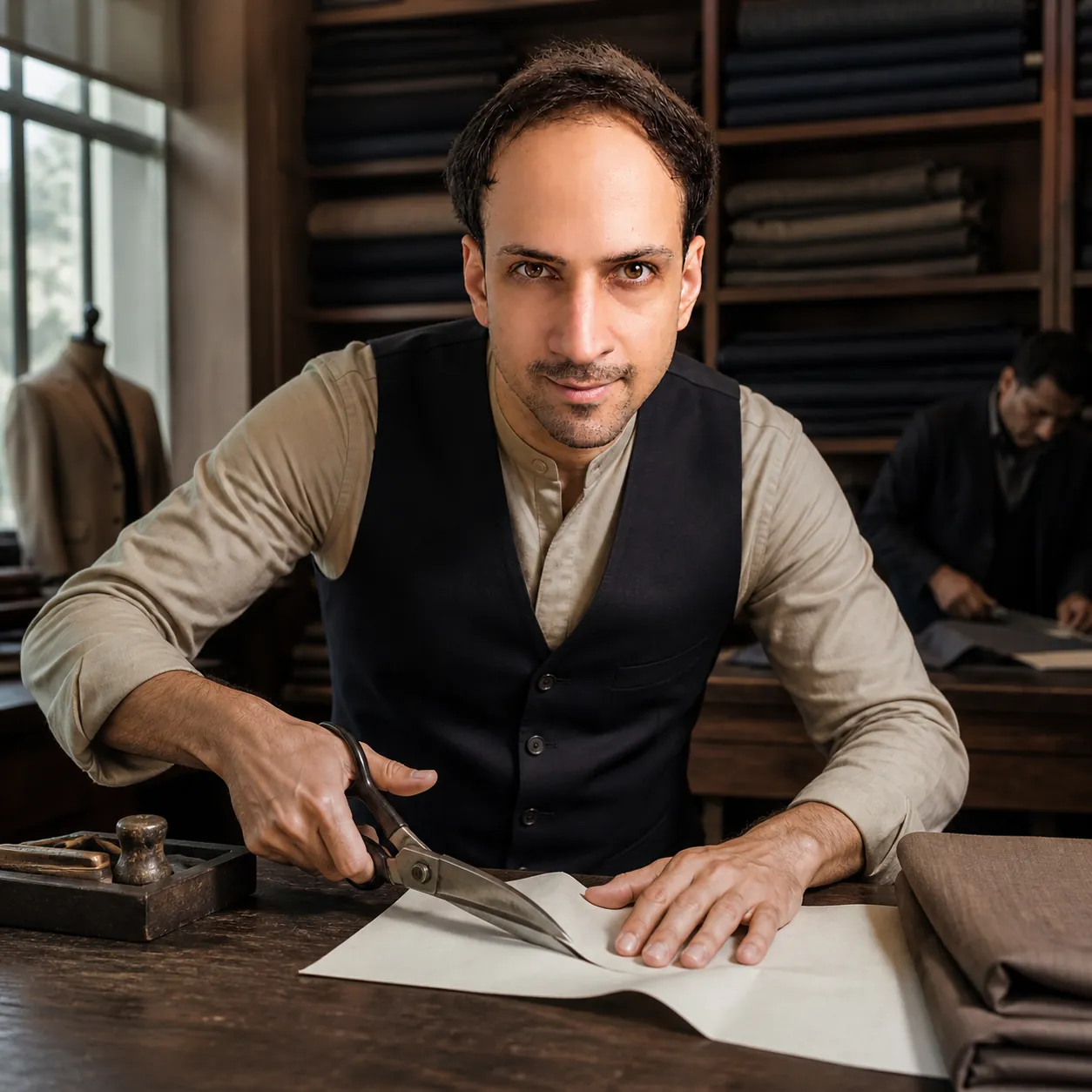
Dead True: Tailor's Cutting Room — AI Portrait Prompt
صورةAI Portraits

Turn your own photo into a workshop still-life portrait in a tailor's cutting room with bolts of cloth shelved to the ceiling. Keeps your face unchanged.

من نص البرومبت

Use the attached reference photo as the identity reference: keep the same face, skin tone, hair and features as the person in that photo, without beautifying, aging or altering them. Create a square 1:1 museum-catalog frame with a strong first read and a slower second read at exactly 2880x2880 pixels. Location: a tailor's cutting room with bolts of cloth shelved to the ceiling. Show the subject in a pressed sand-toned traditional Gulf outfit under a dark tailored vest, closing long shears through paper in one slow test cut. Treat this mechanism as the frame’s governing rule: a whetstone crosshatched in pencil that fades evenly under a flattening plate until one grey trace marks the last low spot reads out the whole difference between nearly true and finally true. Explore how a hand guided by patience can find errors no eye can see; direct expression and posture toward attentive stillness, never melodrama or ad-like confidence. Frame across the benchtop at hand height so the calibration and their eyes share one focal plane. Make the composition surround one micron-scale event with generous, calm negative space. Render it as workshop still-life portraiture combining truthful tool physics, visible micro-texture on steel and skin, disciplined shadow work, and museum-label sobriety, using cool window daylight from one side with soft honest falloff into shadow and a palette of dark walnut, dull iron, and one russet leather band. Photorealistic: this must read as a real photograph from a physical camera, never an illustration, painting, or 3D render. Resolve real surface detail: leather creased along the lines of use, stitching slightly irregular, and edges burnished from contact. Keep one identity-locked person, credible hands and fingers, natural fabric, and coherent scale, contact, reflections, shadows, airflow, deformation, and materials. Background people only when essential, always secondary and clearly different. Avoid impossible mirror gleam, floating measurement holograms, oversized cartoon calipers, and artfully scattered screws. No text, labels, logos, signatures, watermarks, random symbols, plastic skin, excessive bloom, or glossy AI finish.
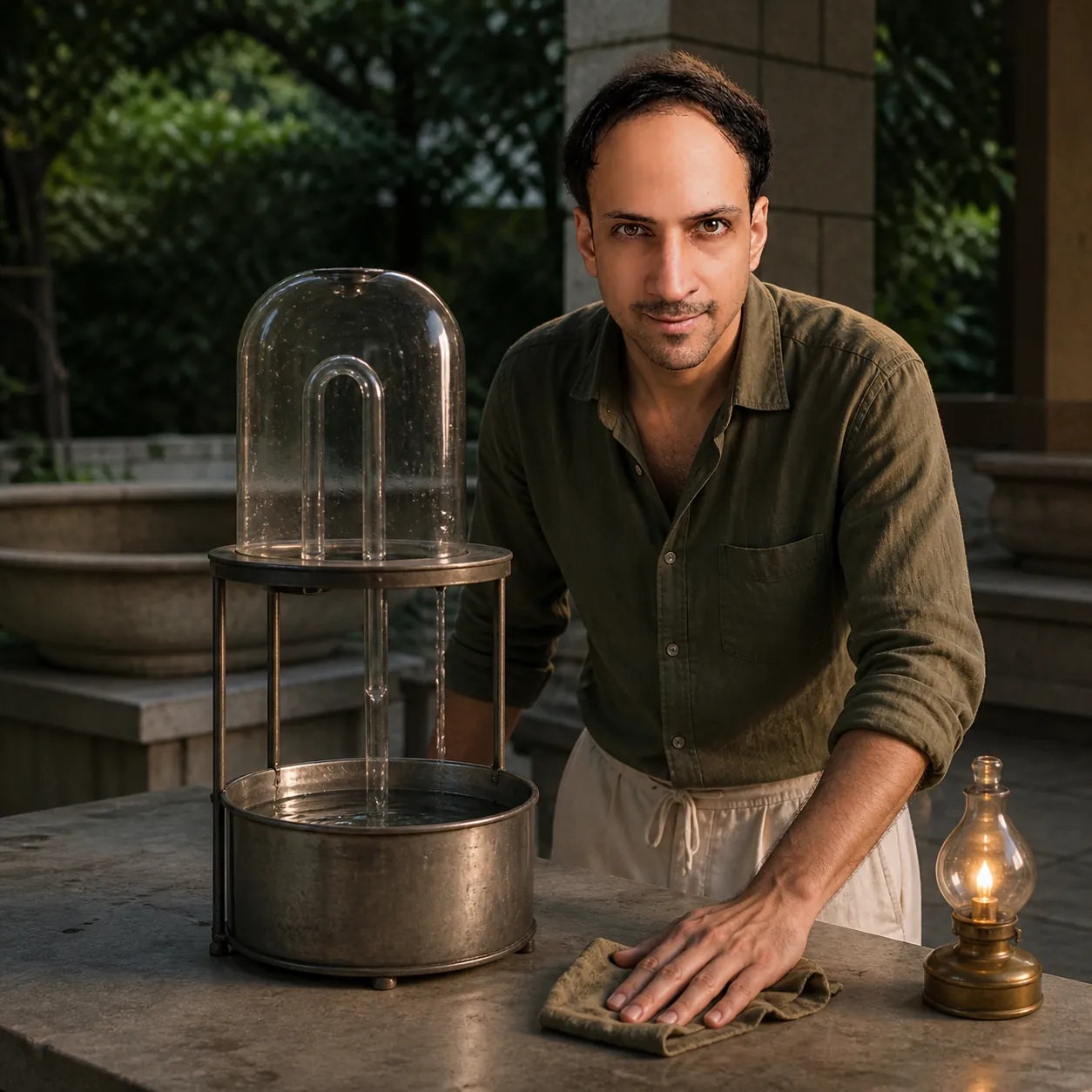
Patience Engineered: Shaded Garden Pavilion — AI Portrait Prompt
صورةAI Portraits

Turn your own photo into a gallery-grade tableau portrait in a shaded garden pavilion beside a fountain switched off. Keeps your face unchanged.

من نص البرومبت

Use the attached reference photo as the identity reference: keep the same face, skin tone, hair and features as the person in that photo, without beautifying, aging or altering them. Create a square 1:1 museum-catalog frame with a strong first read and a slower second read at exactly 2880x2880 pixels. Location: a shaded garden pavilion beside a fountain switched off. Show the subject in an olive linen shirt worn loose over pale drawstring trousers, brushing the stone table clean with the side of their hand. Make one rigorous physical condition the conceptual engine: a clear bell siphon in a slowly filling reservoir, the water climbing toward the crown that releases everything at once turns the act of waiting into a structure the room can hold. Explore why an interval with a visible end asks less of the will; direct expression and posture toward earned ease, never melodrama or ad-like confidence. Use an eye-level 50mm viewpoint with the waiting object placed between the lens and their steady gaze. Make the composition give the untouched object the strongest seat in frame. Render it as gallery-grade tableau realism built from lawful physical timers, warm restrained styling, accurate shadow behavior, and patient large-format photographic clarity, using cool dusk ambience with one warm bulb burning low nearby and a palette of pewter, dry clay, and one band of late sun. Photorealistic: this must read as a real photograph from a physical camera, never an illustration, painting, or 3D render. Resolve real surface detail: fine lint on dark fabric, water spotting on steel, and the soft rounding of edges that have been used for years. Keep one identity-locked person, credible hands and fingers, natural fabric, and coherent scale, contact, reflections, shadows, airflow, deformation, and materials. Background people only when essential, always secondary and clearly different. Avoid melting surrealist clocks, glowing countdown numerals, lavish feast spreads, anguished hungry expressions, and levitating food. No text, labels, logos, signatures, watermarks, random symbols, plastic skin, excessive bloom, or glossy AI finish.
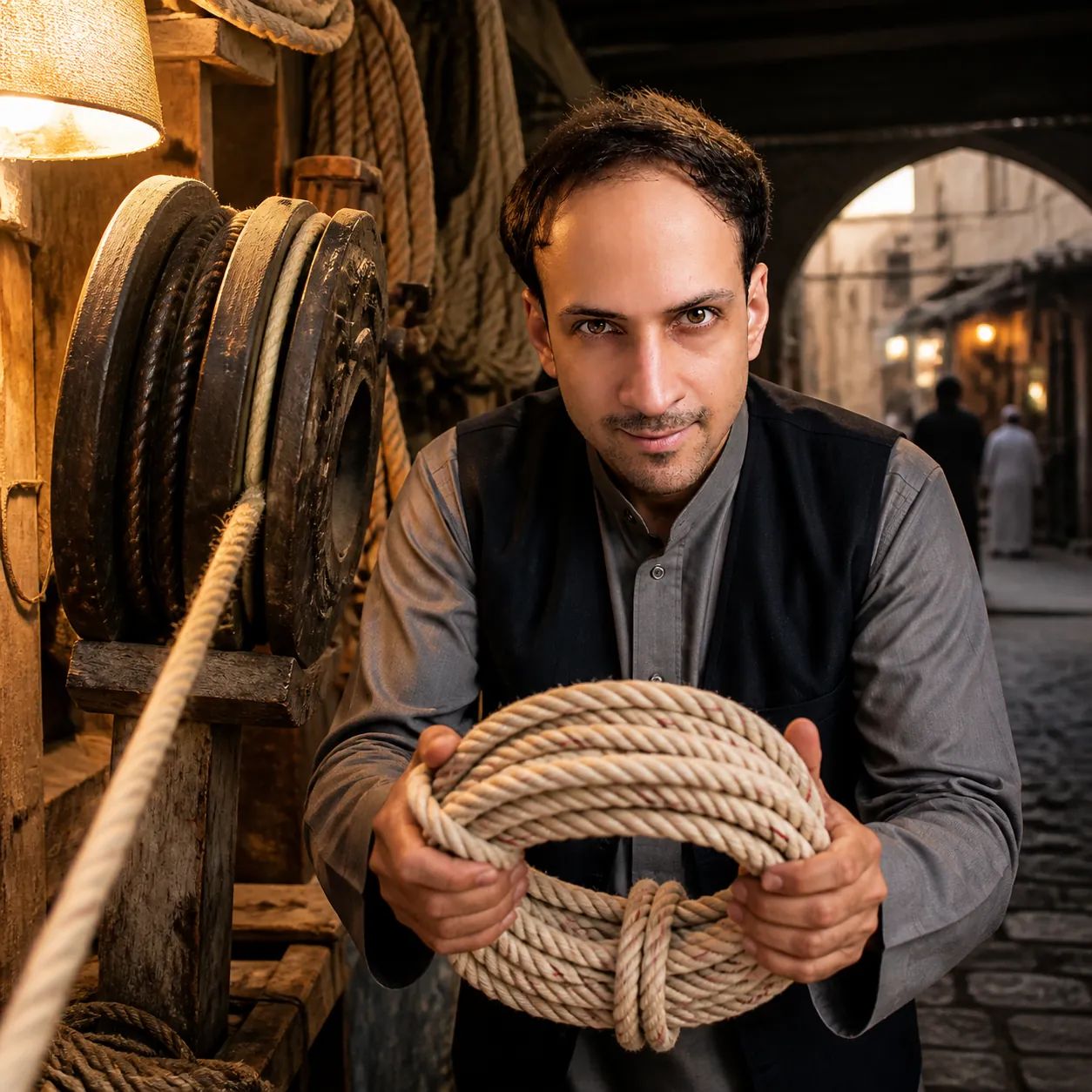
Load-Bearing Change: Rope-Seller's Stall Deep — AI Portrait Prompt
صورةAI Portraits

Turn your own photo into a museum-grade process portrait in a rope-seller's stall deep in an old Riyadh souq at opening hour. Keeps your face unchanged.

من نص البرومبت

Use the attached reference photo as the identity reference: keep the same face, skin tone, hair and features as the person in that photo, without beautifying, aging or altering them. Create a square 1:1 museum-catalog frame with a strong first read and a slower second read at exactly 2880x2880 pixels. Location: a rope-seller's stall deep in an old Riyadh souq at opening hour. Show the subject in a plain grey winter traditional Gulf outfit with a dark sleeveless vest, weighing a coil of new rope across both forearms. The impossible-looking event must obey this clear system: an old well pulley whose hardwood sheave holds deep polished grooves beside one shallow channel a new rope has barely begun makes the newest work instantly legible against everything long since settled. Explore whether an old habit is ever removed or only rerouted around; direct expression and posture toward steady absorption, never melodrama or ad-like confidence. Use a 90mm close-portrait framing with one taut line entering the frame in sharp foreground focus. Make the composition run one continuous line from their hands to the frame edge. Render it as museum-grade process photography combining truthful rigging detail, visible thread-level texture, honest hand-work staging, and unhurried, deeply observational framing, using one warm work lamp pooled on the task with soft surrounding dusk and a palette of bleached cotton, iron shadow, and a restrained saffron accent. Photorealistic: this must read as a real photograph from a physical camera, never an illustration, painting, or 3D render. Resolve real surface detail: condensation beading at true size, liquid meniscus curving against glass, and wet surfaces darker than dry ones. Keep one identity-locked person, credible hands and fingers, natural fabric, and coherent scale, contact, reflections, shadows, airflow, deformation, and materials. Background people only when essential, always secondary and clearly different. Avoid server racks, blinking LED bundles, impossible floating threads, motivational-poster loom staging, and pristine hands untouched by work. No text, labels, logos, signatures, watermarks, random symbols, plastic skin, excessive bloom, or glossy AI finish.
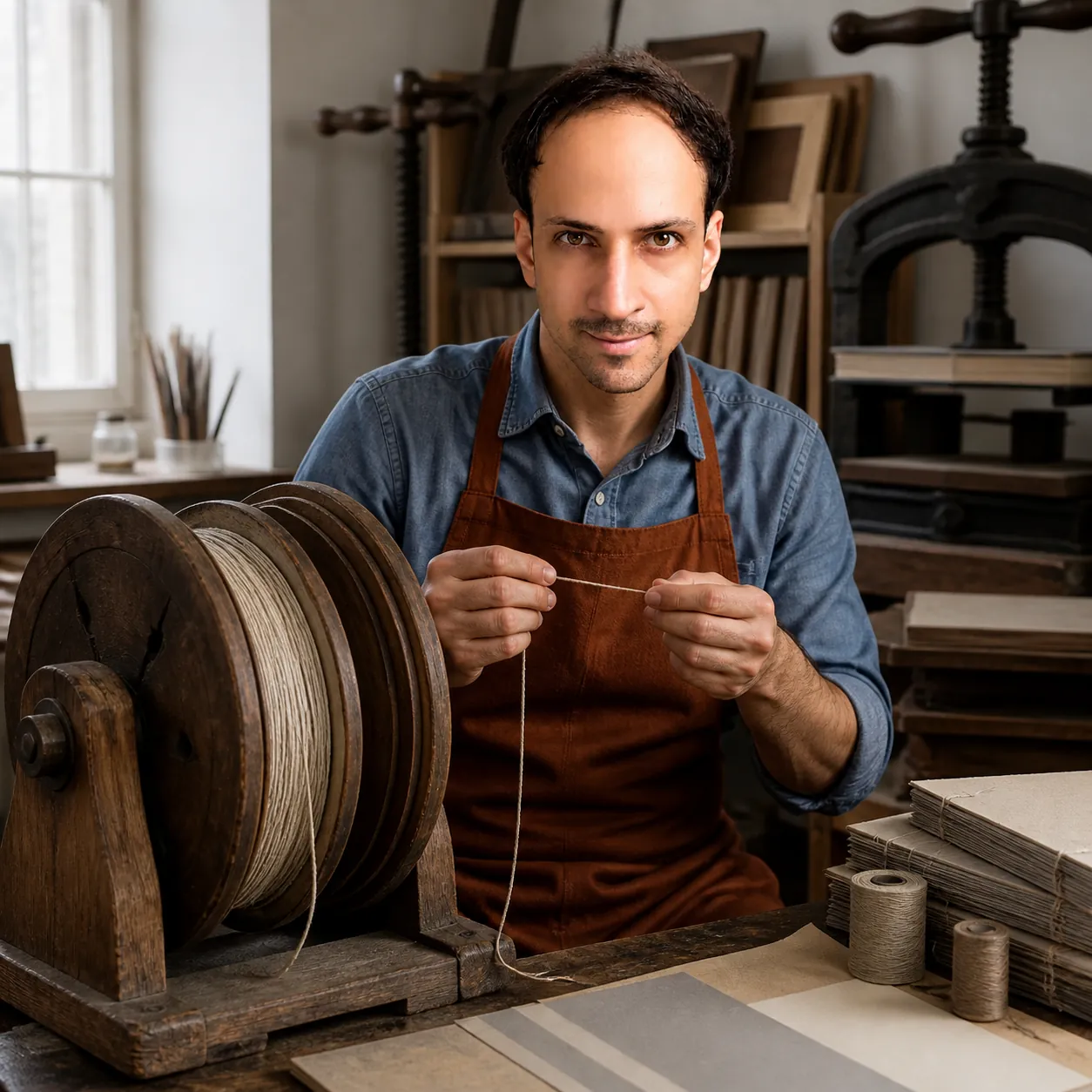
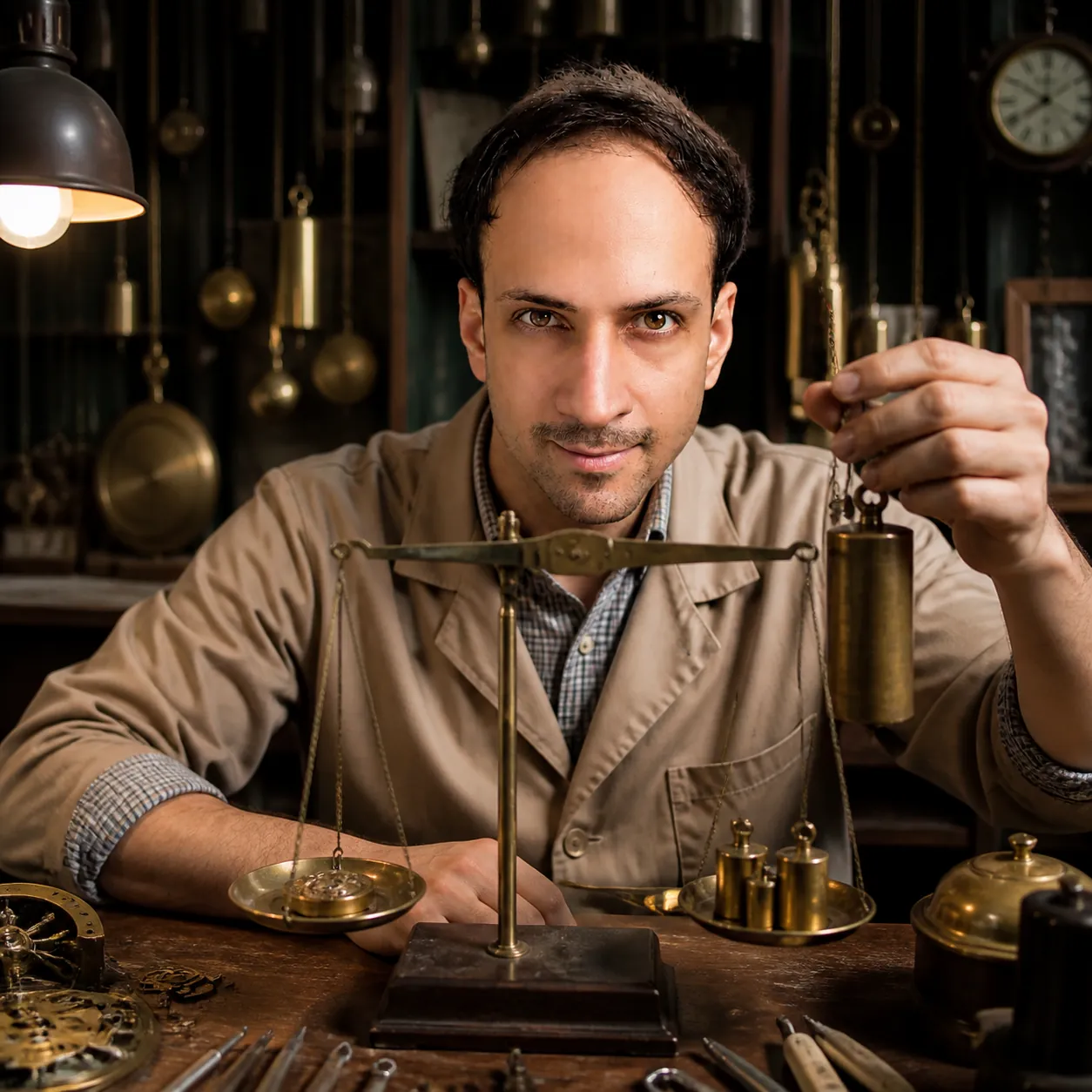
Table for Later: Clockmaker's Bench — AI Portrait Prompt
صورةAI Portraits

Turn your own photo into a calm still-life portrait in a clockmaker's bench hung with pendulums at rest. Keeps your face unchanged.

من نص البرومبت

Use the attached reference photo as the identity reference: keep the same face, skin tone, hair and features as the person in that photo, without beautifying, aging or altering them. Create a square 1:1 museum-catalog frame with a strong first read and a slower second read at exactly 2880x2880 pixels. Location: a clockmaker's bench hung with pendulums at rest. Show the subject in a tan shop coat over a checked shirt with rolled cuffs, hooking a drive weight onto its hanging chain. Make one rigorous physical condition the conceptual engine: a beam balance still on its arrestment, the evening's portion on one pan and matched brass weights on the other turns the act of waiting into a structure the room can hold. Explore how hunger changes character when its answer is already scheduled and in sight; direct expression and posture toward composed anticipation, never melodrama or ad-like confidence. Use an eye-level 50mm viewpoint with the waiting object placed between the lens and their steady gaze. Make the composition keep every promise of later sharp and every distraction soft. Render it as calm still-life portraiture built from genuinely working timekeeping mechanisms, quiet domestic realism, museum-grade material fidelity, and unhurried human-centered editorial composition, using cool dusk ambience with one warm bulb burning low nearby and a palette of chalk, dark tea brown, and a thread of copper. Photorealistic: this must read as a real photograph from a physical camera, never an illustration, painting, or 3D render. Resolve real surface detail: the difference between a wiped surface and a clean one, faint tide marks on ceramic, and metal dulled unevenly by touch. Keep one identity-locked person, credible hands and fingers, natural fabric, and coherent scale, contact, reflections, shadows, airflow, deformation, and materials. Background people only when essential, always secondary and clearly different. Avoid melting surrealist clocks, glowing countdown numerals, lavish feast spreads, anguished hungry expressions, and levitating food. No text, labels, logos, signatures, watermarks, random symbols, plastic skin, excessive bloom, or glossy AI finish.
Load-Bearing Change: Small Bookbindery — AI Portrait Prompt
صورةAI Portraits

Turn your own photo into a gallery-grade workshop portrait in a small bookbindery with sewing frames and presses along one wall. Keeps your face unchanged.

من نص البرومبت

Use the attached reference photo as the identity reference: keep the same face, skin tone, hair and features as the person in that photo, without beautifying, aging or altering them. Create a square 1:1 museum-catalog frame with a strong first read and a slower second read at exactly 2880x2880 pixels. Location: a small bookbindery with sewing frames and presses along one wall. Show the subject in a rust-brown canvas apron over a soft chambray shirt, waxing a length of linen thread between finger and thumb. Build the artwork around this material rule: an old well pulley whose hardwood sheave holds deep polished grooves beside one shallow channel a new rope has barely begun turns repeated effort into a physical route the hand can find again. Explore whether an old habit is ever removed or only rerouted around; direct expression and posture toward grounded hope, never melodrama or ad-like confidence. Frame at the height of the work so effort and expression can be read in one glance. Make the composition rank focus by effort, the hardest-won inch rendered sharpest of all. Render it as gallery-grade workshop photography built from real load-bearing craft, natural fiber materiality, precise repair detail, and calm narrative staging, using cool diffuse skylight evened by pale walls, shadows kept legible and a palette of undyed flax, worn oak, and one madder-red line. Photorealistic: this must read as a real photograph from a physical camera, never an illustration, painting, or 3D render. Resolve real surface detail: label-free packaging showing carton fibre, cardboard bruised at the corners, and tape lifting slightly at one end. Keep one identity-locked person, credible hands and fingers, natural fabric, and coherent scale, contact, reflections, shadows, airflow, deformation, and materials. Background people only when essential, always secondary and clearly different. Avoid glowing neural filaments, brain-shaped tangles, circuit-board overlays, holographic wiring diagrams, and sparks jumping between cables. No text, labels, logos, signatures, watermarks, random symbols, plastic skin, excessive bloom, or glossy AI finish.
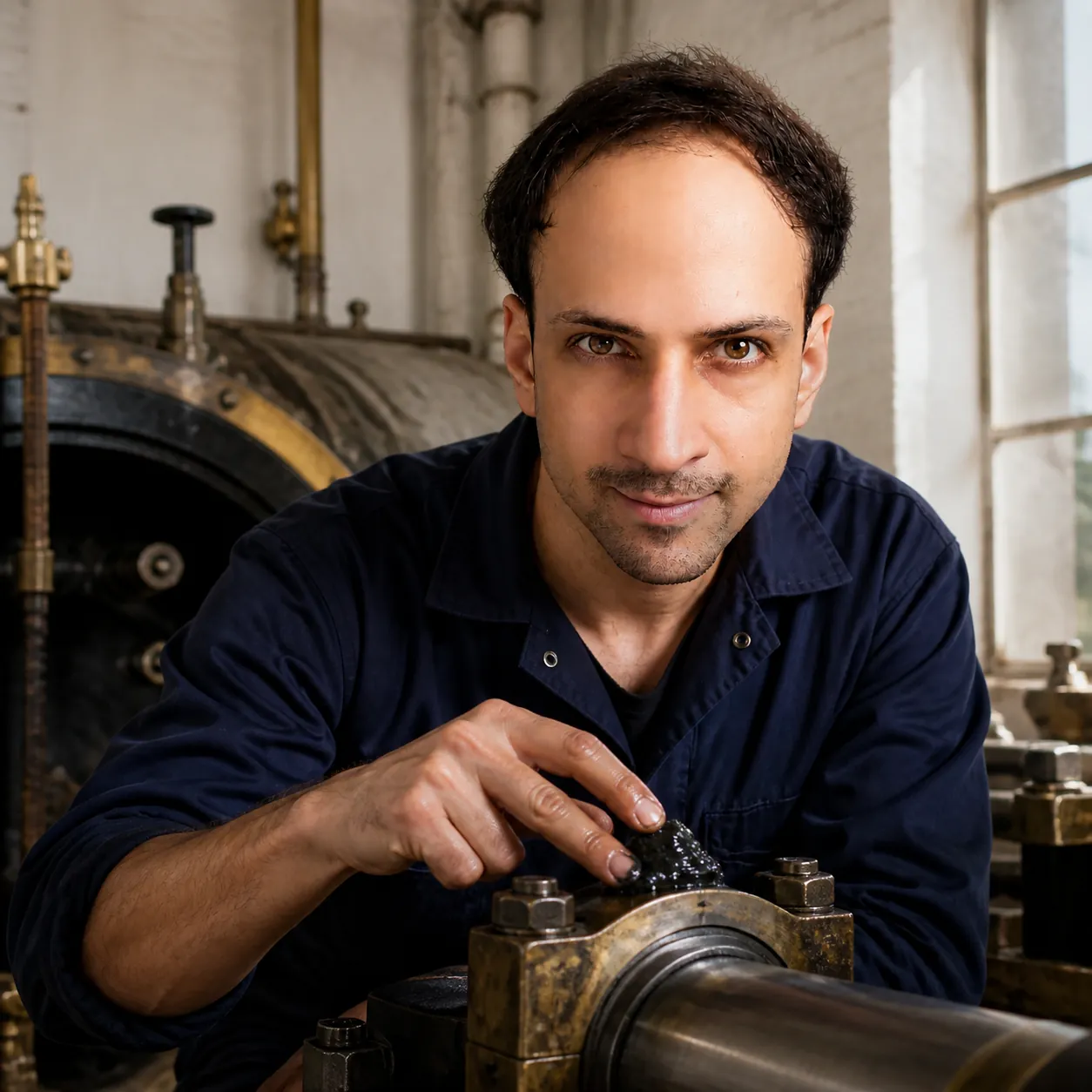
Ritual Maintenance: Whitewashed Pump-House Machine Room — AI Portrait Prompt
صورةAI Portraits

Turn your own photo into a portrait in a whitewashed pump-house machine room, brass fittings dulled to honey. Keeps your face unchanged.

من نص البرومبت

Use the attached reference photo as the identity reference: keep the same face, skin tone, hair and features as the person in that photo, without beautifying, aging or altering them. Create a square 1:1 museum-catalog frame with a strong first read and a slower second read at exactly 2880x2880 pixels. Location: a whitewashed pump-house machine room, brass fittings dulled to honey. Show the subject in clean indigo coveralls folded open at the collar, cupping fresh grease onto a bearing cap with two fingers. The impossible-looking event must obey this clear system: a steel straightedge whose etched figures have been thumbed away to ghosts while its working edge still closes light-tight against glass argues that upkeep, not replacement, is the true form of inheritance. Explore whether care given to an object is spent or invested; direct expression and posture toward steward's calm, never melodrama or ad-like confidence. Use a 90mm close-working lens: the cared-for surface sharp near the glass, their face readable just beyond it. Make the composition pair one worn surface with one fresh mark of care. Render it as material-culture documentary photography combining believable century-old tools, honest maintenance evidence, restrained contemporary art direction, and calm human-scale observational framing, using late slanting sun that grazes every polished wear point into quiet highlights and a palette of lampblack, waxed leather, and one glint of copper. Photorealistic: this must read as a real photograph from a physical camera, never an illustration, painting, or 3D render. Resolve real surface detail: skin that reddens slightly under pressure, nail beds with honest colour, and knuckle creases that fold rather than blur. Keep one identity-locked person, credible hands and fingers, natural fabric, and coherent scale, contact, reflections, shadows, airflow, deformation, and materials. Background people only when essential, always secondary and clearly different. Avoid glowing forge montages, artificially weathered wood grain, hipster workshop styling, floating tool arrangements, and varnish-shiny fake patina. No text, labels, logos, signatures, watermarks, random symbols, plastic skin, excessive bloom, or glossy AI finish.
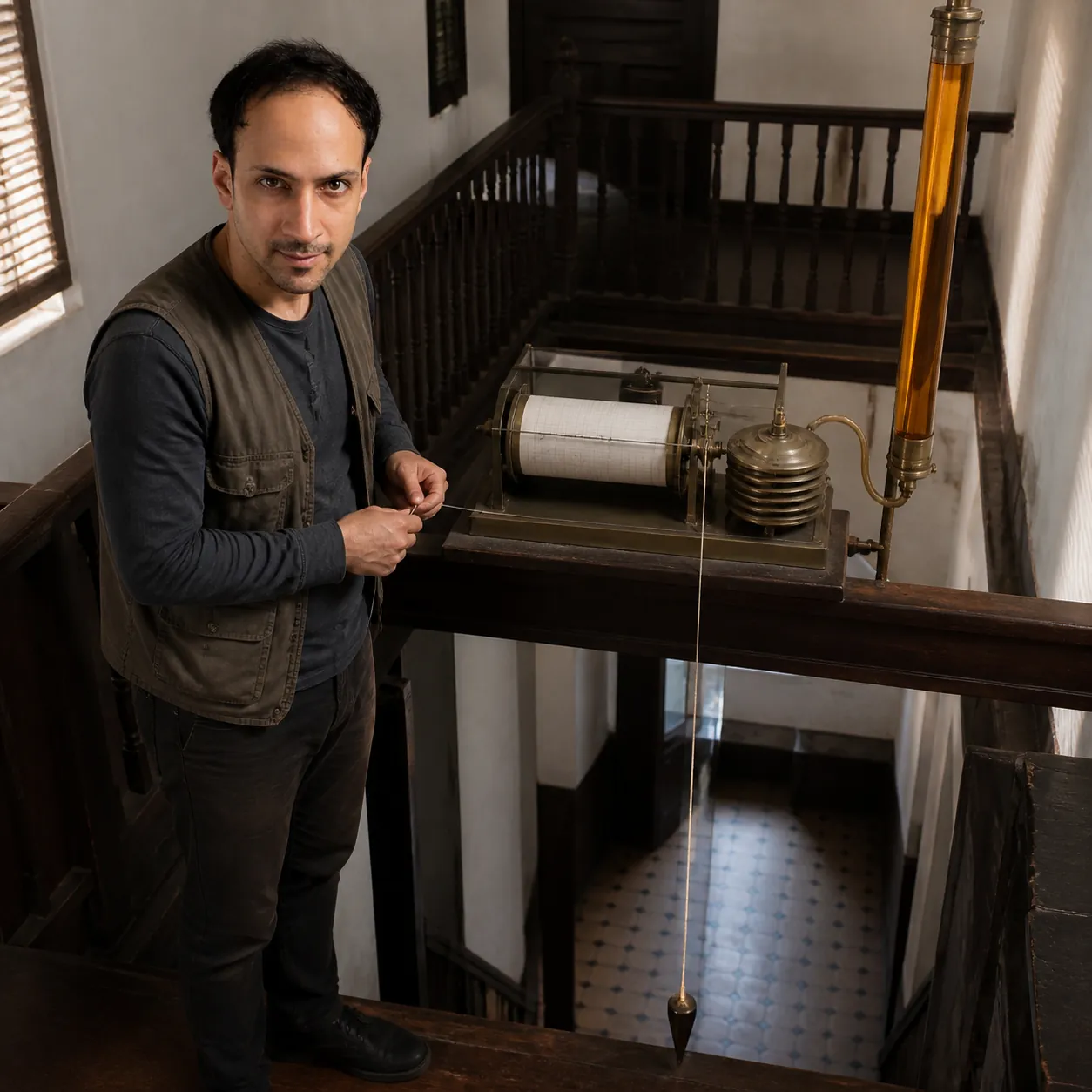
Before Words: Open Shaft of a Two-Storey Stairwell — AI Portrait Prompt
صورةAI Portraits

Turn your own photo into a portrait in the open shaft of a two-storey stairwell above a tiled floor. Keeps your face unchanged.

من نص البرومبت

Use the attached reference photo as the identity reference: keep the same face, skin tone, hair and features as the person in that photo, without beautifying, aging or altering them. Create a square 1:1 museum-catalog frame with a strong first read and a slower second read at exactly 2880x2880 pixels. Location: the open shaft of a two-storey stairwell above a tiled floor. Show the subject in a graphite crewneck under a lightweight canvas work vest, paying a plumb line down through the open shaft. Build the artwork around this material rule: a clock-driven barograph drum whose pen draws one unbroken line as a sealed bellows breathes with the passing air holds a slow shift still long enough for judgment to consult it. Explore what a slow drift becomes once someone builds a way to watch it; direct expression and posture toward unhurried candor, never melodrama or ad-like confidence. Frame from the far end of the room so the signal's whole route stays visible. Make the composition let one connecting line leave the frame without resolving. Render it as gallery-grade documentary imagery built from real pneumatic linkages, believable wear on brass, low-drama interior lighting, and patient human presence, using late-afternoon light entering through louvers as thin parallel bands and a palette of chalk white, dark walnut, and a single amber column. Photorealistic: this must read as a real photograph from a physical camera, never an illustration, painting, or 3D render. Resolve real surface detail: cotton that hangs by its own weight, seams that pucker very slightly, and collars softened by washing. Keep one identity-locked person, credible hands and fingers, natural fabric, and coherent scale, contact, reflections, shadows, airflow, deformation, and materials. Background people only when essential, always secondary and clearly different. Avoid brass-gear collage backdrops, cartoon telegraph keys, neon signal beams, mercury spills, and floating typographic message overlays. No text, labels, logos, signatures, watermarks, random symbols, plastic skin, excessive bloom, or glossy AI finish.
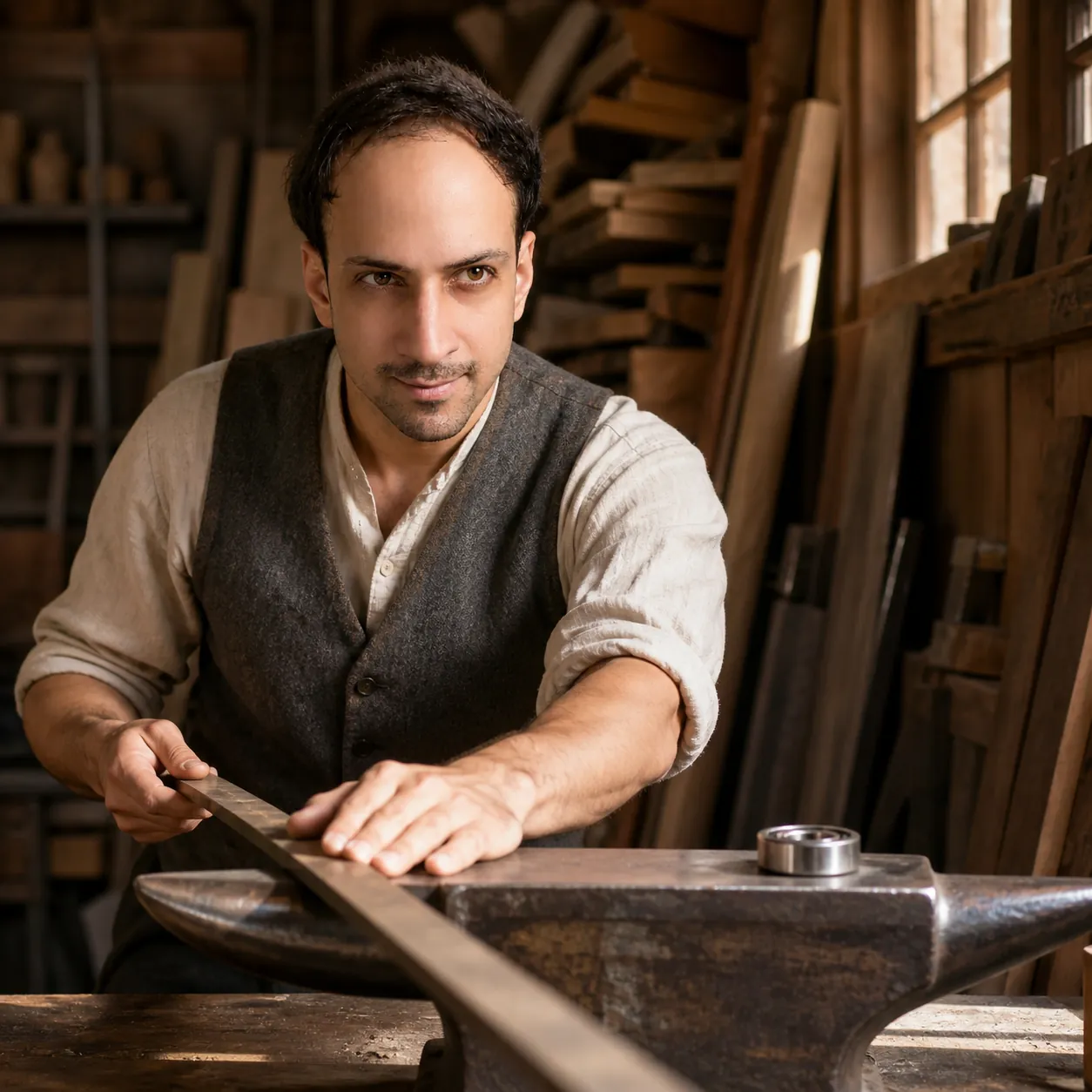
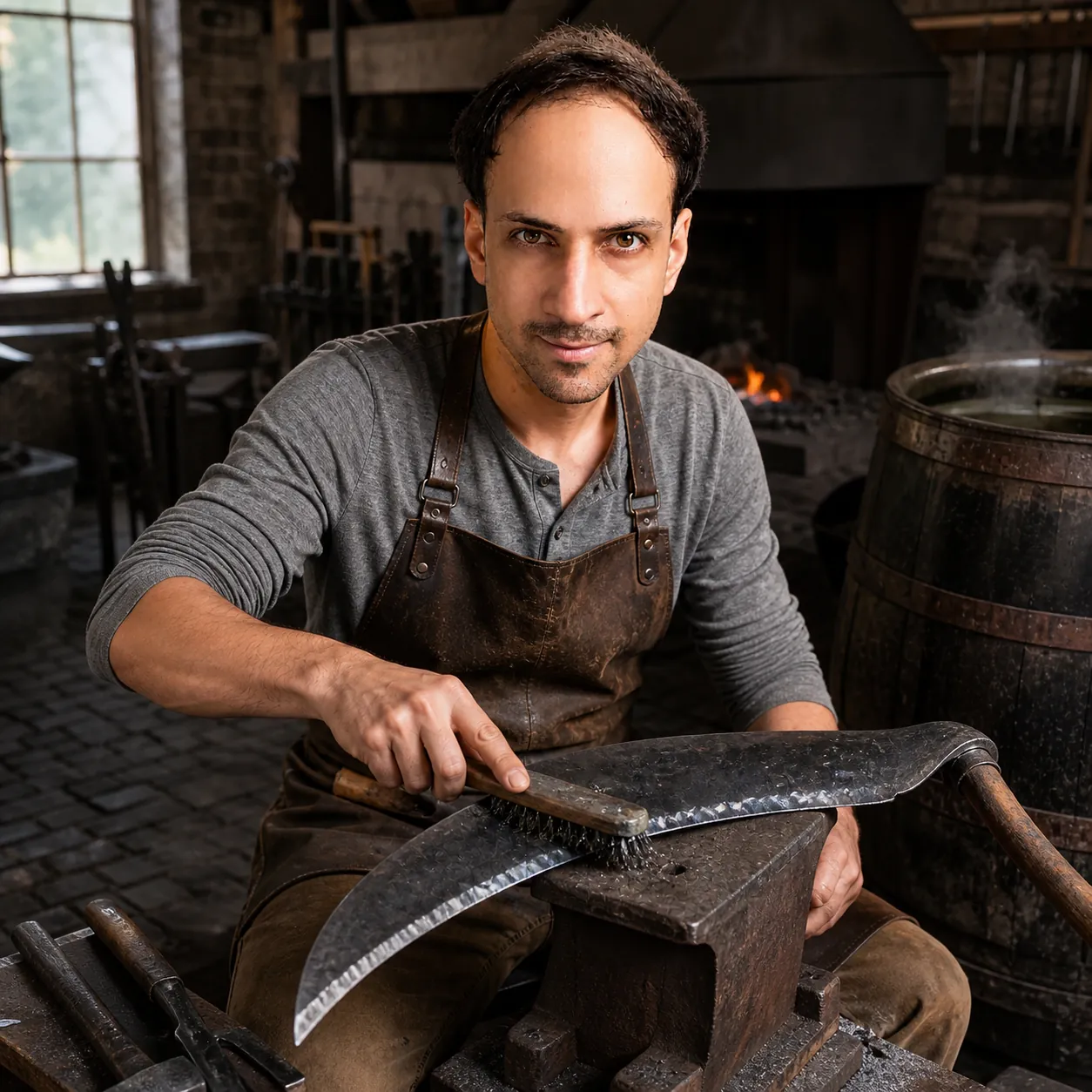
Wear As Record: Swept Brick Yard of a Small Forge — AI Portrait Prompt
صورةAI Portraits

Turn your own photo into a photorealistic portrait in the swept brick yard of a small forge, quench barrel steaming faintly. Keeps your face unchanged.

من نص البرومبت

Use the attached reference photo as the identity reference: keep the same face, skin tone, hair and features as the person in that photo, without beautifying, aging or altering them. Create a square 1:1 museum-catalog frame with a strong first read and a slower second read at exactly 2880x2880 pixels. Location: the swept brick yard of a small forge, quench barrel steaming faintly. Show the subject in a leather smith's apron over a heather-grey henley and canvas trousers, carding scale off a blade's spine with a wire brush. Build the artwork around this material rule: a scythe blade laid across a small peening anvil, its edge brightened by a fresh line of overlapping hammer facets argues that upkeep, not replacement, is the true form of inheritance. Explore where the line falls between wearing out and wearing in; direct expression and posture toward sober gratitude, never melodrama or ad-like confidence. Use a restrained 35mm environmental view, the subject at one-third and the workspace honest around them. Make the composition keep their hands nearer the light than their face. Render it as workshop still-life realism joining high-fidelity portrait photography, accurate patina and polish, shallow tactile depth, and quiet archival grading, using north daylight through a dusty pane, contrast held gentle and true and a palette of bone-white stone, deep hickory, and a thread of amber. Photorealistic: this must read as a real photograph from a physical camera, never an illustration, painting, or 3D render. Resolve real surface detail: dust settled where nobody wipes, fingerprint haze on glass, and edges rubbed pale by handling. Keep one identity-locked person, credible hands and fingers, natural fabric, and coherent scale, contact, reflections, shadows, airflow, deformation, and materials. Background people only when essential, always secondary and clearly different. Avoid glowing forge montages, artificially weathered wood grain, hipster workshop styling, floating tool arrangements, and varnish-shiny fake patina. No text, labels, logos, signatures, watermarks, random symbols, plastic skin, excessive bloom, or glossy AI finish.
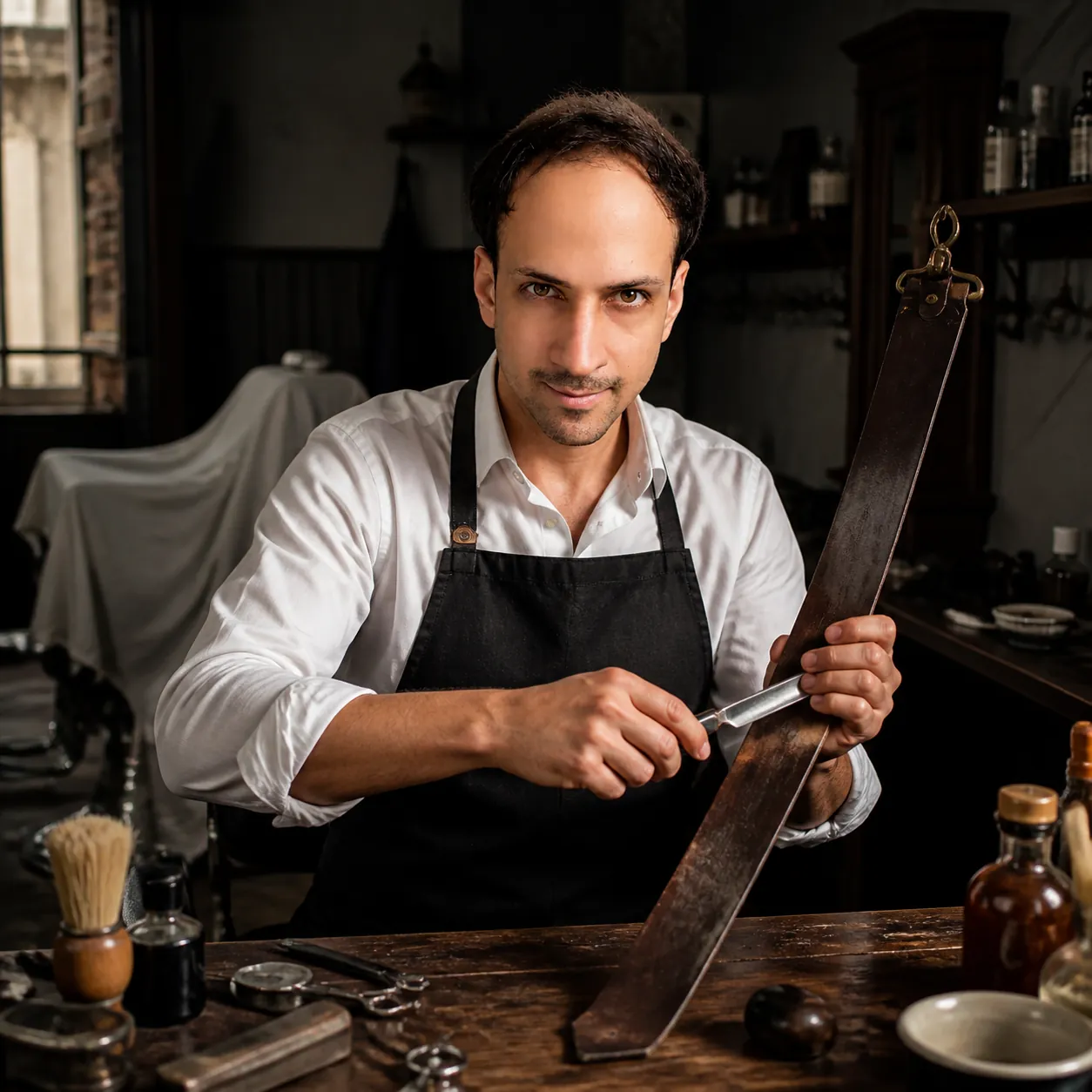
Care Made Visible: Timber-Framed Joinery Loft — AI Portrait Prompt
صورةAI Portraits

Turn your own photo into a portrait in a timber-framed joinery loft where afternoon light crosses stacked rough boards. Keeps your face unchanged.

من نص البرومبت

Use the attached reference photo as the identity reference: keep the same face, skin tone, hair and features as the person in that photo, without beautifying, aging or altering them. Create a square 1:1 museum-catalog frame with a strong first read and a slower second read at exactly 2880x2880 pixels. Location: a timber-framed joinery loft where afternoon light crosses stacked rough boards. Show the subject in a collarless linen shirt under a grey wool vest, sleeves rolled twice, sighting along a straight batten toward the window light. Make one rigorous physical condition the conceptual engine: a century-old anvil that returns a dropped steel bearing almost to the fingers that released it, again and again turns a hundred years of use into polish instead of ruin. Explore how something can be renewed a thousand times and never be lost; direct expression and posture toward quiet pride, never melodrama or ad-like confidence. Use an eye-level 80mm portrait view with honest perspective and shallow, disciplined focus. Make the composition keep their hands nearer the light than their face. Render it as heritage-craft documentary portraiture built from truthful tool wear, oiled-wood and carbon-steel materiality, museum-conservation lighting discipline, and unhurried editorial composition, using late slanting sun that grazes every polished wear point into quiet highlights and a palette of seasoned black, beeswax cream, and a gleam of pewter. Photorealistic: this must read as a real photograph from a physical camera, never an illustration, painting, or 3D render. Resolve real surface detail: the difference between a wiped surface and a clean one, faint tide marks on ceramic, and metal dulled unevenly by touch. Keep one identity-locked person, credible hands and fingers, natural fabric, and coherent scale, contact, reflections, shadows, airflow, deformation, and materials. Background people only when essential, always secondary and clearly different. Avoid rusty antique-shop clutter, sepia nostalgia filters, cobwebbed barn walls, staged distressed props, and heroic blacksmith sparks. No text, labels, logos, signatures, watermarks, random symbols, plastic skin, excessive bloom, or glossy AI finish.
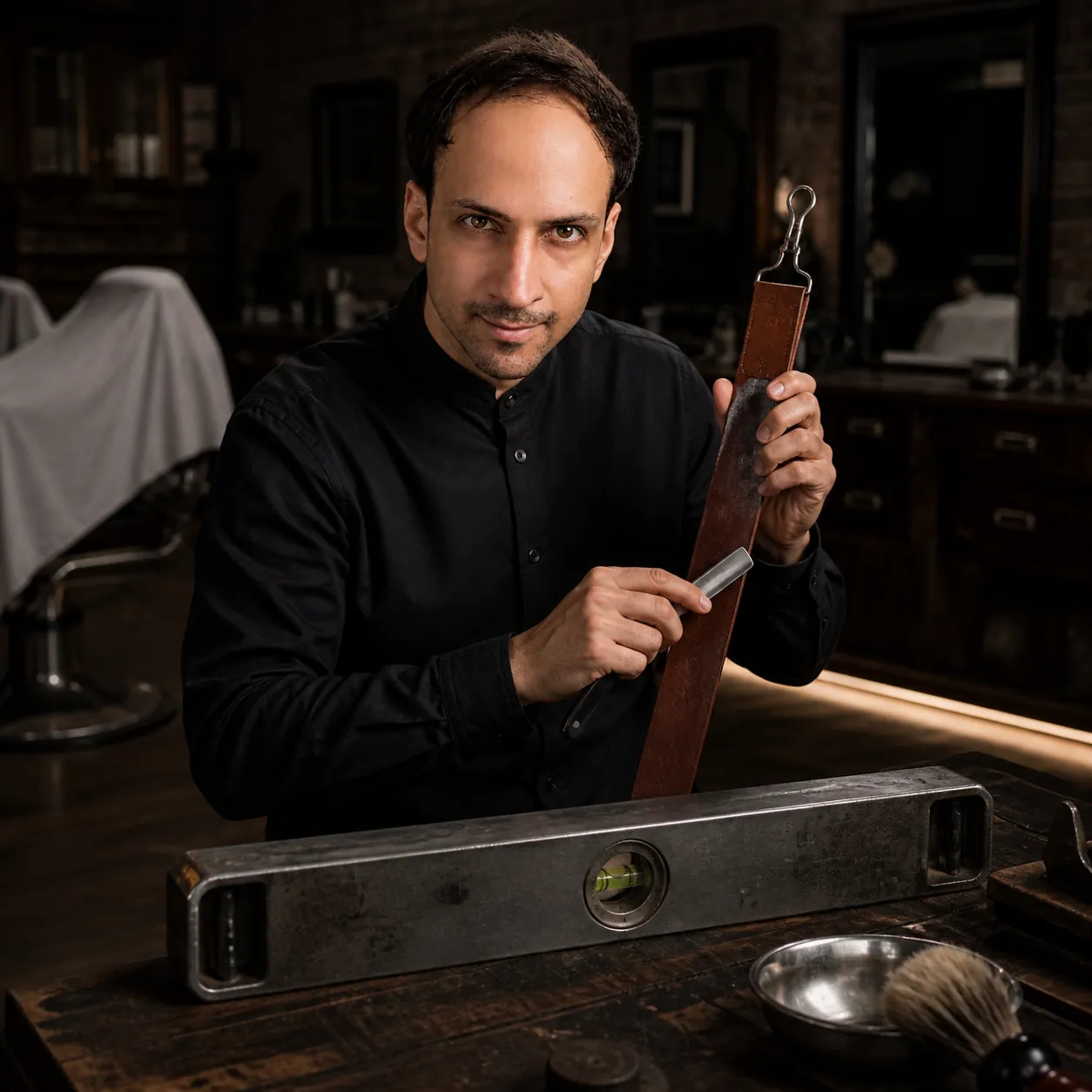
Care Made Visible: Back Room of an Old Barbershop — AI Portrait Prompt
صورةAI Portraits

Turn your own photo into a material-culture documentary portrait in the back room of an old barbershop, chairs sheeted for the night. Keeps your face unchanged.

من نص البرومبت

Use the attached reference photo as the identity reference: keep the same face, skin tone, hair and features as the person in that photo, without beautifying, aging or altering them. Create a square 1:1 museum-catalog frame with a strong first read and a slower second read at exactly 2880x2880 pixels. Location: the back room of an old barbershop, chairs sheeted for the night. Show the subject in a black service apron over a pressed white shirt, cuffs turned back, drawing a blade flat along a hanging leather strop. Treat this mechanism as the frame’s governing rule: a century-old anvil that returns a dropped steel bearing almost to the fingers that released it, again and again argues that upkeep, not replacement, is the true form of inheritance. Explore how something can be renewed a thousand times and never be lost; direct expression and posture toward measured devotion, never melodrama or ad-like confidence. Frame level with the benchtop so the tool's brightest wear and their steady gaze share focus. Make the composition give the brightest polish the smallest area of the frame. Render it as material-culture documentary photography combining believable century-old tools, honest maintenance evidence, restrained contemporary art direction, and calm human-scale observational framing, using one low window key raking across worn surfaces with soft paper-bounce fill and a palette of worn steel, oiled walnut, and one line of brass. Photorealistic: this must read as a real photograph from a physical camera, never an illustration, painting, or 3D render. Resolve real surface detail: floor finish worn along the walked line, skirting marked at shoe height, and corners darker than the open floor. Keep one identity-locked person, credible hands and fingers, natural fabric, and coherent scale, contact, reflections, shadows, airflow, deformation, and materials. Background people only when essential, always secondary and clearly different. Avoid glowing forge montages, artificially weathered wood grain, hipster workshop styling, floating tool arrangements, and varnish-shiny fake patina. No text, labels, logos, signatures, watermarks, random symbols, plastic skin, excessive bloom, or glossy AI finish.
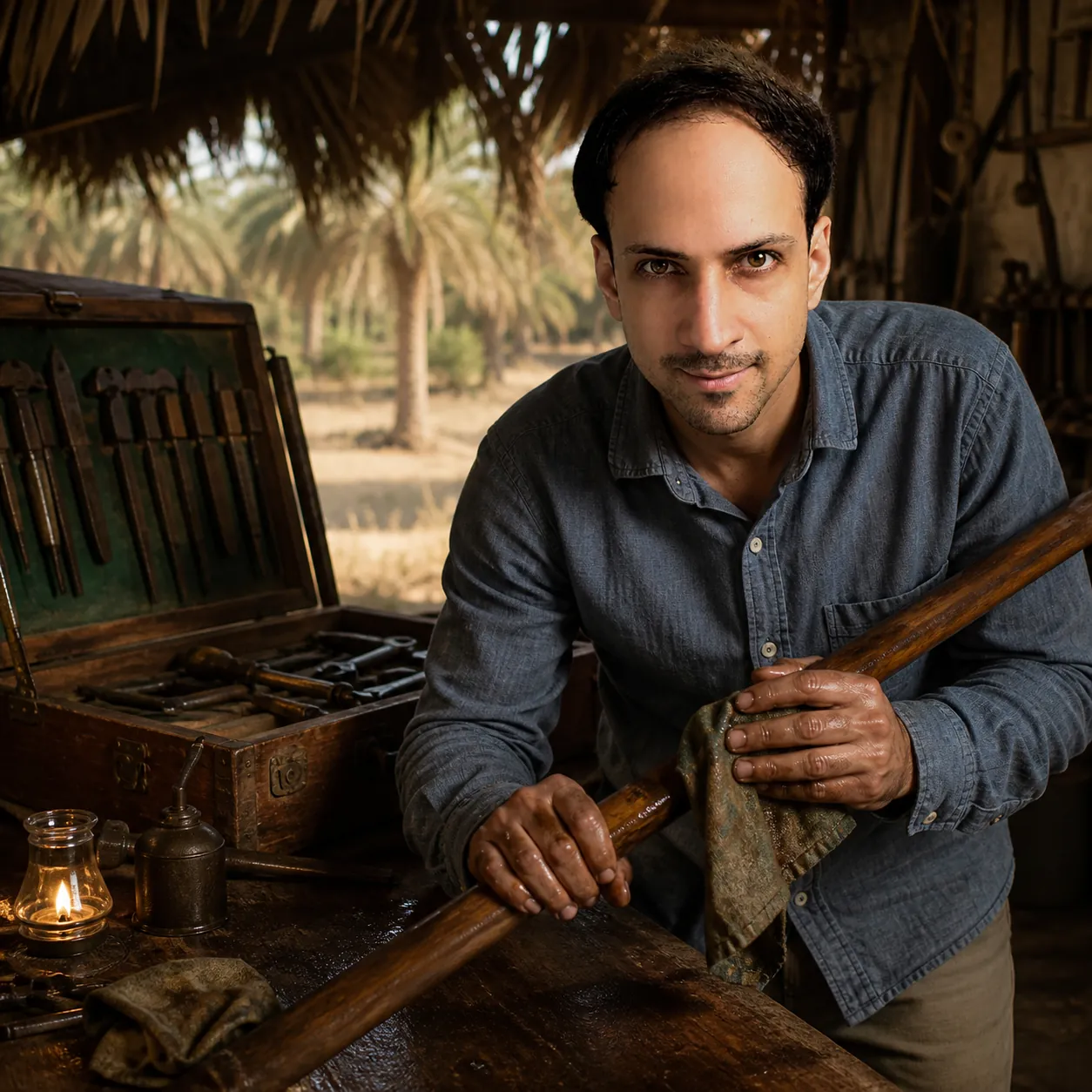
Patient Passes: Barbershop After Closing One Chair — AI Portrait Prompt
صورةAI Portraits

Turn your own photo into a gallery-grade artisan portrait in a barbershop after closing, one chair sheeted and the mirrors dark. Keeps your face unchanged.

من نص البرومبت

Use the attached reference photo as the identity reference: keep the same face, skin tone, hair and features as the person in that photo, without beautifying, aging or altering them. Create a square 1:1 museum-catalog frame with a strong first read and a slower second read at exactly 2880x2880 pixels. Location: a barbershop after closing, one chair sheeted and the mirrors dark. Show the subject in a black band-collar shirt buttoned to the throat, drawing a razor along a hanging strop in even strokes. Make one rigorous physical condition the conceptual engine: a machinist's level flipped end for end on one seat, its vial adjusted until the bubble confesses the same reading both ways turns patient maintenance into evidence the naked eye can verify at a glance. Explore why the ritual of preparation can matter more than the work it precedes; direct expression and posture toward modest mastery, never melodrama or ad-like confidence. Use an eye-level 85mm portrait viewpoint with natural perspective and shallow, honest depth of field. Make the composition reserve peak sharpness for the smallest point under correction. Render it as gallery-grade artisan portraiture combining accurate metrology detail, tactile bench materiality, restrained contemporary art direction, and physically correct highlights, using a backlight placed low so any gap reads as a bright seam and a palette of dark walnut, dull iron, and one russet leather band. Photorealistic: this must read as a real photograph from a physical camera, never an illustration, painting, or 3D render. Resolve real surface detail: fine lint on dark fabric, water spotting on steel, and the soft rounding of edges that have been used for years. Keep one identity-locked person, credible hands and fingers, natural fabric, and coherent scale, contact, reflections, shadows, airflow, deformation, and materials. Background people only when essential, always secondary and clearly different. Avoid sparking grinder wheels, glowing forge steel, sawdust clouds, and staged rustic tool walls. No text, labels, logos, signatures, watermarks, random symbols, plastic skin, excessive bloom, or glossy AI finish.
The Long Keeping: Palm-Frond-Shaded Implement Shed — AI Portrait Prompt
صورةAI Portraits

Turn your own photo into a photorealistic portrait in a palm-frond-shaded implement shed at the working edge of a date farm. Keeps your face unchanged.

من نص البرومبت

Use the attached reference photo as the identity reference: keep the same face, skin tone, hair and features as the person in that photo, without beautifying, aging or altering them. Create a square 1:1 museum-catalog frame with a strong first read and a slower second read at exactly 2880x2880 pixels. Location: a palm-frond-shaded implement shed at the working edge of a date farm. Show the subject in a sun-faded chambray shirt buttoned to the wrist over cotton trousers, rubbing an oiled rag down a long wooden haft. The impossible-looking event must obey this clear system: an open machinist's chest whose green felt recesses have worn to pale, exact portraits of the tools they have held argues that upkeep, not replacement, is the true form of inheritance. Explore whether a thing maintained this long still belongs to any single keeper; direct expression and posture toward steward's calm, never melodrama or ad-like confidence. Use a 90mm close-working lens: the cared-for surface sharp near the glass, their face readable just beyond it. Make the composition hold empty bench space where a finished tool will rest. Render it as workshop still-life realism joining high-fidelity portrait photography, accurate patina and polish, shallow tactile depth, and quiet archival grading, using a single warm workbench lamp pooled tight, the room falling to umber and a palette of seasoned black, beeswax cream, and a gleam of pewter. Photorealistic: this must read as a real photograph from a physical camera, never an illustration, painting, or 3D render. Resolve real surface detail: condensation beading at true size, liquid meniscus curving against glass, and wet surfaces darker than dry ones. Keep one identity-locked person, credible hands and fingers, natural fabric, and coherent scale, contact, reflections, shadows, airflow, deformation, and materials. Background people only when essential, always secondary and clearly different. Avoid glowing forge montages, artificially weathered wood grain, hipster workshop styling, floating tool arrangements, and varnish-shiny fake patina. No text, labels, logos, signatures, watermarks, random symbols, plastic skin, excessive bloom, or glossy AI finish.
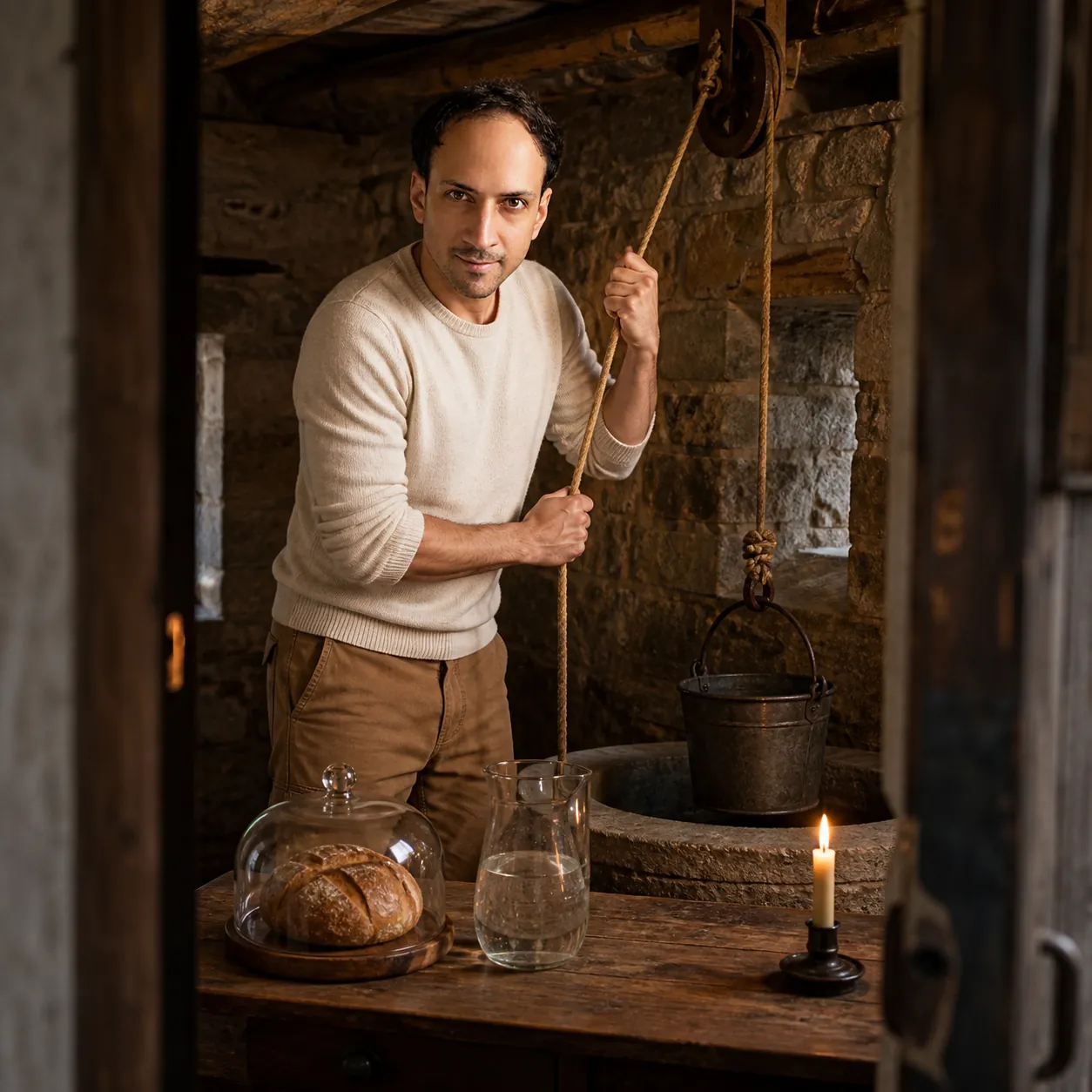
The Empty Hour: Stone Well-House — AI Portrait Prompt
صورةAI Portraits

Turn your own photo into a gallery-grade tableau portrait in a stone well-house, its bucket hanging dry above the shaft. Keeps your face unchanged.

من نص البرومبت

Use the attached reference photo as the identity reference: keep the same face, skin tone, hair and features as the person in that photo, without beautifying, aging or altering them. Create a square 1:1 museum-catalog frame with a strong first read and a slower second read at exactly 2880x2880 pixels. Location: a stone well-house, its bucket hanging dry above the shaft. Show the subject in a heavy cream pullover with pushed-up sleeves and duck-cloth trousers, testing the well rope's knot with one firm pull. Use this advanced image-making device as the core logic: a whole round loaf sealed behind clear glass while an open water carafe stands beside it, half poured and beaded turns the act of waiting into a structure the room can hold. Explore how a room can carry a refusal so the person does not have to; direct expression and posture toward composed anticipation, never melodrama or ad-like confidence. Frame through the nearest doorway at a respectful distance, foreground edges soft but never covering their face or hands. Make the composition hold clean empty space where the meal will later be. Render it as gallery-grade tableau realism built from lawful physical timers, warm restrained styling, accurate shadow behavior, and patient large-format photographic clarity, using a single candle flame supported by dim, honest ambient fill and a palette of chalk, dark tea brown, and a thread of copper. Photorealistic: this must read as a real photograph from a physical camera, never an illustration, painting, or 3D render. Resolve real surface detail: visible weave in cloth, fine scratches on metal, and the faint unevenness of painted walls. Keep one identity-locked person, credible hands and fingers, natural fabric, and coherent scale, contact, reflections, shadows, airflow, deformation, and materials. Background people only when essential, always secondary and clearly different. Avoid melting surrealist clocks, glowing countdown numerals, lavish feast spreads, anguished hungry expressions, and levitating food. No text, labels, logos, signatures, watermarks, random symbols, plastic skin, excessive bloom, or glossy AI finish.
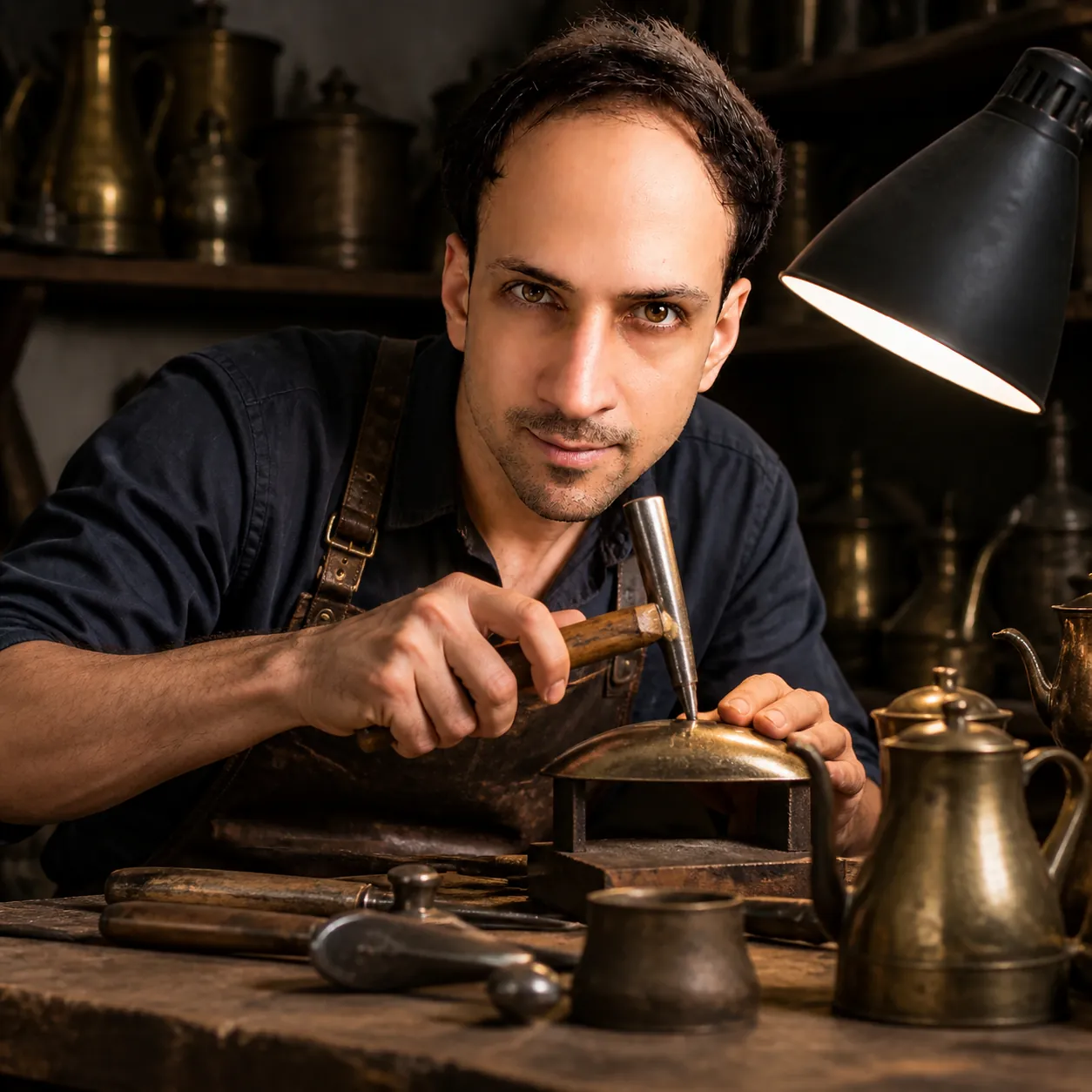
Honed Attention: Tinsmith's Alcove — AI Portrait Prompt
صورةAI Portraits

Turn your own photo into a precision-craft reportage portrait in a tinsmith's alcove stacked with brass coffee pots awaiting repair. Keeps your face unchanged.

من نص البرومبت

Use the attached reference photo as the identity reference: keep the same face, skin tone, hair and features as the person in that photo, without beautifying, aging or altering them. Create a square 1:1 museum-catalog frame with a strong first read and a slower second read at exactly 2880x2880 pixels. Location: a tinsmith's alcove stacked with brass coffee pots awaiting repair. Show the subject in a worn leather half-apron over a rolled-sleeve indigo shirt, chasing a dent outward with taps too light to hear. Treat this mechanism as the frame’s governing rule: a plane iron whose hand-honed micro-bevel has become a true mirror, holding their reflected eye inside a band two millimeters wide reads out the whole difference between nearly true and finally true. Explore why attention behaves like an instrument that drifts unless it is regularly trued; direct expression and posture toward steady devotion, never melodrama or ad-like confidence. Frame across the benchtop at hand height so the calibration and their eyes share one focal plane. Make the composition surround one micron-scale event with generous, calm negative space. Render it as precision-craft reportage built from working sharpening apparatus, honest wear on every surface, controlled single-source lighting, and patient human-scale observation, using a single shaded bench lamp pooling light tightly around the work and a palette of slate grey, unbleached linen, and a single brass glint. Photorealistic: this must read as a real photograph from a physical camera, never an illustration, painting, or 3D render. Resolve real surface detail: paper fibre visible at cut edges, plastic that shows mould lines, and paint thicker where a brush turned. Keep one identity-locked person, credible hands and fingers, natural fabric, and coherent scale, contact, reflections, shadows, airflow, deformation, and materials. Background people only when essential, always secondary and clearly different. Avoid impossible mirror gleam, floating measurement holograms, oversized cartoon calipers, and artfully scattered screws. No text, labels, logos, signatures, watermarks, random symbols, plastic skin, excessive bloom, or glossy AI finish.
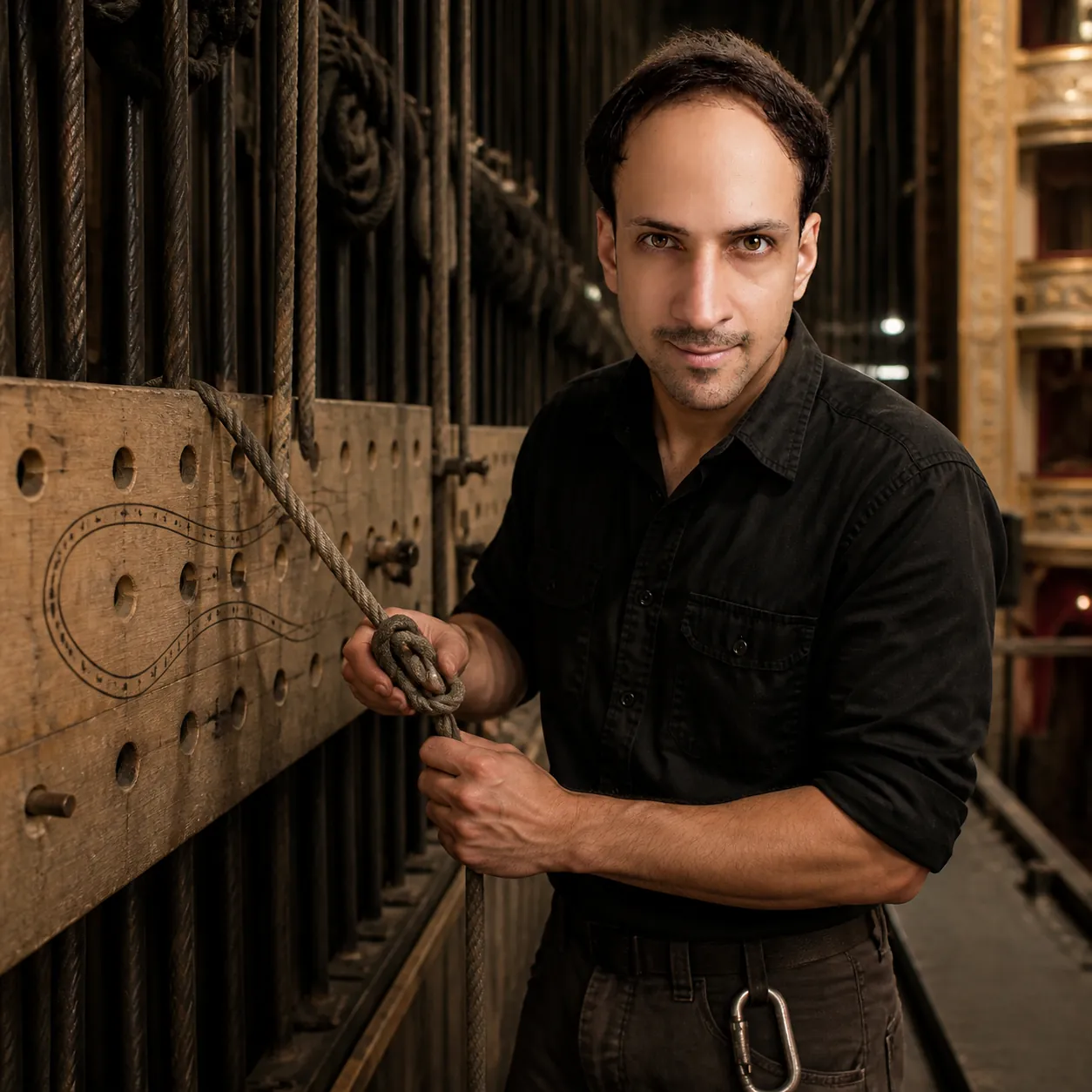
Slow Infrastructure: Fly Gallery of an Old Theater — AI Portrait Prompt
صورةAI Portraits

Turn your own photo into a craft-documentary portrait in the fly gallery of an old theater, ropes belayed along one rail. Keeps your face unchanged.

من نص البرومبت

Use the attached reference photo as the identity reference: keep the same face, skin tone, hair and features as the person in that photo, without beautifying, aging or altering them. Create a square 1:1 museum-catalog frame with a strong first read and a slower second read at exactly 2880x2880 pixels. Location: the fly gallery of an old theater, ropes belayed along one rail. Show the subject in a black stagehand's shirt tucked into worn canvas work trousers, adding one figure-eight turn to a belayed line. Make one rigorous physical condition the conceptual engine: a harness board where a laced cable bundle now sweeps around two empty peg holes, its old route still inked beneath turns repeated effort into a physical route the hand can find again. Explore what a teacher's scaffolding is for once the structure holds alone; direct expression and posture toward unhurried conviction, never melodrama or ad-like confidence. Use an eye-level 55mm perspective that keeps their hands and the work equally credible. Make the composition rank focus by effort, the hardest-won inch rendered sharpest of all. Render it as craft-documentary portraiture built from real fiber mechanics, patient workshop realism, archival material fidelity, and emotionally restrained editorial composition, using two bounced practicals giving gentle modeling without a single hard specular and a palette of bleached cotton, iron shadow, and a restrained saffron accent. Photorealistic: this must read as a real photograph from a physical camera, never an illustration, painting, or 3D render. Resolve real surface detail: the difference between a wiped surface and a clean one, faint tide marks on ceramic, and metal dulled unevenly by touch. Keep one identity-locked person, credible hands and fingers, natural fabric, and coherent scale, contact, reflections, shadows, airflow, deformation, and materials. Background people only when essential, always secondary and clearly different. Avoid glowing neural filaments, brain-shaped tangles, circuit-board overlays, holographic wiring diagrams, and sparks jumping between cables. No text, labels, logos, signatures, watermarks, random symbols, plastic skin, excessive bloom, or glossy AI finish.
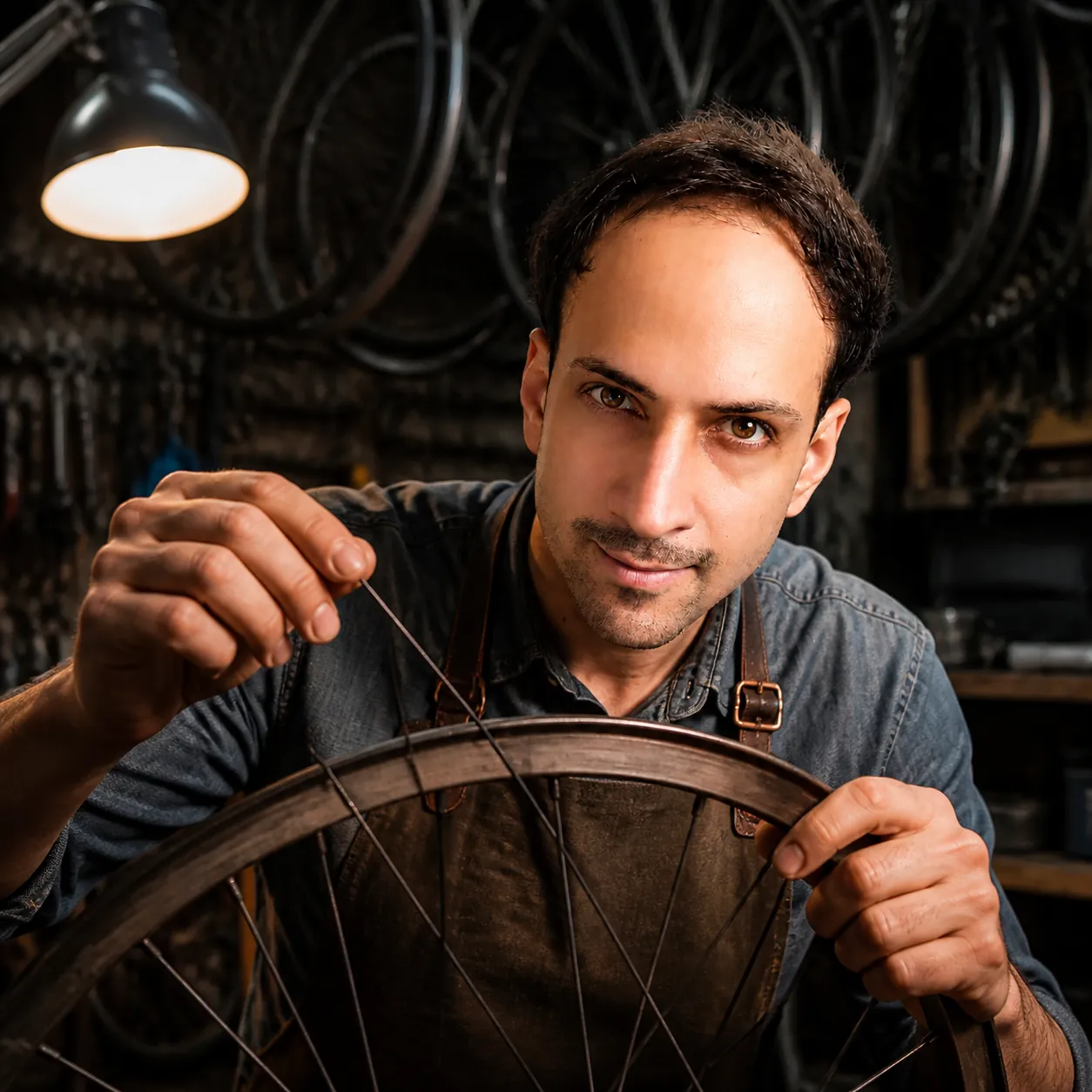
Maintained Edge: Back Room of a Bicycle Repair Shop — AI Portrait Prompt
صورةAI Portraits

Turn your own photo into a close-quarters craft portrait in the back room of a bicycle repair shop, wheels hung overhead. Keeps your face unchanged.

من نص البرومبت

Use the attached reference photo as the identity reference: keep the same face, skin tone, hair and features as the person in that photo, without beautifying, aging or altering them. Create a square 1:1 museum-catalog frame with a strong first read and a slower second read at exactly 2880x2880 pixels. Location: the back room of a bicycle repair shop, wheels hung overhead. Show the subject in a waxed canvas apron over a washed-out denim shirt, plucking one spoke and listening with their head tilted. The impossible-looking event must obey this clear system: a chisel edge turned under one lamp until its last glint vanishes, proven sharp by being too thin to reflect light turns patient maintenance into evidence the naked eye can verify at a glance. Explore why evidence made by hand persuades more deeply than any printed certificate; direct expression and posture toward modest mastery, never melodrama or ad-like confidence. Use a 100mm macro-to-portrait hybrid: the tool's critical edge sharp near the lens and their attentive face readable beyond it. Make the composition align their eye line exactly with the tool's working edge. Render it as close-quarters craft portraiture built from real hand-calibration technique, macro-documentary realism, oiled-steel and stone materiality, and unhurried editorial restraint, using one low raking lamp that turns every scratch into legible topography and a palette of dark walnut, dull iron, and one russet leather band. Photorealistic: this must read as a real photograph from a physical camera, never an illustration, painting, or 3D render. Resolve real surface detail: brass darkened in the recesses and bright where thumbs land, and lacquer crazed rather than perfect. Keep one identity-locked person, credible hands and fingers, natural fabric, and coherent scale, contact, reflections, shadows, airflow, deformation, and materials. Background people only when essential, always secondary and clearly different. Avoid sparking grinder wheels, glowing forge steel, sawdust clouds, and staged rustic tool walls. No text, labels, logos, signatures, watermarks, random symbols, plastic skin, excessive bloom, or glossy AI finish.
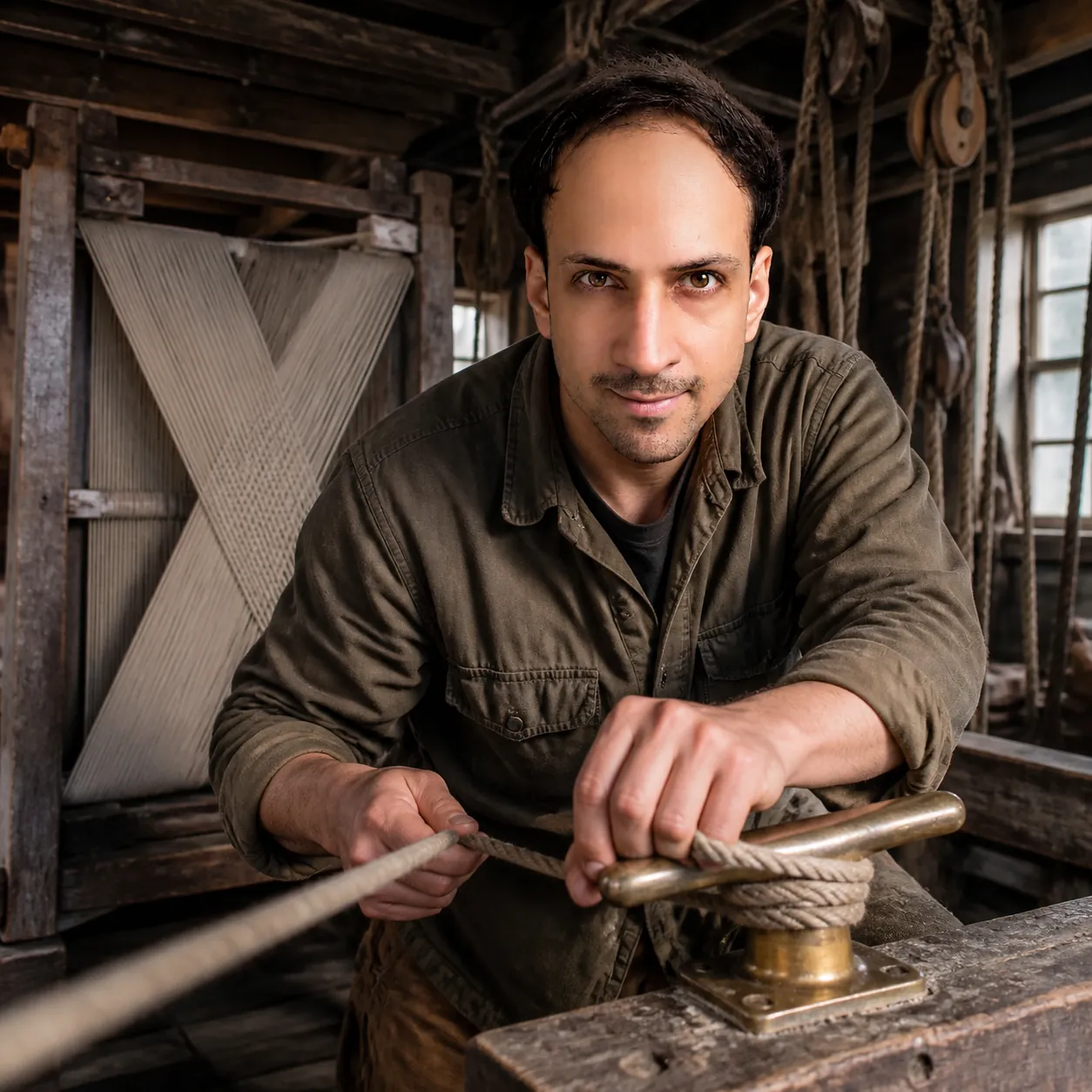
Patient Wiring: Sail-Rigging Loft Strung — AI Portrait Prompt
صورةAI Portraits

Turn your own photo into a craft-documentary portrait in a sail-rigging loft strung with low beams and hanging tackle. Keeps your face unchanged.

من نص البرومبت

Use the attached reference photo as the identity reference: keep the same face, skin tone, hair and features as the person in that photo, without beautifying, aging or altering them. Create a square 1:1 museum-catalog frame with a strong first read and a slower second read at exactly 2880x2880 pixels. Location: a sail-rigging loft strung with low beams and hanging tackle. Show the subject in a heavy canvas work shirt over broken-in carpenter trousers, easing a line's tension with one turn around a cleat. The impossible-looking event must obey this clear system: a warping board wound with a hundred parallel threads whose figure-eight cross keeps every thread's order through any later tangle turns repeated effort into a physical route the hand can find again. Explore why change made slowly under load outlasts change made all at once; direct expression and posture toward workmanlike reverence, never melodrama or ad-like confidence. Use a 90mm close-portrait framing with one taut line entering the frame in sharp foreground focus. Make the composition show where the old path ends and the new begins. Render it as craft-documentary portraiture built from real fiber mechanics, patient workshop realism, archival material fidelity, and emotionally restrained editorial composition, using long window light raking across fiber so every twist reads and a palette of rope-tar black, pale dust grey, and warm ochre. Photorealistic: this must read as a real photograph from a physical camera, never an illustration, painting, or 3D render. Resolve real surface detail: brass darkened in the recesses and bright where thumbs land, and lacquer crazed rather than perfect. Keep one identity-locked person, credible hands and fingers, natural fabric, and coherent scale, contact, reflections, shadows, airflow, deformation, and materials. Background people only when essential, always secondary and clearly different. Avoid glowing neural filaments, brain-shaped tangles, circuit-board overlays, holographic wiring diagrams, and sparks jumping between cables. No text, labels, logos, signatures, watermarks, random symbols, plastic skin, excessive bloom, or glossy AI finish.
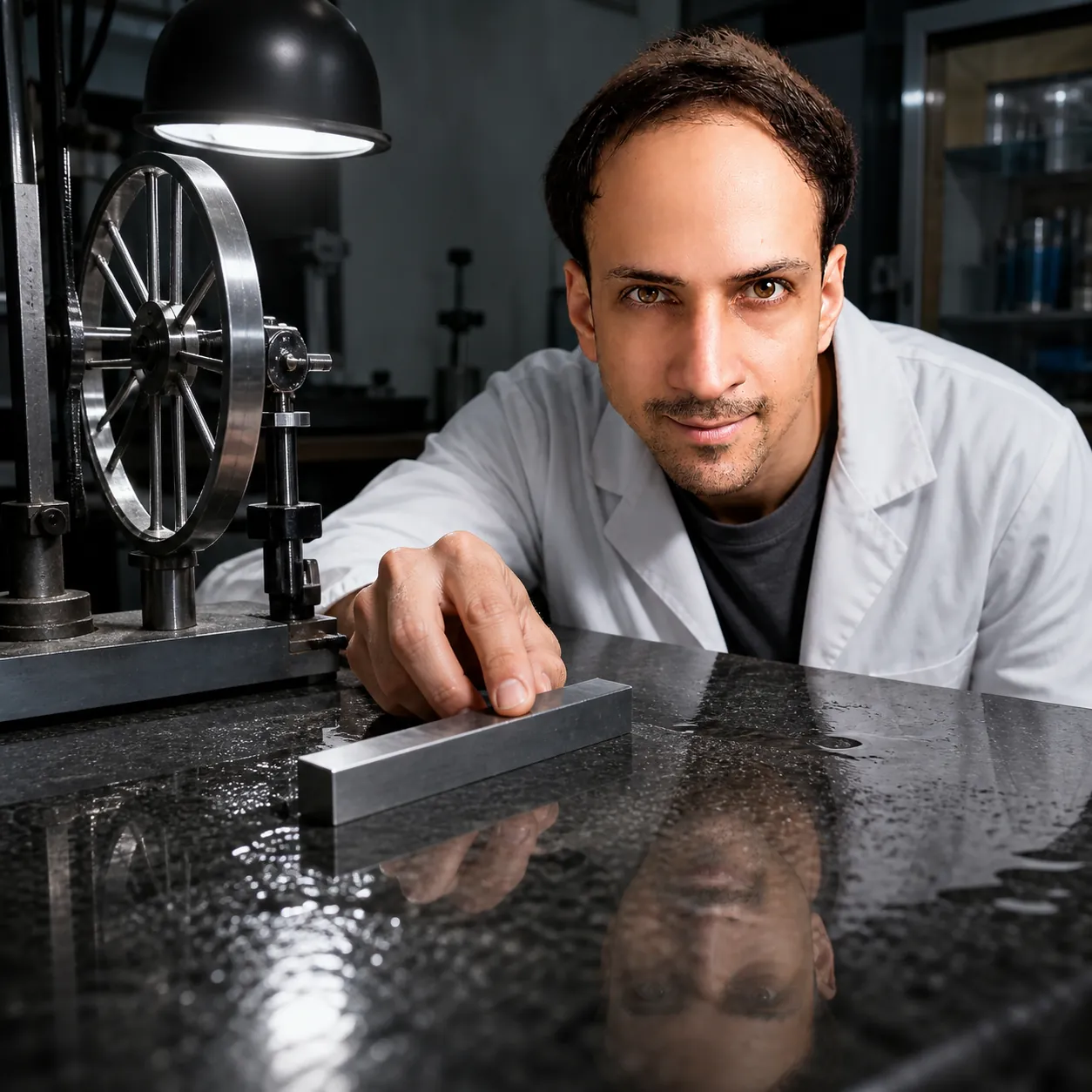
The Zeroing: Temperature-Held Metrology Room — AI Portrait Prompt
صورةAI Portraits

Turn your own photo into a workshop still-life portrait in a temperature-held metrology room built around one granite surface plate. Keeps your face unchanged.

من نص البرومبت

Use the attached reference photo as the identity reference: keep the same face, skin tone, hair and features as the person in that photo, without beautifying, aging or altering them. Create a square 1:1 museum-catalog frame with a strong first read and a slower second read at exactly 2880x2880 pixels. Location: a temperature-held metrology room built around one granite surface plate. Show the subject in a white inspection coat over a collarless slate shirt, sliding a gauge block across the granite's oiled face. The impossible-looking event must obey this clear system: a wheel in a truing stand whose rim wobble closes to paper thickness as each spoke is tuned by plucked pitch reads out the whole difference between nearly true and finally true. Explore whether precision is a property of tools or of the attention holding them; direct expression and posture toward settled exactness, never melodrama or ad-like confidence. Use a 100mm macro-to-portrait hybrid: the tool's critical edge sharp near the lens and their attentive face readable beyond it. Make the composition let one straight worked line lead diagonally toward their eyes. Render it as workshop still-life portraiture combining truthful tool physics, visible micro-texture on steel and skin, disciplined shadow work, and museum-label sobriety, using a single shaded bench lamp pooling light tightly around the work and a palette of ash grey, waterstone slate, and one cold mirror highlight. Photorealistic: this must read as a real photograph from a physical camera, never an illustration, painting, or 3D render. Resolve real surface detail: condensation beading at true size, liquid meniscus curving against glass, and wet surfaces darker than dry ones. Keep one identity-locked person, credible hands and fingers, natural fabric, and coherent scale, contact, reflections, shadows, airflow, deformation, and materials. Background people only when essential, always secondary and clearly different. Avoid impossible mirror gleam, floating measurement holograms, oversized cartoon calipers, and artfully scattered screws. No text, labels, logos, signatures, watermarks, random symbols, plastic skin, excessive bloom, or glossy AI finish.
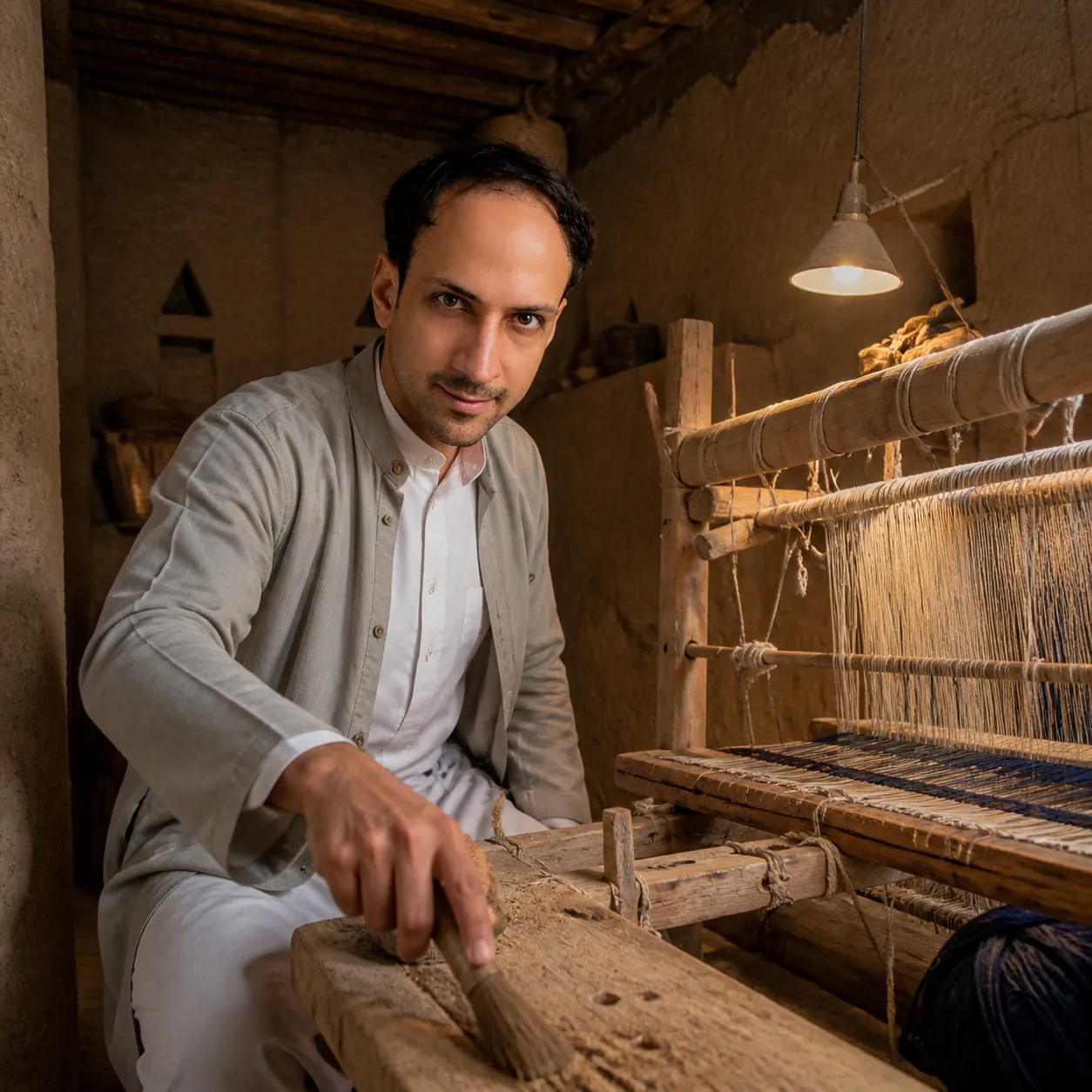
Rewired by Hand: Mudbrick Storeroom — AI Portrait Prompt
صورةAI Portraits

Turn your own photo into a conceptual craft portrait in a mudbrick storeroom in Diriyah restored with palm-trunk ceiling beams. Keeps your face unchanged.

من نص البرومبت

Use the attached reference photo as the identity reference: keep the same face, skin tone, hair and features as the person in that photo, without beautifying, aging or altering them. Create a square 1:1 museum-catalog frame with a strong first read and a slower second read at exactly 2880x2880 pixels. Location: a mudbrick storeroom in Diriyah restored with palm-trunk ceiling beams. Show the subject in a white summer traditional Gulf outfit under a light stone-grey overshirt, brushing straw dust from a low wooden bench. Treat this mechanism as the frame’s governing rule: a small floor loom mid-rethread, every new warp thread knotted end-to-end onto the cut stub of the thread it replaces makes the newest work instantly legible against everything long since settled. Explore why new ability must be physically routed before it can be casually used; direct expression and posture toward settled focus, never melodrama or ad-like confidence. Use a composed 35mm width that places them beside the work, never looming over it. Make the composition hold their hands and the tensioned work in one unbroken diagonal. Render it as conceptual craft portraiture uniting working textile apparatus, believable tension physics, quiet contemporary art direction, and human-centered documentary realism, using one warm work lamp pooled on the task with soft surrounding dusk and a palette of hemp beige, gunmetal grey, and a single indigo thread. Photorealistic: this must read as a real photograph from a physical camera, never an illustration, painting, or 3D render. Resolve real surface detail: paper fibre visible at cut edges, plastic that shows mould lines, and paint thicker where a brush turned. Keep one identity-locked person, credible hands and fingers, natural fabric, and coherent scale, contact, reflections, shadows, airflow, deformation, and materials. Background people only when essential, always secondary and clearly different. Avoid server racks, blinking LED bundles, impossible floating threads, motivational-poster loom staging, and pristine hands untouched by work. No text, labels, logos, signatures, watermarks, random symbols, plastic skin, excessive bloom, or glossy AI finish.
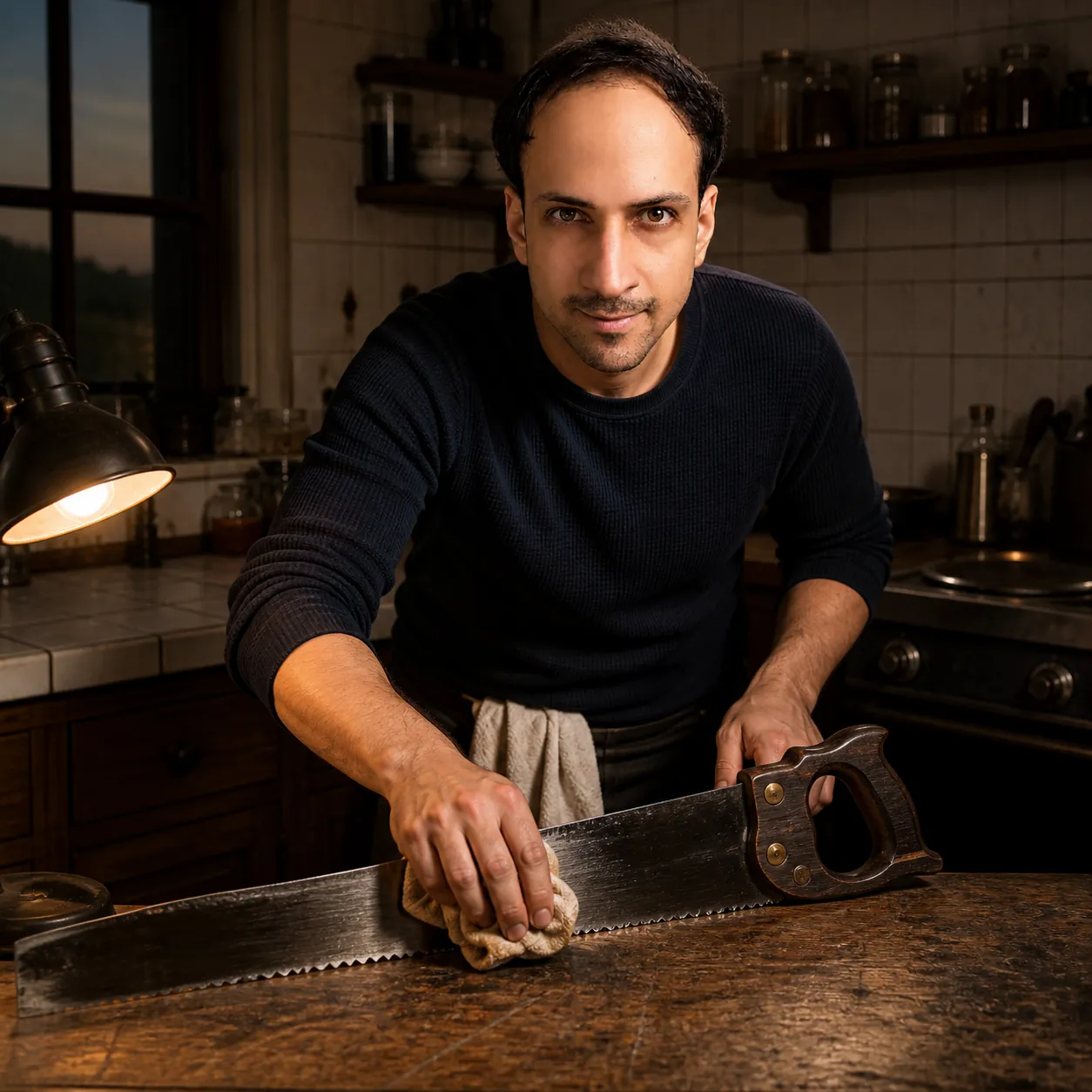
Slow Inheritance: Small Tiled Kitchen — AI Portrait Prompt
صورةAI Portraits

Turn your own photo into a heritage-craft documentary portrait in a small tiled kitchen before dawn, one burner ring still cooling. Keeps your face unchanged.

من نص البرومبت

Use the attached reference photo as the identity reference: keep the same face, skin tone, hair and features as the person in that photo, without beautifying, aging or altering them. Create a square 1:1 museum-catalog frame with a strong first read and a slower second read at exactly 2880x2880 pixels. Location: a small tiled kitchen before dawn, one burner ring still cooling. Show the subject in a navy waffle-knit shirt with a plain towel tucked at the waist, wiping a thin sheen of oil across black iron. Treat this mechanism as the frame’s governing rule: a hand saw whose plate has narrowed a full inch under a century of sharpenings, its tooth line still straight and counted turns a hundred years of use into polish instead of ruin. Explore what disposable things forfeit that a kept tool quietly retains; direct expression and posture toward attentive stillness, never melodrama or ad-like confidence. Frame level with the benchtop so the tool's brightest wear and their steady gaze share focus. Make the composition give the brightest polish the smallest area of the frame. Render it as heritage-craft documentary portraiture built from truthful tool wear, oiled-wood and carbon-steel materiality, museum-conservation lighting discipline, and unhurried editorial composition, using a single warm workbench lamp pooled tight, the room falling to umber and a palette of bone-white stone, deep hickory, and a thread of amber. Photorealistic: this must read as a real photograph from a physical camera, never an illustration, painting, or 3D render. Resolve real surface detail: grout darker than tile, sealant slightly yellowed, and every joint showing a real tolerance gap. Keep one identity-locked person, credible hands and fingers, natural fabric, and coherent scale, contact, reflections, shadows, airflow, deformation, and materials. Background people only when essential, always secondary and clearly different. Avoid rusty antique-shop clutter, sepia nostalgia filters, cobwebbed barn walls, staged distressed props, and heroic blacksmith sparks. No text, labels, logos, signatures, watermarks, random symbols, plastic skin, excessive bloom, or glossy AI finish.
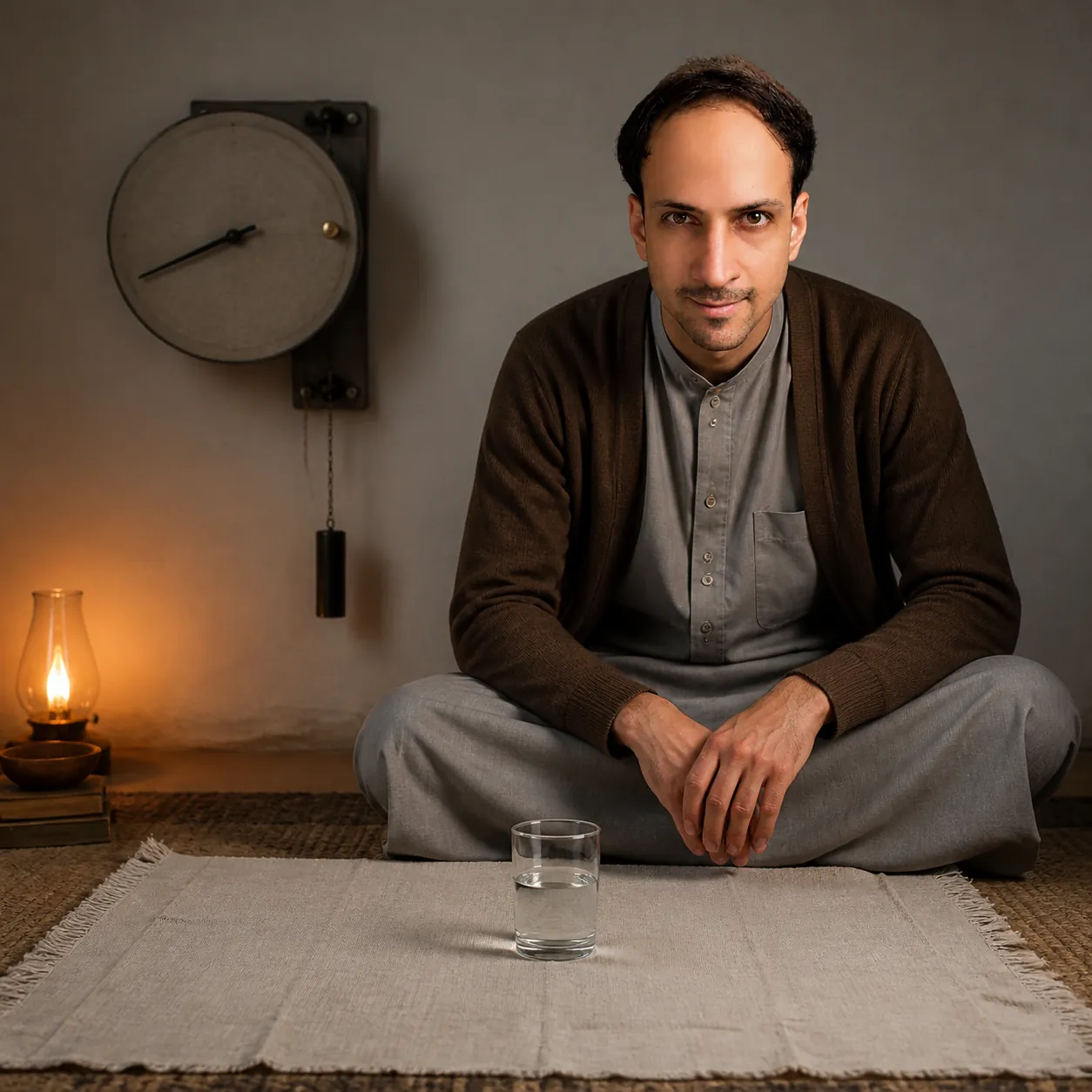
Kept Appetite: Plain Sitting Room — AI Portrait Prompt
صورةAI Portraits

Turn your own photo into a conceptual patience portrait in a plain sitting room where a floor cloth lies spread and empty. Keeps your face unchanged.

من نص البرومبت

Use the attached reference photo as the identity reference: keep the same face, skin tone, hair and features as the person in that photo, without beautifying, aging or altering them. Create a square 1:1 museum-catalog frame with a strong first read and a slower second read at exactly 2880x2880 pixels. Location: a plain sitting room where a floor cloth lies spread and empty. Show the subject in a dove-grey winter traditional Gulf outfit under a plain brown cardigan, placing a single water glass at the cloth's center. The impossible-looking event must obey this clear system: a weight-driven wall clock whose numberless dial carries one brass pin, the hour hand still a span short of it lets the turn from appetite to steadiness be read like plain machinery. Explore what a threshold looks like in the flat hours before it arrives; direct expression and posture toward unhurried resolve, never melodrama or ad-like confidence. Use an 85mm near-portrait distance, the nearest staged detail sharp low in frame while their expression carries the far plane. Make the composition hold clean empty space where the meal will later be. Render it as conceptual patience portraiture combining believable household apparatus, precise horological detail, soft archival tonality, and emotionally intelligent observational framing, using cool dusk ambience with one warm bulb burning low nearby and a palette of unbleached linen, slate grey, and a single amber glow. Photorealistic: this must read as a real photograph from a physical camera, never an illustration, painting, or 3D render. Resolve real surface detail: skin that reddens slightly under pressure, nail beds with honest colour, and knuckle creases that fold rather than blur. Keep one identity-locked person, credible hands and fingers, natural fabric, and coherent scale, contact, reflections, shadows, airflow, deformation, and materials. Background people only when essential, always secondary and clearly different. Avoid tape-measure diet props, empty-fridge gloom, ringing alarm clocks, glossy food-commercial styling, and gravity-defying hourglass sand. No text, labels, logos, signatures, watermarks, random symbols, plastic skin, excessive bloom, or glossy AI finish.
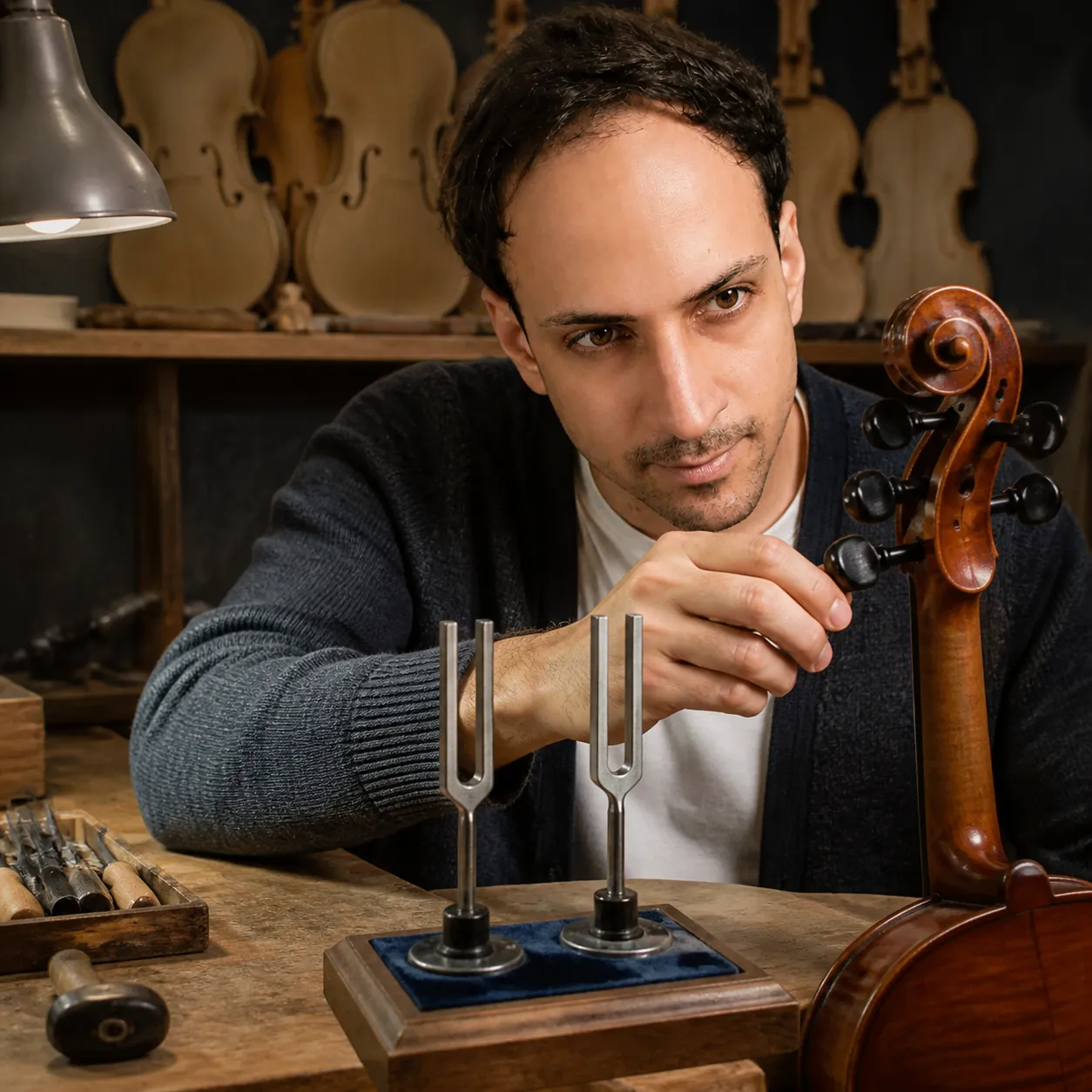
Quiet Tolerance: Violin Maker's Bench — AI Portrait Prompt
صورةAI Portraits

Turn your own photo into a close-quarters craft portrait in a violin maker's bench beneath a row of unfinished instruments. Keeps your face unchanged.

من نص البرومبت

Use the attached reference photo as the identity reference: keep the same face, skin tone, hair and features as the person in that photo, without beautifying, aging or altering them. Create a square 1:1 museum-catalog frame with a strong first read and a slower second read at exactly 2880x2880 pixels. Location: a violin maker's bench beneath a row of unfinished instruments. Show the subject in a fine-knit charcoal cardigan over a soft white shirt, turning a tuning peg a breath at a time. Treat this mechanism as the frame’s governing rule: a pair of steel tuning forks whose slow shared throb stretches toward silence with every measured stroke of their file turns patient maintenance into evidence the naked eye can verify at a glance. Explore whether a mind settles because the hands do, or the other way around; direct expression and posture toward quiet rigor, never melodrama or ad-like confidence. Frame across the benchtop at hand height so the calibration and their eyes share one focal plane. Make the composition reserve peak sharpness for the smallest point under correction. Render it as close-quarters craft portraiture built from real hand-calibration technique, macro-documentary realism, oiled-steel and stone materiality, and unhurried editorial restraint, using a single shaded bench lamp pooling light tightly around the work and a palette of gunmetal, chalk white, and one stripe of Prussian blue. Photorealistic: this must read as a real photograph from a physical camera, never an illustration, painting, or 3D render. Resolve real surface detail: grout darker than tile, sealant slightly yellowed, and every joint showing a real tolerance gap. Keep one identity-locked person, credible hands and fingers, natural fabric, and coherent scale, contact, reflections, shadows, airflow, deformation, and materials. Background people only when essential, always secondary and clearly different. Avoid sparking grinder wheels, glowing forge steel, sawdust clouds, and staged rustic tool walls. No text, labels, logos, signatures, watermarks, random symbols, plastic skin, excessive bloom, or glossy AI finish.
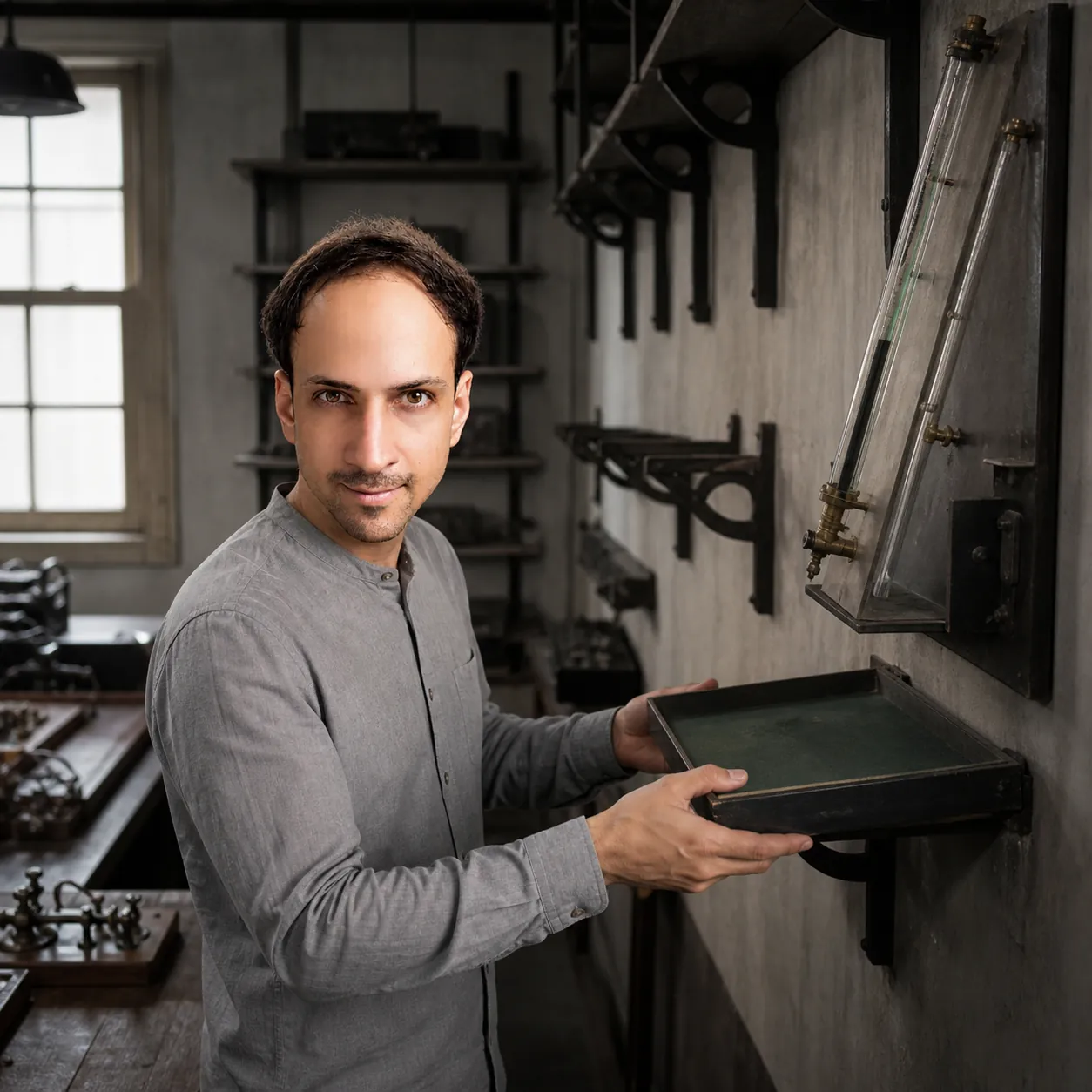
House Telegraph: Small Dispatch Room — AI Portrait Prompt
صورةAI Portraits

Turn your own photo into a conceptual house-systems portrait in a small dispatch room lined with wall brackets and cleared shelves. Keeps your face unchanged.

من نص البرومبت

Use the attached reference photo as the identity reference: keep the same face, skin tone, hair and features as the person in that photo, without beautifying, aging or altering them. Create a square 1:1 museum-catalog frame with a strong first read and a slower second read at exactly 2880x2880 pixels. Location: a small dispatch room lined with wall brackets and cleared shelves. Show the subject in a soft grey collarless shirt with sleeves buttoned at the wrist, lowering a felt-lined tray onto a wall bracket. Build the artwork around this material rule: an inclined oil manometer whose meniscus slides a hand's width for a pressure no palm could ever feel holds a slow shift still long enough for judgment to consult it. Explore how much of good judgment is simply arranging to be told early; direct expression and posture toward quiet stewardship, never melodrama or ad-like confidence. Frame from the far end of the room so the signal's whole route stays visible. Make the composition leave honest vertical distance between the sensing point and their hands. Render it as conceptual house-systems photography built from functioning telegraph hardware, accurate liquid-column behavior, restrained interior direction, and editorial portrait fidelity, using flat overcast illumination that keeps every glass column readable without glare and a palette of lead grey, unpolished tin, and one stripe of verdigris. Photorealistic: this must read as a real photograph from a physical camera, never an illustration, painting, or 3D render. Resolve real surface detail: dust settled where nobody wipes, fingerprint haze on glass, and edges rubbed pale by handling. Keep one identity-locked person, credible hands and fingers, natural fabric, and coherent scale, contact, reflections, shadows, airflow, deformation, and materials. Background people only when essential, always secondary and clearly different. Avoid brass-gear collage backdrops, cartoon telegraph keys, neon signal beams, mercury spills, and floating typographic message overlays. No text, labels, logos, signatures, watermarks, random symbols, plastic skin, excessive bloom, or glossy AI finish.

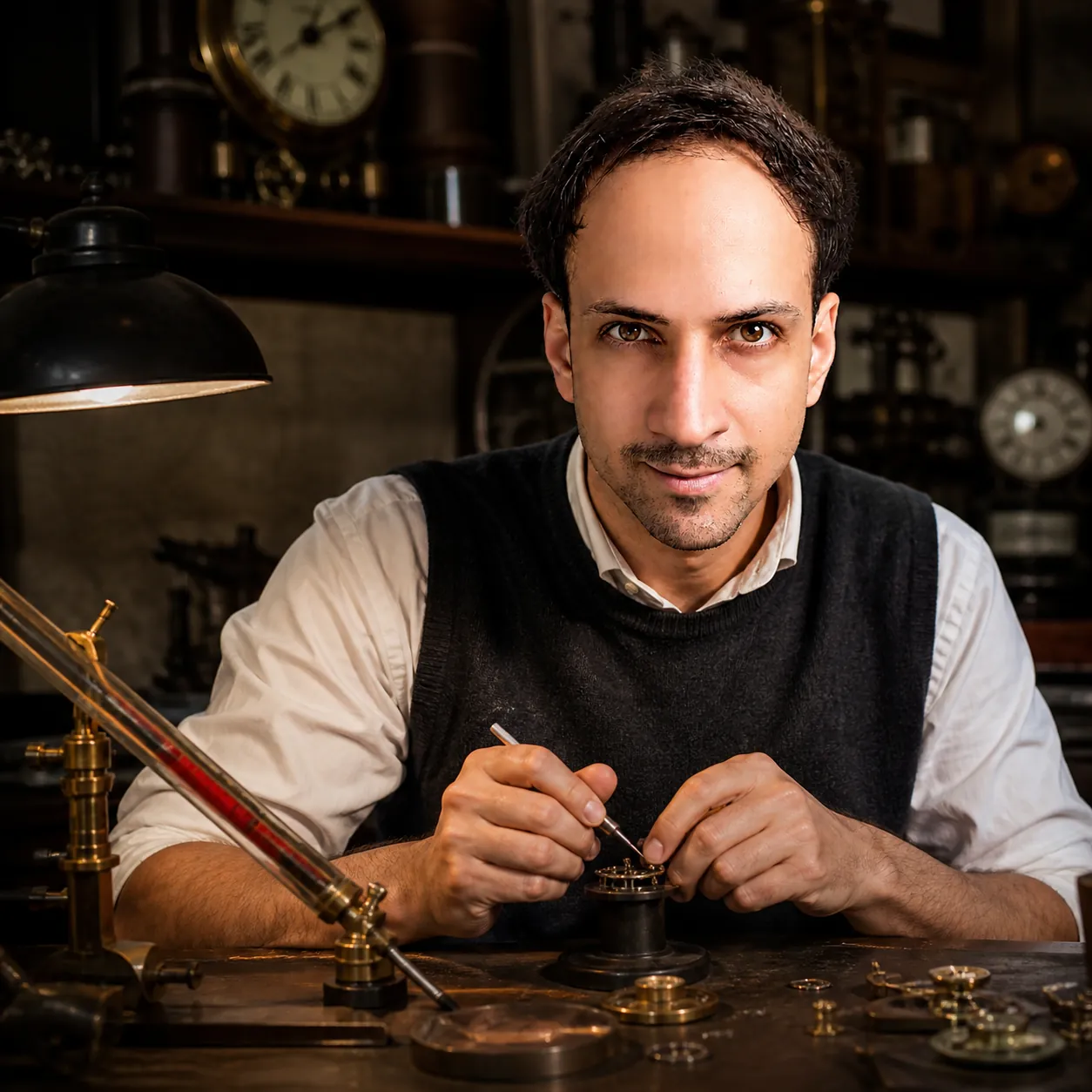
House Telegraph: Clockmaker's Repair Room — AI Portrait Prompt
صورةAI Portraits

Turn your own photo into a gallery-grade documentary imagery portrait in a clockmaker's repair room with the bench light drawn low. Keeps your face unchanged.

من نص البرومبت

Use the attached reference photo as the identity reference: keep the same face, skin tone, hair and features as the person in that photo, without beautifying, aging or altering them. Create a square 1:1 museum-catalog frame with a strong first read and a slower second read at exactly 2880x2880 pixels. Location: a clockmaker's repair room with the bench light drawn low. Show the subject in a charcoal knit vest over one rolled white shirtsleeve, drawing the bench light down to a hand's height. Make one rigorous physical condition the conceptual engine: an inclined oil manometer whose meniscus slides a hand's width for a pressure no palm could ever feel turns a private condition into something two distant rooms can read together. Explore how much of good judgment is simply arranging to be told early; direct expression and posture toward steady deliberation, never melodrama or ad-like confidence. Use an eye-level 50mm viewpoint with natural perspective and one plane of critical focus. Make the composition follow the signal's path from its source to their eyes. Render it as gallery-grade documentary imagery built from real pneumatic linkages, believable wear on brass, low-drama interior lighting, and patient human presence, using a low bench lamp grazing brass while the room behind stays dim and a palette of warm plaster, blackened iron, and a narrow signal red. Photorealistic: this must read as a real photograph from a physical camera, never an illustration, painting, or 3D render. Resolve real surface detail: fine lint on dark fabric, water spotting on steel, and the soft rounding of edges that have been used for years. Keep one identity-locked person, credible hands and fingers, natural fabric, and coherent scale, contact, reflections, shadows, airflow, deformation, and materials. Background people only when essential, always secondary and clearly different. Avoid steampunk goggles, glowing holograms, dripping food props, anatomical organ diagrams, and legible dial lettering anywhere. No text, labels, logos, signatures, watermarks, random symbols, plastic skin, excessive bloom, or glossy AI finish.
