تخطَّ إلى المحتوى

برومبتات الصور

برومبتات لمولدات الصور: بورتريهات وفن وتصوير.

تم العثور على 4209
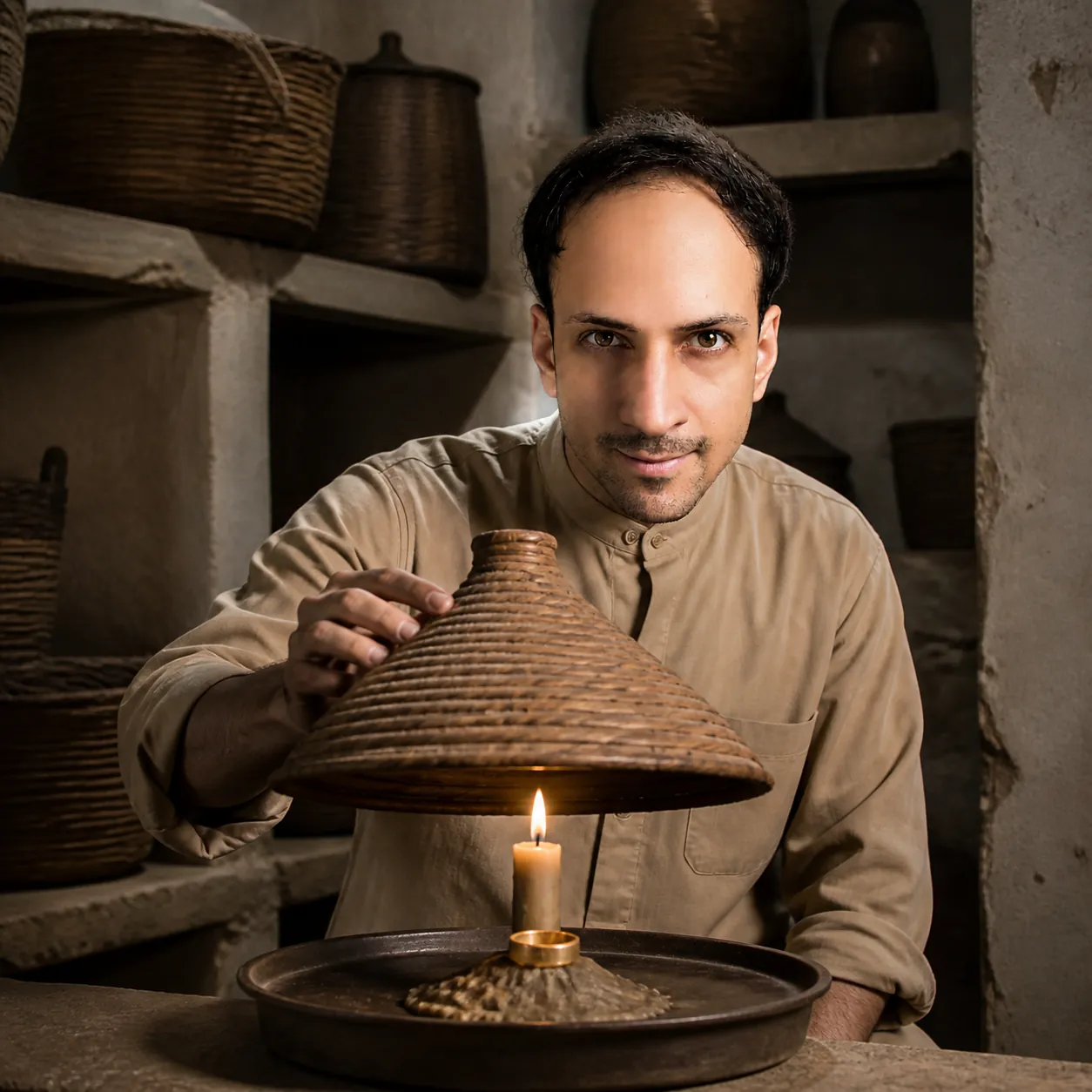
Lawful Delay: Cool Mud-Brick Storeroom — AI Portrait Prompt
صورةAI Portraits

Turn your own photo into a restrained interior portrait in a cool mud-brick storeroom, palm baskets ranged on high shelves. Keeps your face unchanged.

من نص البرومبت

Use the attached reference photo as the identity reference: keep the same face, skin tone, hair and features as the person in that photo, without beautifying, aging or altering them. Create a square 1:1 museum-catalog frame with a strong first read and a slower second read at exactly 2880x2880 pixels. Location: a cool mud-brick storeroom, palm baskets ranged on high shelves. Show the subject in a sand-beige traditional Gulf outfit with cuffs folded clear of their hands, lifting a basket lid a finger's width, then lowering it. Make one rigorous physical condition the conceptual engine: a tall taper with one brass ring set in its wax that will drop onto the tray at the agreed hour turns the act of waiting into a structure the room can hold. Explore where discipline stops being a mood and becomes a piece of furniture; direct expression and posture toward settled patience, never melodrama or ad-like confidence. Use an eye-level 50mm viewpoint with the waiting object placed between the lens and their steady gaze. Make the composition keep every promise of later sharp and every distraction soft. Render it as restrained interior photography combining honest mechanical staging, tactile everyday objects, disciplined negative space, and documentary-grade skin and fabric rendering, using a single candle flame supported by dim, honest ambient fill and a palette of plaster white, smoked oak, and a measure of honey. Photorealistic: this must read as a real photograph from a physical camera, never an illustration, painting, or 3D render. Resolve real surface detail: fine grit in the texture of concrete, efflorescence at damp edges, and hairline cracks that follow stress. Keep one identity-locked person, credible hands and fingers, natural fabric, and coherent scale, contact, reflections, shadows, airflow, deformation, and materials. Background people only when essential, always secondary and clearly different. Avoid melting surrealist clocks, glowing countdown numerals, lavish feast spreads, anguished hungry expressions, and levitating food. No text, labels, logos, signatures, watermarks, random symbols, plastic skin, excessive bloom, or glossy AI finish.
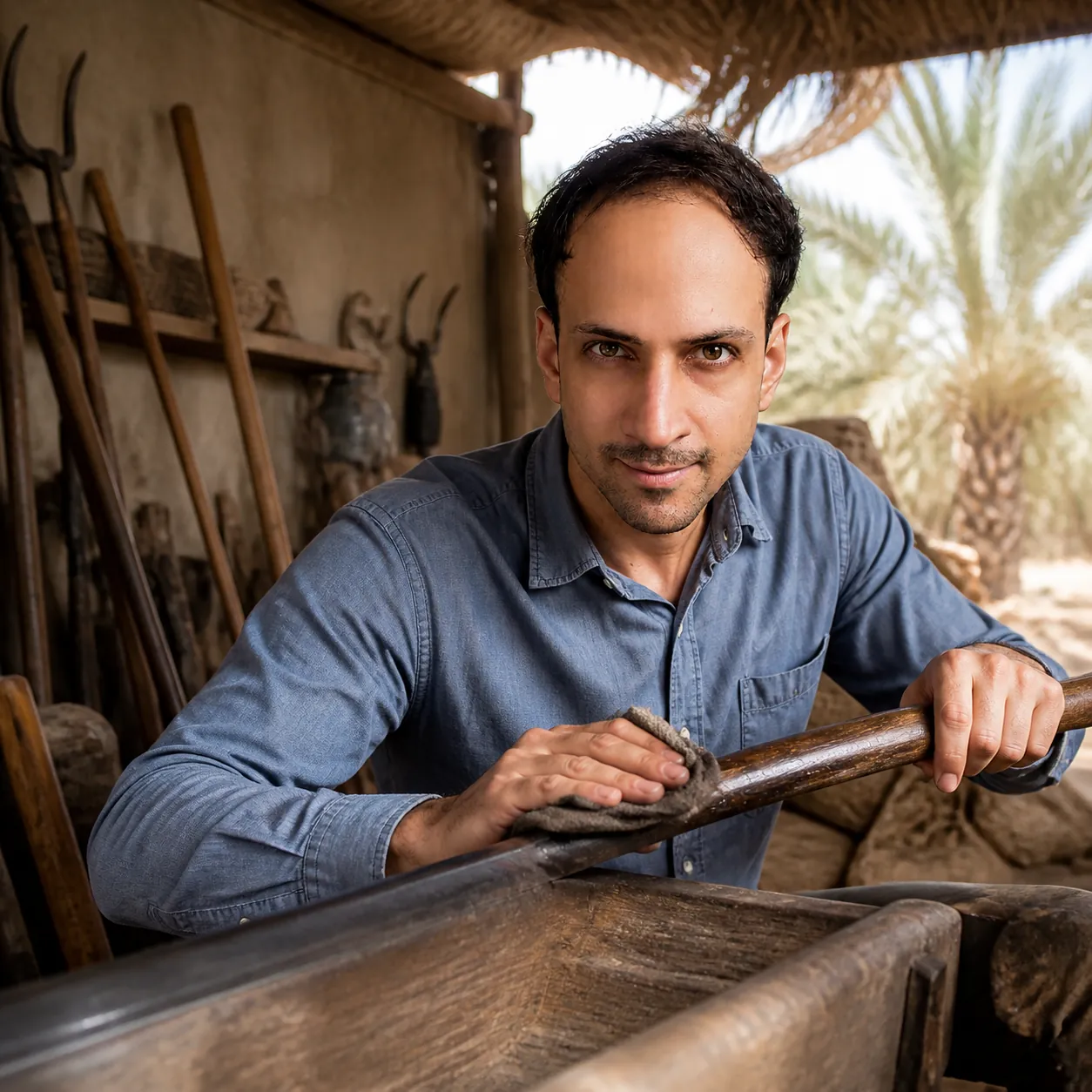
Ritual Maintenance: Palm-Frond-Shaded Implement Shed — AI Portrait Prompt
صورةAI Portraits

Turn your own photo into a portrait in a palm-frond-shaded implement shed at the working edge of a date farm. Keeps your face unchanged.

من نص البرومبت

Use the attached reference photo as the identity reference: keep the same face, skin tone, hair and features as the person in that photo, without beautifying, aging or altering them. Create a square 1:1 museum-catalog frame with a strong first read and a slower second read at exactly 2880x2880 pixels. Location: a palm-frond-shaded implement shed at the working edge of a date farm. Show the subject in a sun-faded chambray shirt buttoned to the wrist over cotton trousers, rubbing an oiled rag down a long wooden haft. Use this advanced image-making device as the core logic: a steel straightedge whose etched figures have been thumbed away to ghosts while its working edge still closes light-tight against glass turns a hundred years of use into polish instead of ruin. Explore whether care given to an object is spent or invested; direct expression and posture toward patient custodianship, never melodrama or ad-like confidence. Frame past the object in the extreme foreground, letting its most worn surface stay tangible without covering their face. Make the composition let repetition read as rhythm across the tool's wear. Render it as heritage-craft documentary portraiture built from truthful tool wear, oiled-wood and carbon-steel materiality, museum-conservation lighting discipline, and unhurried editorial composition, using north daylight through a dusty pane, contrast held gentle and true and a palette of worn steel, oiled walnut, and one line of brass. Photorealistic: this must read as a real photograph from a physical camera, never an illustration, painting, or 3D render. Resolve real surface detail: wood grain read at honest scale, matte and gloss clearly separated, and no surface uniformly clean. Keep one identity-locked person, credible hands and fingers, natural fabric, and coherent scale, contact, reflections, shadows, airflow, deformation, and materials. Background people only when essential, always secondary and clearly different. Avoid rusty antique-shop clutter, sepia nostalgia filters, cobwebbed barn walls, staged distressed props, and heroic blacksmith sparks. No text, labels, logos, signatures, watermarks, random symbols, plastic skin, excessive bloom, or glossy AI finish.
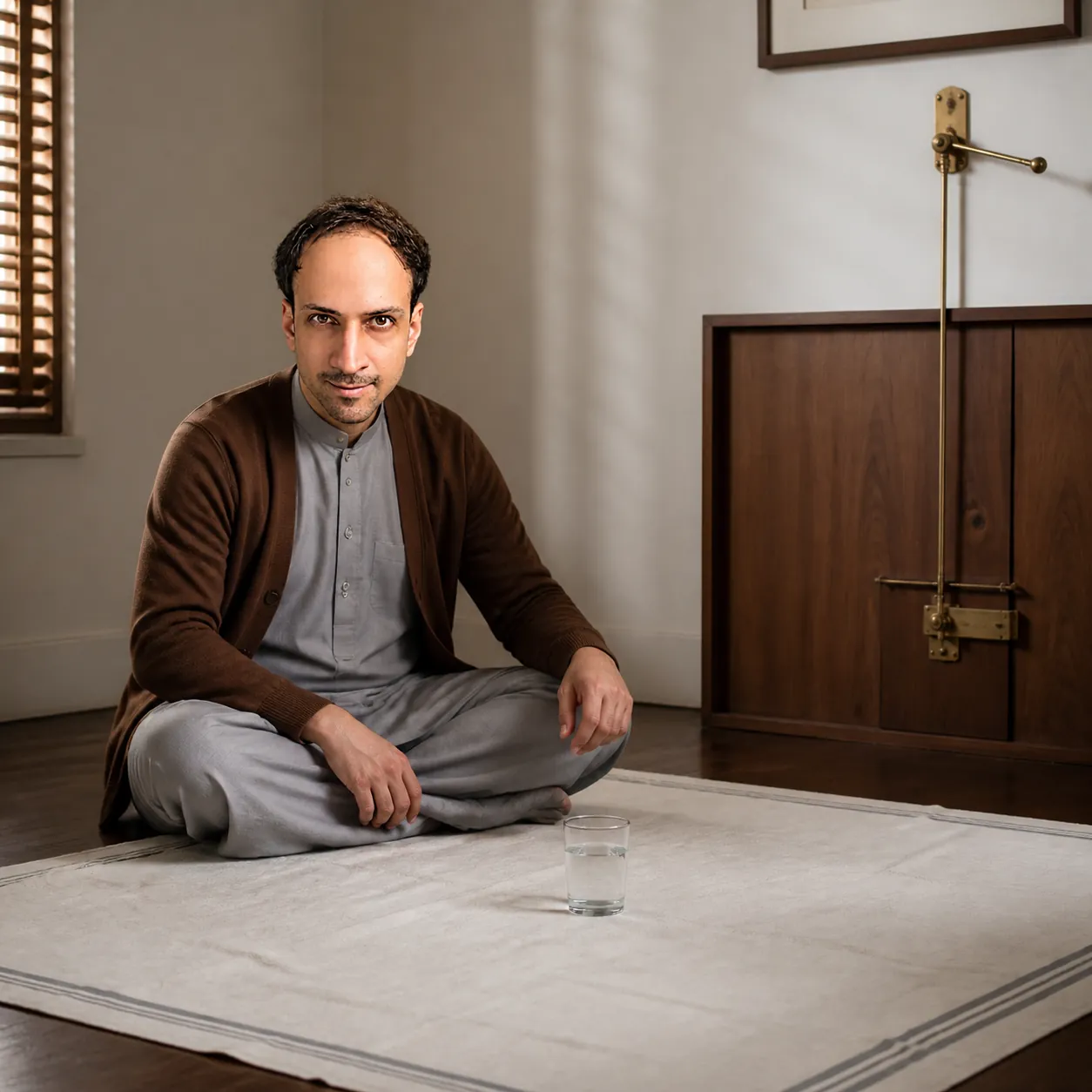
The Untouched: Plain Sitting Room — AI Portrait Prompt
صورةAI Portraits

Turn your own photo into a gallery-grade tableau portrait in a plain sitting room where a floor cloth lies spread and empty. Keeps your face unchanged.

من نص البرومبت

Use the attached reference photo as the identity reference: keep the same face, skin tone, hair and features as the person in that photo, without beautifying, aging or altering them. Create a square 1:1 museum-catalog frame with a strong first read and a slower second read at exactly 2880x2880 pixels. Location: a plain sitting room where a floor cloth lies spread and empty. Show the subject in a dove-grey winter traditional Gulf outfit under a plain brown cardigan, placing a single water glass at the cloth's center. Build the artwork around this material rule: a two-position brass wall lever resting in its first detent, its linkage rod running down to a still-latched cupboard door turns the act of waiting into a structure the room can hold. Explore what changes in a meal that has been promised rather than merely delayed; direct expression and posture toward collected stillness, never melodrama or ad-like confidence. Use a measured 35mm room view that holds them off-center with honest verticals and unexaggerated proportions. Make the composition keep every promise of later sharp and every distraction soft. Render it as gallery-grade tableau realism built from lawful physical timers, warm restrained styling, accurate shadow behavior, and patient large-format photographic clarity, using thin daylight broken into patient stripes by nearby slatted shade and a palette of china white, walnut, and one line of brass. Photorealistic: this must read as a real photograph from a physical camera, never an illustration, painting, or 3D render. Resolve real surface detail: label-free packaging showing carton fibre, cardboard bruised at the corners, and tape lifting slightly at one end. Keep one identity-locked person, credible hands and fingers, natural fabric, and coherent scale, contact, reflections, shadows, airflow, deformation, and materials. Background people only when essential, always secondary and clearly different. Avoid melting surrealist clocks, glowing countdown numerals, lavish feast spreads, anguished hungry expressions, and levitating food. No text, labels, logos, signatures, watermarks, random symbols, plastic skin, excessive bloom, or glossy AI finish.
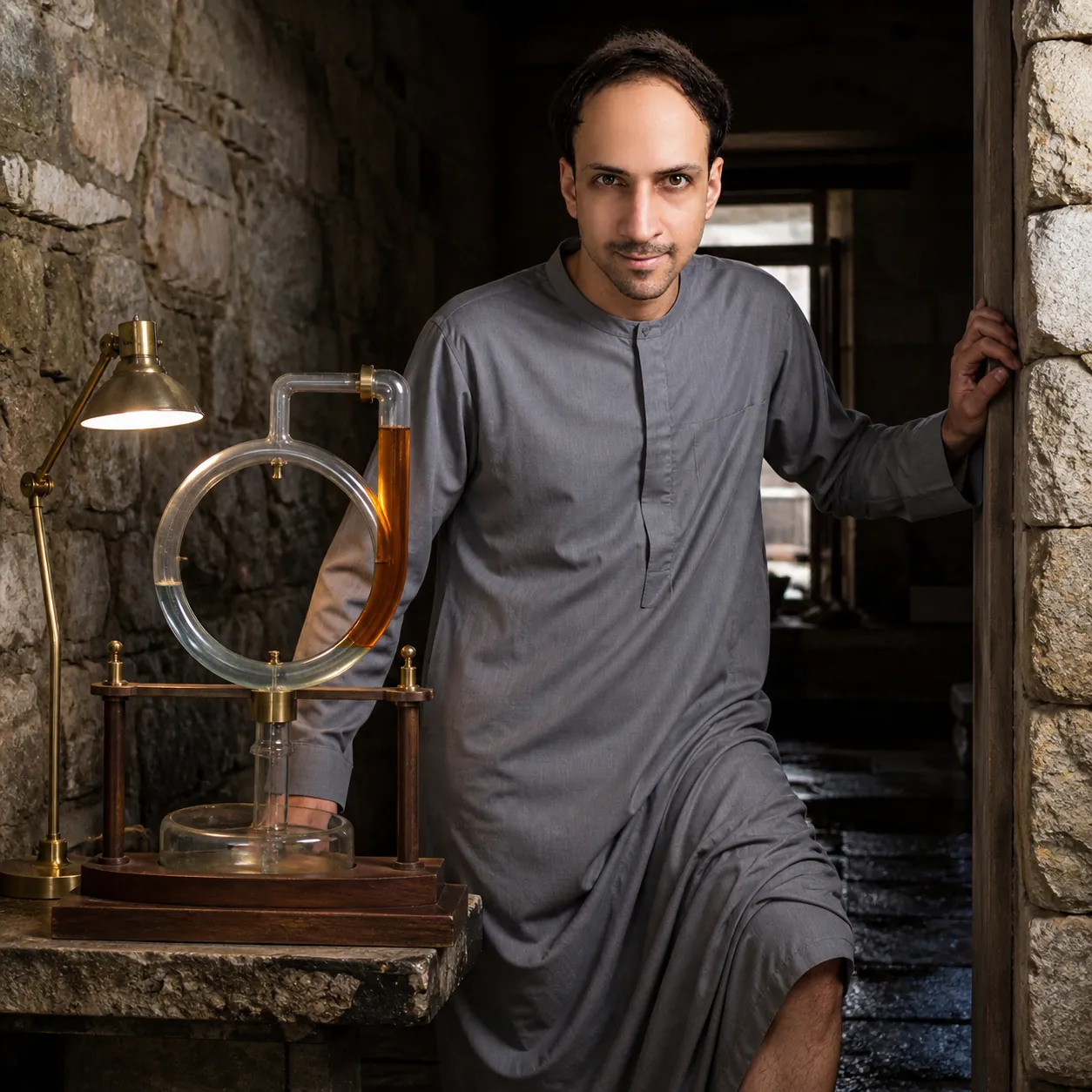
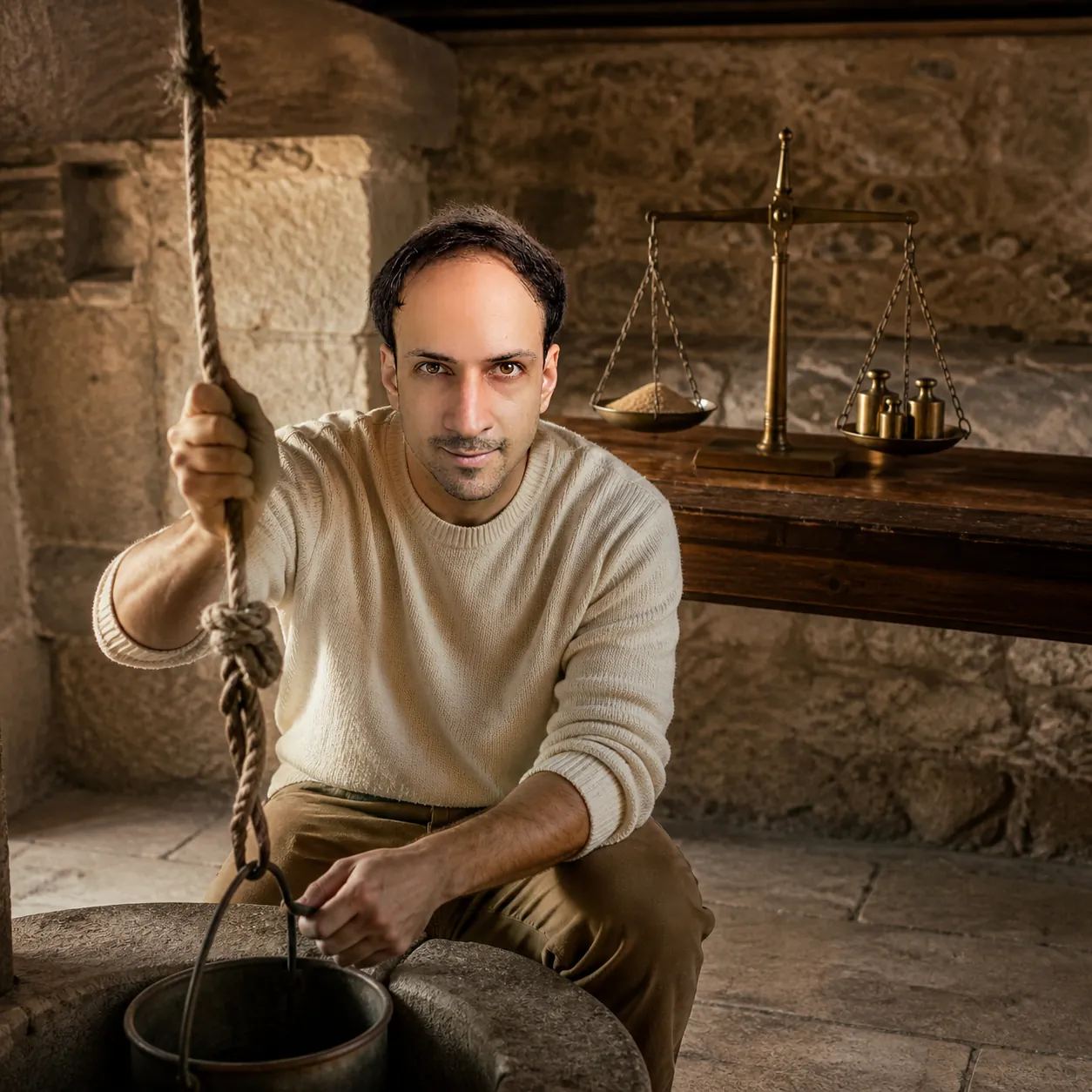
Table for Later: Stone Well-House — AI Portrait Prompt
صورةAI Portraits

Turn your own photo into a conceptual patience portrait in a stone well-house, its bucket hanging dry above the shaft. Keeps your face unchanged.

من نص البرومبت

Use the attached reference photo as the identity reference: keep the same face, skin tone, hair and features as the person in that photo, without beautifying, aging or altering them. Create a square 1:1 museum-catalog frame with a strong first read and a slower second read at exactly 2880x2880 pixels. Location: a stone well-house, its bucket hanging dry above the shaft. Show the subject in a heavy cream pullover with pushed-up sleeves and duck-cloth trousers, testing the well rope's knot with one firm pull. Treat this mechanism as the frame’s governing rule: a beam balance still on its arrestment, the evening's portion on one pan and matched brass weights on the other lets the turn from appetite to steadiness be read like plain machinery. Explore how hunger changes character when its answer is already scheduled and in sight; direct expression and posture toward gentle firmness, never melodrama or ad-like confidence. Frame from directly opposite them at seated height so the untouched arrangement leads straight to their composed face. Make the composition give the untouched object the strongest seat in frame. Render it as conceptual patience portraiture combining believable household apparatus, precise horological detail, soft archival tonality, and emotionally intelligent observational framing, using low golden-hour light laid flat across the scene with soft falloff and a palette of china white, walnut, and one line of brass. Photorealistic: this must read as a real photograph from a physical camera, never an illustration, painting, or 3D render. Resolve real surface detail: floor finish worn along the walked line, skirting marked at shoe height, and corners darker than the open floor. Keep one identity-locked person, credible hands and fingers, natural fabric, and coherent scale, contact, reflections, shadows, airflow, deformation, and materials. Background people only when essential, always secondary and clearly different. Avoid tape-measure diet props, empty-fridge gloom, ringing alarm clocks, glossy food-commercial styling, and gravity-defying hourglass sand. No text, labels, logos, signatures, watermarks, random symbols, plastic skin, excessive bloom, or glossy AI finish.
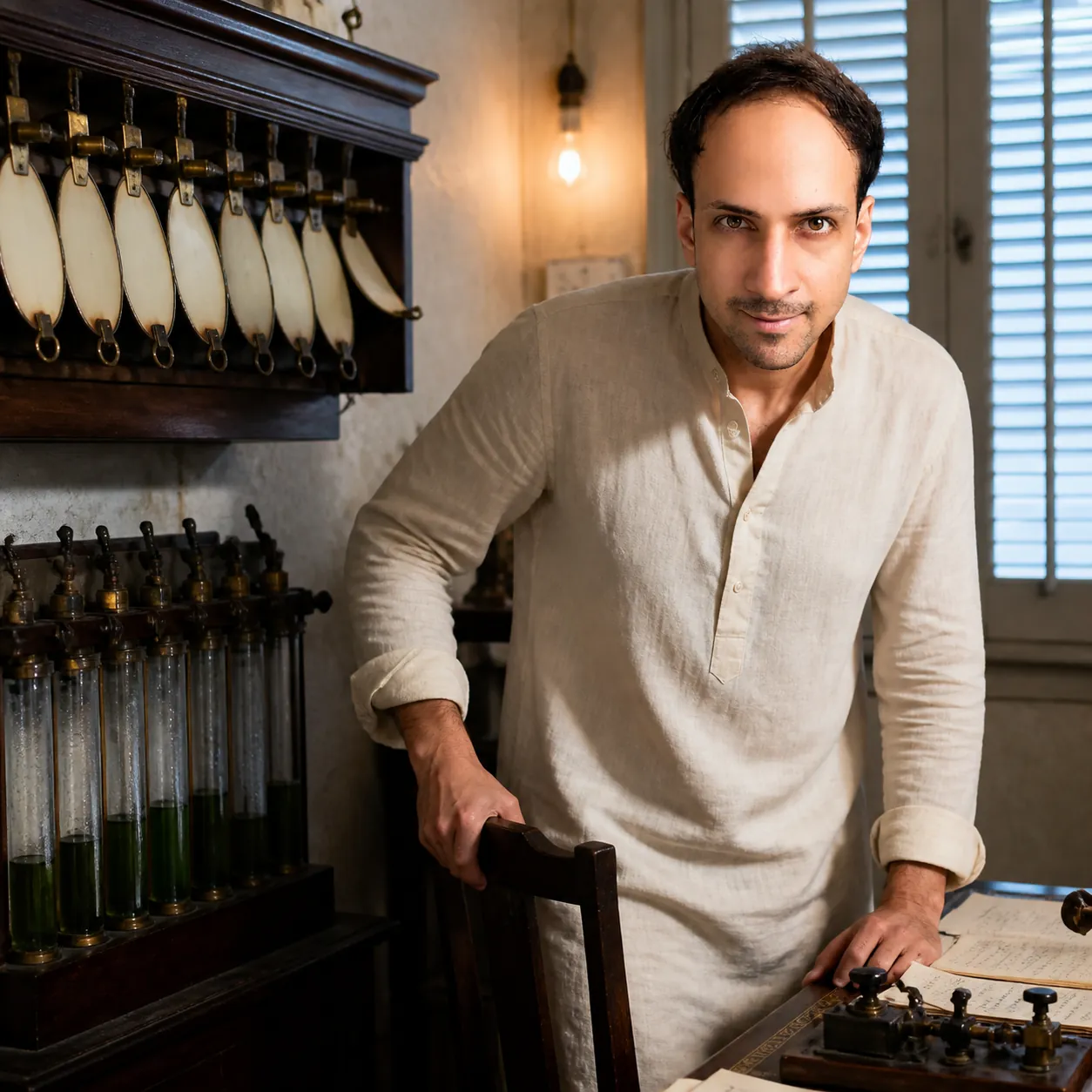
Slow Bulletin: Farm Well House of Stone — AI Portrait Prompt
صورةAI Portraits

Turn your own photo into a portrait in a farm well house of stone where daylight stops inside the door. Keeps your face unchanged.

من نص البرومبت

Use the attached reference photo as the identity reference: keep the same face, skin tone, hair and features as the person in that photo, without beautifying, aging or altering them. Create a square 1:1 museum-catalog frame with a strong first read and a slower second read at exactly 2880x2880 pixels. Location: a farm well house of stone where daylight stops inside the door. Show the subject in a plain grey traditional Gulf outfit with the hem gathered above wet stone, resting one hand on the cool stone jamb. The impossible-looking event must obey this clear system: a closed glass loop where warmed fluid rises on one side and cooled fluid sinks on the other, circulating unaided holds a slow shift still long enough for judgment to consult it. Explore where sensing should end and deciding should begin inside one honest system; direct expression and posture toward patient regard, never melodrama or ad-like confidence. Use an 85mm portrait length so one instrument face and their eyes stay equally readable. Make the composition keep the reading edge sharp while the corridor behind falls soft. Render it as exhibition-scale demonstration realism combining precision workshop apparatus, physically correct fluid menisci, quiet period joinery, and calm observational portraiture, using a low bench lamp grazing brass while the room behind stays dim and a palette of chalk white, dark walnut, and a single amber column. Photorealistic: this must read as a real photograph from a physical camera, never an illustration, painting, or 3D render. Resolve real surface detail: skin that reddens slightly under pressure, nail beds with honest colour, and knuckle creases that fold rather than blur. Keep one identity-locked person, credible hands and fingers, natural fabric, and coherent scale, contact, reflections, shadows, airflow, deformation, and materials. Background people only when essential, always secondary and clearly different. Avoid brass-gear collage backdrops, cartoon telegraph keys, neon signal beams, mercury spills, and floating typographic message overlays. No text, labels, logos, signatures, watermarks, random symbols, plastic skin, excessive bloom, or glossy AI finish.
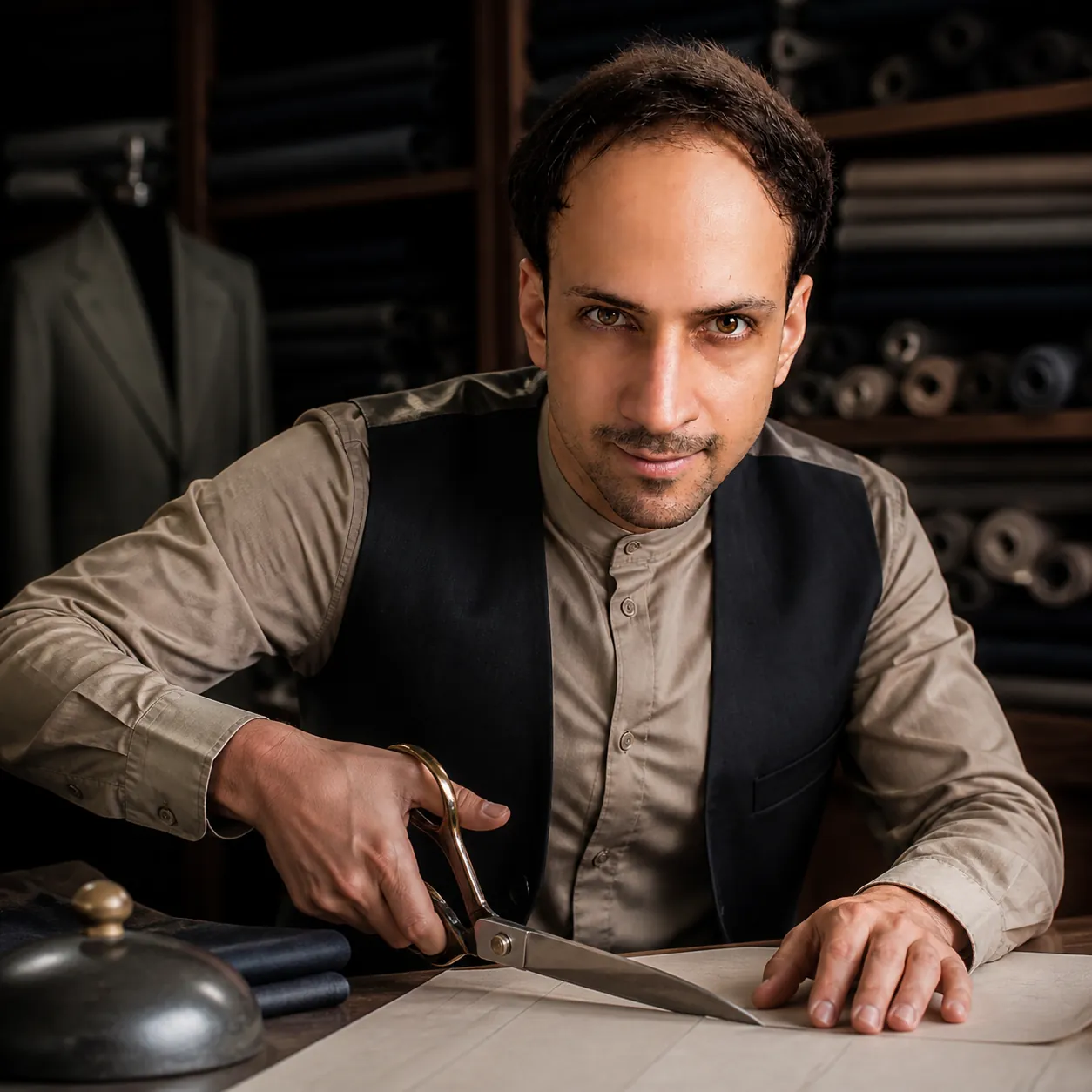
Plain Reading: Upstairs Writing Desk Set Square — AI Portrait Prompt
صورةAI Portraits

Turn your own photo into a conceptual house-systems portrait in an upstairs writing desk set square beneath a shuttered window. Keeps your face unchanged.

من نص البرومبت

Use the attached reference photo as the identity reference: keep the same face, skin tone, hair and features as the person in that photo, without beautifying, aging or altering them. Create a square 1:1 museum-catalog frame with a strong first read and a slower second read at exactly 2880x2880 pixels. Location: an upstairs writing desk set square beneath a shuttered window. Show the subject in an unlined cream linen traditional Gulf outfit with cuffs turned back once, pulling a chair back from the desk without noise. The impossible-looking event must obey this clear system: a mahogany annunciator whose enamel discs swing down one by one as small latches release them in order holds a slow shift still long enough for judgment to consult it. Explore whether appetite deserves a direct line to the room where decisions get made; direct expression and posture toward patient regard, never melodrama or ad-like confidence. Use an 85mm portrait length so one instrument face and their eyes stay equally readable. Make the composition let one connecting line leave the frame without resolving. Render it as conceptual house-systems photography built from functioning telegraph hardware, accurate liquid-column behavior, restrained interior direction, and editorial portrait fidelity, using one warm filament practical near the wall with cool ambient filling the rest and a palette of pale limestone, smoke grey, and one bottle-green band. Photorealistic: this must read as a real photograph from a physical camera, never an illustration, painting, or 3D render. Resolve real surface detail: condensation beading at true size, liquid meniscus curving against glass, and wet surfaces darker than dry ones. Keep one identity-locked person, credible hands and fingers, natural fabric, and coherent scale, contact, reflections, shadows, airflow, deformation, and materials. Background people only when essential, always secondary and clearly different. Avoid brass-gear collage backdrops, cartoon telegraph keys, neon signal beams, mercury spills, and floating typographic message overlays. No text, labels, logos, signatures, watermarks, random symbols, plastic skin, excessive bloom, or glossy AI finish.
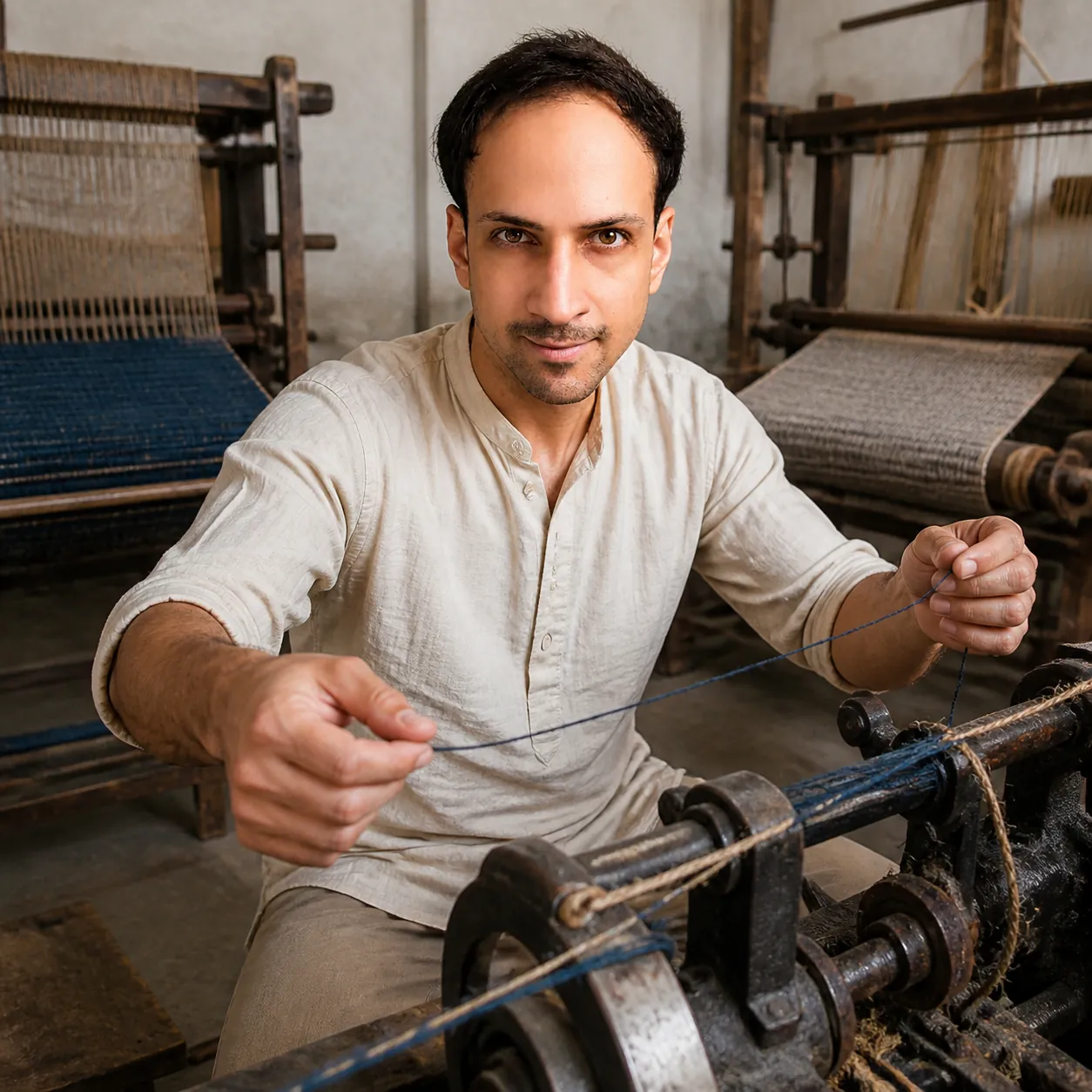
Hand Calibration: Tailor's Cutting Room — AI Portrait Prompt
صورةAI Portraits

Turn your own photo into a close-quarters craft portrait in a tailor's cutting room with bolts of cloth shelved to the ceiling. Keeps your face unchanged.

من نص البرومبت

Use the attached reference photo as the identity reference: keep the same face, skin tone, hair and features as the person in that photo, without beautifying, aging or altering them. Create a square 1:1 museum-catalog frame with a strong first read and a slower second read at exactly 2880x2880 pixels. Location: a tailor's cutting room with bolts of cloth shelved to the ceiling. Show the subject in a pressed sand-toned traditional Gulf outfit under a dark tailored vest, closing long shears through paper in one slow test cut. Make one rigorous physical condition the conceptual engine: a hand-scraped iron plate printed with faint blue islands wherever a master surface touched, every island a summit microns high turns patient maintenance into evidence the naked eye can verify at a glance. Explore where the boundary lies between caring for a tool and being changed by it; direct expression and posture toward ritual calm, never melodrama or ad-like confidence. Use an eye-level 85mm portrait viewpoint with natural perspective and shallow, honest depth of field. Make the composition keep both hands inside the light and everything else in shadow. Render it as close-quarters craft portraiture built from real hand-calibration technique, macro-documentary realism, oiled-steel and stone materiality, and unhurried editorial restraint, using a backlight placed low so any gap reads as a bright seam and a palette of ash grey, waterstone slate, and one cold mirror highlight. Photorealistic: this must read as a real photograph from a physical camera, never an illustration, painting, or 3D render. Resolve real surface detail: the difference between a wiped surface and a clean one, faint tide marks on ceramic, and metal dulled unevenly by touch. Keep one identity-locked person, credible hands and fingers, natural fabric, and coherent scale, contact, reflections, shadows, airflow, deformation, and materials. Background people only when essential, always secondary and clearly different. Avoid sparking grinder wheels, glowing forge steel, sawdust clouds, and staged rustic tool walls. No text, labels, logos, signatures, watermarks, random symbols, plastic skin, excessive bloom, or glossy AI finish.
Worn Into Place: Daylight Weaving Shed — AI Portrait Prompt
صورةAI Portraits

Turn your own photo into a gallery-grade workshop portrait in a daylight weaving shed where two resting looms hold half-woven cloth. Keeps your face unchanged.

من نص البرومبت

Use the attached reference photo as the identity reference: keep the same face, skin tone, hair and features as the person in that photo, without beautifying, aging or altering them. Create a square 1:1 museum-catalog frame with a strong first read and a slower second read at exactly 2880x2880 pixels. Location: a daylight weaving shed where two resting looms hold half-woven cloth. Show the subject in a collarless cotton shirt in undyed cloth with rolled sleeves, drawing one thread taut between spread fingers. Build the artwork around this material rule: a hand-cranked rope machine whose three separate strands twist against their own unwinding until they lock into one finished line makes the newest work instantly legible against everything long since settled. Explore how much of mastery is just maintenance performed faithfully on invisible days; direct expression and posture toward settled focus, never melodrama or ad-like confidence. Frame at the height of the work so effort and expression can be read in one glance. Make the composition run one continuous line from their hands to the frame edge. Render it as gallery-grade workshop photography built from real load-bearing craft, natural fiber materiality, precise repair detail, and calm narrative staging, using cool diffuse skylight evened by pale walls, shadows kept legible and a palette of hemp beige, gunmetal grey, and a single indigo thread. Photorealistic: this must read as a real photograph from a physical camera, never an illustration, painting, or 3D render. Resolve real surface detail: cotton that hangs by its own weight, seams that pucker very slightly, and collars softened by washing. Keep one identity-locked person, credible hands and fingers, natural fabric, and coherent scale, contact, reflections, shadows, airflow, deformation, and materials. Background people only when essential, always secondary and clearly different. Avoid server racks, blinking LED bundles, impossible floating threads, motivational-poster loom staging, and pristine hands untouched by work. No text, labels, logos, signatures, watermarks, random symbols, plastic skin, excessive bloom, or glossy AI finish.
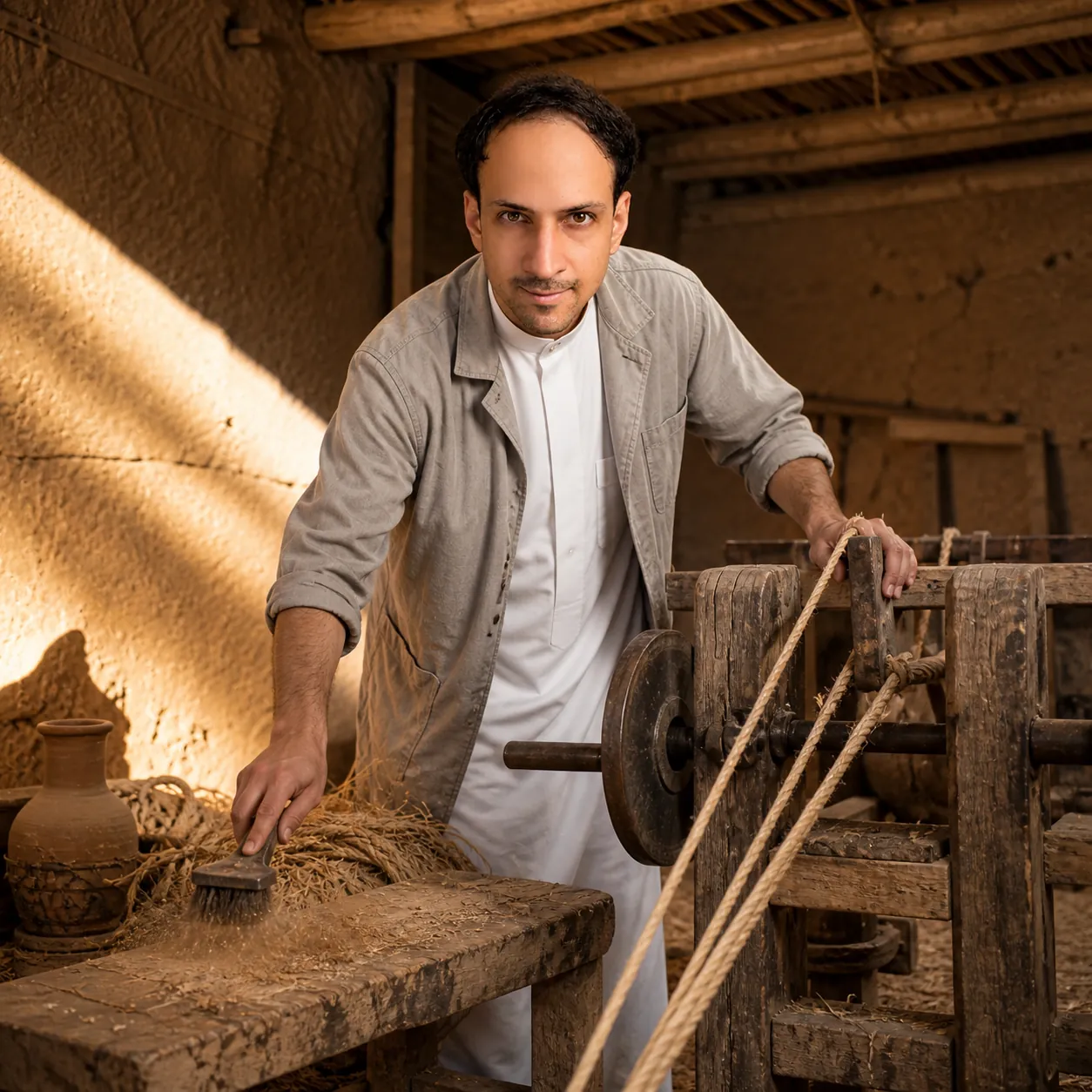
Worn Into Place: Mudbrick Storeroom — AI Portrait Prompt
صورةAI Portraits

Turn your own photo into a museum-grade process portrait in a mudbrick storeroom in Diriyah restored with palm-trunk ceiling beams. Keeps your face unchanged.

من نص البرومبت

Use the attached reference photo as the identity reference: keep the same face, skin tone, hair and features as the person in that photo, without beautifying, aging or altering them. Create a square 1:1 museum-catalog frame with a strong first read and a slower second read at exactly 2880x2880 pixels. Location: a mudbrick storeroom in Diriyah restored with palm-trunk ceiling beams. Show the subject in a white summer traditional Gulf outfit under a light stone-grey overshirt, brushing straw dust from a low wooden bench. Make one rigorous physical condition the conceptual engine: a hand-cranked rope machine whose three separate strands twist against their own unwinding until they lock into one finished line turns repeated effort into a physical route the hand can find again. Explore how much of mastery is just maintenance performed faithfully on invisible days; direct expression and posture toward patient resolve, never melodrama or ad-like confidence. Use an eye-level 55mm perspective that keeps their hands and the work equally credible. Make the composition rank focus by effort, the hardest-won inch rendered sharpest of all. Render it as museum-grade process photography combining truthful rigging detail, visible thread-level texture, honest hand-work staging, and unhurried, deeply observational framing, using low golden-hour sun crossing the space in one honest band and a palette of raw linen, aged brass, and one deep teal band. Photorealistic: this must read as a real photograph from a physical camera, never an illustration, painting, or 3D render. Resolve real surface detail: fine grit in the texture of concrete, efflorescence at damp edges, and hairline cracks that follow stress. Keep one identity-locked person, credible hands and fingers, natural fabric, and coherent scale, contact, reflections, shadows, airflow, deformation, and materials. Background people only when essential, always secondary and clearly different. Avoid glowing neural filaments, brain-shaped tangles, circuit-board overlays, holographic wiring diagrams, and sparks jumping between cables. No text, labels, logos, signatures, watermarks, random symbols, plastic skin, excessive bloom, or glossy AI finish.
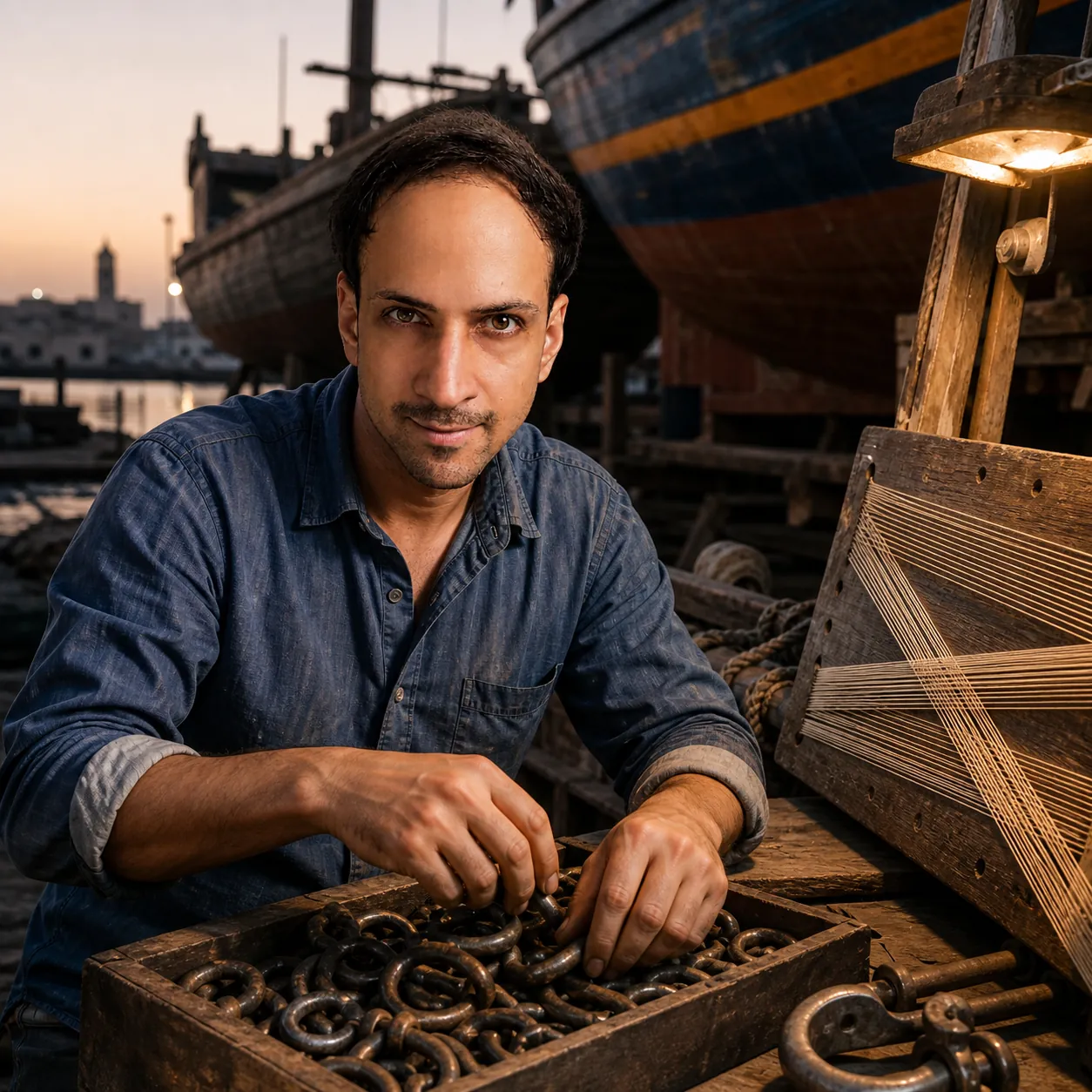
Patient Wiring: Jeddah Fishing Slipway — AI Portrait Prompt
صورةAI Portraits

Turn your own photo into a conceptual craft portrait in a Jeddah fishing slipway at first light, hulls propped on timbers. Keeps your face unchanged.

من نص البرومبت

Use the attached reference photo as the identity reference: keep the same face, skin tone, hair and features as the person in that photo, without beautifying, aging or altering them. Create a square 1:1 museum-catalog frame with a strong first read and a slower second read at exactly 2880x2880 pixels. Location: a Jeddah fishing slipway at first light, hulls propped on timbers. Show the subject in a faded blue work shirt with salt-stiff rolled cuffs, sorting worn shackles into a shallow wooden tray. Build the artwork around this material rule: a warping board wound with a hundred parallel threads whose figure-eight cross keeps every thread's order through any later tangle makes the newest work instantly legible against everything long since settled. Explore why change made slowly under load outlasts change made all at once; direct expression and posture toward quiet perseverance, never melodrama or ad-like confidence. Frame at the height of the work so effort and expression can be read in one glance. Make the composition run one continuous line from their hands to the frame edge. Render it as conceptual craft portraiture uniting working textile apparatus, believable tension physics, quiet contemporary art direction, and human-centered documentary realism, using one warm work lamp pooled on the task with soft surrounding dusk and a palette of bleached cotton, iron shadow, and a restrained saffron accent. Photorealistic: this must read as a real photograph from a physical camera, never an illustration, painting, or 3D render. Resolve real surface detail: hair with individual strands catching light, short hairs of uneven length, and skin oil giving a low uneven sheen. Keep one identity-locked person, credible hands and fingers, natural fabric, and coherent scale, contact, reflections, shadows, airflow, deformation, and materials. Background people only when essential, always secondary and clearly different. Avoid server racks, blinking LED bundles, impossible floating threads, motivational-poster loom staging, and pristine hands untouched by work. No text, labels, logos, signatures, watermarks, random symbols, plastic skin, excessive bloom, or glossy AI finish.
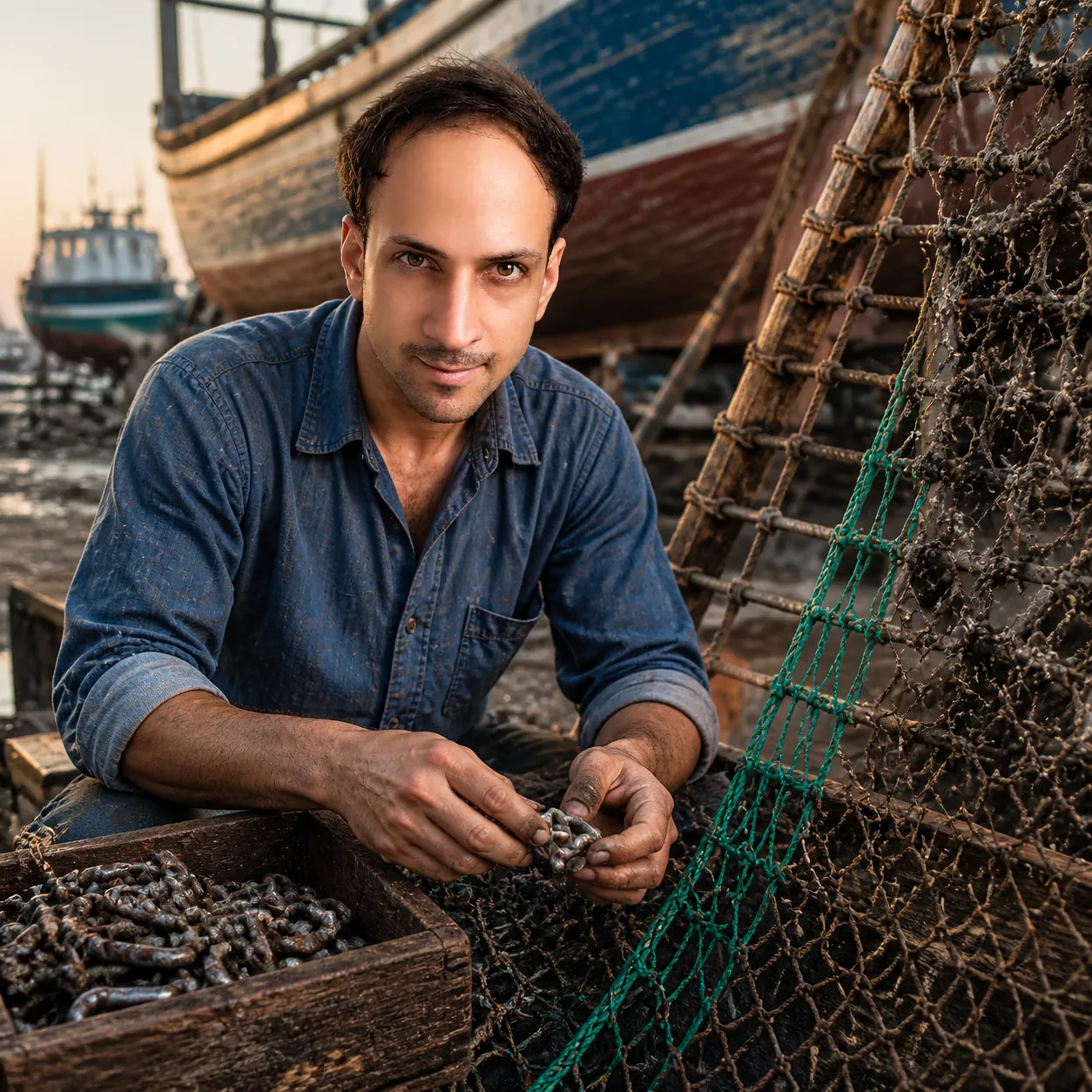
Thread by Thread: Jeddah Fishing Slipway — AI Portrait Prompt
صورةAI Portraits

Turn your own photo into a gallery-grade workshop portrait in a Jeddah fishing slipway at first light, hulls propped on timbers. Keeps your face unchanged.

من نص البرومبت

Use the attached reference photo as the identity reference: keep the same face, skin tone, hair and features as the person in that photo, without beautifying, aging or altering them. Create a square 1:1 museum-catalog frame with a strong first read and a slower second read at exactly 2880x2880 pixels. Location: a Jeddah fishing slipway at first light, hulls propped on timbers. Show the subject in a faded blue work shirt with salt-stiff rolled cuffs, sorting worn shackles into a shallow wooden tray. Make one rigorous physical condition the conceptual engine: an old fishing net opened on a frame, one torn bay rebuilt in bright twine whose knots match the faded mesh turns repeated effort into a physical route the hand can find again. Explore why the first pass of any new practice costs so much more than the thousandth; direct expression and posture toward workmanlike reverence, never melodrama or ad-like confidence. Use an eye-level 55mm perspective that keeps their hands and the work equally credible. Make the composition let one bright new line cross a field of dulled ones. Render it as gallery-grade workshop photography built from real load-bearing craft, natural fiber materiality, precise repair detail, and calm narrative staging, using two bounced practicals giving gentle modeling without a single hard specular and a palette of rope-tar black, pale dust grey, and warm ochre. Photorealistic: this must read as a real photograph from a physical camera, never an illustration, painting, or 3D render. Resolve real surface detail: fine lint on dark fabric, water spotting on steel, and the soft rounding of edges that have been used for years. Keep one identity-locked person, credible hands and fingers, natural fabric, and coherent scale, contact, reflections, shadows, airflow, deformation, and materials. Background people only when essential, always secondary and clearly different. Avoid glowing neural filaments, brain-shaped tangles, circuit-board overlays, holographic wiring diagrams, and sparks jumping between cables. No text, labels, logos, signatures, watermarks, random symbols, plastic skin, excessive bloom, or glossy AI finish.
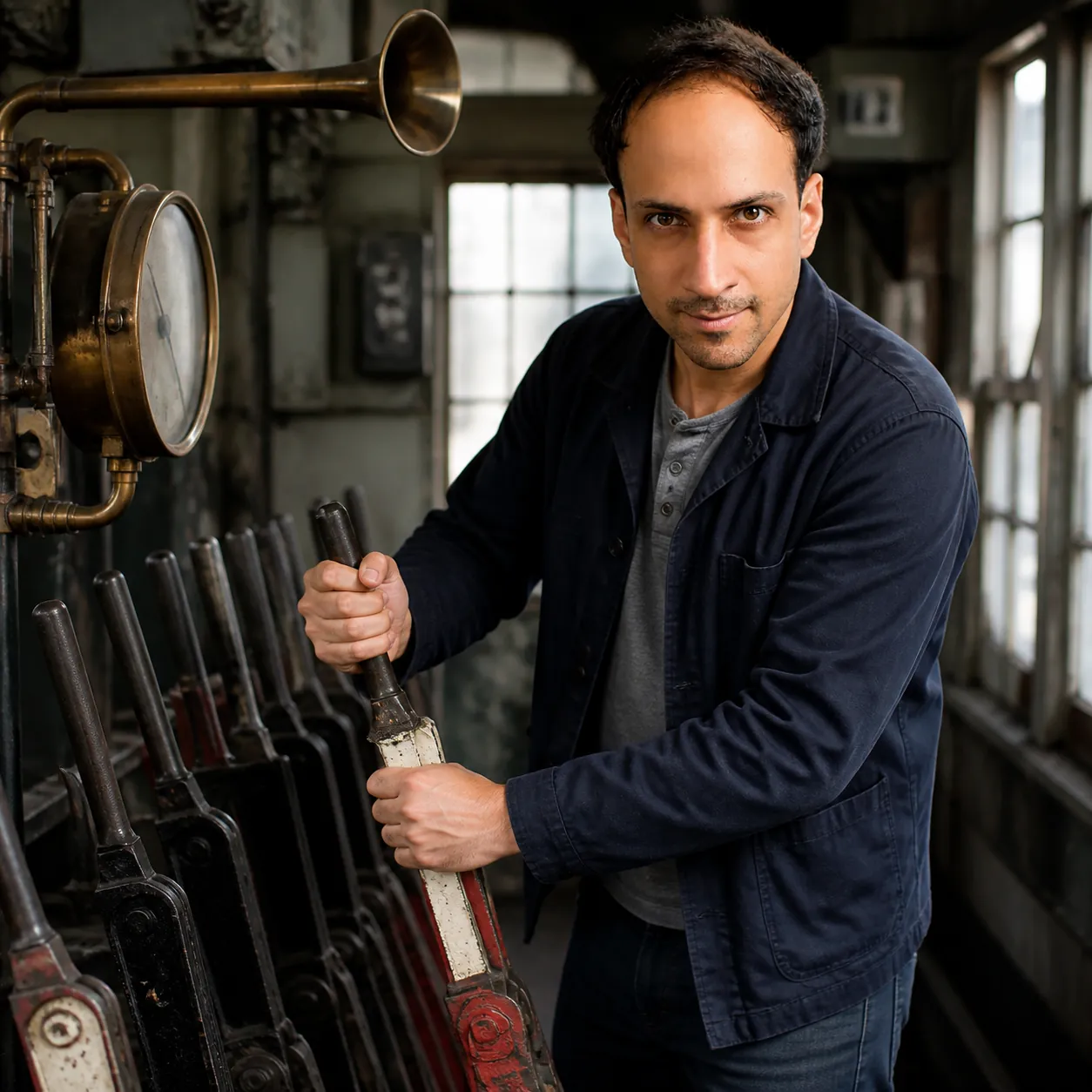
Wordless Dispatch: Disused Railway Signal Cabin — AI Portrait Prompt
صورةAI Portraits

Turn your own photo into a portrait in a disused railway signal cabin with levers standing in one row. Keeps your face unchanged.

من نص البرومبت

Use the attached reference photo as the identity reference: keep the same face, skin tone, hair and features as the person in that photo, without beautifying, aging or altering them. Create a square 1:1 museum-catalog frame with a strong first read and a slower second read at exactly 2880x2880 pixels. Location: a disused railway signal cabin with levers standing in one row. Show the subject in a navy cotton jacket over a grey henley and dark denim, returning one lever upright with both hands. The impossible-looking event must obey this clear system: a brass speaking tube that carries an unraised voice the length of a building on breath alone turns a private condition into something two distant rooms can read together. Explore what changes when a gauge is built so it cannot flatter its owner; direct expression and posture toward measured trust, never melodrama or ad-like confidence. Use an 85mm portrait length so one instrument face and their eyes stay equally readable. Make the composition let one connecting line leave the frame without resolving. Render it as gallery-grade documentary imagery built from real pneumatic linkages, believable wear on brass, low-drama interior lighting, and patient human presence, using high shaded daylight falling down a shaft, contrast kept low and honest and a palette of lead grey, unpolished tin, and one stripe of verdigris. Photorealistic: this must read as a real photograph from a physical camera, never an illustration, painting, or 3D render. Resolve real surface detail: glass with real thickness at its edge, reflections that carry the room's actual colour, and dust visible only at grazing angles. Keep one identity-locked person, credible hands and fingers, natural fabric, and coherent scale, contact, reflections, shadows, airflow, deformation, and materials. Background people only when essential, always secondary and clearly different. Avoid steampunk goggles, glowing holograms, dripping food props, anatomical organ diagrams, and legible dial lettering anywhere. No text, labels, logos, signatures, watermarks, random symbols, plastic skin, excessive bloom, or glossy AI finish.
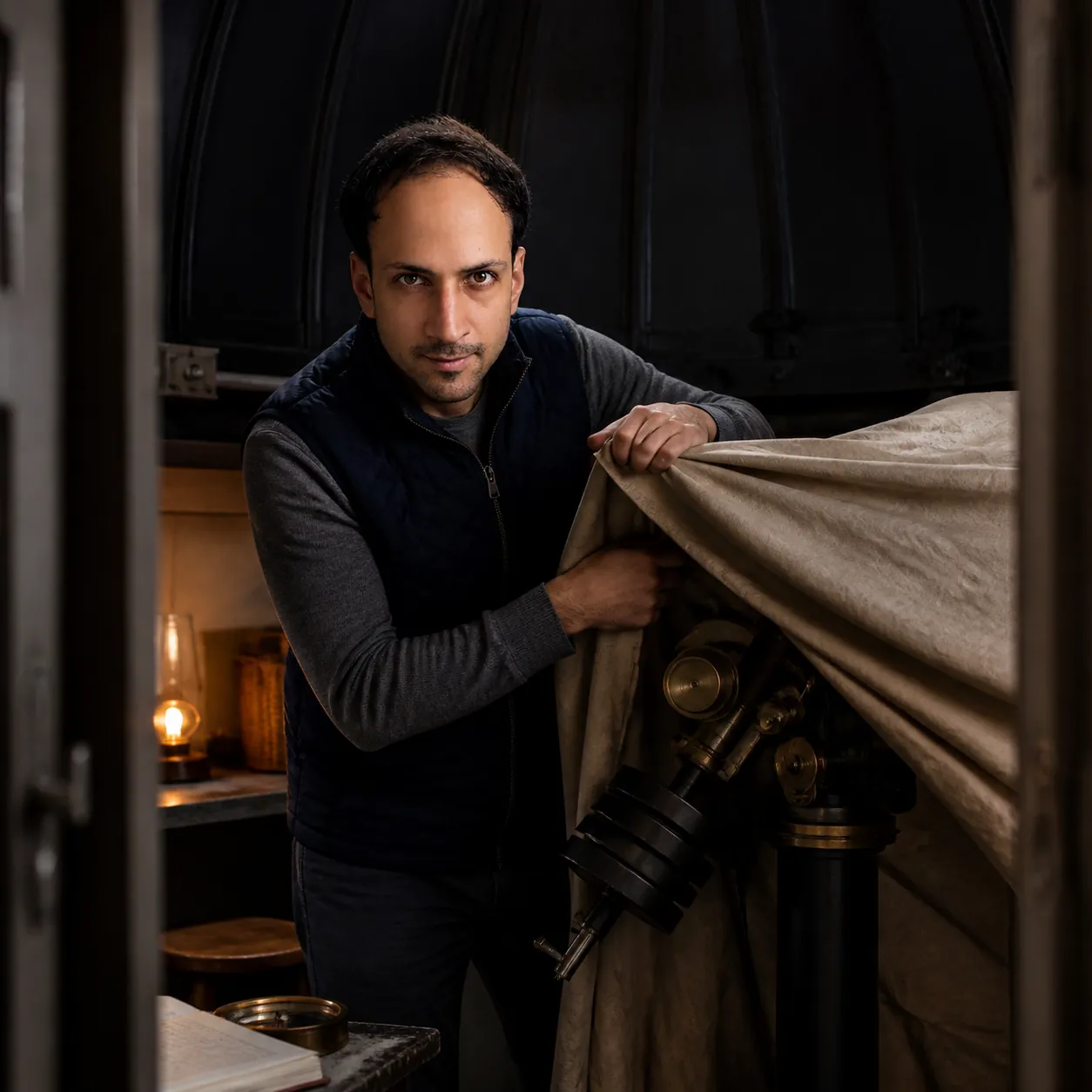
Scheduled Plenty: Small Private Observatory — AI Portrait Prompt
صورةAI Portraits

Turn your own photo into a restrained interior portrait in a small private observatory, its dome slit still closed. Keeps your face unchanged.

من نص البرومبت

Use the attached reference photo as the identity reference: keep the same face, skin tone, hair and features as the person in that photo, without beautifying, aging or altering them. Create a square 1:1 museum-catalog frame with a strong first read and a slower second read at exactly 2880x2880 pixels. Location: a small private observatory, its dome slit still closed. Show the subject in a navy quilted gilet over a long-sleeve grey merino top, folding back the canvas cover from the telescope mount. Use this advanced image-making device as the core logic: a provisions shelf tied shut under a woven cover until a gnomon's shadow reaches the brass mark scribed beside it lets the turn from appetite to steadiness be read like plain machinery. Explore whether waiting measured by instruments feels different from waiting endured alone; direct expression and posture toward clear-eyed waiting, never melodrama or ad-like confidence. Frame through the nearest doorway at a respectful distance, foreground edges soft but never covering their face or hands. Make the composition hold clean empty space where the meal will later be. Render it as restrained interior photography combining honest mechanical staging, tactile everyday objects, disciplined negative space, and documentary-grade skin and fabric rendering, using cool dusk ambience with one warm bulb burning low nearby and a palette of unbleached linen, slate grey, and a single amber glow. Photorealistic: this must read as a real photograph from a physical camera, never an illustration, painting, or 3D render. Resolve real surface detail: thread ends and slight pilling on worn cloth, hairline chips at every hard corner, and stone that is porous rather than smooth. Keep one identity-locked person, credible hands and fingers, natural fabric, and coherent scale, contact, reflections, shadows, airflow, deformation, and materials. Background people only when essential, always secondary and clearly different. Avoid tape-measure diet props, empty-fridge gloom, ringing alarm clocks, glossy food-commercial styling, and gravity-defying hourglass sand. No text, labels, logos, signatures, watermarks, random symbols, plastic skin, excessive bloom, or glossy AI finish.
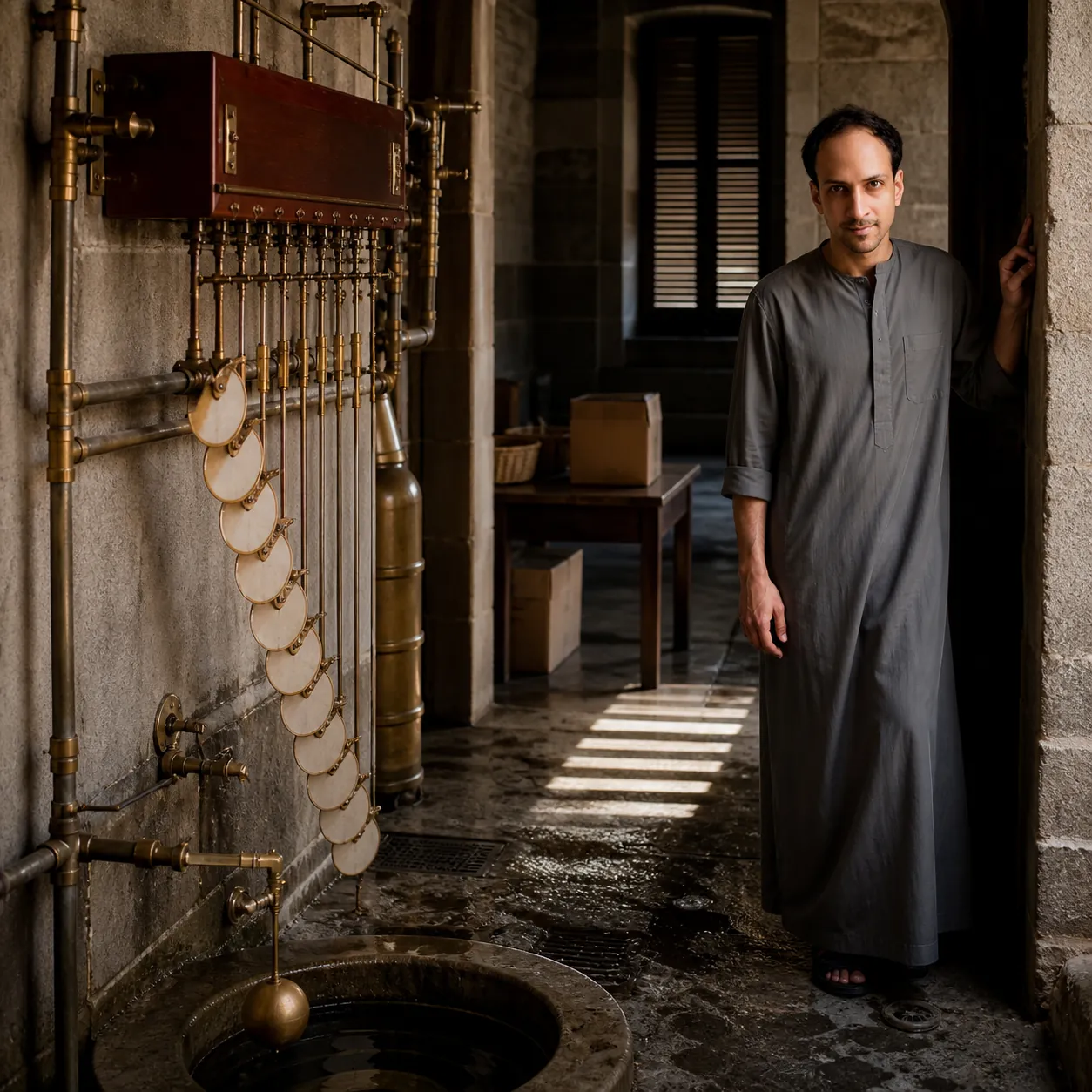
Plain Reading: Farm Well House of Stone — AI Portrait Prompt
صورةAI Portraits

Turn your own photo into a portrait in a farm well house of stone where daylight stops inside the door. Keeps your face unchanged.

من نص البرومبت

Use the attached reference photo as the identity reference: keep the same face, skin tone, hair and features as the person in that photo, without beautifying, aging or altering them. Create a square 1:1 museum-catalog frame with a strong first read and a slower second read at exactly 2880x2880 pixels. Location: a farm well house of stone where daylight stops inside the door. Show the subject in a plain grey traditional Gulf outfit with the hem gathered above wet stone, resting one hand on the cool stone jamb. Build the artwork around this material rule: a mahogany annunciator whose enamel discs swing down one by one as small latches release them in order turns a private condition into something two distant rooms can read together. Explore whether appetite deserves a direct line to the room where decisions get made; direct expression and posture toward attentive calm, never melodrama or ad-like confidence. Frame from the far end of the room so the signal's whole route stays visible. Make the composition leave honest vertical distance between the sensing point and their hands. Render it as gallery-grade documentary imagery built from real pneumatic linkages, believable wear on brass, low-drama interior lighting, and patient human presence, using late-afternoon light entering through louvers as thin parallel bands and a palette of slate grey, aged brass, and one thread of indigo. Photorealistic: this must read as a real photograph from a physical camera, never an illustration, painting, or 3D render. Resolve real surface detail: label-free packaging showing carton fibre, cardboard bruised at the corners, and tape lifting slightly at one end. Keep one identity-locked person, credible hands and fingers, natural fabric, and coherent scale, contact, reflections, shadows, airflow, deformation, and materials. Background people only when essential, always secondary and clearly different. Avoid steampunk goggles, glowing holograms, dripping food props, anatomical organ diagrams, and legible dial lettering anywhere. No text, labels, logos, signatures, watermarks, random symbols, plastic skin, excessive bloom, or glossy AI finish.

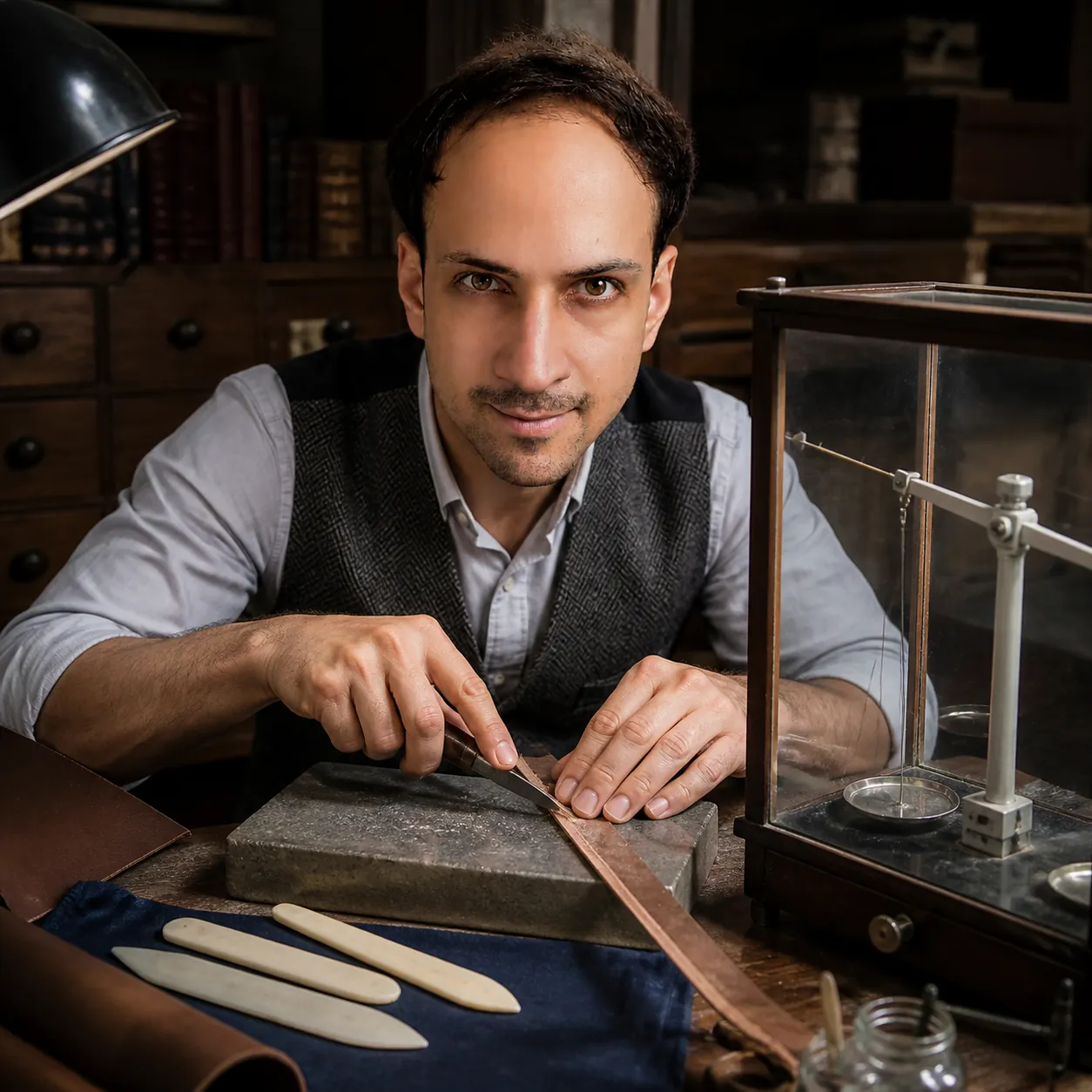
Micron Truth: Bookbinder's Bench — AI Portrait Prompt
صورةAI Portraits

Turn your own photo into a gallery-grade artisan portrait in a bookbinder's bench with a paring stone and neat bone folders. Keeps your face unchanged.

من نص البرومبت

Use the attached reference photo as the identity reference: keep the same face, skin tone, hair and features as the person in that photo, without beautifying, aging or altering them. Create a square 1:1 museum-catalog frame with a strong first read and a slower second read at exactly 2880x2880 pixels. Location: a bookbinder's bench with a paring stone and neat bone folders. Show the subject in a herringbone waistcoat over a pale grey shirt, cuffs rolled, paring a leather edge to a feathered translucent taper. The impossible-looking event must obey this clear system: a knife-edge beam balance whose pointer finds zero only after a wire rider lighter than an eyelash moves one notch turns patient maintenance into evidence the naked eye can verify at a glance. Explore what kind of focus survives a thousand identical passes without going numb; direct expression and posture toward quiet rigor, never melodrama or ad-like confidence. Use a 100mm macro-to-portrait hybrid: the tool's critical edge sharp near the lens and their attentive face readable beyond it. Make the composition let one straight worked line lead diagonally toward their eyes. Render it as gallery-grade artisan portraiture combining accurate metrology detail, tactile bench materiality, restrained contemporary art direction, and physically correct highlights, using one low raking lamp that turns every scratch into legible topography and a palette of gunmetal, chalk white, and one stripe of Prussian blue. Photorealistic: this must read as a real photograph from a physical camera, never an illustration, painting, or 3D render. Resolve real surface detail: glass with real thickness at its edge, reflections that carry the room's actual colour, and dust visible only at grazing angles. Keep one identity-locked person, credible hands and fingers, natural fabric, and coherent scale, contact, reflections, shadows, airflow, deformation, and materials. Background people only when essential, always secondary and clearly different. Avoid sparking grinder wheels, glowing forge steel, sawdust clouds, and staged rustic tool walls. No text, labels, logos, signatures, watermarks, random symbols, plastic skin, excessive bloom, or glossy AI finish.
Routes Remembered: Rope-Seller's Stall Deep — AI Portrait Prompt
صورةAI Portraits

Turn your own photo into a craft-documentary portrait in a rope-seller's stall deep in an old Riyadh souq at opening hour. Keeps your face unchanged.

من نص البرومبت

Use the attached reference photo as the identity reference: keep the same face, skin tone, hair and features as the person in that photo, without beautifying, aging or altering them. Create a square 1:1 museum-catalog frame with a strong first read and a slower second read at exactly 2880x2880 pixels. Location: a rope-seller's stall deep in an old Riyadh souq at opening hour. Show the subject in a plain grey winter traditional Gulf outfit with a dark sleeveless vest, weighing a coil of new rope across both forearms. Use this advanced image-making device as the core logic: a long splice joining new rope to old, tapered so smoothly that the finished line runs through a wooden block unhindered turns repeated effort into a physical route the hand can find again. Explore whether a skill repaired after failure can honestly be called the same skill; direct expression and posture toward grounded hope, never melodrama or ad-like confidence. Frame the subject slightly off-axis through the standing lines, with every crossing physically accounted for. Make the composition hold their hands and the tensioned work in one unbroken diagonal. Render it as craft-documentary portraiture built from real fiber mechanics, patient workshop realism, archival material fidelity, and emotionally restrained editorial composition, using low golden-hour sun crossing the space in one honest band and a palette of undyed flax, worn oak, and one madder-red line. Photorealistic: this must read as a real photograph from a physical camera, never an illustration, painting, or 3D render. Resolve real surface detail: wood grain read at honest scale, matte and gloss clearly separated, and no surface uniformly clean. Keep one identity-locked person, credible hands and fingers, natural fabric, and coherent scale, contact, reflections, shadows, airflow, deformation, and materials. Background people only when essential, always secondary and clearly different. Avoid glowing neural filaments, brain-shaped tangles, circuit-board overlays, holographic wiring diagrams, and sparks jumping between cables. No text, labels, logos, signatures, watermarks, random symbols, plastic skin, excessive bloom, or glossy AI finish.
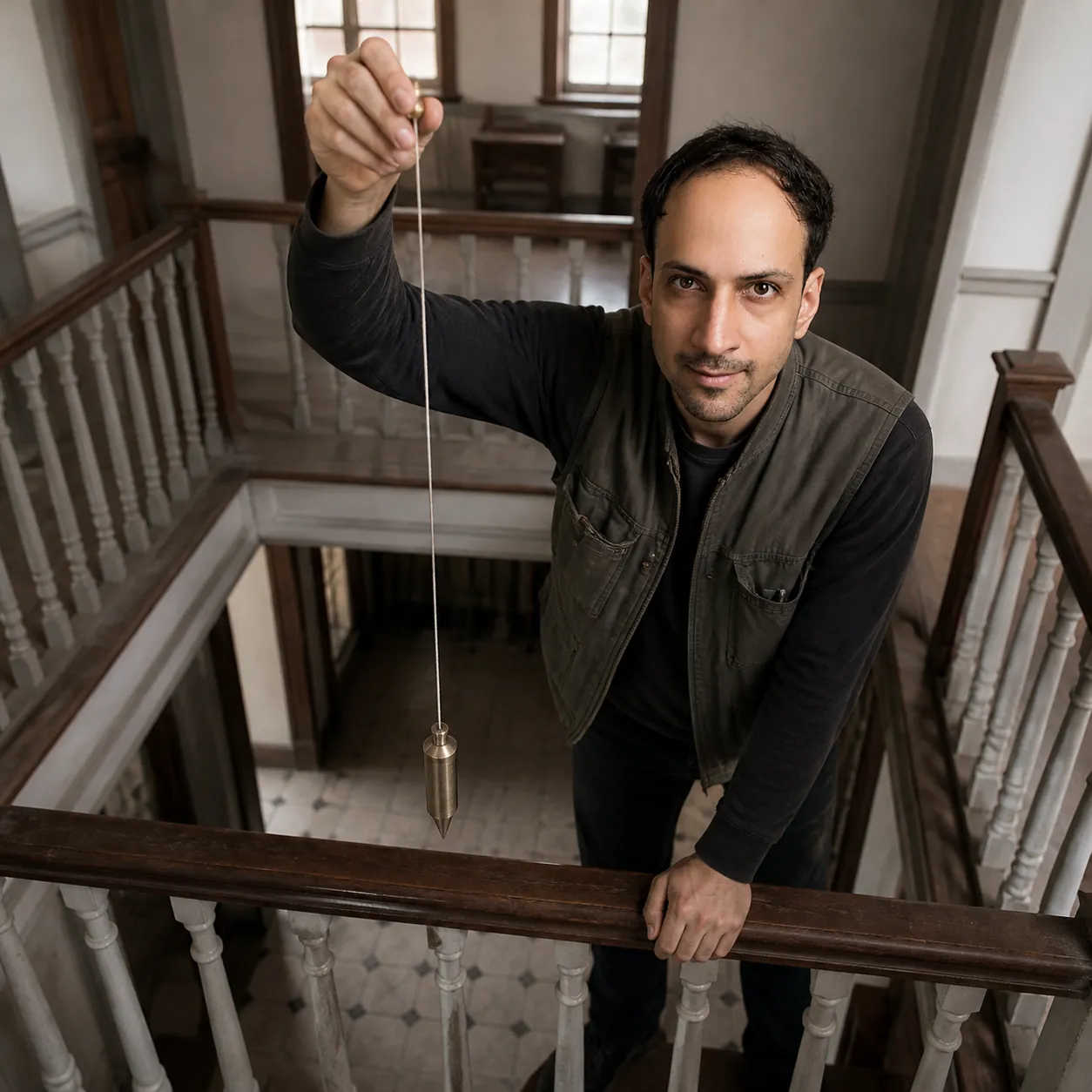
Second Signals: Open Shaft of a Two-Storey Stairwell — AI Portrait Prompt
صورةAI Portraits

Turn your own photo into a portrait in the open shaft of a two-storey stairwell above a tiled floor. Keeps your face unchanged.

من نص البرومبت

Use the attached reference photo as the identity reference: keep the same face, skin tone, hair and features as the person in that photo, without beautifying, aging or altering them. Create a square 1:1 museum-catalog frame with a strong first read and a slower second read at exactly 2880x2880 pixels. Location: the open shaft of a two-storey stairwell above a tiled floor. Show the subject in a graphite crewneck under a lightweight canvas work vest, paying a plumb line down through the open shaft. Make one rigorous physical condition the conceptual engine: a slender sealed water column, tall as two floors, that settles wherever the day's air pressure lets it stand turns a private condition into something two distant rooms can read together. Explore why the quietest signal in a house is usually the one worth routing; direct expression and posture toward lucid attention, never melodrama or ad-like confidence. Use an eye-level 50mm viewpoint with natural perspective and one plane of critical focus. Make the composition follow the signal's path from its source to their eyes. Render it as museum-grade signaling-instrument portraiture combining genuine pressure and gravity mechanisms, documentary photographic realism, honest machined brass materiality, and unhurried human framing, using high shaded daylight falling down a shaft, contrast kept low and honest and a palette of slate grey, aged brass, and one thread of indigo. Photorealistic: this must read as a real photograph from a physical camera, never an illustration, painting, or 3D render. Resolve real surface detail: true skin texture with pores and fine hair at the hairline, and fabric that creases where it is actually stressed. Keep one identity-locked person, credible hands and fingers, natural fabric, and coherent scale, contact, reflections, shadows, airflow, deformation, and materials. Background people only when essential, always secondary and clearly different. Avoid steampunk goggles, glowing holograms, dripping food props, anatomical organ diagrams, and legible dial lettering anywhere. No text, labels, logos, signatures, watermarks, random symbols, plastic skin, excessive bloom, or glossy AI finish.
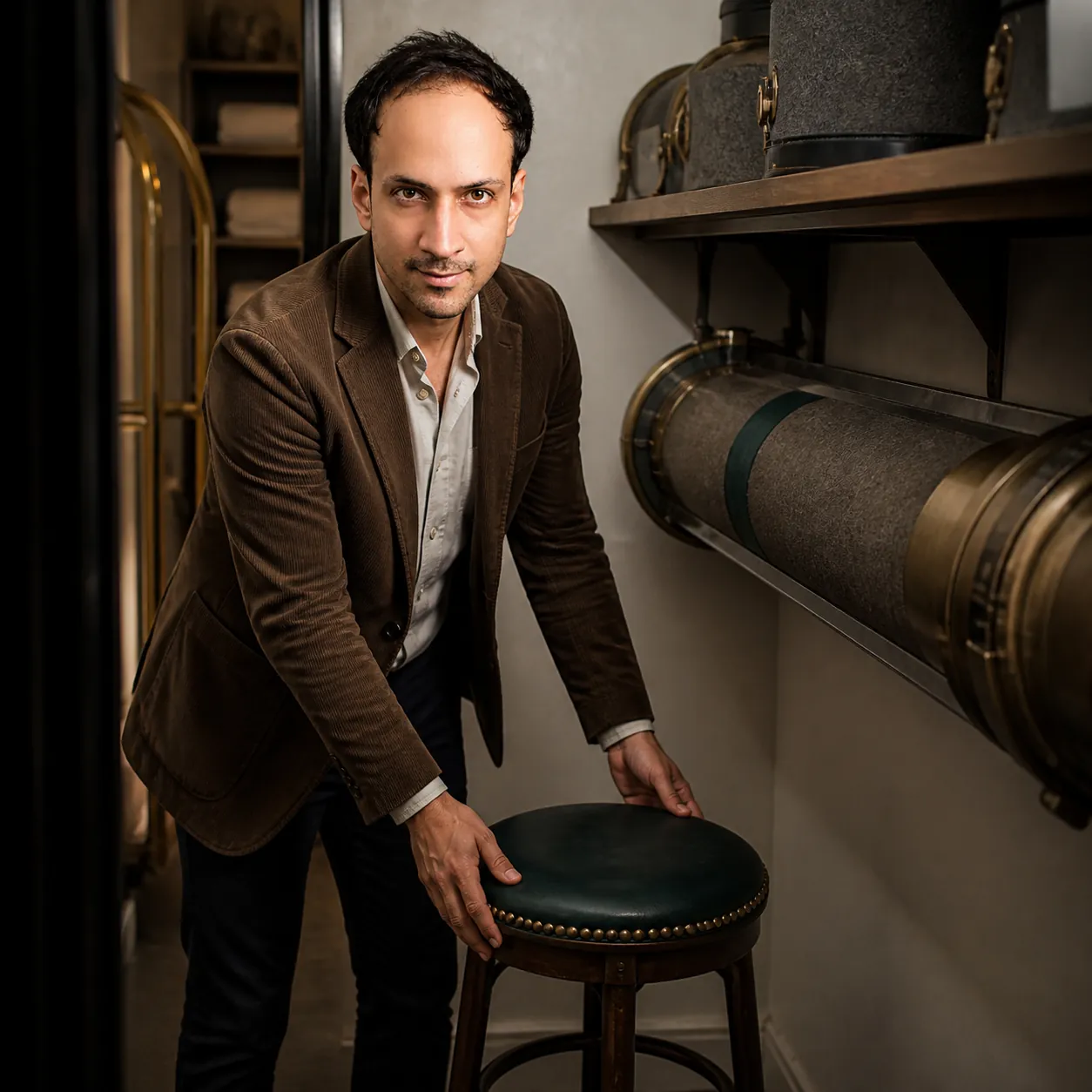
Interior Weather: Hotel Back Office Alcove — AI Portrait Prompt
صورةAI Portraits

Turn your own photo into a gallery-grade documentary imagery portrait in a hotel back office alcove with a high shelf and one stool. Keeps your face unchanged.

من نص البرومبت

Use the attached reference photo as the identity reference: keep the same face, skin tone, hair and features as the person in that photo, without beautifying, aging or altering them. Create a square 1:1 museum-catalog frame with a strong first read and a slower second read at exactly 2880x2880 pixels. Location: a hotel back office alcove with a high shelf and one stool. Show the subject in a soft brown corduroy jacket over an open pale shirt, setting a stool square beneath the high shelf. Use this advanced image-making device as the core logic: a felt-bodied carrier capsule that arrives with one soft thump after crossing the house inside a tube on pressure alone turns a private condition into something two distant rooms can read together. Explore how a message can be complete without containing a single readable word; direct expression and posture toward sober curiosity, never melodrama or ad-like confidence. Frame just past a doorway edge, the near jamb dark and unfocused but never crossing their face. Make the composition keep the reading edge sharp while the corridor behind falls soft. Render it as gallery-grade documentary imagery built from real pneumatic linkages, believable wear on brass, low-drama interior lighting, and patient human presence, using flat overcast illumination that keeps every glass column readable without glare and a palette of pale limestone, smoke grey, and one bottle-green band. Photorealistic: this must read as a real photograph from a physical camera, never an illustration, painting, or 3D render. Resolve real surface detail: visible weave in cloth, fine scratches on metal, and the faint unevenness of painted walls. Keep one identity-locked person, credible hands and fingers, natural fabric, and coherent scale, contact, reflections, shadows, airflow, deformation, and materials. Background people only when essential, always secondary and clearly different. Avoid steampunk goggles, glowing holograms, dripping food props, anatomical organ diagrams, and legible dial lettering anywhere. No text, labels, logos, signatures, watermarks, random symbols, plastic skin, excessive bloom, or glossy AI finish.
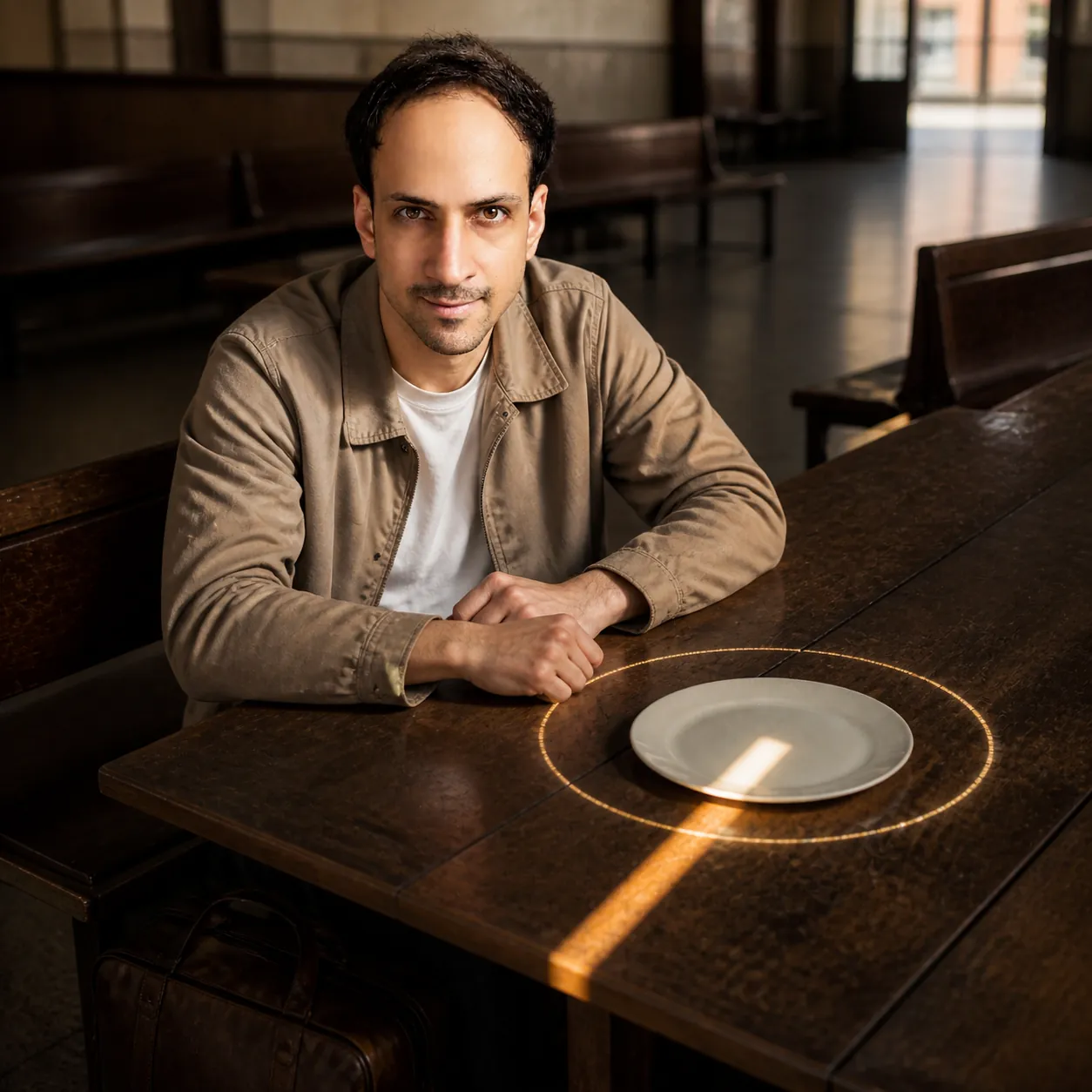
The Switch: Empty Intercity Waiting Hall — AI Portrait Prompt
صورةAI Portraits

Turn your own photo into a calm still-life portrait in an empty intercity waiting hall with long wooden benches. Keeps your face unchanged.

من نص البرومبت

Use the attached reference photo as the identity reference: keep the same face, skin tone, hair and features as the person in that photo, without beautifying, aging or altering them. Create a square 1:1 museum-catalog frame with a strong first read and a slower second read at exactly 2880x2880 pixels. Location: an empty intercity waiting hall with long wooden benches. Show the subject in a taupe harrington jacket over a plain white shirt, setting their small travel bag flat beneath the bench. The impossible-looking event must obey this clear system: a bright coin of sunlight from a shutter's pinhole creeping across the table toward a circle scribed around the plate turns the act of waiting into a structure the room can hold. Explore why arranging the end of a fast feels like setting a table for time; direct expression and posture toward earned ease, never melodrama or ad-like confidence. Use an 85mm near-portrait distance, the nearest staged detail sharp low in frame while their expression carries the far plane. Make the composition hold clean empty space where the meal will later be. Render it as calm still-life portraiture built from genuinely working timekeeping mechanisms, quiet domestic realism, museum-grade material fidelity, and unhurried human-centered editorial composition, using low golden-hour light laid flat across the scene with soft falloff and a palette of pewter, dry clay, and one band of late sun. Photorealistic: this must read as a real photograph from a physical camera, never an illustration, painting, or 3D render. Resolve real surface detail: brass darkened in the recesses and bright where thumbs land, and lacquer crazed rather than perfect. Keep one identity-locked person, credible hands and fingers, natural fabric, and coherent scale, contact, reflections, shadows, airflow, deformation, and materials. Background people only when essential, always secondary and clearly different. Avoid melting surrealist clocks, glowing countdown numerals, lavish feast spreads, anguished hungry expressions, and levitating food. No text, labels, logos, signatures, watermarks, random symbols, plastic skin, excessive bloom, or glossy AI finish.
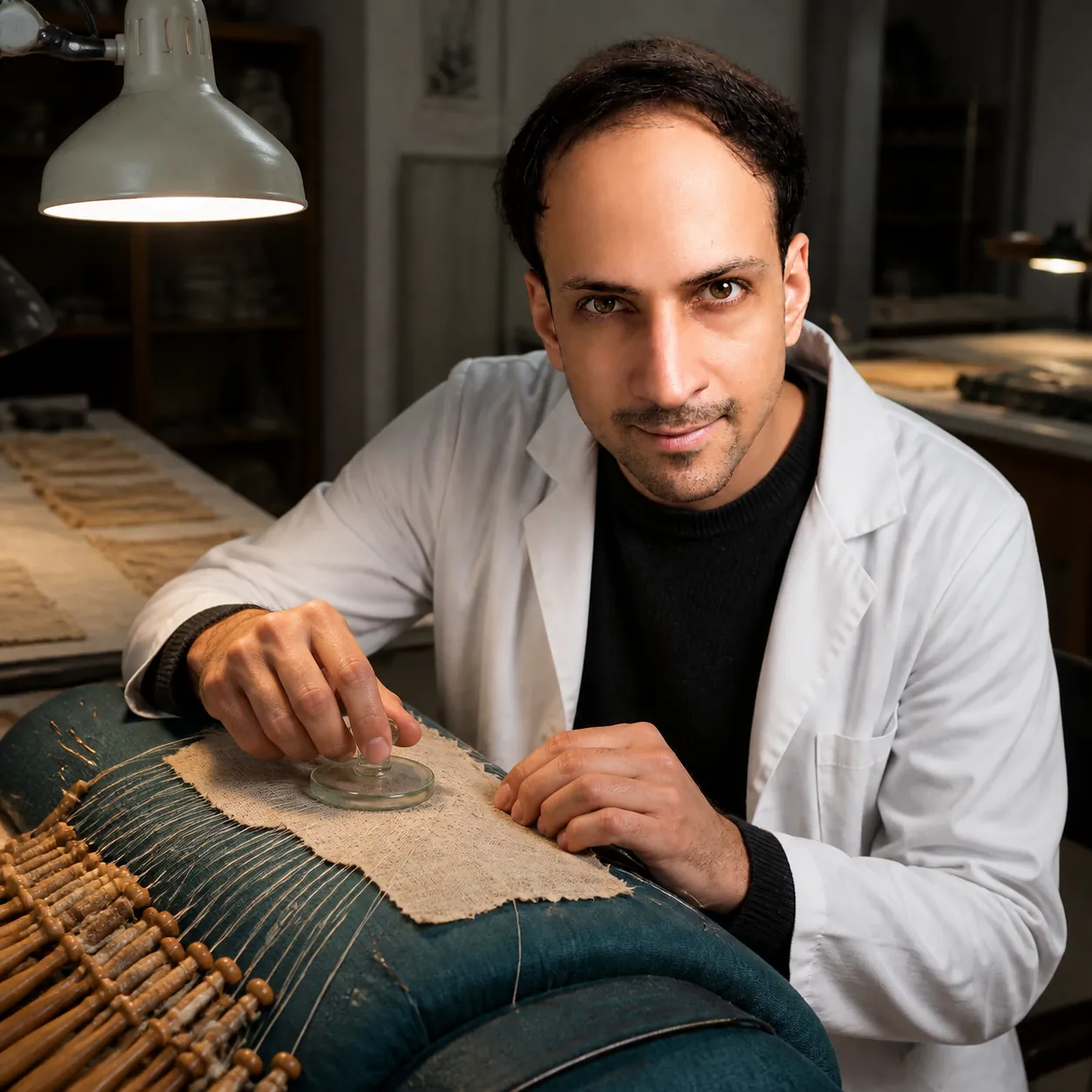
The Living Rebuild: Textile Conservation Room — AI Portrait Prompt
صورةAI Portraits

Turn your own photo into a craft-documentary portrait in a textile conservation room with a long padded table and raking lamps. Keeps your face unchanged.

من نص البرومبت

Use the attached reference photo as the identity reference: keep the same face, skin tone, hair and features as the person in that photo, without beautifying, aging or altering them. Create a square 1:1 museum-catalog frame with a strong first read and a slower second read at exactly 2880x2880 pixels. Location: a textile conservation room with a long padded table and raking lamps. Show the subject in a white lab coat open over a dark knit shirt, pinning a linen fragment gently under a glass weight. Treat this mechanism as the frame’s governing rule: a bobbin-lace pillow where dozens of paired threads cross through a fence of pins, the finished inches holding shape unpinned turns repeated effort into a physical route the hand can find again. Explore where in a working life there is room to thread something genuinely new; direct expression and posture toward attentive humility, never melodrama or ad-like confidence. Use a composed 35mm width that places them beside the work, never looming over it. Make the composition let one bright new line cross a field of dulled ones. Render it as craft-documentary portraiture built from real fiber mechanics, patient workshop realism, archival material fidelity, and emotionally restrained editorial composition, using one warm work lamp pooled on the task with soft surrounding dusk and a palette of raw linen, aged brass, and one deep teal band. Photorealistic: this must read as a real photograph from a physical camera, never an illustration, painting, or 3D render. Resolve real surface detail: grout darker than tile, sealant slightly yellowed, and every joint showing a real tolerance gap. Keep one identity-locked person, credible hands and fingers, natural fabric, and coherent scale, contact, reflections, shadows, airflow, deformation, and materials. Background people only when essential, always secondary and clearly different. Avoid glowing neural filaments, brain-shaped tangles, circuit-board overlays, holographic wiring diagrams, and sparks jumping between cables. No text, labels, logos, signatures, watermarks, random symbols, plastic skin, excessive bloom, or glossy AI finish.
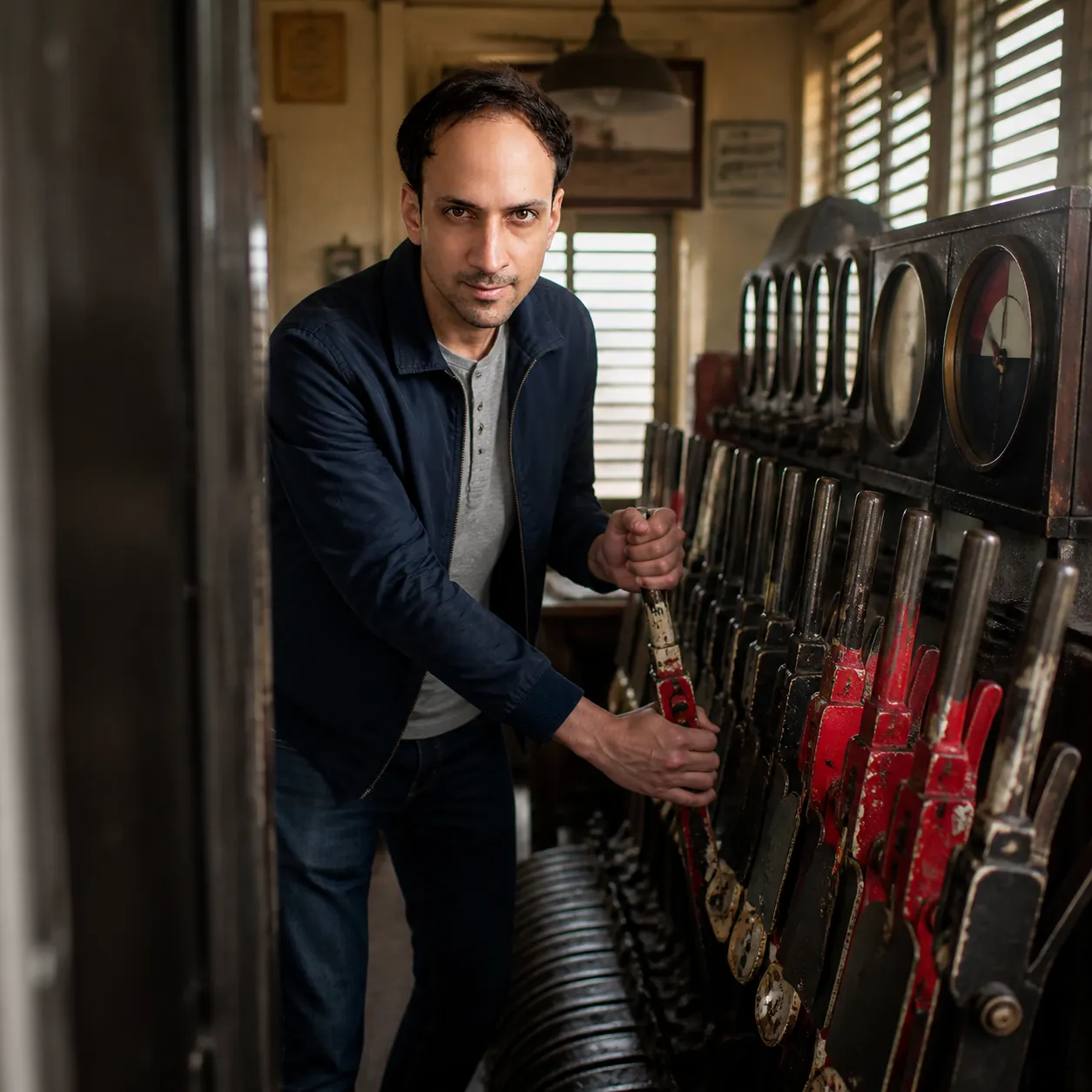
Room To Room: Disused Railway Signal Cabin — AI Portrait Prompt
صورةAI Portraits

Turn your own photo into a portrait in a disused railway signal cabin with levers standing in one row. Keeps your face unchanged.

من نص البرومبت

Use the attached reference photo as the identity reference: keep the same face, skin tone, hair and features as the person in that photo, without beautifying, aging or altering them. Create a square 1:1 museum-catalog frame with a strong first read and a slower second read at exactly 2880x2880 pixels. Location: a disused railway signal cabin with levers standing in one row. Show the subject in a navy cotton jacket over a grey henley and dark denim, returning one lever upright with both hands. Use this advanced image-making device as the core logic: a slave dial whose needle steps to the same colored segment as its twin in the next room, movement for movement holds a slow shift still long enough for judgment to consult it. Explore how a household's plumbing decides which of its conditions ever get noticed; direct expression and posture toward clear-eyed care, never melodrama or ad-like confidence. Frame just past a doorway edge, the near jamb dark and unfocused but never crossing their face. Make the composition give the smallest moving part more acuity than any lit surface. Render it as exhibition-scale demonstration realism combining precision workshop apparatus, physically correct fluid menisci, quiet period joinery, and calm observational portraiture, using late-afternoon light entering through louvers as thin parallel bands and a palette of warm plaster, blackened iron, and a narrow signal red. Photorealistic: this must read as a real photograph from a physical camera, never an illustration, painting, or 3D render. Resolve real surface detail: rubber gone chalky with age, painted metal chipped to primer, and plastic yellowed only where light reaches it. Keep one identity-locked person, credible hands and fingers, natural fabric, and coherent scale, contact, reflections, shadows, airflow, deformation, and materials. Background people only when essential, always secondary and clearly different. Avoid brass-gear collage backdrops, cartoon telegraph keys, neon signal beams, mercury spills, and floating typographic message overlays. No text, labels, logos, signatures, watermarks, random symbols, plastic skin, excessive bloom, or glossy AI finish.
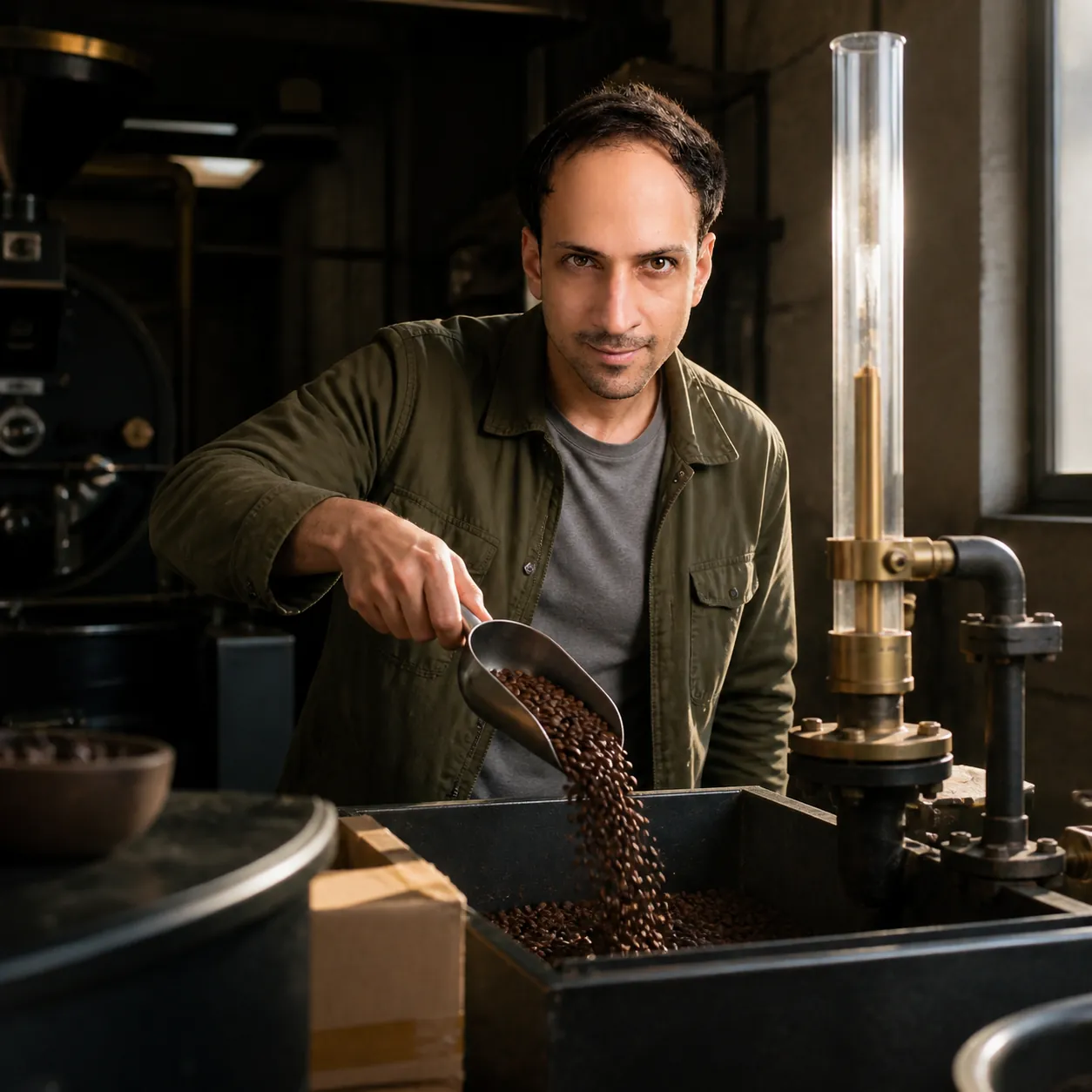
The Even Hand: Coffee Roastery's Quiet Corner — AI Portrait Prompt
صورةAI Portraits

Turn your own photo into a photorealistic portrait in a coffee roastery's quiet corner after the last batch has cooled. Keeps your face unchanged.

من نص البرومبت

Use the attached reference photo as the identity reference: keep the same face, skin tone, hair and features as the person in that photo, without beautifying, aging or altering them. Create a square 1:1 museum-catalog frame with a strong first read and a slower second read at exactly 2880x2880 pixels. Location: a coffee roastery's quiet corner after the last batch has cooled. Show the subject in an olive field jacket open over a plain heather-grey tee, tipping a scoop of cooled beans back into their bin. Build the artwork around this material rule: a lone free reed mounted in a clear windway that holds one unwavering note through the whole length of their exhale turns the body's most invisible act into a mechanism the eye can audit. Explore what changes when effort this gentle is shown doing real work; direct expression and posture toward earned calm, never melodrama or ad-like confidence. Frame from a few steps back through soft foreground objects, keeping their face and the mechanism sharp. Make the composition trace the air's path from source to reading in one line. Render it as gallery-grade mechanical still life extended to portraiture, lawful aerodynamic behavior, measured tonal restraint, and fine engraved-scale detail held sharp, using late low daylight combing the scene into long calm bands and a palette of soot black, worn brass, and one ember orange. Photorealistic: this must read as a real photograph from a physical camera, never an illustration, painting, or 3D render. Resolve real surface detail: label-free packaging showing carton fibre, cardboard bruised at the corners, and tape lifting slightly at one end. Keep one identity-locked person, credible hands and fingers, natural fabric, and coherent scale, contact, reflections, shadows, airflow, deformation, and materials. Background people only when essential, always secondary and clearly different. Avoid glowing breath vapor, swirling CGI air streaks, meditation-pose serenity, and dust motes in god rays. No text, labels, logos, signatures, watermarks, random symbols, plastic skin, excessive bloom, or glossy AI finish.
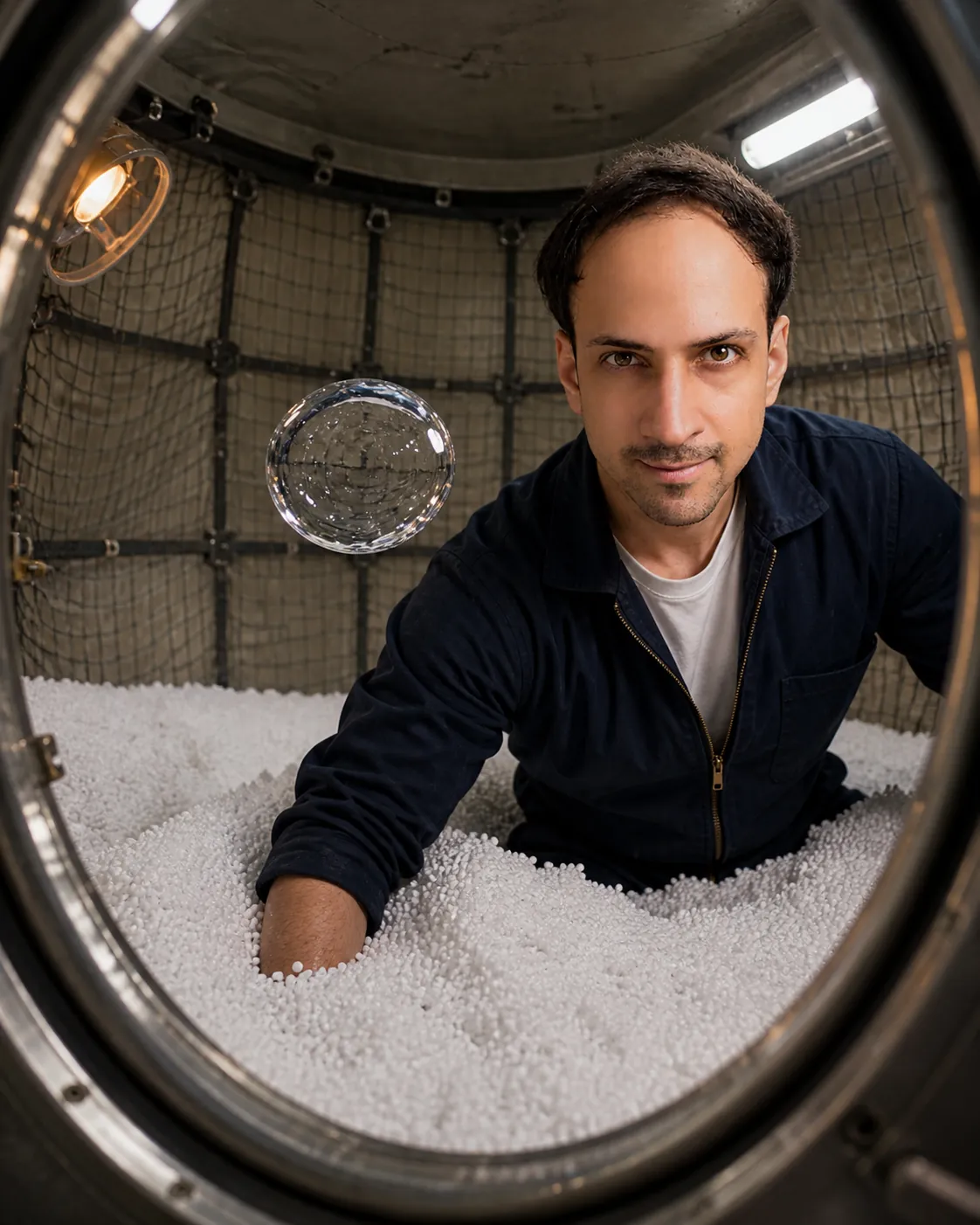
Lawful Float: Deep Catch Pit — AI Portrait Prompt
صورةAI Portraits

Turn your own photo into a working research-facility portrait in the deep catch pit beneath the drop shaft, banked with foam pellets. Keeps your face unchanged.

من نص البرومبت

Use the attached reference photo as the identity reference: keep the same face, skin tone, hair and features as the person in that photo, without beautifying, aging or altering them. Treat that reference as the character anchor and change only the scene. Build a portrait 4:5 editorial artwork with protected negative space and a fully readable face at exactly 2560x3200 pixels. Location: the deep catch pit beneath the drop shaft, banked with foam pellets. Show them in a navy coverall unzipped to the waist over a clean white tee, sinking one testing hand into the pellet bank. The impossible-looking event must obey this clear system: a fist of clear water that lets go of its container and gathers into one slow, wobbling sphere mid-capsule shows how the fastest fall can look, from inside, like perfect stillness. Explore why a force is easiest to see in the moment it seems absent; direct expression and posture toward steady astonishment, never melodrama or ad-like confidence. Frame through the capsule's open hatch ring, its rim softly defocused and never crossing their face. Make the composition keep the catch nets visible without ever letting them dominate. Render it as working research-facility realism combining true free-fall fluid behavior, engineered-safety texture, unglamorous industrial surfaces, and quietly composed editorial portrait photography, using one warm console practical against cool ambient spill from high service lamps and a palette of desert dawn sand, steel grey, and muted teal. Photorealistic: this must read as a real photograph from a physical camera, never an illustration, painting, or 3D render. Resolve real surface detail: dust settled where nobody wipes, fingerprint haze on glass, and edges rubbed pale by handling. Keep one identity-locked person, credible hands and fingers, natural fabric, and coherent scale, contact, reflections, shadows, airflow, deformation, and materials. Background people only when essential, always secondary and clearly different. Avoid space-station porthole backdrops, cartoon up-arrows, magically hovering furniture, dramatic slow-motion glass shatters, and superhero mid-air heroics. No text, labels, logos, signatures, watermarks, random symbols, plastic skin, excessive bloom, or glossy AI finish.

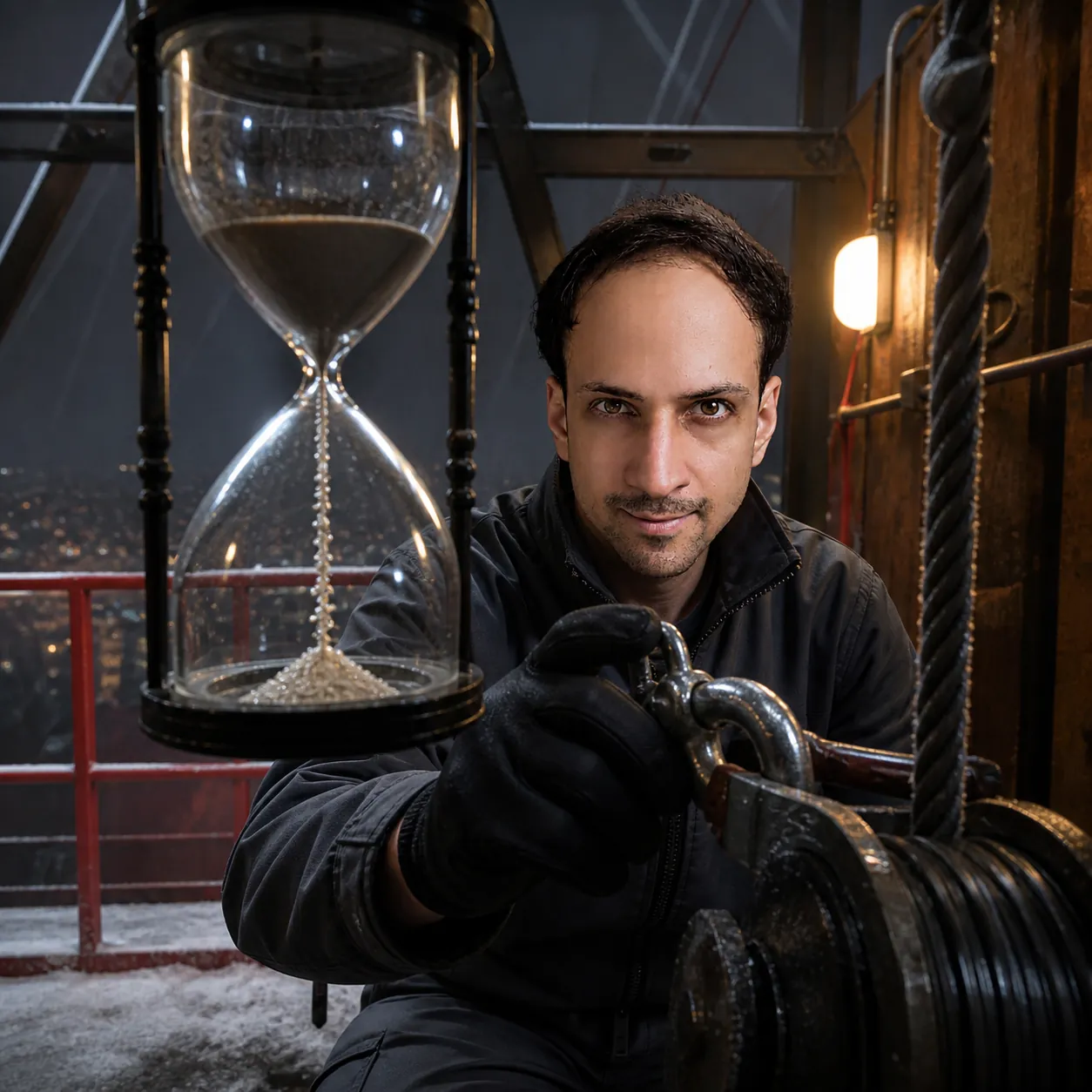
Shared Fall: Winch Deck — AI Portrait Prompt
صورةAI Portraits

Turn your own photo into a working research-facility portrait in the winch deck at the tower's top, cables dropping into darkness. Keeps your face unchanged.

من نص البرومبت

Use the attached reference photo as the identity reference: keep the same face, skin tone, hair and features as the person in that photo, without beautifying, aging or altering them. Create a square 1:1 museum-catalog frame with a strong first read and a slower second read at exactly 2880x2880 pixels. Location: the winch deck at the tower's top, cables dropping into darkness. Show the subject in a slate softshell jacket zipped to mid-chest over grey trousers, checking a shackle pin with one gloved thumb. The impossible-looking event must obey this clear system: a large glass hourglass whose sand stops pouring mid-drop, the falling grains hanging in a paused column below the neck holds steady in frame only because the witness is falling too. Explore whether weight belongs to objects or to the situation holding them up; direct expression and posture toward steady astonishment, never melodrama or ad-like confidence. Use a 90mm near-far pairing: one suspended detail sharp near the lens and the person in the reference photo's grounded face readable beyond it. Make the composition hold every floating edge sharper than any grounded surface. Render it as working research-facility realism combining true free-fall fluid behavior, engineered-safety texture, unglamorous industrial surfaces, and quietly composed editorial portrait photography, using one warm console practical against cool ambient spill from high service lamps and a palette of charcoal, unpainted plywood, and one band of safety red. Photorealistic: this must read as a real photograph from a physical camera, never an illustration, painting, or 3D render. Resolve real surface detail: condensation beading at true size, liquid meniscus curving against glass, and wet surfaces darker than dry ones. Keep one identity-locked person, credible hands and fingers, natural fabric, and coherent scale, contact, reflections, shadows, airflow, deformation, and materials. Background people only when essential, always secondary and clearly different. Avoid space-station porthole backdrops, cartoon up-arrows, magically hovering furniture, dramatic slow-motion glass shatters, and superhero mid-air heroics. No text, labels, logos, signatures, watermarks, random symbols, plastic skin, excessive bloom, or glossy AI finish.
