تخطَّ إلى المحتوى
f

faisal aziz

@alkhunizan

2700البرومبتات
0تصويتات مستلمة
0مساهمات
تاريخ الانضمام منذ 4 أشهر
2700 مساهمات في العام الماضي
نوفمبر
ديسمبر
يناير
فبراير
مارس
أبريل
مايو
يونيو
يوليو
أغسطس
سبتمبر
أكتوبر
ن
ر
ج
أقل
أكثر
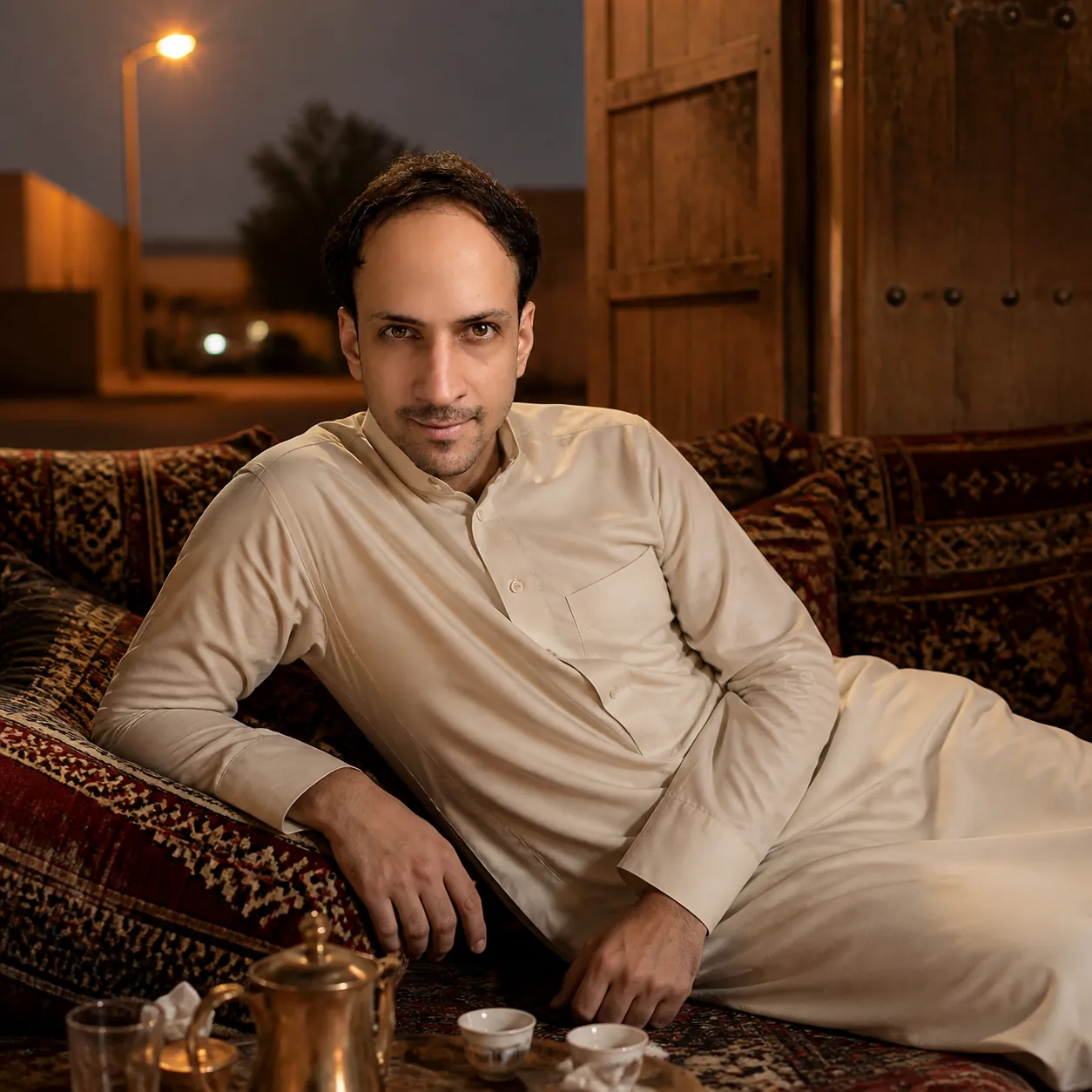
The Missing Weekday — AI Portrait Prompt
صورةAI Portraits

Turn your own photo into a photorealistic portrait in a majlis late in the evening, cushions dented and cups collected. Keeps your face unchanged.

من نص البرومبت

Use the attached reference photo as the identity reference: keep the same face, skin tone, hair and features as the person in that photo, without beautifying, aging or altering them. Treat that reference as the character anchor and change only the scene. Create a square 1:1 museum-catalog frame with a strong first read and a slower second read at exactly 2880x2880 pixels. Location: a majlis late in the evening, cushions dented and cups collected. Show the subject in an ivory traditional Gulf outfit gone soft with the day, reclining on one elbow along the cushion line. Build the second read around this bent minute: a weekday surfacing mid-errand one full day off from where they had filed it, the week having slid a quiet notch thickens the recording without slowing the event by one degree. Explore how a whole day can go missing from the week's count without a seam showing; expression open and unforced, carrying unhurried reflection, the attention held at the speed the day actually runs. Take a 35mm three-quarter view with a doorway or boundary cutting the frame. Make the composition let their stillness argue with the scene's implied motion. Render it as plain documentary photography made from real errand locations, natural fidgets and stillness, credible props, and completely undramatic timing, using one streetlamp arriving before the sky has fully gone and a palette of warm sand, shadow brown, and a single lamplit cream. Photorealistic: this must read as a real photograph from a physical camera, never an illustration, painting, or 3D render. Keep one identity-locked person, credible hands and fingers, natural fabric, and coherent scale, contact, reflections, shadows, airflow, deformation, and materials. Background people only when essential, always secondary and clearly different. Avoid montage effects, motion-blur streaks, double exposure, ghost trails, and any literal time-lapse styling. No text, labels, logos, signatures, watermarks, random symbols, plastic skin, excessive bloom, or glossy AI finish.
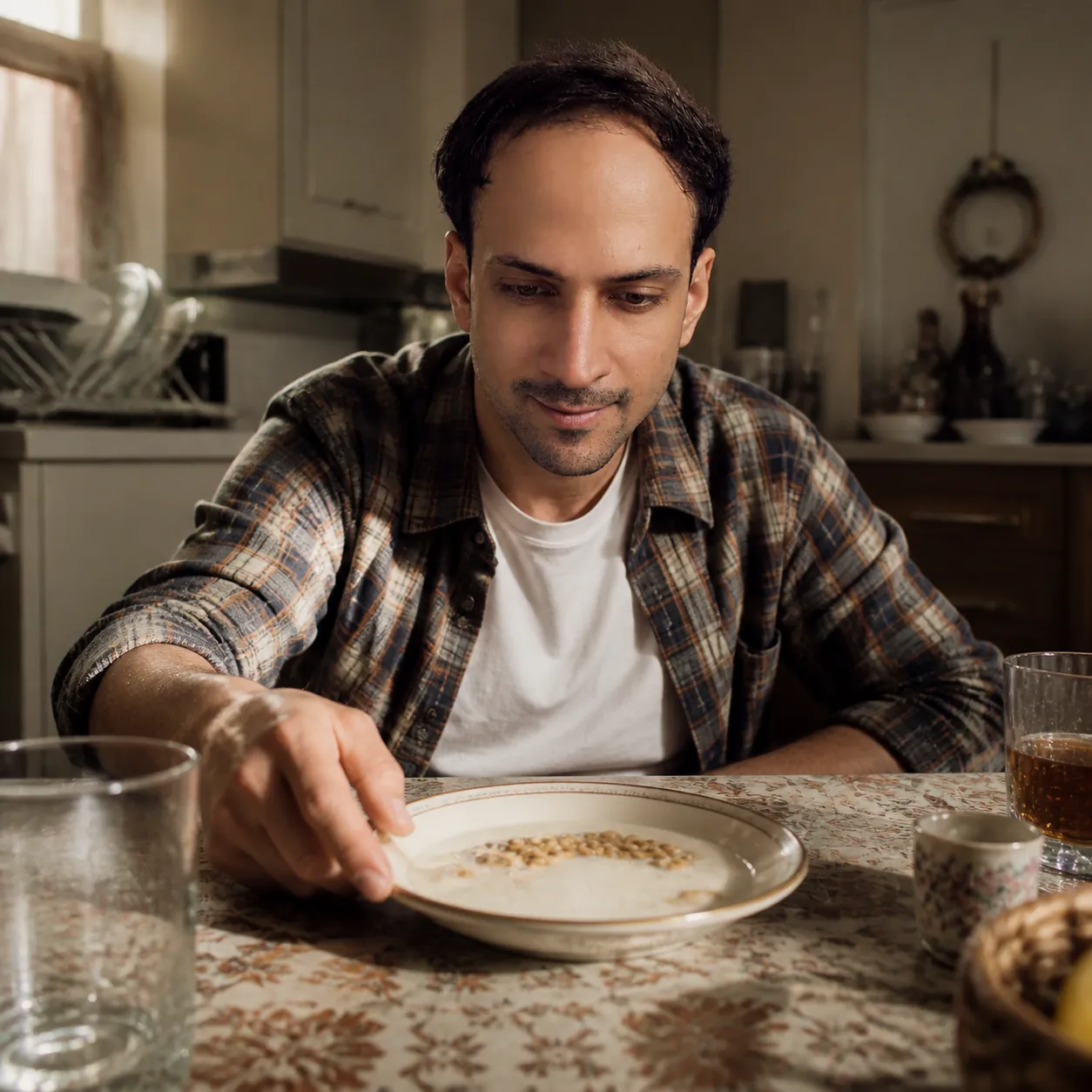
Breakfast at Mother's Table — AI Portrait Prompt
صورةAI Portraits

Turn your own photo into a photorealistic portrait in your mother's kitchen table with its patterned oilcloth cover. Keeps your face unchanged.

من نص البرومبت

Use the attached reference photo as the identity reference: keep the same face, skin tone, hair and features as the person in that photo, without beautifying, aging or altering them. Treat that reference as the character anchor and change only the scene. Create a square 1:1 museum-catalog frame with a strong first read and a slower second read at exactly 2880x2880 pixels. Location: their mother's kitchen table with its patterned oilcloth cover. Show them in a plain white tee under an open flannel shirt, drawing the saucer toward them across the cloth. Build the second read around this tabletop physics: a fleet of dry oat rings afloat on the milk, gathering into one raft and easing toward the bowl's wall runs a law of nature at the scale of one saucer. Explore what changes in a person the moment they watch a process that never needed them; expression open and unforced, carrying practical focus, the attention held inside the ordinary tempo of breakfast. Drop the lens to just above table height so the glasses stand like buildings before them. Make the composition balance their patient face against the busy miniature weather below. Render it as gallery-grade still-life realism assembling worn table surfaces, precise liquid rendering, soft believable reflections, and a sitter who belongs to the room, using level early sun raking the tabletop and giving every ripple a shadow and a palette of pale sand, matte black, and one deep coffee accent. Photorealistic: this must read as a real photograph from a physical camera, never an illustration, painting, or 3D render. Keep one identity-locked person, credible hands and fingers, natural fabric, and coherent scale, contact, reflections, shadows, airflow, deformation, and materials. Background people only when essential, always secondary and clearly different. Avoid splash spectacle, staged laboratory glassware, magnified insets, diagram overlays, and any hint of demonstration setup. No text, labels, logos, signatures, watermarks, random symbols, plastic skin, excessive bloom, or glossy AI finish.
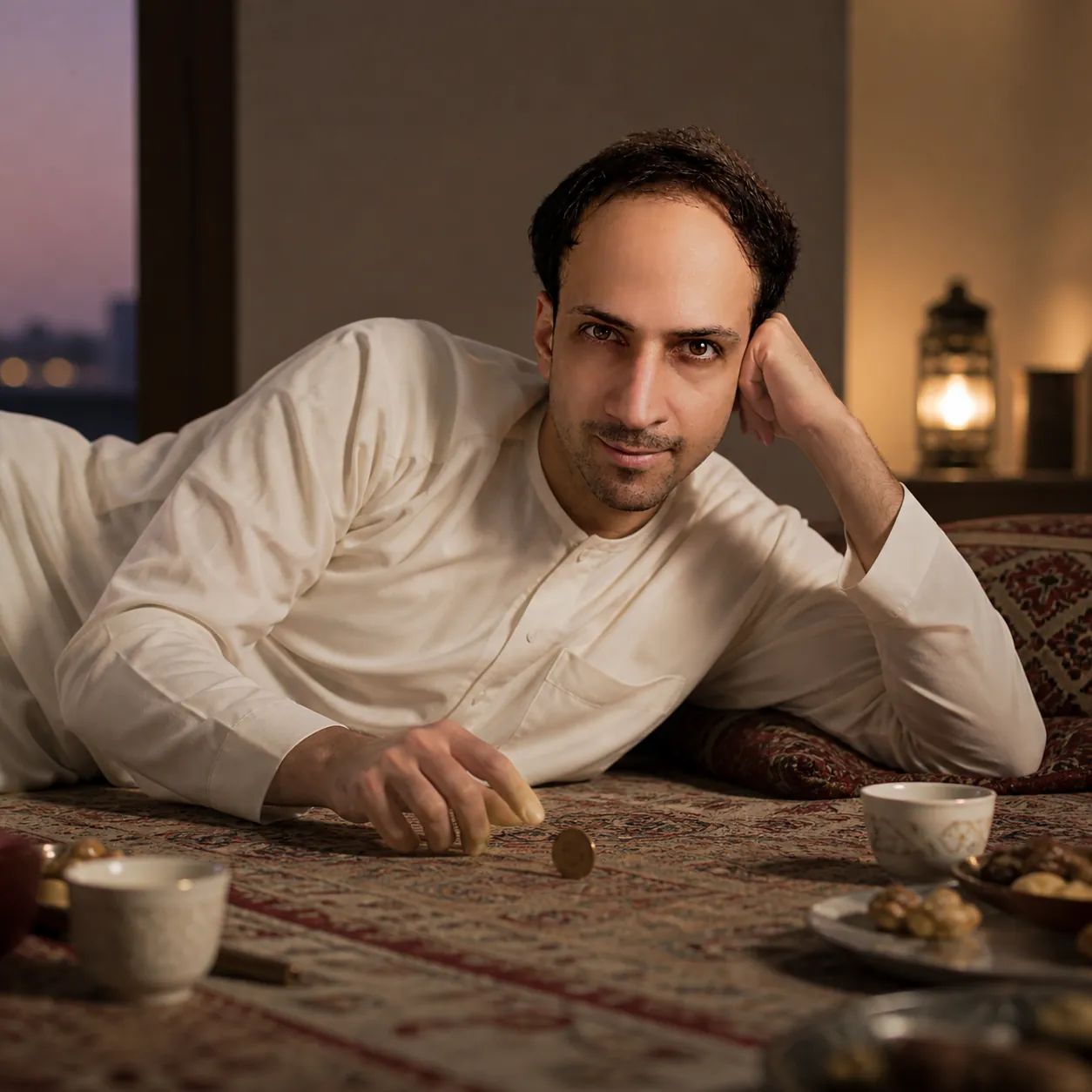
Late Evening in the Majlis — AI Portrait Prompt
صورةAI Portraits

Turn your own photo into a photorealistic portrait in a majlis late in the evening, cushions dented and cups collected. Keeps your face unchanged.

من نص البرومبت

Use the attached reference photo as the identity reference: keep the same face, skin tone, hair and features as the person in that photo, without beautifying, aging or altering them. Treat that reference as the character anchor and change only the scene. Create a square 1:1 museum-catalog frame with a strong first read and a slower second read at exactly 2880x2880 pixels. Location: a majlis late in the evening, cushions dented and cups collected. Show the subject in an ivory traditional Gulf outfit gone soft with the day, reclining on one elbow along the cushion line. Let the frame hold this stretch of private time: a coin slipped from their change still rolling its long arc, the watching second swelling around its spin keeps a private clock that never once agrees with the wall's. Explore why one unexpected small event seems to carry more time than the minute holding it; expression open and unforced, carrying calm noticing, the attention held just beneath the surface of the hour. Use a 50mm at eye level with any clock readable as an object, never its digits. Make the composition surround them with stillness that reads as duration. Render it as gallery-grade street-and-interior realism assembling soft artificial light, believable unmarked walls, and one person's inner hour held in frame, using dusk settling by degrees, edges softening in the last airborne light and a palette of slate grey, linen white, and one dusk-violet note. Photorealistic: this must read as a real photograph from a physical camera, never an illustration, painting, or 3D render. Keep one identity-locked person, credible hands and fingers, natural fabric, and coherent scale, contact, reflections, shadows, airflow, deformation, and materials. Background people only when essential, always secondary and clearly different. Avoid clock faces with readable digits, calendars, hourglasses, melting-clock surrealism, and any visible countdown. No text, labels, logos, signatures, watermarks, random symbols, plastic skin, excessive bloom, or glossy AI finish.
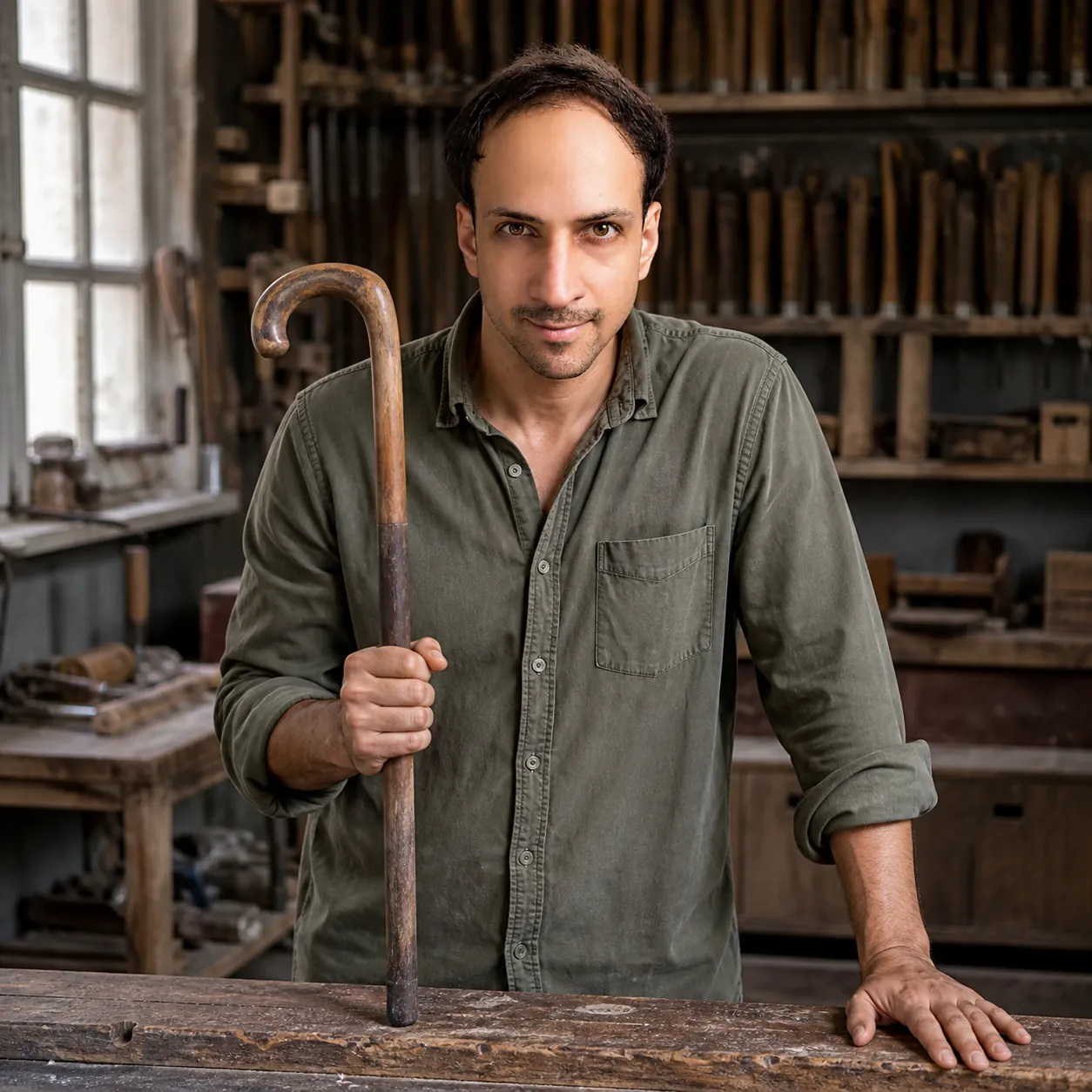
Grandfather's Workshop Cane — AI Portrait Prompt
صورةAI Portraits

Turn your own photo into a quiet archival portrait in your grandfather's workshop where tool handles hang darkened at your grips. Keeps your face unchanged.

من نص البرومبت

Use the attached reference photo as the identity reference: keep the same face, skin tone, hair and features as the person in that photo, without beautifying, aging or altering them. Treat that reference as the character anchor and change only the scene. Create a square 1:1 museum-catalog frame with a strong first read and a slower second read at exactly 2880x2880 pixels. Location: their grandfather's workshop where tool handles hang darkened at their grips. Show the subject in a faded olive work shirt with sleeves rolled twice, resting one palm flat on the scarred workbench. Build the second look around this earned mark: their grandfather's cane with one hand-width of shaft burnished dark where three generations chose the same grip testifies to constancy more credibly than any spoken claim. Explore whether a habit exists anywhere more honestly than in the surface it wore; expression open and unforced, carrying a keeper's tenderness, the attention held inside the object's own patience. Frame at waist height so hands, object, and face stack in one column. Make the composition let repeated forms, treads and shelves and slats, set the rhythm behind them. Render it as quiet archival realism combining lived-in Saudi interiors, generational objects, natural handling marks, and light that respects age, using cool north daylight, even and forensic, kind to texture and a palette of smoke grey, honeyed wood, and a quiet pewter note. Photorealistic: this must read as a real photograph from a physical camera, never an illustration, painting, or 3D render. Keep one identity-locked person, credible hands and fingers, natural fabric, and coherent scale, contact, reflections, shadows, airflow, deformation, and materials. Background people only when essential, always secondary and clearly different. Avoid museum vitrines, white gloves, catalogue cards, dramatic spotlighting, and any restoration gloss. No text, labels, logos, signatures, watermarks, random symbols, plastic skin, excessive bloom, or glossy AI finish.
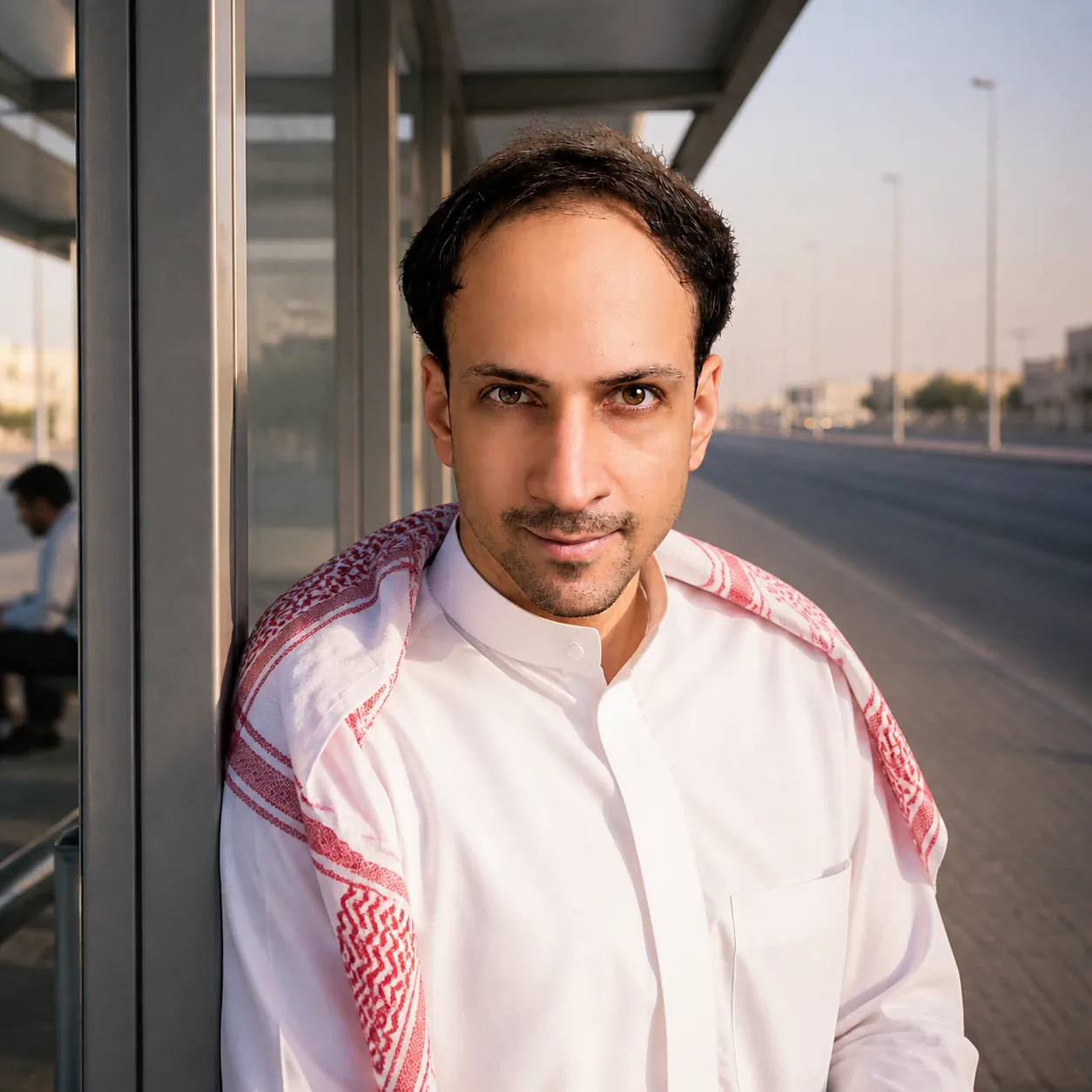
The Day That Slipped — AI Portrait Prompt
صورةAI Portraits

Turn your own photo into a patient observational portrait in a bus shelter's strip of shade on a wide afternoon road. Keeps your face unchanged.

من نص البرومبت

Use the attached reference photo as the identity reference: keep the same face, skin tone, hair and features as the person in that photo, without beautifying, aging or altering them. Treat that reference as the character anchor and change only the scene. Create a square 1:1 museum-catalog frame with a strong first read and a slower second read at exactly 2880x2880 pixels. Location: a bus shelter's strip of shade on a wide afternoon road. Show the subject in a white traditional Gulf outfit with a light shemagh thrown back, leaning one shoulder against the shelter post. Make this quiet distortion the argument: a weekday surfacing mid-errand one full day off from where they had filed it, the week having slid a quiet notch keeps a private clock that never once agrees with the wall's. Explore how a whole day can go missing from the week's count without a seam showing; expression open and unforced, carrying calm noticing, the attention held level with the errand around it. Frame them at chest height with empty time visible around them as negative space. Make the composition put the boundary they crossed inside the frame with them. Render it as patient observational portraiture built from believable public interiors, honest artificial light, unposed waiting bodies, and time made almost visible, using the flat pause of late fluorescent light over an empty hour and a palette of slate grey, linen white, and one dusk-violet note. Photorealistic: this must read as a real photograph from a physical camera, never an illustration, painting, or 3D render. Keep one identity-locked person, credible hands and fingers, natural fabric, and coherent scale, contact, reflections, shadows, airflow, deformation, and materials. Background people only when essential, always secondary and clearly different. Avoid clock faces with readable digits, calendars, hourglasses, melting-clock surrealism, and any visible countdown. No text, labels, logos, signatures, watermarks, random symbols, plastic skin, excessive bloom, or glossy AI finish.
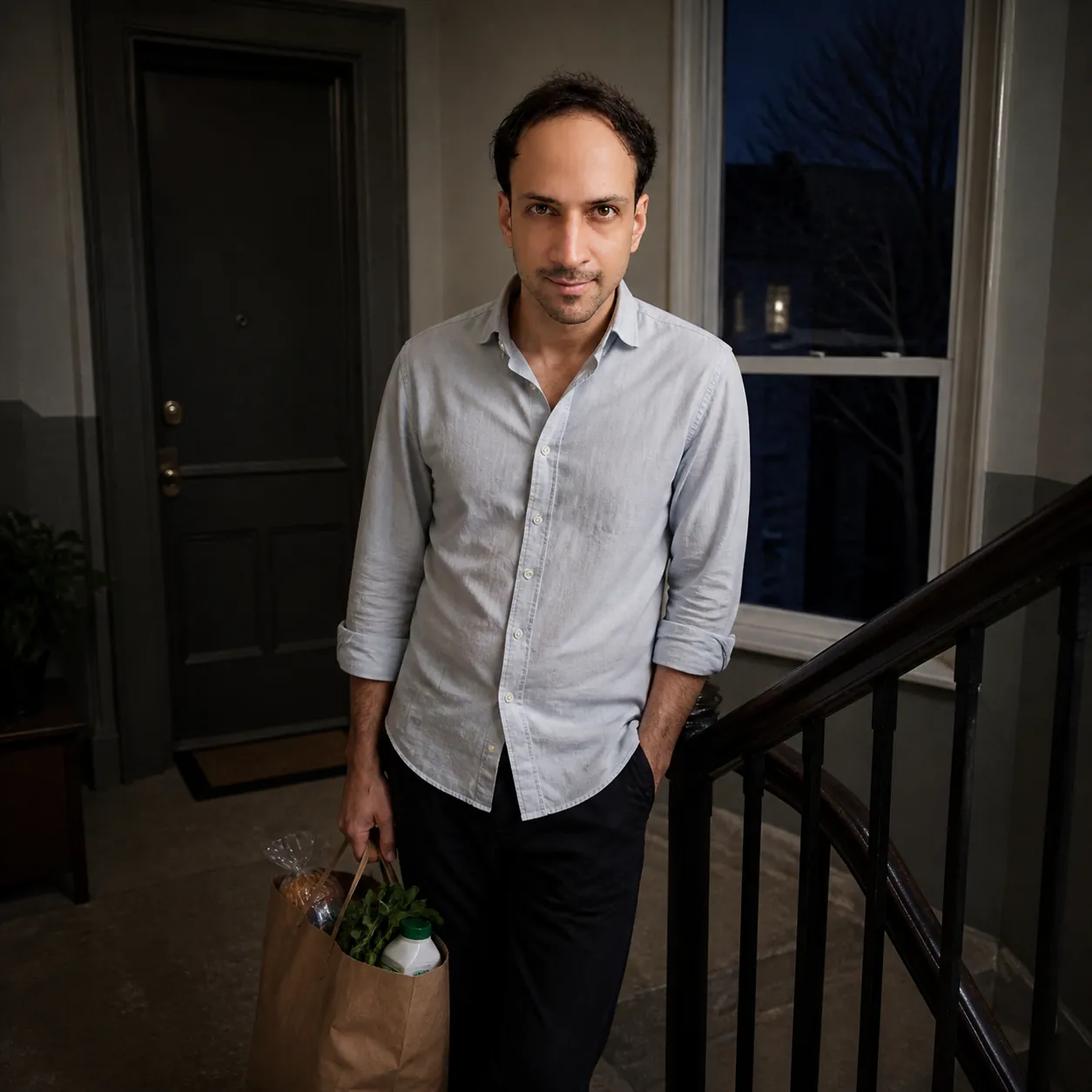
The Pause on the Landing — AI Portrait Prompt
صورةAI Portraits

Turn your own photo into a photorealistic portrait in the landing of your building's stairs, one floor short of home. Keeps your face unchanged.

من نص البرومبت

Use the attached reference photo as the identity reference: keep the same face, skin tone, hair and features as the person in that photo, without beautifying, aging or altering them. Treat that reference as the character anchor and change only the scene. Create a square 1:1 museum-catalog frame with a strong first read and a slower second read at exactly 2880x2880 pixels. Location: the landing of their building's stairs, one floor short of home. Show the subject in an office shirt untucked at the end of the day, pausing with a grocery bag hanging from one hand. Give this unmeasured moment its full due: a lull in the talk that their body measures far past its actual seconds, courtesy keeping its own quick clock thickens the recording without slowing the event by one degree. Explore why a harmless pause in talk feels longer than any watch will confirm; expression open and unforced, carrying ordinary patience, the attention held without argument with the clock. Keep the lens still and level, the composition calm enough to make duration felt. Make the composition hold one time cue softly visible and every other out of frame. Render it as plain documentary photography made from real errand locations, natural fidgets and stillness, credible props, and completely undramatic timing, using kitchen counter light pooled small while the window goes navy and a palette of slate grey, linen white, and one dusk-violet note. Photorealistic: this must read as a real photograph from a physical camera, never an illustration, painting, or 3D render. Keep one identity-locked person, credible hands and fingers, natural fabric, and coherent scale, contact, reflections, shadows, airflow, deformation, and materials. Background people only when essential, always secondary and clearly different. Avoid montage effects, motion-blur streaks, double exposure, ghost trails, and any literal time-lapse styling. No text, labels, logos, signatures, watermarks, random symbols, plastic skin, excessive bloom, or glossy AI finish.
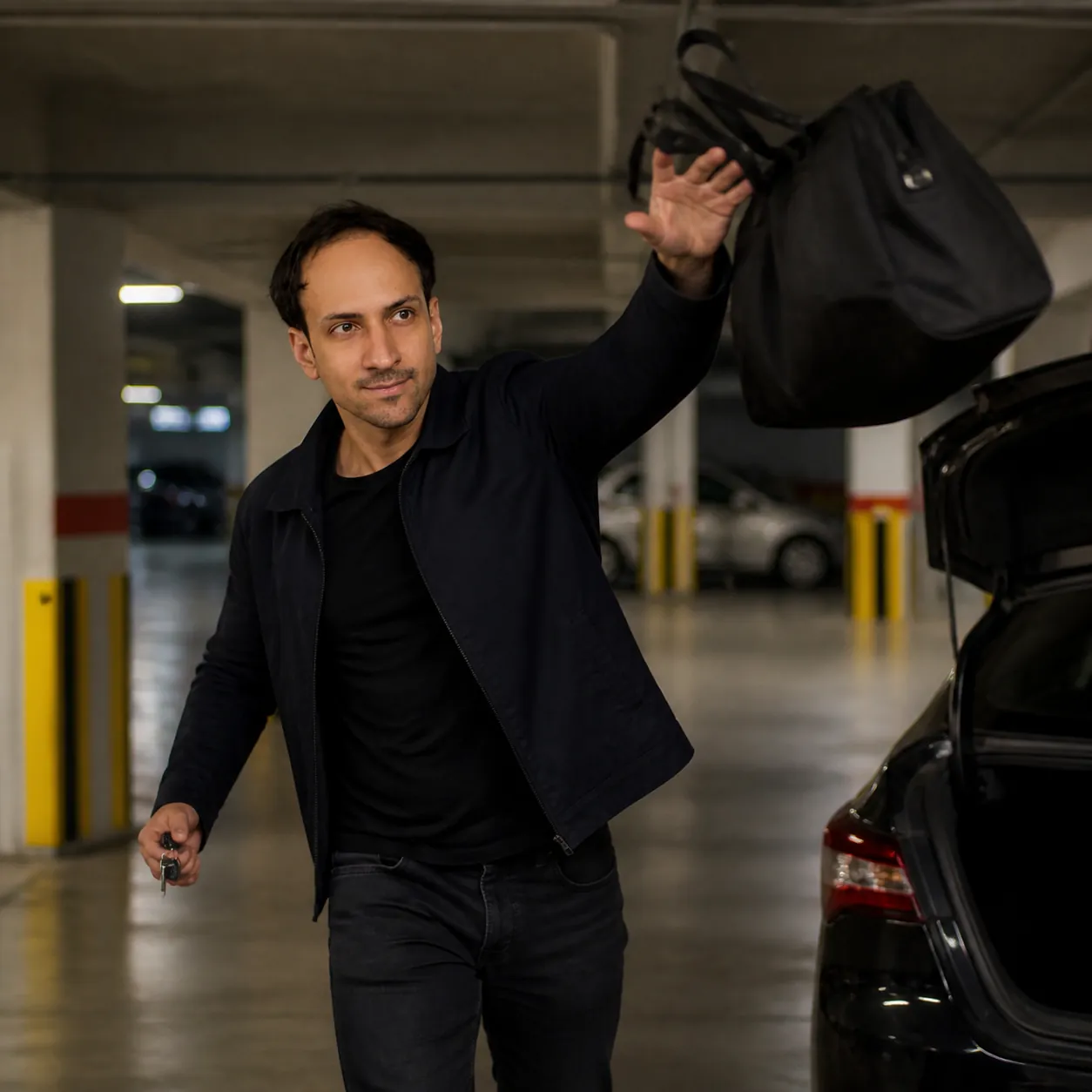
The Empty Bag Lift — AI Portrait Prompt
صورةAI Portraits

Turn your own photo into a quiet observational portrait in an underground parking level of pillars and even echo. Keeps your face unchanged.

من نص البرومبت

Use the attached reference photo as the identity reference: keep the same face, skin tone, hair and features as the person in that photo, without beautifying, aging or altering them. Treat that reference as the character anchor and change only the scene. Create a square 1:1 museum-catalog frame with a strong first read and a slower second read at exactly 2880x2880 pixels. Location: an underground parking level of pillars and even echo. Show the subject in a dark jacket over a tee, keys looped on one finger, crossing toward their car on an easy diagonal. Treat this confident error as the key: a bag lifted with force budgeted for full and paid against empty, the arm sailing high past its target runs on yesterday's calibration until the update finally lands. Explore how an arm can be wrong about a bag it has carried a hundred times; expression open and unforced, carrying plain interest, the attention held before the correction finishes filing. Use an 85mm portrait, the body's small miscalculation sharp and the room honestly plain. Make the composition read normal at first glance and reveal the error on the second. Render it as quiet observational realism combining ordinary interiors, credible body mechanics, unstaged surprise, and light that explains every reflection, using one counter lamp holding a small warm room inside the dark kitchen and a palette of marble cream, smoked glass, and a single brass line. Photorealistic: this must read as a real photograph from a physical camera, never an illustration, painting, or 3D render. Keep one identity-locked person, credible hands and fingers, natural fabric, and coherent scale, contact, reflections, shadows, airflow, deformation, and materials. Background people only when essential, always secondary and clearly different. Avoid literal ghosts, drawn-on illusions, double exposure, diagram arrows, and any visual-effect trickery. No text, labels, logos, signatures, watermarks, random symbols, plastic skin, excessive bloom, or glossy AI finish.
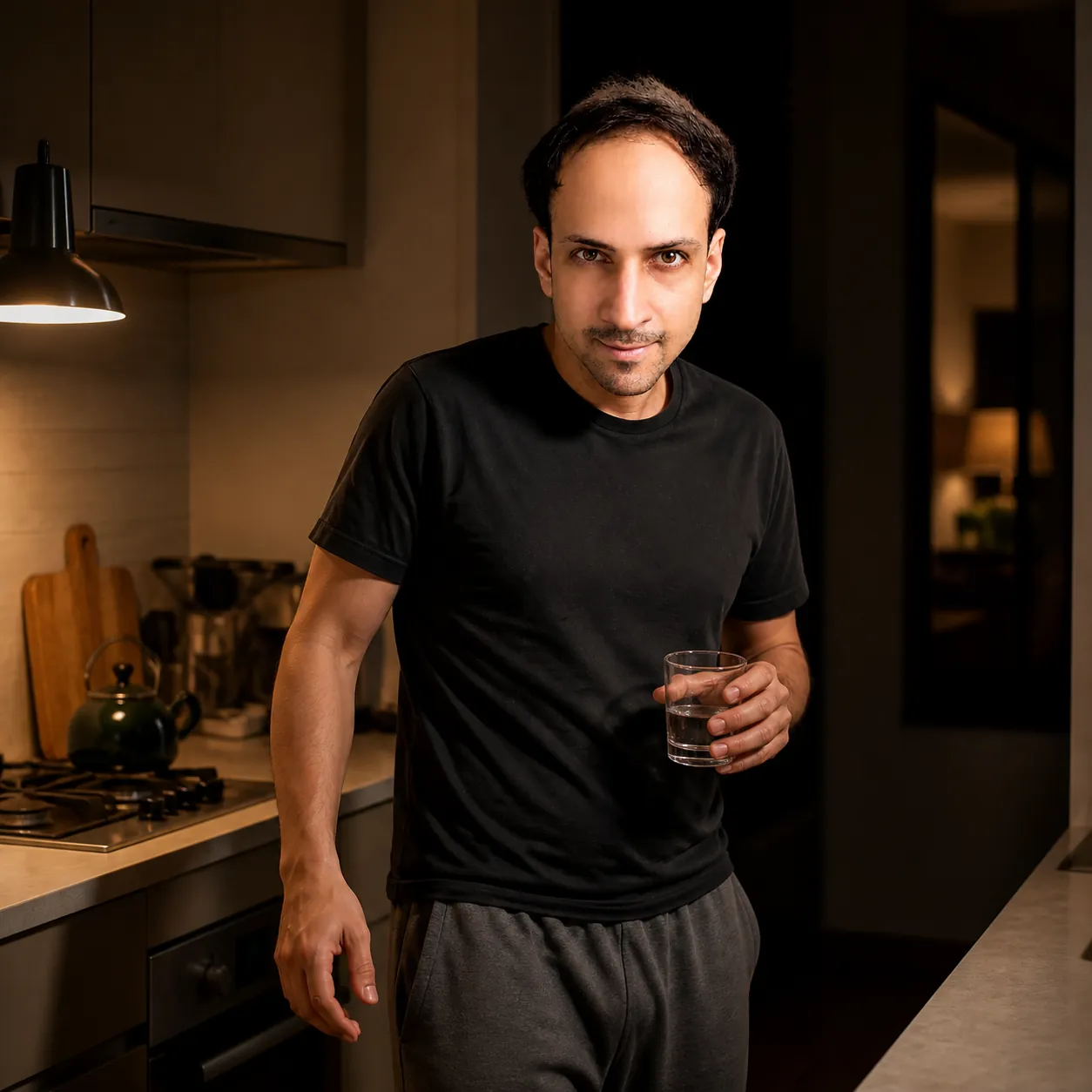
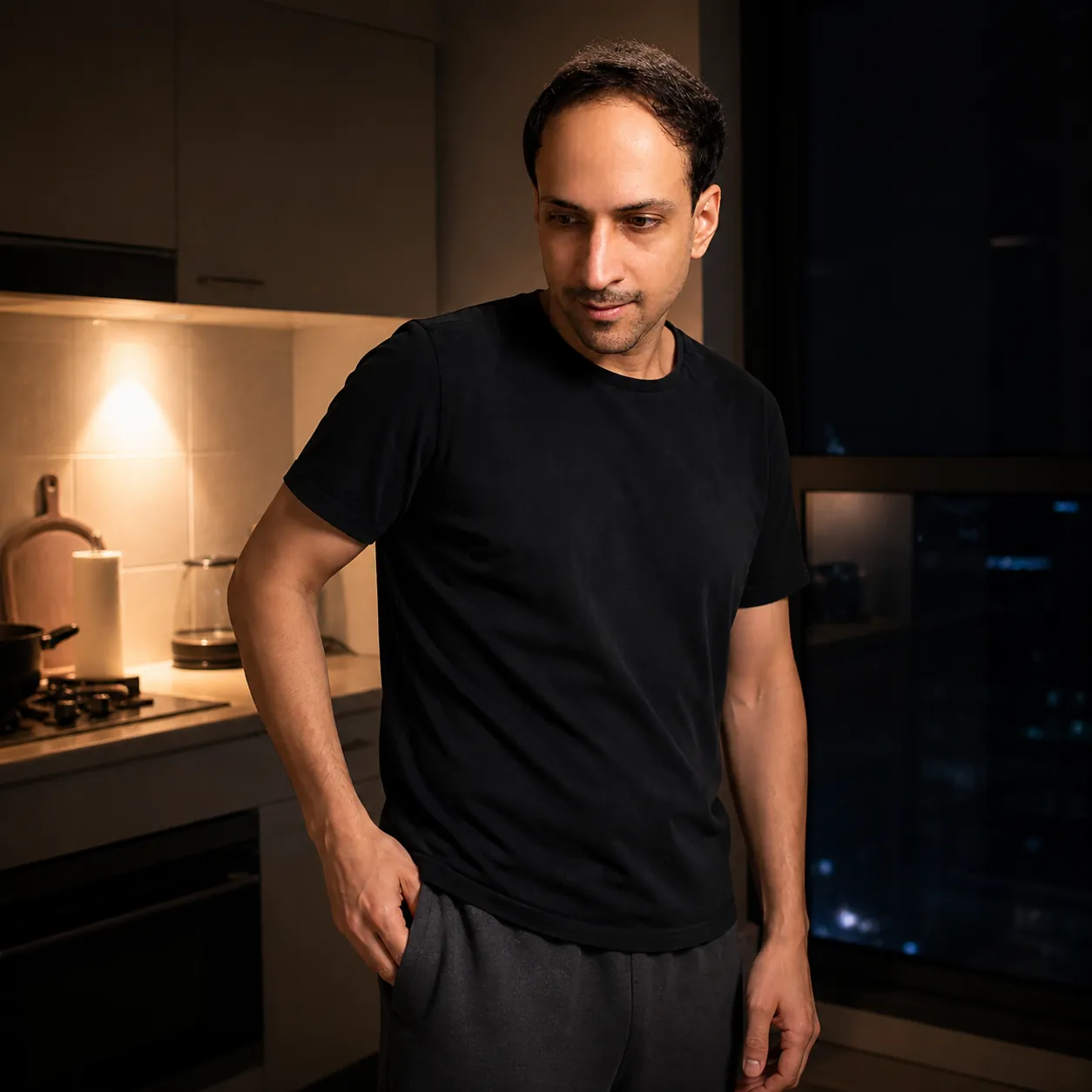
A Fixed Gaze in the Kitchen — AI Portrait Prompt
صورةAI Portraits

Turn your own photo into a quiet observational portrait in the kitchen of your flat at night with one counter lamp on. Keeps your face unchanged.

من نص البرومبت

Use the attached reference photo as the identity reference: keep the same face, skin tone, hair and features as the person in that photo, without beautifying, aging or altering them. Treat that reference as the character anchor and change only the scene. Create a square 1:1 museum-catalog frame with a strong first read and a slower second read at exactly 2880x2880 pixels. Location: the kitchen of their flat at night with one counter lamp on. Show the subject in a tee and loose trousers, the day over, moving through the room with the ease of blind habit. Let the frame catch this prediction mid-error: a gaze held so long on one point that the edges of the room quietly thin and step back shows the forecast arriving before the fact and briefly outranking it. Explore why the world thins at its edges the moment the eyes refuse to move; expression open and unforced, carrying startled good humour, the attention held level with the ordinary moment. Use a 50mm at eye level, catching the gesture at its exact mid-error instant. Make the composition give the expected motion its empty space in the frame. Render it as quiet observational realism combining ordinary interiors, credible body mechanics, unstaged surprise, and light that explains every reflection, using arcade shade striped with hard noon between the arches and a palette of plaster beige, worn teal, and one warm terracotta note. Photorealistic: this must read as a real photograph from a physical camera, never an illustration, painting, or 3D render. Keep one identity-locked person, credible hands and fingers, natural fabric, and coherent scale, contact, reflections, shadows, airflow, deformation, and materials. Background people only when essential, always secondary and clearly different. Avoid cartoon pratfalls, spilled chaos, falls, injury, and any slapstick exaggeration. No text, labels, logos, signatures, watermarks, random symbols, plastic skin, excessive bloom, or glossy AI finish.
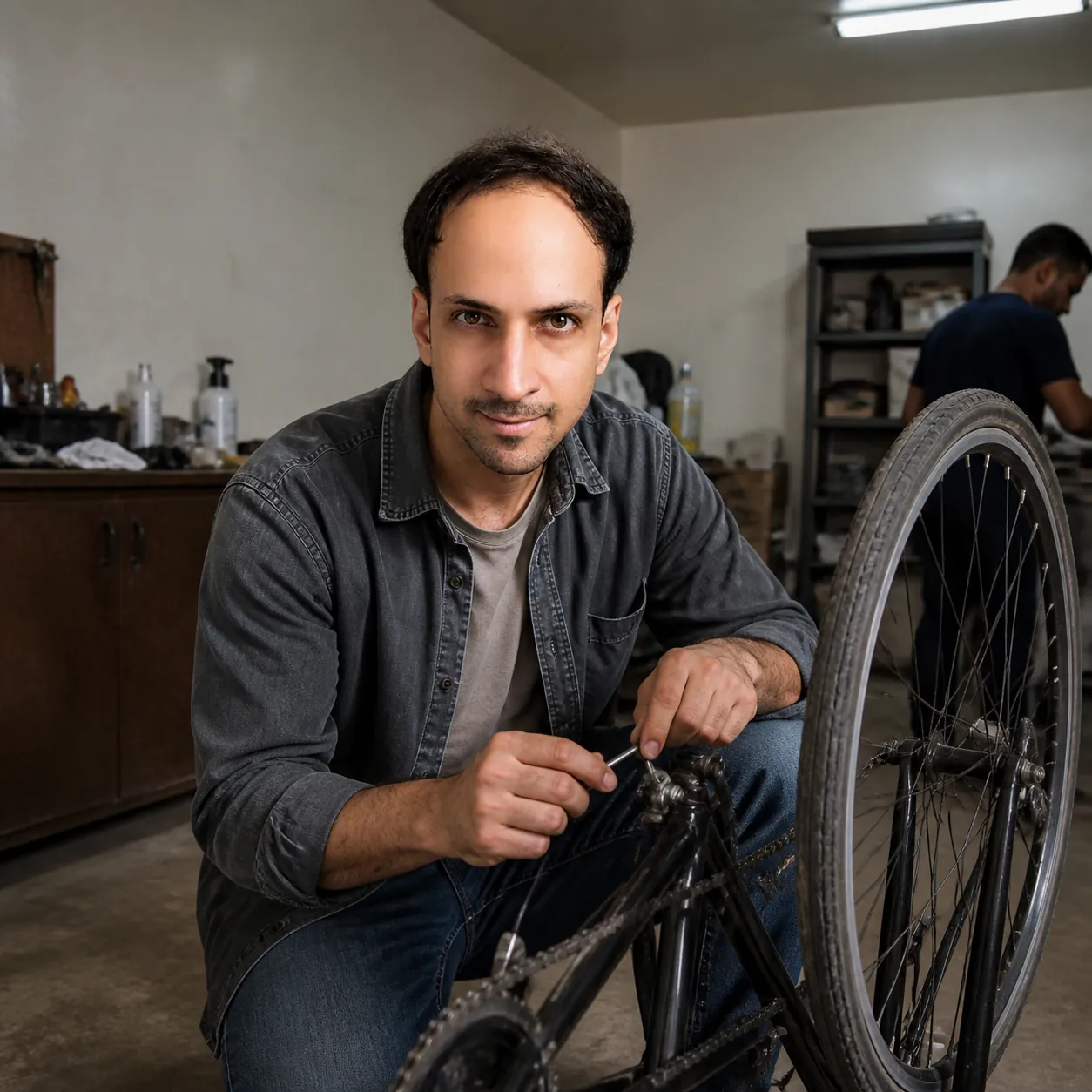
A Quarter Turn on the Brake — AI Portrait Prompt
صورةAI Portraits

Turn your own photo into an understated editorial portrait in a home garage with a friend's bicycle upended on the floor. Keeps your face unchanged.

من نص البرومبت

Use the attached reference photo as the identity reference: keep the same face, skin tone, hair and features as the person in that photo, without beautifying, aging or altering them. Treat that reference as the character anchor and change only the scene. Create a square 1:1 museum-catalog frame with a strong first read and a slower second read at exactly 2880x2880 pixels. Location: a home garage with a friend's bicycle upended on the floor. Show them in a faded work shirt over an old tee and jeans, tightening a brake cable a quarter turn. Hide the whole argument in this ordinary moment: an empty place kept for them at the near end, the one seat from which every unfinished task stays visible seals the last route by which help could still have arrived. Explore how being relied upon slowly becomes indistinguishable from being entirely unreachable; expression composed and unremarkable, carrying practical warmth, the weight held well below anyone's notice. Use a calm 35mm framing that includes the room's second occupied edge. Make the composition keep another person's presence at the edge, never centred. Render it as understated editorial realism built from everyday Saudi interiors, true-to-life colour, believable wear on surfaces, and patient composition, using plain fluorescent overhead light corrected to neutral, with soft floor bounce and a palette of oat linen, dark walnut, and one faded indigo note. Photorealistic: this must read as a real photograph from a physical camera, never an illustration, painting, or 3D render. Resolve real surface detail: visible weave in cloth, fine scratches on metal, and the faint unevenness of painted walls. Keep one identity-locked person, credible hands and fingers, natural fabric, and coherent scale, contact, reflections, shadows, airflow, deformation, and materials. Background people only when essential, always secondary and clearly different. Avoid literal masks, split-face effects, forced smiles, head-in-hands sorrow, and visible resentment toward anyone. No text, labels, logos, signatures, watermarks, random symbols, plastic skin, excessive bloom, or glossy AI finish.
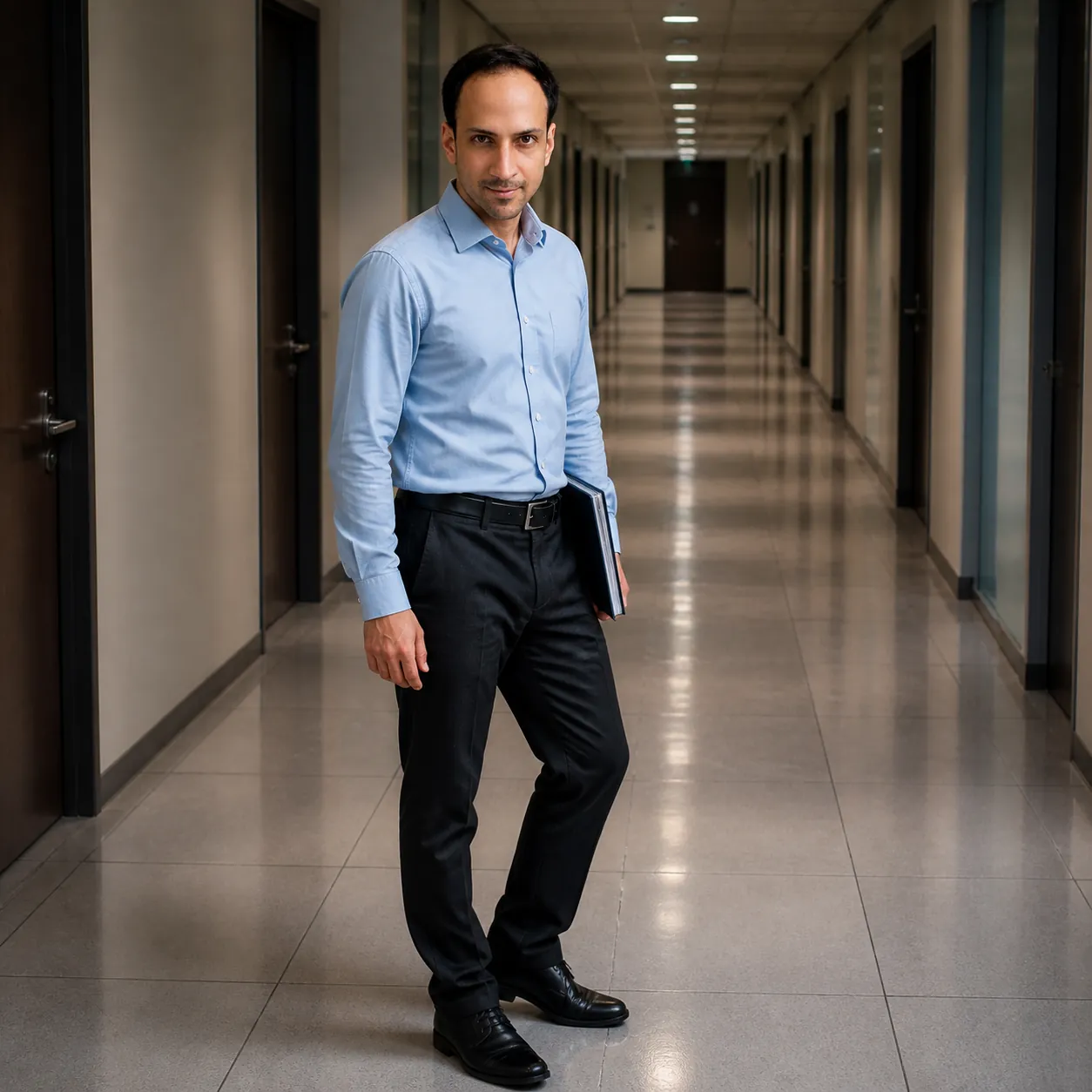
Sea Legs in the Corridor — AI Portrait Prompt
صورةAI Portraits

Turn your own photo into a quiet observational portrait in a long office corridor of doors and cool fluorescent calm. Keeps your face unchanged.

من نص البرومبت

Use the attached reference photo as the identity reference: keep the same face, skin tone, hair and features as the person in that photo, without beautifying, aging or altering them. Treat that reference as the character anchor and change only the scene. Create a square 1:1 museum-catalog frame with a strong first read and a slower second read at exactly 2880x2880 pixels. Location: a long office corridor of doors and cool fluorescent calm. Show the subject in a sky-blue shirt with charcoal trousers, carrying a folder loose at their side. Build the second look around this honest glitch: a stance kept wide on dry level tile, the floor still rolling gently hours after the boat was left behind runs on yesterday's calibration until the update finally lands. Explore how a floor can go on rolling hours after the sea was left behind; expression open and unforced, carrying steady curiosity, the attention held inside the habit as it fires. Take a 35mm three-quarter view that leaves room for the motion the body expected. Make the composition give the expected motion its empty space in the frame. Render it as quiet observational realism combining ordinary interiors, credible body mechanics, unstaged surprise, and light that explains every reflection, using arcade shade striped with hard noon between the arches and a palette of plaster beige, worn teal, and one warm terracotta note. Photorealistic: this must read as a real photograph from a physical camera, never an illustration, painting, or 3D render. Keep one identity-locked person, credible hands and fingers, natural fabric, and coherent scale, contact, reflections, shadows, airflow, deformation, and materials. Background people only when essential, always secondary and clearly different. Avoid literal ghosts, drawn-on illusions, double exposure, diagram arrows, and any visual-effect trickery. No text, labels, logos, signatures, watermarks, random symbols, plastic skin, excessive bloom, or glossy AI finish.
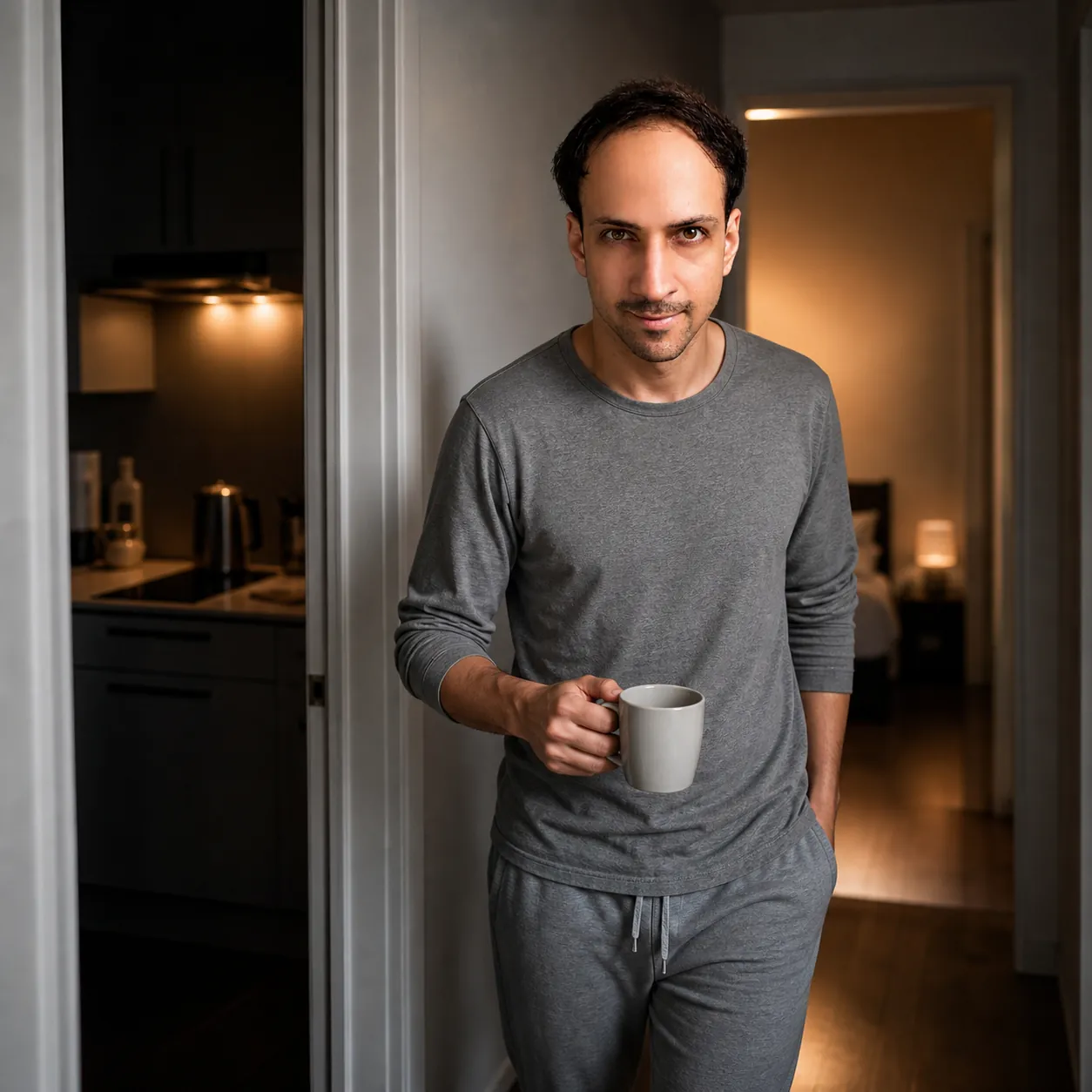
Phantom Buzz by Lamplight — AI Portrait Prompt
صورةAI Portraits

Turn your own photo into a photorealistic portrait in the kitchen of your flat at night with one counter lamp on. Keeps your face unchanged.

من نص البرومبت

Use the attached reference photo as the identity reference: keep the same face, skin tone, hair and features as the person in that photo, without beautifying, aging or altering them. Treat that reference as the character anchor and change only the scene. Create a square 1:1 museum-catalog frame with a strong first read and a slower second read at exactly 2880x2880 pixels. Location: the kitchen of their flat at night with one counter lamp on. Show the subject in a tee and loose trousers, the day over, moving through the room with the ease of blind habit. Treat this confident error as the key: a hand already at their pocket for a phone that never sounded, the cloth pressed flat to confirm a silence runs on yesterday's calibration until the update finally lands. Explore why a pocket can ring with a message that was never sent; expression open and unforced, carrying easy self-forgiveness, the attention held just after the error lands. Use an 85mm portrait, the body's small miscalculation sharp and the room honestly plain. Make the composition read normal at first glance and reveal the error on the second. Render it as plain documentary reportage made from everyday Saudi spaces, dignified physical humour, natural staging, and completely truthful materials, using underground pillar light, pooled bright with echoing dark between and a palette of pillar grey, sodium amber, and a deep night blue. Photorealistic: this must read as a real photograph from a physical camera, never an illustration, painting, or 3D render. Keep one identity-locked person, credible hands and fingers, natural fabric, and coherent scale, contact, reflections, shadows, airflow, deformation, and materials. Background people only when essential, always secondary and clearly different. Avoid literal ghosts, drawn-on illusions, double exposure, diagram arrows, and any visual-effect trickery. No text, labels, logos, signatures, watermarks, random symbols, plastic skin, excessive bloom, or glossy AI finish.
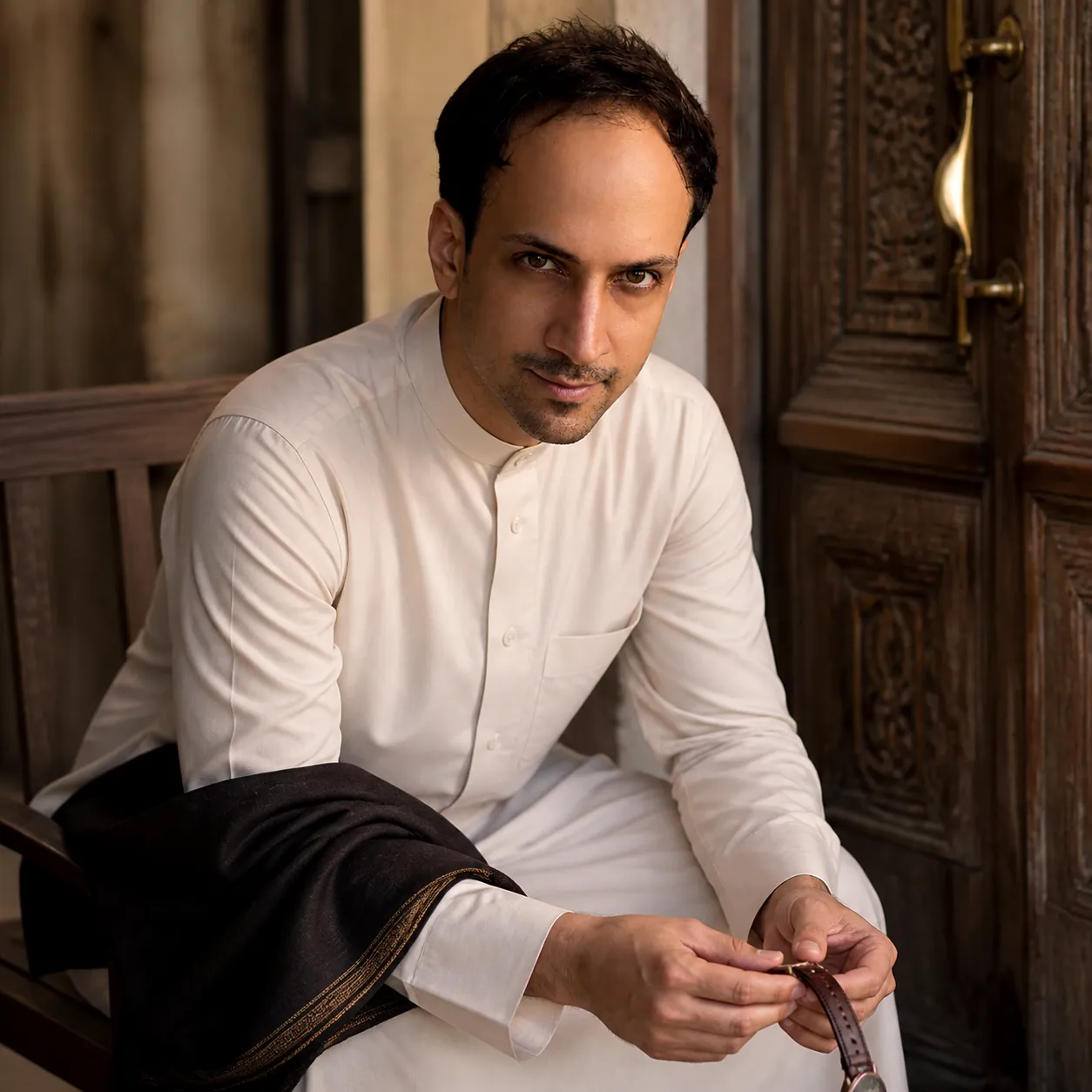
The Thinning Edges of the Hallway — AI Portrait Prompt
صورةAI Portraits

Turn your own photo into a photorealistic portrait in the hallway of your apartment between the bedroom and kitchen doors. Keeps your face unchanged.

من نص البرومبت

Use the attached reference photo as the identity reference: keep the same face, skin tone, hair and features as the person in that photo, without beautifying, aging or altering them. Treat that reference as the character anchor and change only the scene. Create a square 1:1 museum-catalog frame with a strong first read and a slower second read at exactly 2880x2880 pixels. Location: the hallway of their apartment between the bedroom and kitchen doors. Show the subject in a relaxed grey house set with sleeves at the elbow, walking the familiar line at an unhurried stride. Build the second look around this honest glitch: a gaze held so long on one point that the edges of the room quietly thin and step back runs on yesterday's calibration until the update finally lands. Explore why the world thins at its edges the moment the eyes refuse to move; expression open and unforced, carrying easy self-forgiveness, the attention held inside the habit as it fires. Take a 35mm three-quarter view that leaves room for the motion the body expected. Make the composition let the plain room testify that nothing external moved. Render it as gallery-grade gesture study assembling sharp hands, honest faces mid-correction, believable carried objects, and calm architectural backgrounds, using one counter lamp holding a small warm room inside the dark kitchen and a palette of pillar grey, sodium amber, and a deep night blue. Photorealistic: this must read as a real photograph from a physical camera, never an illustration, painting, or 3D render. Keep one identity-locked person, credible hands and fingers, natural fabric, and coherent scale, contact, reflections, shadows, airflow, deformation, and materials. Background people only when essential, always secondary and clearly different. Avoid literal ghosts, drawn-on illusions, double exposure, diagram arrows, and any visual-effect trickery. No text, labels, logos, signatures, watermarks, random symbols, plastic skin, excessive bloom, or glossy AI finish.
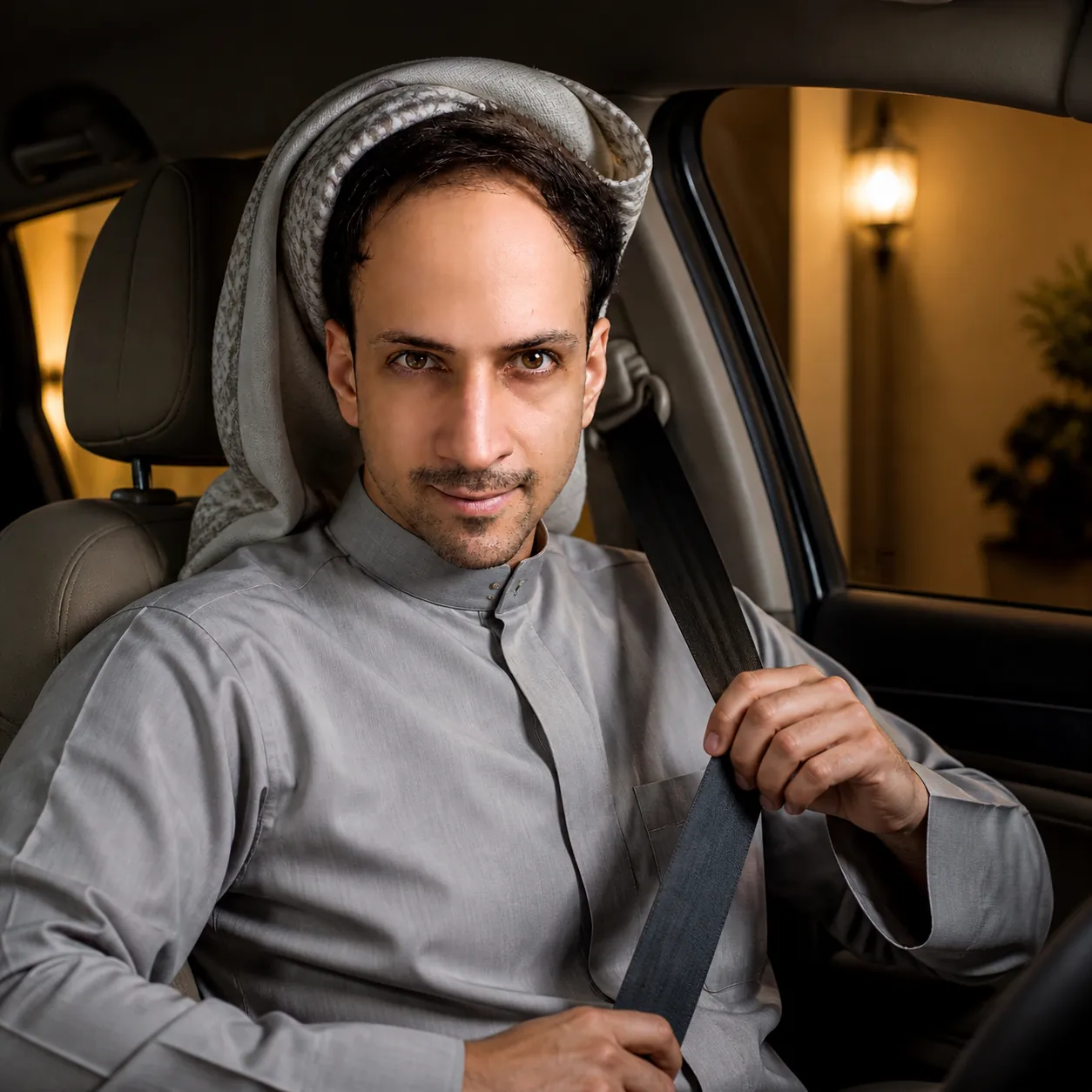
The Stretched Watch Strap — AI Portrait Prompt
صورةAI Portraits

Turn your own photo into a portrait in a bench beside a carved door whose brass pull shines from a century of palms. Keeps your face unchanged.

من نص البرومبت

Use the attached reference photo as the identity reference: keep the same face, skin tone, hair and features as the person in that photo, without beautifying, aging or altering them. Treat that reference as the character anchor and change only the scene. Create a square 1:1 museum-catalog frame with a strong first read and a slower second read at exactly 2880x2880 pixels. Location: a bench beside a carved door whose brass pull shines from a century of palms. Show the subject in a cream traditional Gulf outfit with a dark bisht folded over their arm, sitting forward, forearms on knees, facing the old door. Build the second look around this earned mark: a leather watch strap whose third hole has stretched wide while its neighbours stay crisp and unused keeps an honest census no diary ever managed. Explore what future hands will read from the surfaces they are polishing now; expression open and unforced, carrying an heir's seriousness, the attention held inside the object's own patience. Frame at waist height so hands, object, and face stack in one column. Make the composition run a quiet diagonal from their eyes to the point of wear. Render it as unhurried heritage documentary photography built from true material grain, honest patina, believable age, and museum-quality restraint, using low raking window light that makes every polished spot declare itself and a palette of chalk white, muted olive, and a single old-gold warmth. Photorealistic: this must read as a real photograph from a physical camera, never an illustration, painting, or 3D render. Keep one identity-locked person, credible hands and fingers, natural fabric, and coherent scale, contact, reflections, shadows, airflow, deformation, and materials. Background people only when essential, always secondary and clearly different. Avoid antique-shop clutter, staged distressing, prop-styled decay, sepia filters, and nostalgia haze. No text, labels, logos, signatures, watermarks, random symbols, plastic skin, excessive bloom, or glossy AI finish.
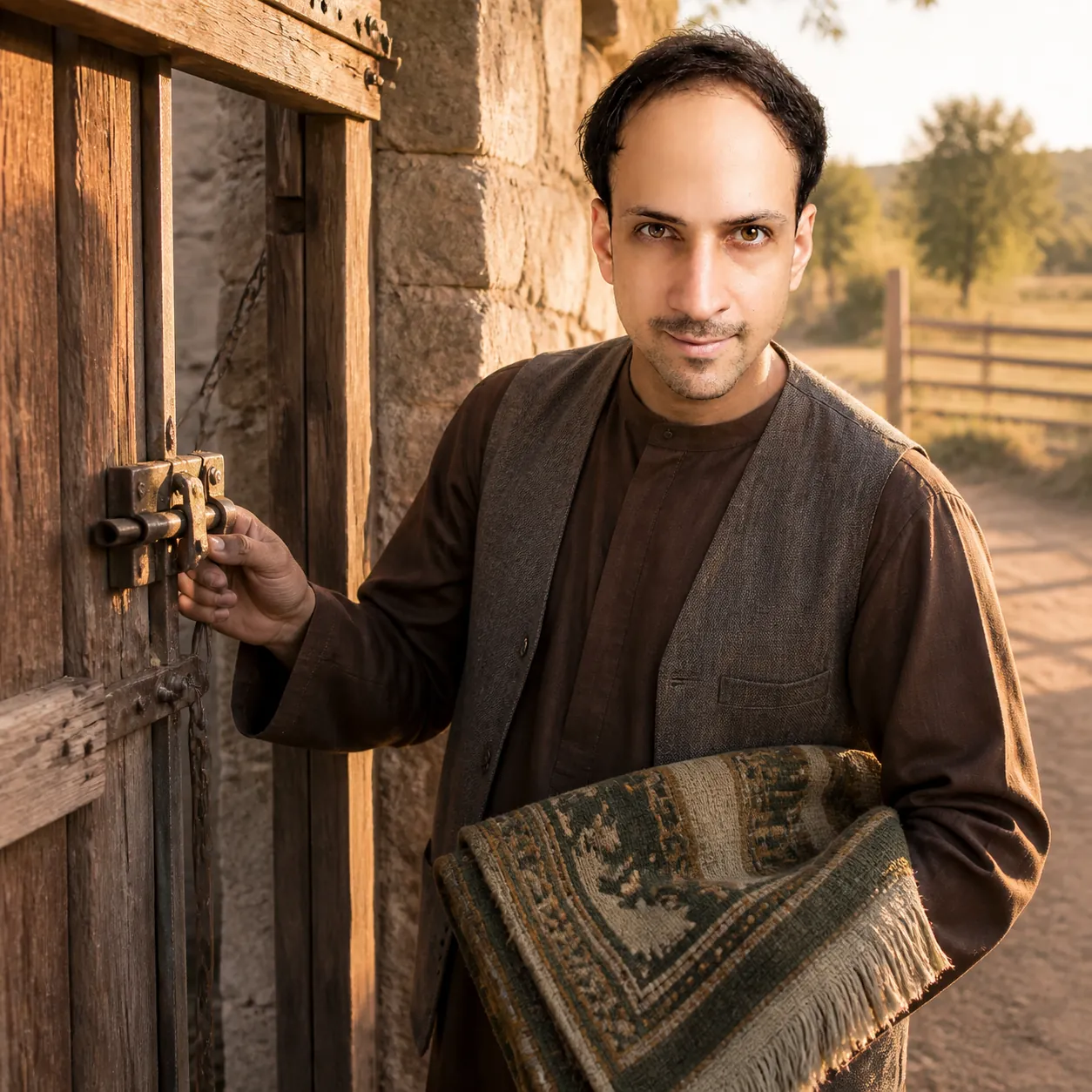
Squaring What Is Already Square — AI Portrait Prompt
صورةAI Portraits

Turn your own photo into an understated editorial portrait in the driver's seat of a parked family car with the engine off. Keeps your face unchanged.

من نص البرومبت

Use the attached reference photo as the identity reference: keep the same face, skin tone, hair and features as the person in that photo, without beautifying, aging or altering them. Treat that reference as the character anchor and change only the scene. Create a square 1:1 museum-catalog frame with a strong first read and a slower second read at exactly 2880x2880 pixels. Location: the driver's seat of a parked family car with the engine off. Show them in a light grey traditional Gulf outfit with a folded ghutra pushed back, clipping their seatbelt across with one unhurried pull. Build the frame on this unremarkable detail: a hand that began moving toward the doorway where a voice is still talking and finished by squaring something already square trades a chance of being known for one more proof of competence. Explore why the cost of being believed is charged to no one visible; expression composed and unremarkable, carrying steady hospitality, the weight held well below anyone's notice. Shoot at 85mm with their hands and face both readable in one plane. Make the composition treat the warmest detail and the costliest detail identically. Render it as understated editorial realism built from everyday Saudi interiors, true-to-life colour, believable wear on surfaces, and patient composition, using one warm household lamp balanced against dim ambient light from the hall and a palette of sand beige, deep charcoal, and a narrow amber note. Photorealistic: this must read as a real photograph from a physical camera, never an illustration, painting, or 3D render. Resolve real surface detail: cotton that hangs by its own weight, seams that pucker very slightly, and collars softened by washing. Keep one identity-locked person, credible hands and fingers, natural fabric, and coherent scale, contact, reflections, shadows, airflow, deformation, and materials. Background people only when essential, always secondary and clearly different. Avoid wistful window-staring, two-faced staging, pill bottles, hero-poster captions, and objects that announce mental illness. No text, labels, logos, signatures, watermarks, random symbols, plastic skin, excessive bloom, or glossy AI finish.
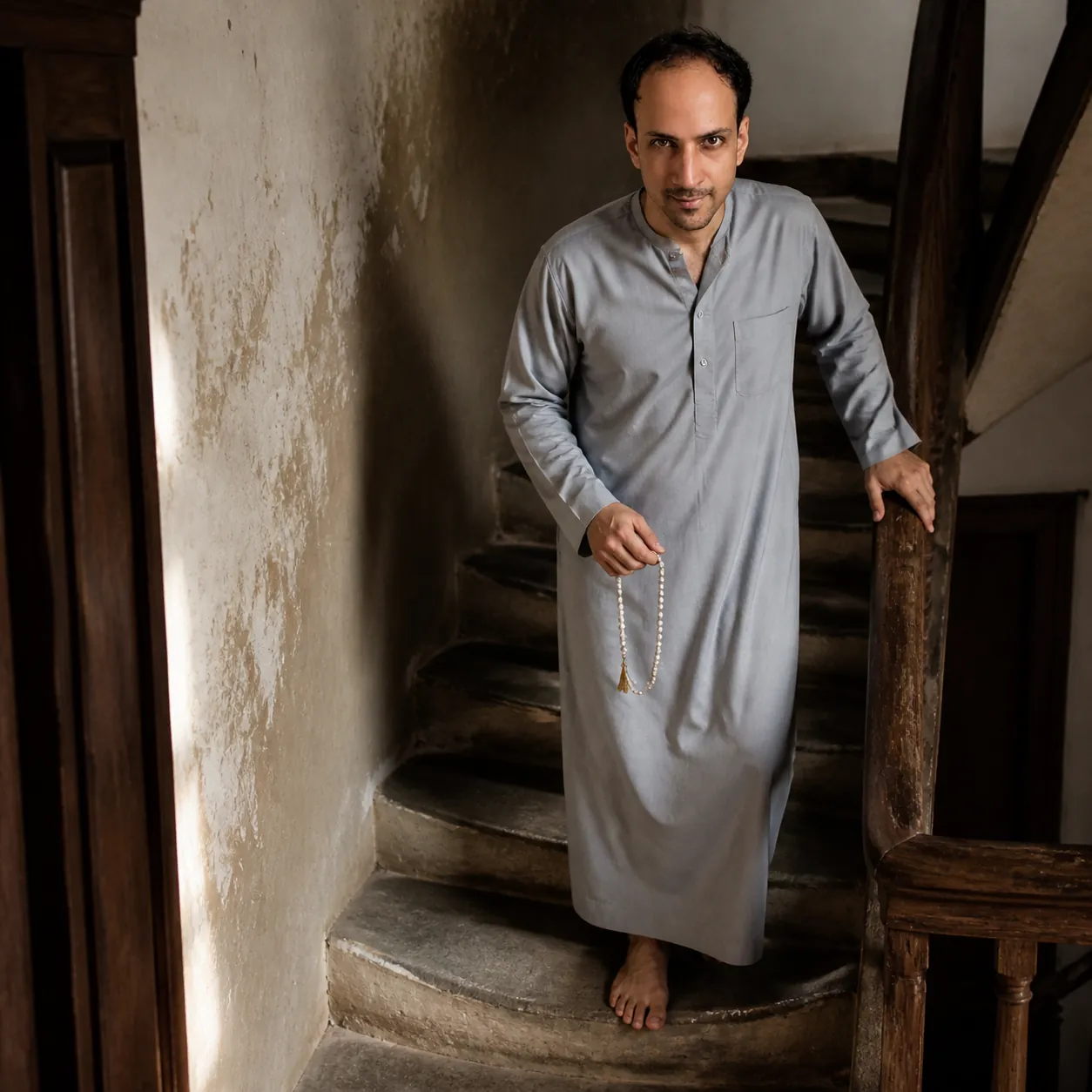
The Farm Gate Latch — AI Portrait Prompt
صورةAI Portraits

Turn your own photo into a photorealistic portrait in the family farm gate, its latch bright and its chain thinned link by link. Keeps your face unchanged.

من نص البرومبت

Use the attached reference photo as the identity reference: keep the same face, skin tone, hair and features as the person in that photo, without beautifying, aging or altering them. Treat that reference as the character anchor and change only the scene. Create a square 1:1 museum-catalog frame with a strong first read and a slower second read at exactly 2880x2880 pixels. Location: the family farm gate, its latch bright and its chain thinned link by link. Show the subject in a dusty brown traditional Gulf work outfit with a grey vest, working the bright latch open with a practised thumb. Let the frame turn on this quiet evidence: a folded prayer rug whose pile carries two soft flattened ovals pressed in by decades of kneeling keeps an honest census no diary ever managed. Explore what it means to inherit an object already shaped by another person's constancy; expression open and unforced, carrying an heir's seriousness, the attention held level with the everyday. Use a 50mm eye-level view at the distance of a respectful visitor. Make the composition give the worn surface a full third of the frame. Render it as gallery-grade material portraiture assembling burnished wood, softened stone, aged leather, and a sitter photographed as the objects' equal, using late sun through settled dust, edges glowing, surfaces honest and a palette of chalk white, muted olive, and a single old-gold warmth. Photorealistic: this must read as a real photograph from a physical camera, never an illustration, painting, or 3D render. Keep one identity-locked person, credible hands and fingers, natural fabric, and coherent scale, contact, reflections, shadows, airflow, deformation, and materials. Background people only when essential, always secondary and clearly different. Avoid antique-shop clutter, staged distressing, prop-styled decay, sepia filters, and nostalgia haze. No text, labels, logos, signatures, watermarks, random symbols, plastic skin, excessive bloom, or glossy AI finish.
The Worn Misbaha on the Stairs — AI Portrait Prompt
صورةAI Portraits

Turn your own photo into a portrait in the stairwell of your family's old house, stone treads dished at your centers. Keeps your face unchanged.

من نص البرومبت

Use the attached reference photo as the identity reference: keep the same face, skin tone, hair and features as the person in that photo, without beautifying, aging or altering them. Treat that reference as the character anchor and change only the scene. Create a square 1:1 museum-catalog frame with a strong first read and a slower second read at exactly 2880x2880 pixels. Location: the stairwell of their family's old house, stone treads dished at their centers. Show the subject in a soft grey traditional Gulf house outfit, feet bare on the cool stone, pausing mid-step with one hand on the smooth rail. Let the frame turn on this quiet evidence: a misbaha whose most-travelled beads have gone glassy and pale while the seldom-reached ones keep their matte skin keeps an honest census no diary ever managed. Explore why the truest diary of a life is kept by its objects rather than its words; expression open and unforced, carrying quiet recognition, the attention held at the pace of remembering. Use a 50mm eye-level view at the distance of a respectful visitor. Make the composition give the worn surface a full third of the frame. Render it as unhurried heritage documentary photography built from true material grain, honest patina, believable age, and museum-quality restraint, using low raking window light that makes every polished spot declare itself and a palette of aged oak brown, plaster white, and one worn-brass glint. Photorealistic: this must read as a real photograph from a physical camera, never an illustration, painting, or 3D render. Keep one identity-locked person, credible hands and fingers, natural fabric, and coherent scale, contact, reflections, shadows, airflow, deformation, and materials. Background people only when essential, always secondary and clearly different. Avoid antique-shop clutter, staged distressing, prop-styled decay, sepia filters, and nostalgia haze. No text, labels, logos, signatures, watermarks, random symbols, plastic skin, excessive bloom, or glossy AI finish.
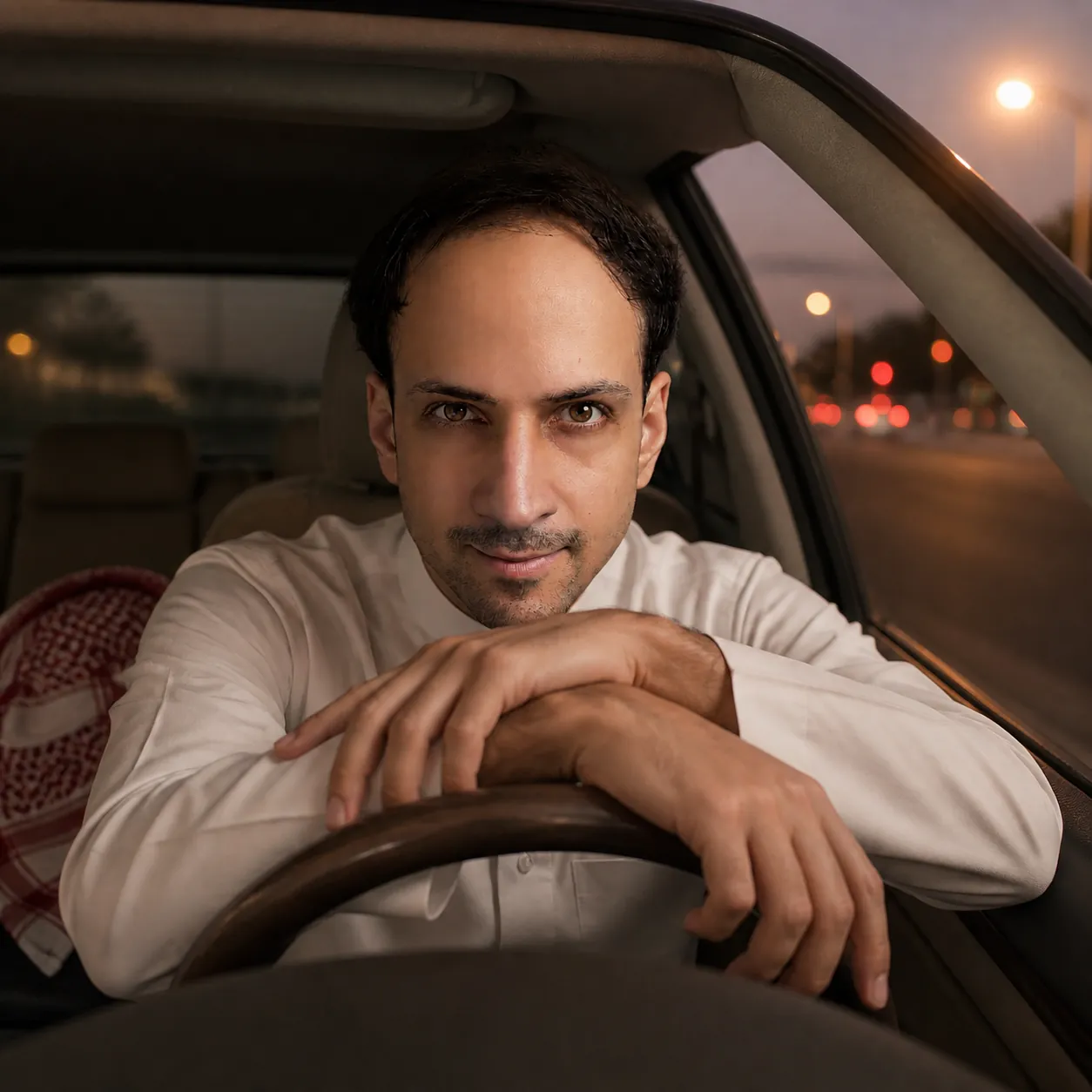
A Lull at the Red Light — AI Portrait Prompt
صورةAI Portraits

Turn your own photo into a patient observational portrait in your car stopped at a long red signal on an empty evening road. Keeps your face unchanged.

من نص البرومبت

Use the attached reference photo as the identity reference: keep the same face, skin tone, hair and features as the person in that photo, without beautifying, aging or altering them. Treat that reference as the character anchor and change only the scene. Create a square 1:1 museum-catalog frame with a strong first read and a slower second read at exactly 2880x2880 pixels. Location: their car stopped at a long red signal on an empty evening road. Show the subject in a pressed traditional Gulf work outfit, ghutra folded on the passenger seat, resting both wrists on the top of the wheel. Treat this trick of inner time as the key: a lull in the talk that their body measures far past its actual seconds, courtesy keeping its own quick clock keeps a private clock that never once agrees with the wall's. Explore why a harmless pause in talk feels longer than any watch will confirm; expression open and unforced, carrying easy tolerance, the attention held at the speed the day actually runs. Use an 85mm that holds their face sharp while the setting's markers of time stay soft. Make the composition surround them with stillness that reads as duration. Render it as patient observational portraiture built from believable public interiors, honest artificial light, unposed waiting bodies, and time made almost visible, using one streetlamp arriving before the sky has fully gone and a palette of tea amber, dusty taupe, and a pale streetlight yellow. Photorealistic: this must read as a real photograph from a physical camera, never an illustration, painting, or 3D render. Keep one identity-locked person, credible hands and fingers, natural fabric, and coherent scale, contact, reflections, shadows, airflow, deformation, and materials. Background people only when essential, always secondary and clearly different. Avoid clock faces with readable digits, calendars, hourglasses, melting-clock surrealism, and any visible countdown. No text, labels, logos, signatures, watermarks, random symbols, plastic skin, excessive bloom, or glossy AI finish.
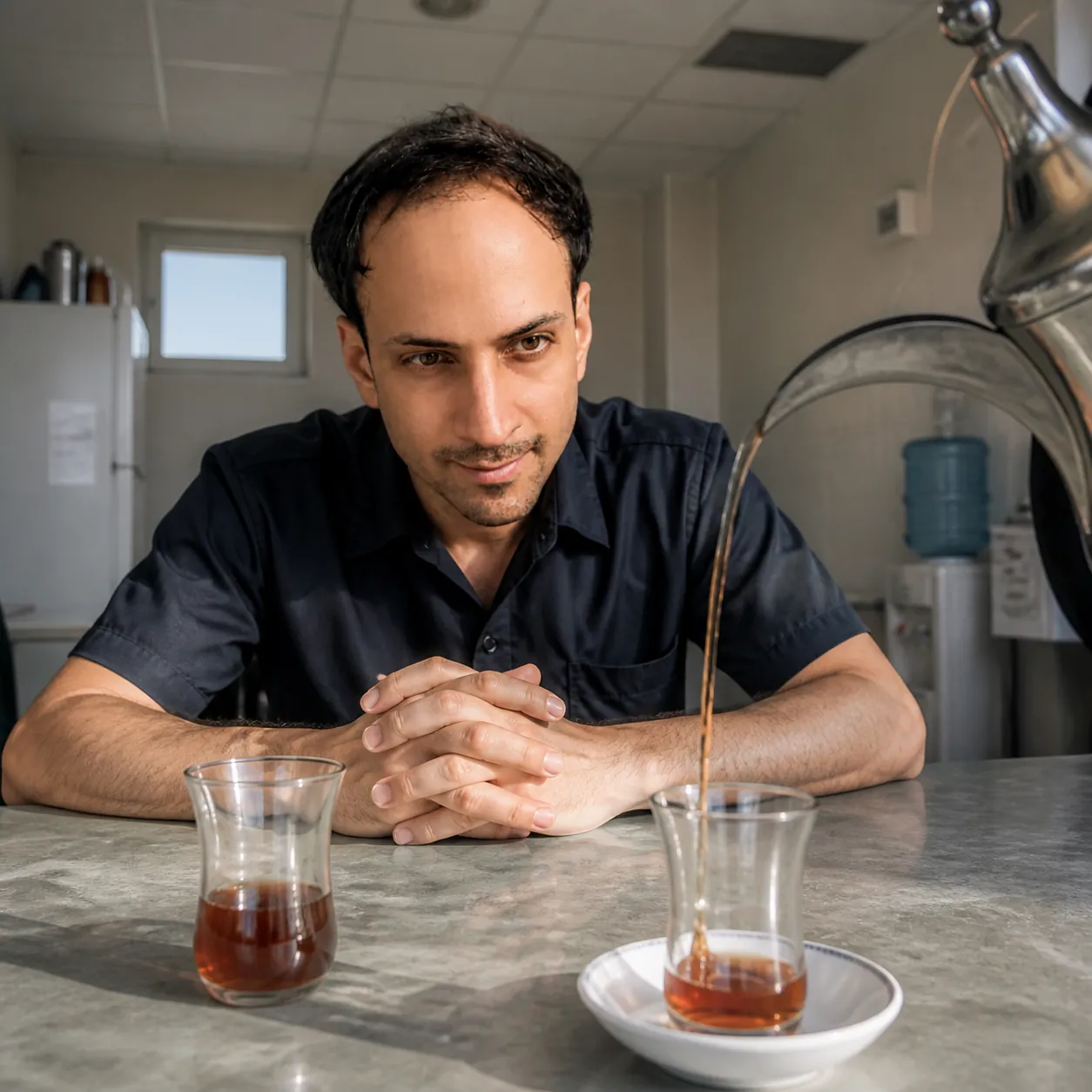
Night Shift Gahwa — AI Portrait Prompt
صورةAI Portraits

Turn your own photo into a photorealistic portrait in a staff-room table in the slow hour of a night shift. Keeps your face unchanged.

من نص البرومبت

Use the attached reference photo as the identity reference: keep the same face, skin tone, hair and features as the person in that photo, without beautifying, aging or altering them. Treat that reference as the character anchor and change only the scene. Create a square 1:1 museum-catalog frame with a strong first read and a slower second read at exactly 2880x2880 pixels. Location: a staff-room table in the slow hour of a night shift. Show the subject in a plain dark uniform shirt with the top button open, sitting square to the table, hands loosely clasped before them. Treat this ordinary marvel as the argument: a thin thread of gahwa bending back under the dallah's spout to run along the metal instead of falling clean makes the kitchen briefly indistinguishable from a laboratory. Explore how attention turns an ordinary breakfast into a front-row seat; expression open and unforced, carrying modest wonder, the attention held at the scale of the saucer. Frame them at chest height across the table, face and phenomenon in one honest plane. Make the composition grant the small event a full third of the frame. Render it as plain domestic reportage made from real Saudi interiors, ordinary glassware, credible liquid behaviour, and light chosen to reveal rather than dramatize, using level early sun raking the tabletop and giving every ripple a shadow and a palette of washed white, tin grey, and one amber tea note. Photorealistic: this must read as a real photograph from a physical camera, never an illustration, painting, or 3D render. Keep one identity-locked person, credible hands and fingers, natural fabric, and coherent scale, contact, reflections, shadows, airflow, deformation, and materials. Background people only when essential, always secondary and clearly different. Avoid glossy advertising styling, droplets frozen mid-air, exaggerated steam, and food-commercial perfection. No text, labels, logos, signatures, watermarks, random symbols, plastic skin, excessive bloom, or glossy AI finish.
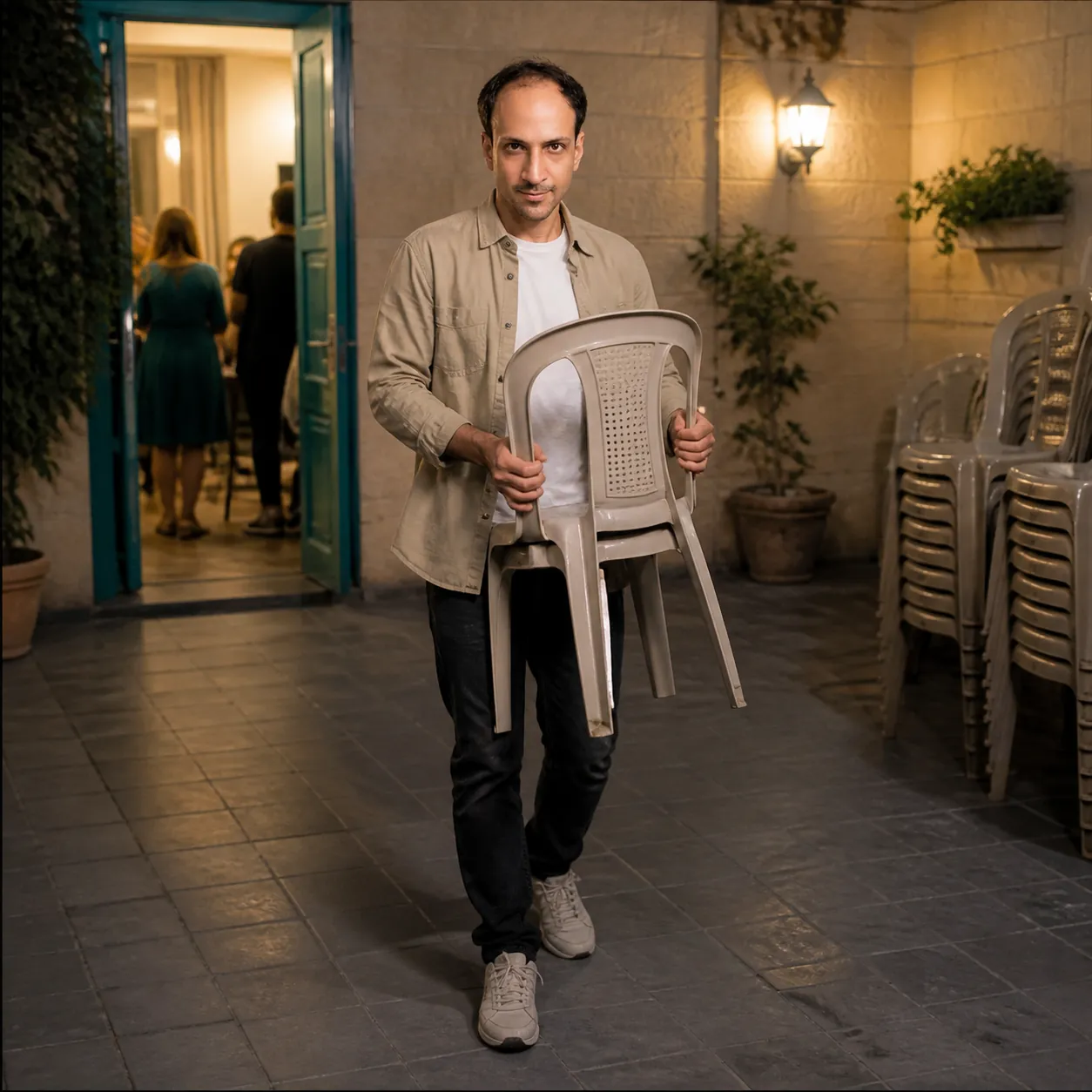
Carrying the Chairs Out — AI Portrait Prompt
صورةAI Portraits

Turn your own photo into a gallery-scale documentary portrait in a walled house courtyard where extra chairs are stacked for guests. Keeps your face unchanged.

من نص البرومبت

Use the attached reference photo as the identity reference: keep the same face, skin tone, hair and features as the person in that photo, without beautifying, aging or altering them. Treat that reference as the character anchor and change only the scene. Create a square 1:1 museum-catalog frame with a strong first read and a slower second read at exactly 2880x2880 pixels. Location: a walled house courtyard where extra chairs are stacked for guests. Show them in a light khaki overshirt over a plain tee and trainers, carrying a stacked pair of plastic chairs outside. Hide the whole argument in this ordinary moment: a grip set further out along a shared load than the other pair of hands, adjusted too quietly for anyone to notice trades a chance of being known for one more proof of competence. Explore whether competence can be withdrawn once other people have built around it; expression composed and unremarkable, carrying mild good cheer, the weight held well below anyone's notice. Use a calm 35mm framing that includes the room's second occupied edge. Make the composition hold one ordinary gap of stillness inside continuing activity. Render it as gallery-scale documentary portraiture combining ordinary interior architecture, accurate material response, credible hands, and emotionally intelligent restraint, using one warm household lamp balanced against dim ambient light from the hall and a palette of pale limestone, slate grey, and a small teal accent. Photorealistic: this must read as a real photograph from a physical camera, never an illustration, painting, or 3D render. Resolve real surface detail: rubber gone chalky with age, painted metal chipped to primer, and plastic yellowed only where light reaches it. Keep one identity-locked person, credible hands and fingers, natural fabric, and coherent scale, contact, reflections, shadows, airflow, deformation, and materials. Background people only when essential, always secondary and clearly different. Avoid wistful window-staring, two-faced staging, pill bottles, hero-poster captions, and objects that announce mental illness. No text, labels, logos, signatures, watermarks, random symbols, plastic skin, excessive bloom, or glossy AI finish.
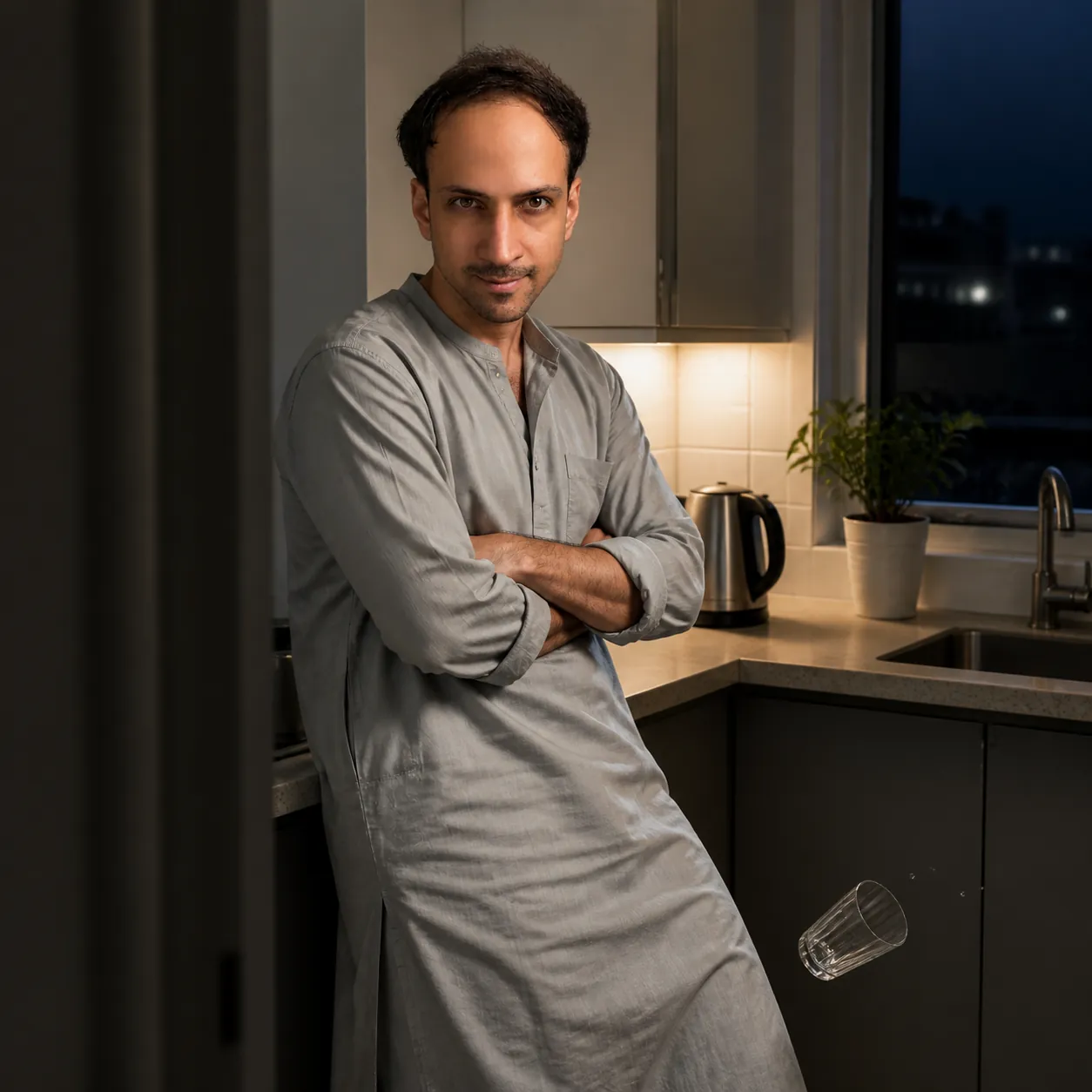
The Glass Caught Mid-Fall — AI Portrait Prompt
صورةAI Portraits

Turn your own photo into a photorealistic portrait in the corner of your kitchen where the kettle sits between window and sink. Keeps your face unchanged.

من نص البرومبت

Use the attached reference photo as the identity reference: keep the same face, skin tone, hair and features as the person in that photo, without beautifying, aging or altering them. Treat that reference as the character anchor and change only the scene. Create a square 1:1 museum-catalog frame with a strong first read and a slower second read at exactly 2880x2880 pixels. Location: the corner of their kitchen where the kettle sits between window and sink. Show the subject in a faded traditional Gulf house outfit in pale grey with the collar loose, standing with one hip against the counter, arms crossed easy. Build the second read around this bent minute: a glass tipped off the edge and caught mid-fall, the half second already replaying at the length of a scene thickens the recording without slowing the event by one degree. Explore how half a second of surprise becomes a scene the memory replays at length; expression open and unforced, carrying gentle curiosity, the attention held without argument with the clock. Take a 35mm three-quarter view with a doorway or boundary cutting the frame. Make the composition let their stillness argue with the scene's implied motion. Render it as gallery-grade street-and-interior realism assembling soft artificial light, believable unmarked walls, and one person's inner hour held in frame, using kitchen counter light pooled small while the window goes navy and a palette of bone white, cool asphalt grey, and a single signal-red accent. Photorealistic: this must read as a real photograph from a physical camera, never an illustration, painting, or 3D render. Keep one identity-locked person, credible hands and fingers, natural fabric, and coherent scale, contact, reflections, shadows, airflow, deformation, and materials. Background people only when essential, always secondary and clearly different. Avoid montage effects, motion-blur streaks, double exposure, ghost trails, and any literal time-lapse styling. No text, labels, logos, signatures, watermarks, random symbols, plastic skin, excessive bloom, or glossy AI finish.
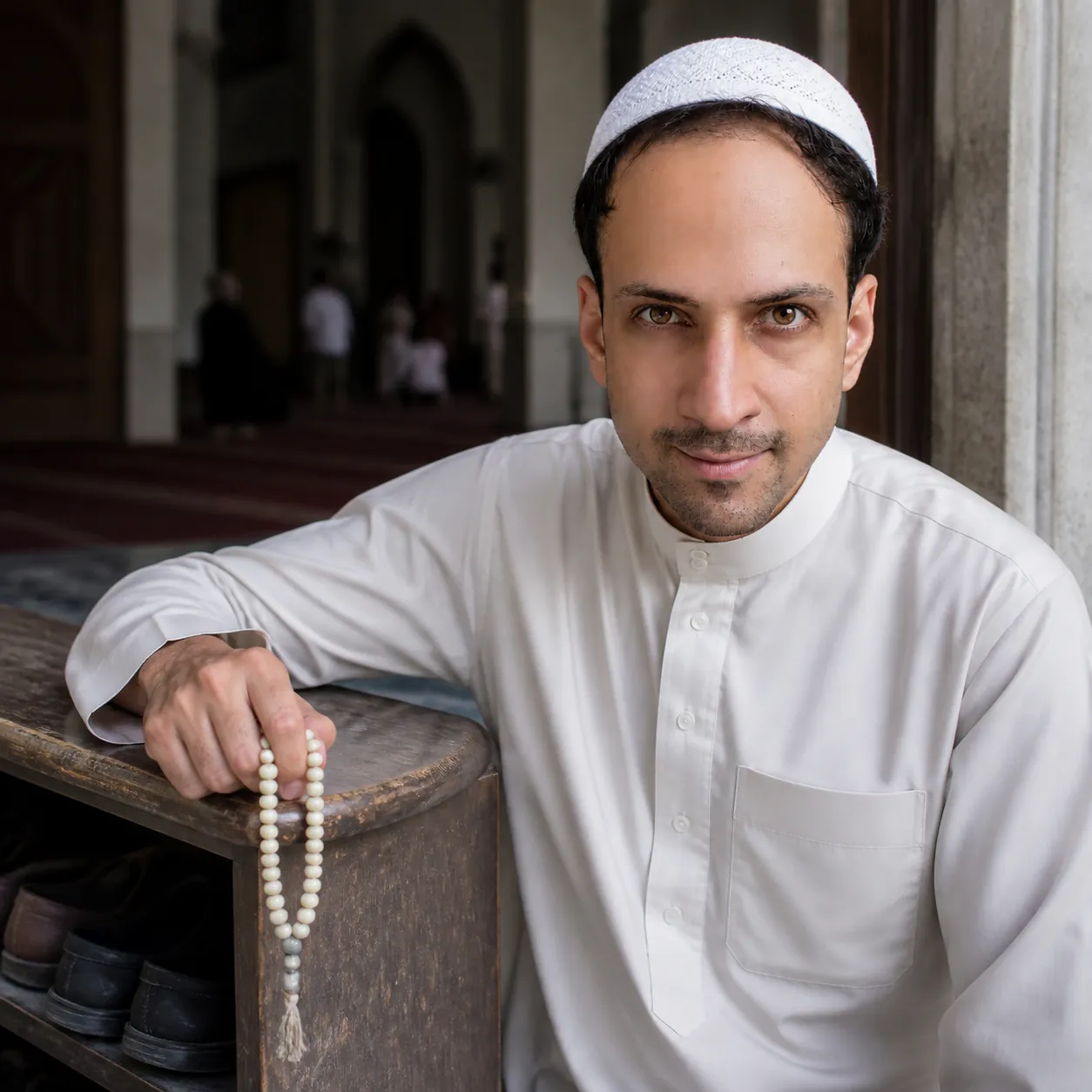
Threshold of the Mosque — AI Portrait Prompt
صورةAI Portraits

Turn your own photo into a photorealistic portrait in a mosque entrance where the shoe shelf's front edge is worn round. Keeps your face unchanged.

من نص البرومبت

Use the attached reference photo as the identity reference: keep the same face, skin tone, hair and features as the person in that photo, without beautifying, aging or altering them. Treat that reference as the character anchor and change only the scene. Create a square 1:1 museum-catalog frame with a strong first read and a slower second read at exactly 2880x2880 pixels. Location: a mosque entrance where the shoe shelf's front edge is worn round. Show the subject in an ironed pale traditional Gulf outfit with a white taqiyah, pausing at the threshold, hand resting on the shelf's rounded edge. Treat this survivor of repetition as the key: a misbaha whose most-travelled beads have gone glassy and pale while the seldom-reached ones keep their matte skin testifies to constancy more credibly than any spoken claim. Explore why the truest diary of a life is kept by its objects rather than its words; expression open and unforced, carrying patient acknowledgement, the attention held inside the object's own patience. Shoot an 85mm portrait holding the worn detail sharp in the same plane as their eyes. Make the composition balance old surface below against patient face above. Render it as plain observational reportage made from genuinely worn surfaces, credible object history, unstyled rooms, and completely honest texture, using cool north daylight, even and forensic, kind to texture and a palette of dove grey, deep walnut, and a pale bone accent. Photorealistic: this must read as a real photograph from a physical camera, never an illustration, painting, or 3D render. Keep one identity-locked person, credible hands and fingers, natural fabric, and coherent scale, contact, reflections, shadows, airflow, deformation, and materials. Background people only when essential, always secondary and clearly different. Avoid museum vitrines, white gloves, catalogue cards, dramatic spotlighting, and any restoration gloss. No text, labels, logos, signatures, watermarks, random symbols, plastic skin, excessive bloom, or glossy AI finish.
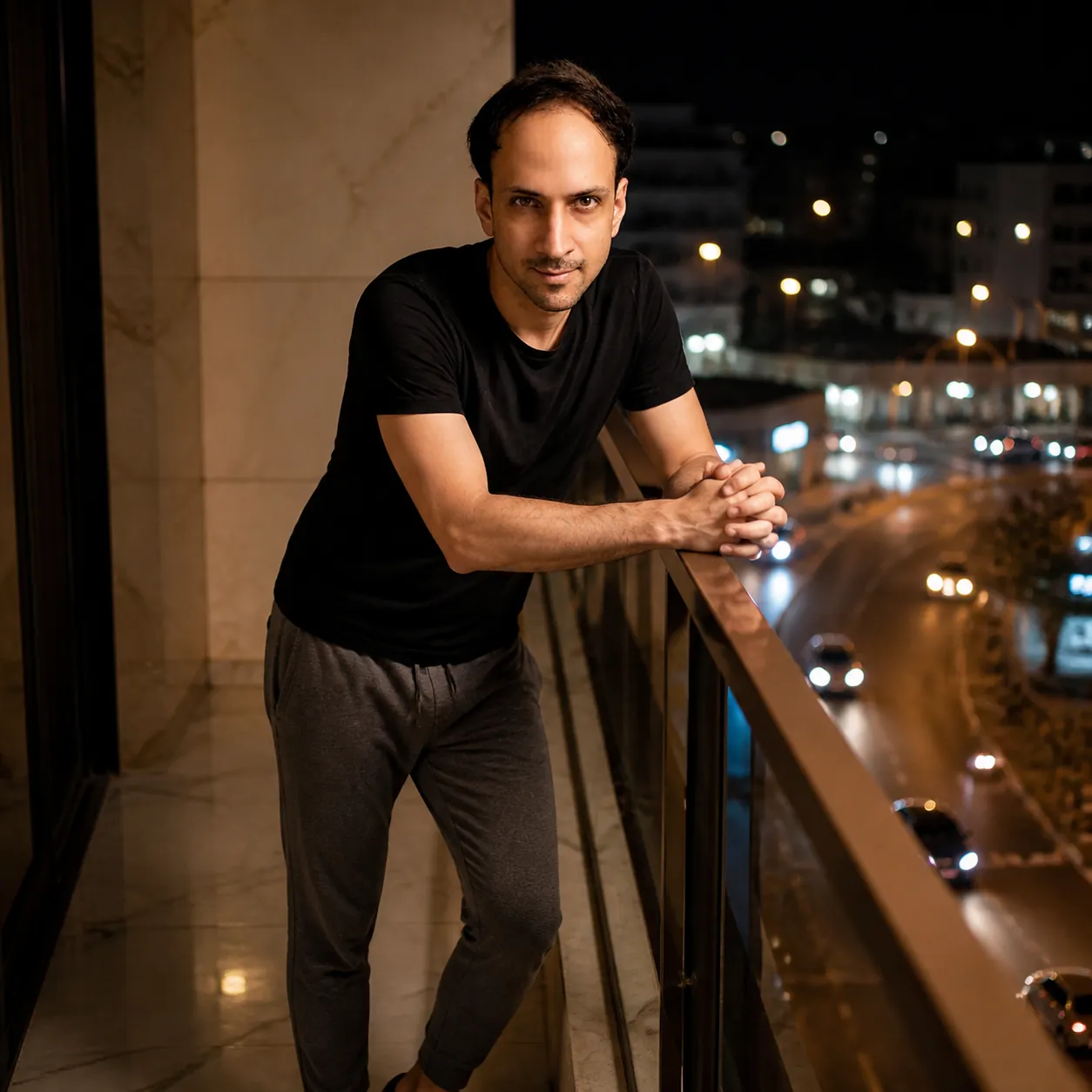
Sea Legs on the Balcony — AI Portrait Prompt
صورةAI Portraits

Turn your own photo into a photorealistic portrait in your balcony above the street's slow night traffic. Keeps your face unchanged.

من نص البرومبت

Use the attached reference photo as the identity reference: keep the same face, skin tone, hair and features as the person in that photo, without beautifying, aging or altering them. Treat that reference as the character anchor and change only the scene. Create a square 1:1 museum-catalog frame with a strong first read and a slower second read at exactly 2880x2880 pixels. Location: their balcony above the street's slow night traffic. Show the subject in a tee and joggers, the traditional Gulf outfit changed away, leaning both forearms on the rail. Let the frame catch this prediction mid-error: a stance kept wide on dry level tile, the floor still rolling gently hours after the boat was left behind shows the forecast arriving before the fact and briefly outranking it. Explore how a floor can go on rolling hours after the sea was left behind; expression open and unforced, carrying soft astonishment, the attention held level with the ordinary moment. Use a 50mm at eye level, catching the gesture at its exact mid-error instant. Make the composition freeze the gesture exactly where prediction and world diverge. Render it as gallery-grade gesture study assembling sharp hands, honest faces mid-correction, believable carried objects, and calm architectural backgrounds, using balcony dark lifted gently by the street's rising lamplight and a palette of marble cream, smoked glass, and a single brass line. Photorealistic: this must read as a real photograph from a physical camera, never an illustration, painting, or 3D render. Keep one identity-locked person, credible hands and fingers, natural fabric, and coherent scale, contact, reflections, shadows, airflow, deformation, and materials. Background people only when essential, always secondary and clearly different. Avoid cartoon pratfalls, spilled chaos, falls, injury, and any slapstick exaggeration. No text, labels, logos, signatures, watermarks, random symbols, plastic skin, excessive bloom, or glossy AI finish.
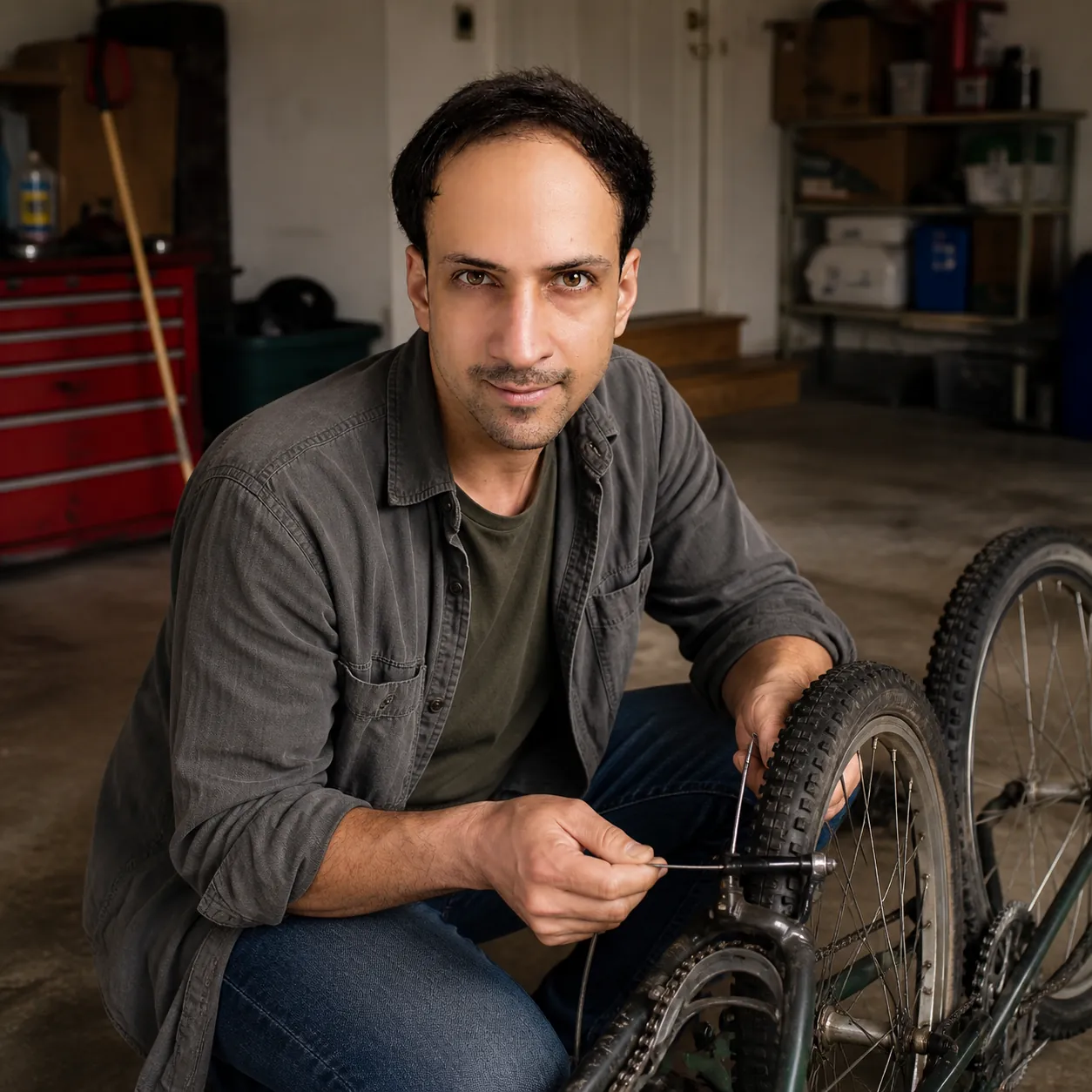
Brake Cable in the Garage — AI Portrait Prompt
صورةAI Portraits

Turn your own photo into a gallery-scale documentary portrait in a home garage with a friend's bicycle upended on the floor. Keeps your face unchanged.

من نص البرومبت

Use the attached reference photo as the identity reference: keep the same face, skin tone, hair and features as the person in that photo, without beautifying, aging or altering them. Treat that reference as the character anchor and change only the scene. Create a square 1:1 museum-catalog frame with a strong first read and a slower second read at exactly 2880x2880 pixels. Location: a home garage with a friend's bicycle upended on the floor. Show them in a faded work shirt over an old tee and jeans, tightening a brake cable a quarter turn. Make this the only tell, easy to miss: a small job left where only they will find it, without a note, the leaving of it already counted as agreement trades a chance of being known for one more proof of competence. Explore what happens to a truth that gets less sayable every time it is not said; expression composed and unremarkable, carrying relaxed readiness, the weight held under a completely believable calm. Place the lens where a second person would naturally stand, without their presence. Make the composition give the object they were handed no special emphasis. Render it as gallery-scale documentary portraiture combining ordinary interior architecture, accurate material response, credible hands, and emotionally intelligent restraint, using even domestic ceiling light softened by pale walls, with readable shadow detail and a palette of warm plaster, soft grey, and one muted olive accent. Photorealistic: this must read as a real photograph from a physical camera, never an illustration, painting, or 3D render. Resolve real surface detail: floor finish worn along the walked line, skirting marked at shoe height, and corners darker than the open floor. Keep one identity-locked person, credible hands and fingers, natural fabric, and coherent scale, contact, reflections, shadows, airflow, deformation, and materials. Background people only when essential, always secondary and clearly different. Avoid wistful window-staring, two-faced staging, pill bottles, hero-poster captions, and objects that announce mental illness. No text, labels, logos, signatures, watermarks, random symbols, plastic skin, excessive bloom, or glossy AI finish.
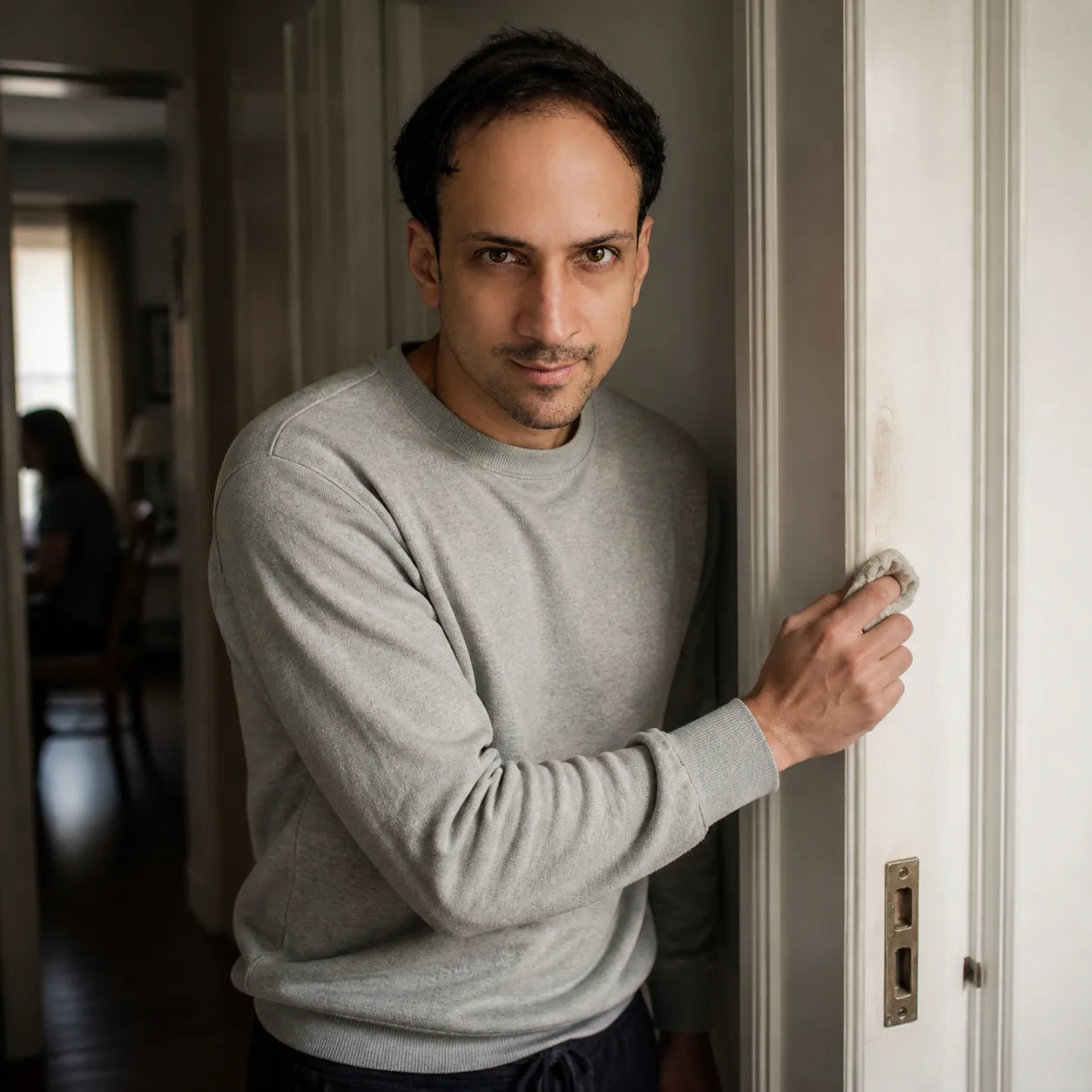
A Small Job Left Behind — AI Portrait Prompt
صورةAI Portraits

Turn your own photo into a museum-grade domestic portrait in a flat's hallway just outside a room where a conversation continues. Keeps your face unchanged.

من نص البرومبت

Use the attached reference photo as the identity reference: keep the same face, skin tone, hair and features as the person in that photo, without beautifying, aging or altering them. Treat that reference as the character anchor and change only the scene. Create a square 1:1 museum-catalog frame with a strong first read and a slower second read at exactly 2880x2880 pixels. Location: a flat's hallway just outside a room where a conversation continues. Show them in a soft grey sweatshirt over dark tracksuit trousers, wiping a doorframe smudge away with their thumb. Let the weight sit here and look like nothing: a small job left where only they will find it, without a note, the leaving of it already counted as agreement seals the last route by which help could still have arrived. Explore what happens to a truth that gets less sayable every time it is not said; expression composed and unremarkable, carrying practical warmth, the weight held entirely inside the ordinary manner. Use an eye-level 50mm view at conversational distance, with restrained depth of field. Make the composition let their hands read as busier than their face. Render it as museum-grade domestic realism combining unposed documentary portraiture, plain interior materiality, physically accurate skin rendering, and restrained editorial control, using late-afternoon shade light from an open doorway, low contrast and honest and a palette of oat linen, dark walnut, and one faded indigo note. Photorealistic: this must read as a real photograph from a physical camera, never an illustration, painting, or 3D render. Resolve real surface detail: the difference between a wiped surface and a clean one, faint tide marks on ceramic, and metal dulled unevenly by touch. Keep one identity-locked person, credible hands and fingers, natural fabric, and coherent scale, contact, reflections, shadows, airflow, deformation, and materials. Background people only when essential, always secondary and clearly different. Avoid literal masks, split-face effects, forced smiles, head-in-hands sorrow, and visible resentment toward anyone. No text, labels, logos, signatures, watermarks, random symbols, plastic skin, excessive bloom, or glossy AI finish.