جاري التحميل...


جاري التحميل...
Treat that reference as the character anchor and change only the scene. Create a square 1:1 museum-catalog frame with a strong first read and a slower...
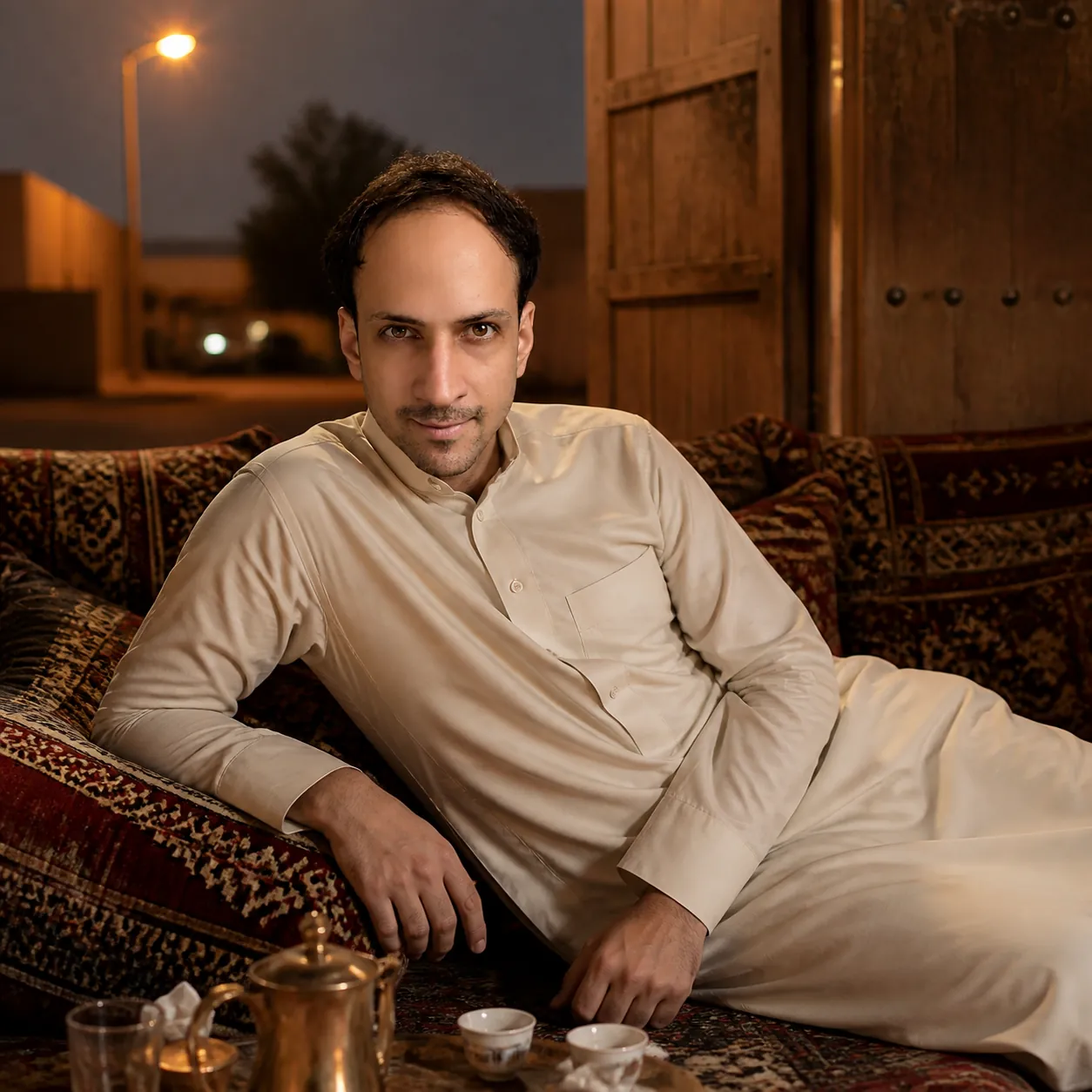
Use the attached reference photo as the identity reference: keep the same face, skin tone, hair and features as the person in that photo, without beautifying, aging or altering them. Treat that reference as the character anchor and change only the scene. Create a square 1:1 museum-catalog frame with a strong first read and a slower second read at exactly 2880x2880 pixels. Location: a majlis late in the evening, cushions dented and cups collected. Show the subject in an ivory traditional Gulf outfit gone soft with the day, reclining on one elbow along the cushion line. Build the second read around this bent minute: a weekday surfacing mid-errand one full day off from where they had filed it, the week having slid a quiet notch thickens the recording without slowing the event by one degree. Explore how a whole day can go missing from the week's count without a seam showing; expression open and unforced, carrying unhurried reflection, the attention held at the speed the day actually runs. Take a 35mm three-quarter view with a doorway or boundary cutting the frame. Make the composition let their stillness argue with the scene's implied motion. Render it as plain documentary photography made from real errand locations, natural fidgets and stillness, credible props, and completely undramatic timing, using one streetlamp arriving before the sky has fully gone and a palette of warm sand, shadow brown, and a single lamplit cream. Photorealistic: this must read as a real photograph from a physical camera, never an illustration, painting, or 3D render. Keep one identity-locked person, credible hands and fingers, natural fabric, and coherent scale, contact, reflections, shadows, airflow, deformation, and materials. Background people only when essential, always secondary and clearly different. Avoid montage effects, motion-blur streaks, double exposure, ghost trails, and any literal time-lapse styling. No text, labels, logos, signatures, watermarks, random symbols, plastic skin, excessive bloom, or glossy AI finish.
Treat that reference as the character anchor and change only the scene. Create a square 1:1 museum-catalog frame with a strong first read and a slower...
Treat that reference as the character anchor and change only the scene. Create a square 1:1 museum-catalog frame with a strong first read and a slower...
Treat that reference as the character anchor and change only the scene. Create a square 1:1 museum-catalog frame with a strong first read and a slower...
Treat that reference as the character anchor and change only the scene. Create a square 1:1 museum-catalog frame with a strong first read and a slower...
Treat that reference as the character anchor and change only the scene. Create a square 1:1 museum-catalog frame with a strong first read and a slower...
Treat that reference as the character anchor and change only the scene. Create a square 1:1 museum-catalog frame with a strong first read and a slower...
Treat that reference as the character anchor and change only the scene. Create a square 1:1 museum-catalog frame with a strong first read and a slower...
Treat that reference as the character anchor and change only the scene. Create a square 1:1 museum-catalog frame with a strong first read and a slower...
Treat that reference as the character anchor and change only the scene. Create a square 1:1 museum-catalog frame with a strong first read and a slower...
Treat that reference as the character anchor and change only the scene. Create a square 1:1 museum-catalog frame with a strong first read and a slower...
Treat that reference as the character anchor and change only the scene. Create a square 1:1 museum-catalog frame with a strong first read and a slower...
Treat that reference as the character anchor and change only the scene. Create a square 1:1 museum-catalog frame with a strong first read and a slower...