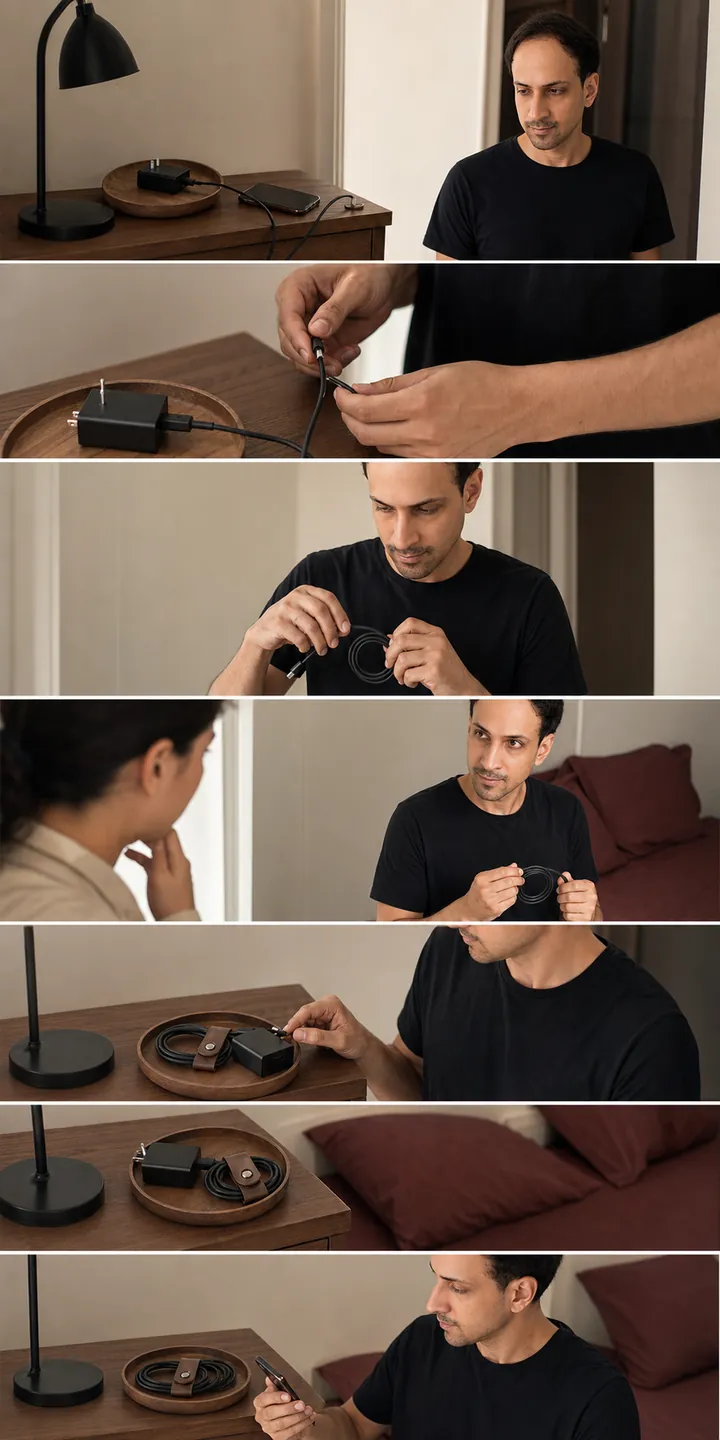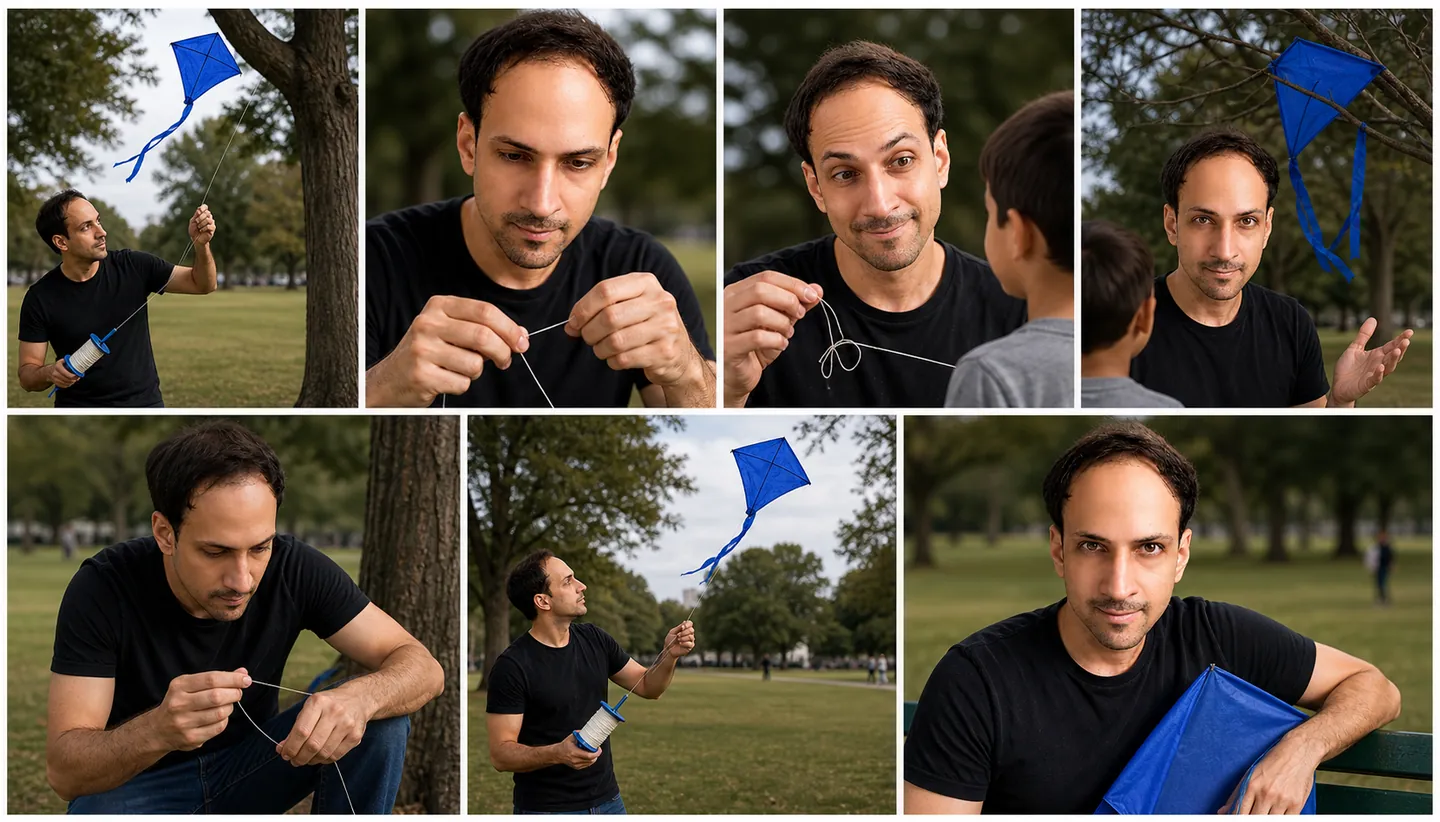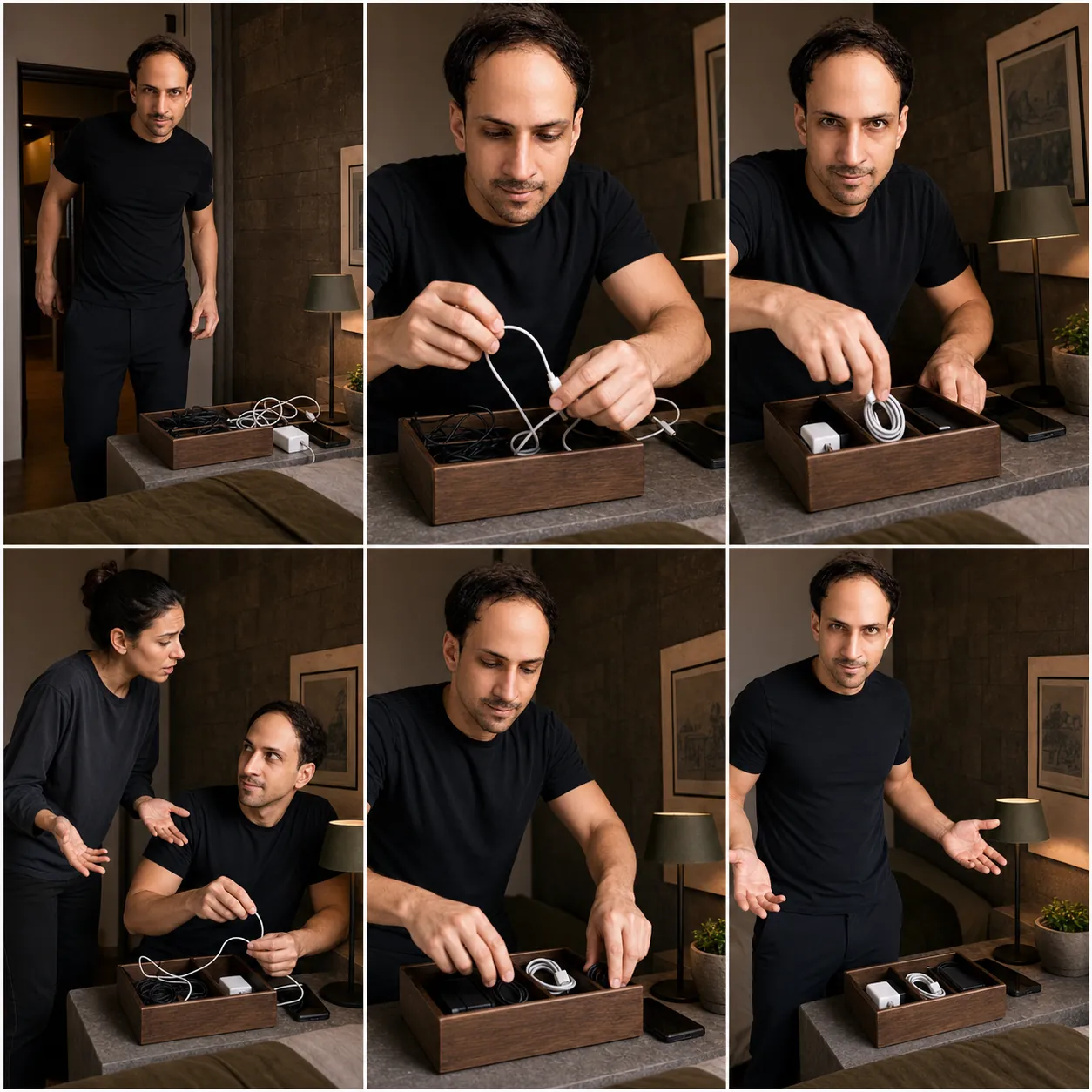
Design a square 1:1 image containing exactly 6 panels, read left to right. Keep the same wardrobe, facial landmarks, apparent age, hair, and environmental...
من نص البرومبت
Use the attached reference photo as the identity reference: keep the same face, skin tone, hair and features as the person in that photo, without beautifying, aging or altering them. Design a square 1:1 image containing exactly 6 panels, read left to right. Keep the same wardrobe, facial landmarks, apparent age, hair, and environmental continuity across every panel unless a panel description explicitly changes a prop. Panel 1: establish a phone-charging station away from the bed before the main action, with the person entering or settling into the space and the visual problem clearly readable. Panel 2: move closer to their hands as they prepare for the task, preserving wardrobe and object continuity. Panel 3: show the exact moment of them putting one charging cable away instead of leaving it loose, keeping their recognizable face and natural posture consistent. Panel 4: introduce a modest complication or second person’s response, never changing the person’s identity or wardrobe. Panel 5: show the adjustment they make after noticing what the situation actually needs. Panel 6: capture the immediate result: the task leaves the room slightly more ready for the next person. Use clean, consistent gutters and no accidental extra frames, repeated panels, or duplicated versions of the person. Render the sequence as clean but lived-in lifestyle photography with high skylight with a quiet pool of illumination on the working area and a restrained palette of warm stone, charcoal, and muted olive. The emotional progression should move toward dry humor through posture and action, not facial redesign. Let the face stay recognizable even when attention is directed toward the task. Do not include captions or any other text. Keep hands, object continuity, body scale, and perspective believable.