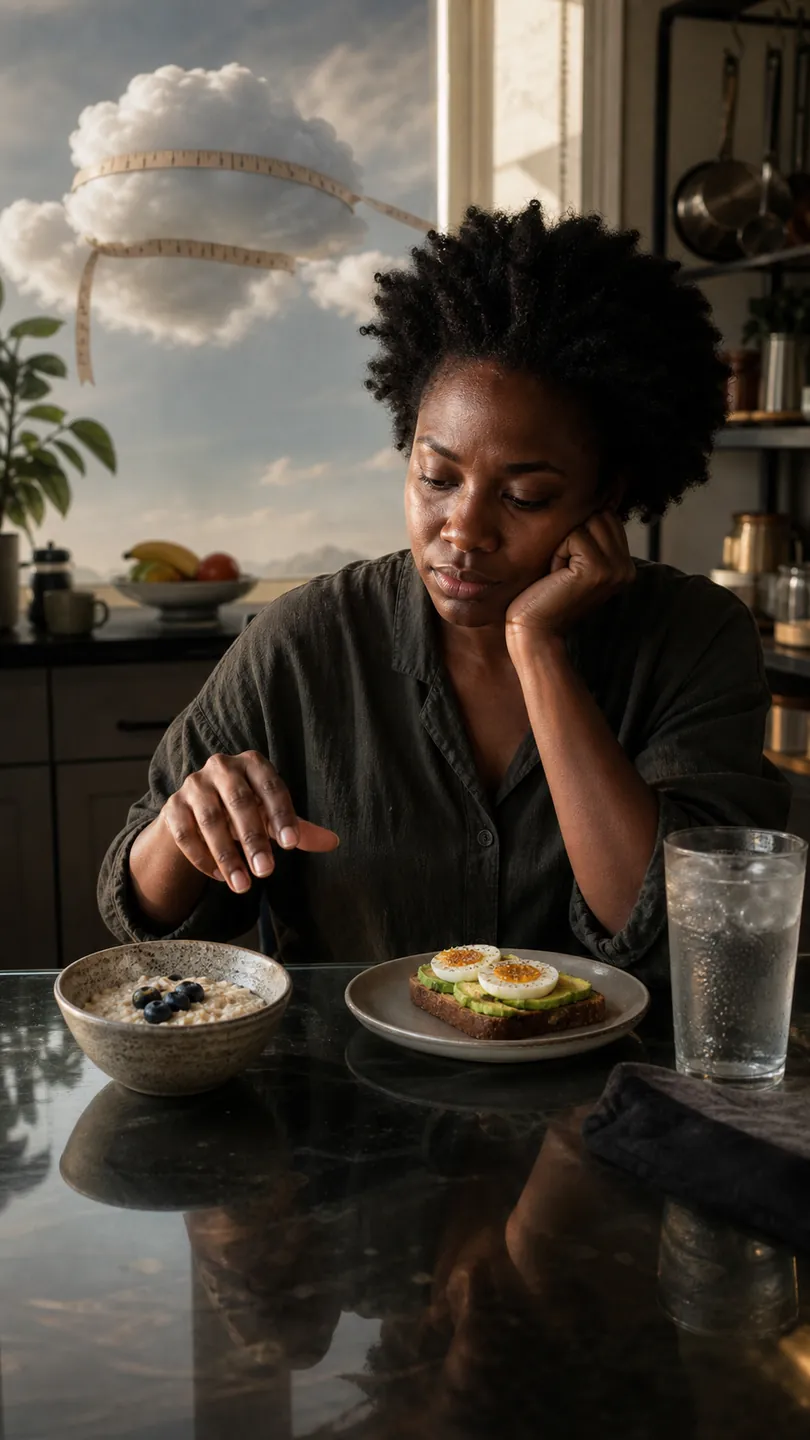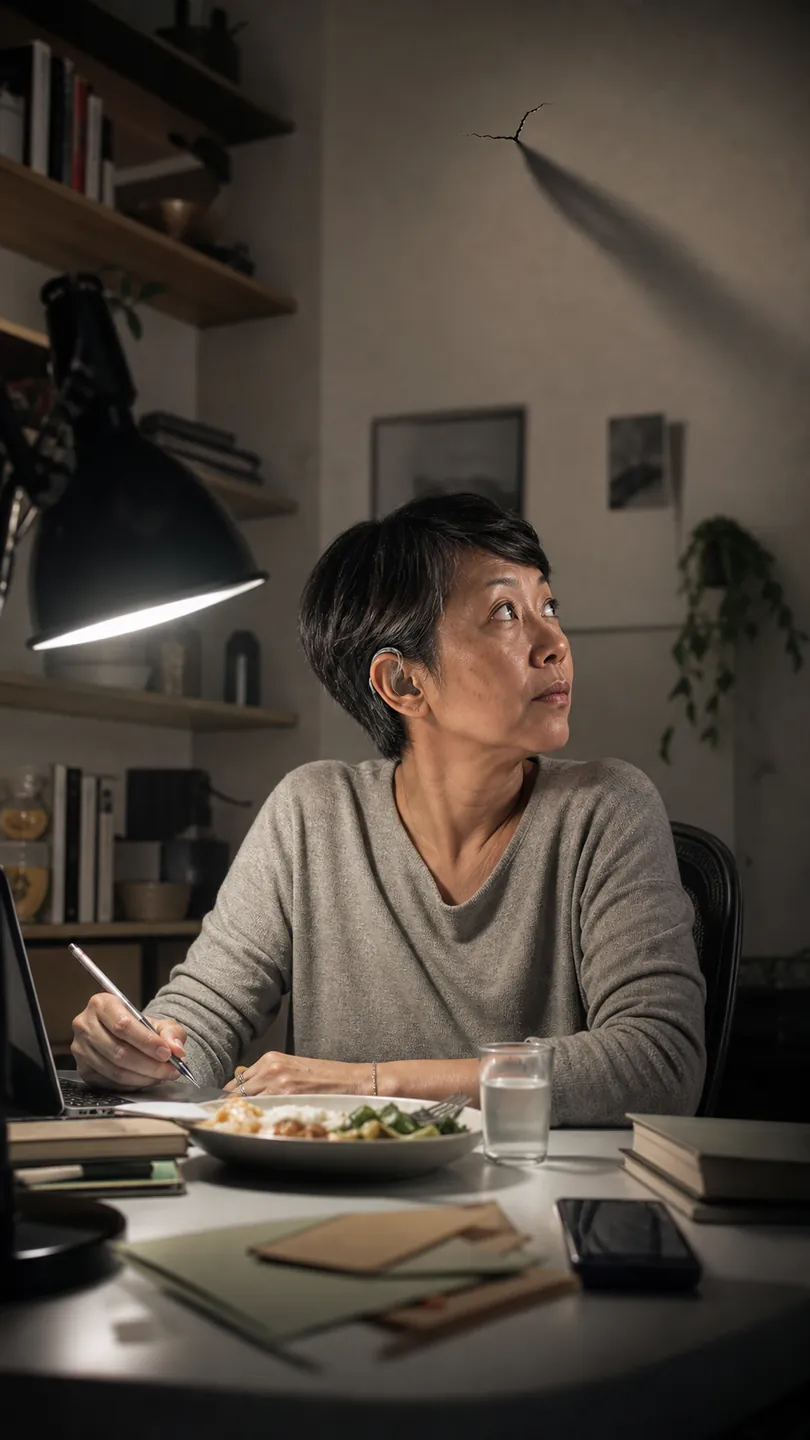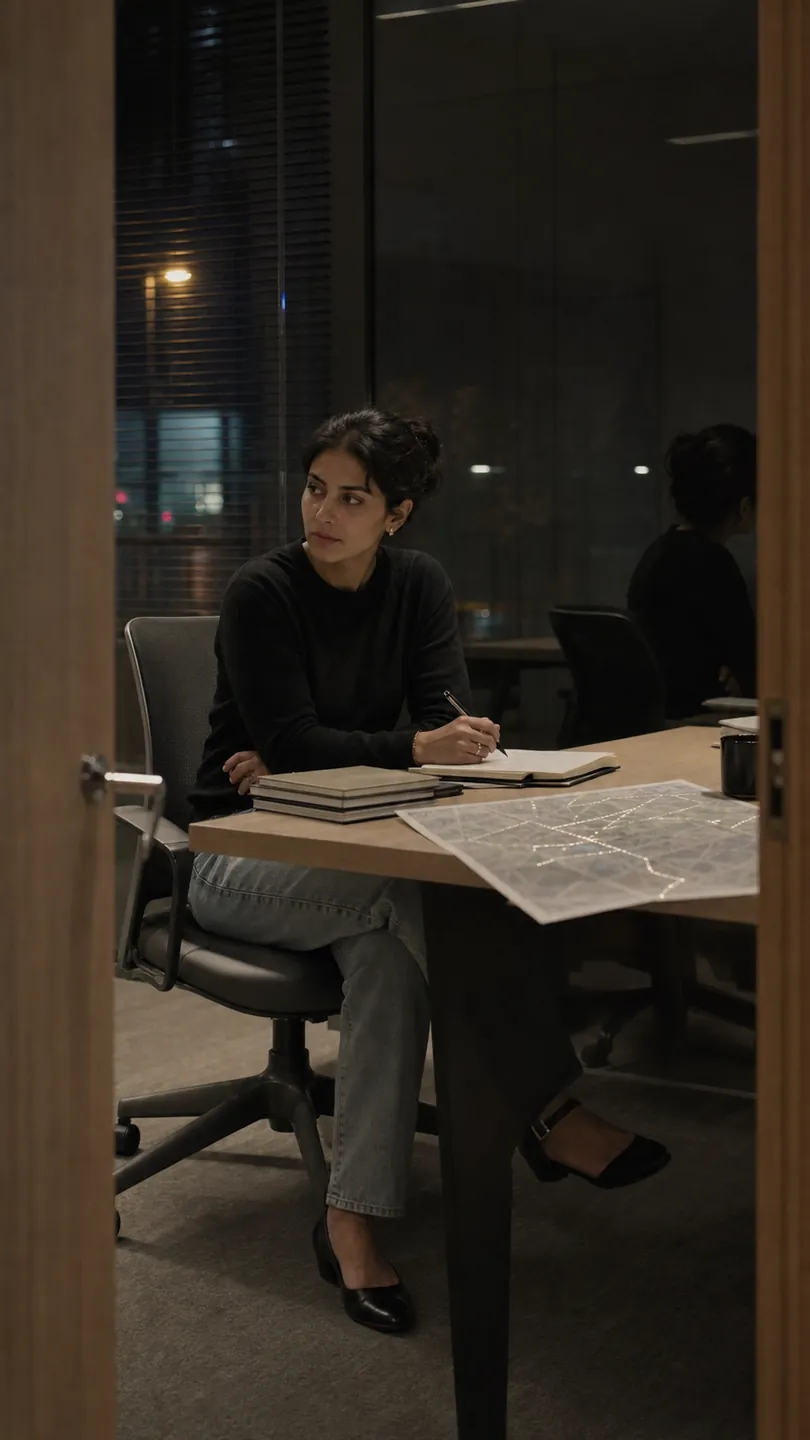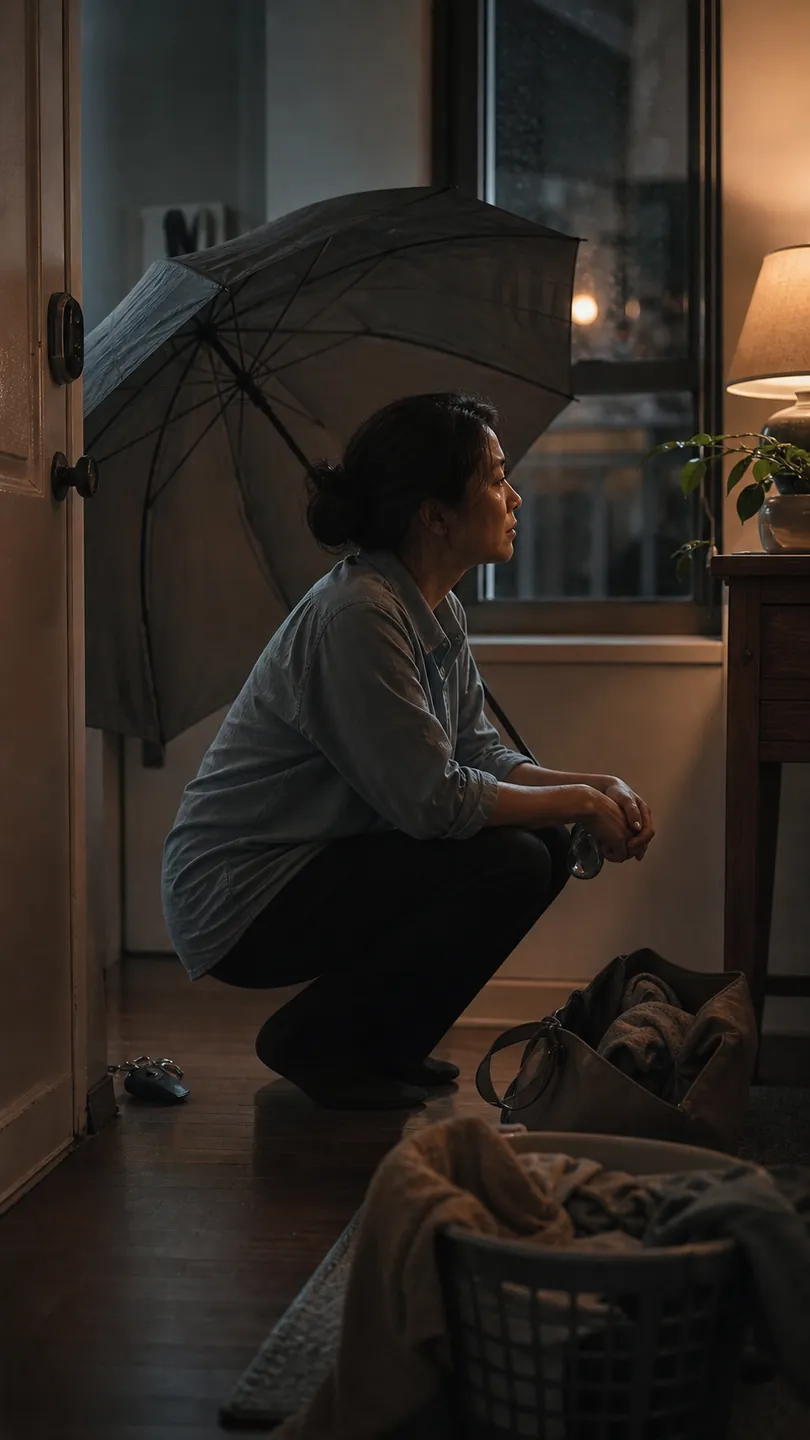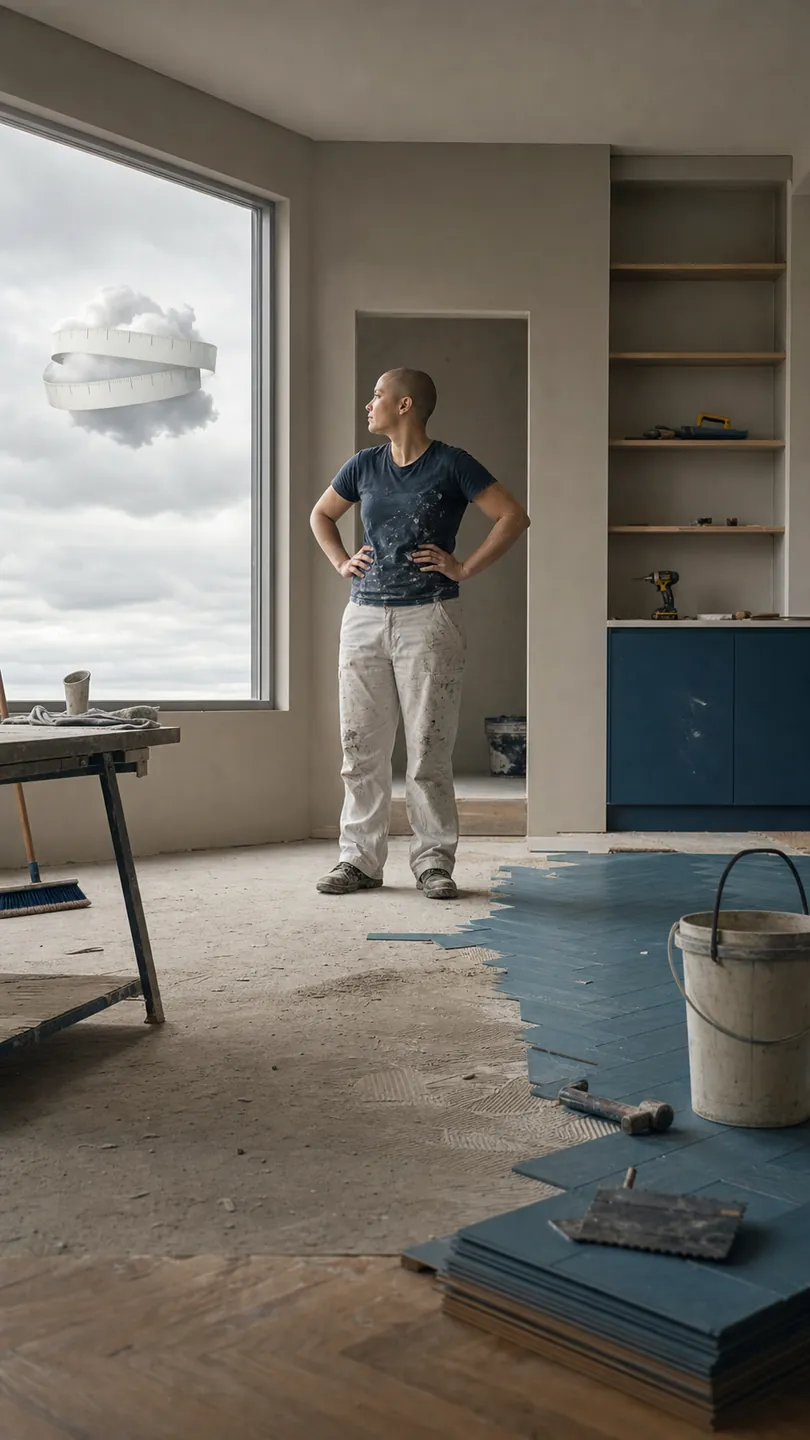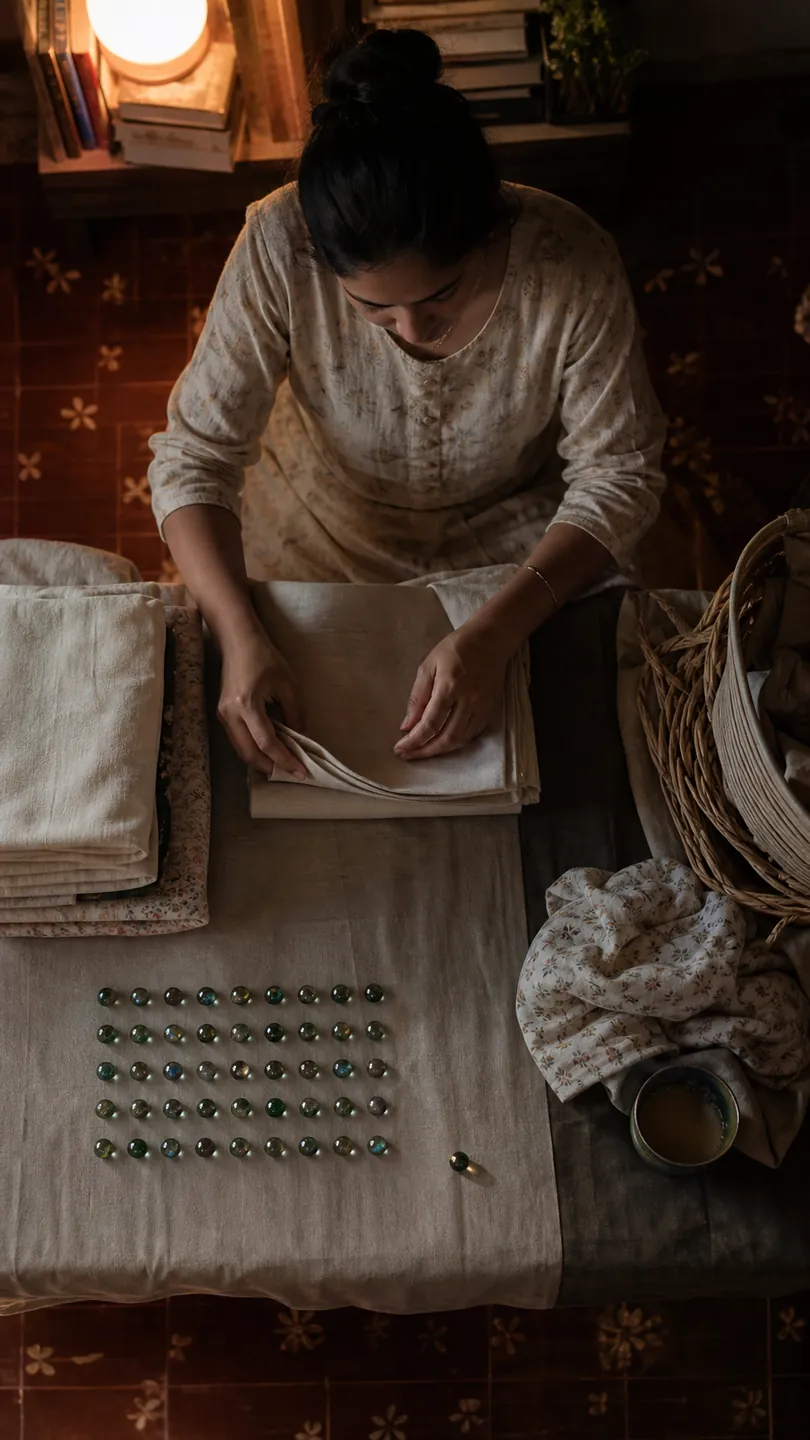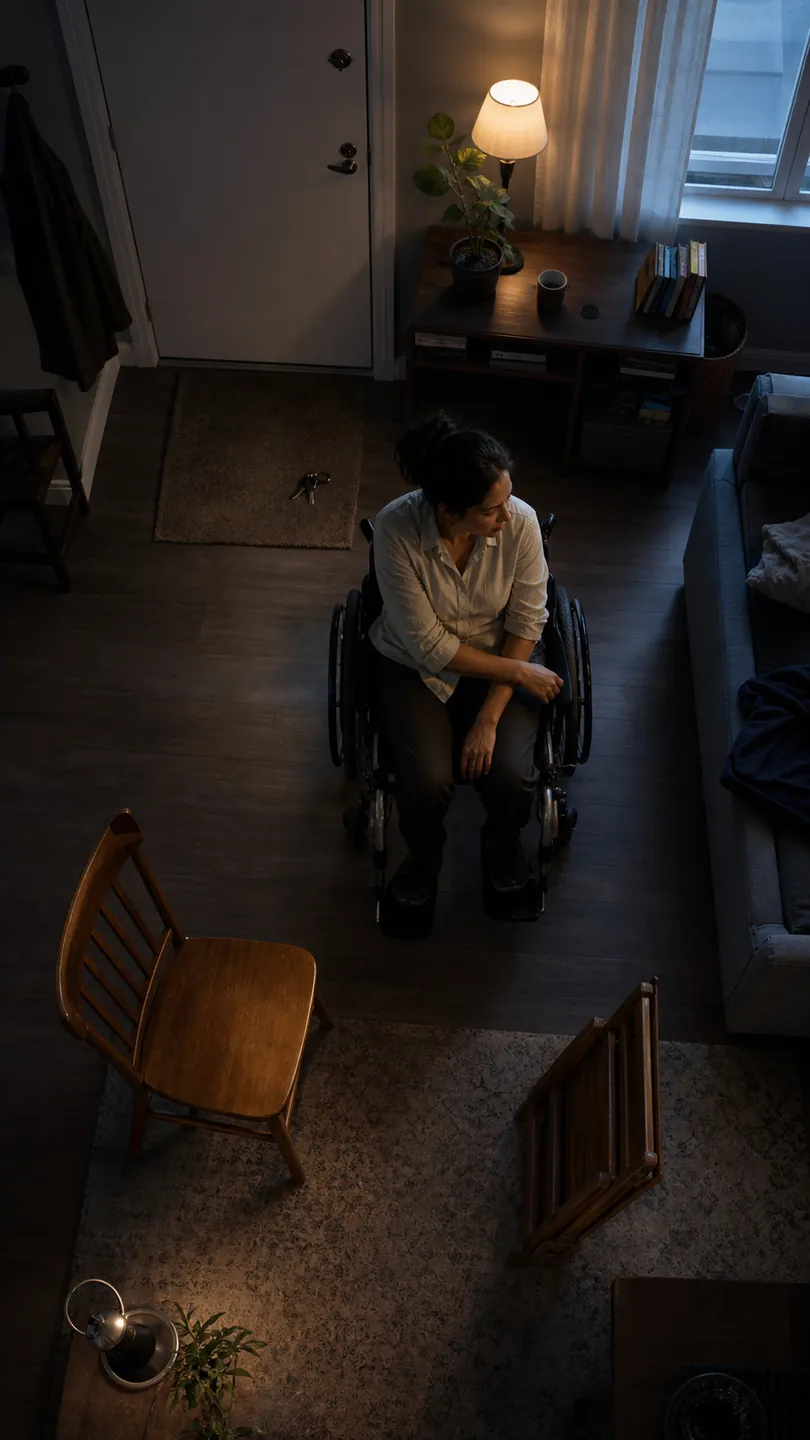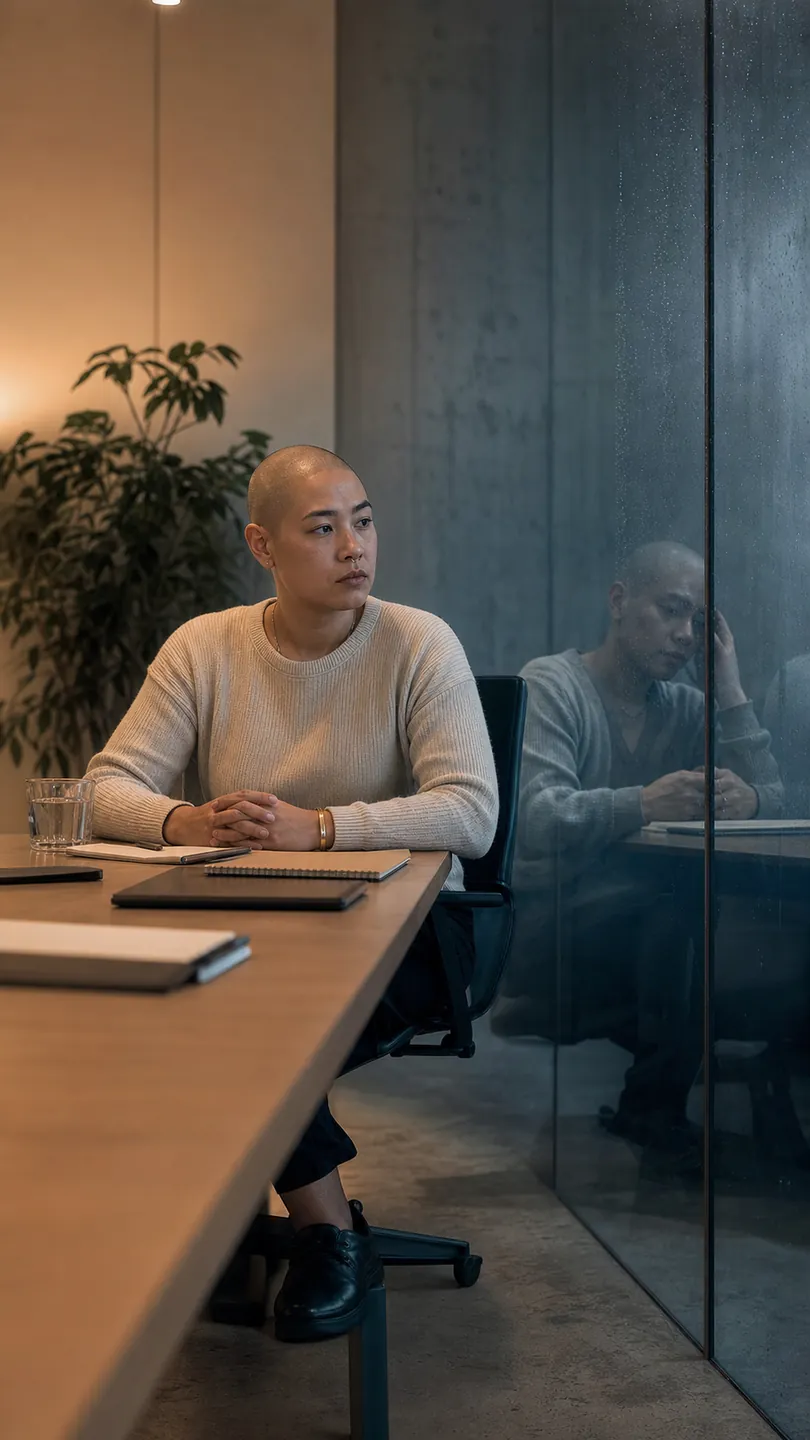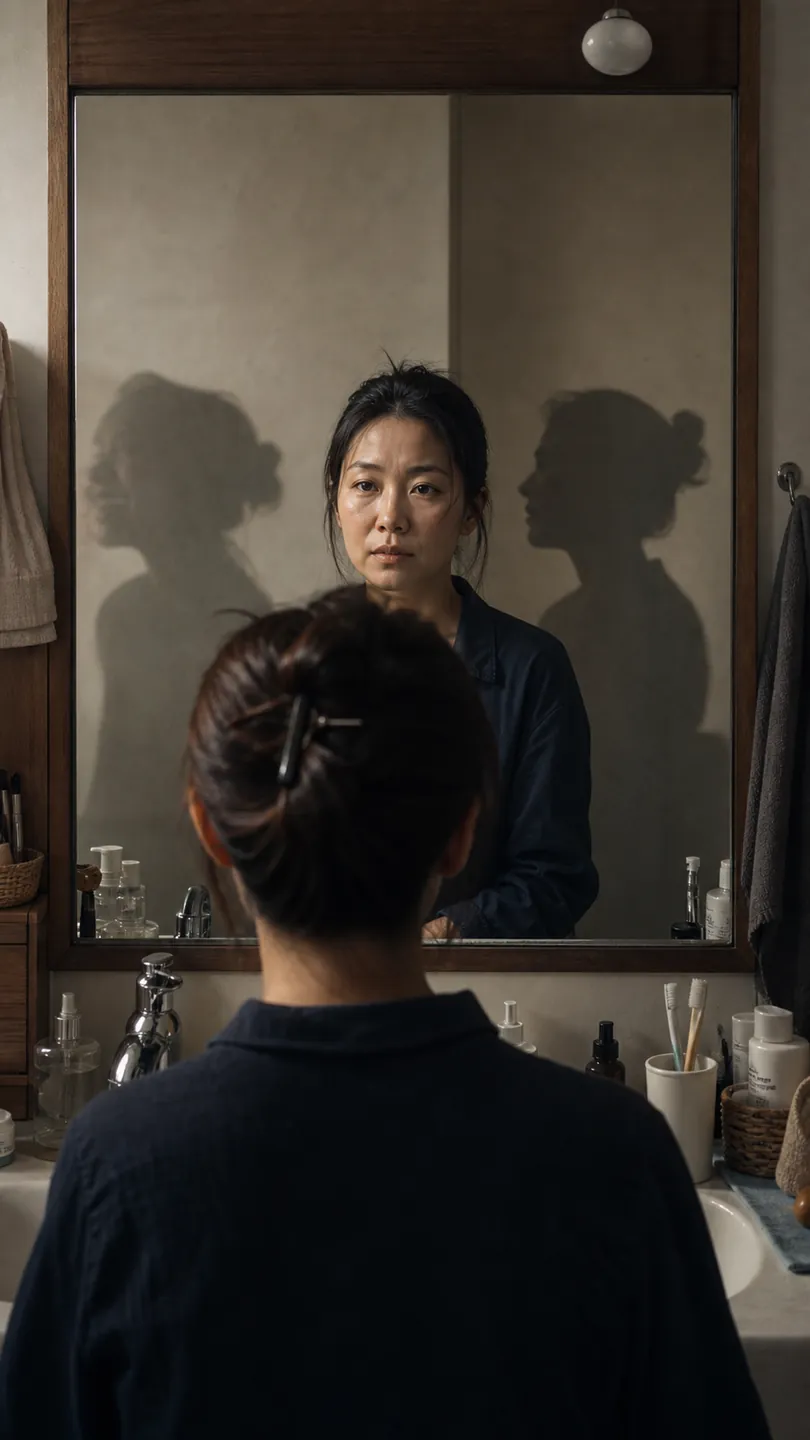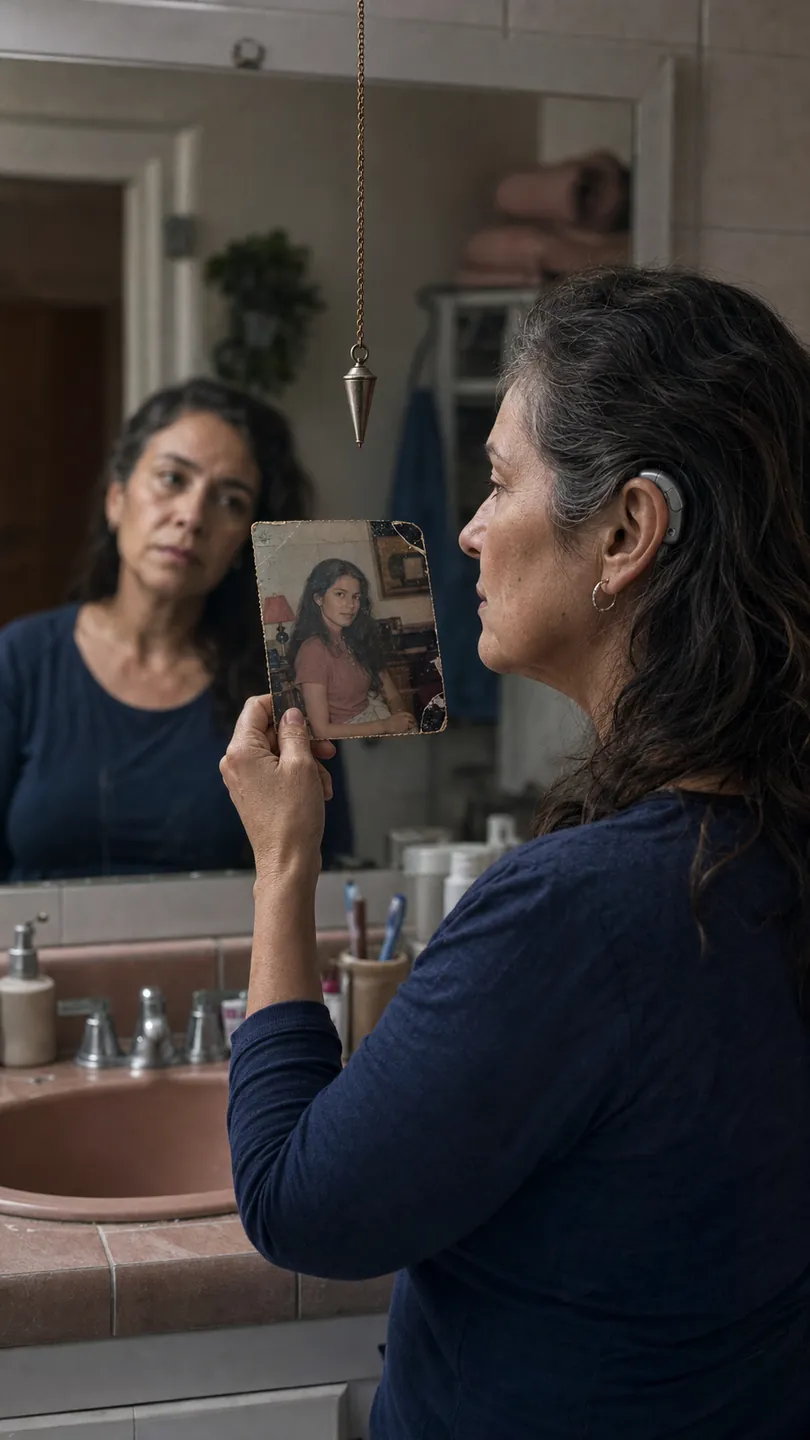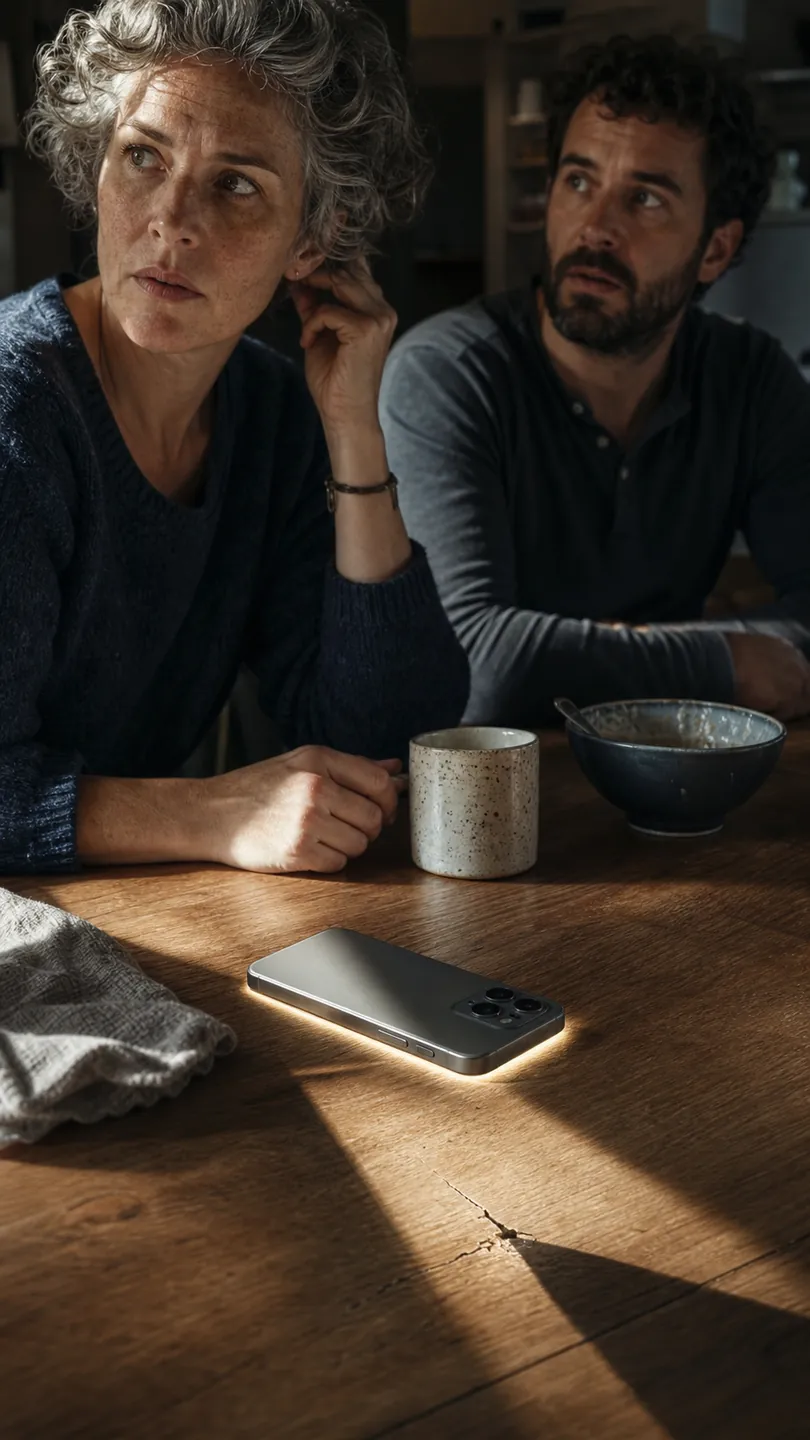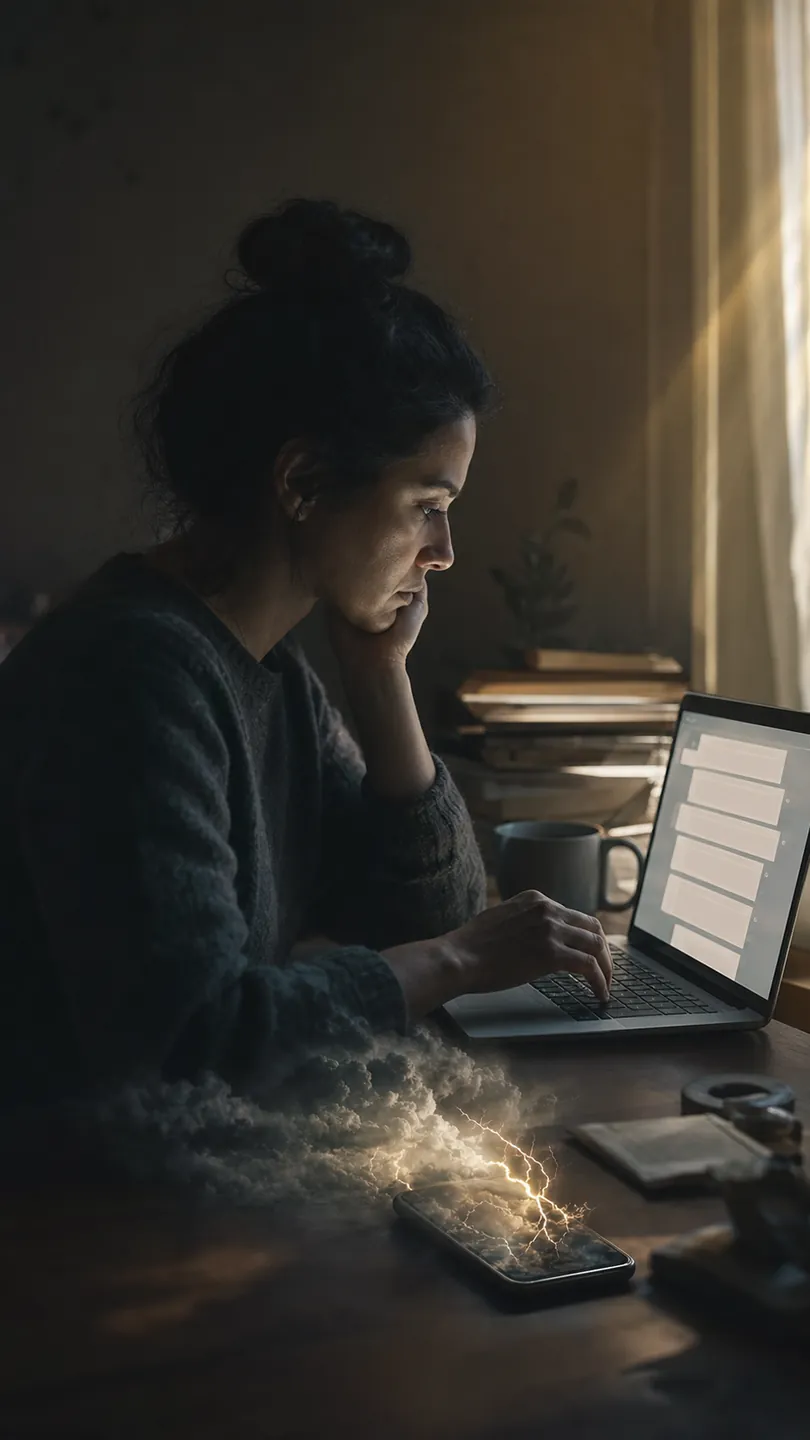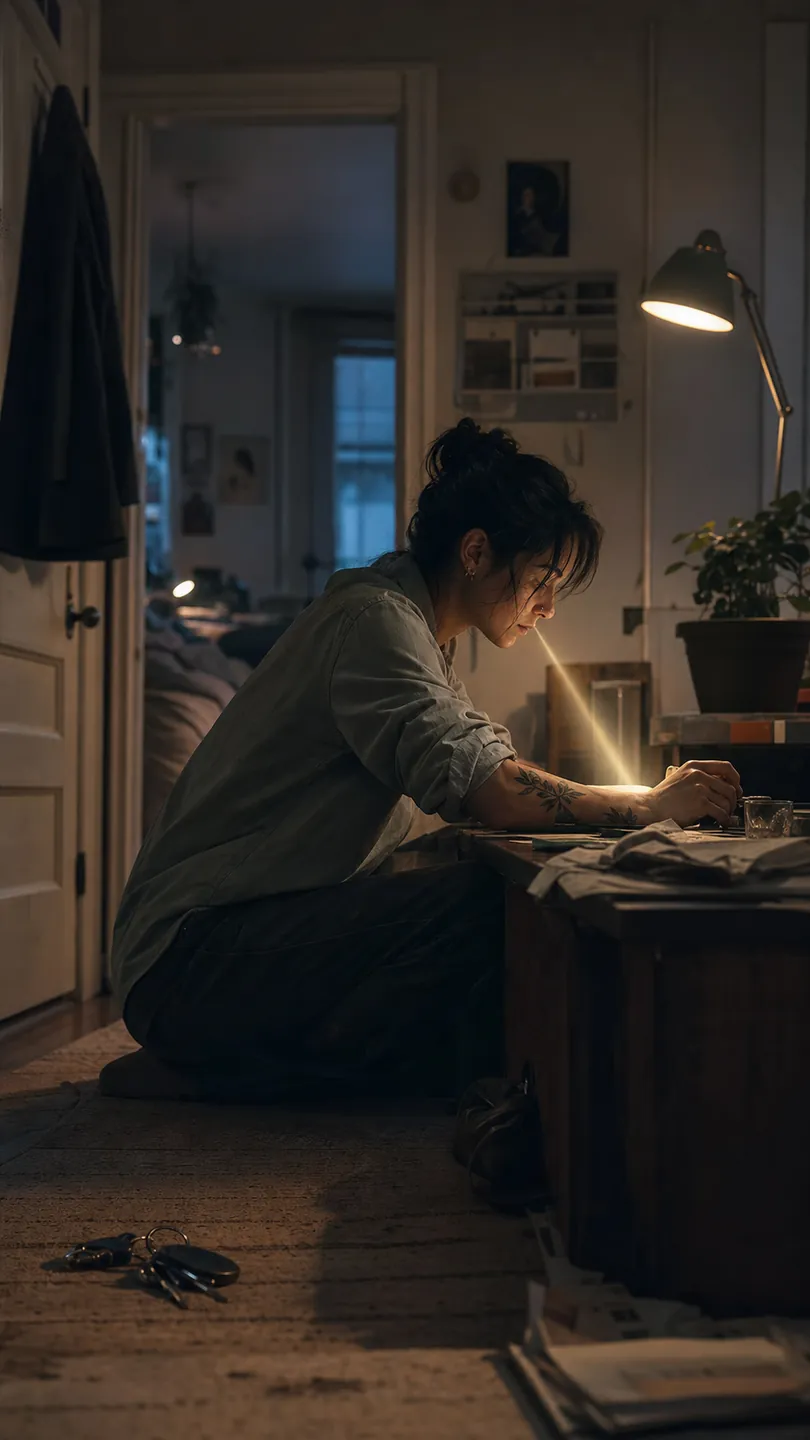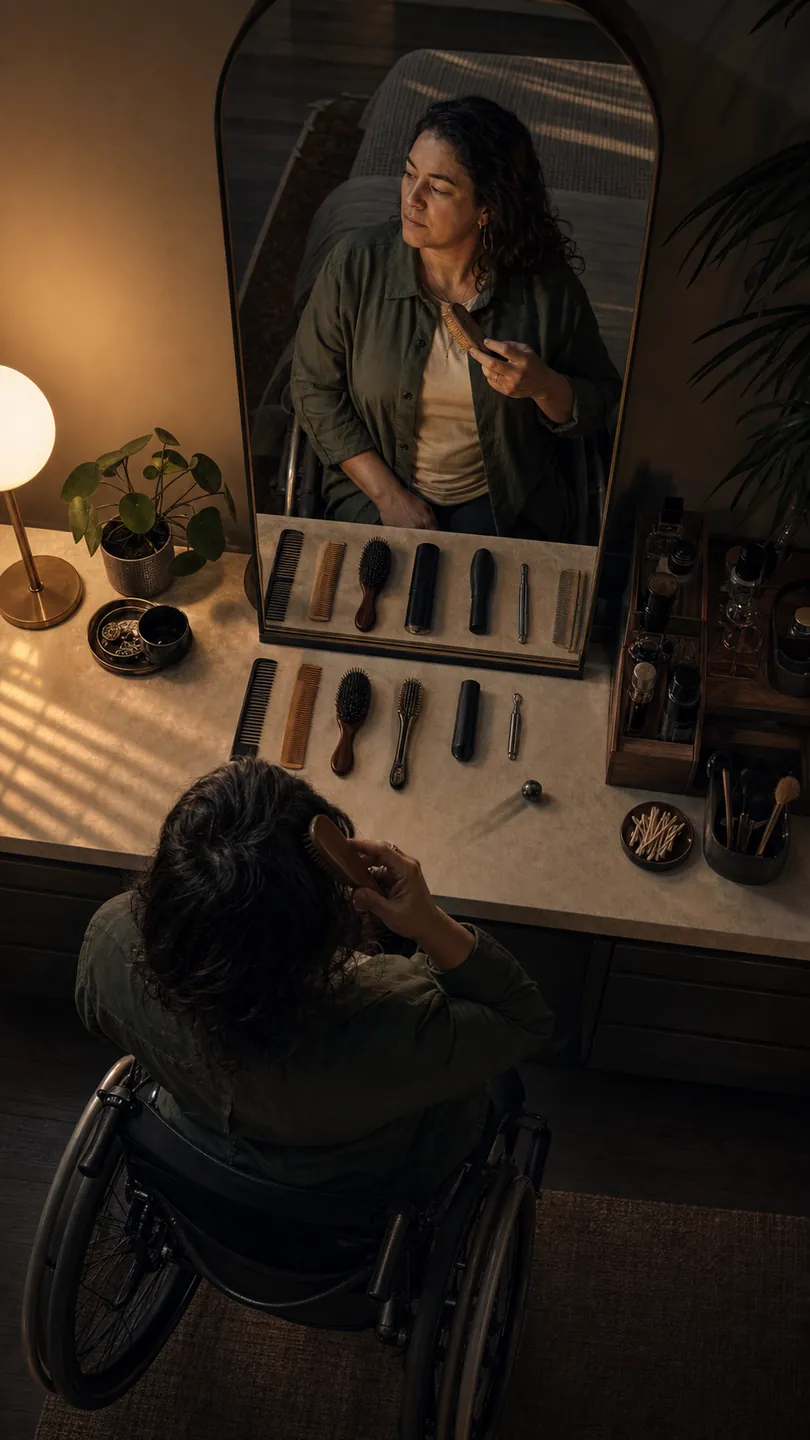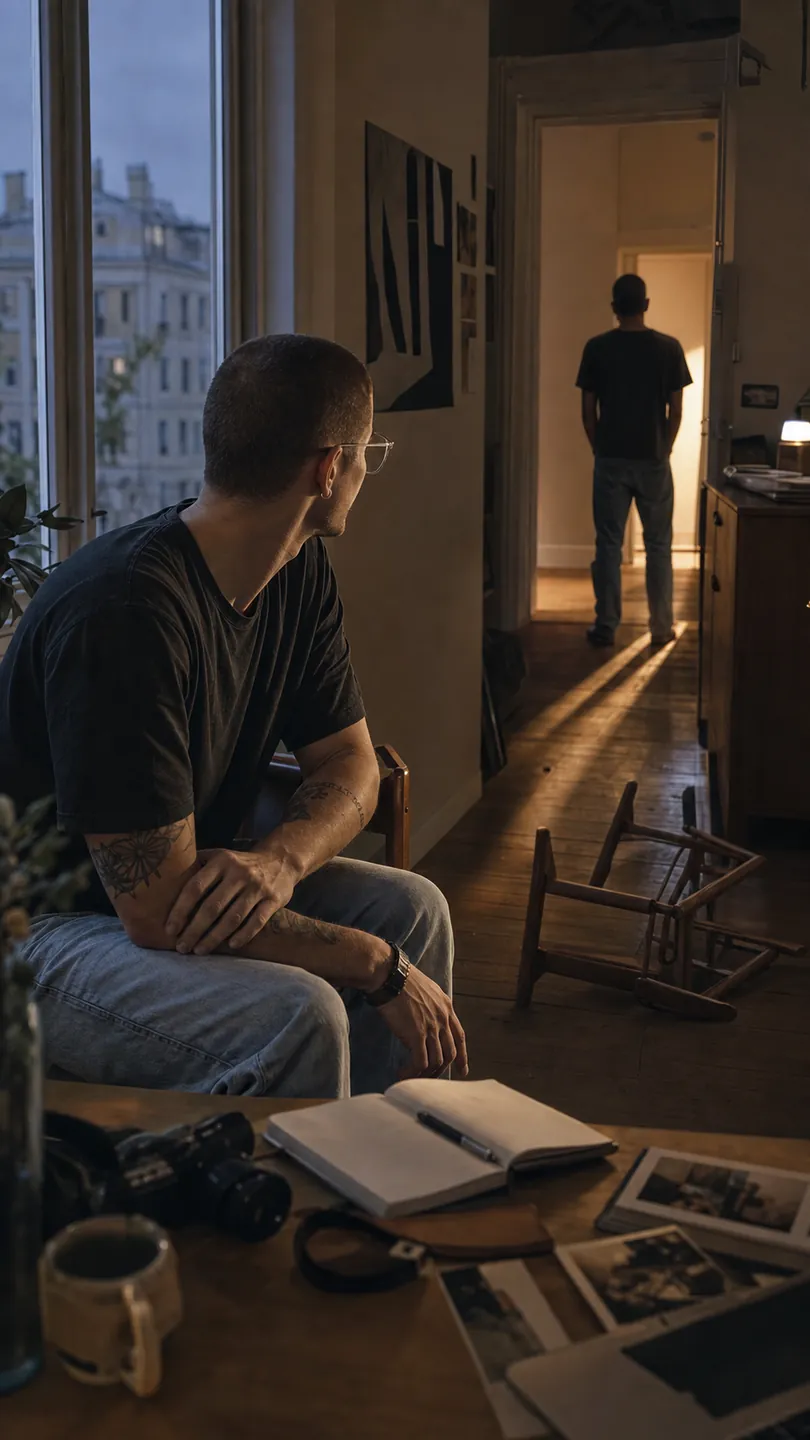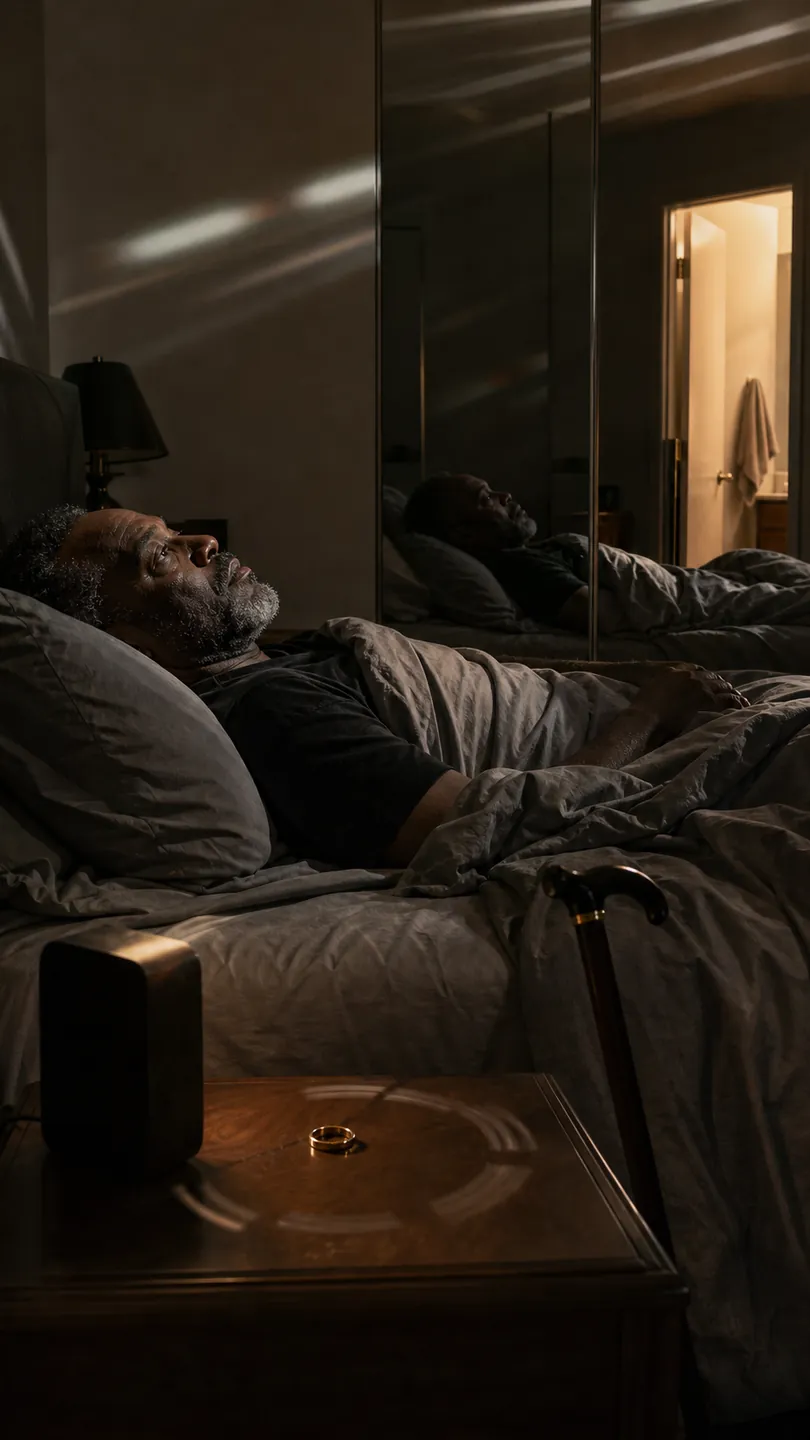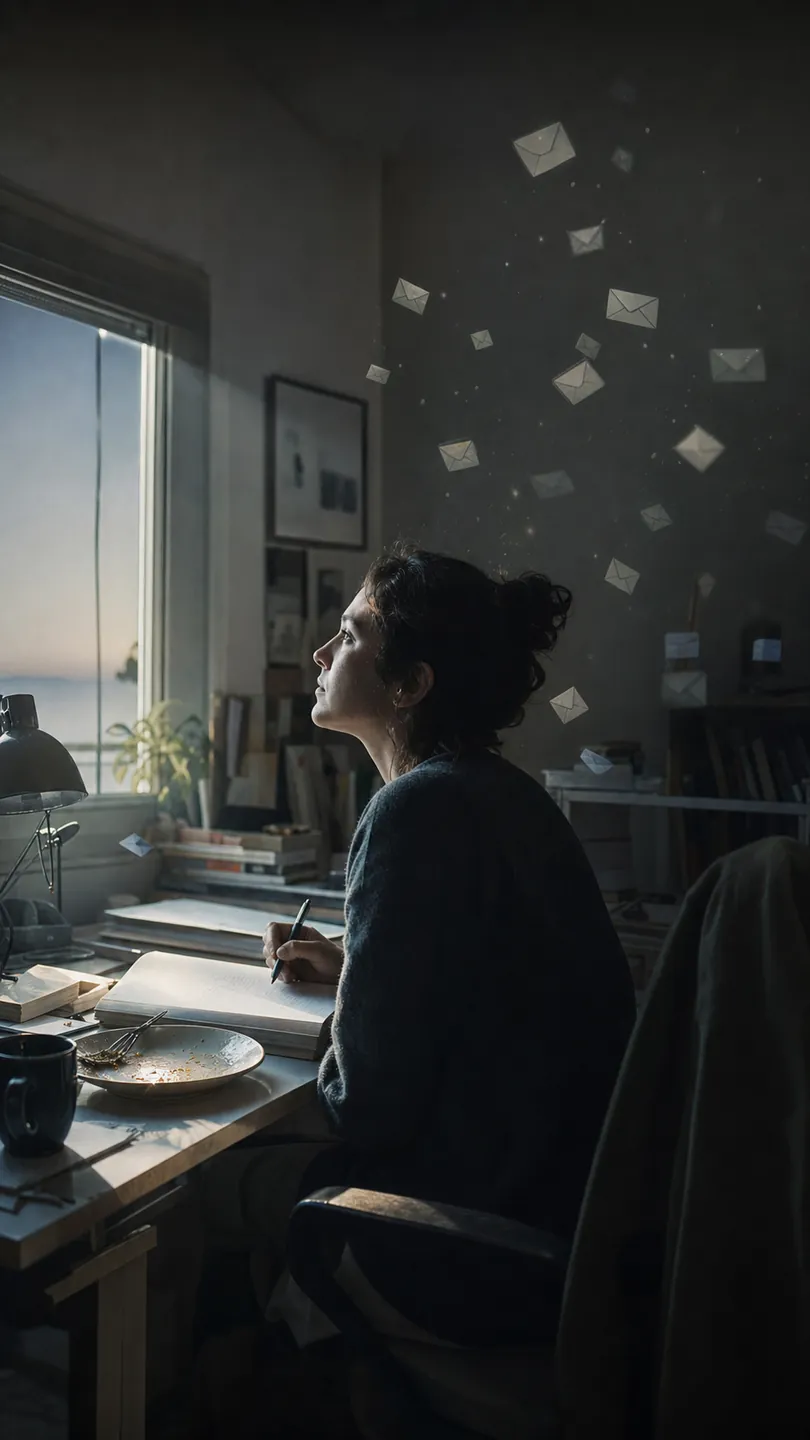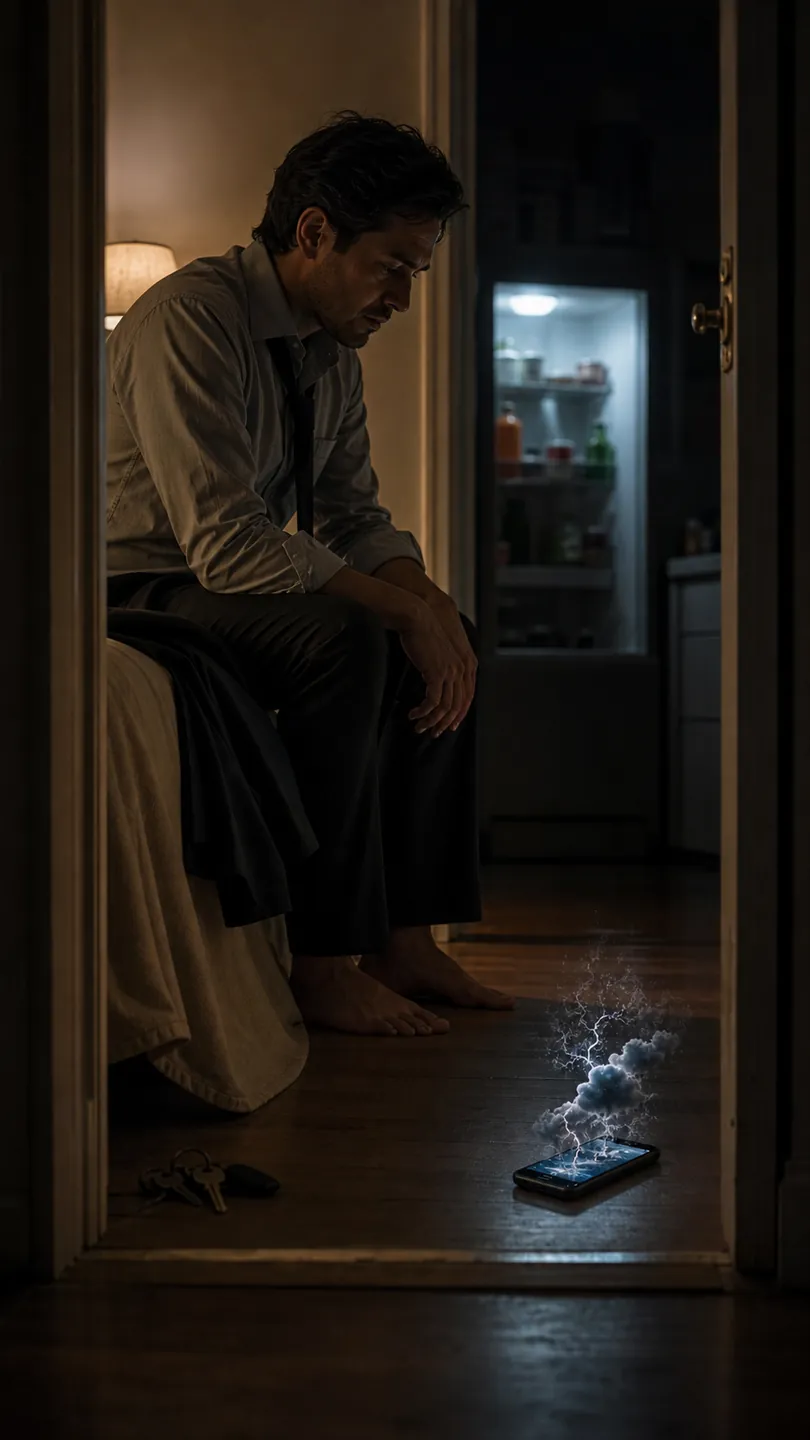
Ground the scene in work clothes loosened, keys dropped near the door, one lamp on, and the room appearing heavier toward the floor. INNER DYNAMIC — Let the...
من نص البرومبت
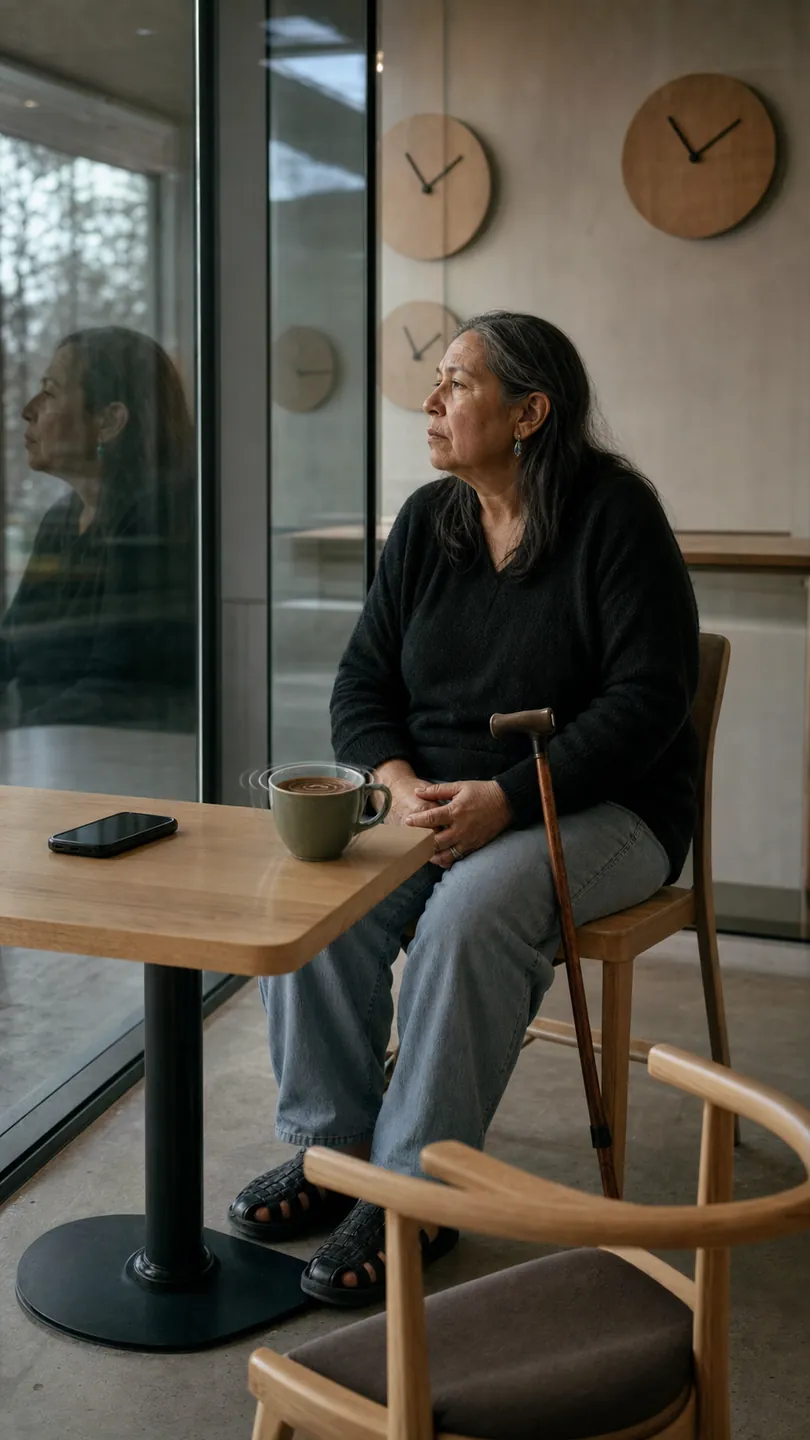
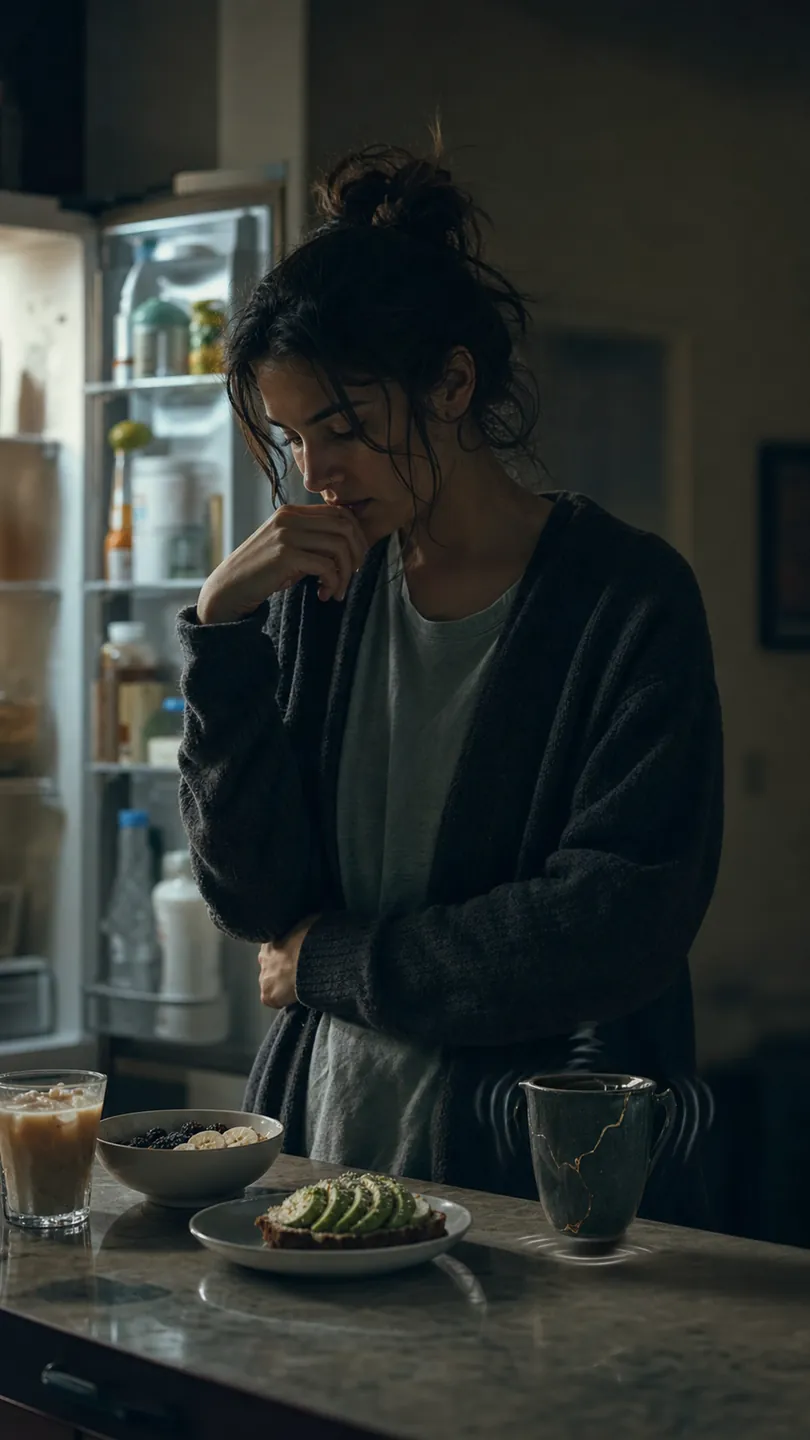
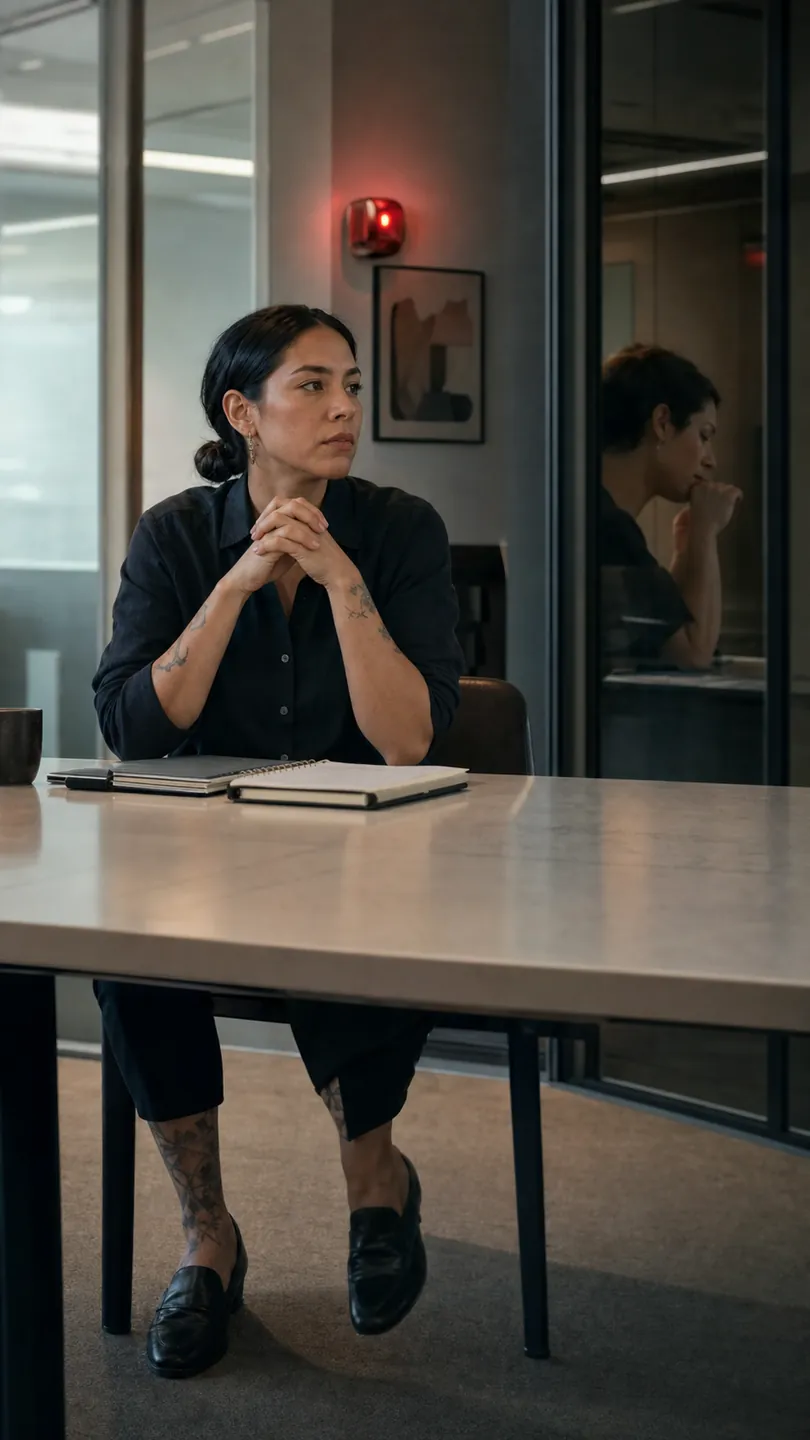
Use the attached reference photo as the identity reference: keep the same face, skin tone, hair and features as the person in that photo, without beautifying, aging or altering them. Create a contemplative single-frame image designed to serve as a visual catalyst for reflective writing. SUBJECT & SCENE — Depict the person from the reference photo, shown with documentary realism in an ordinary moment: reaching evening after a functional day and feeling the hidden cost arrive all at once. Ground the scene in work clothes loosened, keys dropped near the door, one lamp on, and the room appearing heavier toward the floor. INNER DYNAMIC — Let the image express this dynamic: the mind rehearsing danger before ordinary events. Show the person as complex and capable, not broken or inspirational. Communicate the tension through restrained posture, attention, and behavior rather than exaggerated facial emotion. SYMBOLIC DETAIL — Integrate an ordinary phone surrounded by branching weather systems as the only controlled departure from realism. It should feel physically present yet subtle enough to be understood only after the everyday scene is noticed. TIME & IDENTITY — Suggest the repeated pattern of borrowing energy from the night. Let the scene hold this identity question: how a protective imagination can become an authority over choices, relationships, and the future. VISUAL LANGUAGE — Use a doorway-framed composition that makes a small threshold feel consequential; brief refrigerator light in an otherwise dark kitchen; low-saturation household colors with subtle tonal separation; subtle motion traces only where attention or time is implied. BOUNDARIES — No words, captions, diagnostic labels, medical clichés, self-harm imagery, horror framing, or sensational despair. Keep the portrayal humane, culturally respectful, emotionally complex, and accessible. Portrait orientation, 9:16, high detail, realistic anatomy and materials.