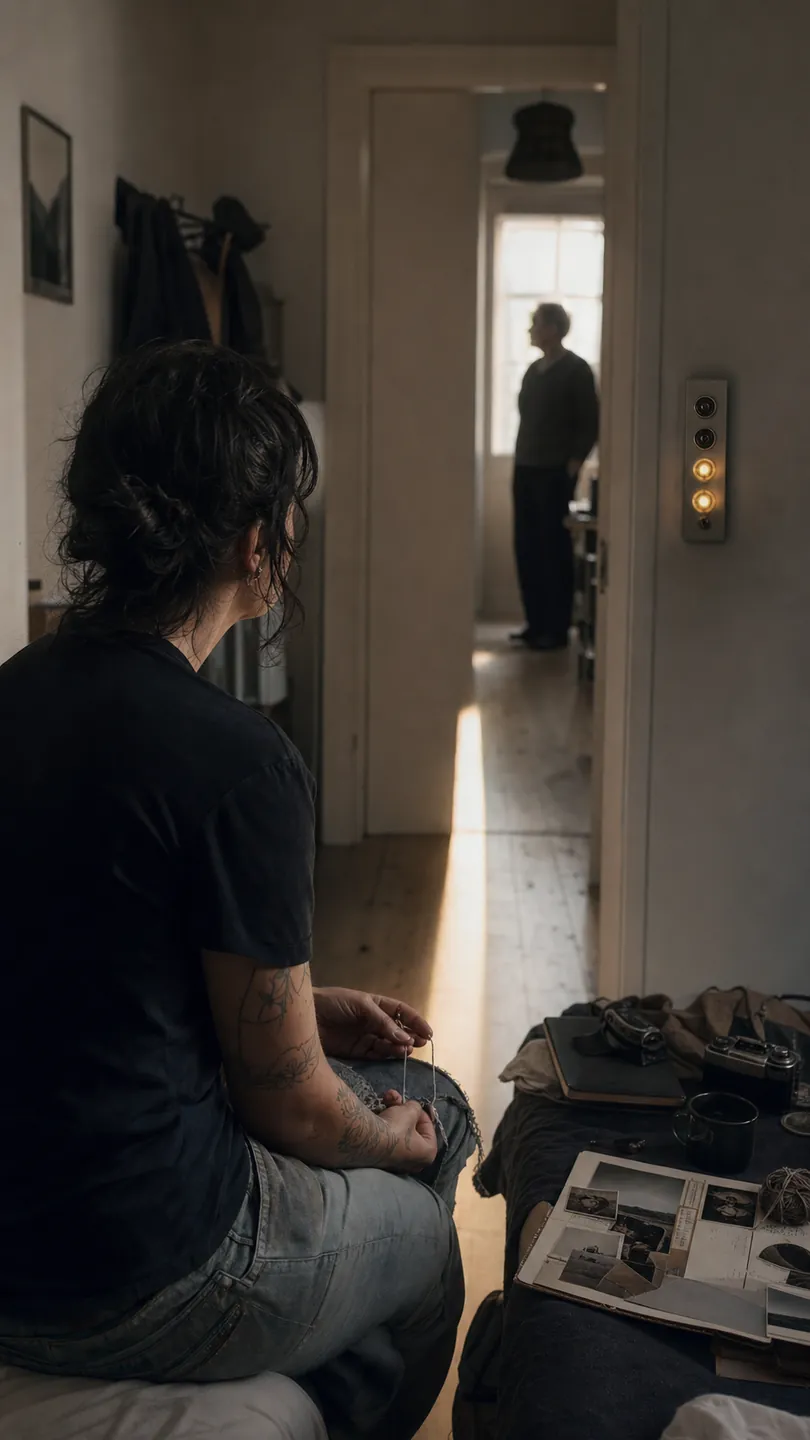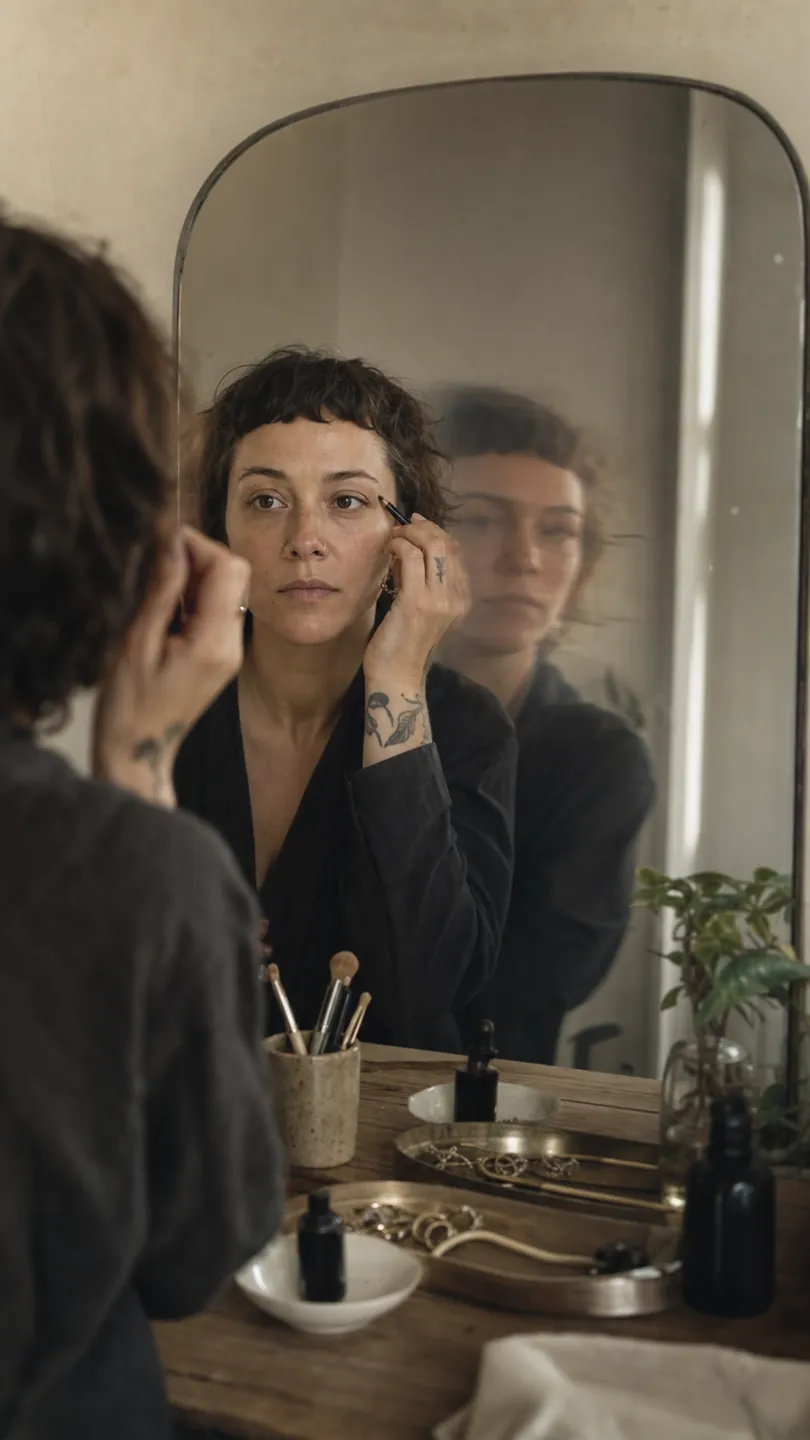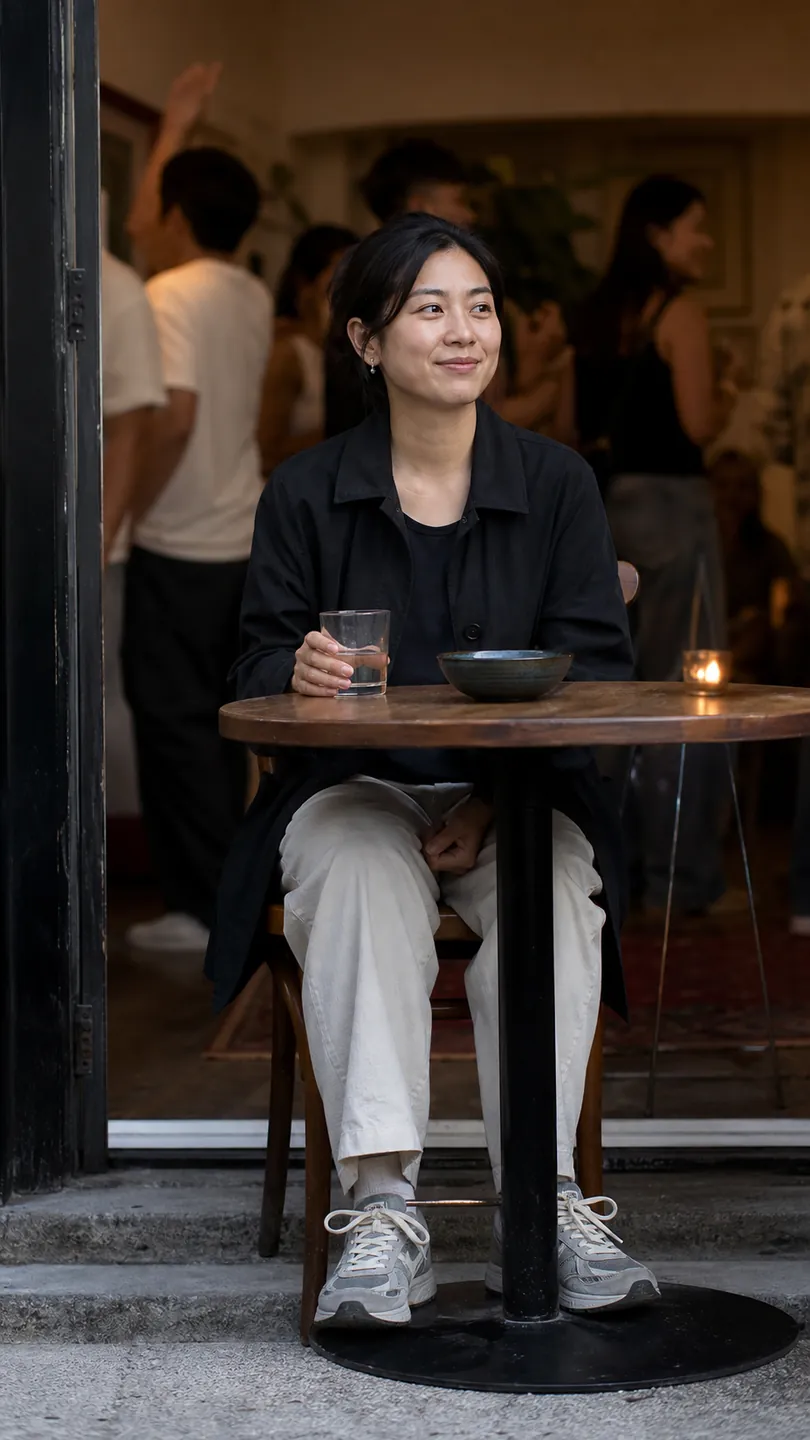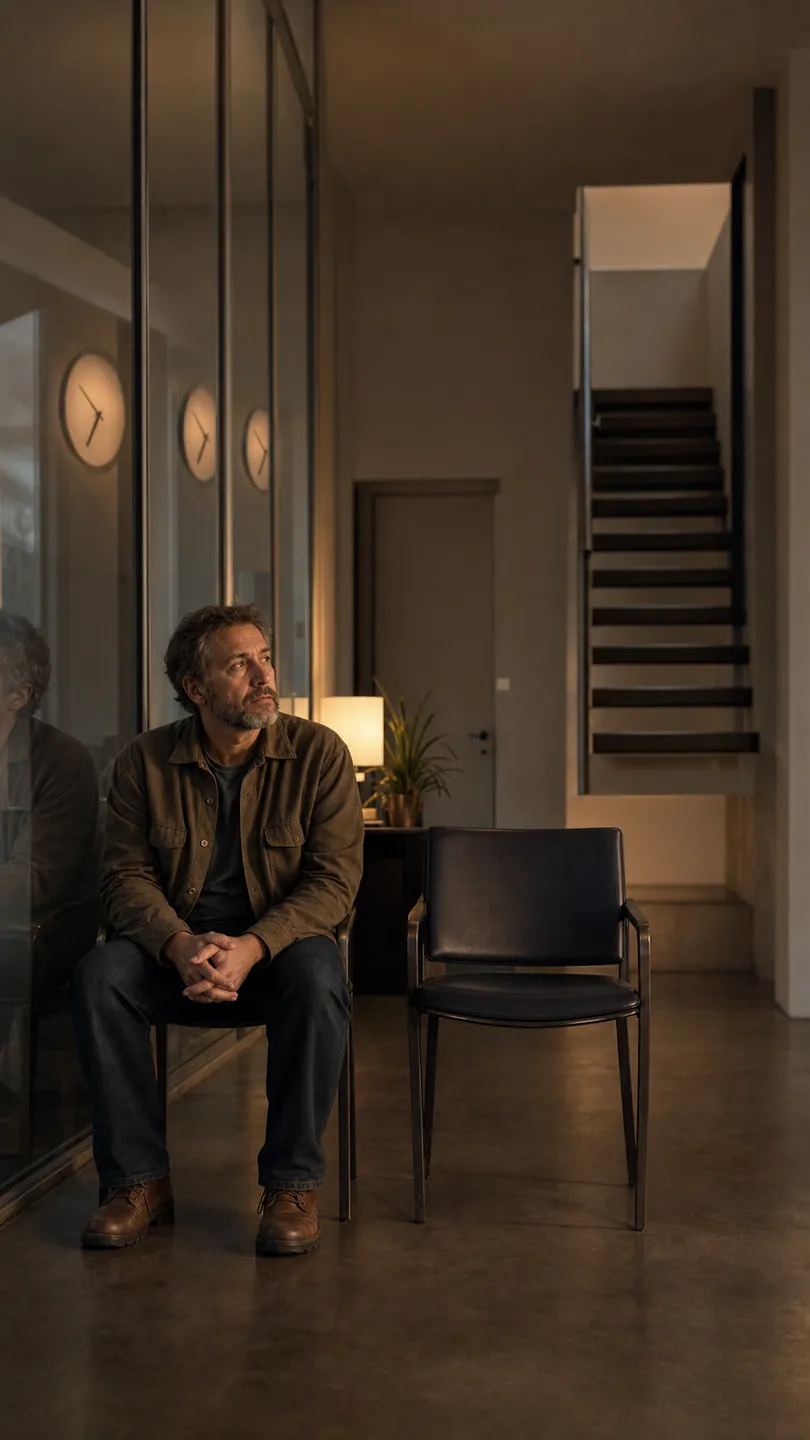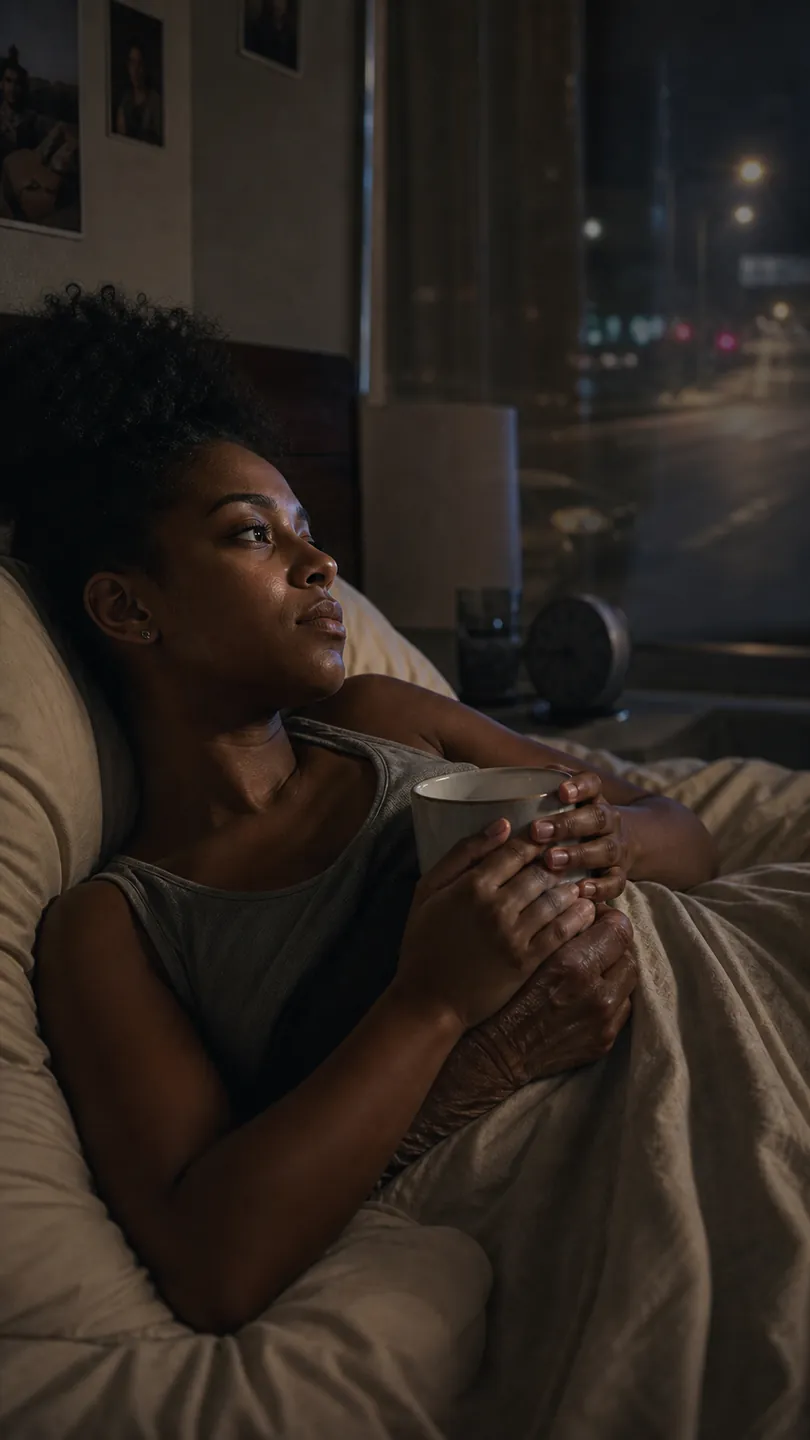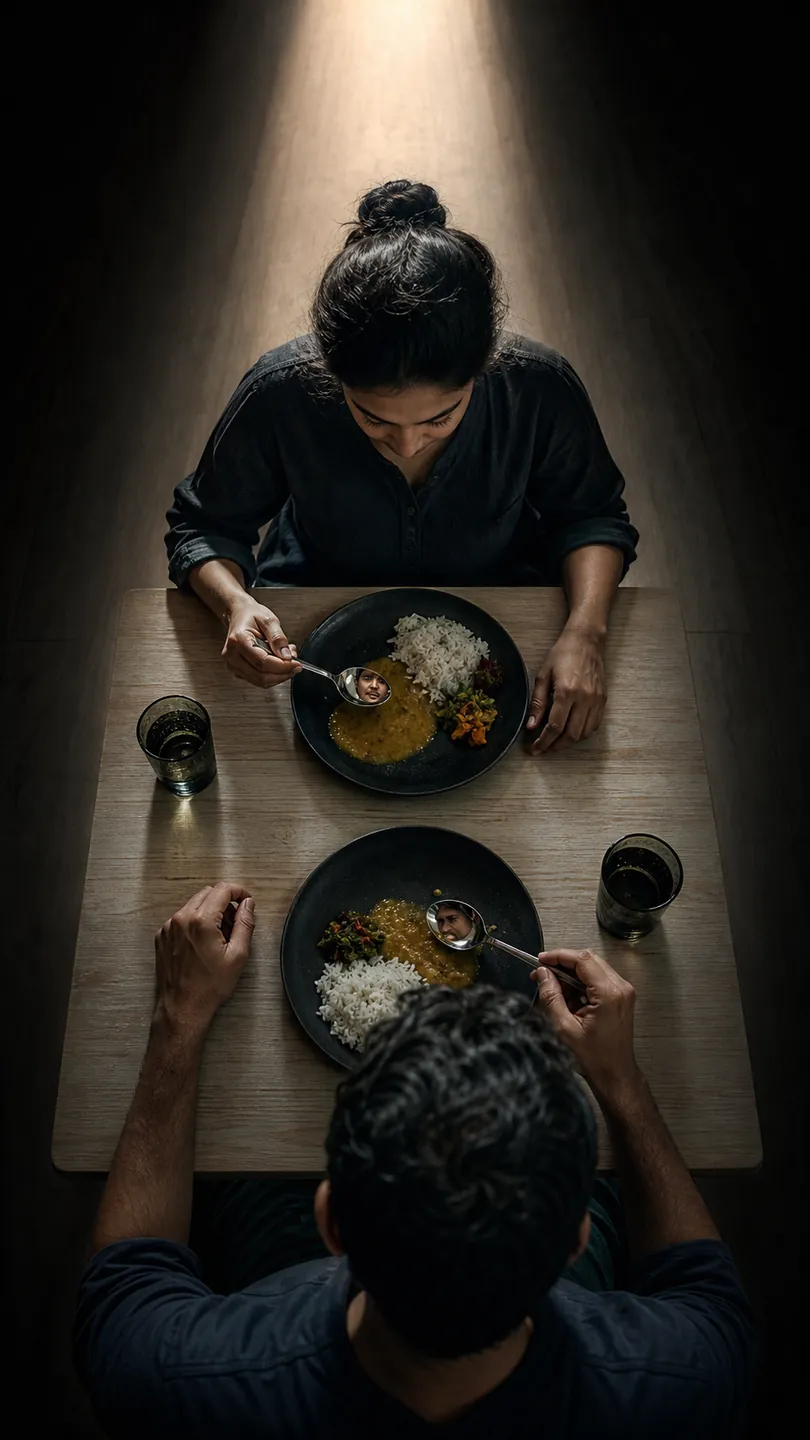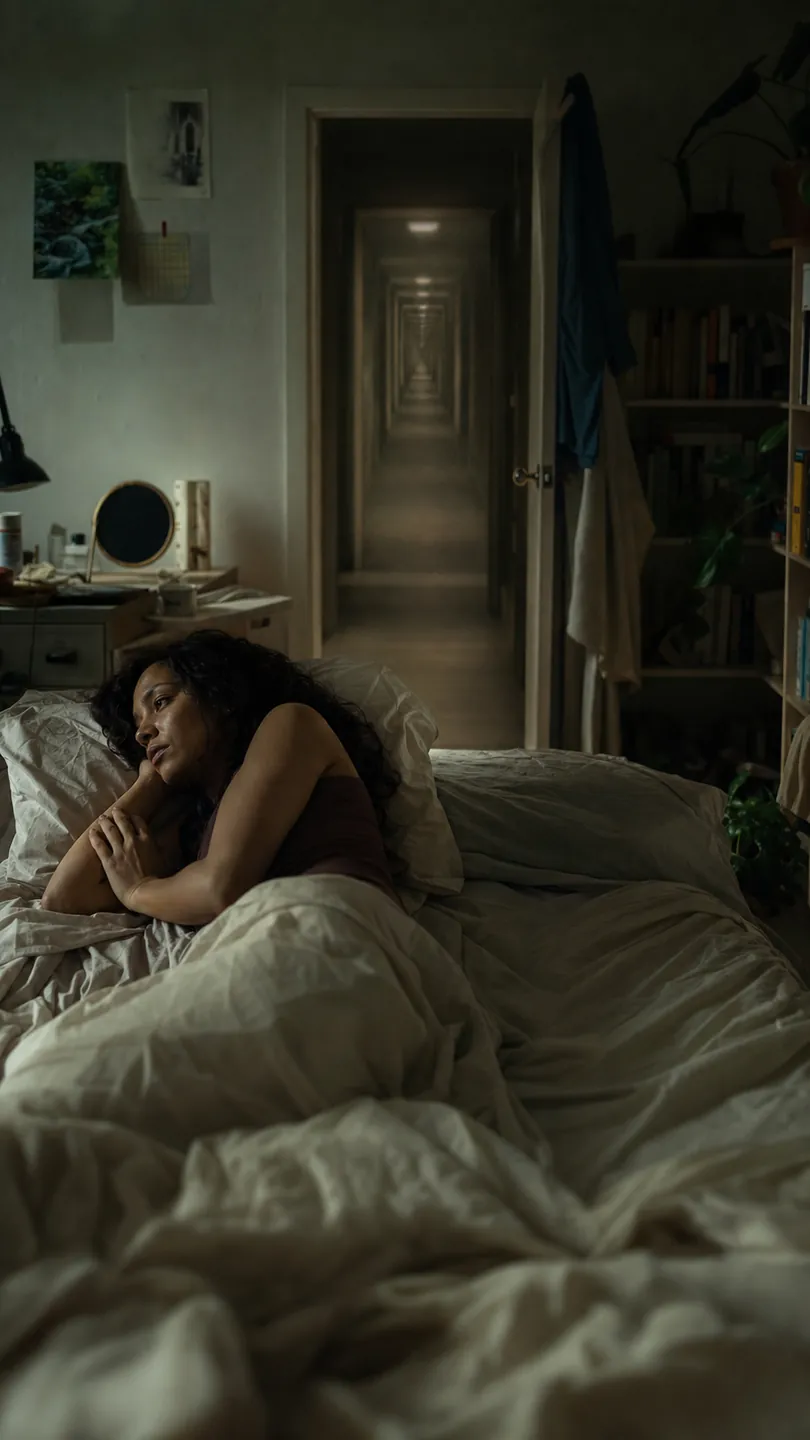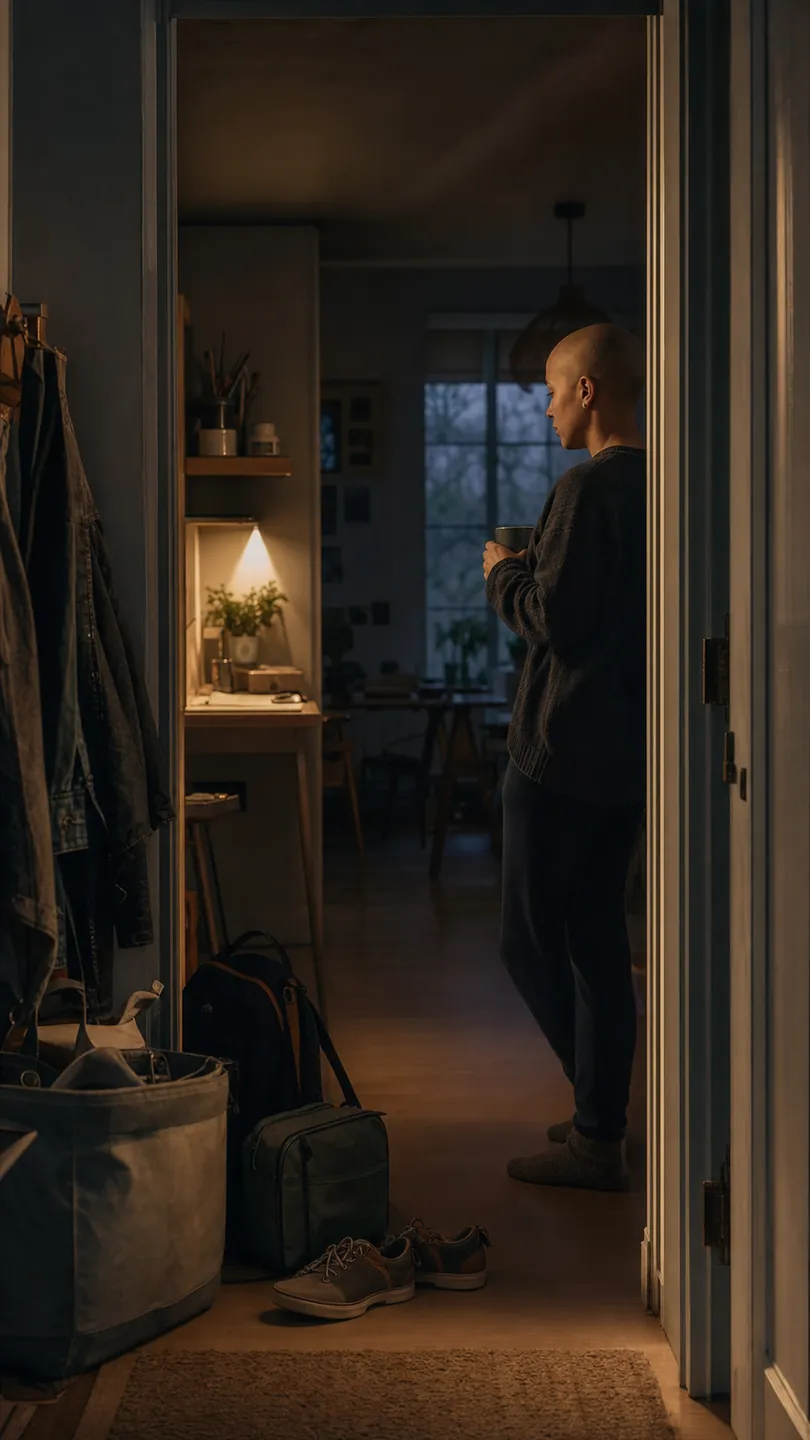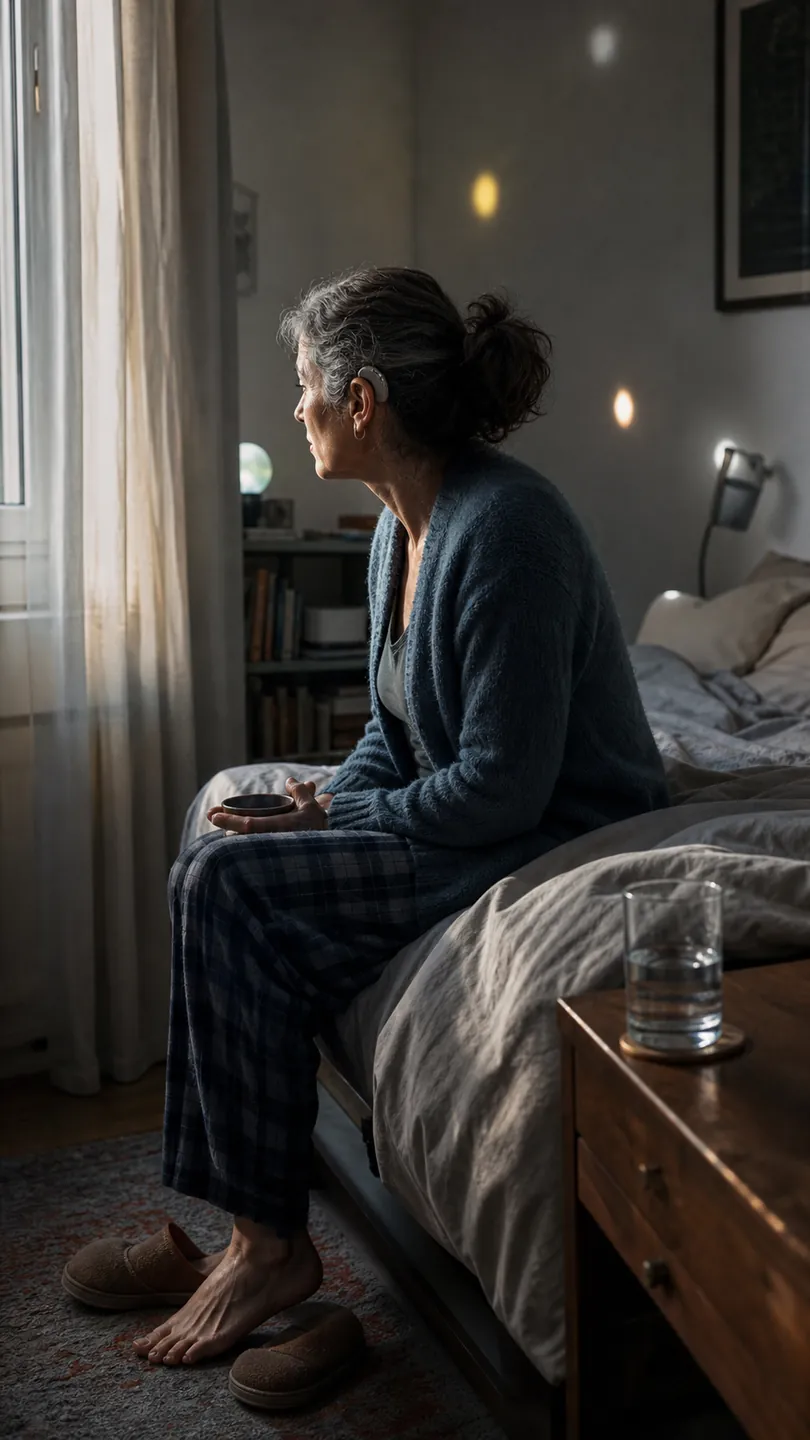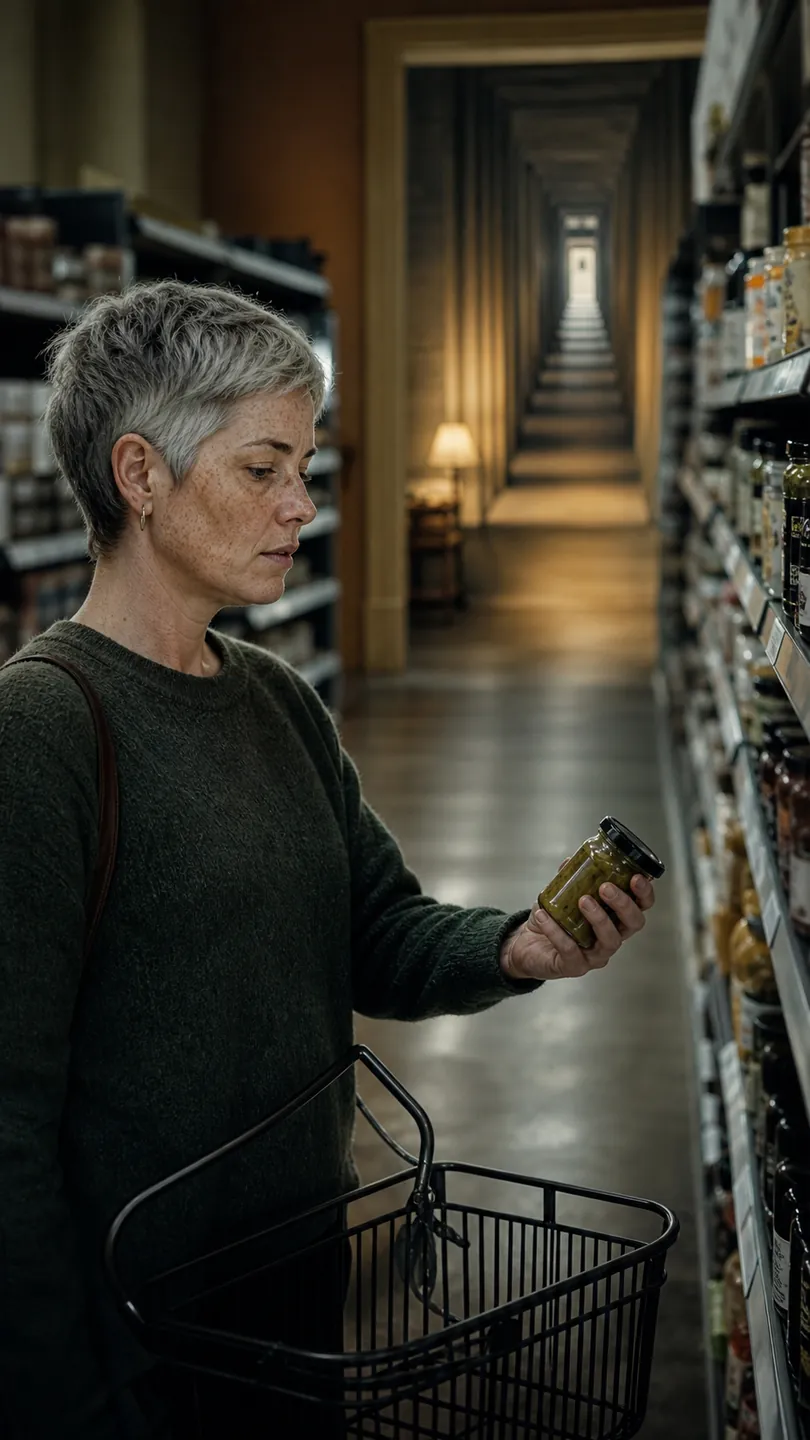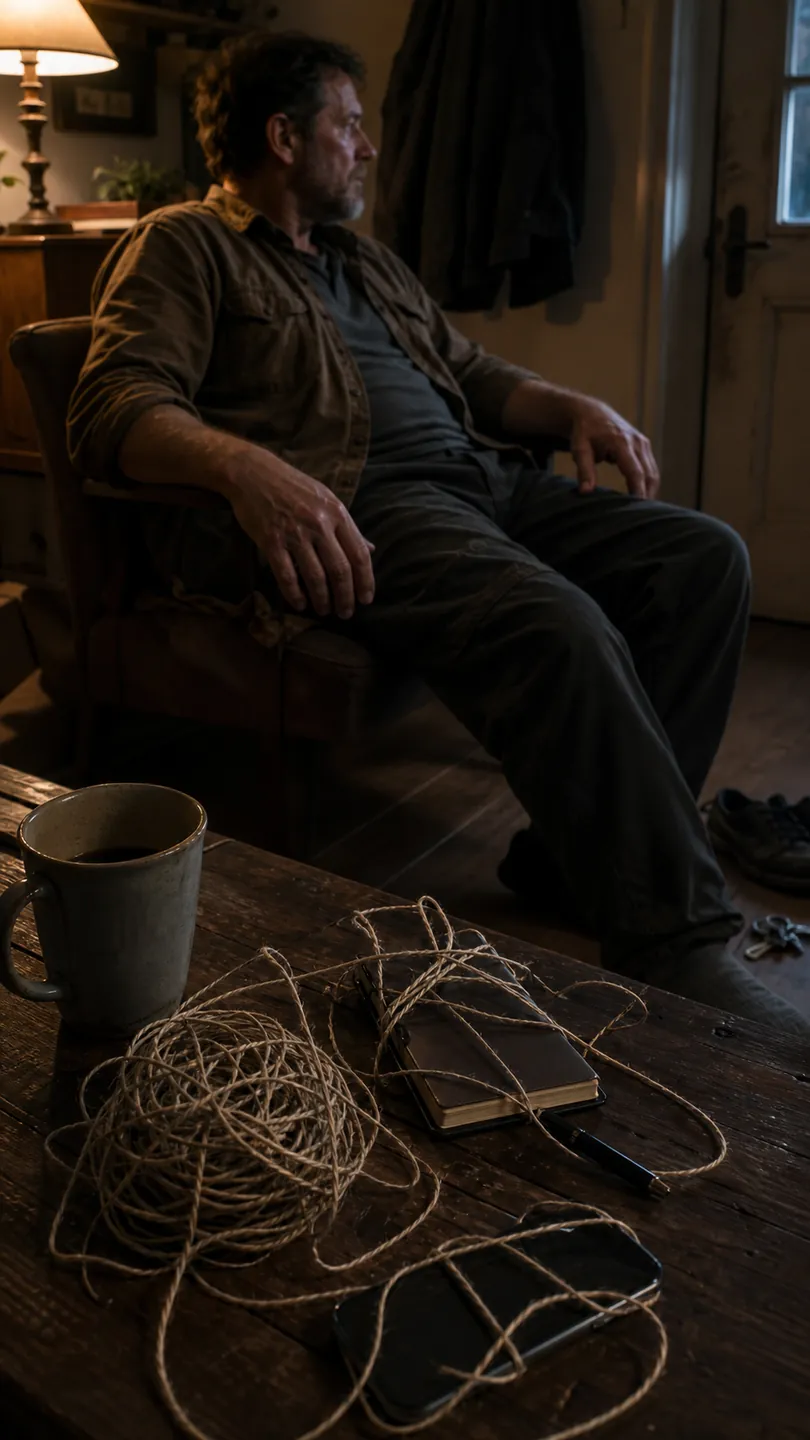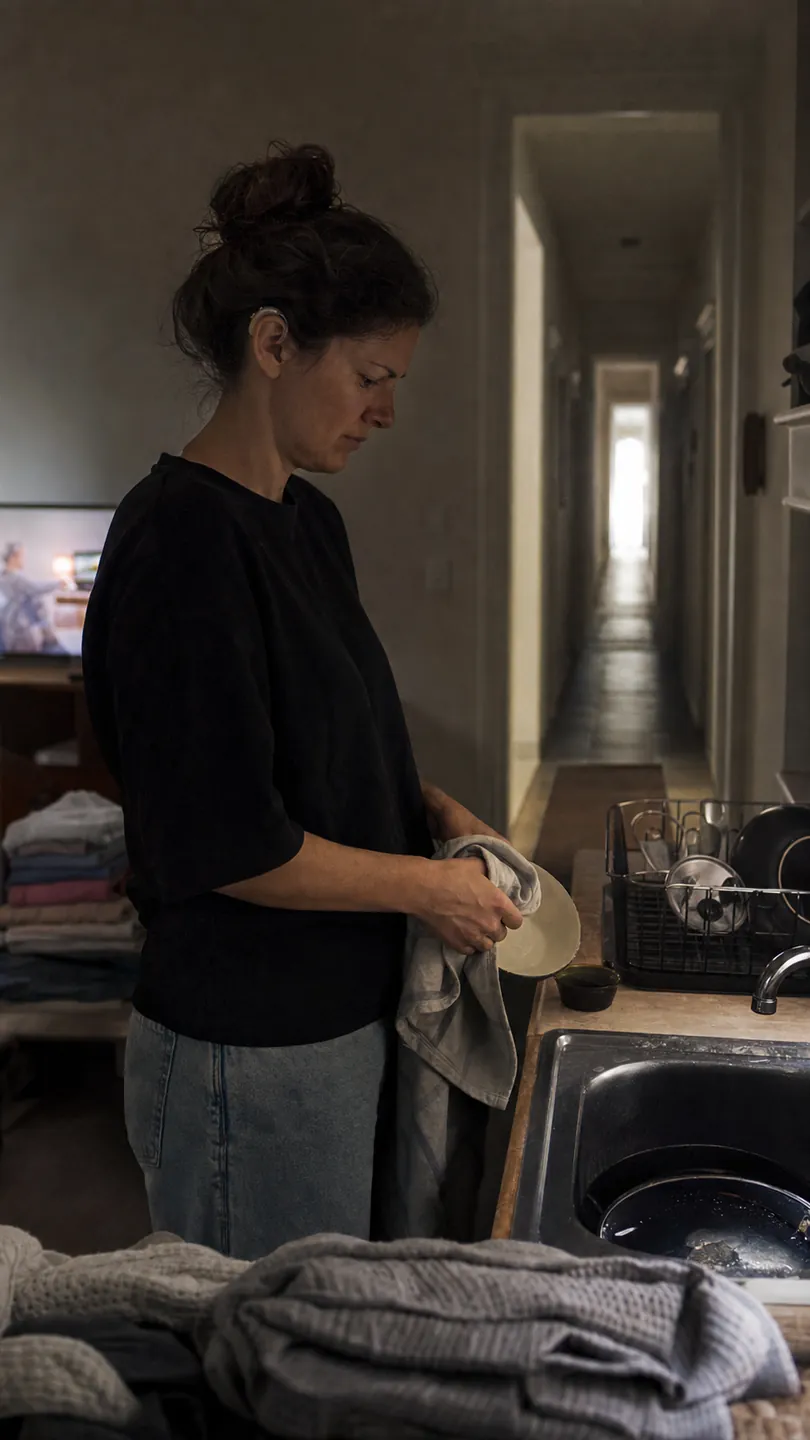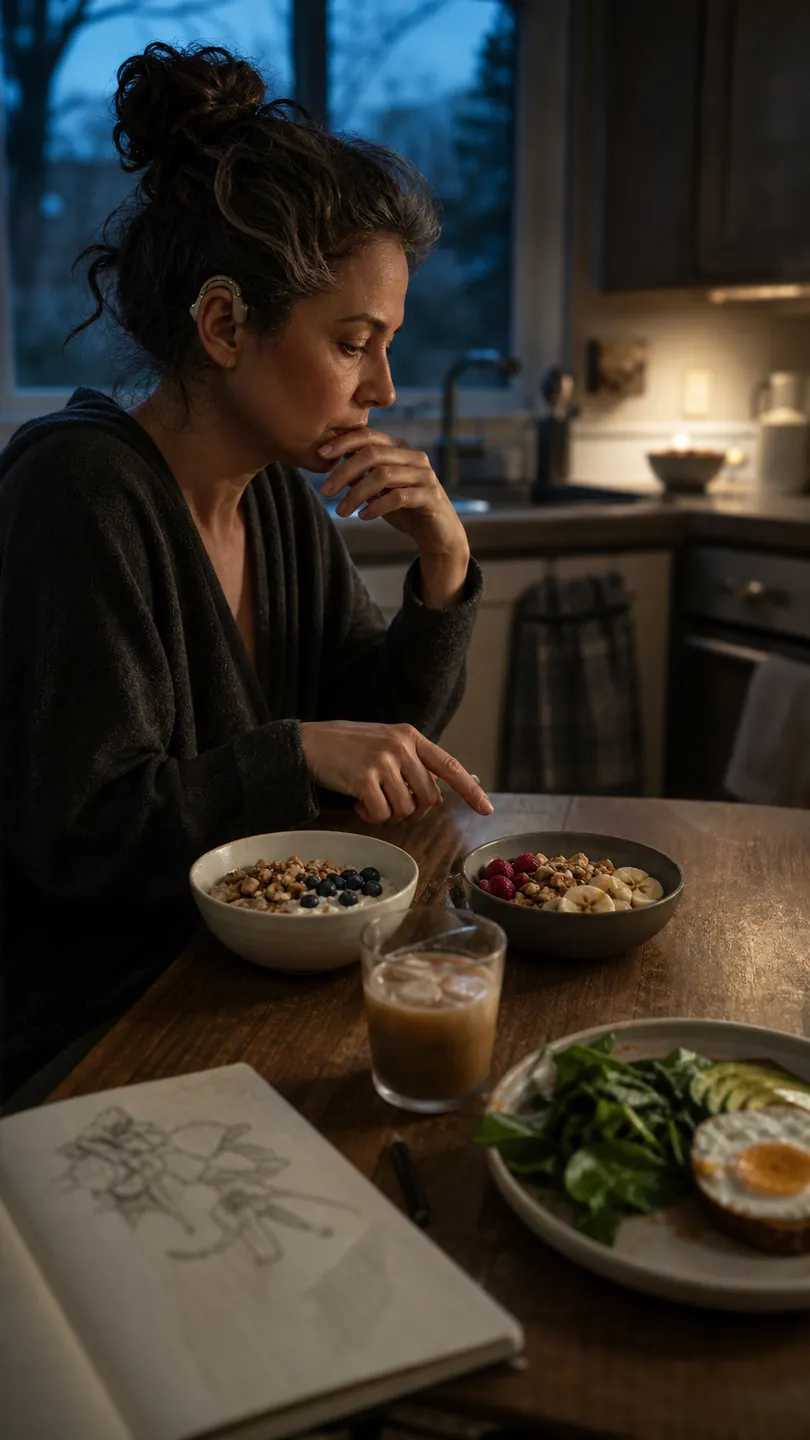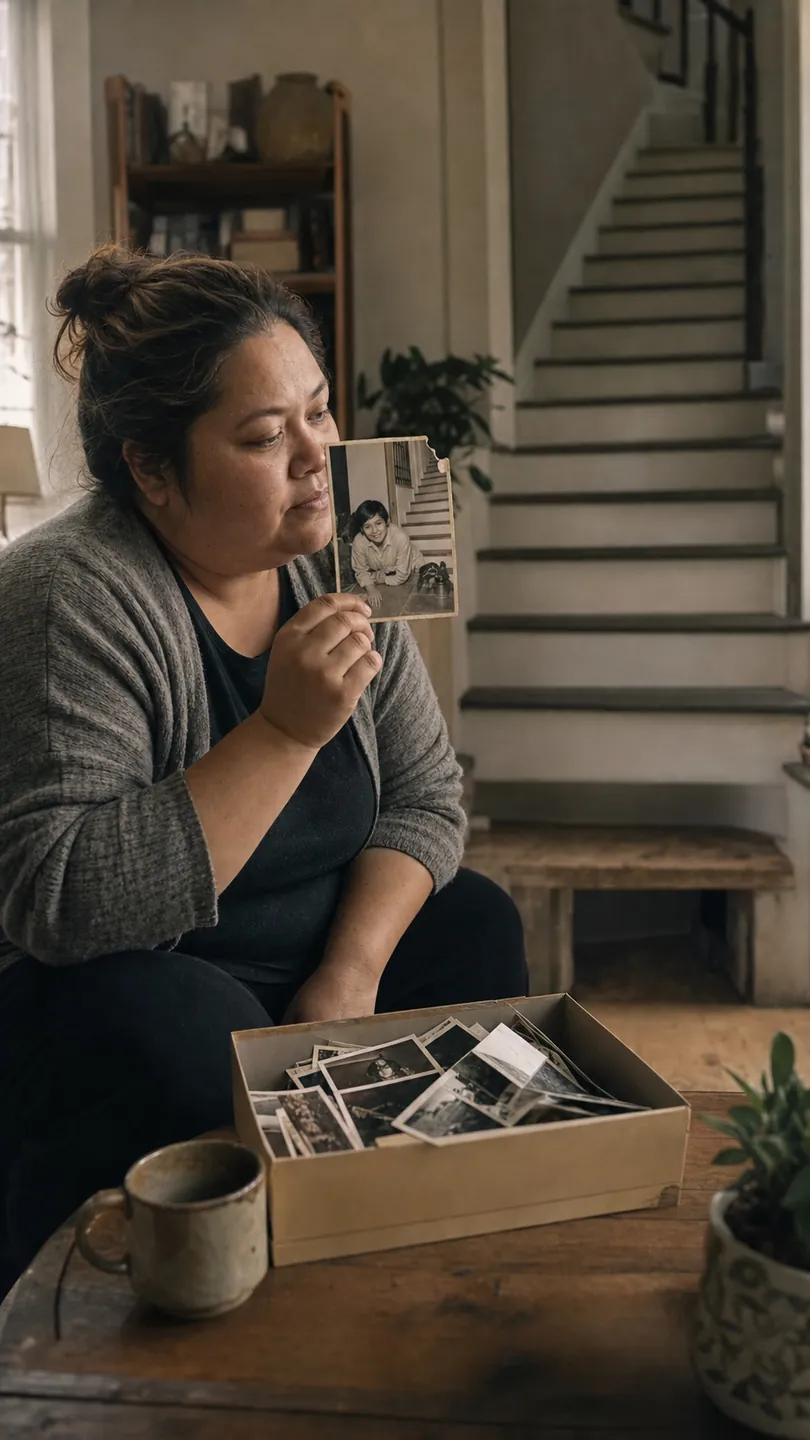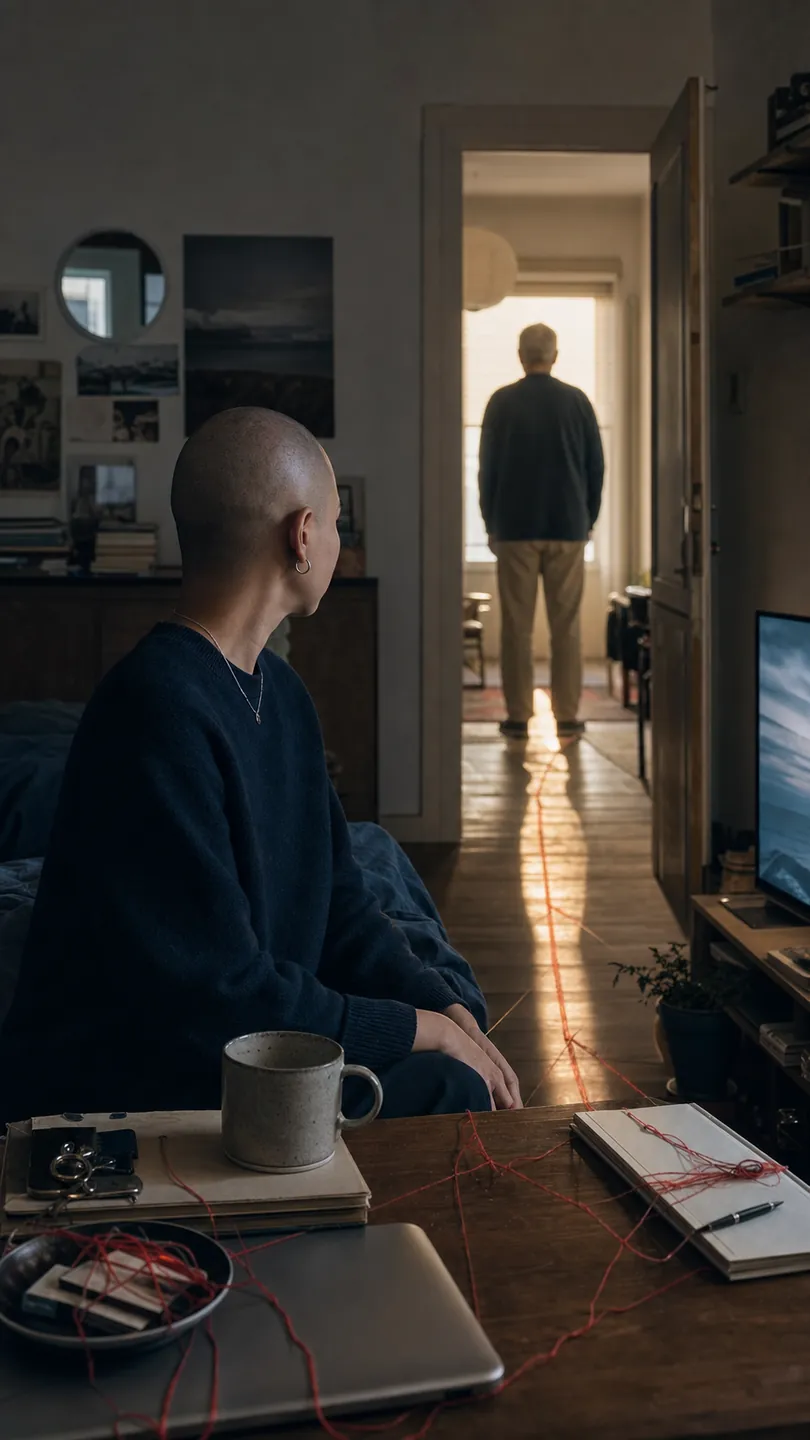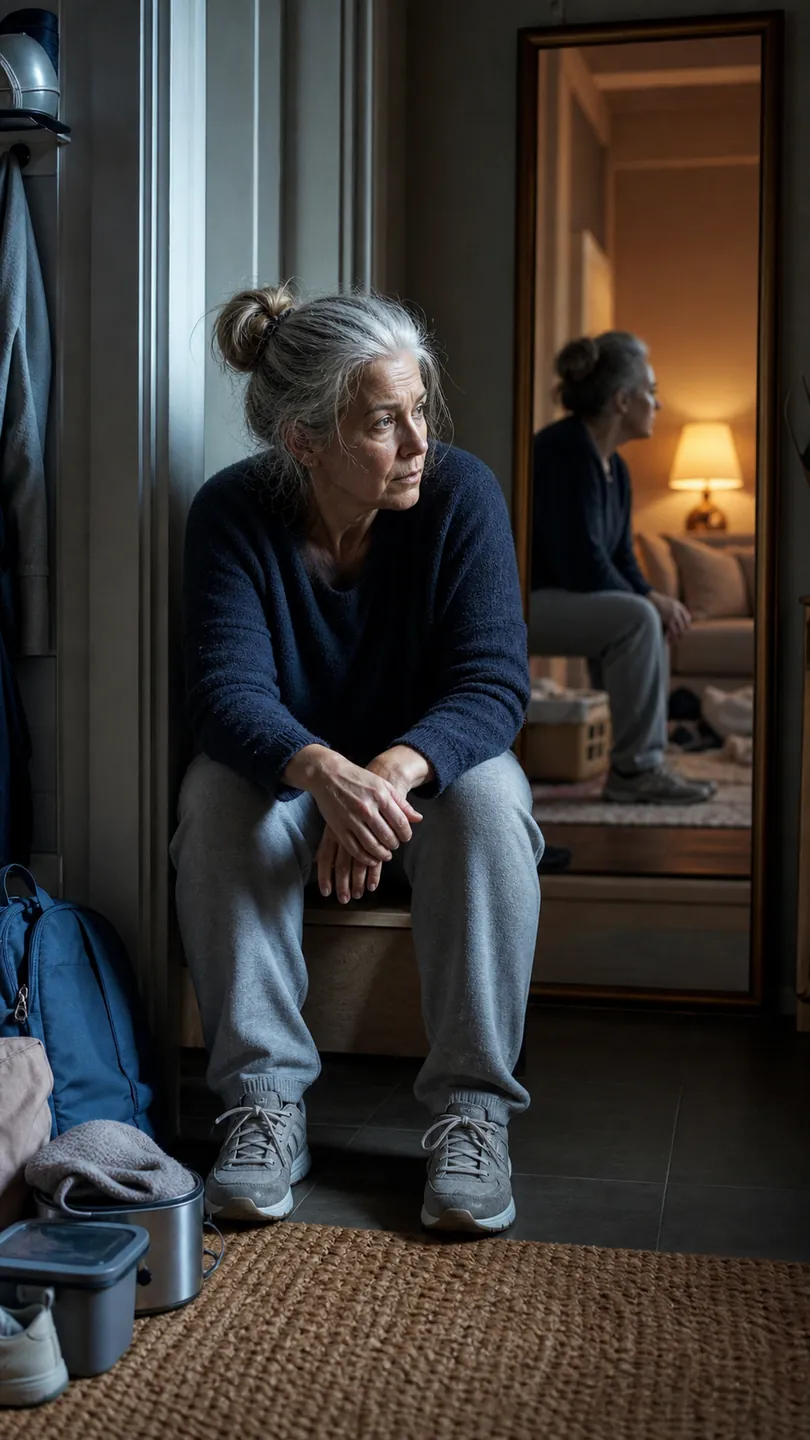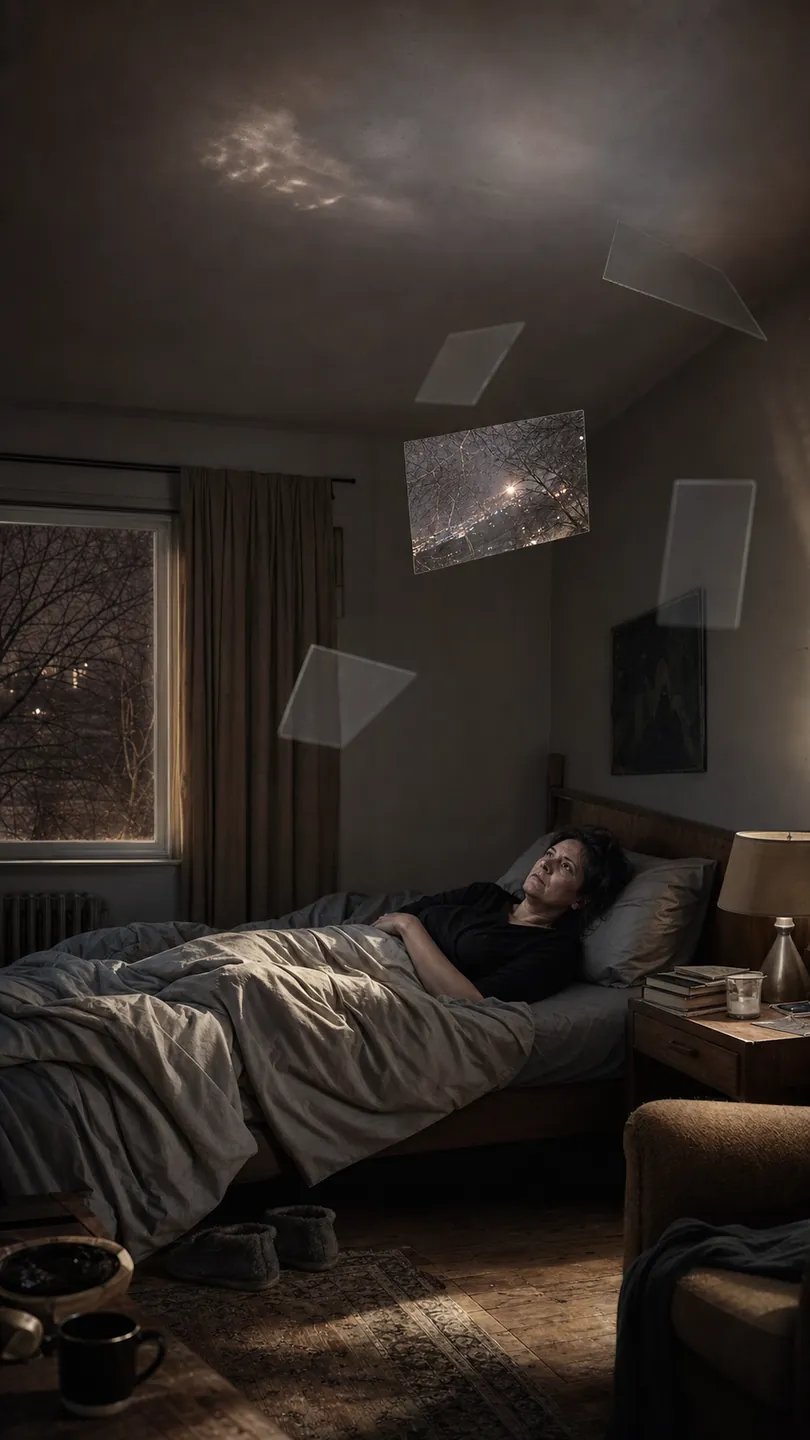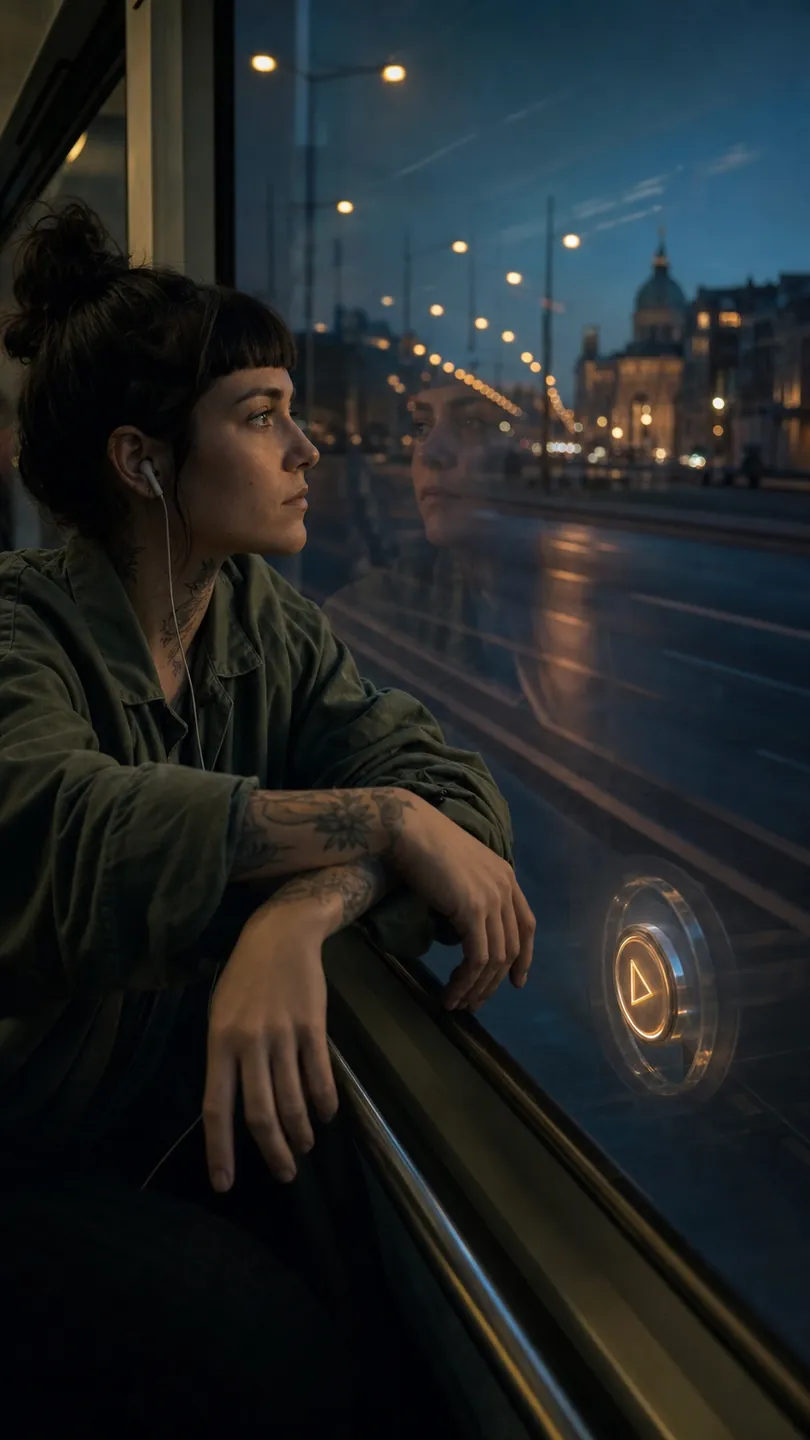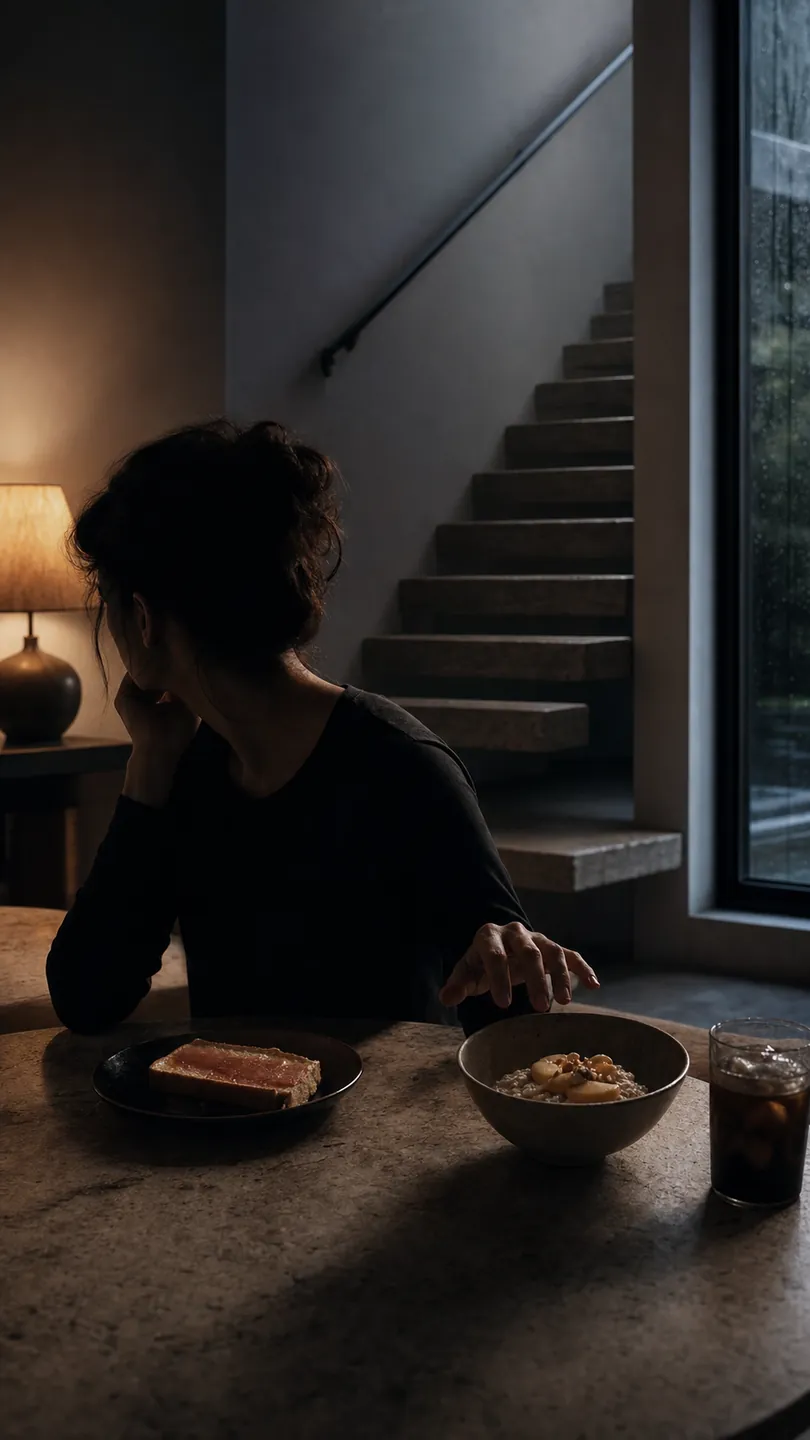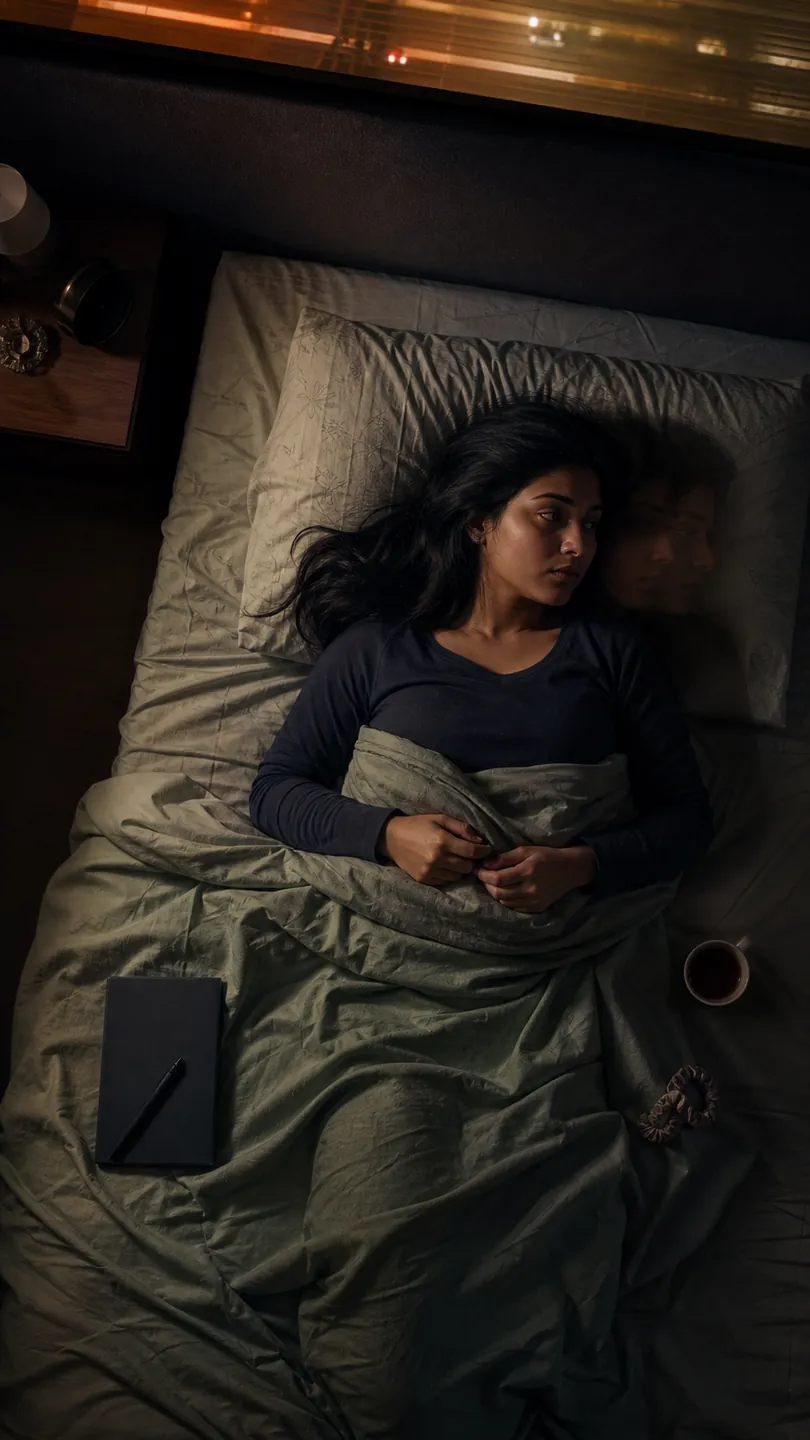
Ground the scene in ceiling light from outside traffic, a clock turned away, and sheets shaped by repeated attempts to rest. INNER DYNAMIC — Let the image...
من نص البرومبت
Use the attached reference photo as the identity reference: keep the same face, skin tone, hair and features as the person in that photo, without beautifying, aging or altering them. Create a contemplative single-frame image designed to serve as a visual catalyst for reflective writing. SUBJECT & SCENE — Depict the person from the reference photo in everyday clothing, with cultural context conveyed subtly and specifically, in an ordinary moment: lying awake while ordinary concerns expand into questions about meaning, failure, safety, and the future. Ground the scene in ceiling light from outside traffic, a clock turned away, and sheets shaped by repeated attempts to rest. INNER DYNAMIC — Let the image express this dynamic: the difficulty of knowing where a diagnosis ends and a personality begins. Show the person as complex and capable, not broken or inspirational. Communicate the tension through restrained posture, attention, and behavior rather than exaggerated facial emotion. SYMBOLIC DETAIL — Integrate a reflection that lags behind the person by a fraction of a second as the only controlled departure from realism. It should feel physically present yet subtle enough to be understood only after the everyday scene is noticed. TIME & IDENTITY — Suggest many nights in which time felt both stalled and rapidly disappearing. Let the scene hold this identity question: how to honor the explanatory power of a label without letting it become the whole self. VISUAL LANGUAGE — Use a top-down composition centered on hands, objects, and small decisions; subtle streetlight filtering through blinds at night; muted earth tones with restrained blue-gray accents; high clarity in the symbolic detail, softer context elsewhere. BOUNDARIES — No words, captions, diagnostic labels, medical clichés, self-harm imagery, horror framing, or sensational despair. Keep the portrayal humane, culturally respectful, emotionally complex, and accessible. Portrait orientation, 9:16, high detail, realistic anatomy and materials.