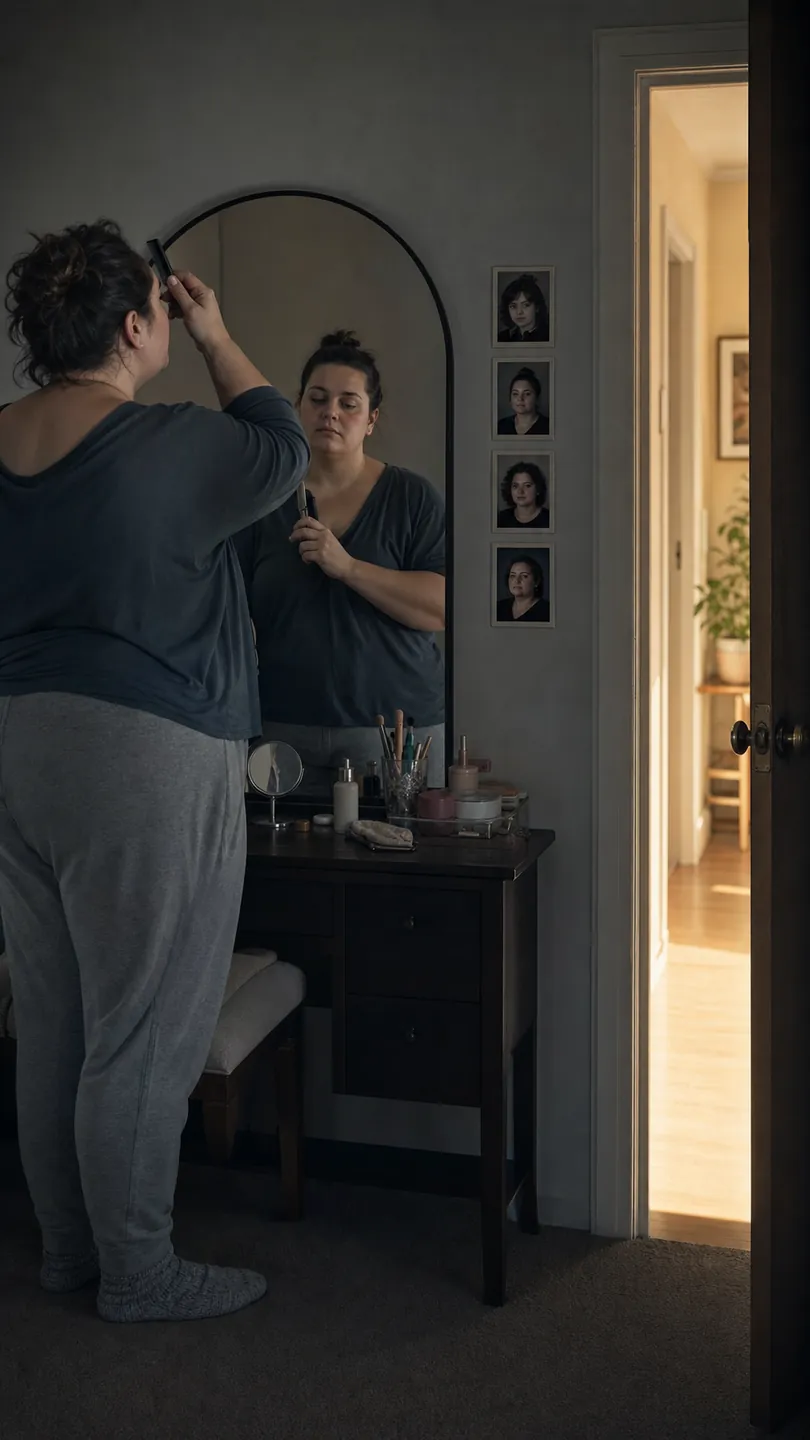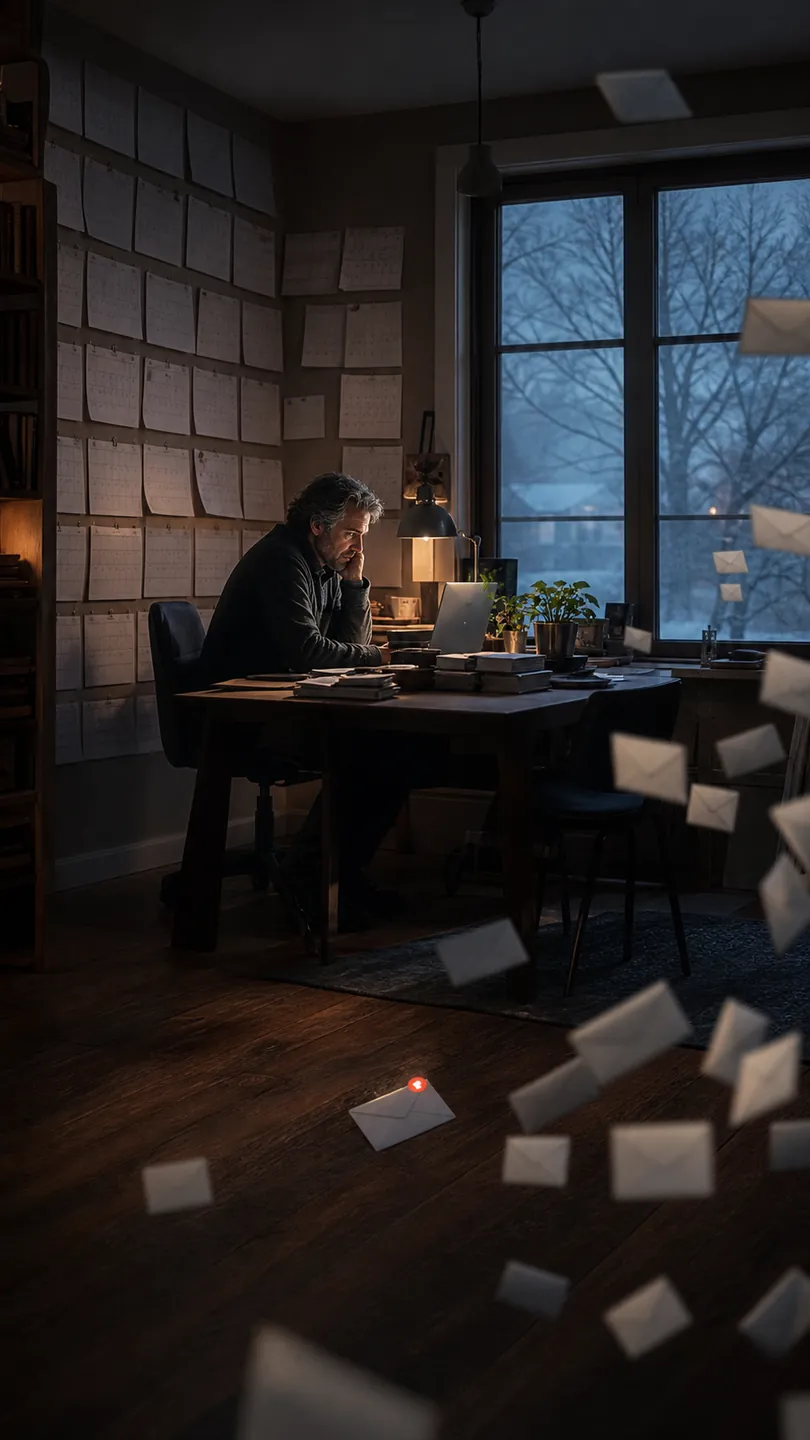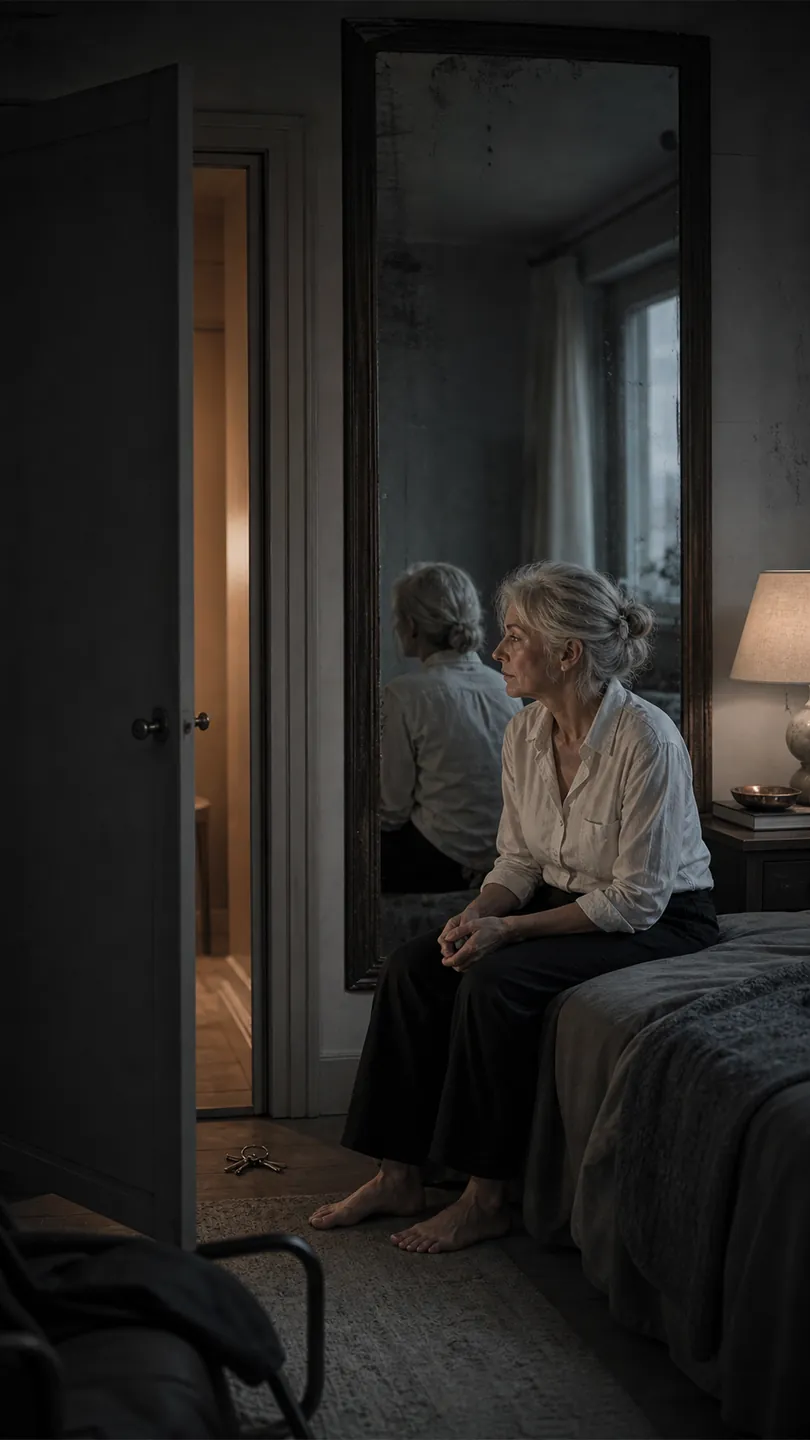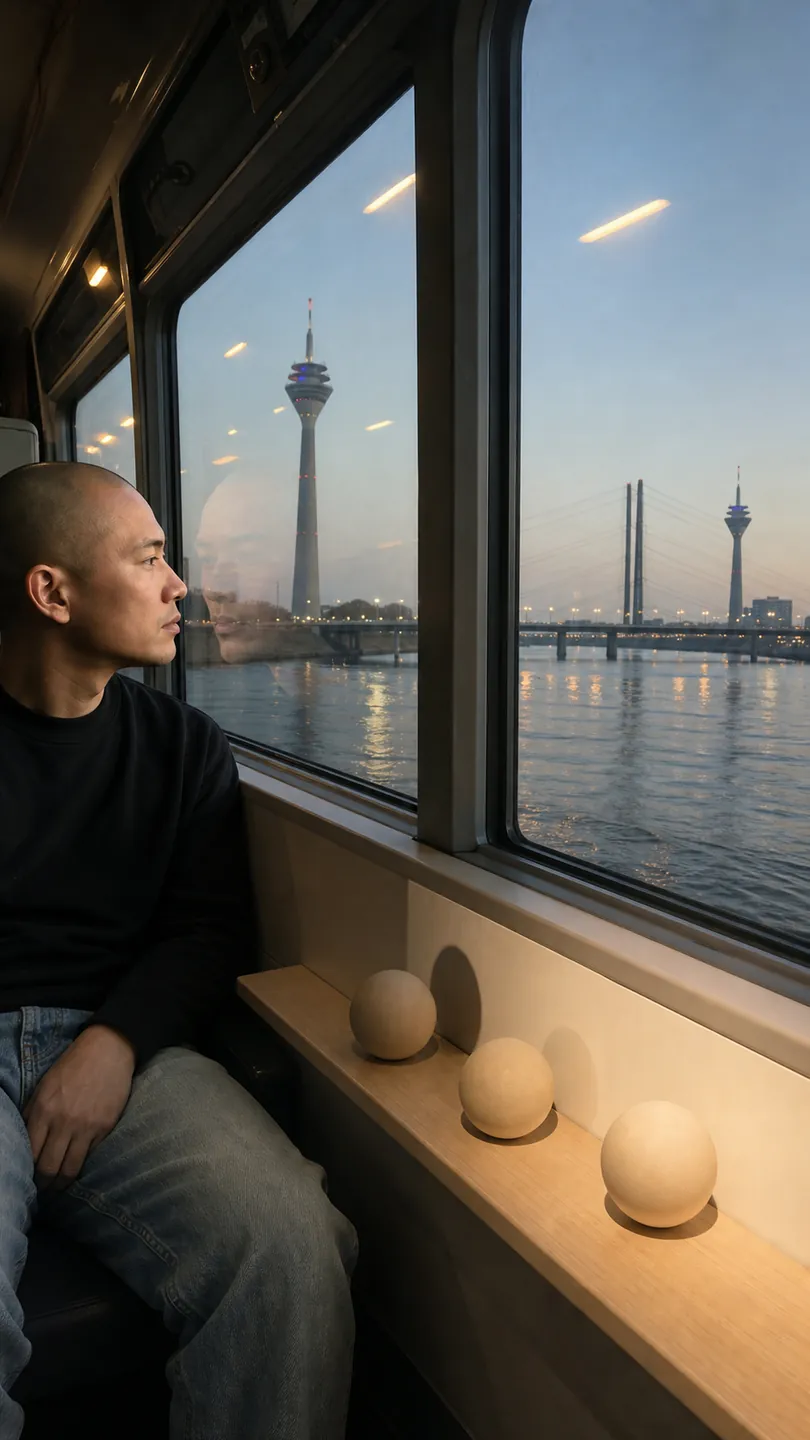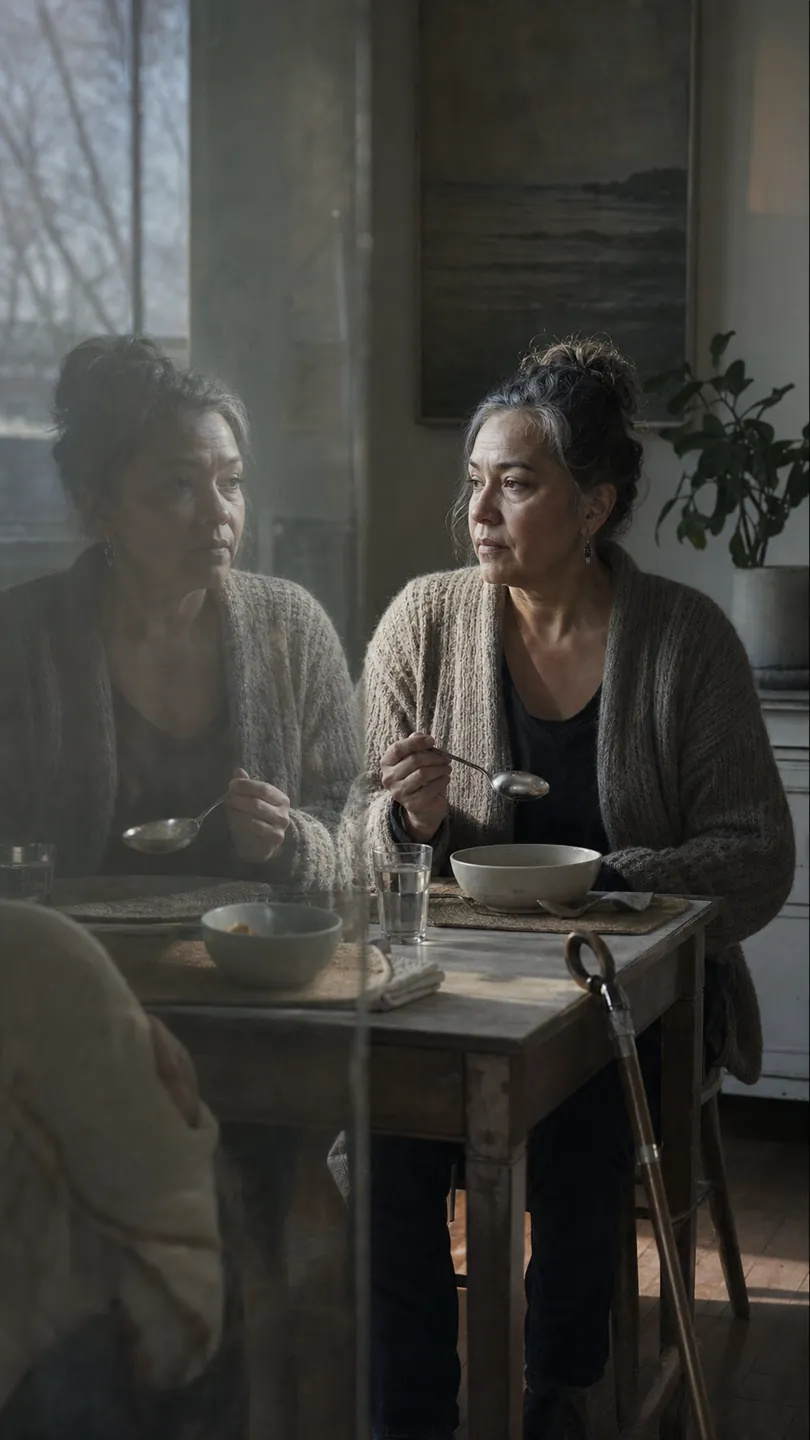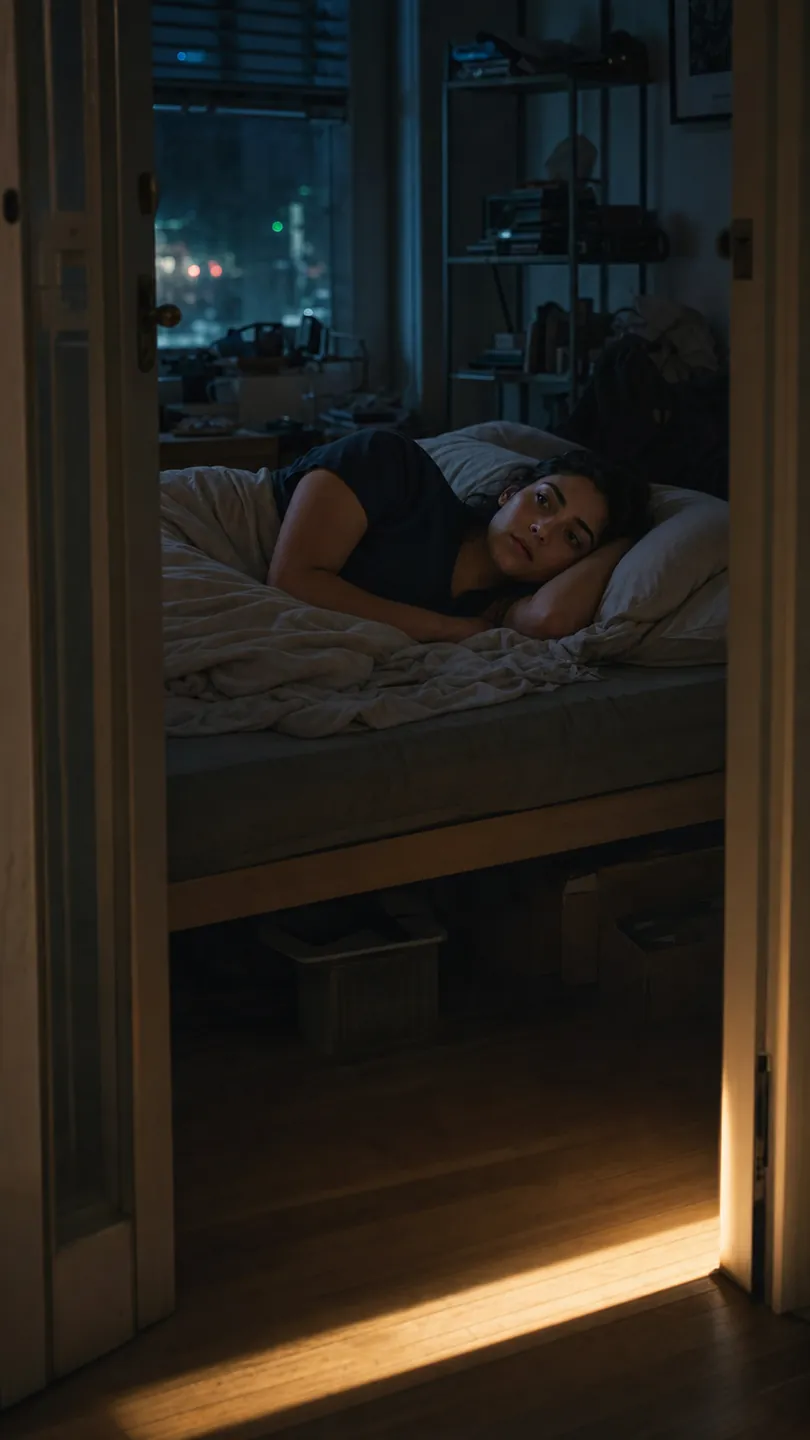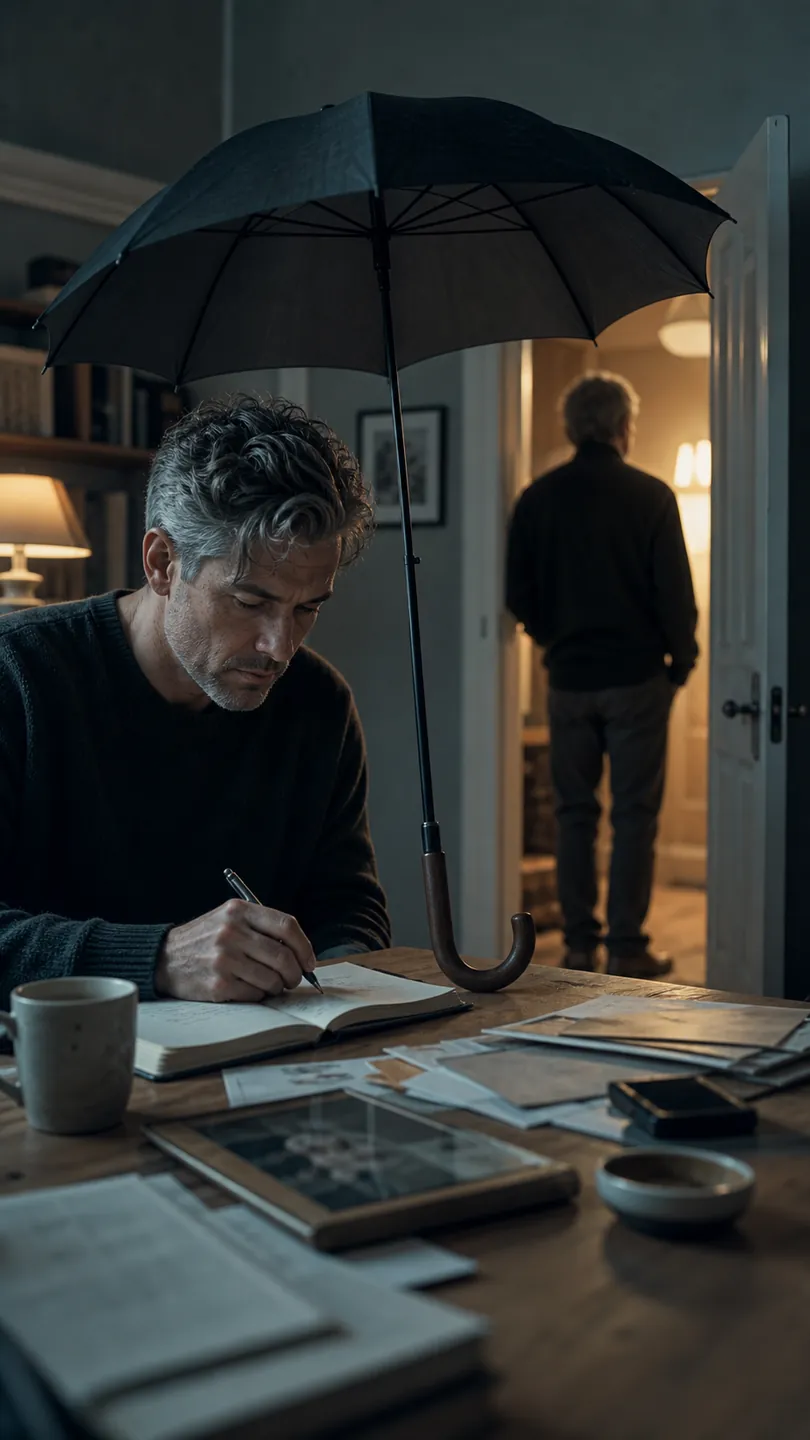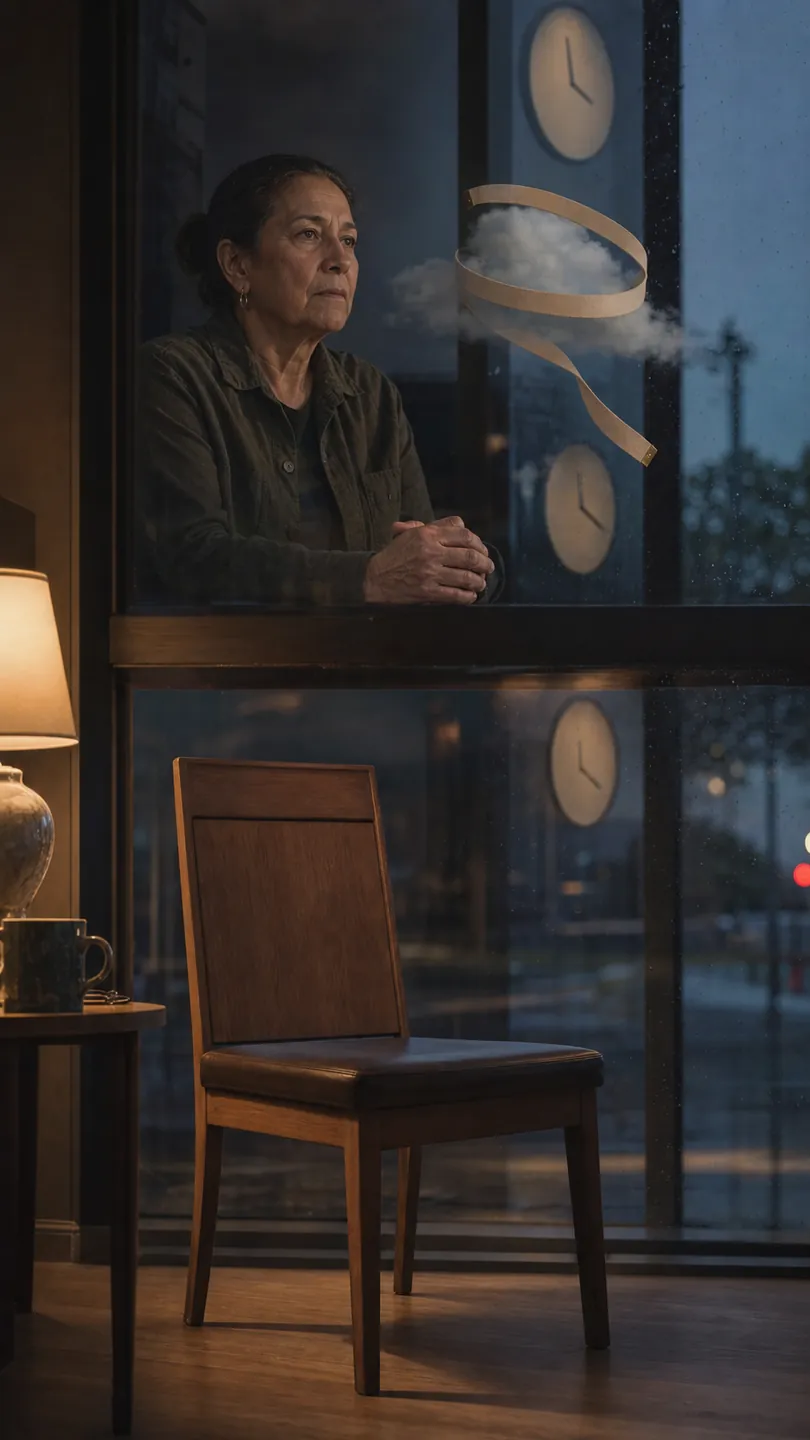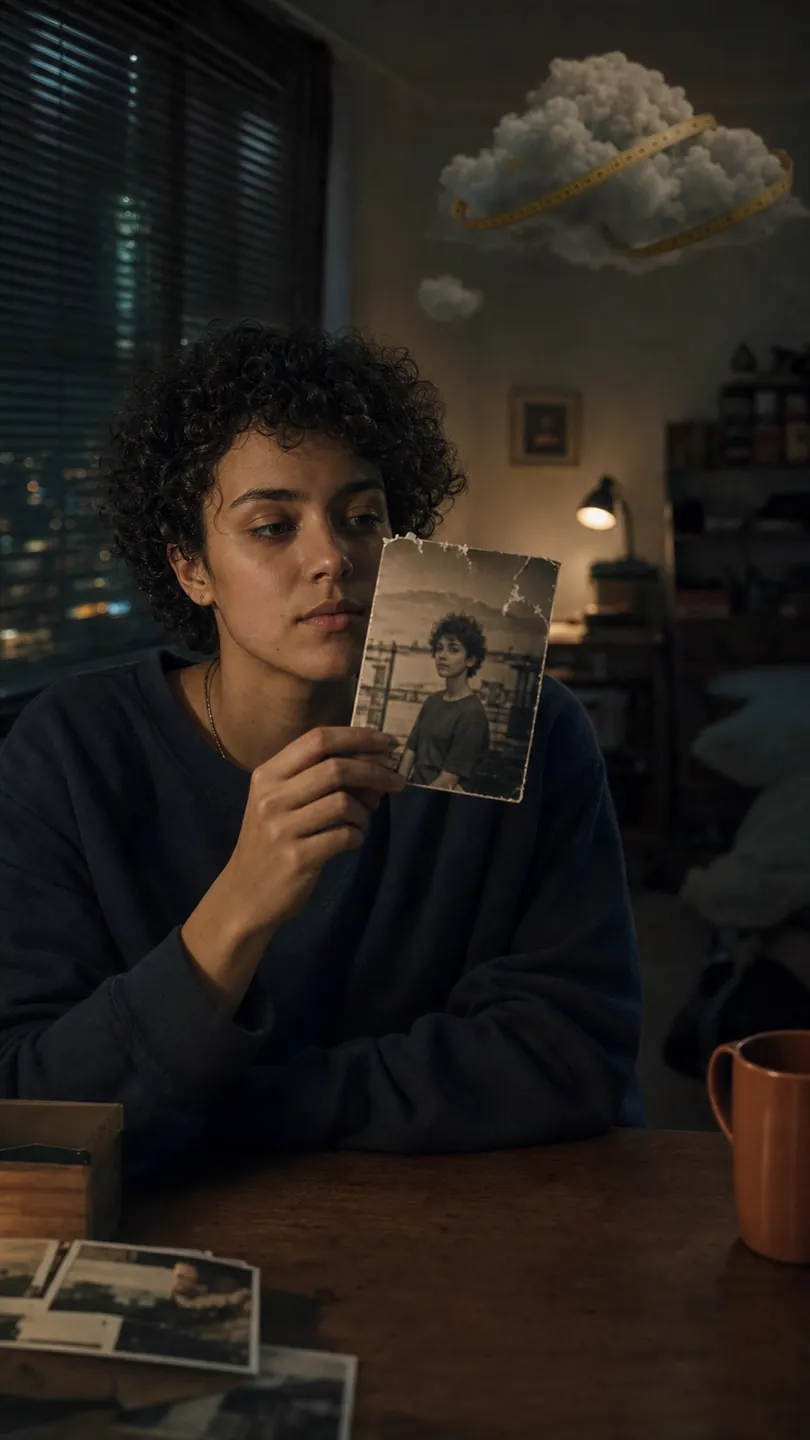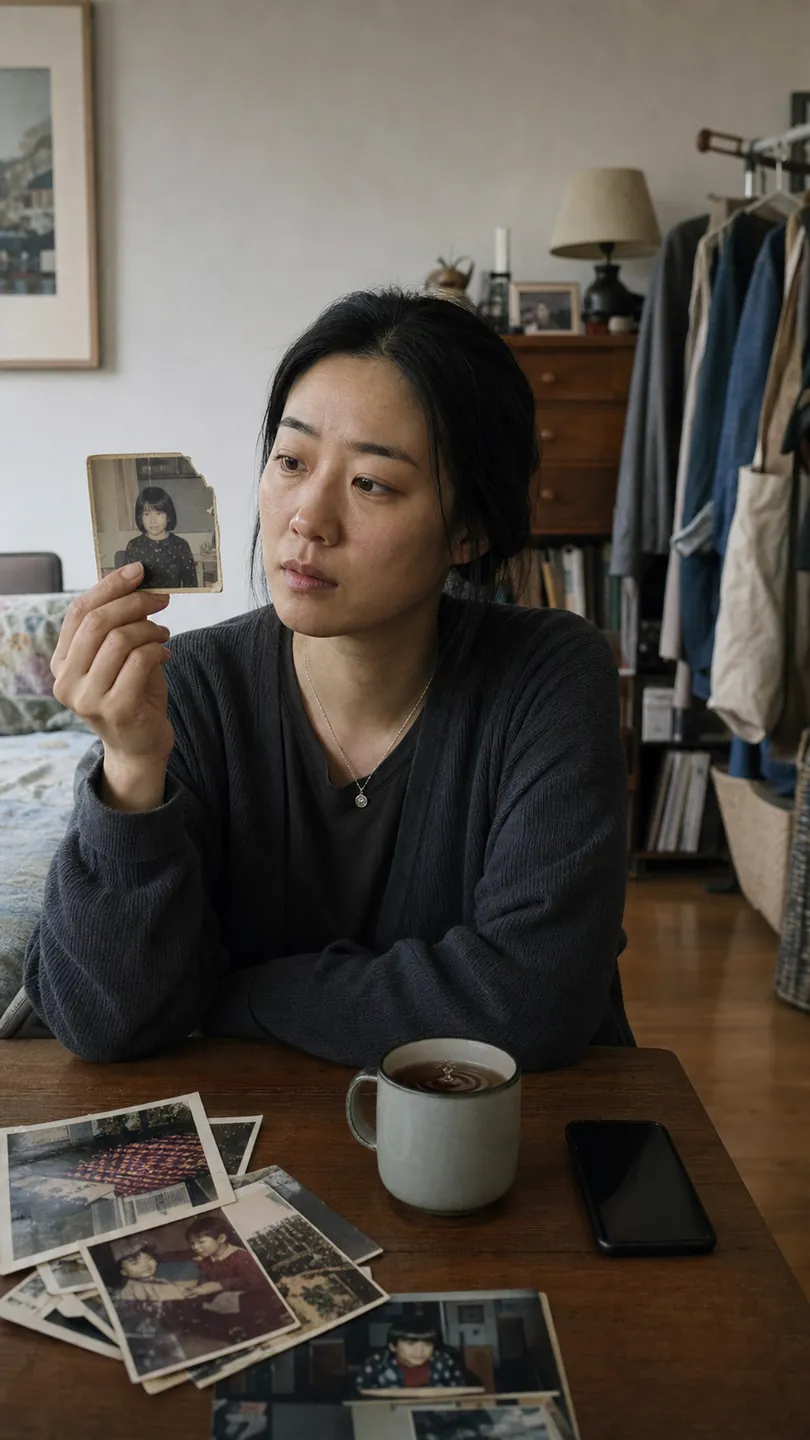
Ground the scene in a worn photograph held beside the current face, small missing details, and background objects echoed in the present room. If the person...
من نص البرومبت
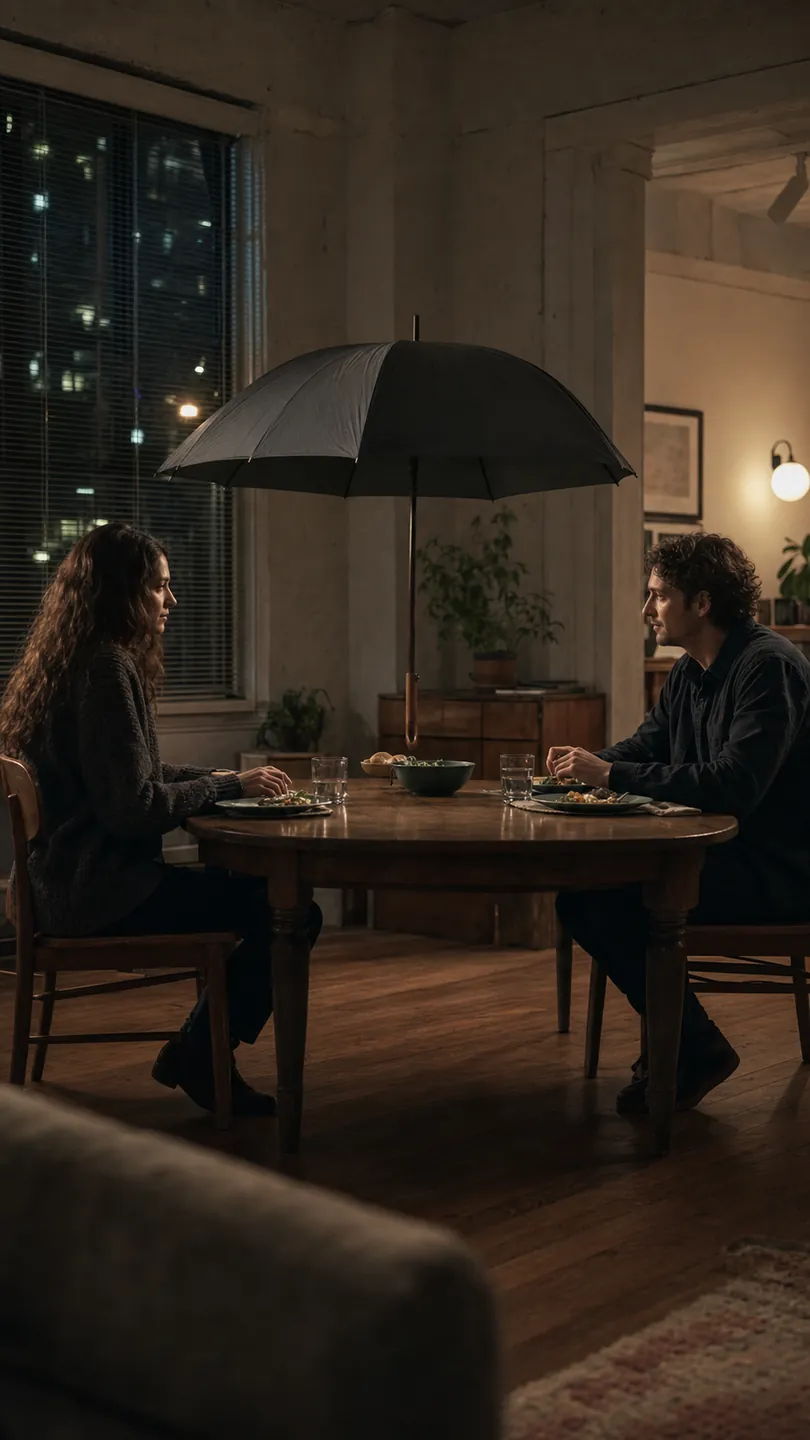
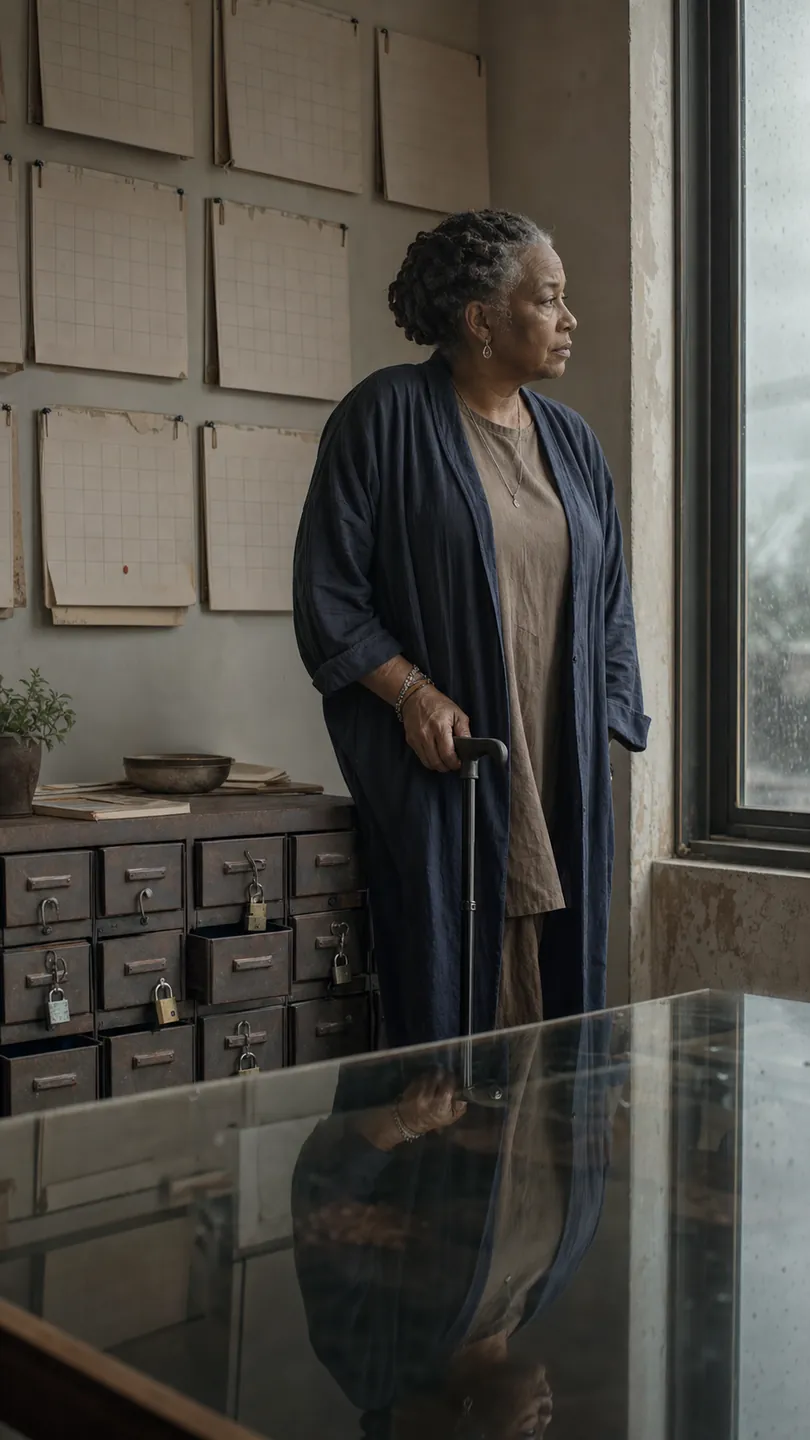
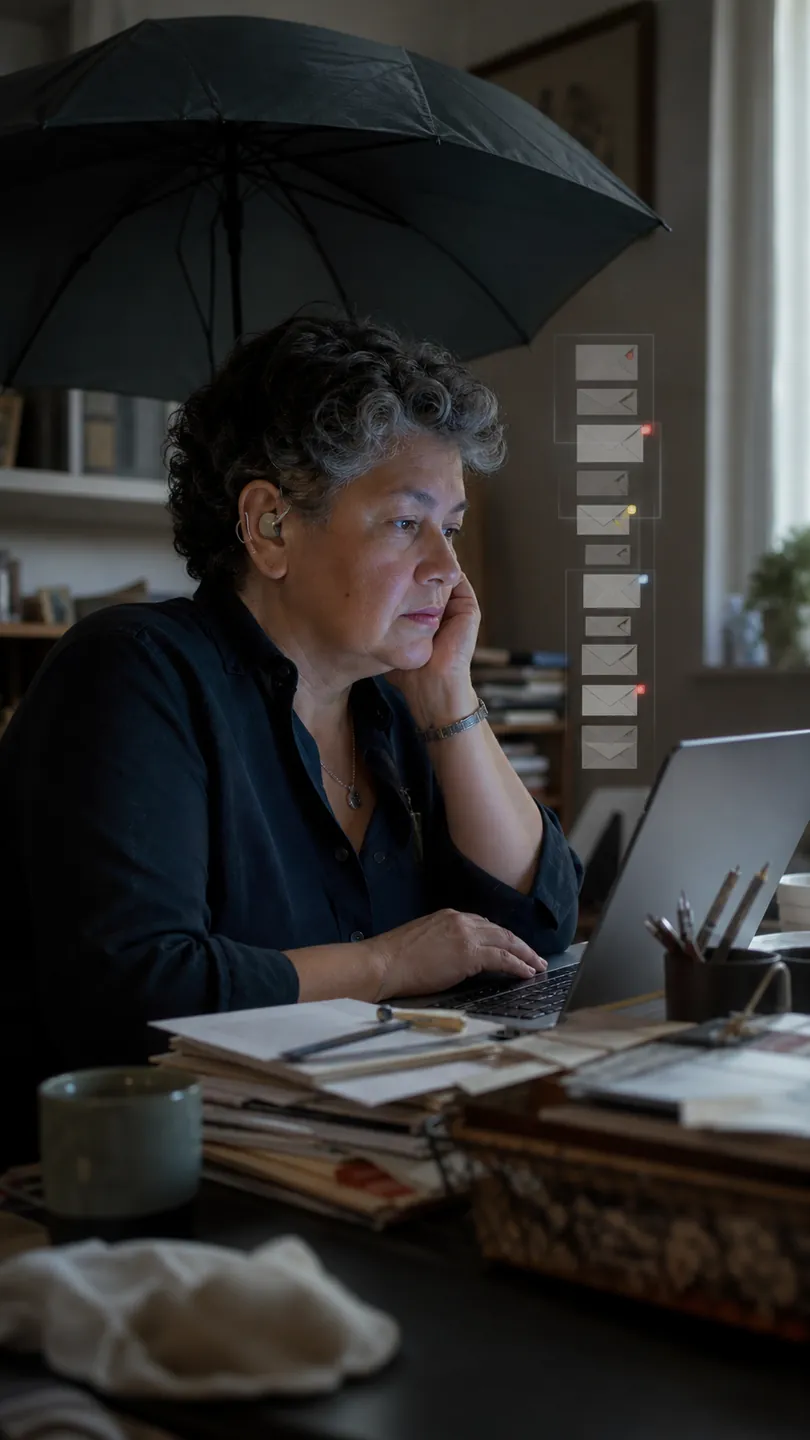
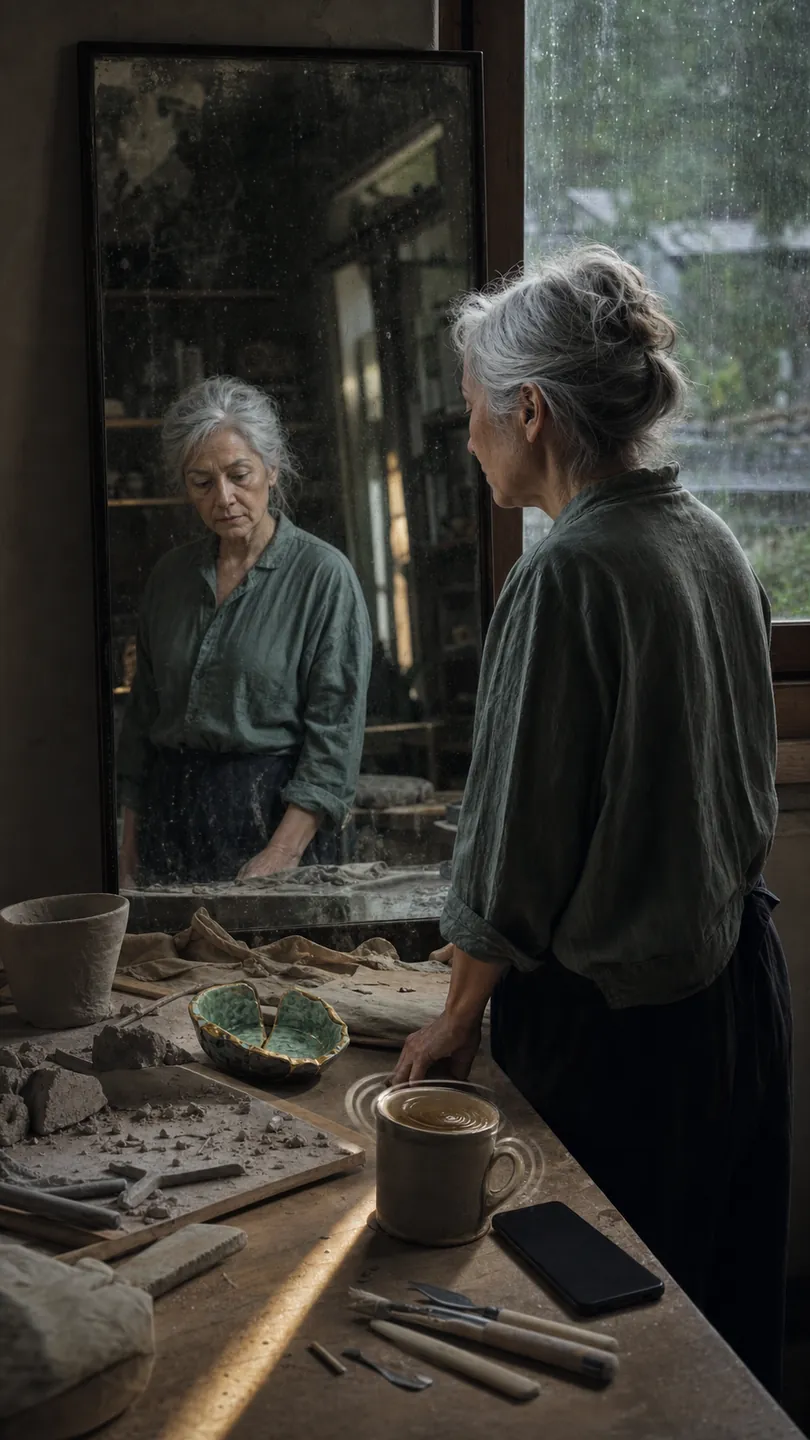
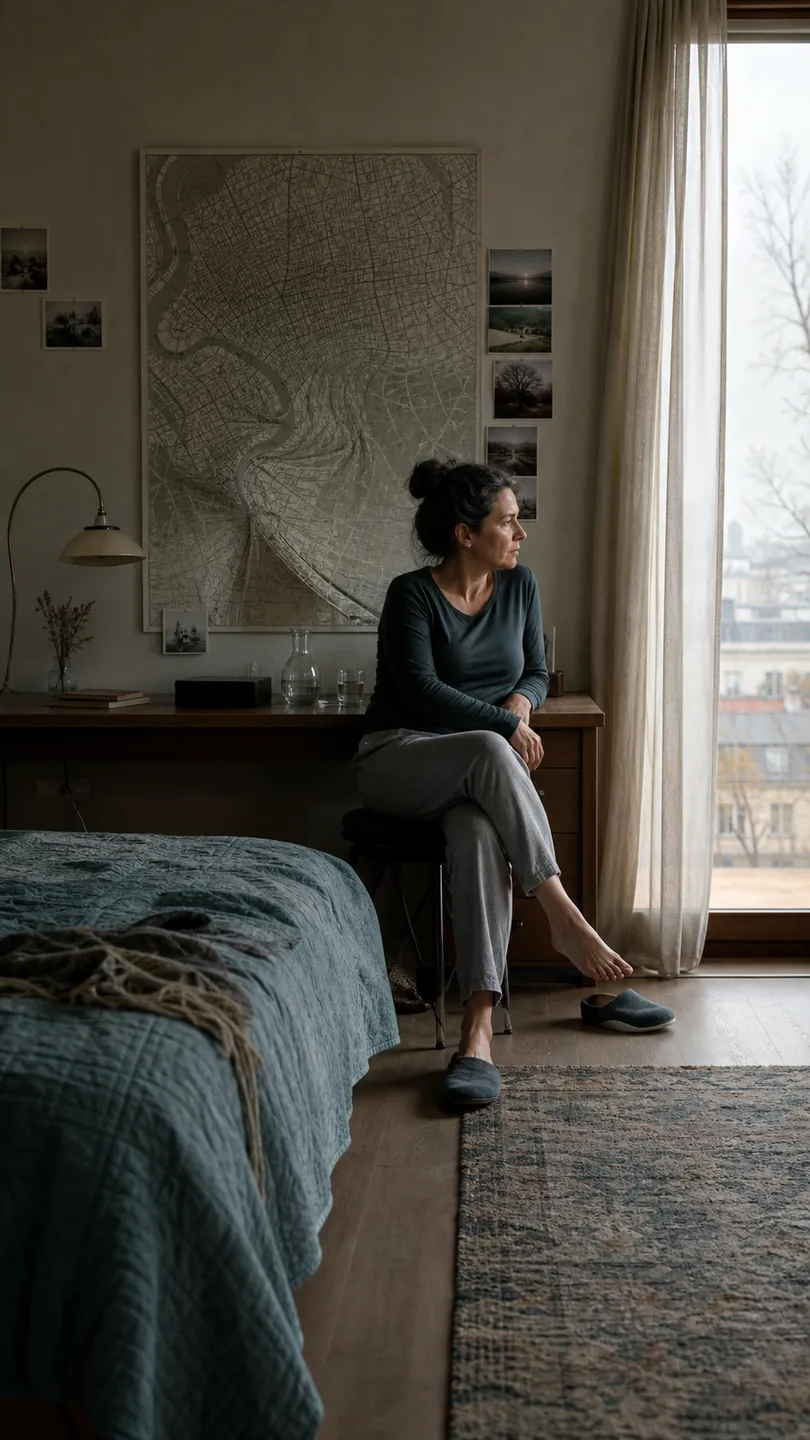
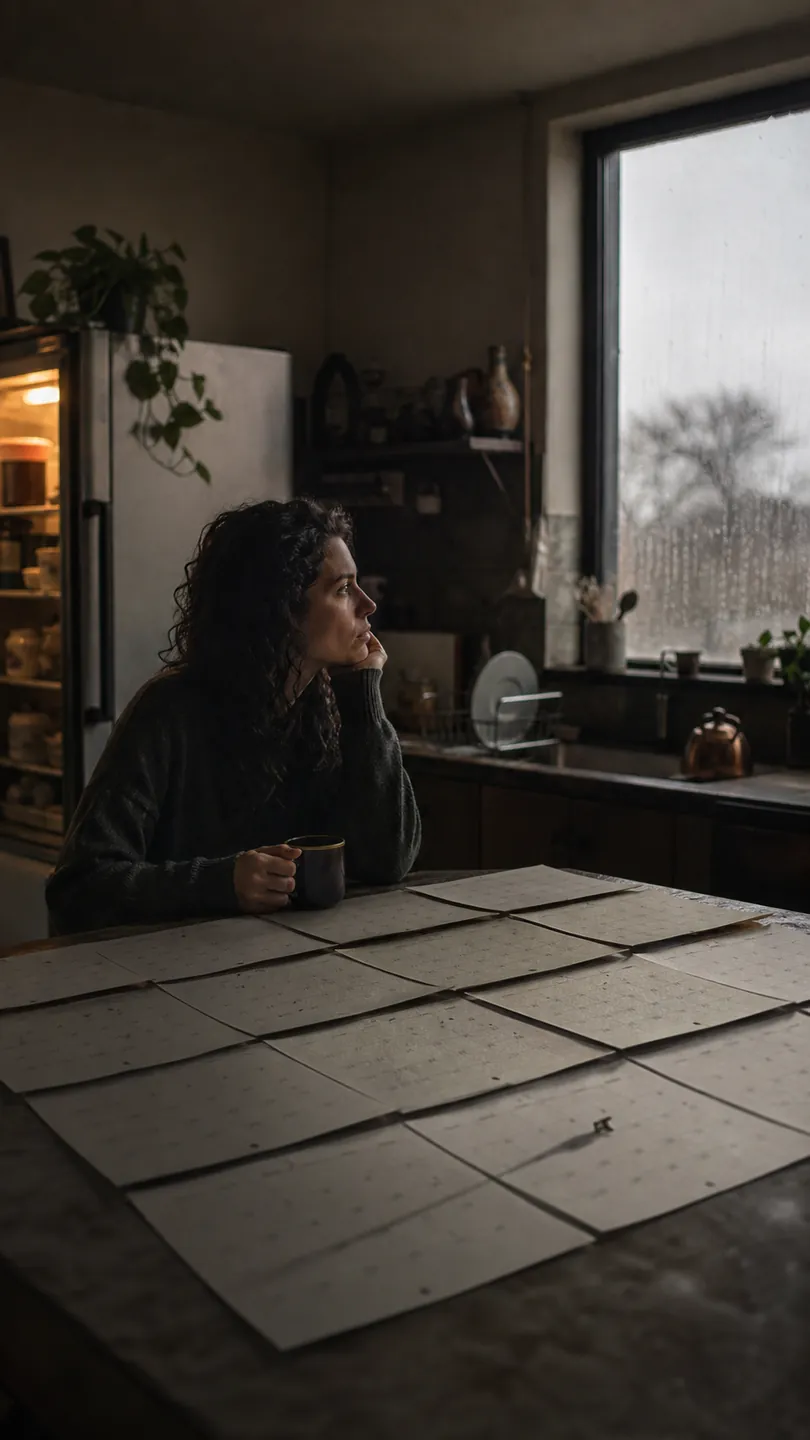
Use the attached reference photo as the identity reference: keep the same face, skin tone, hair and features as the person in that photo, without beautifying, aging or altering them. Create a contemplative single-frame image designed to serve as a visual catalyst for reflective writing. SUBJECT & SCENE — Depict the person from the reference photo in an ordinary moment: finding an old photograph and wondering which present-day patterns were already visible but unnamed. Ground the scene in a worn photograph held beside the current face, small missing details, and background objects echoed in the present room. If the person in the reference photo wears glasses, keep them naturally as part of who they are; if not, do not add any. INNER DYNAMIC — Let the image express this dynamic: emotional flatness changing the felt value of people, tasks, beauty, and future possibilities. Show the person as complex and capable, not broken or inspirational. Communicate the tension through restrained posture, attention, and behavior rather than exaggerated facial emotion. SYMBOLIC DETAIL — Integrate a heavy blanket visually blending with the floor beneath it as the only controlled departure from realism. It should feel physically present yet subtle enough to be understood only after the everyday scene is noticed. TIME & IDENTITY — Suggest the full distance between the photographed moment and the present. Let the scene hold this identity question: how to trust values and relationships when feeling no longer confirms that they matter. VISUAL LANGUAGE — Use a layered frame using foreground objects to suggest divided attention; thin winter sunlight that reaches only part of the space; cool gray-blue with realistic skin warmth; visible condensation, fingerprints, and ordinary surface wear. BOUNDARIES — No words, captions, diagnostic labels, medical clichés, self-harm imagery, horror framing, or sensational despair. Keep the portrayal humane, culturally respectful, emotionally complex, and accessible. Portrait orientation, 9:16, high detail, realistic anatomy and materials.