جاري التحميل...


جاري التحميل...
Create a square 1:1 museum-catalog frame with a strong first read and a slower second read. Location: a quiet museum preparation room before opening. Show...
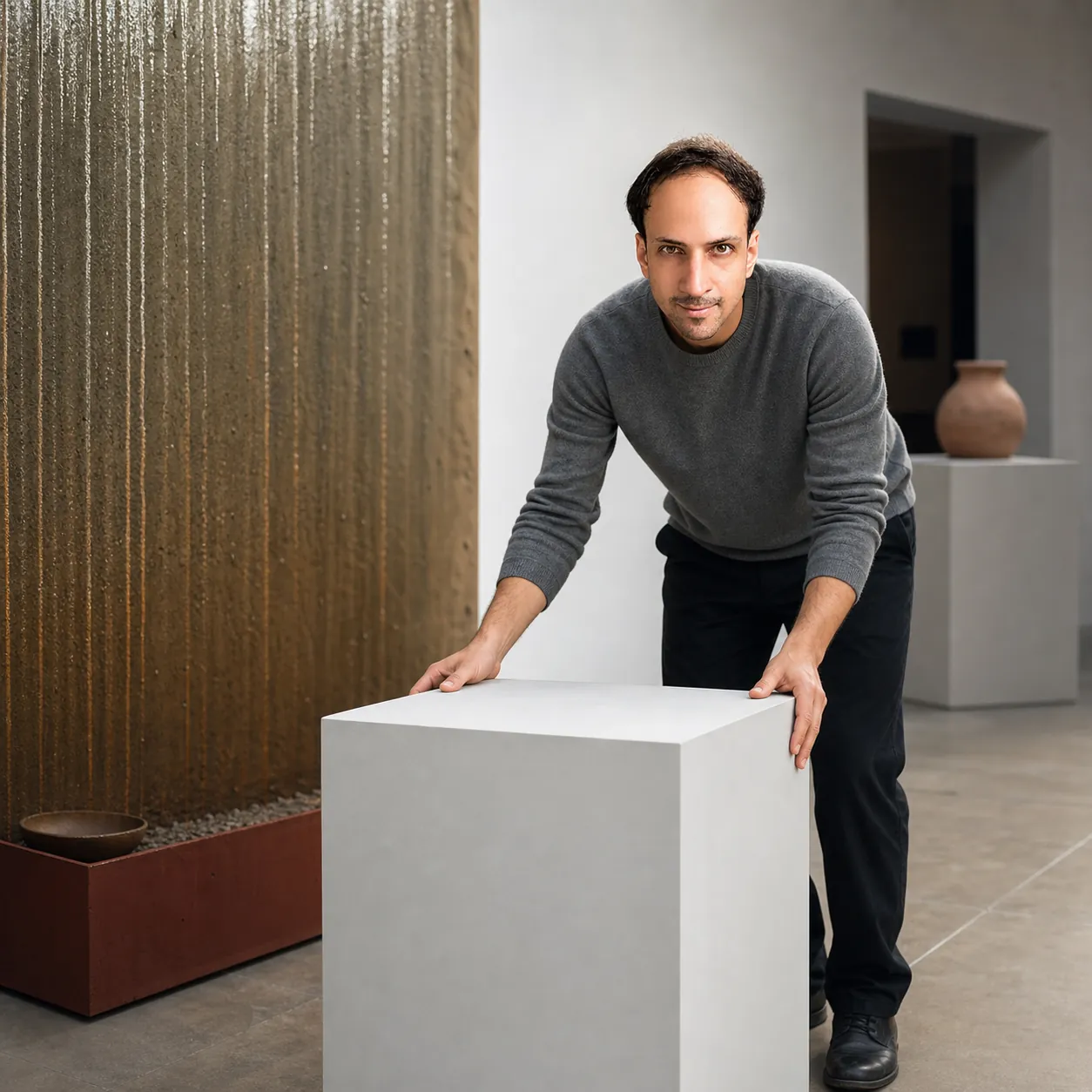
Use the attached reference photo as the identity reference: keep the same face, skin tone, hair and features as the person in that photo, without beautifying, aging or altering them. Create a square 1:1 museum-catalog frame with a strong first read and a slower second read. Location: a quiet museum preparation room before opening. Show the subject in a muted grey crew-neck sweater with simple dark trousers, aligning an empty plinth by hand, then stepping back to judge the spacing. Make one rigorous physical condition the conceptual engine: a vertical surface harvesting tiny amounts of water from night air reveals temperature gradients through material behavior rather than color-map graphics. Explore the future value of old passive wisdom when materials change; direct expression and posture toward respectful continuity, never melodrama or ad-like confidence. Use an eye-level 65mm medium-format viewpoint with natural perspective and restrained depth of field. Make the composition make both principles visually legible without nostalgia styling. Render it as climate-adaptation editorial art grounded in desert physics, passive design, real materials, human-scale architecture, and luminous documentary portraiture, using soft north-facing daylight with restrained contrast and visible skin texture and a palette of cool concrete, soft black, and a single clay-red note. Keep one identity-locked person, credible hands and fingers, natural fabric, and coherent scale, contact, reflections, shadows, airflow, deformation, and materials. Background people only when essential, always secondary and clearly different. Avoid disaster spectacle, cracked-earth stock imagery, green-tech logos, utopian megacities, and impossible waterfalls. No text, labels, logos, signatures, watermarks, random symbols, plastic skin, excessive bloom, or glossy AI finish.
Treat that reference as the character anchor and change only the scene. Create a square 1:1 museum-catalog frame with a strong first read and a slower...
Treat that reference as the character anchor and change only the scene. Create a square 1:1 museum-catalog frame with a strong first read and a slower...
Treat that reference as the character anchor and change only the scene. Create a square 1:1 museum-catalog frame with a strong first read and a slower...
Treat that reference as the character anchor and change only the scene. Create a square 1:1 museum-catalog frame with a strong first read and a slower...
Treat that reference as the character anchor and change only the scene. Create a square 1:1 museum-catalog frame with a strong first read and a slower...
Treat that reference as the character anchor and change only the scene. Create a square 1:1 museum-catalog frame with a strong first read and a slower...
Treat that reference as the character anchor and change only the scene. Create a square 1:1 museum-catalog frame with a strong first read and a slower...
Treat that reference as the character anchor and change only the scene. Create a square 1:1 museum-catalog frame with a strong first read and a slower...
Treat that reference as the character anchor and change only the scene. Create a square 1:1 museum-catalog frame with a strong first read and a slower...
Treat that reference as the character anchor and change only the scene. Create a square 1:1 museum-catalog frame with a strong first read and a slower...
Treat that reference as the character anchor and change only the scene. Create a square 1:1 museum-catalog frame with a strong first read and a slower...
Treat that reference as the character anchor and change only the scene. Create a square 1:1 museum-catalog frame with a strong first read and a slower...