جاري التحميل...


جاري التحميل...
Create a square 1:1 museum-catalog frame with a strong first read and a slower second read. Location: a glass-walled corridor between two lab wings, empty...
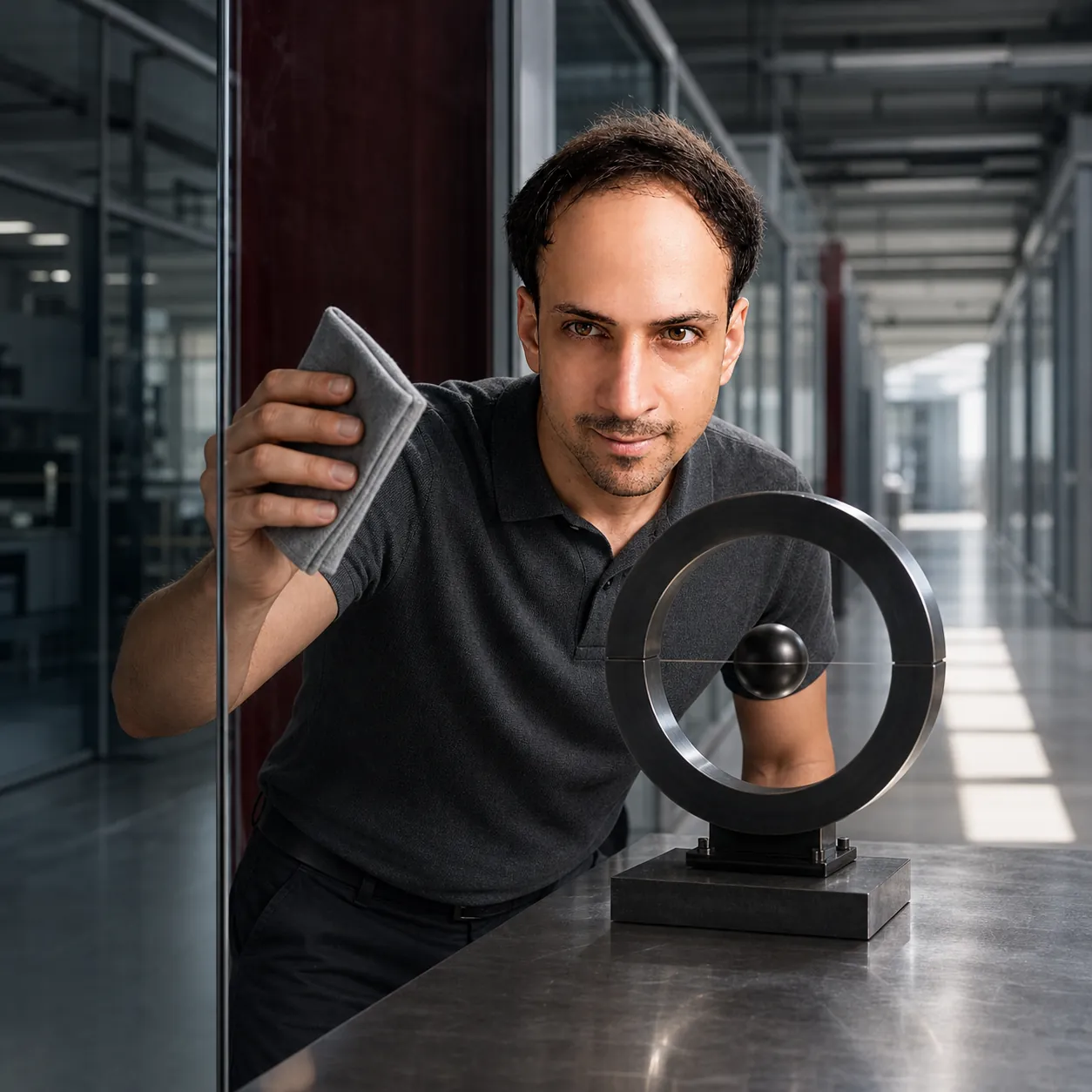
Use the attached reference photo as the identity reference: keep the same face, skin tone, hair and features as the person in that photo, without beautifying, aging or altering them. Create a square 1:1 museum-catalog frame with a strong first read and a slower second read. Location: a glass-walled corridor between two lab wings, empty at midday. Show the subject in a slate-grey knit polo and pressed dark chinos, wiping one clear panel with a folded microfiber cloth. Build the artwork around this material rule: a machined ring holding a dark ceramic sphere in stable levitation across a gap no wider than a finger turns an invisible force into structure the eye can walk through. Explore why the most important part of some structures is the space where nothing is; direct expression and posture toward sober fascination, never melodrama or ad-like confidence. Frame across the work surface at chest height so the demonstration and their eyes share one focal plane. Make the composition hold honest empty distance between the cause and its effect. Render it as gallery-grade experimental photography built from working magnetic devices, quiet industrial styling, accurate material response, and unhurried observational framing, using one hard raking key skimmed across the work surface with gentle bounced fill and a palette of ink black, raw steel, and one field of oxblood. Keep one identity-locked person, credible hands and fingers, natural fabric, and coherent scale, contact, reflections, shadows, airflow, deformation, and materials. Background people only when essential, always secondary and clearly different. Avoid school-demo horseshoe magnets, levitating superhero poses, glowing force fields, CGI liquid chrome, and lightning arcs. No text, labels, logos, signatures, watermarks, random symbols, plastic skin, excessive bloom, or glossy AI finish.
Treat that reference as the character anchor and change only the scene. Create a square 1:1 museum-catalog frame with a strong first read and a slower...
Treat that reference as the character anchor and change only the scene. Create a square 1:1 museum-catalog frame with a strong first read and a slower...
Treat that reference as the character anchor and change only the scene. Create a square 1:1 museum-catalog frame with a strong first read and a slower...
Treat that reference as the character anchor and change only the scene. Create a square 1:1 museum-catalog frame with a strong first read and a slower...
Treat that reference as the character anchor and change only the scene. Create a square 1:1 museum-catalog frame with a strong first read and a slower...
Treat that reference as the character anchor and change only the scene. Create a square 1:1 museum-catalog frame with a strong first read and a slower...
Treat that reference as the character anchor and change only the scene. Create a square 1:1 museum-catalog frame with a strong first read and a slower...
Treat that reference as the character anchor and change only the scene. Create a square 1:1 museum-catalog frame with a strong first read and a slower...
Treat that reference as the character anchor and change only the scene. Create a square 1:1 museum-catalog frame with a strong first read and a slower...
Treat that reference as the character anchor and change only the scene. Create a square 1:1 museum-catalog frame with a strong first read and a slower...
Treat that reference as the character anchor and change only the scene. Create a square 1:1 museum-catalog frame with a strong first read and a slower...
Treat that reference as the character anchor and change only the scene. Create a square 1:1 museum-catalog frame with a strong first read and a slower...