جاري التحميل...


جاري التحميل...
Create a square 1:1 museum-catalog frame with a strong first read and a slower second read. Location: a museum prep room beside an empty vitrine on a padded...
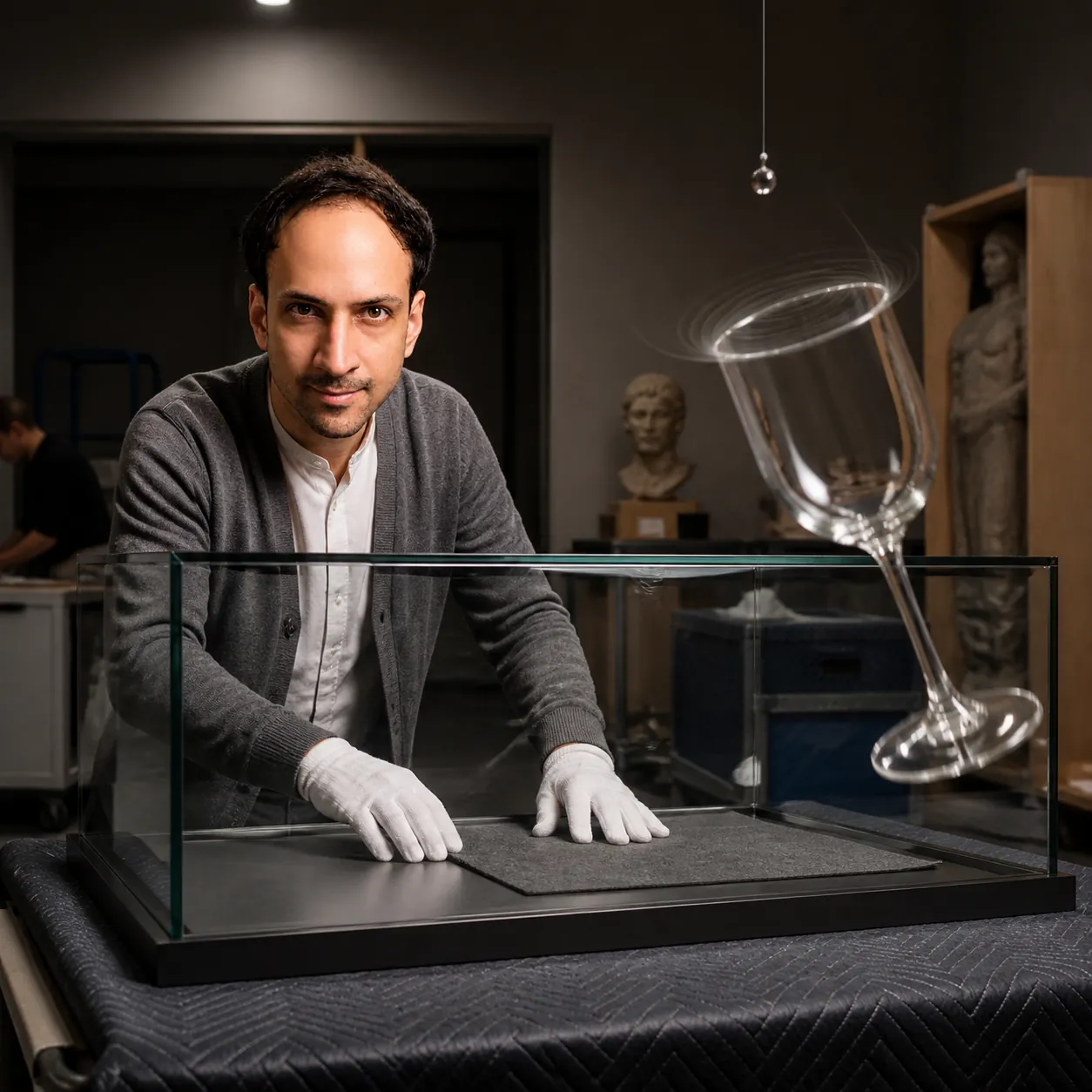
Use the attached reference photo as the identity reference: keep the same face, skin tone, hair and features as the person in that photo, without beautifying, aging or altering them. Create a square 1:1 museum-catalog frame with a strong first read and a slower second read. Location: a museum prep room beside an empty vitrine on a padded cart. Show the subject in a fine grey cardigan over a white collarless shirt, laying a felt square flat inside the vitrine. Build the artwork around this material rule: a wine glass ringing under a struck note, its rim caught visibly oval at the extreme of its vibration proves the pattern was drafted by structure long before the trigger. Explore which trusted rigid things are secretly flexing at every moment; direct expression and posture toward alert reverence, never melodrama or ad-like confidence. Use a measured wide 28mm view with the subject near one-third of the frame and no stretched limbs. Make the composition let one fragment exit the frame mid-flight, unresolved. Render it as conceptual impact portraiture combining arrested kinetic events, restrained contemporary art direction, believable rigging, and human-centered editorial realism, using a single overhead practical softened by the surrounding architecture, leaving readable shadow detail and a palette of matte charcoal, ivory, and one drop of cobalt. Keep one identity-locked person, credible hands and fingers, natural fabric, and coherent scale, contact, reflections, shadows, airflow, deformation, and materials. Background people only when essential, always secondary and clearly different. Avoid slow-motion advertising gloss, levitating product shots, splashing perfume bottles, exploding paint clouds, and staged glitter bursts. No text, labels, logos, signatures, watermarks, random symbols, plastic skin, excessive bloom, or glossy AI finish.
Treat that reference as the character anchor and change only the scene. Create a square 1:1 museum-catalog frame with a strong first read and a slower...
Treat that reference as the character anchor and change only the scene. Create a square 1:1 museum-catalog frame with a strong first read and a slower...
Treat that reference as the character anchor and change only the scene. Create a square 1:1 museum-catalog frame with a strong first read and a slower...
Treat that reference as the character anchor and change only the scene. Create a square 1:1 museum-catalog frame with a strong first read and a slower...
Treat that reference as the character anchor and change only the scene. Create a square 1:1 museum-catalog frame with a strong first read and a slower...
Treat that reference as the character anchor and change only the scene. Create a square 1:1 museum-catalog frame with a strong first read and a slower...
Treat that reference as the character anchor and change only the scene. Create a square 1:1 museum-catalog frame with a strong first read and a slower...
Treat that reference as the character anchor and change only the scene. Create a square 1:1 museum-catalog frame with a strong first read and a slower...
Treat that reference as the character anchor and change only the scene. Create a square 1:1 museum-catalog frame with a strong first read and a slower...
Treat that reference as the character anchor and change only the scene. Create a square 1:1 museum-catalog frame with a strong first read and a slower...
Treat that reference as the character anchor and change only the scene. Create a square 1:1 museum-catalog frame with a strong first read and a slower...
Treat that reference as the character anchor and change only the scene. Create a square 1:1 museum-catalog frame with a strong first read and a slower...