جاري التحميل...


جاري التحميل...
Create a square 1:1 museum-catalog frame with a strong first read and a slower second read. Location: a print archive table with cotton gloves and an empty...
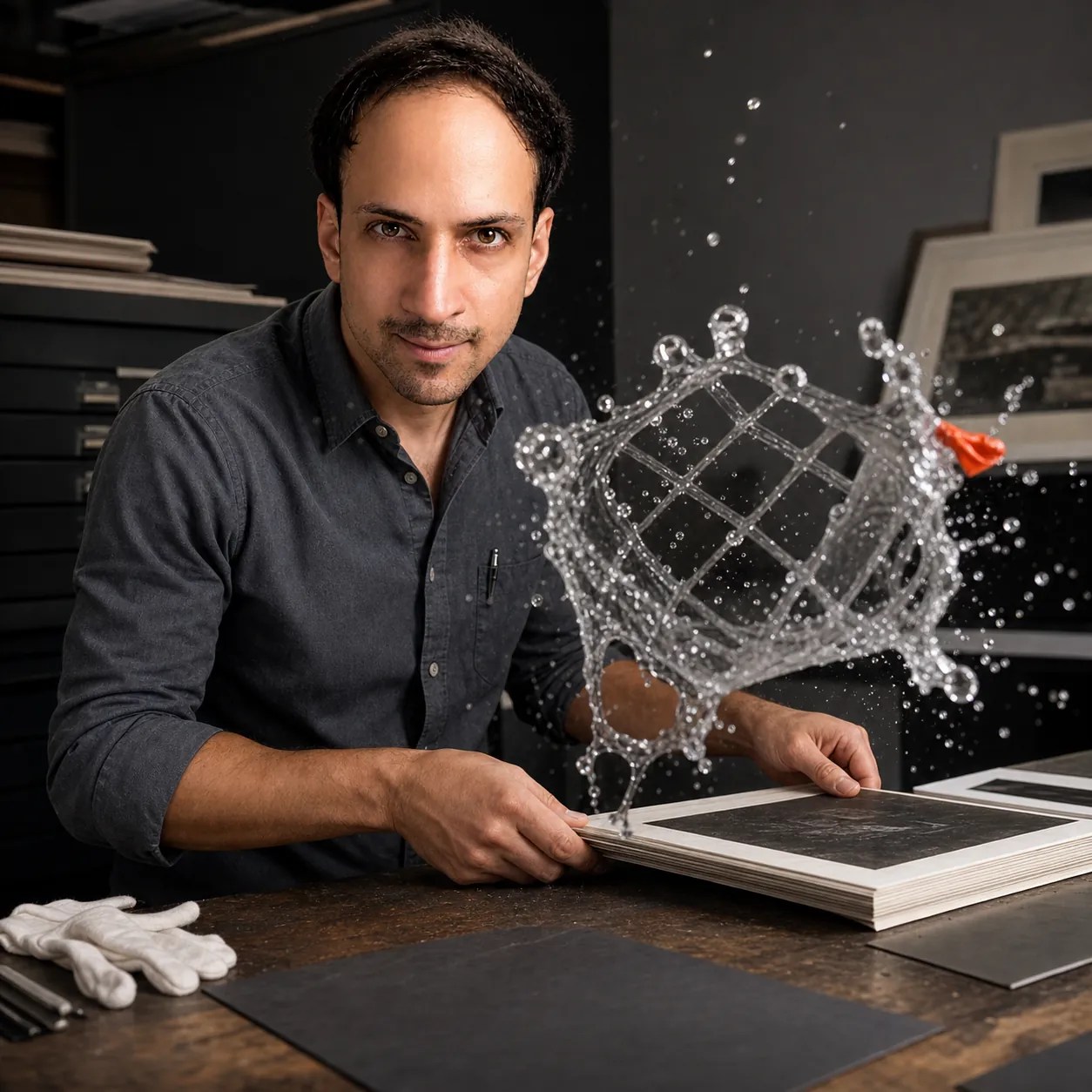
Use the attached reference photo as the identity reference: keep the same face, skin tone, hair and features as the person in that photo, without beautifying, aging or altering them. Create a square 1:1 museum-catalog frame with a strong first read and a slower second read. Location: a print archive table with cotton gloves and an empty blotter. Show the subject in a buttoned slate shirt with a pen clipped to the placket, squaring a stack of prints against the table edge. The impossible-looking event must obey this clear system: a burst water balloon whose skin has vanished while the water still holds the balloon's shape mid-air reveals strict geometric order inside an event filed under chaos. Explore whether a fracture is an ending or a publication of old stress; direct expression and posture toward contained astonishment, never melodrama or ad-like confidence. Use a 100mm macro-to-portrait hybrid: the arrested event near the lens and the subject's face readable beyond it, both physically plausible. Make the composition let one fragment exit the frame mid-flight, unresolved. Render it as gallery-grade instant photography built from real released tension, quiet technical staging, accurate material behavior, and unhurried observational framing, using one microsecond strobe frozen against a held ambient base and a palette of carbon, chalk, and a single band of signal orange. Keep one identity-locked subject, credible hands and fingers, natural fabric, and coherent scale, contact, reflections, shadows, airflow, deformation, and materials. Background people only when essential, always secondary and clearly different. Avoid bullet-time camera clichés, action-movie explosions, shattering-face effects, frozen gunfire, and dramatic debris storms. No text, labels, logos, signatures, watermarks, random symbols, plastic skin, excessive bloom, or glossy AI finish.
Treat that reference as the character anchor and change only the scene. Create a square 1:1 museum-catalog frame with a strong first read and a slower...
Treat that reference as the character anchor and change only the scene. Create a square 1:1 museum-catalog frame with a strong first read and a slower...
Treat that reference as the character anchor and change only the scene. Create a square 1:1 museum-catalog frame with a strong first read and a slower...
Treat that reference as the character anchor and change only the scene. Create a square 1:1 museum-catalog frame with a strong first read and a slower...
Treat that reference as the character anchor and change only the scene. Create a square 1:1 museum-catalog frame with a strong first read and a slower...
Treat that reference as the character anchor and change only the scene. Create a square 1:1 museum-catalog frame with a strong first read and a slower...
Treat that reference as the character anchor and change only the scene. Create a square 1:1 museum-catalog frame with a strong first read and a slower...
Treat that reference as the character anchor and change only the scene. Create a square 1:1 museum-catalog frame with a strong first read and a slower...
Treat that reference as the character anchor and change only the scene. Create a square 1:1 museum-catalog frame with a strong first read and a slower...
Treat that reference as the character anchor and change only the scene. Create a square 1:1 museum-catalog frame with a strong first read and a slower...
Treat that reference as the character anchor and change only the scene. Create a square 1:1 museum-catalog frame with a strong first read and a slower...
Treat that reference as the character anchor and change only the scene. Create a square 1:1 museum-catalog frame with a strong first read and a slower...