جاري التحميل...


جاري التحميل...
Create a square 1:1 museum-catalog frame with a strong first read and a slower second read. Location: a mineralogy bench with labeled wafers in numbered...
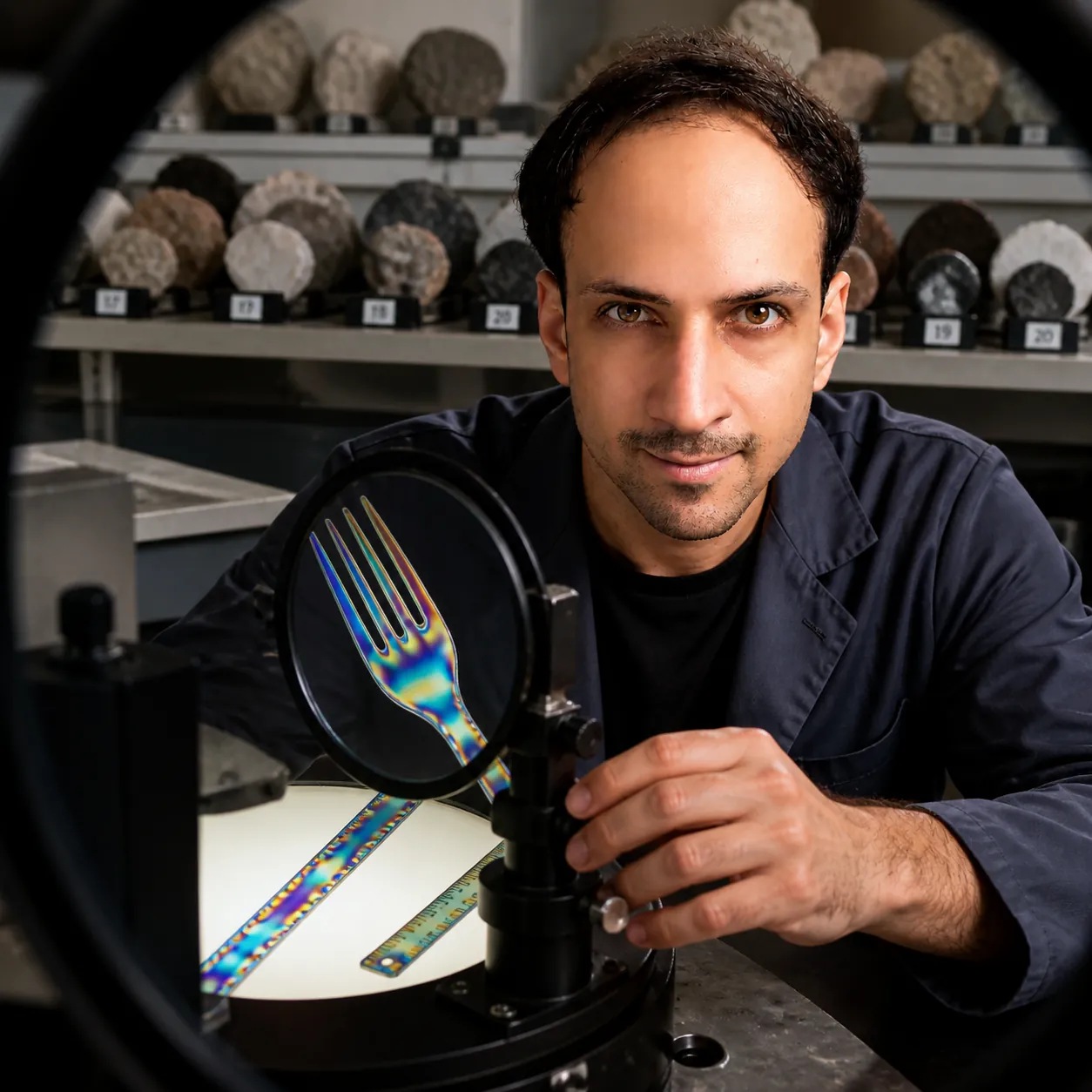
Use the attached reference photo as the identity reference: keep the same face, skin tone, hair and features as the person in that photo, without beautifying, aging or altering them. Create a square 1:1 museum-catalog frame with a strong first read and a slower second read. Location: a mineralogy bench with labeled wafers in numbered slots. Show the subject in a slate lab coat worn open over a black crew-neck, rotating a mounted wafer one careful degree. Use this advanced image-making device as the core logic: a plastic fork and ruler on a backlit polarized stage, their molded interiors glowing with frozen rainbow strain reveals a weather system of stress living inside apparently calm material. Explore whether mass-produced objects can still carry individual histories; direct expression and posture toward forensic calm, never melodrama or ad-like confidence. Frame through the polarizer's edge so half the frame sees the hidden color and half stays ordinary. Make the composition let the most stressed point sit nearest their steadiest hand. Render it as gallery-grade polarization photography built from genuine internal-strain color, quiet technical furniture, accurate material response, and unhurried observational framing, using soft north-facing daylight with restrained contrast and visible skin texture and a palette of soft black, unbleached linen, and spectral color confined to the clear object. Keep one identity-locked person, credible hands and fingers, natural fabric, and coherent scale, contact, reflections, shadows, airflow, deformation, and materials. Background people only when essential, always secondary and clearly different. Avoid rainbow lens flares, oil-slick gradients, holographic foil textures, neon cyberpunk glow, and decorative prism spam. No text, labels, logos, signatures, watermarks, random symbols, plastic skin, excessive bloom, or glossy AI finish.
Treat that reference as the character anchor and change only the scene. Create a square 1:1 museum-catalog frame with a strong first read and a slower...
Treat that reference as the character anchor and change only the scene. Create a square 1:1 museum-catalog frame with a strong first read and a slower...
Treat that reference as the character anchor and change only the scene. Create a square 1:1 museum-catalog frame with a strong first read and a slower...
Treat that reference as the character anchor and change only the scene. Create a square 1:1 museum-catalog frame with a strong first read and a slower...
Treat that reference as the character anchor and change only the scene. Create a square 1:1 museum-catalog frame with a strong first read and a slower...
Treat that reference as the character anchor and change only the scene. Create a square 1:1 museum-catalog frame with a strong first read and a slower...
Treat that reference as the character anchor and change only the scene. Create a square 1:1 museum-catalog frame with a strong first read and a slower...
Treat that reference as the character anchor and change only the scene. Create a square 1:1 museum-catalog frame with a strong first read and a slower...
Treat that reference as the character anchor and change only the scene. Create a square 1:1 museum-catalog frame with a strong first read and a slower...
Treat that reference as the character anchor and change only the scene. Create a square 1:1 museum-catalog frame with a strong first read and a slower...
Treat that reference as the character anchor and change only the scene. Create a square 1:1 museum-catalog frame with a strong first read and a slower...
Treat that reference as the character anchor and change only the scene. Create a square 1:1 museum-catalog frame with a strong first read and a slower...