جاري التحميل...


جاري التحميل...
Create a square 1:1 museum-catalog frame with a strong first read and a slower second read. Location: a whitewashed courtyard with one surveyed brass marker...
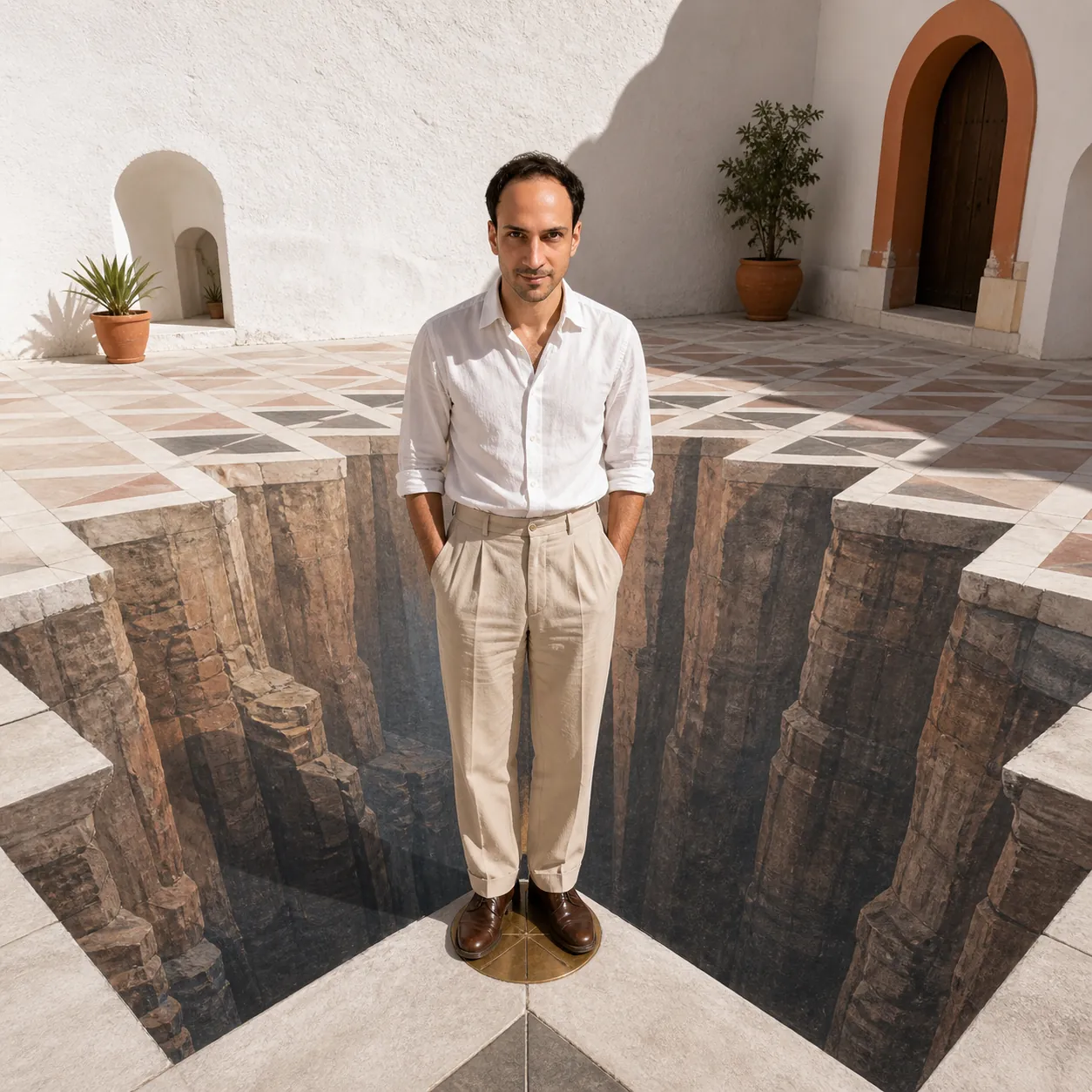
Use the attached reference photo as the identity reference: keep the same face, skin tone, hair and features as the person in that photo, without beautifying, aging or altering them. Create a square 1:1 museum-catalog frame with a strong first read and a slower second read. Location: a whitewashed courtyard with one surveyed brass marker set in the paving. Show the subject in a clean white shirt tucked into pleated sand trousers, aligning their shoe toes exactly to the brass marker. Make one rigorous physical condition the conceptual engine: a painted courtyard floor that resolves into a plunging chasm from exactly one marked standing point makes meaning appear only for the viewer willing to stand in the right place. Explore why some truths are only visible from one deliberate standing point; direct expression and posture toward measured delight, never melodrama or ad-like confidence. Use an eye-level 65mm medium-format viewpoint locked to the illusion's single surveyed station. Make the composition keep the illusion perfect and one clue to its making equally sharp. Render it as high-concept perspectival portraiture built from surveyed anamorphic construction, documentary realism, architectural draftsmanship, and emotionally intelligent composition, using high, diffused desert daylight moderated by real shade and bounced warm ground light and a palette of chalk white, warm grey, and one architectural terracotta. Keep one identity-locked person, credible hands and fingers, natural fabric, and coherent scale, contact, reflections, shadows, airflow, deformation, and materials. Background people only when essential, always secondary and clearly different. Avoid melting-clock surrealism, endless staircases, floating islands, impossible Escher tributes played straight, and green-screen composites. No text, labels, logos, signatures, watermarks, random symbols, plastic skin, excessive bloom, or glossy AI finish.
Treat that reference as the character anchor and change only the scene. Create a square 1:1 museum-catalog frame with a strong first read and a slower...
Treat that reference as the character anchor and change only the scene. Create a square 1:1 museum-catalog frame with a strong first read and a slower...
Treat that reference as the character anchor and change only the scene. Create a square 1:1 museum-catalog frame with a strong first read and a slower...
Treat that reference as the character anchor and change only the scene. Create a square 1:1 museum-catalog frame with a strong first read and a slower...
Treat that reference as the character anchor and change only the scene. Create a square 1:1 museum-catalog frame with a strong first read and a slower...
Treat that reference as the character anchor and change only the scene. Create a square 1:1 museum-catalog frame with a strong first read and a slower...
Treat that reference as the character anchor and change only the scene. Create a square 1:1 museum-catalog frame with a strong first read and a slower...
Treat that reference as the character anchor and change only the scene. Create a square 1:1 museum-catalog frame with a strong first read and a slower...
Treat that reference as the character anchor and change only the scene. Create a square 1:1 museum-catalog frame with a strong first read and a slower...
Treat that reference as the character anchor and change only the scene. Create a square 1:1 museum-catalog frame with a strong first read and a slower...
Treat that reference as the character anchor and change only the scene. Create a square 1:1 museum-catalog frame with a strong first read and a slower...
Treat that reference as the character anchor and change only the scene. Create a square 1:1 museum-catalog frame with a strong first read and a slower...