جاري التحميل...


جاري التحميل...
Create a square 1:1 museum-catalog frame with a strong first read and a slower second read at exactly 2880x2880 pixels. Location: a hilltop triangulation...
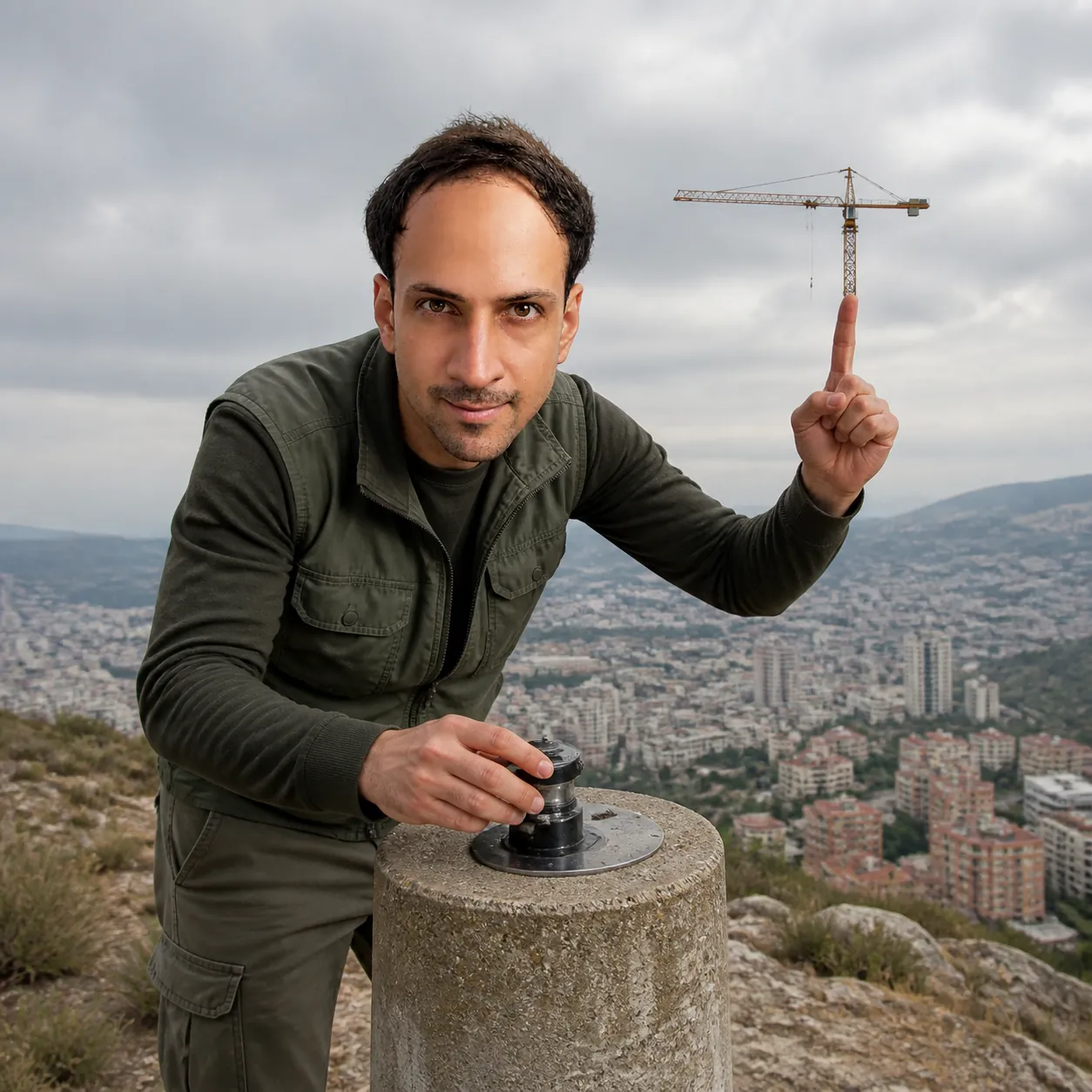
Use the attached reference photo as the identity reference: keep the same face, skin tone, hair and features as the person in that photo, without beautifying, aging or altering them. Create a square 1:1 museum-catalog frame with a strong first read and a slower second read at exactly 2880x2880 pixels. Location: a hilltop triangulation pillar above the city's northern districts. Show the subject in an olive utility vest over a long-sleeve base layer and cargo trousers, screwing a panoramic head onto the pillar's center bolt. Use this advanced image-making device as the core logic: a distant tower crane that settles weightlessly onto their raised fingertip when the camera holds one surveyed vantage defeats the eye's scale instinct with nothing but honest, lawful geometry. Explore how a viewpoint can rebuild the world without moving a single object; direct expression and posture toward sober curiosity, never melodrama or ad-like confidence. Frame at the demonstration's own height so the optical event and their eyes share one axis. Make the composition seat the illusion dead center and let them stand off-axis. Render it as gallery-grade perspective photography built from real sightline alignments, measured camera placement, physically accurate focus falloff, and unhurried dignified portrait values, using a single practical lamp held low, its beam spreading lawfully with distance and a palette of overcast silver, limestone buff, and one dark cedar green. Photorealistic: this must read as a real photograph from a physical camera, never an illustration, painting, or 3D render. Resolve real surface detail: visible weave in cloth, fine scratches on metal, and the faint unevenness of painted walls. Keep one identity-locked person, credible hands and fingers, natural fabric, and coherent scale, contact, reflections, shadows, airflow, deformation, and materials. Background people only when essential, always secondary and clearly different. Avoid shrunken-person composites, giant-monster posing, fake miniature blur filters, candy-toy oversaturation, and warped fisheye streets. No text, labels, logos, signatures, watermarks, random symbols, plastic skin, excessive bloom, or glossy AI finish.
Treat that reference as the character anchor and change only the scene. Create a square 1:1 museum-catalog frame with a strong first read and a slower...
Treat that reference as the character anchor and change only the scene. Create a square 1:1 museum-catalog frame with a strong first read and a slower...
Treat that reference as the character anchor and change only the scene. Create a square 1:1 museum-catalog frame with a strong first read and a slower...
Treat that reference as the character anchor and change only the scene. Create a square 1:1 museum-catalog frame with a strong first read and a slower...
Treat that reference as the character anchor and change only the scene. Create a square 1:1 museum-catalog frame with a strong first read and a slower...
Treat that reference as the character anchor and change only the scene. Create a square 1:1 museum-catalog frame with a strong first read and a slower...
Treat that reference as the character anchor and change only the scene. Create a square 1:1 museum-catalog frame with a strong first read and a slower...
Treat that reference as the character anchor and change only the scene. Create a square 1:1 museum-catalog frame with a strong first read and a slower...
Treat that reference as the character anchor and change only the scene. Create a square 1:1 museum-catalog frame with a strong first read and a slower...
Treat that reference as the character anchor and change only the scene. Create a square 1:1 museum-catalog frame with a strong first read and a slower...
Treat that reference as the character anchor and change only the scene. Create a square 1:1 museum-catalog frame with a strong first read and a slower...
Treat that reference as the character anchor and change only the scene. Create a square 1:1 museum-catalog frame with a strong first read and a slower...