جاري التحميل...


جاري التحميل...
Create a square 1:1 museum-catalog frame with a strong first read and a slower second read. Location: a shaded courtyard table with muslin squares drying on...
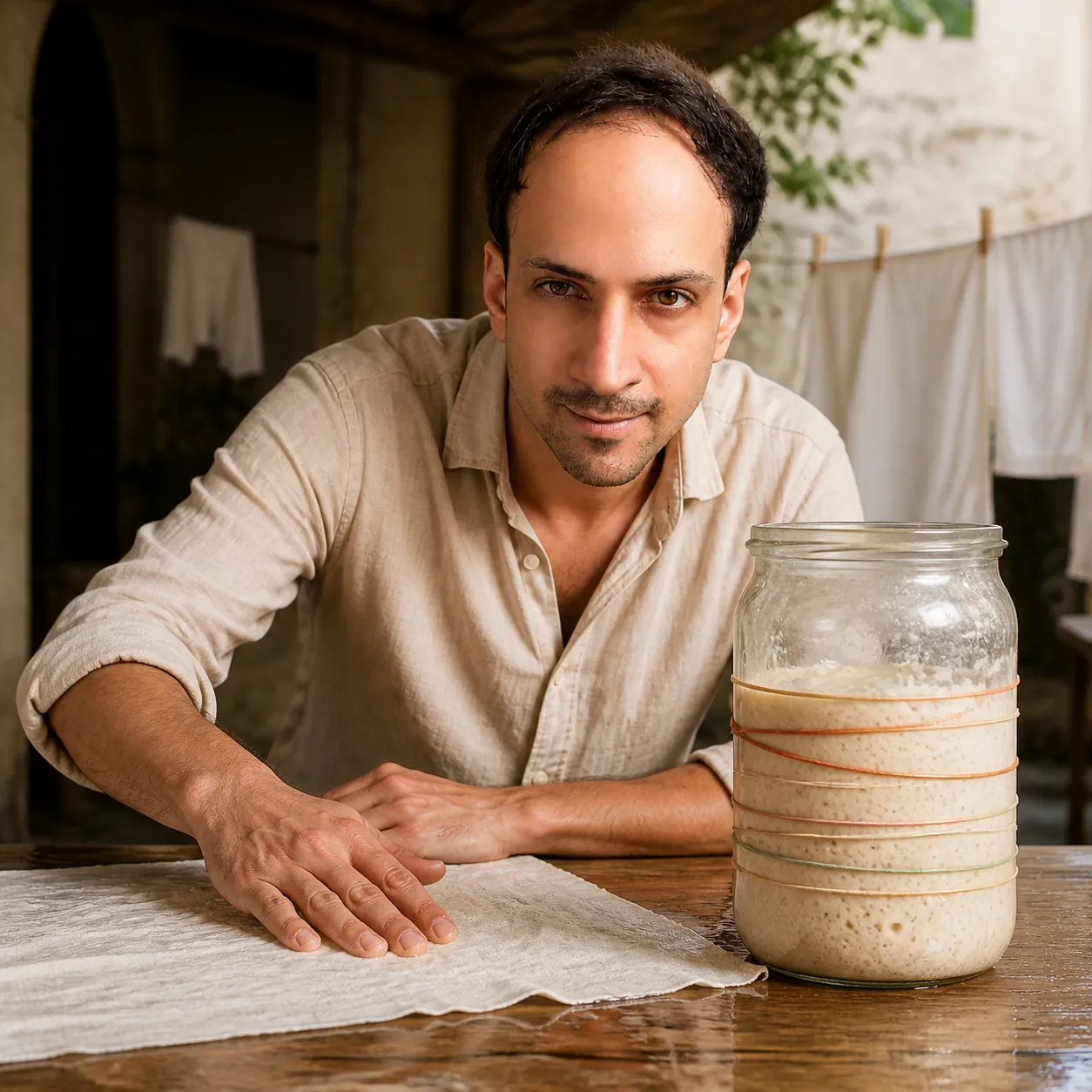
Use the attached reference photo as the identity reference: keep the same face, skin tone, hair and features as the person in that photo, without beautifying, aging or altering them. Create a square 1:1 museum-catalog frame with a strong first read and a slower second read. Location: a shaded courtyard table with muslin squares drying on a line. Show the subject in a sand-colored linen shirt with unbuttoned cuffs, smoothing a damp muslin square flat on the table. Use this advanced image-making device as the core logic: a sourdough jar ringed with dated rubber bands, each marking one day's high-water rise against the glass shows the exact geometry of a shift of work no one witnessed. Explore whether a jar can wear its own performance review; direct expression and posture toward humble attention, never melodrama or ad-like confidence. Frame across the bench at chest height so the vessel's activity and their eyes share one focal plane. Make the composition let the liveliest jar sit off-center and draw their gaze, not their hands. Render it as museum-scale still-life realism combining high-fidelity portrait photography, truthful glass and brine optics, patient natural color, and physically accurate bubbles and bloom, using a single overhead practical softened by the surrounding architecture, leaving readable shadow detail and a palette of milk white, pale straw, and one field of fig dark. Keep one identity-locked person, credible hands and fingers, natural fabric, and coherent scale, contact, reflections, shadows, airflow, deformation, and materials. Background people only when essential, always secondary and clearly different. Avoid probiotic-supplement bottles, gut-diagram infographics, glowing bacteria renders, petri-dish sci-fi, and sourdough-influencer clichés. No text, labels, logos, signatures, watermarks, random symbols, plastic skin, excessive bloom, or glossy AI finish.
Treat that reference as the character anchor and change only the scene. Create a square 1:1 museum-catalog frame with a strong first read and a slower...
Treat that reference as the character anchor and change only the scene. Create a square 1:1 museum-catalog frame with a strong first read and a slower...
Treat that reference as the character anchor and change only the scene. Create a square 1:1 museum-catalog frame with a strong first read and a slower...
Treat that reference as the character anchor and change only the scene. Create a square 1:1 museum-catalog frame with a strong first read and a slower...
Treat that reference as the character anchor and change only the scene. Create a square 1:1 museum-catalog frame with a strong first read and a slower...
Treat that reference as the character anchor and change only the scene. Create a square 1:1 museum-catalog frame with a strong first read and a slower...
Treat that reference as the character anchor and change only the scene. Create a square 1:1 museum-catalog frame with a strong first read and a slower...
Treat that reference as the character anchor and change only the scene. Create a square 1:1 museum-catalog frame with a strong first read and a slower...
Treat that reference as the character anchor and change only the scene. Create a square 1:1 museum-catalog frame with a strong first read and a slower...
Treat that reference as the character anchor and change only the scene. Create a square 1:1 museum-catalog frame with a strong first read and a slower...
Treat that reference as the character anchor and change only the scene. Create a square 1:1 museum-catalog frame with a strong first read and a slower...
Treat that reference as the character anchor and change only the scene. Create a square 1:1 museum-catalog frame with a strong first read and a slower...