جاري التحميل...


جاري التحميل...
Create a square 1:1 museum-catalog frame with a strong first read and a slower second read at exactly 2880x2880 pixels. Location: the top deck of an empty...
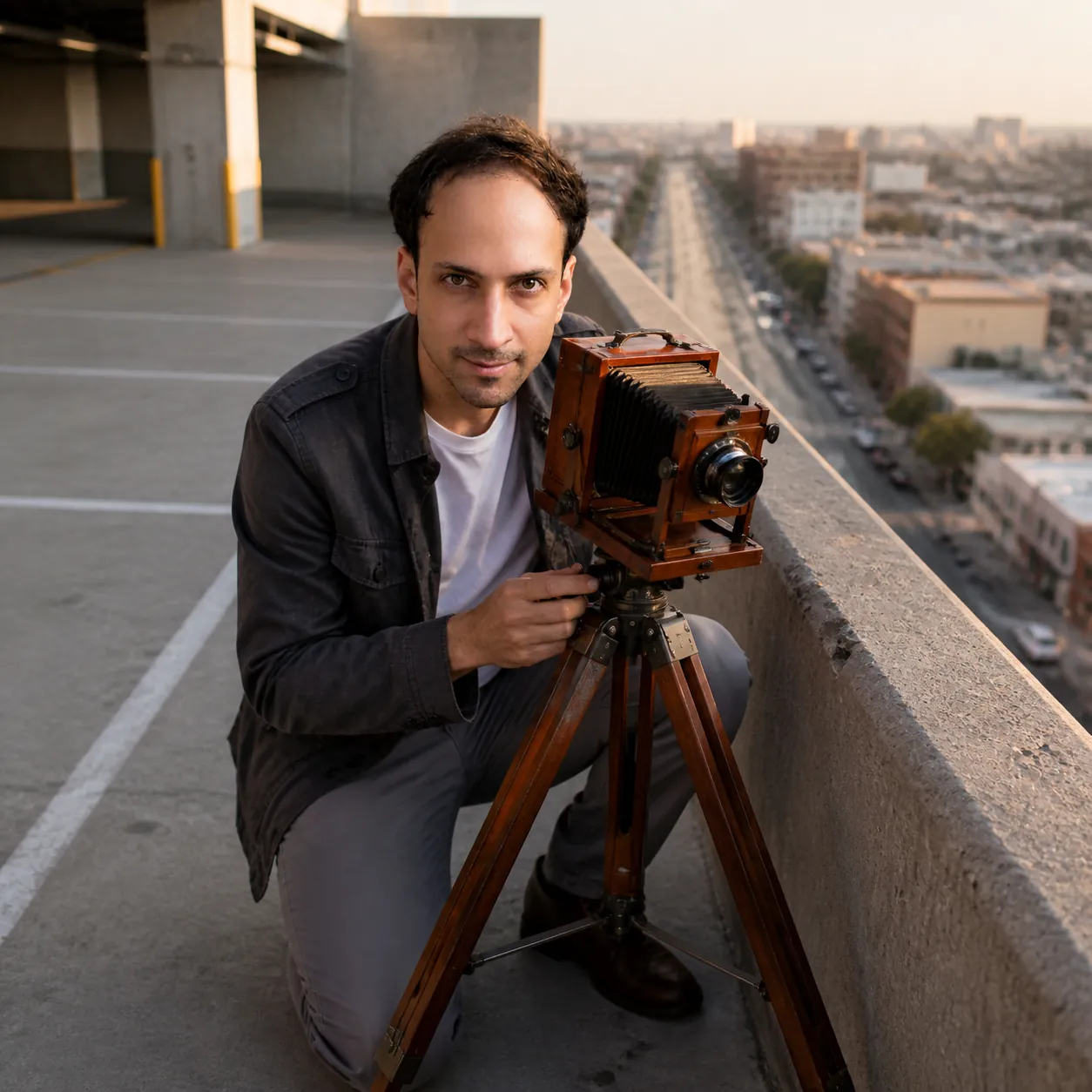
Use the attached reference photo as the identity reference: keep the same face, skin tone, hair and features as the person in that photo, without beautifying, aging or altering them. Create a square 1:1 museum-catalog frame with a strong first read and a slower second read at exactly 2880x2880 pixels. Location: the top deck of an empty parking garage overlooking a straight boulevard. Show the subject in a graphite field jacket over a plain white tee and grey chinos, spreading a wooden tripod's legs against the parapet curb. Make one rigorous physical condition the conceptual engine: a wooden view camera whose tilted lens lays a sloping wedge of focus that renders the scene beyond as a tabletop model defeats the eye's scale instinct with nothing but honest, lawful geometry. Explore why the eye trusts context more than it trusts the thing itself; direct expression and posture toward quiet astonishment, never melodrama or ad-like confidence. Use an eye-level 50mm view stopped far down so near objects and far architecture hold equal focus. Make the composition keep one honest scale reference standing quietly inside the frame. Render it as high-concept optical portraiture built from lawful lens geometry, documentary street realism, model-shop craft fidelity, and patient editorial composition, using late low sun raking the scene so every shadow states its distance and a palette of warm grey concrete, pale haze, and one signal orange. Photorealistic: this must read as a real photograph from a physical camera, never an illustration, painting, or 3D render. Resolve real surface detail: true skin texture with pores and fine hair at the hairline, and fabric that creases where it is actually stressed. Keep one identity-locked person, credible hands and fingers, natural fabric, and coherent scale, contact, reflections, shadows, airflow, deformation, and materials. Background people only when essential, always secondary and clearly different. Avoid shrunken-person composites, giant-monster posing, fake miniature blur filters, candy-toy oversaturation, and warped fisheye streets. No text, labels, logos, signatures, watermarks, random symbols, plastic skin, excessive bloom, or glossy AI finish.
Treat that reference as the character anchor and change only the scene. Create a square 1:1 museum-catalog frame with a strong first read and a slower...
Treat that reference as the character anchor and change only the scene. Create a square 1:1 museum-catalog frame with a strong first read and a slower...
Treat that reference as the character anchor and change only the scene. Create a square 1:1 museum-catalog frame with a strong first read and a slower...
Treat that reference as the character anchor and change only the scene. Create a square 1:1 museum-catalog frame with a strong first read and a slower...
Treat that reference as the character anchor and change only the scene. Create a square 1:1 museum-catalog frame with a strong first read and a slower...
Treat that reference as the character anchor and change only the scene. Create a square 1:1 museum-catalog frame with a strong first read and a slower...
Treat that reference as the character anchor and change only the scene. Create a square 1:1 museum-catalog frame with a strong first read and a slower...
Treat that reference as the character anchor and change only the scene. Create a square 1:1 museum-catalog frame with a strong first read and a slower...
Treat that reference as the character anchor and change only the scene. Create a square 1:1 museum-catalog frame with a strong first read and a slower...
Treat that reference as the character anchor and change only the scene. Create a square 1:1 museum-catalog frame with a strong first read and a slower...
Treat that reference as the character anchor and change only the scene. Create a square 1:1 museum-catalog frame with a strong first read and a slower...
Treat that reference as the character anchor and change only the scene. Create a square 1:1 museum-catalog frame with a strong first read and a slower...