جاري التحميل...


جاري التحميل...
Create a square 1:1 museum-catalog frame with a strong first read and a slower second read. Location: an apartment corridor converted into one long...
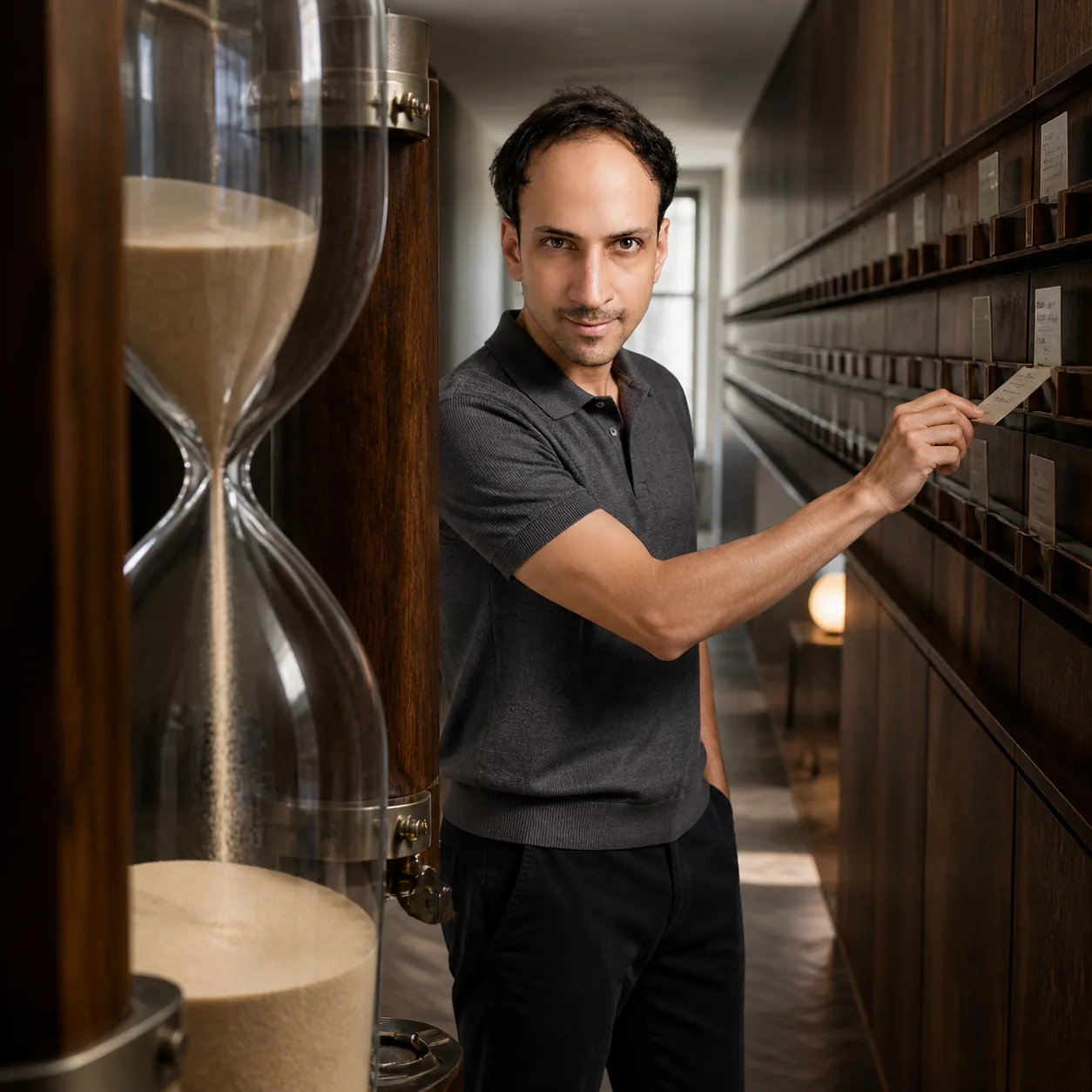
Use the attached reference photo as the identity reference: keep the same face, skin tone, hair and features as the person in that photo, without beautifying, aging or altering them. Create a square 1:1 museum-catalog frame with a strong first read and a slower second read. Location: an apartment corridor converted into one long card-rail wall. Show the subject in a slate-grey knit polo and dark chinos, sliding one clipped card a hand-width to the right. The impossible-looking event must obey this clear system: a person-height hourglass whose falling sand column for one deep-work block is readable from across the room grants every ending a small, physical arrival instead of silence. Explore how large time must be built before it earns respect; direct expression and posture toward quiet confidence, never melodrama or ad-like confidence. Use a 100mm macro-to-portrait hybrid: one mechanism detail near the lens and the person in the reference photo's face readable beyond it, both physically plausible. Make the composition hold generous empty space where the clutter used to live. Render it as museum-scale focus realism combining high-fidelity portrait photography, truthful single-source light, honest joinery and wiring, and physically accurate mechanisms, using soft north-facing daylight with restrained contrast and visible skin texture and a palette of walnut, slate, and one small field of lamp amber. Keep one identity-locked person, credible hands and fingers, natural fabric, and coherent scale, contact, reflections, shadows, airflow, deformation, and materials. Background people only when essential, always secondary and clearly different. Avoid productivity-app screens, pomodoro-branded props, motivational posters, bullet-journal styling spreads, and pill-bottle imagery. No text, labels, logos, signatures, watermarks, random symbols, plastic skin, excessive bloom, or glossy AI finish.
Treat that reference as the character anchor and change only the scene. Create a square 1:1 museum-catalog frame with a strong first read and a slower...
Treat that reference as the character anchor and change only the scene. Create a square 1:1 museum-catalog frame with a strong first read and a slower...
Treat that reference as the character anchor and change only the scene. Create a square 1:1 museum-catalog frame with a strong first read and a slower...
Treat that reference as the character anchor and change only the scene. Create a square 1:1 museum-catalog frame with a strong first read and a slower...
Treat that reference as the character anchor and change only the scene. Create a square 1:1 museum-catalog frame with a strong first read and a slower...
Treat that reference as the character anchor and change only the scene. Create a square 1:1 museum-catalog frame with a strong first read and a slower...
Treat that reference as the character anchor and change only the scene. Create a square 1:1 museum-catalog frame with a strong first read and a slower...
Treat that reference as the character anchor and change only the scene. Create a square 1:1 museum-catalog frame with a strong first read and a slower...
Treat that reference as the character anchor and change only the scene. Create a square 1:1 museum-catalog frame with a strong first read and a slower...
Treat that reference as the character anchor and change only the scene. Create a square 1:1 museum-catalog frame with a strong first read and a slower...
Treat that reference as the character anchor and change only the scene. Create a square 1:1 museum-catalog frame with a strong first read and a slower...
Treat that reference as the character anchor and change only the scene. Create a square 1:1 museum-catalog frame with a strong first read and a slower...