جاري التحميل...


جاري التحميل...
Create a square 1:1 museum-catalog frame with a strong first read and a slower second read at exactly 2880x2880 pixels. Location: a timber-framing hall with...
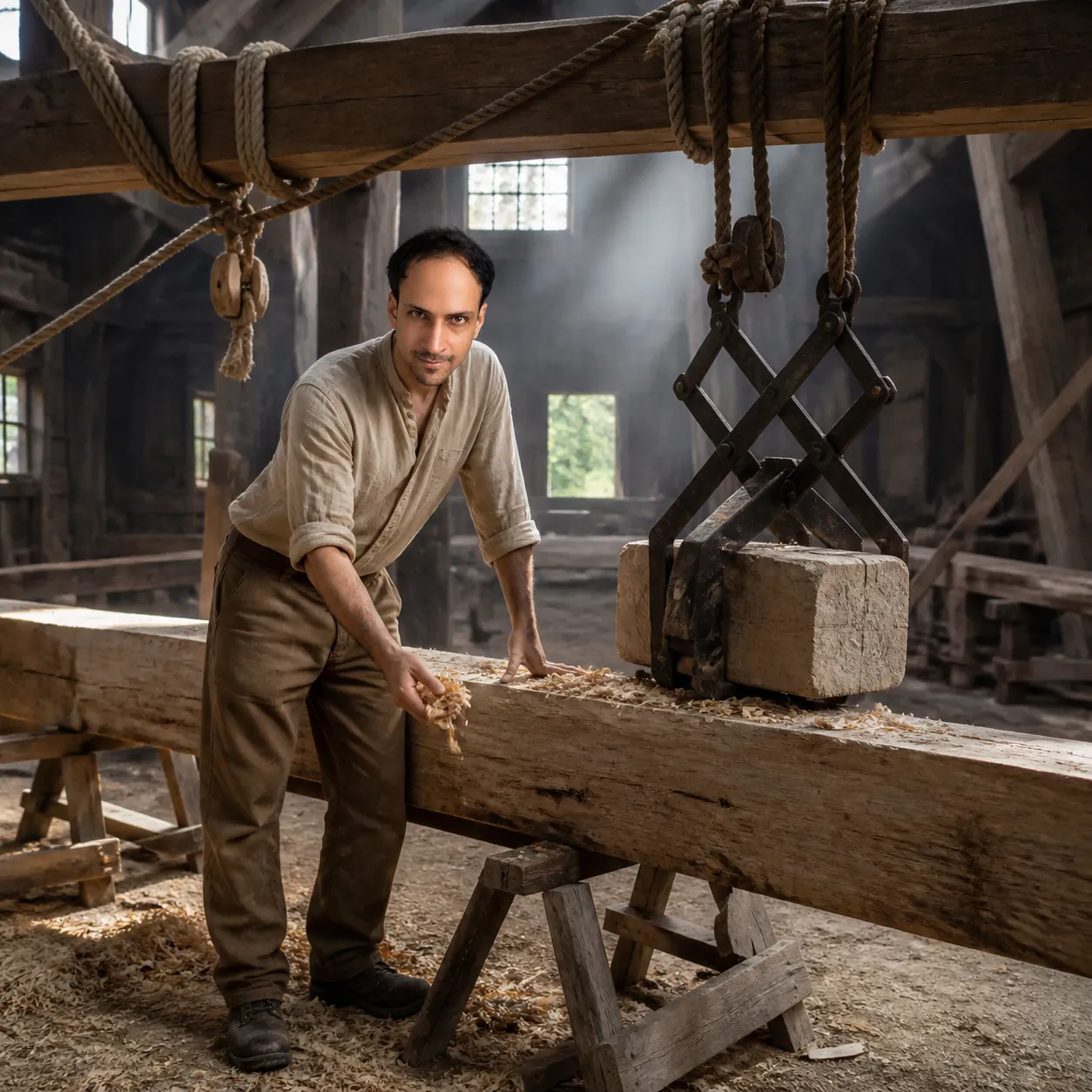
Use the attached reference photo as the identity reference: keep the same face, skin tone, hair and features as the person in that photo, without beautifying, aging or altering them. Create a square 1:1 museum-catalog frame with a strong first read and a slower second read at exactly 2880x2880 pixels. Location: a timber-framing hall with fresh-sawn beams laid across paired trestles. Show the subject in a wheat-colored linen shirt tucked into heavy cotton work trousers, clearing curled shavings off a beam with one cupped hand. Use this advanced image-making device as the core logic: a pair of scissor-jawed lifting tongs whose grip on a rough block tightens exactly as hard as its weight pulls down turns a small, steady effort into the equal of crushing weight. Explore why stored advantage is quietest at the exact moment it is greatest; direct expression and posture toward attentive ease, never melodrama or ad-like confidence. Frame from a few steps back with the full rig visible, their figure honest against its scale. Make the composition place the balance point exactly on a third line. Render it as quiet working-rigging portraiture built from lawful mechanical advantage, heavy documentary realism, hand-worn rope-and-timber materiality, and patient large-format editorial composition, using dusty shafts of high window light cut into slow diagonal beams and a palette of raw hemp, limestone grey, and one oxide-red band. Photorealistic: this must read as a real photograph from a physical camera, never an illustration, painting, or 3D render. Resolve real surface detail: wood grain read at honest scale, matte and gloss clearly separated, and no surface uniformly clean. Keep one identity-locked person, credible hands and fingers, natural fabric, and coherent scale, contact, reflections, shadows, airflow, deformation, and materials. Background people only when essential, always secondary and clearly different. Avoid gym equipment, heroic strongman poses, bulging-vein close-ups, snapped-rope drama, and impossibly floating boulders. No text, labels, logos, signatures, watermarks, random symbols, plastic skin, excessive bloom, or glossy AI finish.
Treat that reference as the character anchor and change only the scene. Create a square 1:1 museum-catalog frame with a strong first read and a slower...
Treat that reference as the character anchor and change only the scene. Create a square 1:1 museum-catalog frame with a strong first read and a slower...
Treat that reference as the character anchor and change only the scene. Create a square 1:1 museum-catalog frame with a strong first read and a slower...
Treat that reference as the character anchor and change only the scene. Create a square 1:1 museum-catalog frame with a strong first read and a slower...
Treat that reference as the character anchor and change only the scene. Create a square 1:1 museum-catalog frame with a strong first read and a slower...
Treat that reference as the character anchor and change only the scene. Create a square 1:1 museum-catalog frame with a strong first read and a slower...
Treat that reference as the character anchor and change only the scene. Create a square 1:1 museum-catalog frame with a strong first read and a slower...
Treat that reference as the character anchor and change only the scene. Create a square 1:1 museum-catalog frame with a strong first read and a slower...
Treat that reference as the character anchor and change only the scene. Create a square 1:1 museum-catalog frame with a strong first read and a slower...
Treat that reference as the character anchor and change only the scene. Create a square 1:1 museum-catalog frame with a strong first read and a slower...
Treat that reference as the character anchor and change only the scene. Create a square 1:1 museum-catalog frame with a strong first read and a slower...
Treat that reference as the character anchor and change only the scene. Create a square 1:1 museum-catalog frame with a strong first read and a slower...