جاري التحميل...


جاري التحميل...
Create a square 1:1 museum-catalog frame with a strong first read and a slower second read. Location: a quiet clinic anteroom with two chairs and a wall...
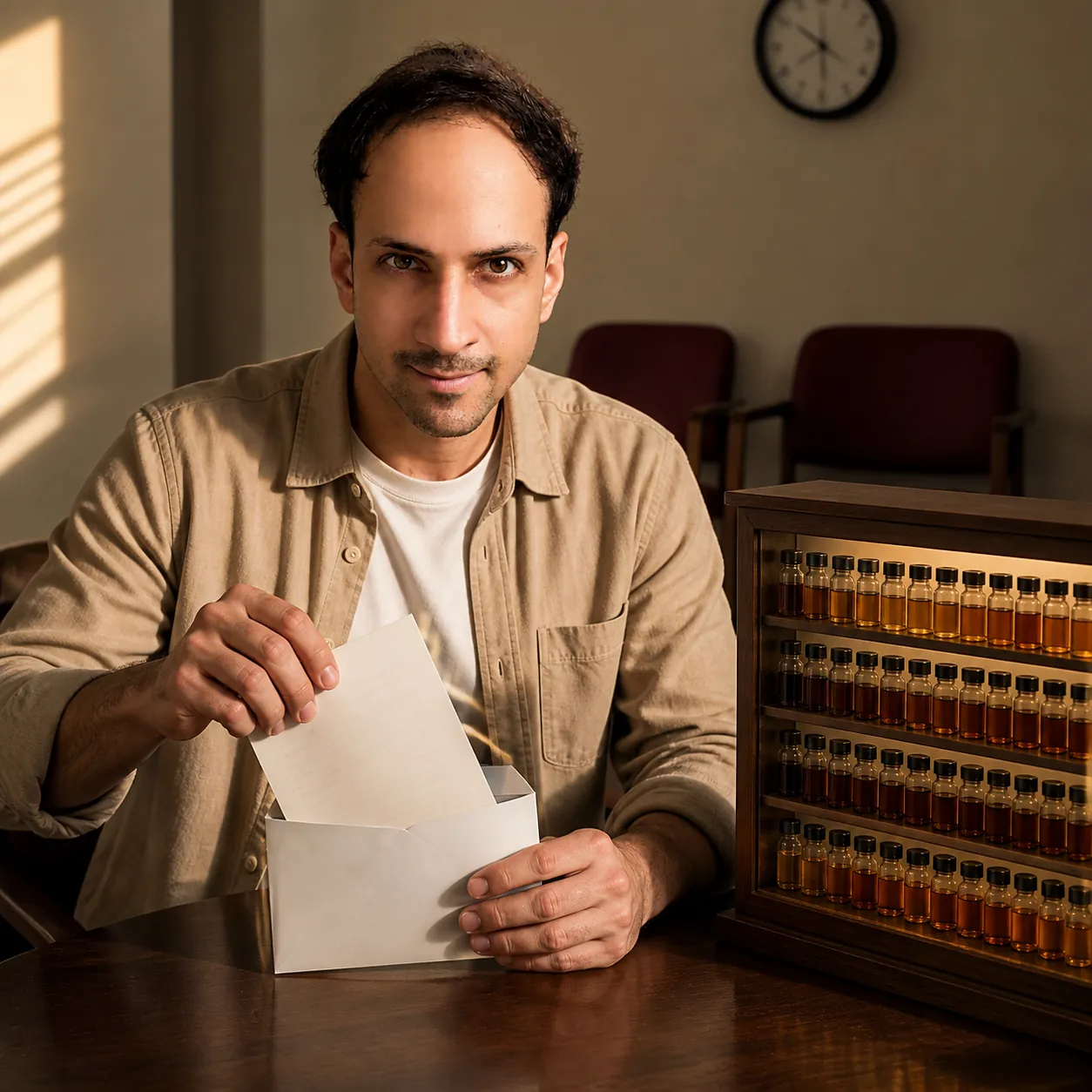
Use the attached reference photo as the identity reference: keep the same face, skin tone, hair and features as the person in that photo, without beautifying, aging or altering them. Create a square 1:1 museum-catalog frame with a strong first read and a slower second read. Location: a quiet clinic anteroom with two chairs and a wall clock. Show the subject in a pressed sand-colored overshirt over a white crew-neck, folding this year's results letter back into its envelope. Use this advanced image-making device as the core logic: a climate cabinet of small amber vials arranged by year, their honey tones deepening almost imperceptibly along the rows retires the language of emergency in favor of dated, boring care. Explore how slowly a body drifts when someone is honestly keeping records; direct expression and posture toward deliberate hope, never melodrama or ad-like confidence. Frame across the instrument at chest height so the reading and their eyes share one focal plane. Make the composition let the instrument's smallest graduation stay legible. Render it as museum-scale archival realism combining high-fidelity portrait photography, truthful patina and wear, disciplined warm neutrals, and physically accurate aging of materials, using low-angle late-afternoon light creating long but physically coherent shadows and a palette of bronze, chalk white, and one field of oxblood. Keep one identity-locked subject, credible hands and fingers, natural fabric, and coherent scale, contact, reflections, shadows, airflow, deformation, and materials. Background people only when essential, always secondary and clearly different. Avoid hospital drama, IV drips, gym-transformation posing, supplement-bottle product shots, and glowing DNA helices. No text, labels, logos, signatures, watermarks, random symbols, plastic skin, excessive bloom, or glossy AI finish.
Treat that reference as the character anchor and change only the scene. Create a square 1:1 museum-catalog frame with a strong first read and a slower...
Treat that reference as the character anchor and change only the scene. Create a square 1:1 museum-catalog frame with a strong first read and a slower...
Treat that reference as the character anchor and change only the scene. Create a square 1:1 museum-catalog frame with a strong first read and a slower...
Treat that reference as the character anchor and change only the scene. Create a square 1:1 museum-catalog frame with a strong first read and a slower...
Treat that reference as the character anchor and change only the scene. Create a square 1:1 museum-catalog frame with a strong first read and a slower...
Treat that reference as the character anchor and change only the scene. Create a square 1:1 museum-catalog frame with a strong first read and a slower...
Treat that reference as the character anchor and change only the scene. Create a square 1:1 museum-catalog frame with a strong first read and a slower...
Treat that reference as the character anchor and change only the scene. Create a square 1:1 museum-catalog frame with a strong first read and a slower...
Treat that reference as the character anchor and change only the scene. Create a square 1:1 museum-catalog frame with a strong first read and a slower...
Treat that reference as the character anchor and change only the scene. Create a square 1:1 museum-catalog frame with a strong first read and a slower...
Treat that reference as the character anchor and change only the scene. Create a square 1:1 museum-catalog frame with a strong first read and a slower...
Treat that reference as the character anchor and change only the scene. Create a square 1:1 museum-catalog frame with a strong first read and a slower...