جاري التحميل...


جاري التحميل...
Create a square 1:1 museum-catalog frame with a strong first read and a slower second read. Location: a data-center service corridor with no visible screens...
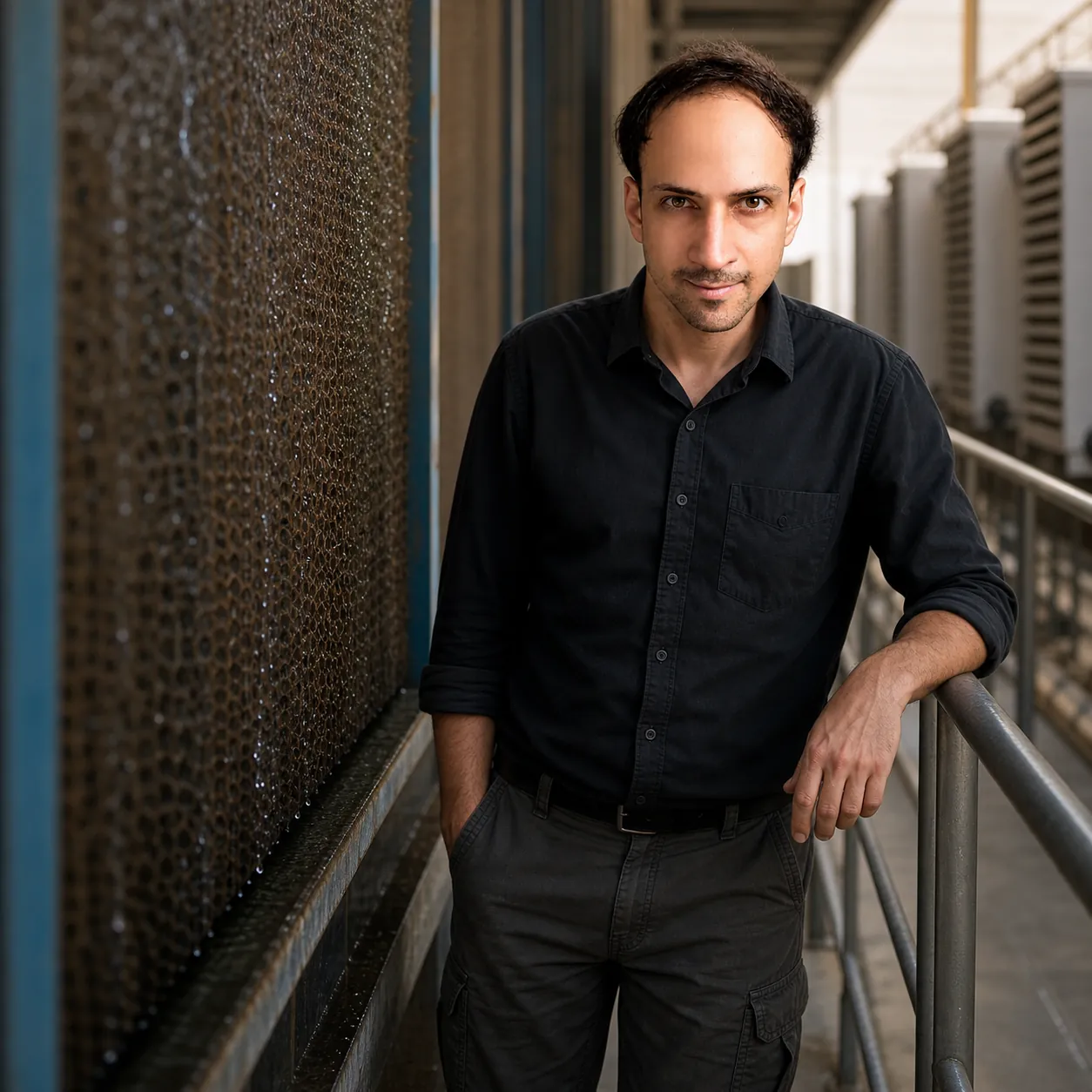
Use the attached reference photo as the identity reference: keep the same face, skin tone, hair and features as the person in that photo, without beautifying, aging or altering them. Create a square 1:1 museum-catalog frame with a strong first read and a slower second read. Location: a data-center service corridor with no visible screens or branding. Show the subject in a dark work shirt with practical trousers and rolled sleeves, resting their hand on a cold railing while listening to the airflow. Make one rigorous physical condition the conceptual engine: a vertical surface harvesting tiny amounts of water from night air combines a traditional passive strategy with a contemporary low-energy material. Explore climate resilience as daily protection rather than heroic conquest; direct expression and posture toward practical hope, never melodrama or ad-like confidence. Use a 100mm macro-to-portrait hybrid: one material detail near the lens and the person in the reference photo's face readable beyond it, both physically plausible. Make the composition center the comfort of bodies, not the device. Render it as climate-adaptation editorial art grounded in desert physics, passive design, real materials, human-scale architecture, and luminous documentary portraiture, using a broad window-shaped key with gentle falloff, soft negative fill, and no beauty-light flattening and a palette of sand, smoke grey, and a small field of mineral blue. Keep one identity-locked person, credible hands and fingers, natural fabric, and coherent scale, contact, reflections, shadows, airflow, deformation, and materials. Background people only when essential, always secondary and clearly different. Avoid disaster spectacle, cracked-earth stock imagery, green-tech logos, utopian megacities, and impossible waterfalls. No text, labels, logos, signatures, watermarks, random symbols, plastic skin, excessive bloom, or glossy AI finish.
Treat that reference as the character anchor and change only the scene. Create a square 1:1 museum-catalog frame with a strong first read and a slower...
Treat that reference as the character anchor and change only the scene. Create a square 1:1 museum-catalog frame with a strong first read and a slower...
Treat that reference as the character anchor and change only the scene. Create a square 1:1 museum-catalog frame with a strong first read and a slower...
Treat that reference as the character anchor and change only the scene. Create a square 1:1 museum-catalog frame with a strong first read and a slower...
Treat that reference as the character anchor and change only the scene. Create a square 1:1 museum-catalog frame with a strong first read and a slower...
Treat that reference as the character anchor and change only the scene. Create a square 1:1 museum-catalog frame with a strong first read and a slower...
Treat that reference as the character anchor and change only the scene. Create a square 1:1 museum-catalog frame with a strong first read and a slower...
Treat that reference as the character anchor and change only the scene. Create a square 1:1 museum-catalog frame with a strong first read and a slower...
Treat that reference as the character anchor and change only the scene. Create a square 1:1 museum-catalog frame with a strong first read and a slower...
Treat that reference as the character anchor and change only the scene. Create a square 1:1 museum-catalog frame with a strong first read and a slower...
Treat that reference as the character anchor and change only the scene. Create a square 1:1 museum-catalog frame with a strong first read and a slower...
Treat that reference as the character anchor and change only the scene. Create a square 1:1 museum-catalog frame with a strong first read and a slower...