تخطَّ إلى المحتوى

برومبتات الصور

برومبتات لمولدات الصور: بورتريهات وفن وتصوير.

تم العثور على 4209
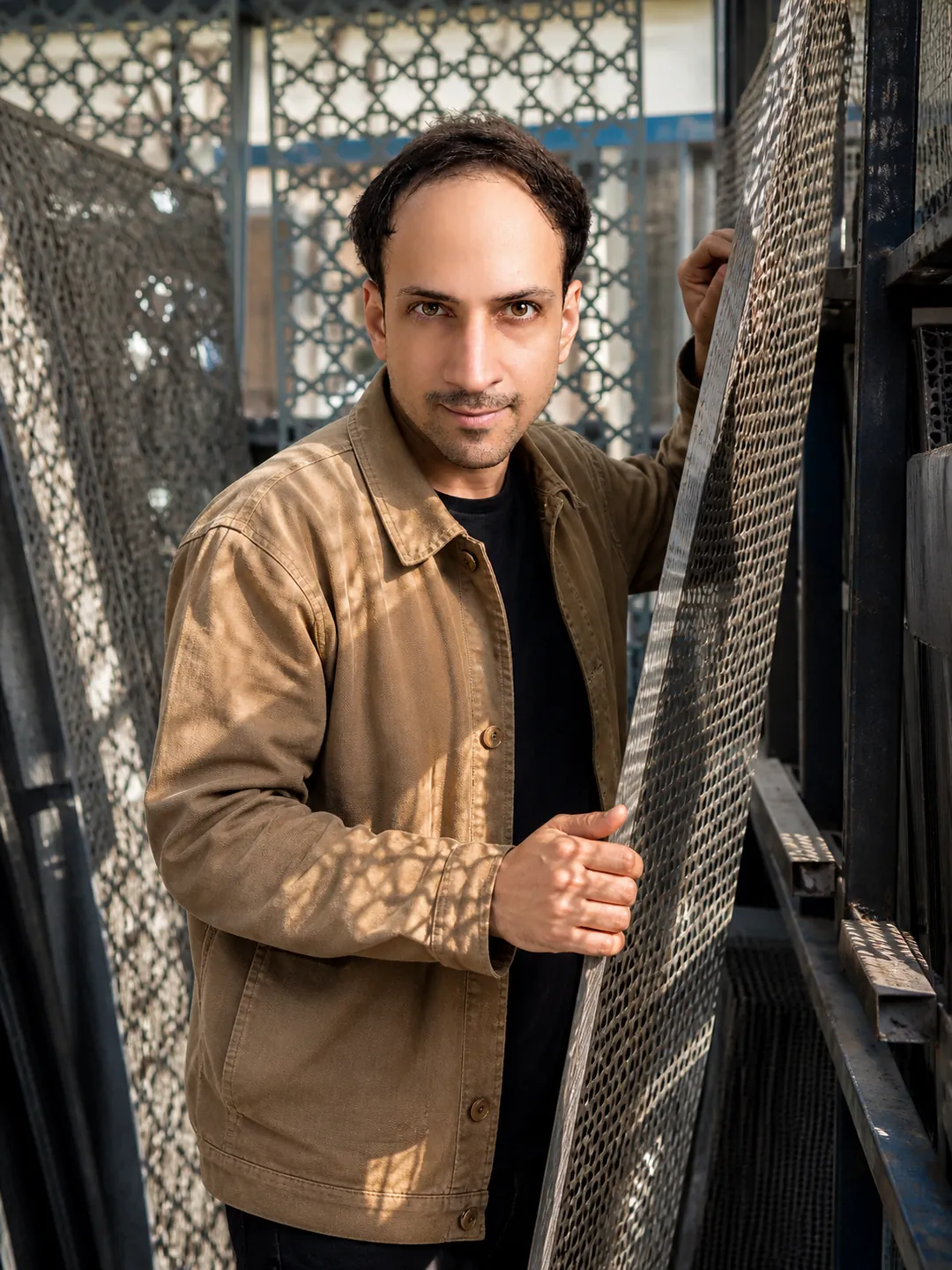
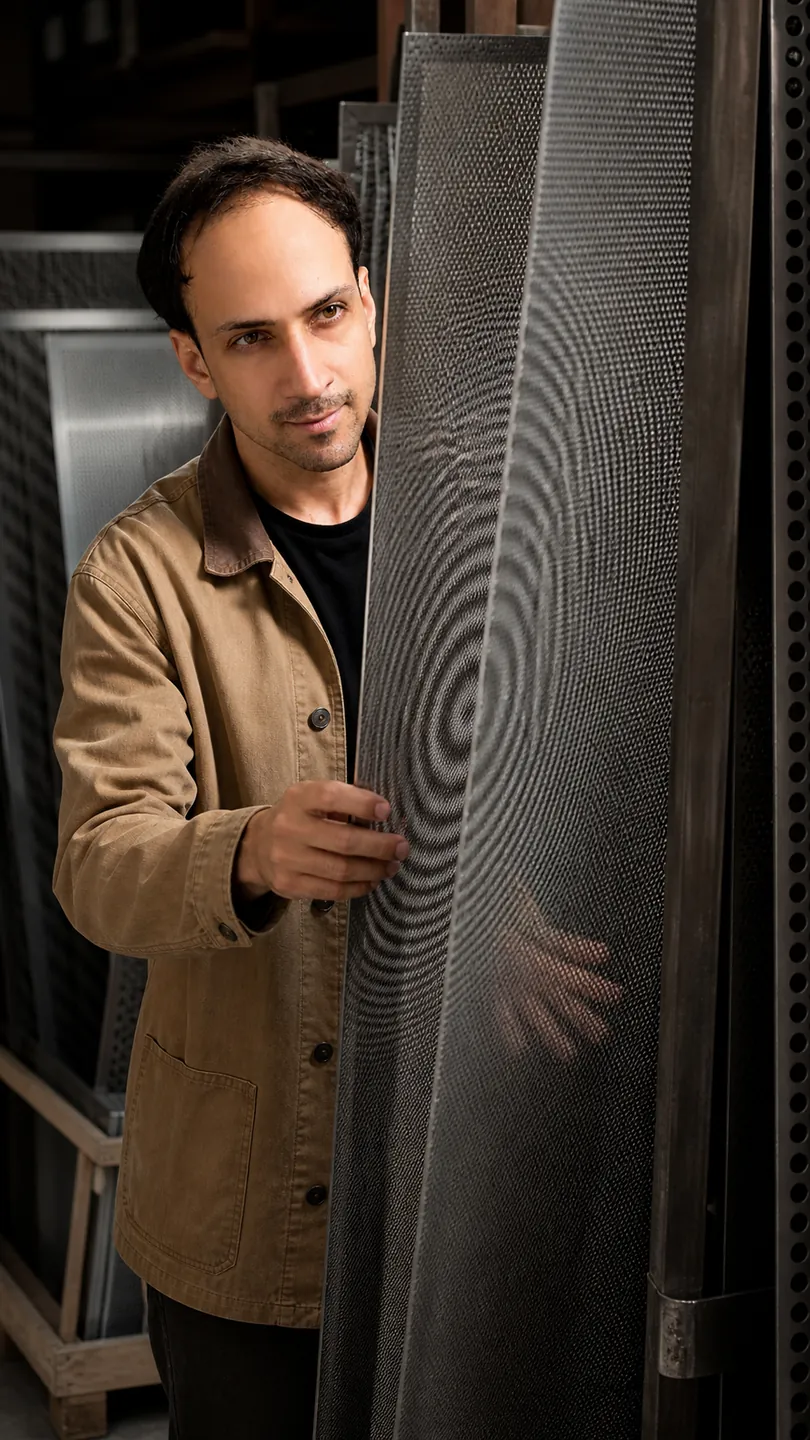
Standing Motion: Shaded Metal Supply Yard — AI Portrait Prompt
صورةAI Portraits

Turn your own photo into a high-concept interference portrait in a shaded metal supply yard with perforated sheets racked on edge. Keeps your face unchanged.

من نص البرومبت

Use the attached reference photo as the identity reference: keep the same face, skin tone, hair and features as the person in that photo, without beautifying, aging or altering them. Treat that reference as the character anchor and change only the scene. Use a formal 3:4 environmental portrait with complete hands and meaningful objects inside frame at exactly 2480x3312 pixels. Location: a shaded metal supply yard with perforated sheets racked on edge. Show them in a tan canvas work jacket over a dark crew-neck, tilting one thin sheet upright against the rack rail. Use this advanced image-making device as the core logic: a pair of carved mashrabiya screens hung a hand span apart, whose overlapped shadows gather into broad bands drifting with the sun shows the eye a change its own resolution could never catch. Explore why two still patterns can conjure a third that plainly moves; direct expression and posture toward unhurried curiosity, never melodrama or ad-like confidence. Use an eye-level 85mm portrait view stopped down so both pattern layers stay equally sharp. Make the composition run the interference bands diagonally while every real edge stays level. Render it as high-concept interference portraiture built from genuinely overlapping physical patterns, large-format documentary clarity, hand-made material honesty, and patient architectural observation, using even mid-morning shade with just enough directionality to model their face and a palette of washed white, cool steel mesh, and one indigo band. Photorealistic: this must read as a real photograph from a physical camera, never an illustration, painting, or 3D render. Resolve real surface detail: skin that reddens slightly under pressure, nail beds with honest colour, and knuckle creases that fold rather than blur. Keep one identity-locked person, credible hands and fingers, natural fabric, and coherent scale, contact, reflections, shadows, airflow, deformation, and materials. Background people only when essential, always secondary and clearly different. Avoid kaleidoscope symmetry, fake motion blur, rainbow chromatic fringing, and funhouse distortion of their features. No text, labels, logos, signatures, watermarks, random symbols, plastic skin, excessive bloom, or glossy AI finish.
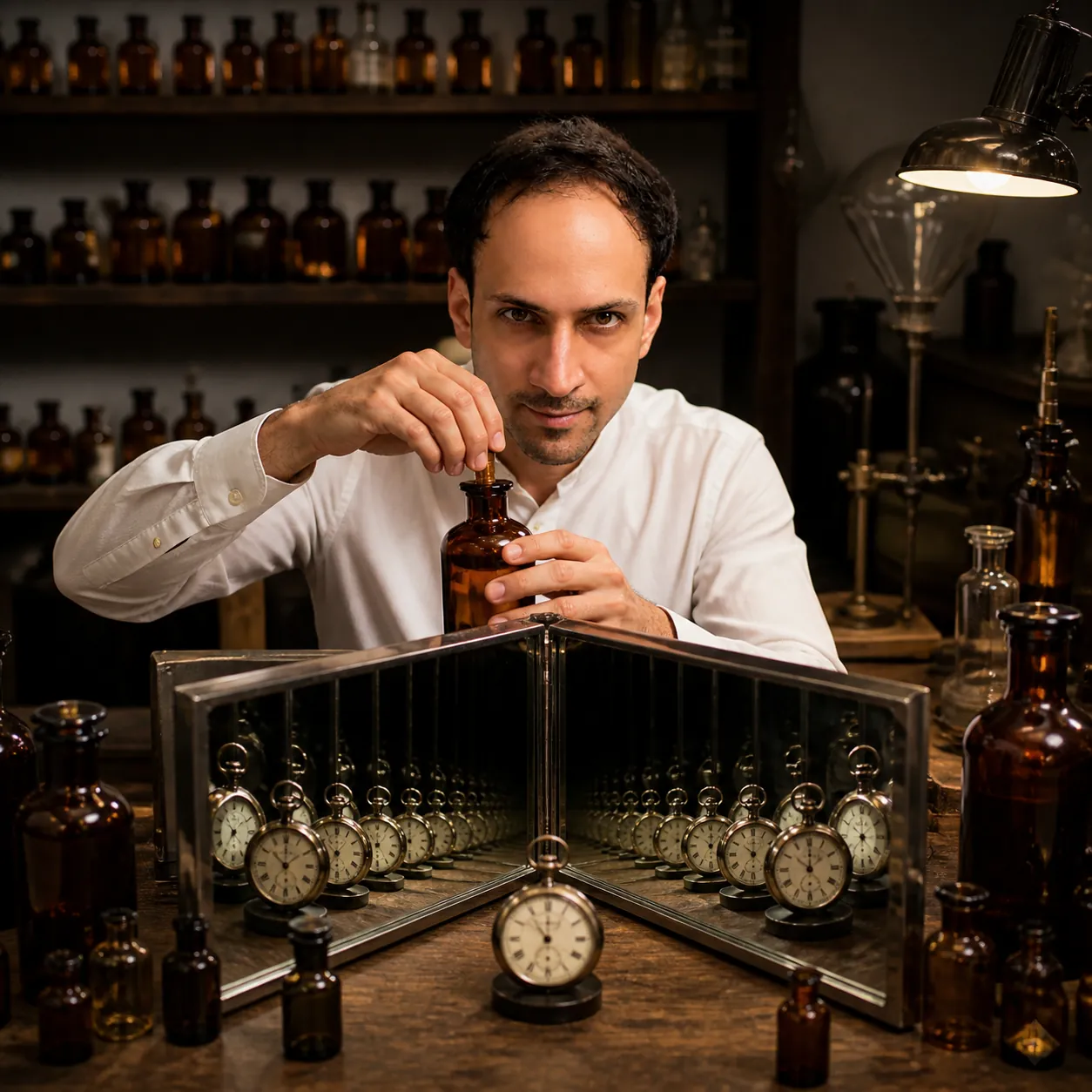
Depth on Loan: Perfumer's Compounding Room — AI Portrait Prompt
صورةAI Portraits

Turn your own photo into a conceptual instrument portrait in a perfumer's compounding room with amber bottles ranked by size. Keeps your face unchanged.

من نص البرومبت

Use the attached reference photo as the identity reference: keep the same face, skin tone, hair and features as the person in that photo, without beautifying, aging or altering them. Create a square 1:1 museum-catalog frame with a strong first read and a slower second read at exactly 2880x2880 pixels. Location: a perfumer's compounding room with amber bottles ranked by size. Show them in a collarless white shirt with both sleeves buttoned at the wrist, seating a ground-glass stopper home with one gentle twist. Make one rigorous physical condition the conceptual engine: a hinged pair of upright mirrors that arranges one pocket watch into a ring of copies counted by the opening angle turns one modest original into abundant company the eye can truly count. Explore why the eye keeps re-testing a spectacle it has already verified as lawful; direct expression and posture toward earned composure, never melodrama or ad-like confidence. Use an eye-level 55mm medium-format viewpoint with natural perspective and quiet, honest depth of field. Make the composition let the recession deepen away from them, never toward their face. Render it as conceptual instrument photography built from lawful recursion, accurate glass color and absorption, precise machined mounts, and quiet observational framing, using controlled darkness with a single shielded lamp placed to miss every mirror and a palette of graphite, chalk white, and one seam of oxide red. Photorealistic: this must read as a real photograph from a physical camera, never an illustration, painting, or 3D render. Resolve real surface detail: fine lint on dark fabric, water spotting on steel, and the soft rounding of edges that have been used for years. Keep one identity-locked person, credible hands and fingers, natural fabric, and coherent scale, contact, reflections, shadows, airflow, deformation, and materials. Background people only when essential, always secondary and clearly different. Avoid duplicated faces, funhouse warps, endless-clone selfies, glowing portal tunnels, and CGI mirror shards. No text, labels, logos, signatures, watermarks, random symbols, plastic skin, excessive bloom, or glossy AI finish.
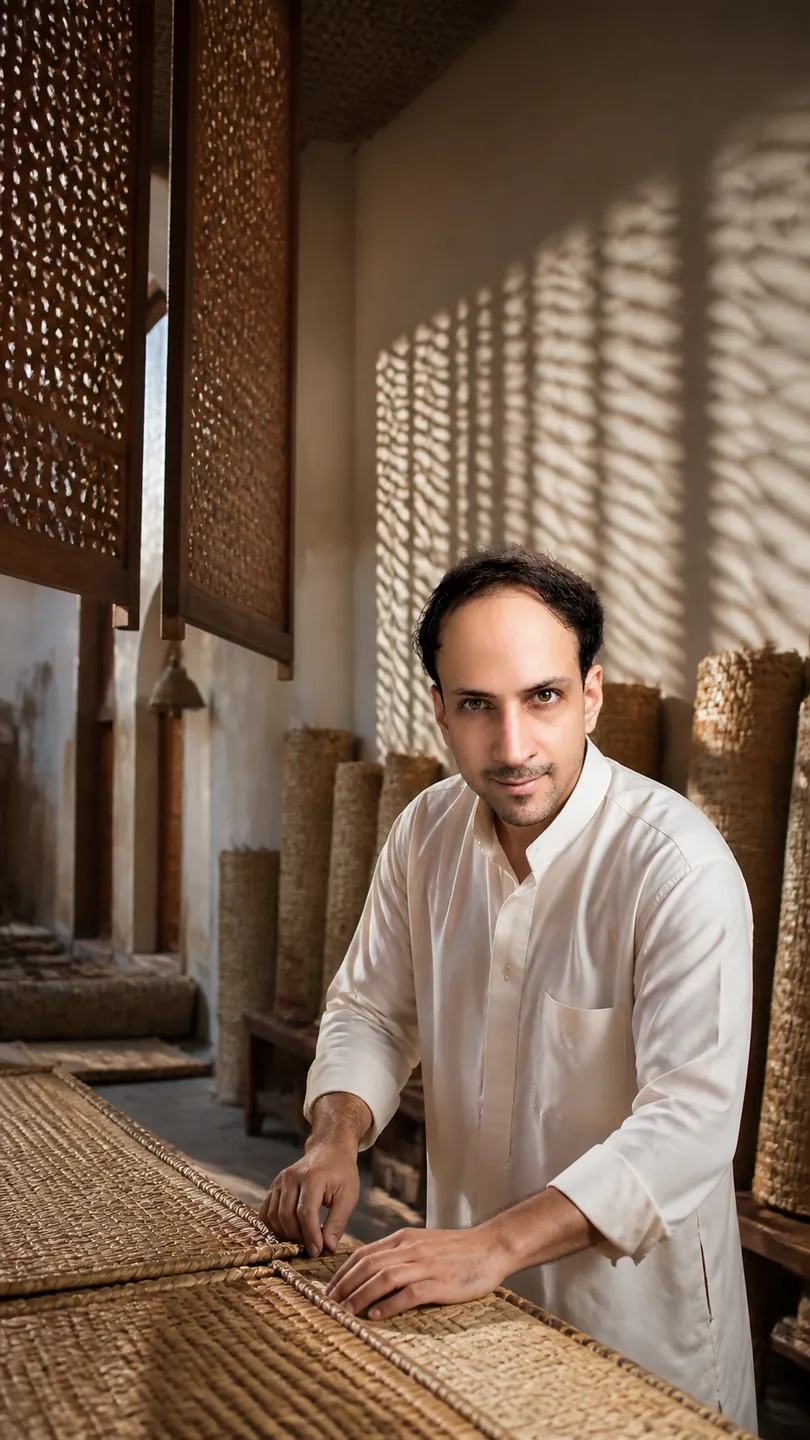
Standing Motion: Craft Cooperative Hall — AI Portrait Prompt
صورةAI Portraits

Turn your own photo into a portrait in a craft cooperative hall stacked with woven palm-frond mats. Keeps your face unchanged.

من نص البرومبت

Use the attached reference photo as the identity reference: keep the same face, skin tone, hair and features as the person in that photo, without beautifying, aging or altering them. Treat that reference as the character anchor and change only the scene. Design a full-height 9:16 cinematic artwork that reads on a phone and rewards gallery-scale inspection at exactly 2144x3808 pixels. Location: a craft cooperative hall stacked with woven palm-frond mats. Show them in an ivory cotton traditional Gulf outfit with both sleeves turned back once, matching two mat edges until their weaves sit square. Make one rigorous physical condition the conceptual engine: a pair of carved mashrabiya screens hung a hand span apart, whose overlapped shadows gather into broad bands drifting with the sun makes two fixed patterns appear to breathe against each other slowly. Explore why two still patterns can conjure a third that plainly moves; direct expression and posture toward grounded awe, never melodrama or ad-like confidence. Use a restrained 35mm view with verticals kept true, the person at one-third and the patterned field beyond. Make the composition give the emergent pattern more visual weight than either honest layer. Render it as museum-grade optical demonstration realism combining true moiré geometry, tactile weave detail, faithful shadow behavior, and calm editorial framing, using cool ambient daylight lifted by one warm bounce off nearby wood and a palette of warm cedar, deep shadow, and one seam of saffron. Photorealistic: this must read as a real photograph from a physical camera, never an illustration, painting, or 3D render. Give the space honest scale: real distance between foreground, subject, and far wall. Resolve real surface detail: glass with real thickness at its edge, reflections that carry the room's actual colour, and dust visible only at grazing angles. Keep one identity-locked person, credible hands and fingers, natural fabric, and coherent scale, contact, reflections, shadows, airflow, deformation, and materials. Background people only when essential, always secondary and clearly different. Avoid op-art poster graphics, hypnotic spiral overlays, digital glitch scanlines, television static, and patterns projected across their face. No text, labels, logos, signatures, watermarks, random symbols, plastic skin, excessive bloom, or glossy AI finish.
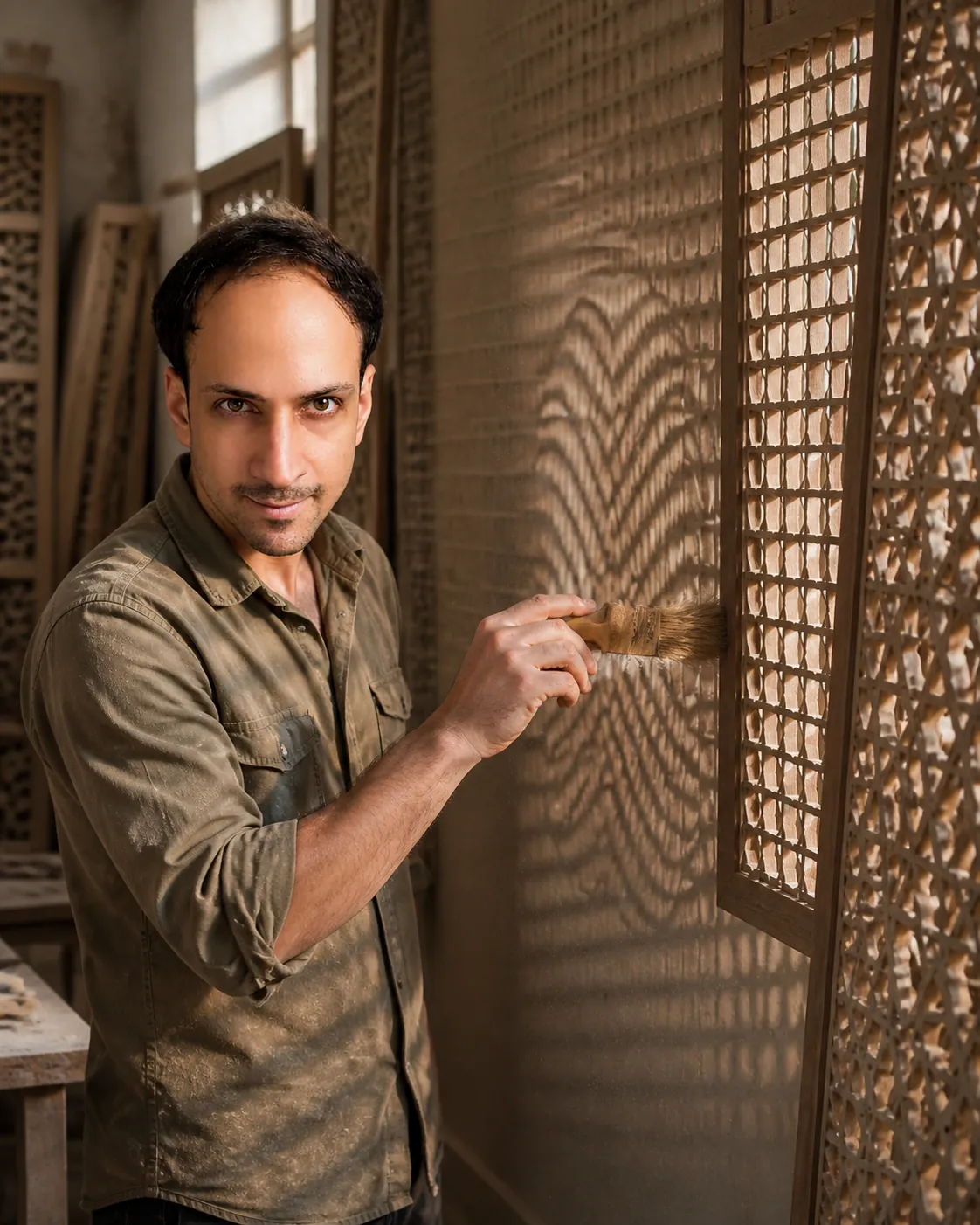
Standing Motion: Lattice Joinery Shop — AI Portrait Prompt
صورةAI Portraits

Turn your own photo into a portrait in a lattice joinery shop where carved cedar panels lean in ordered rows. Keeps your face unchanged.

من نص البرومبت

Use the attached reference photo as the identity reference: keep the same face, skin tone, hair and features as the person in that photo, without beautifying, aging or altering them. Treat that reference as the character anchor and change only the scene. Build a portrait 4:5 editorial artwork with protected negative space and a fully readable face at exactly 2560x3200 pixels. Location: a lattice joinery shop where carved cedar panels lean in ordered rows. Show them in a dust-flecked khaki work shirt with sleeves rolled twice, brushing sawdust from one carved opening with a soft brush. The impossible-looking event must obey this clear system: a pair of carved mashrabiya screens hung a hand span apart, whose overlapped shadows gather into broad bands drifting with the sun magnifies a difference too small to see into bands the eye cannot miss. Explore why two still patterns can conjure a third that plainly moves; direct expression and posture toward patient scrutiny, never melodrama or ad-like confidence. Use a restrained 35mm view with verticals kept true, the person at one-third and the patterned field beyond. Make the composition give the emergent pattern more visual weight than either honest layer. Render it as museum-grade optical demonstration realism combining true moiré geometry, tactile weave detail, faithful shadow behavior, and calm editorial framing, using one broad diffused window source held oblique so fine patterns stay resolvable and a palette of pale plaster, carbon grey, and a muted date-brown. Photorealistic: this must read as a real photograph from a physical camera, never an illustration, painting, or 3D render. Resolve real surface detail: dust settled where nobody wipes, fingerprint haze on glass, and edges rubbed pale by handling. Keep one identity-locked person, credible hands and fingers, natural fabric, and coherent scale, contact, reflections, shadows, airflow, deformation, and materials. Background people only when essential, always secondary and clearly different. Avoid kaleidoscope symmetry, fake motion blur, rainbow chromatic fringing, and funhouse distortion of their features. No text, labels, logos, signatures, watermarks, random symbols, plastic skin, excessive bloom, or glossy AI finish.
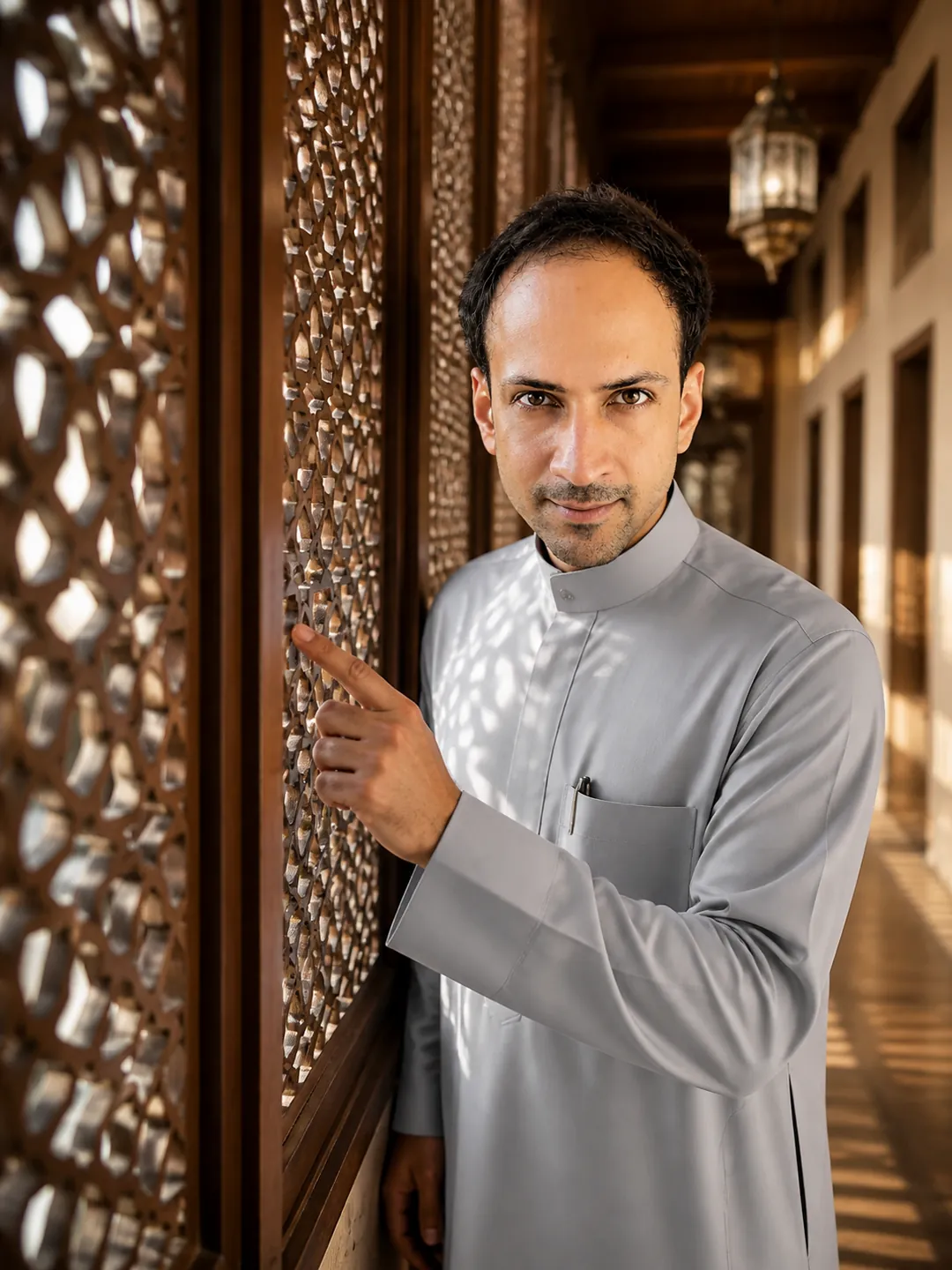
Standing Motion: Restored Heritage House Hallway — AI Portrait Prompt
صورةAI Portraits

Turn your own photo into a portrait in a restored heritage house hallway with latticed windows along one side. Keeps your face unchanged.

من نص البرومبت

Use the attached reference photo as the identity reference: keep the same face, skin tone, hair and features as the person in that photo, without beautifying, aging or altering them. Treat that reference as the character anchor and change only the scene. Use a formal 3:4 environmental portrait with complete hands and meaningful objects inside frame at exactly 2480x3312 pixels. Location: a restored heritage house hallway with latticed windows along one side. Show them in a plain pale-grey traditional Gulf outfit with one pen in the chest pocket, tracing one lattice opening lightly with an index finger. Treat this mechanism as the frame’s governing rule: a pair of carved mashrabiya screens hung a hand span apart, whose overlapped shadows gather into broad bands drifting with the sun puts undeniable motion into a frame where every part stands still. Explore why two still patterns can conjure a third that plainly moves; direct expression and posture toward steadied wonder, never melodrama or ad-like confidence. Frame straight through the nearer pattern layer, its structure crisp while their eyes hold the true focus. Make the composition place their eyes in the one calm zone the fringes spare. Render it as gallery-standard pattern photography built on lawfully emergent fringes, honest textile texture, deep controlled focus, and unhurried human presence, using a single hard lamp placed to cast one clean, honest shadow and a palette of bone linen, graphite line-work, and a low brass accent. Photorealistic: this must read as a real photograph from a physical camera, never an illustration, painting, or 3D render. Resolve real surface detail: wood grain read at honest scale, matte and gloss clearly separated, and no surface uniformly clean. Keep one identity-locked person, credible hands and fingers, natural fabric, and coherent scale, contact, reflections, shadows, airflow, deformation, and materials. Background people only when essential, always secondary and clearly different. Avoid op-art poster graphics, hypnotic spiral overlays, digital glitch scanlines, television static, and patterns projected across their face. No text, labels, logos, signatures, watermarks, random symbols, plastic skin, excessive bloom, or glossy AI finish.
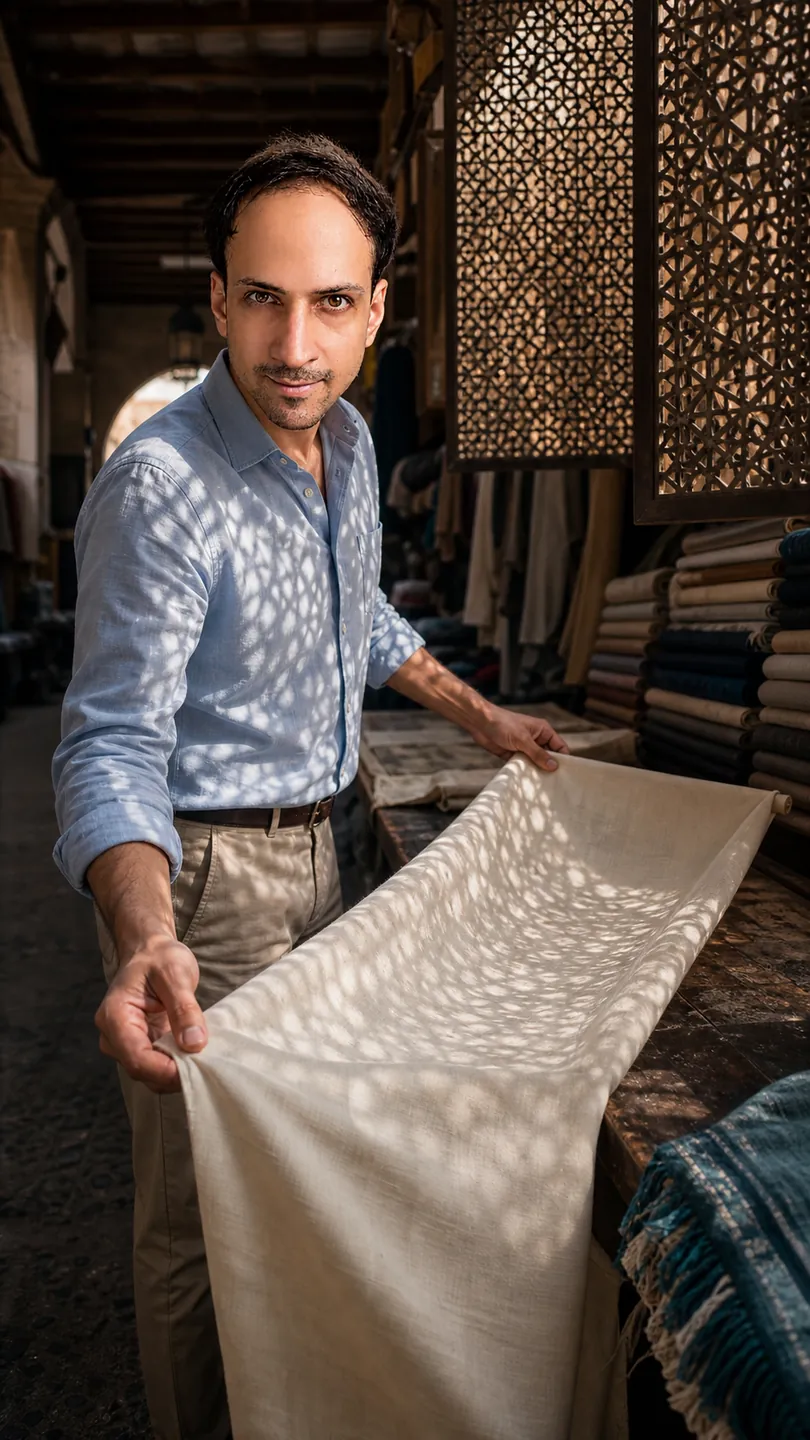
Standing Motion: Covered Textile Souq Aisle — AI Portrait Prompt
صورةAI Portraits

Turn your own photo into a quietly rigorous studio portrait in a covered textile souq aisle before opening, bolts shelved high. Keeps your face unchanged.

من نص البرومبت

Use the attached reference photo as the identity reference: keep the same face, skin tone, hair and features as the person in that photo, without beautifying, aging or altering them. Treat that reference as the character anchor and change only the scene. Design a full-height 9:16 cinematic artwork that reads on a phone and rewards gallery-scale inspection at exactly 2144x3808 pixels. Location: a covered textile souq aisle before opening, bolts shelved high. Show them in a light-blue casual shirt tucked into pressed sand chinos, unrolling a forearm's length of cloth across the counter. Build the artwork around this material rule: a pair of carved mashrabiya screens hung a hand span apart, whose overlapped shadows gather into broad bands drifting with the sun acts as a lever built from nothing but geometry and spacing. Explore why two still patterns can conjure a third that plainly moves; direct expression and posture toward sober delight, never melodrama or ad-like confidence. Frame from low tripod height so the layered patterns rise behind their shoulders without crowding the face. Make the composition crop one giant fringe mid-sweep so its scale stays unproven. Render it as quietly rigorous studio realism uniting layered handcrafted screens, physically exact interference behavior, restrained heritage styling, and dignified observational portraiture, using even mid-morning shade with just enough directionality to model their face and a palette of soft sand, ink-lined shadow, and one quiet teal thread. Photorealistic: this must read as a real photograph from a physical camera, never an illustration, painting, or 3D render. Give the air depth: falloff with distance and no artificial clarity far back. Resolve real surface detail: thread ends and slight pilling on worn cloth, hairline chips at every hard corner, and stone that is porous rather than smooth. Keep one identity-locked person, credible hands and fingers, natural fabric, and coherent scale, contact, reflections, shadows, airflow, deformation, and materials. Background people only when essential, always secondary and clearly different. Avoid kaleidoscope symmetry, fake motion blur, rainbow chromatic fringing, and funhouse distortion of their features. No text, labels, logos, signatures, watermarks, random symbols, plastic skin, excessive bloom, or glossy AI finish.
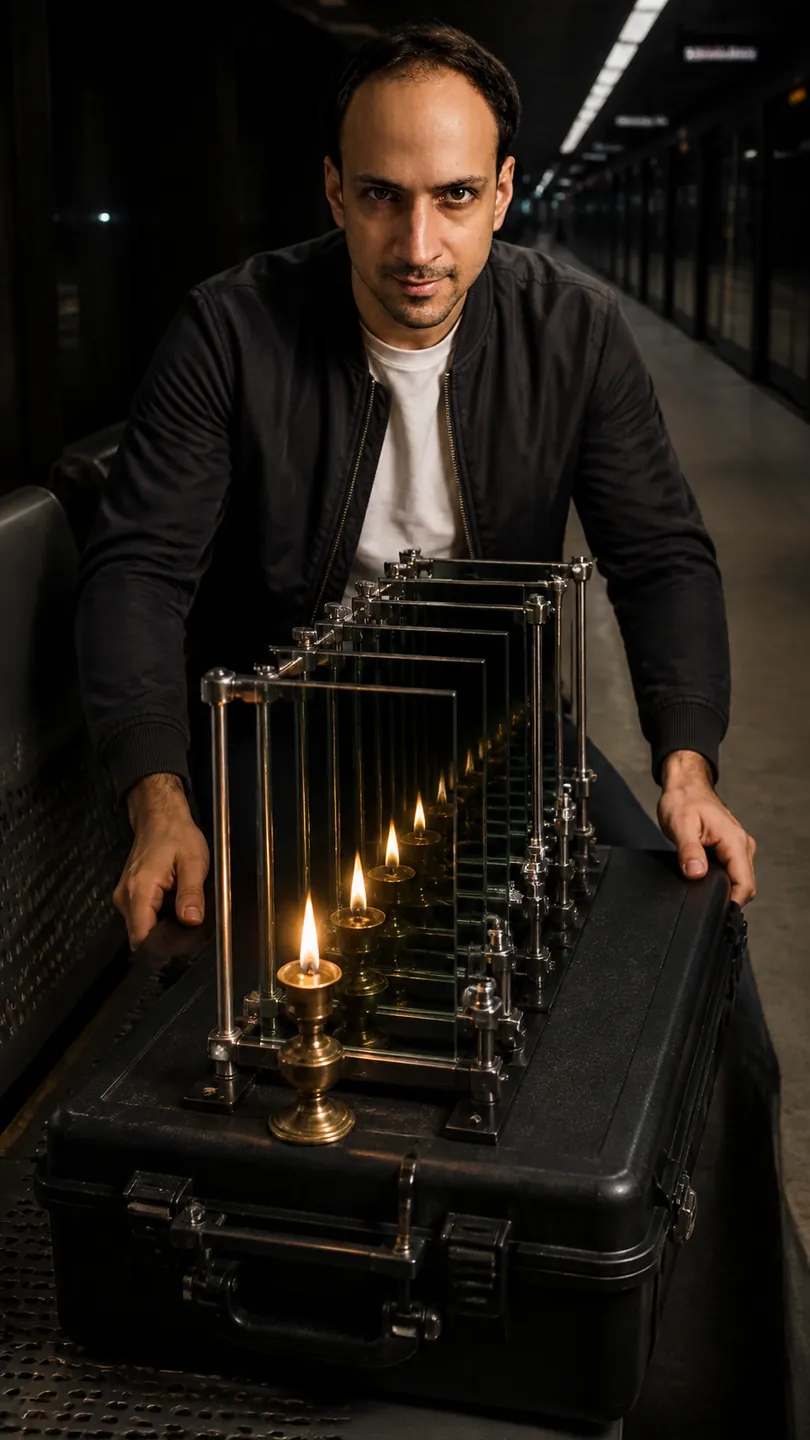
Exactly Once: Riyadh Metro Platform — AI Portrait Prompt
صورةAI Portraits

Turn your own photo into a portrait in a Riyadh metro platform after the last train, lighting dimmed to standby. Keeps your face unchanged.

من نص البرومبت

Use the attached reference photo as the identity reference: keep the same face, skin tone, hair and features as the person in that photo, without beautifying, aging or altering them. Treat that reference as the character anchor and change only the scene. Design a full-height 9:16 cinematic artwork that reads on a phone and rewards gallery-scale inspection at exactly 2144x3808 pixels. Location: a Riyadh metro platform after the last train, lighting dimmed to standby. Show them in a graphite bomber jacket zipped over a plain white crew-neck, laying a hard equipment case flat on the platform bench. Treat this mechanism as the frame’s governing rule: a pair of facing mirrors set one degree out of parallel, bending a lone brass oil lamp's reflected corridor into darkness shows geometry alone deciding where every copy stands and how many exist. Explore what each new copy must surrender in brightness to be admitted; direct expression and posture toward attentive reserve, never melodrama or ad-like confidence. Use a 90mm macro-to-portrait hybrid: one repeated object near the lens, their face beyond it and outside every reflection. Make the composition weight the single real object more heavily than all its copies. Render it as conceptual instrument photography built from lawful recursion, accurate glass color and absorption, precise machined mounts, and quiet observational framing, using a narrow hard key raked across the apparatus with soft ambient spill and a palette of deep black, aged silver, and one candleflame amber. Photorealistic: this must read as a real photograph from a physical camera, never an illustration, painting, or 3D render. Give the frame volume: faint density deepest in the room, contrast easing at the edges. Resolve real surface detail: dust settled where nobody wipes, fingerprint haze on glass, and edges rubbed pale by handling. Keep one identity-locked person, credible hands and fingers, natural fabric, and coherent scale, contact, reflections, shadows, airflow, deformation, and materials. Background people only when essential, always secondary and clearly different. Avoid neon infinity-room installations, floating disembodied reflections, cracked-mirror symbolism, and impossible seamless recursion without dimming. No text, labels, logos, signatures, watermarks, random symbols, plastic skin, excessive bloom, or glossy AI finish.
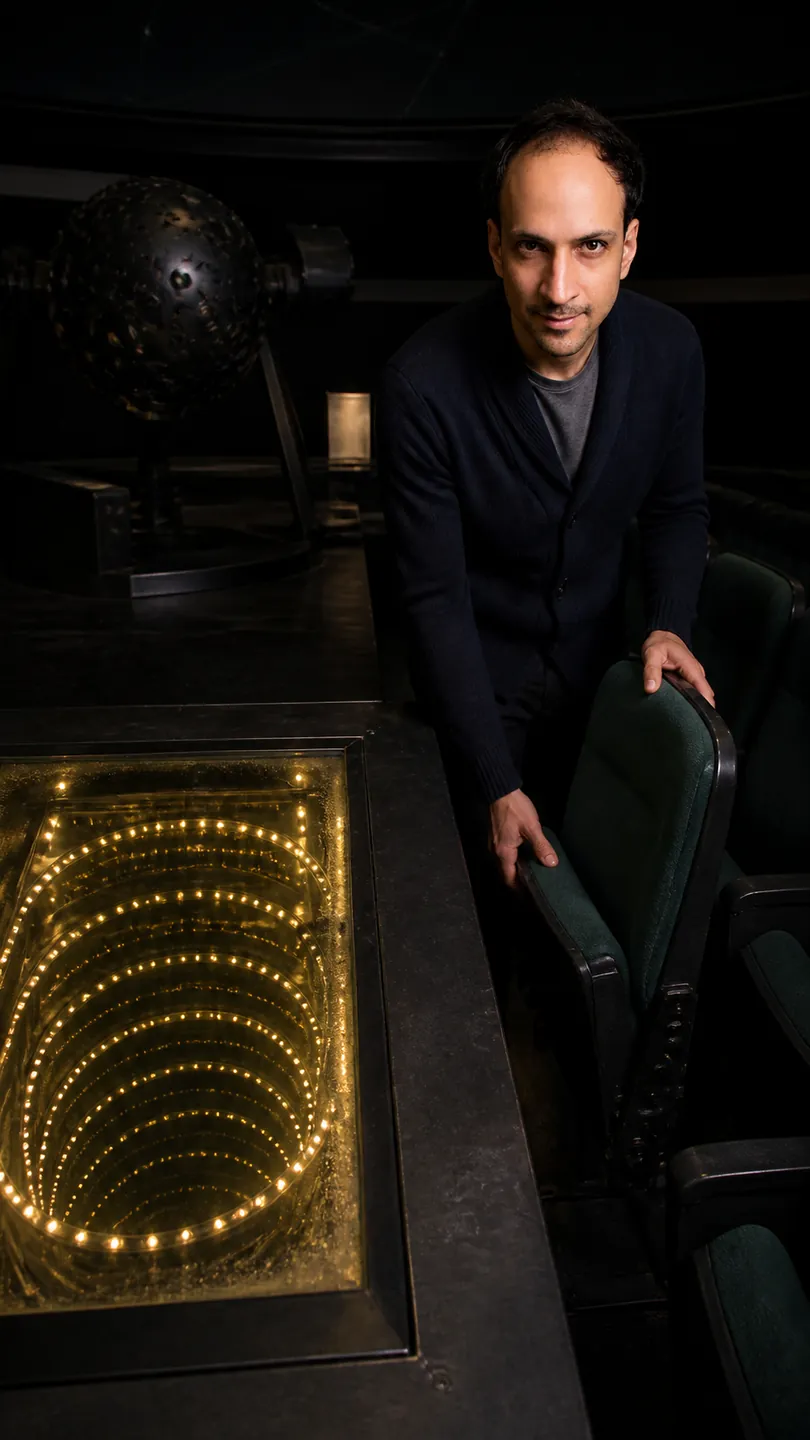
The Uninvited Third: Shaded Metal Supply Yard — AI Portrait Prompt
صورةAI Portraits

Turn your own photo into a portrait in a shaded metal supply yard with perforated sheets racked on edge. Keeps your face unchanged.

من نص البرومبت

Use the attached reference photo as the identity reference: keep the same face, skin tone, hair and features as the person in that photo, without beautifying, aging or altering them. Treat that reference as the character anchor and change only the scene. Design a full-height 9:16 cinematic artwork that reads on a phone and rewards gallery-scale inspection at exactly 2144x3808 pixels. Location: a shaded metal supply yard with perforated sheets racked on edge. Show them in a tan canvas work jacket over a dark crew-neck, tilting one thin sheet upright against the rack rail. Treat this mechanism as the frame’s governing rule: a printed line sheet laid over its identical twin on glass, where a fingertip of offset becomes one fringe sweeping the pane makes two fixed patterns appear to breathe against each other slowly. Explore how a disagreement smaller than a thread becomes the loudest thing visible; direct expression and posture toward measured astonishment, never melodrama or ad-like confidence. Use a 50mm standpoint set exactly where the bands read strongest, with their face just off that axis. Make the composition keep both source patterns readable at the edges as quiet evidence. Render it as museum-grade optical demonstration realism combining true moiré geometry, tactile weave detail, faithful shadow behavior, and calm editorial framing, using one broad diffused window source held oblique so fine patterns stay resolvable and a palette of pale plaster, carbon grey, and a muted date-brown. Photorealistic: this must read as a real photograph from a physical camera, never an illustration, painting, or 3D render. Give the frame volume: faint density deepest in the room, contrast easing at the edges. Resolve real surface detail: label-free packaging showing carton fibre, cardboard bruised at the corners, and tape lifting slightly at one end. Keep one identity-locked person, credible hands and fingers, natural fabric, and coherent scale, contact, reflections, shadows, airflow, deformation, and materials. Background people only when essential, always secondary and clearly different. Avoid op-art poster graphics, hypnotic spiral overlays, digital glitch scanlines, television static, and patterns projected across their face. No text, labels, logos, signatures, watermarks, random symbols, plastic skin, excessive bloom, or glossy AI finish.
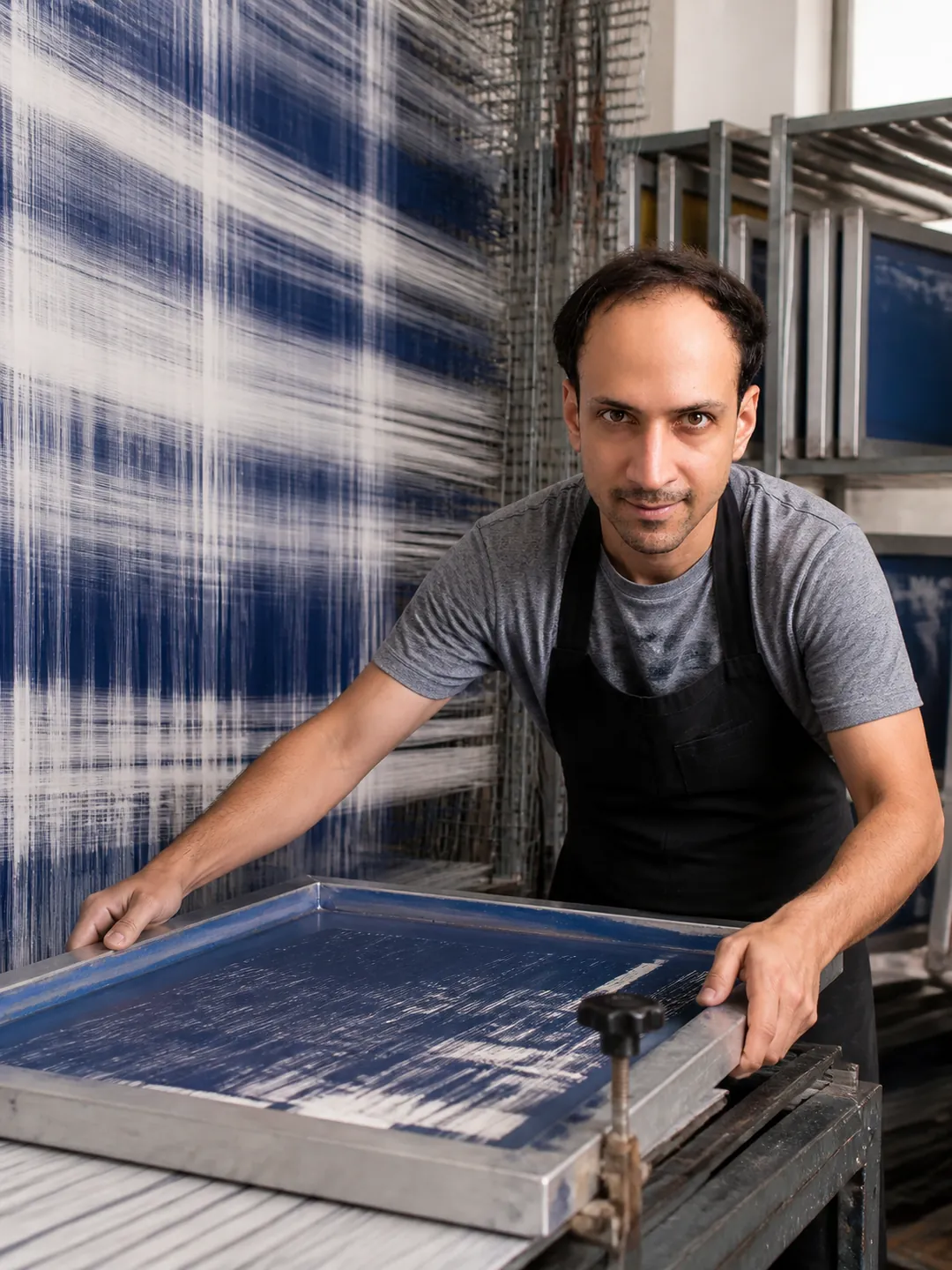
Bounded Forever: Small Planetarium — AI Portrait Prompt
صورةAI Portraits

Turn your own photo into a conceptual instrument portrait in a small planetarium under low house lights, its star projector parked. Keeps your face unchanged.

من نص البرومبت

Use the attached reference photo as the identity reference: keep the same face, skin tone, hair and features as the person in that photo, without beautifying, aging or altering them. Design a full-height 9:16 cinematic artwork that reads on a phone and rewards gallery-scale inspection at exactly 2144x3808 pixels. Location: a small planetarium under low house lights, its star projector parked. Show the subject in a midnight-blue shawl-collar cardigan over a heather-grey tee, folding one theater seat down with a quiet hand. Make one rigorous physical condition the conceptual engine: a shallow box under a half-silvered pane whose ring of small warm lamps repeats downward into an apparently plunging shaft shows geometry alone deciding where every copy stands and how many exist. Explore how strict finite means keep producing more view than they physically hold; direct expression and posture toward unhurried certainty, never melodrama or ad-like confidence. Use a measured 32mm wide view with them at one-third and the apparatus honest, unstretched, and fully in frame. Make the composition keep them fully outside every reflective sightline, present exactly once. Render it as conceptual instrument photography built from lawful recursion, accurate glass color and absorption, precise machined mounts, and quiet observational framing, using one small warm practical as key with deep protected shadow around it and a palette of soot black, unpolished pewter, and one deep bottle green. Photorealistic: this must read as a real photograph from a physical camera, never an illustration, painting, or 3D render. Give the space honest scale: real distance between foreground, subject, and far wall. Resolve real surface detail: condensation beading at true size, liquid meniscus curving against glass, and wet surfaces darker than dry ones. Keep one identity-locked person, credible hands and fingers, natural fabric, and coherent scale, contact, reflections, shadows, airflow, deformation, and materials. Background people only when essential, always secondary and clearly different. Avoid neon infinity-room installations, floating disembodied reflections, cracked-mirror symbolism, and impossible seamless recursion without dimming. No text, labels, logos, signatures, watermarks, random symbols, plastic skin, excessive bloom, or glossy AI finish.
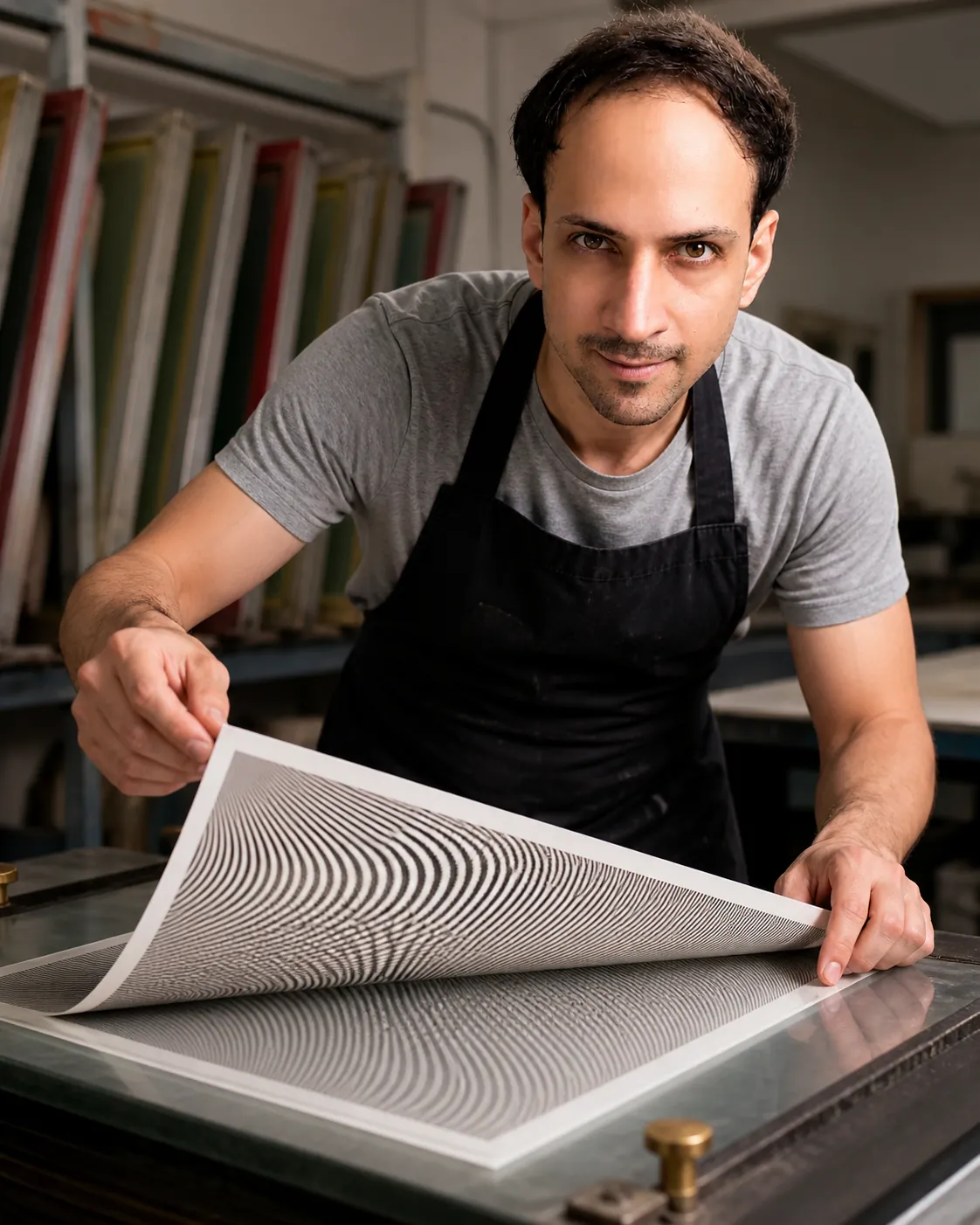
Woven Interference: Screen-Printing Workshop — AI Portrait Prompt
صورةAI Portraits

Turn your own photo into a portrait in a screen-printing workshop with taut mesh frames racked along one wall. Keeps your face unchanged.

من نص البرومبت

Use the attached reference photo as the identity reference: keep the same face, skin tone, hair and features as the person in that photo, without beautifying, aging or altering them. Treat that reference as the character anchor and change only the scene. Use a formal 3:4 environmental portrait with complete hands and meaningful objects inside frame at exactly 2480x3312 pixels. Location: a screen-printing workshop with taut mesh frames racked along one wall. Show them in a black canvas shop apron over a heather-grey tee, lowering one mesh frame flat onto the vacuum table. The impossible-looking event must obey this clear system: a corridor of two woven wire fences one stride apart, through which giant slow bands roll at any shift of viewpoint puts undeniable motion into a frame where every part stands still. Explore whether motion the eye reports but the world denies still counts as real; direct expression and posture toward held fascination, never melodrama or ad-like confidence. Frame from low tripod height so the layered patterns rise behind their shoulders without crowding the face. Make the composition crop one giant fringe mid-sweep so its scale stays unproven. Render it as gallery-standard pattern photography built on lawfully emergent fringes, honest textile texture, deep controlled focus, and unhurried human presence, using one broad diffused window source held oblique so fine patterns stay resolvable and a palette of washed white, cool steel mesh, and one indigo band. Photorealistic: this must read as a real photograph from a physical camera, never an illustration, painting, or 3D render. Resolve real surface detail: true skin texture with pores and fine hair at the hairline, and fabric that creases where it is actually stressed. Keep one identity-locked person, credible hands and fingers, natural fabric, and coherent scale, contact, reflections, shadows, airflow, deformation, and materials. Background people only when essential, always secondary and clearly different. Avoid op-art poster graphics, hypnotic spiral overlays, digital glitch scanlines, television static, and patterns projected across their face. No text, labels, logos, signatures, watermarks, random symbols, plastic skin, excessive bloom, or glossy AI finish.
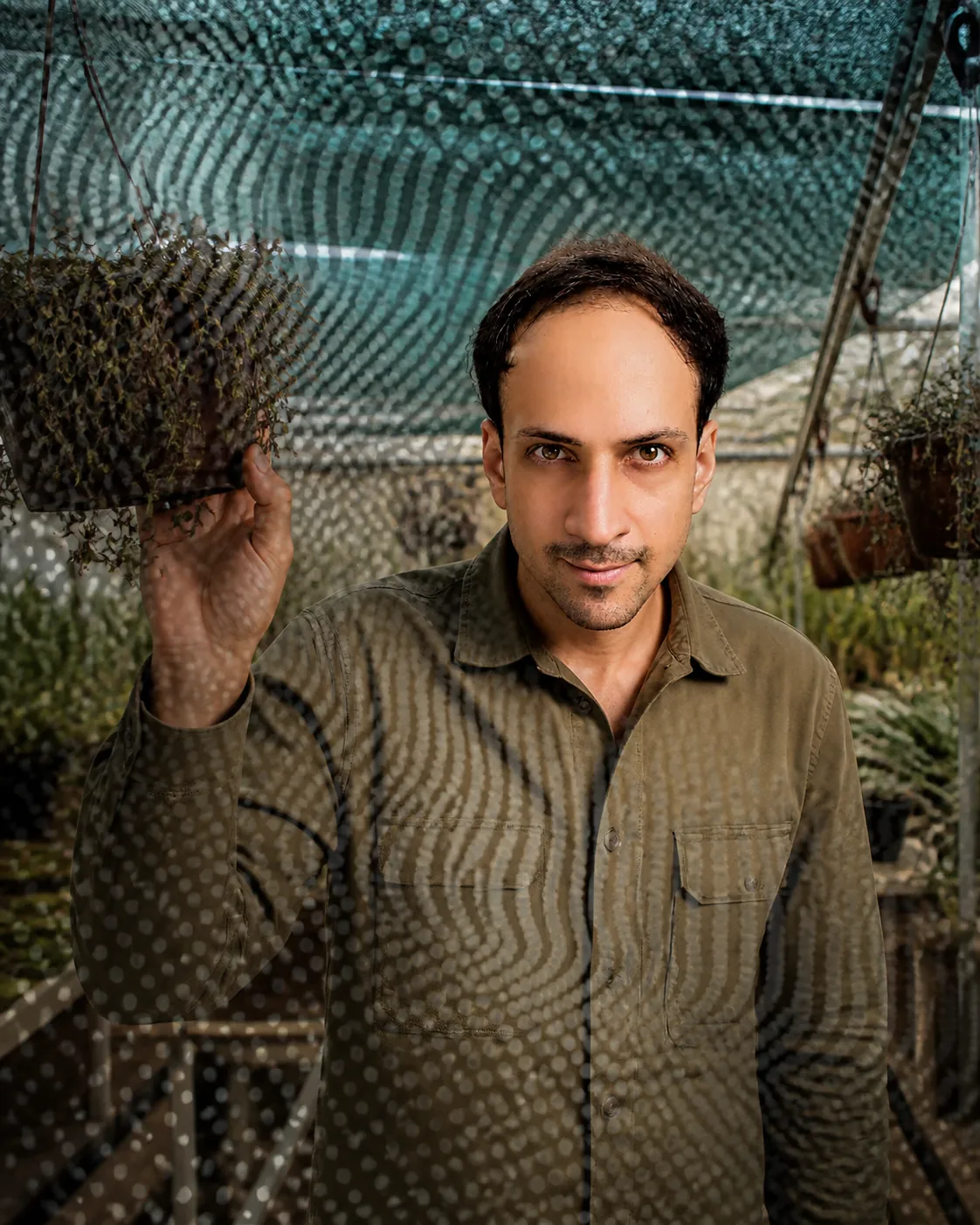
The Uninvited Third: Screen-Printing Workshop — AI Portrait Prompt
صورةAI Portraits

Turn your own photo into a portrait in a screen-printing workshop with taut mesh frames racked along one wall. Keeps your face unchanged.

من نص البرومبت

Use the attached reference photo as the identity reference: keep the same face, skin tone, hair and features as the person in that photo, without beautifying, aging or altering them. Treat that reference as the character anchor and change only the scene. Build a portrait 4:5 editorial artwork with protected negative space and a fully readable face at exactly 2560x3200 pixels. Location: a screen-printing workshop with taut mesh frames racked along one wall. Show them in a black canvas shop apron over a heather-grey tee, lowering one mesh frame flat onto the vacuum table. Build the artwork around this material rule: a printed line sheet laid over its identical twin on glass, where a fingertip of offset becomes one fringe sweeping the pane magnifies a difference too small to see into bands the eye cannot miss. Explore how a disagreement smaller than a thread becomes the loudest thing visible; direct expression and posture toward sober delight, never melodrama or ad-like confidence. Use a 50mm standpoint set exactly where the bands read strongest, with their face just off that axis. Make the composition keep both source patterns readable at the edges as quiet evidence. Render it as museum-grade optical demonstration realism combining true moiré geometry, tactile weave detail, faithful shadow behavior, and calm editorial framing, using even mid-morning shade with just enough directionality to model their face and a palette of bone linen, graphite line-work, and a low brass accent. Photorealistic: this must read as a real photograph from a physical camera, never an illustration, painting, or 3D render. Resolve real surface detail: cotton that hangs by its own weight, seams that pucker very slightly, and collars softened by washing. Keep one identity-locked person, credible hands and fingers, natural fabric, and coherent scale, contact, reflections, shadows, airflow, deformation, and materials. Background people only when essential, always secondary and clearly different. Avoid kaleidoscope symmetry, fake motion blur, rainbow chromatic fringing, and funhouse distortion of their features. No text, labels, logos, signatures, watermarks, random symbols, plastic skin, excessive bloom, or glossy AI finish.
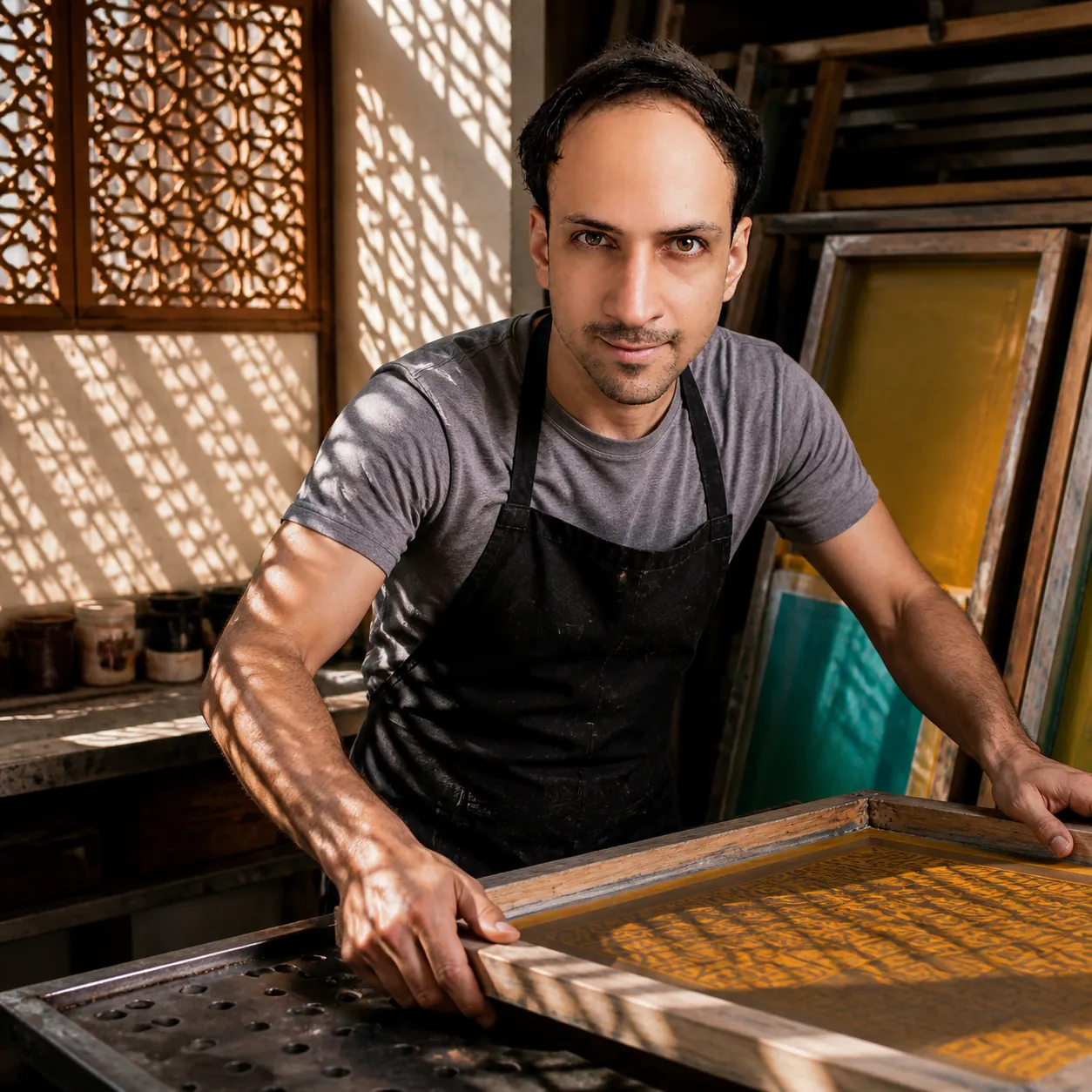
The Uninvited Third: Plant Nursery Aisle — AI Portrait Prompt
صورةAI Portraits

Turn your own photo into a quietly rigorous studio portrait in a plant nursery aisle under doubled green shade netting at midmorning. Keeps your face unchanged.

من نص البرومبت

Use the attached reference photo as the identity reference: keep the same face, skin tone, hair and features as the person in that photo, without beautifying, aging or altering them. Treat that reference as the character anchor and change only the scene. Build a portrait 4:5 editorial artwork with protected negative space and a fully readable face at exactly 2560x3200 pixels. Location: a plant nursery aisle under doubled green shade netting at midmorning. Show them in an olive utility overshirt with both cuffs buttoned closed, stilling a hanging pot's slow spin with one raised palm. Make one rigorous physical condition the conceptual engine: a printed line sheet laid over its identical twin on glass, where a fingertip of offset becomes one fringe sweeping the pane lets plain matter interfere the way waves on water do. Explore how a disagreement smaller than a thread becomes the loudest thing visible; direct expression and posture toward grounded awe, never melodrama or ad-like confidence. Frame straight through the nearer pattern layer, its structure crisp while their eyes hold the true focus. Make the composition place their eyes in the one calm zone the fringes spare. Render it as quietly rigorous studio realism uniting layered handcrafted screens, physically exact interference behavior, restrained heritage styling, and dignified observational portraiture, using cool ambient daylight lifted by one warm bounce off nearby wood and a palette of washed white, cool steel mesh, and one indigo band. Photorealistic: this must read as a real photograph from a physical camera, never an illustration, painting, or 3D render. Resolve real surface detail: fine grit in the texture of concrete, efflorescence at damp edges, and hairline cracks that follow stress. Keep one identity-locked person, credible hands and fingers, natural fabric, and coherent scale, contact, reflections, shadows, airflow, deformation, and materials. Background people only when essential, always secondary and clearly different. Avoid op-art poster graphics, hypnotic spiral overlays, digital glitch scanlines, television static, and patterns projected across their face. No text, labels, logos, signatures, watermarks, random symbols, plastic skin, excessive bloom, or glossy AI finish.
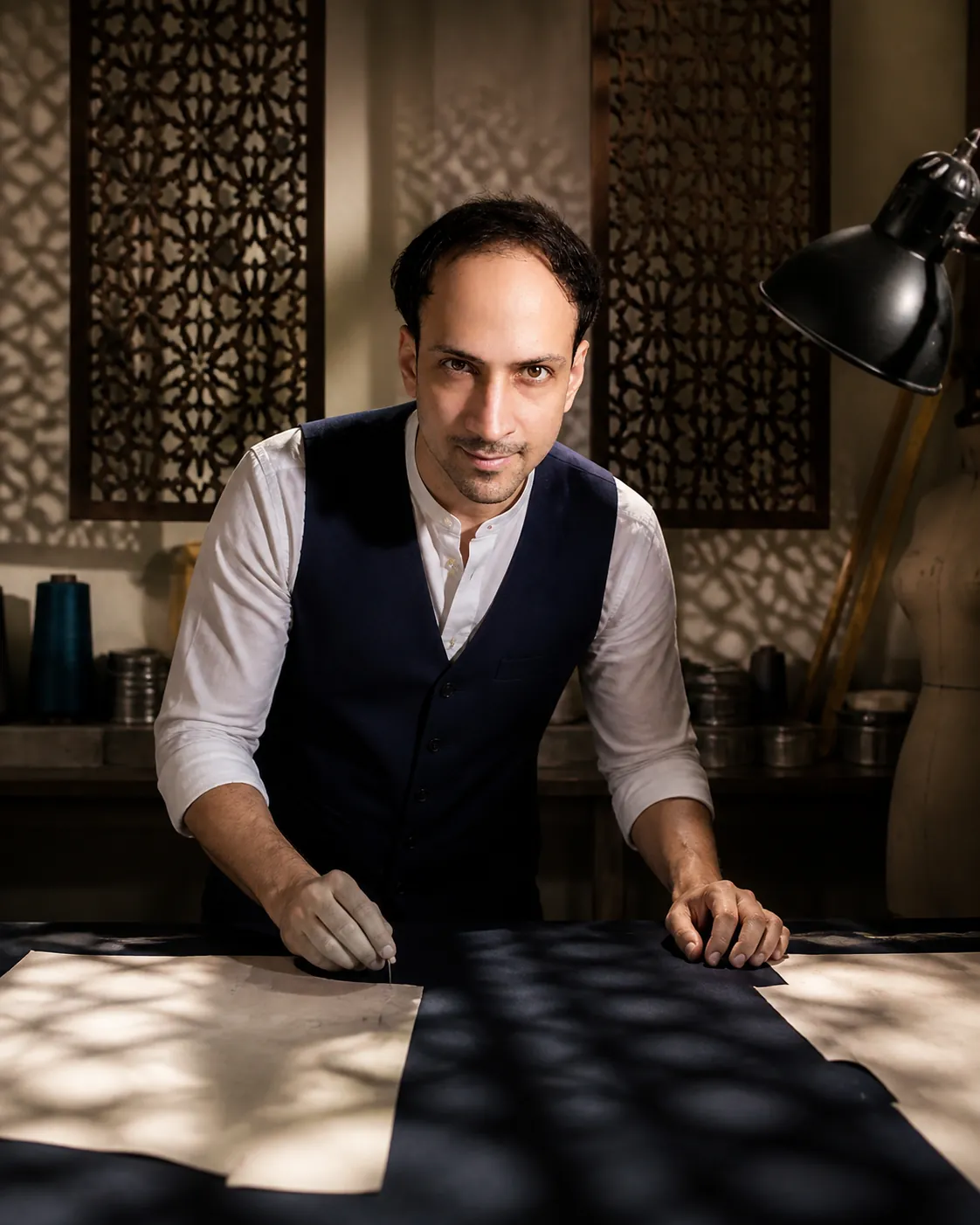
Standing Motion: Screen-Printing Workshop — AI Portrait Prompt
صورةAI Portraits

Turn your own photo into a portrait in a screen-printing workshop with taut mesh frames racked along one wall. Keeps your face unchanged.

من نص البرومبت

Use the attached reference photo as the identity reference: keep the same face, skin tone, hair and features as the person in that photo, without beautifying, aging or altering them. Treat that reference as the character anchor and change only the scene. Create a square 1:1 museum-catalog frame with a strong first read and a slower second read at exactly 2880x2880 pixels. Location: a screen-printing workshop with taut mesh frames racked along one wall. Show the subject in a black canvas shop apron over a heather-grey tee, lowering one mesh frame flat onto the vacuum table. Make one rigorous physical condition the conceptual engine: a pair of carved mashrabiya screens hung a hand span apart, whose overlapped shadows gather into broad bands drifting with the sun summons a third pattern that belongs to neither layer alone. Explore why two still patterns can conjure a third that plainly moves; direct expression and posture toward measured astonishment, never melodrama or ad-like confidence. Use an eye-level 85mm portrait view stopped down so both pattern layers stay equally sharp. Make the composition run the interference bands diagonally while every real edge stays level. Render it as high-concept interference portraiture built from genuinely overlapping physical patterns, large-format documentary clarity, hand-made material honesty, and patient architectural observation, using low raking sun that lets every layered shadow keep its true edge and a palette of warm cedar, deep shadow, and one seam of saffron. Photorealistic: this must read as a real photograph from a physical camera, never an illustration, painting, or 3D render. Resolve real surface detail: true skin texture with pores and fine hair at the hairline, and fabric that creases where it is actually stressed. Keep one identity-locked person, credible hands and fingers, natural fabric, and coherent scale, contact, reflections, shadows, airflow, deformation, and materials. Background people only when essential, always secondary and clearly different. Avoid op-art poster graphics, hypnotic spiral overlays, digital glitch scanlines, television static, and patterns projected across their face. No text, labels, logos, signatures, watermarks, random symbols, plastic skin, excessive bloom, or glossy AI finish.
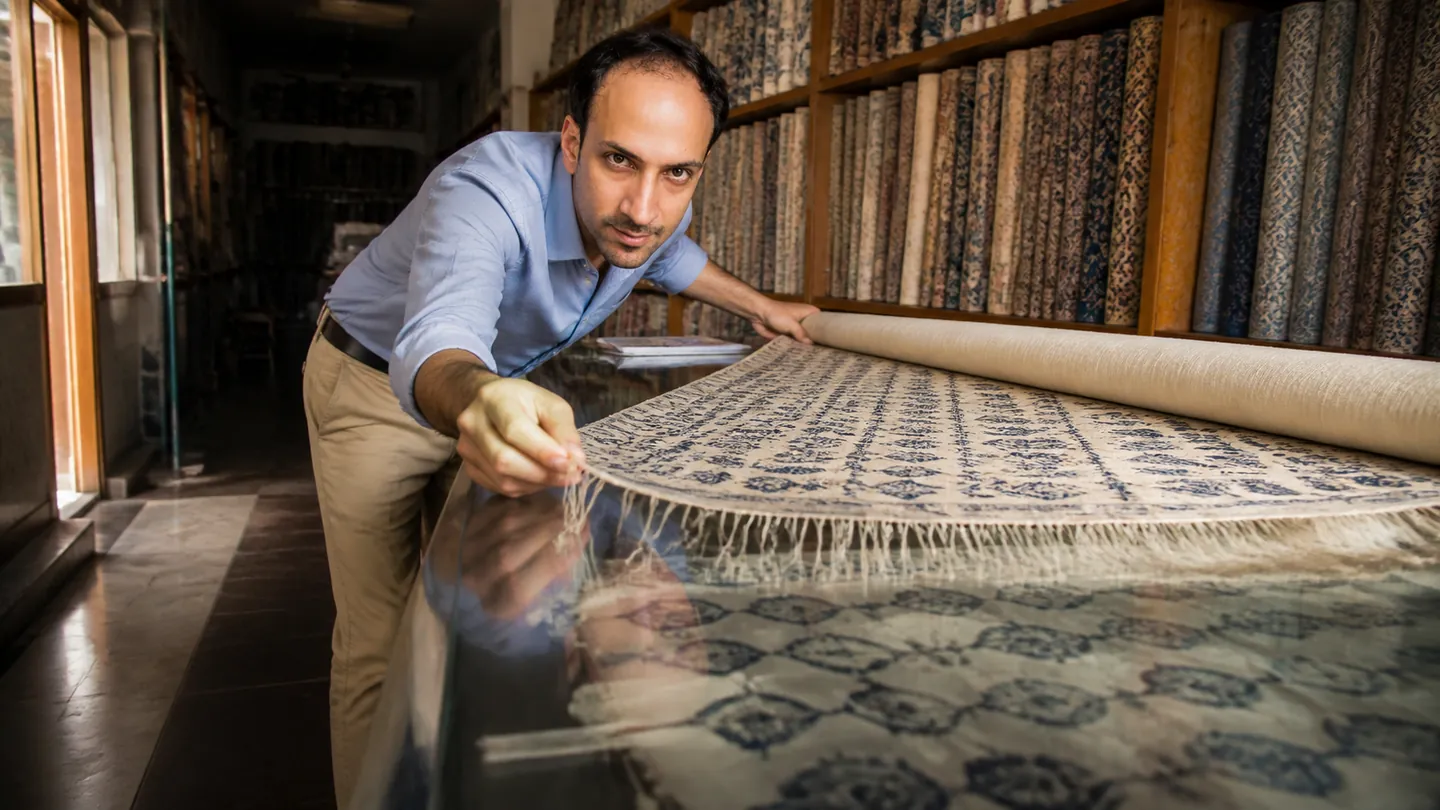
Standing Motion: Tailor's Workroom — AI Portrait Prompt
صورةAI Portraits

Turn your own photo into a quietly rigorous studio portrait in a tailor's workroom at night with one clear cutting table. Keeps your face unchanged.

من نص البرومبت

Use the attached reference photo as the identity reference: keep the same face, skin tone, hair and features as the person in that photo, without beautifying, aging or altering them. Treat that reference as the character anchor and change only the scene. Build a portrait 4:5 editorial artwork with protected negative space and a fully readable face at exactly 2560x3200 pixels. Location: a tailor's workroom at night with one clear cutting table. Show them in a fitted navy waistcoat over a collarless white shirt, pinning one tissue pattern corner to the folded cloth. Build the artwork around this material rule: a pair of carved mashrabiya screens hung a hand span apart, whose overlapped shadows gather into broad bands drifting with the sun lets plain matter interfere the way waves on water do. Explore why two still patterns can conjure a third that plainly moves; direct expression and posture toward held fascination, never melodrama or ad-like confidence. Use a 50mm standpoint set exactly where the bands read strongest, with their face just off that axis. Make the composition keep both source patterns readable at the edges as quiet evidence. Render it as quietly rigorous studio realism uniting layered handcrafted screens, physically exact interference behavior, restrained heritage styling, and dignified observational portraiture, using a single hard lamp placed to cast one clean, honest shadow and a palette of soft sand, ink-lined shadow, and one quiet teal thread. Photorealistic: this must read as a real photograph from a physical camera, never an illustration, painting, or 3D render. Resolve real surface detail: fine lint on dark fabric, water spotting on steel, and the soft rounding of edges that have been used for years. Keep one identity-locked person, credible hands and fingers, natural fabric, and coherent scale, contact, reflections, shadows, airflow, deformation, and materials. Background people only when essential, always secondary and clearly different. Avoid op-art poster graphics, hypnotic spiral overlays, digital glitch scanlines, television static, and patterns projected across their face. No text, labels, logos, signatures, watermarks, random symbols, plastic skin, excessive bloom, or glossy AI finish.
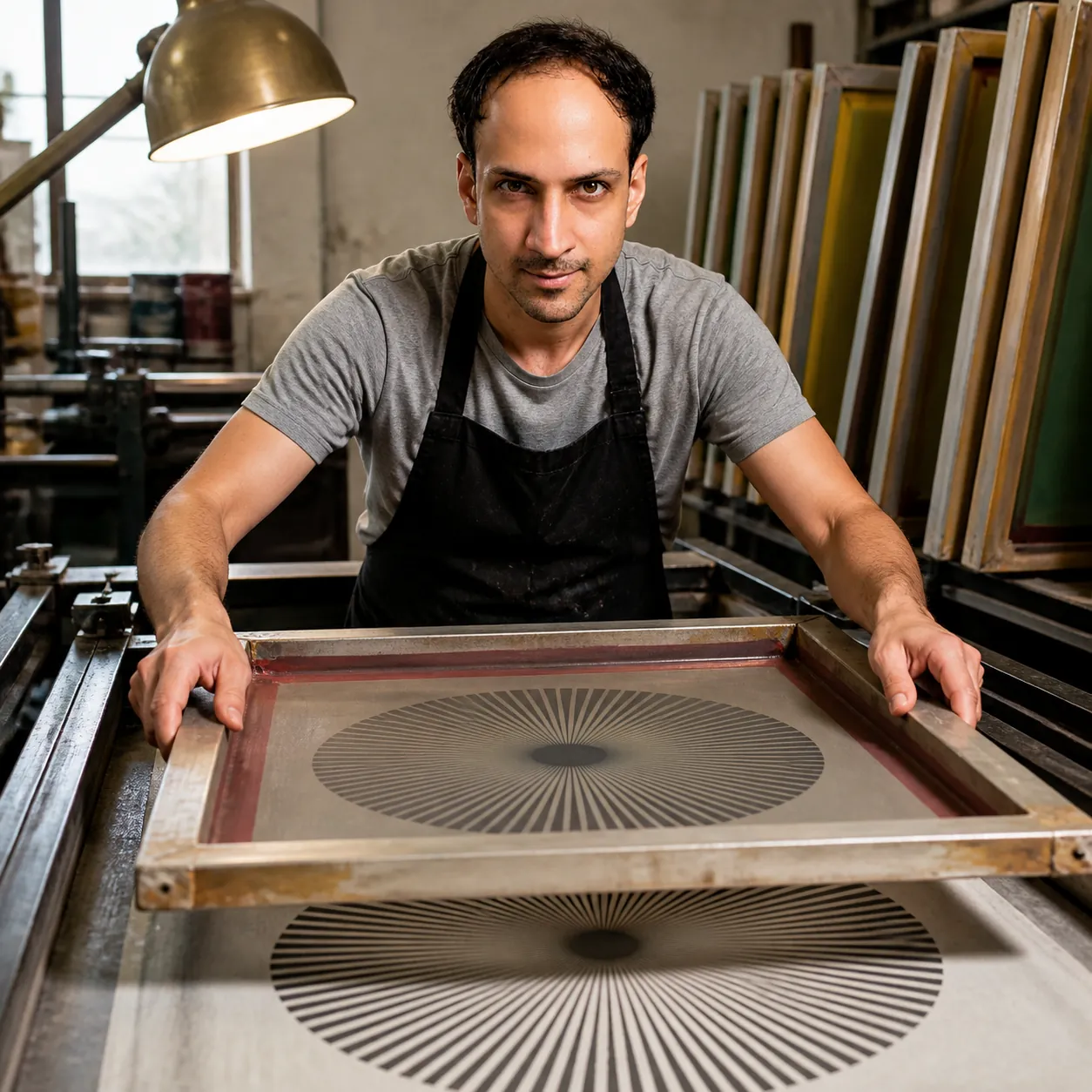
The Uninvited Third: Covered Textile Souq Aisle — AI Portrait Prompt
صورةAI Portraits

Turn your own photo into a high-concept interference portrait in a covered textile souq aisle before opening, bolts shelved high. Keeps your face unchanged.

من نص البرومبت

Use the attached reference photo as the identity reference: keep the same face, skin tone, hair and features as the person in that photo, without beautifying, aging or altering them. Treat that reference as the character anchor and change only the scene. Compose a wide 16:9 narrative image where environment and subject carry equal meaning at exactly 3808x2144 pixels. Location: a covered textile souq aisle before opening, bolts shelved high. Show them in a light-blue casual shirt tucked into pressed sand chinos, unrolling a forearm's length of cloth across the counter. The impossible-looking event must obey this clear system: a printed line sheet laid over its identical twin on glass, where a fingertip of offset becomes one fringe sweeping the pane reads out the difference between two layers rather than either one. Explore how a disagreement smaller than a thread becomes the loudest thing visible; direct expression and posture toward held fascination, never melodrama or ad-like confidence. Frame straight through the nearer pattern layer, its structure crisp while their eyes hold the true focus. Make the composition place their eyes in the one calm zone the fringes spare. Render it as high-concept interference portraiture built from genuinely overlapping physical patterns, large-format documentary clarity, hand-made material honesty, and patient architectural observation, using one broad diffused window source held oblique so fine patterns stay resolvable and a palette of warm cedar, deep shadow, and one seam of saffron. Photorealistic: this must read as a real photograph from a physical camera, never an illustration, painting, or 3D render. Give the frame volume: faint density deepest in the room, contrast easing at the edges. Resolve real surface detail: grout darker than tile, sealant slightly yellowed, and every joint showing a real tolerance gap. Keep one identity-locked person, credible hands and fingers, natural fabric, and coherent scale, contact, reflections, shadows, airflow, deformation, and materials. Background people only when essential, always secondary and clearly different. Avoid op-art poster graphics, hypnotic spiral overlays, digital glitch scanlines, television static, and patterns projected across their face. No text, labels, logos, signatures, watermarks, random symbols, plastic skin, excessive bloom, or glossy AI finish.
Almost Identical: Screen-Printing Workshop — AI Portrait Prompt
صورةAI Portraits

Turn your own photo into a portrait in a screen-printing workshop with taut mesh frames racked along one wall. Keeps your face unchanged.

من نص البرومبت

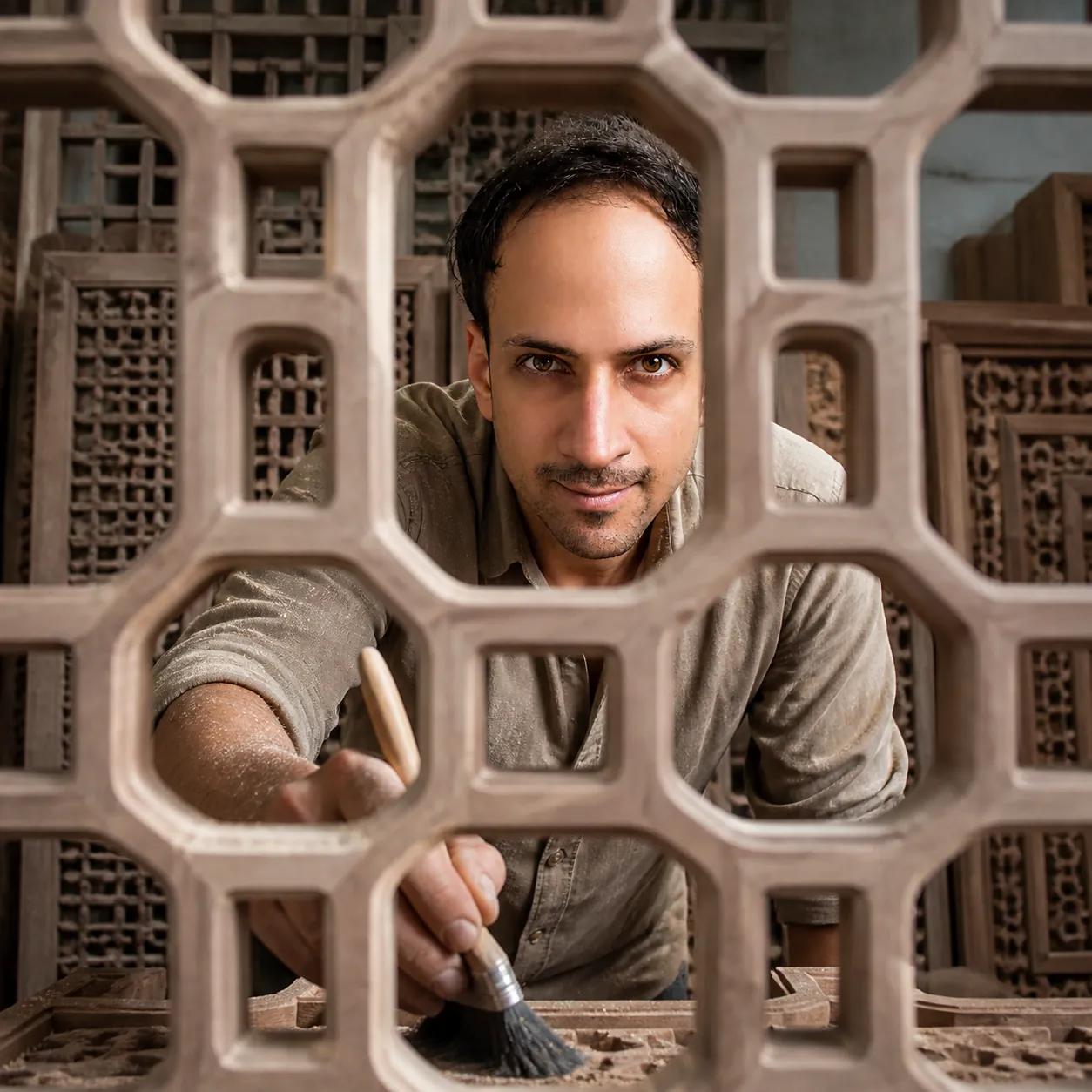
Use the attached reference photo as the identity reference: keep the same face, skin tone, hair and features as the person in that photo, without beautifying, aging or altering them. Treat that reference as the character anchor and change only the scene. Create a square 1:1 museum-catalog frame with a strong first read and a slower second read at exactly 2880x2880 pixels. Location: a screen-printing workshop with taut mesh frames racked along one wall. Show the subject in a black canvas shop apron over a heather-grey tee, lowering one mesh frame flat onto the vacuum table. Build the artwork around this material rule: a face-to-face pair of radially ruled discs, whose fringe spokes wheel through many degrees for each single degree of the top disc gives stillness a pulse the camera can record without any trick. Explore why amplification built from spacing alone feels more trustworthy than machinery; direct expression and posture toward quiet reckoning, never melodrama or ad-like confidence. Frame straight through the nearer pattern layer, its structure crisp while their eyes hold the true focus. Make the composition keep both source patterns readable at the edges as quiet evidence. Render it as quietly rigorous studio realism uniting layered handcrafted screens, physically exact interference behavior, restrained heritage styling, and dignified observational portraiture, using a single hard lamp placed to cast one clean, honest shadow and a palette of bone linen, graphite line-work, and a low brass accent. Photorealistic: this must read as a real photograph from a physical camera, never an illustration, painting, or 3D render. Resolve real surface detail: cotton that hangs by its own weight, seams that pucker very slightly, and collars softened by washing. Keep one identity-locked person, credible hands and fingers, natural fabric, and coherent scale, contact, reflections, shadows, airflow, deformation, and materials. Background people only when essential, always secondary and clearly different. Avoid kaleidoscope symmetry, fake motion blur, rainbow chromatic fringing, and funhouse distortion of their features. No text, labels, logos, signatures, watermarks, random symbols, plastic skin, excessive bloom, or glossy AI finish.
Quiet Leverage: Lattice Joinery Shop — AI Portrait Prompt
صورةAI Portraits

Turn your own photo into a portrait in a lattice joinery shop where carved cedar panels lean in ordered rows. Keeps your face unchanged.

من نص البرومبت

Use the attached reference photo as the identity reference: keep the same face, skin tone, hair and features as the person in that photo, without beautifying, aging or altering them. Treat that reference as the character anchor and change only the scene. Create a square 1:1 museum-catalog frame with a strong first read and a slower second read at exactly 2880x2880 pixels. Location: a lattice joinery shop where carved cedar panels lean in ordered rows. Show the subject in a dust-flecked khaki work shirt with sleeves rolled twice, brushing sawdust from one carved opening with a soft brush. Build the artwork around this material rule: a bench vernier of two printed scales, on which one dark fringe marches boldly for movements finer than a hair gives stillness a pulse the camera can record without any trick. Explore where a pattern lives when it exists only between two others; direct expression and posture toward sober delight, never melodrama or ad-like confidence. Frame straight through the nearer pattern layer, its structure crisp while their eyes hold the true focus. Make the composition place their eyes in the one calm zone the fringes spare. Render it as museum-grade optical demonstration realism combining true moiré geometry, tactile weave detail, faithful shadow behavior, and calm editorial framing, using even mid-morning shade with just enough directionality to model their face and a palette of washed white, cool steel mesh, and one indigo band. Photorealistic: this must read as a real photograph from a physical camera, never an illustration, painting, or 3D render. Resolve real surface detail: dust settled where nobody wipes, fingerprint haze on glass, and edges rubbed pale by handling. Keep one identity-locked person, credible hands and fingers, natural fabric, and coherent scale, contact, reflections, shadows, airflow, deformation, and materials. Background people only when essential, always secondary and clearly different. Avoid kaleidoscope symmetry, fake motion blur, rainbow chromatic fringing, and funhouse distortion of their features. No text, labels, logos, signatures, watermarks, random symbols, plastic skin, excessive bloom, or glossy AI finish.
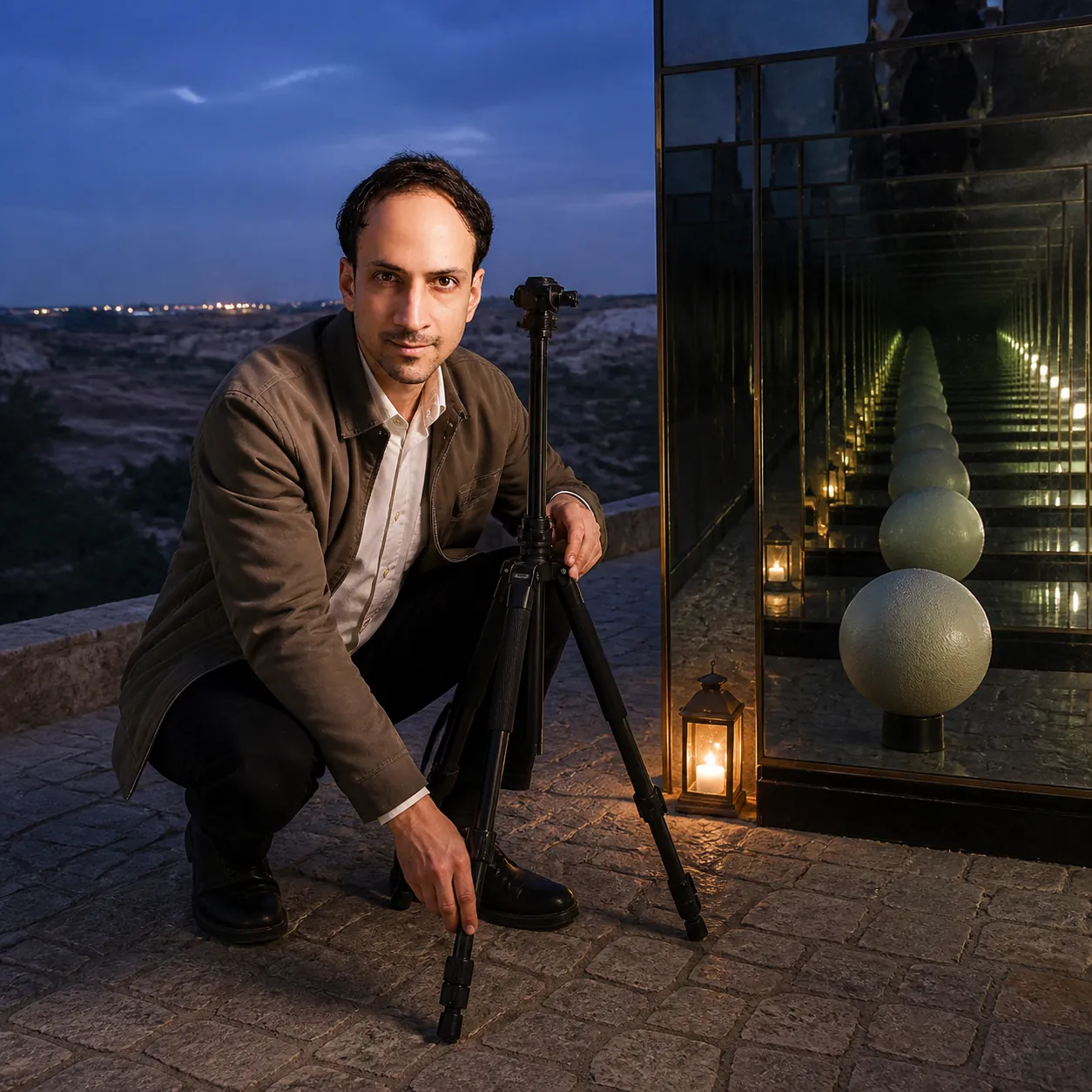
Nanosecond Archive: Paved Overlook — AI Portrait Prompt
صورةAI Portraits

Turn your own photo into a museum-scale demonstration portrait in a paved overlook above Wadi Hanifah in the last blue light. Keeps your face unchanged.

من نص البرومبت

Use the attached reference photo as the identity reference: keep the same face, skin tone, hair and features as the person in that photo, without beautifying, aging or altering them. Treat that reference as the character anchor and change only the scene. Create a square 1:1 museum-catalog frame with a strong first read and a slower second read at exactly 2880x2880 pixels. Location: a paved overlook above Wadi Hanifah in the last blue light. Show the subject in a taupe harrington jacket over an off-white oxford shirt, settling a folding tripod's third leg onto the paving. Treat this mechanism as the frame’s governing rule: a corridor of back-silvered facing mirrors whose copies of one white plaster sphere march away turning steadily greener and dimmer proves repetition can multiply spectacle without inventing one new fact. Explore how plain geometry manufactures plenty without inventing a single new fact; direct expression and posture toward attentive reserve, never melodrama or ad-like confidence. Frame from just off the mirror axis so the recession stays deep while their face appears exactly once. Make the composition let the recession deepen away from them, never toward their face. Render it as museum-scale demonstration realism uniting exact reflection optics, believable handmade apparatus, deep readable shadow, and editorial portrait fidelity keeping them singular, using one small warm practical as key with deep protected shadow around it and a palette of deep black, aged silver, and one candleflame amber. Photorealistic: this must read as a real photograph from a physical camera, never an illustration, painting, or 3D render. Resolve real surface detail: floor finish worn along the walked line, skirting marked at shoe height, and corners darker than the open floor. Keep one identity-locked person, credible hands and fingers, natural fabric, and coherent scale, contact, reflections, shadows, airflow, deformation, and materials. Background people only when essential, always secondary and clearly different. Avoid neon infinity-room installations, floating disembodied reflections, cracked-mirror symbolism, and impossible seamless recursion without dimming. No text, labels, logos, signatures, watermarks, random symbols, plastic skin, excessive bloom, or glossy AI finish.
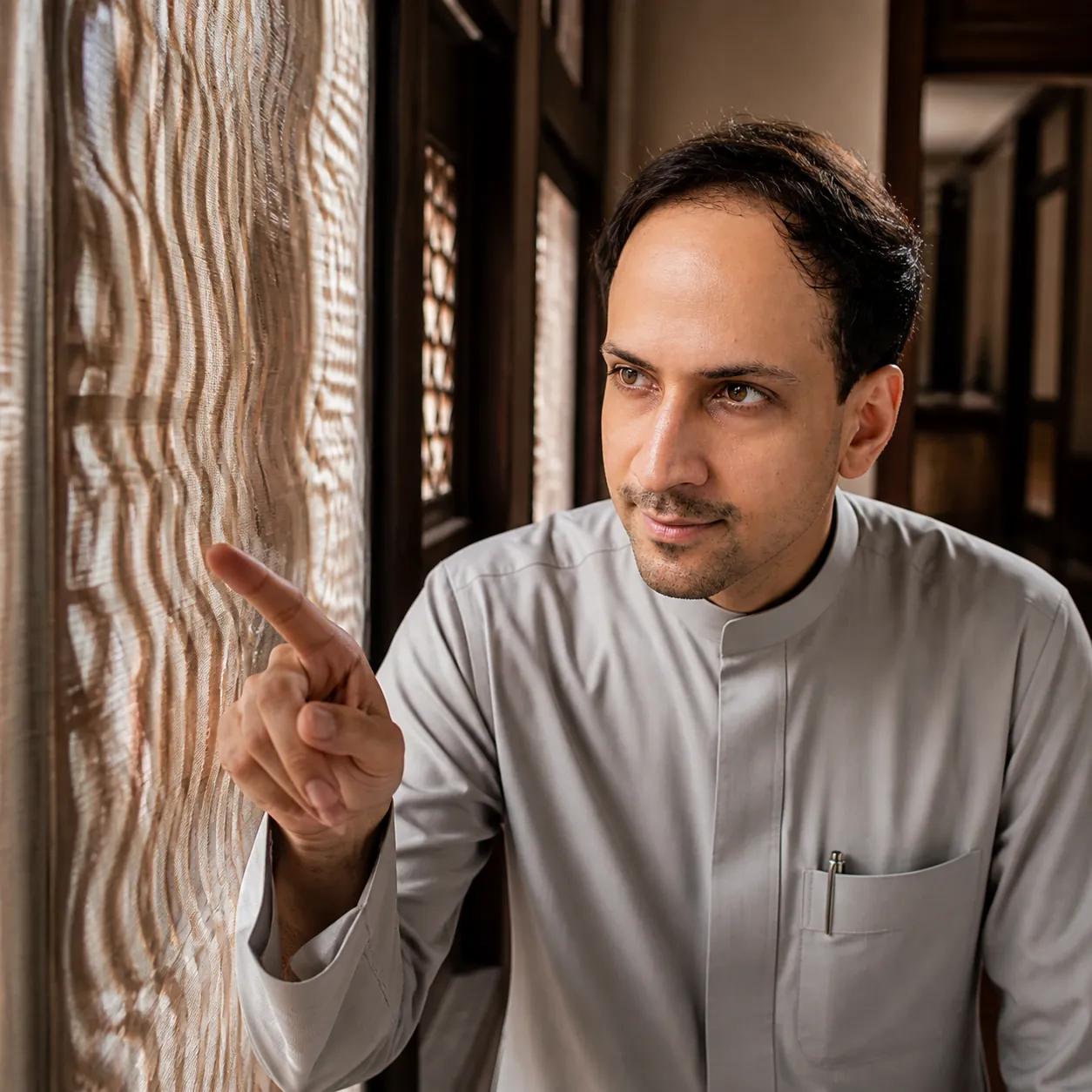
Layered Beat: Restored Heritage House Hallway — AI Portrait Prompt
صورةAI Portraits

Turn your own photo into a portrait in a restored heritage house hallway with latticed windows along one side. Keeps your face unchanged.

من نص البرومبت

Use the attached reference photo as the identity reference: keep the same face, skin tone, hair and features as the person in that photo, without beautifying, aging or altering them. Treat that reference as the character anchor and change only the scene. Create a square 1:1 museum-catalog frame with a strong first read and a slower second read at exactly 2880x2880 pixels. Location: a restored heritage house hallway with latticed windows along one side. Show the subject in a plain pale-grey traditional Gulf outfit with one pen in the chest pocket, tracing one lattice opening lightly with an index finger. The impossible-looking event must obey this clear system: a double layer of sheer silk stretched on one frame, whose riding weaves break into watered bands that gave moiré its name gives stillness a pulse the camera can record without any trick. Explore what it means that the boldest pattern present was authored by neither maker; direct expression and posture toward patient scrutiny, never melodrama or ad-like confidence. Use a 50mm standpoint set exactly where the bands read strongest, with their face just off that axis. Make the composition keep both source patterns readable at the edges as quiet evidence. Render it as museum-grade optical demonstration realism combining true moiré geometry, tactile weave detail, faithful shadow behavior, and calm editorial framing, using one broad diffused window source held oblique so fine patterns stay resolvable and a palette of soft sand, ink-lined shadow, and one quiet teal thread. Photorealistic: this must read as a real photograph from a physical camera, never an illustration, painting, or 3D render. Resolve real surface detail: condensation beading at true size, liquid meniscus curving against glass, and wet surfaces darker than dry ones. Keep one identity-locked person, credible hands and fingers, natural fabric, and coherent scale, contact, reflections, shadows, airflow, deformation, and materials. Background people only when essential, always secondary and clearly different. Avoid kaleidoscope symmetry, fake motion blur, rainbow chromatic fringing, and funhouse distortion of their features. No text, labels, logos, signatures, watermarks, random symbols, plastic skin, excessive bloom, or glossy AI finish.
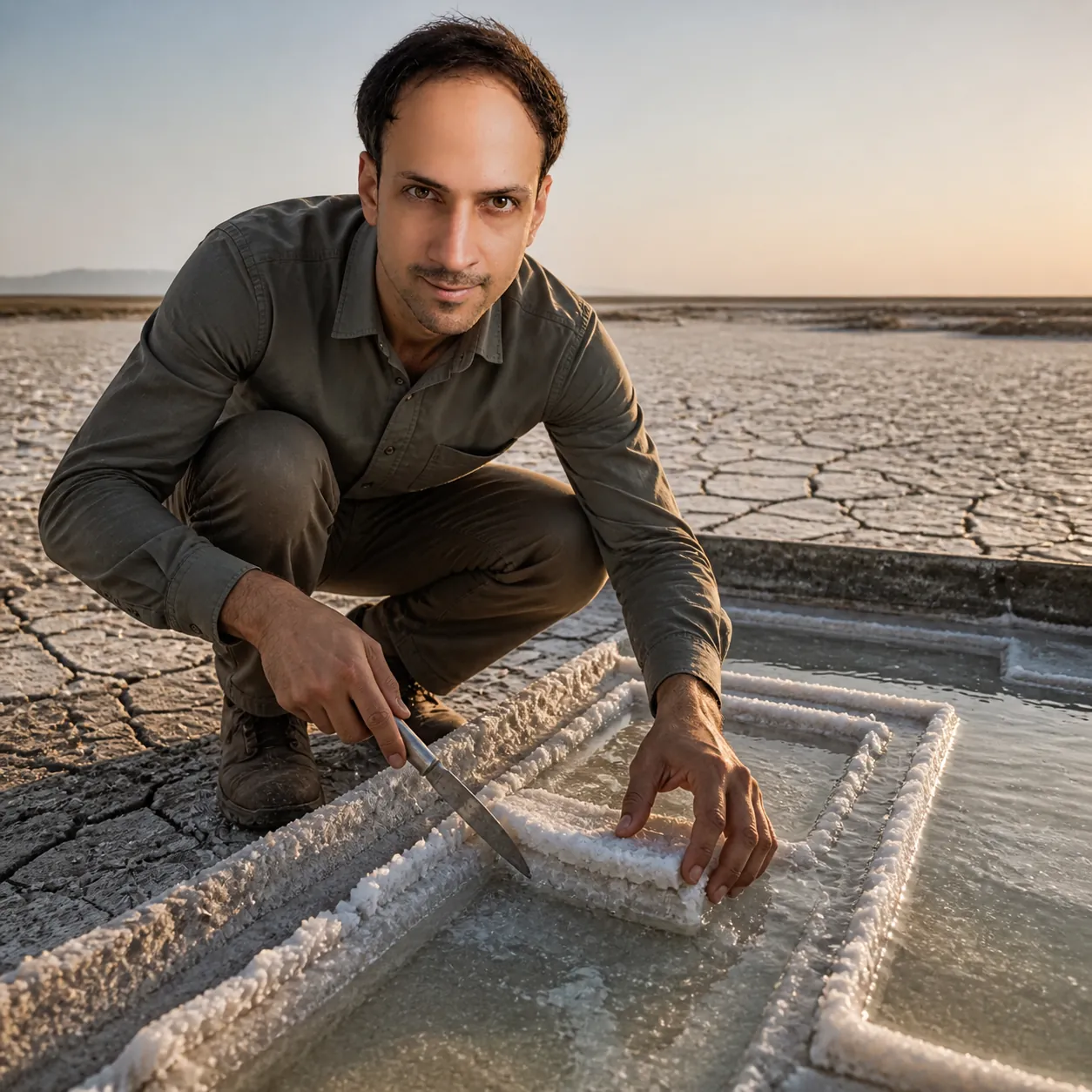
Seed and Verdict: Cracked White Edge — AI Portrait Prompt
صورةAI Portraits

Turn your own photo into a museum-demonstration portrait in the cracked white edge of a sabkha salt flat at low sun. Keeps your face unchanged.

من نص البرومبت

Use the attached reference photo as the identity reference: keep the same face, skin tone, hair and features as the person in that photo, without beautifying, aging or altering them. Treat that reference as the character anchor and change only the scene. Create a square 1:1 museum-catalog frame with a strong first read and a slower second read at exactly 2880x2880 pixels. Location: the cracked white edge of a sabkha salt flat at low sun. Show the subject in a dust-toned field shirt with sleeves buttoned at the wrist, crouching to free one salt plate with a flat knife. Build the artwork around this material rule: an open evaporation tray where drying brine has built stepped, hollow square terraces of salt that no hand ever arranged produces confident geometry in a place where nobody asked for any. Explore where the boundary runs between a substance dissolving and a substance deciding; direct expression and posture toward measured reverence, never melodrama or ad-like confidence. Use a measured 32mm wide view from respectful distance with all verticals kept straight. Make the composition keep their hands nearer the lens than the astonishment they tend. Render it as museum-demonstration realism combining faithful crystal optics, accurate refraction and caustics, patient editorial portrait craft, and unstyled working-room authenticity, using dim room light with one focused beam grazing the solution's surface and a palette of eggshell white, cool zinc grey, and one moss-green accent. Photorealistic: this must read as a real photograph from a physical camera, never an illustration, painting, or 3D render. Resolve real surface detail: dust settled where nobody wipes, fingerprint haze on glass, and edges rubbed pale by handling. Keep one identity-locked person, credible hands and fingers, natural fabric, and coherent scale, contact, reflections, shadows, airflow, deformation, and materials. Background people only when essential, always secondary and clearly different. Avoid wizard-laboratory props, neon translucent minerals, floating crystal shards, motion-smeared growth trails, and jewelry-advert sparkle. No text, labels, logos, signatures, watermarks, random symbols, plastic skin, excessive bloom, or glossy AI finish.
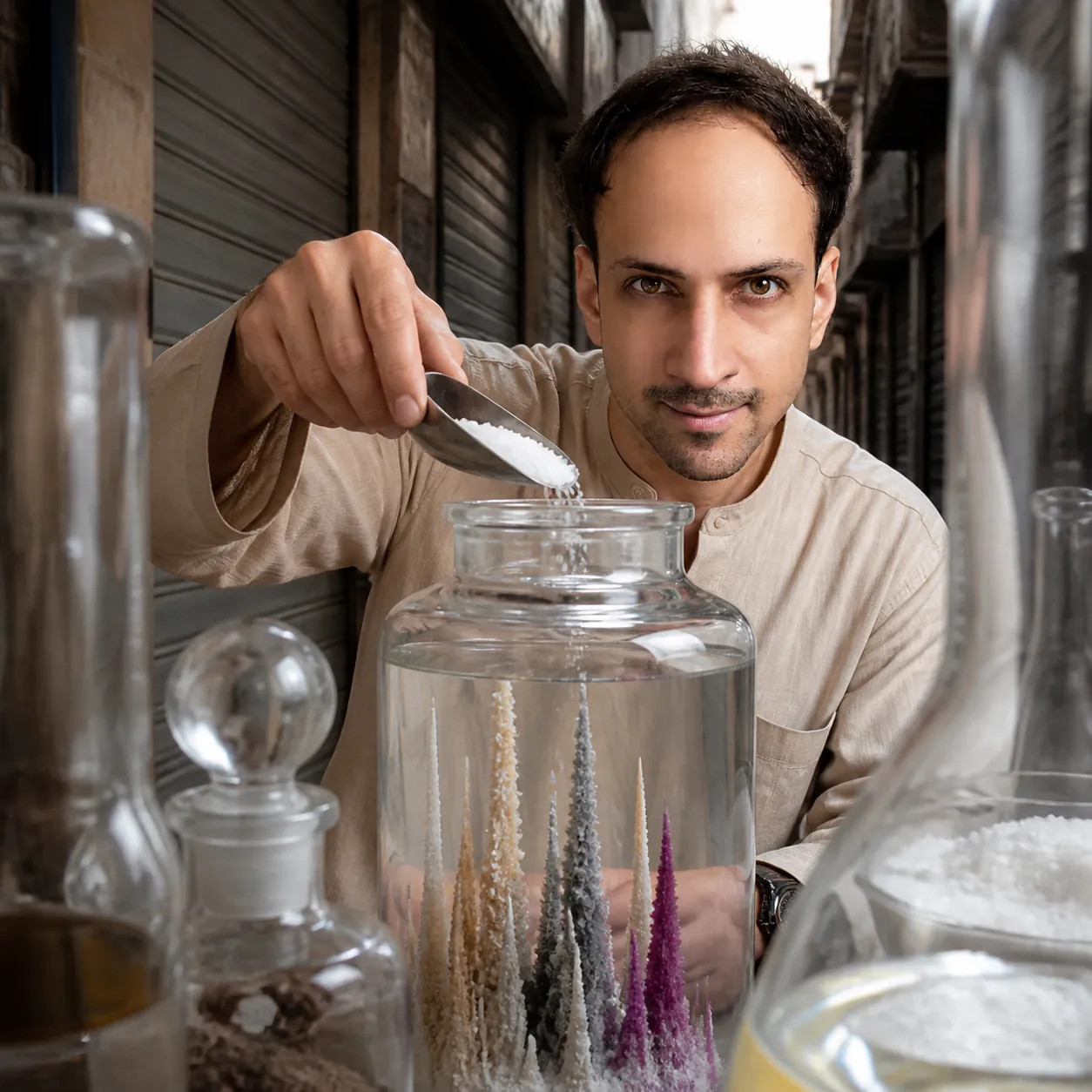
What Brine Knew: Salt Merchant's Stall — AI Portrait Prompt
صورةAI Portraits

Turn your own photo into a conceptual bench-science portrait in a salt merchant's stall in a shuttered souq lane, still cool. Keeps your face unchanged.

من نص البرومبت

Use the attached reference photo as the identity reference: keep the same face, skin tone, hair and features as the person in that photo, without beautifying, aging or altering them. Treat that reference as the character anchor and change only the scene. Create a square 1:1 museum-catalog frame with a strong first read and a slower second read at exactly 2880x2880 pixels. Location: a salt merchant's stall in a shuttered souq lane, still cool. Show the subject in a pale oat cotton traditional Gulf outfit with a dark wristwatch showing, cupping a scoop of coarse salt and tipping it back. Use this advanced image-making device as the core logic: a tall jar of sodium silicate in which dropped metal salts have raised slender mineral towers, each color naming its salt produces confident geometry in a place where nobody asked for any. Explore what a finished form can testify about the liquid that built it; direct expression and posture toward collected wonder, never melodrama or ad-like confidence. Frame through the nearest glassware so refraction bends the background while their face stays direct and sharp. Make the composition let ordinary glassware frame the geometry like museum casework. Render it as conceptual bench-science photography combining believable grown geometry, honest hand-and-glass interaction, precise material response, and quiet contemporary gallery restraint, using soft overcast daylight through high windows with shadows kept open and legible and a palette of putty, brushed steel, and one violet chrome-alum note. Photorealistic: this must read as a real photograph from a physical camera, never an illustration, painting, or 3D render. Resolve real surface detail: rubber gone chalky with age, painted metal chipped to primer, and plastic yellowed only where light reaches it. Keep one identity-locked person, credible hands and fingers, natural fabric, and coherent scale, contact, reflections, shadows, airflow, deformation, and materials. Background people only when essential, always secondary and clearly different. Avoid wizard-laboratory props, neon translucent minerals, floating crystal shards, motion-smeared growth trails, and jewelry-advert sparkle. No text, labels, logos, signatures, watermarks, random symbols, plastic skin, excessive bloom, or glossy AI finish.
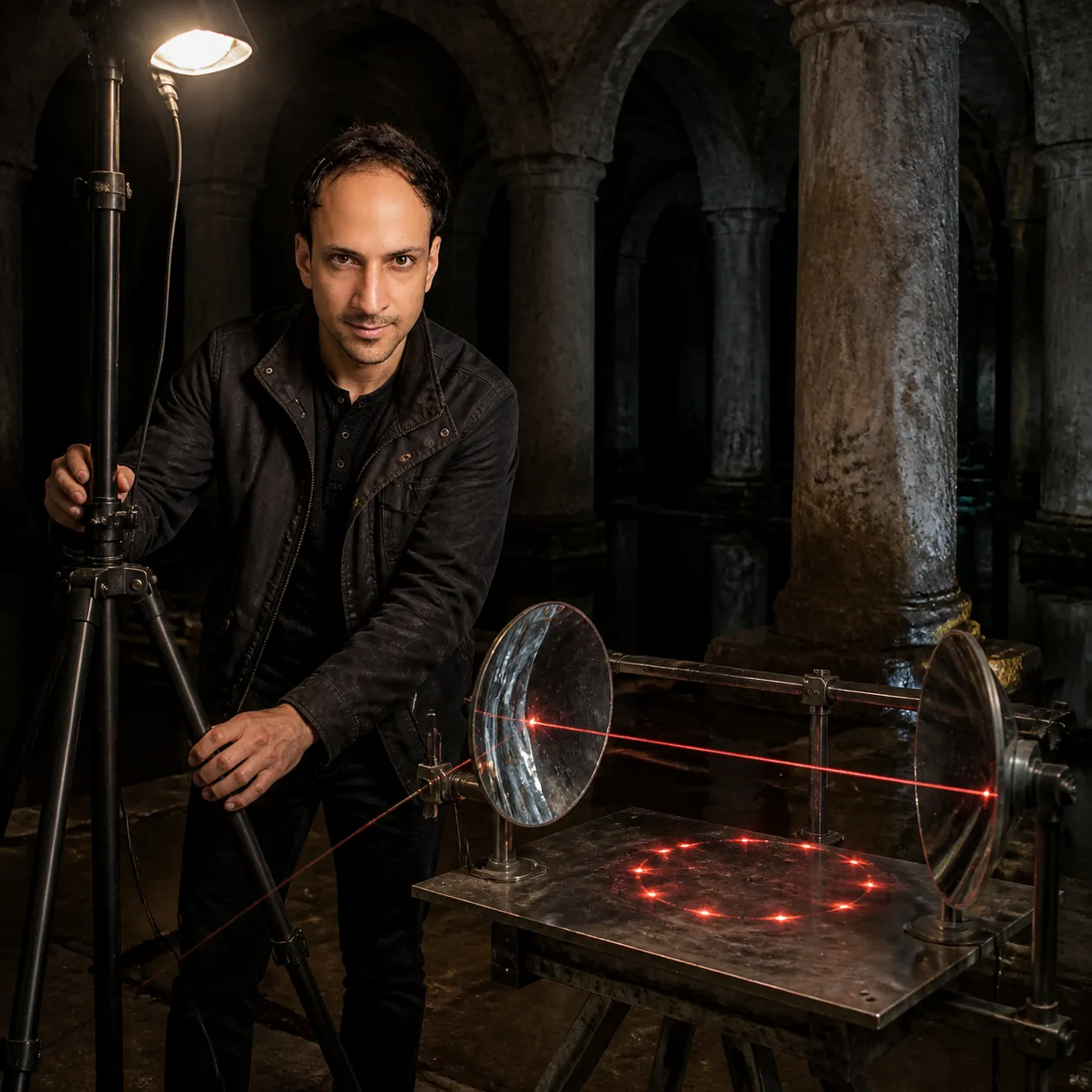
Lawful Recursion: Restored Underground Stone Cistern — AI Portrait Prompt
صورةAI Portraits

Turn your own photo into a museum-scale demonstration portrait in a restored underground stone cistern lit by one standing work lamp. Keeps your face unchanged.

من نص البرومبت

Use the attached reference photo as the identity reference: keep the same face, skin tone, hair and features as the person in that photo, without beautifying, aging or altering them. Treat that reference as the character anchor and change only the scene. Create a square 1:1 museum-catalog frame with a strong first read and a slower second read at exactly 2880x2880 pixels. Location: a restored underground stone cistern lit by one standing work lamp. Show the subject in a charcoal field jacket closed over a dark waffle henley, planting the work lamp's tripod firm on the uneven floor. Use this advanced image-making device as the core logic: a pair of concave laboratory mirrors that folds one thin laser beam into an oval constellation of glowing spots proves repetition can multiply spectacle without inventing one new fact. Explore where repetition actually ends, and what decides the final visible copy; direct expression and posture toward steady fascination, never melodrama or ad-like confidence. Use a measured 32mm wide view with them at one-third and the apparatus honest, unstretched, and fully in frame. Make the composition let darkness swallow the recession before the frame edge does. Render it as museum-scale demonstration realism uniting exact reflection optics, believable handmade apparatus, deep readable shadow, and editorial portrait fidelity keeping them singular, using a narrow hard key raked across the apparatus with soft ambient spill and a palette of graphite, chalk white, and one seam of oxide red. Photorealistic: this must read as a real photograph from a physical camera, never an illustration, painting, or 3D render. Resolve real surface detail: rubber gone chalky with age, painted metal chipped to primer, and plastic yellowed only where light reaches it. Keep one identity-locked person, credible hands and fingers, natural fabric, and coherent scale, contact, reflections, shadows, airflow, deformation, and materials. Background people only when essential, always secondary and clearly different. Avoid neon infinity-room installations, floating disembodied reflections, cracked-mirror symbolism, and impossible seamless recursion without dimming. No text, labels, logos, signatures, watermarks, random symbols, plastic skin, excessive bloom, or glossy AI finish.

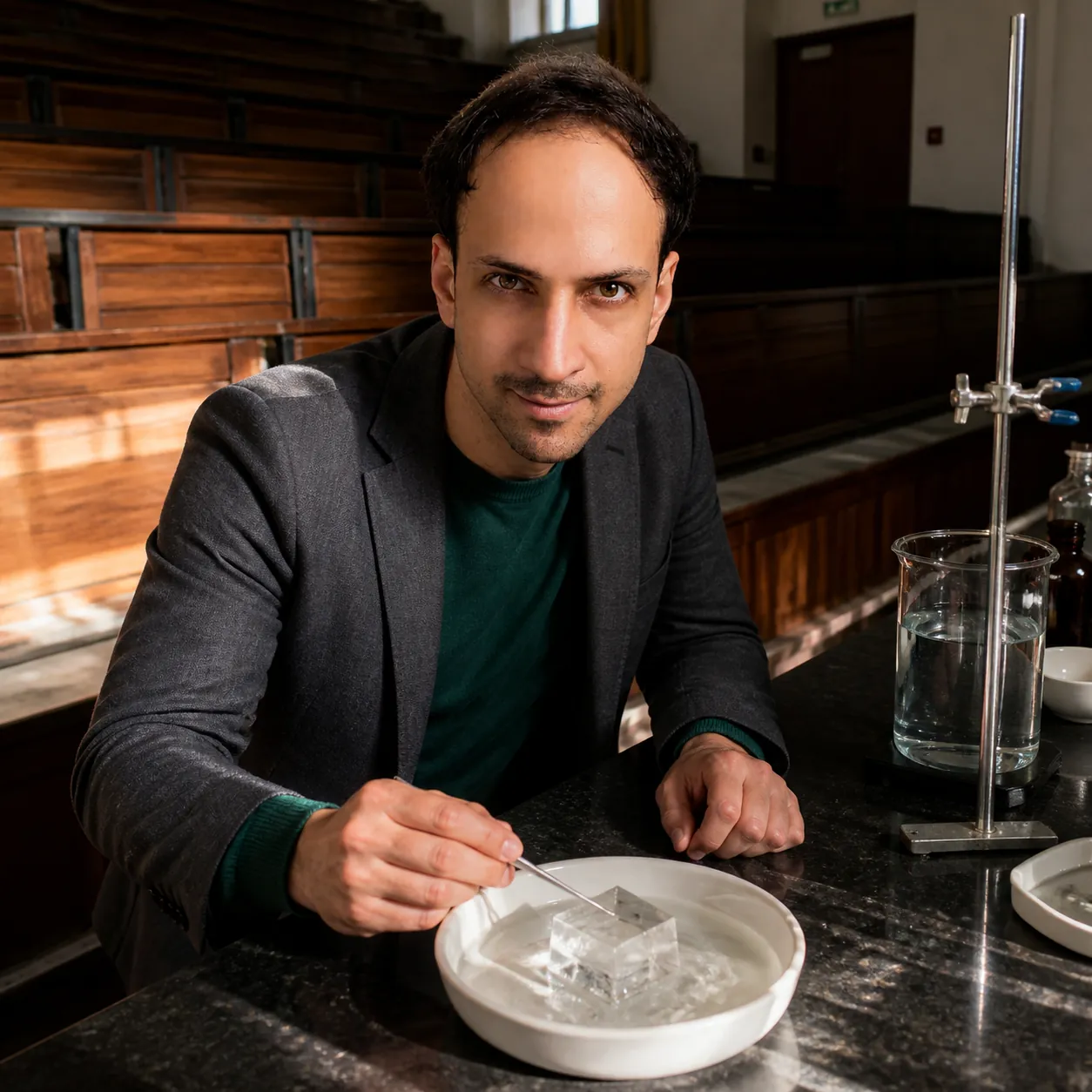
Geometry Unasked: Empty Raked Lecture Theatre — AI Portrait Prompt
صورةAI Portraits

Turn your own photo into a portrait in an empty raked lecture theatre with one long demonstration bench below. Keeps your face unchanged.

من نص البرومبت

Use the attached reference photo as the identity reference: keep the same face, skin tone, hair and features as the person in that photo, without beautifying, aging or altering them. Treat that reference as the character anchor and change only the scene. Create a square 1:1 museum-catalog frame with a strong first read and a slower second read at exactly 2880x2880 pixels. Location: an empty raked lecture theatre with one long demonstration bench below. Show the subject in a mid-grey blazer over a deep green crew-neck sweater, centering a white ceramic dish on the long bench. Treat this mechanism as the frame’s governing rule: a single alum crystal grown from a pinhead seed into a faceted block whose faces lie flat as instrument glass produces confident geometry in a place where nobody asked for any. Explore how one law repeated without exception becomes something the eye calls beauty; direct expression and posture toward watchful respect, never melodrama or ad-like confidence. Frame slightly above their hands so vessel, hands, and face stack in one calm diagonal. Make the composition give the newest crystal the frame's brightest square inch. Render it as conceptual bench-science photography combining believable grown geometry, honest hand-and-glass interaction, precise material response, and quiet contemporary gallery restraint, using hard low window sun refracted through glassware into small honest caustics and a palette of salt white, wet slate, and deep vitriol blue. Photorealistic: this must read as a real photograph from a physical camera, never an illustration, painting, or 3D render. Resolve real surface detail: floor finish worn along the walked line, skirting marked at shoe height, and corners darker than the open floor. Keep one identity-locked person, credible hands and fingers, natural fabric, and coherent scale, contact, reflections, shadows, airflow, deformation, and materials. Background people only when essential, always secondary and clearly different. Avoid wizard-laboratory props, neon translucent minerals, floating crystal shards, motion-smeared growth trails, and jewelry-advert sparkle. No text, labels, logos, signatures, watermarks, random symbols, plastic skin, excessive bloom, or glossy AI finish.

Stream to Stone: Tiled Chemistry Bench — AI Portrait Prompt
صورةAI Portraits

Turn your own photo into a high-concept chemistry portrait in a tiled chemistry bench beneath the raised sash of a fume hood. Keeps your face unchanged.

من نص البرومبت

Use the attached reference photo as the identity reference: keep the same face, skin tone, hair and features as the person in that photo, without beautifying, aging or altering them. Treat that reference as the character anchor and change only the scene. Create a square 1:1 museum-catalog frame with a strong first read and a slower second read at exactly 2880x2880 pixels. Location: a tiled chemistry bench beneath the raised sash of a fume hood. Show the subject in a white lab coat open over a dark olive tee, decanting clear solution down a glass stirring rod. Make one rigorous physical condition the conceptual engine: a white column of sodium acetate that solidifies exactly where its own poured stream lands, stacking itself into a warm tower turns a liquid's dissolved cargo into architecture a hand could rest on. Explore why a liquid can carry a cathedral's worth of order without showing it; direct expression and posture toward quiet astonishment, never melodrama or ad-like confidence. Use an eye-level 50mm view with honest perspective and gentle depth of field. Make the composition give the newest crystal the frame's brightest square inch. Render it as high-concept chemistry portraiture built from real supersaturation phenomena, true laboratory-glass materiality, restrained documentary honesty, and quietly monumental still-life composition, using hard low window sun refracted through glassware into small honest caustics and a palette of salt white, wet slate, and deep vitriol blue. Photorealistic: this must read as a real photograph from a physical camera, never an illustration, painting, or 3D render. Resolve real surface detail: true skin texture with pores and fine hair at the hairline, and fabric that creases where it is actually stressed. Keep one identity-locked person, credible hands and fingers, natural fabric, and coherent scale, contact, reflections, shadows, airflow, deformation, and materials. Background people only when essential, always secondary and clearly different. Avoid glowing magic crystals, amethyst geode caves, gemstone treasure piles, frosted window fakery, and CGI diamond shards. No text, labels, logos, signatures, watermarks, random symbols, plastic skin, excessive bloom, or glossy AI finish.
