تخطَّ إلى المحتوى

برومبتات الصور

برومبتات لمولدات الصور: بورتريهات وفن وتصوير.

تم العثور على 4209
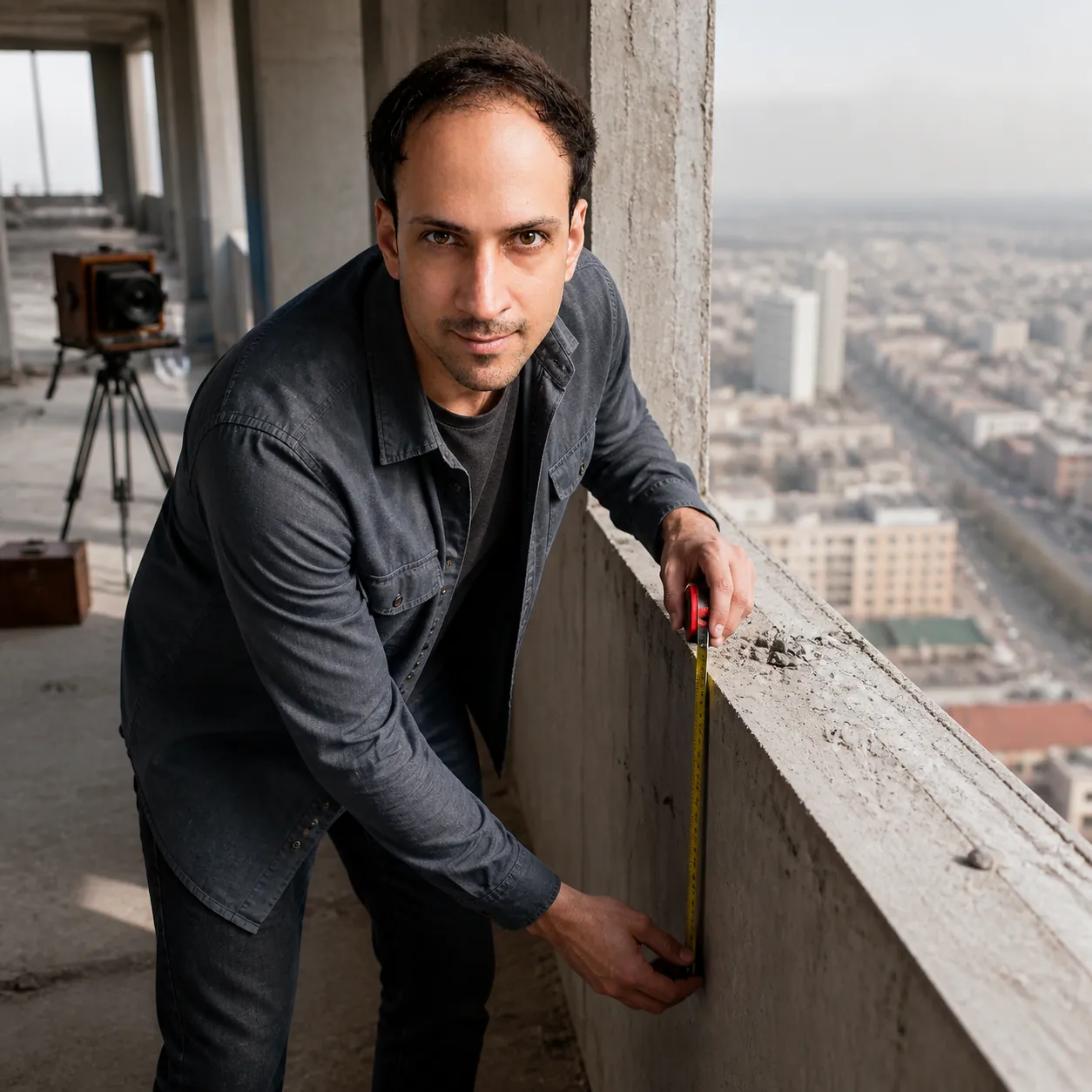
Lawful Miniature: Nineteenth-Floor Window — AI Portrait Prompt
صورةAI Portraits

Turn your own photo into a conceptual scale-study portrait in the nineteenth-floor window of an unfinished tower, floor swept bare. Keeps your face unchanged.

من نص البرومبت

Use the attached reference photo as the identity reference: keep the same face, skin tone, hair and features as the person in that photo, without beautifying, aging or altering them. Create a square 1:1 museum-catalog frame with a strong first read and a slower second read at exactly 2880x2880 pixels. Location: the nineteenth-floor window of an unfinished tower, floor swept bare. Show the subject in a slate flannel shirt jacket buttoned once over a charcoal tee, measuring the window's sill height with a pocket tape. Treat this mechanism as the frame’s governing rule: a wooden view camera whose tilted lens lays a sloping wedge of focus that renders the scene beyond as a tabletop model achieves its entire effect without altering a single object it shows. Explore why the eye trusts context more than it trusts the thing itself; direct expression and posture toward composed surprise, never melodrama or ad-like confidence. Frame from one marked standing position so the alignment lands exactly and their face stays readable. Make the composition align their gaze with the exact line the illusion depends on. Render it as conceptual scale-study realism combining architectural miniature exactness, truthful shadow geometry, unretouched photographic optics, and quiet human-centered observational framing, using one collimated key with crisp parallel shadows and soft neutral fill and a palette of dust beige, asphalt grey, and a single brick red. Photorealistic: this must read as a real photograph from a physical camera, never an illustration, painting, or 3D render. Resolve real surface detail: paper fibre visible at cut edges, plastic that shows mould lines, and paint thicker where a brush turned. Keep one identity-locked person, credible hands and fingers, natural fabric, and coherent scale, contact, reflections, shadows, airflow, deformation, and materials. Background people only when essential, always secondary and clearly different. Avoid surreal scale collage, floating figures, painted anamorphic pavement, and dollhouse cartoon styling. No text, labels, logos, signatures, watermarks, random symbols, plastic skin, excessive bloom, or glossy AI finish.
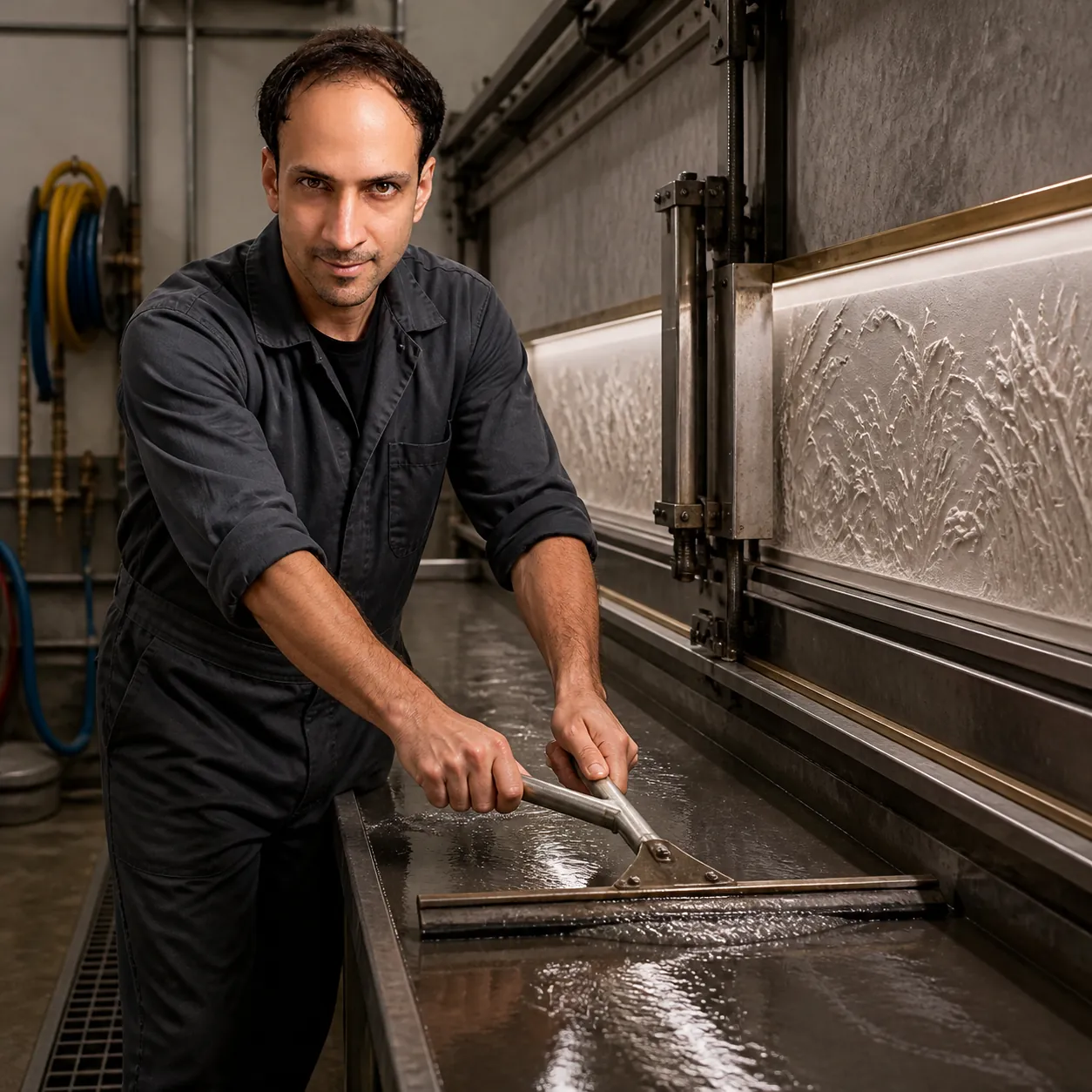
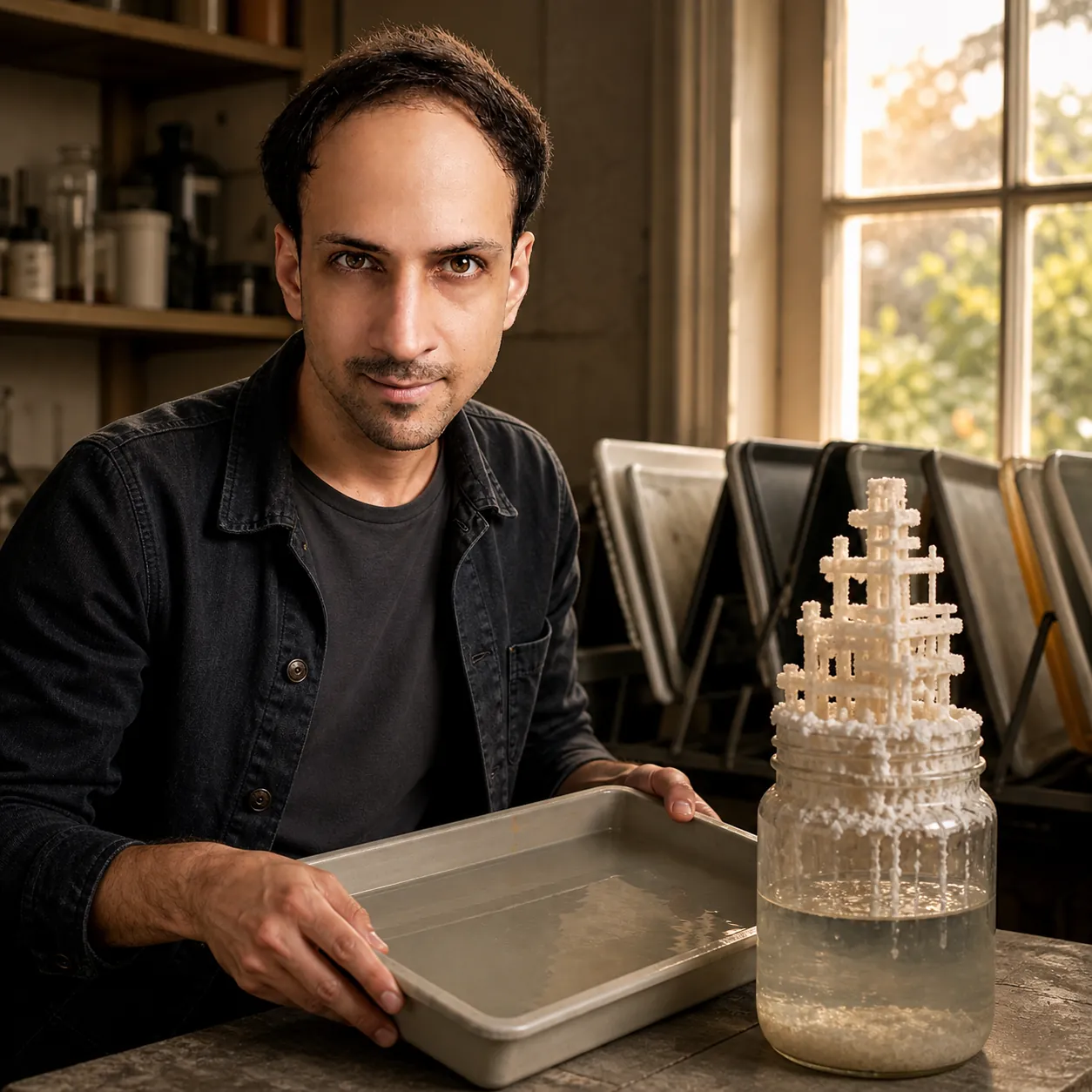
Persistence: Hydraulics Teaching Lab — AI Portrait Prompt
صورةAI Portraits

Turn your own photo into a kinetic-sculpture portrait in a hydraulics teaching lab with floor drains and coiled hose reels. Keeps your face unchanged.

من نص البرومبت

Use the attached reference photo as the identity reference: keep the same face, skin tone, hair and features as the person in that photo, without beautifying, aging or altering them. Create a square 1:1 museum-catalog frame with a strong first read and a slower second read at exactly 2880x2880 pixels. Location: a hydraulics teaching lab with floor drains and coiled hose reels. Show the subject in a slate work coverall with sleeves rolled past the elbow, squeegeeing a narrow path of water off the bench. The impossible-looking event must obey this clear system: a sliding slit-screen carriage that animates a wall strip of carved dune-grass reliefs as they draw it steadily past turns strict mechanical repetition into one seamless appearance the eye trusts. Explore what patience becomes inside a machine built to repeat one moment forever; direct expression and posture toward watchful calm, never melodrama or ad-like confidence. Use a 50mm chest-height viewpoint that keeps both their hands and the mechanism's rim readable. Make the composition let one sharp resolved detail ride inside surrounding motion blur. Render it as kinetic-sculpture photography grounded in believable machinery, honest depth of field, accurate frozen-motion physics, and unhurried editorial portrait craft, using narrow theatrical beams carving the moving parts out of a quiet room and a palette of gypsum white, shadowed grey, and a thin brass line. Photorealistic: this must read as a real photograph from a physical camera, never an illustration, painting, or 3D render. Resolve real surface detail: skin that reddens slightly under pressure, nail beds with honest colour, and knuckle creases that fold rather than blur. Keep one identity-locked person, credible hands and fingers, natural fabric, and coherent scale, contact, reflections, shadows, airflow, deformation, and materials. Background people only when essential, always secondary and clearly different. Avoid steampunk goggles and gears, CGI slow-motion splashes, projected film beams, carnival colors, and duplicated human figures. No text, labels, logos, signatures, watermarks, random symbols, plastic skin, excessive bloom, or glossy AI finish.
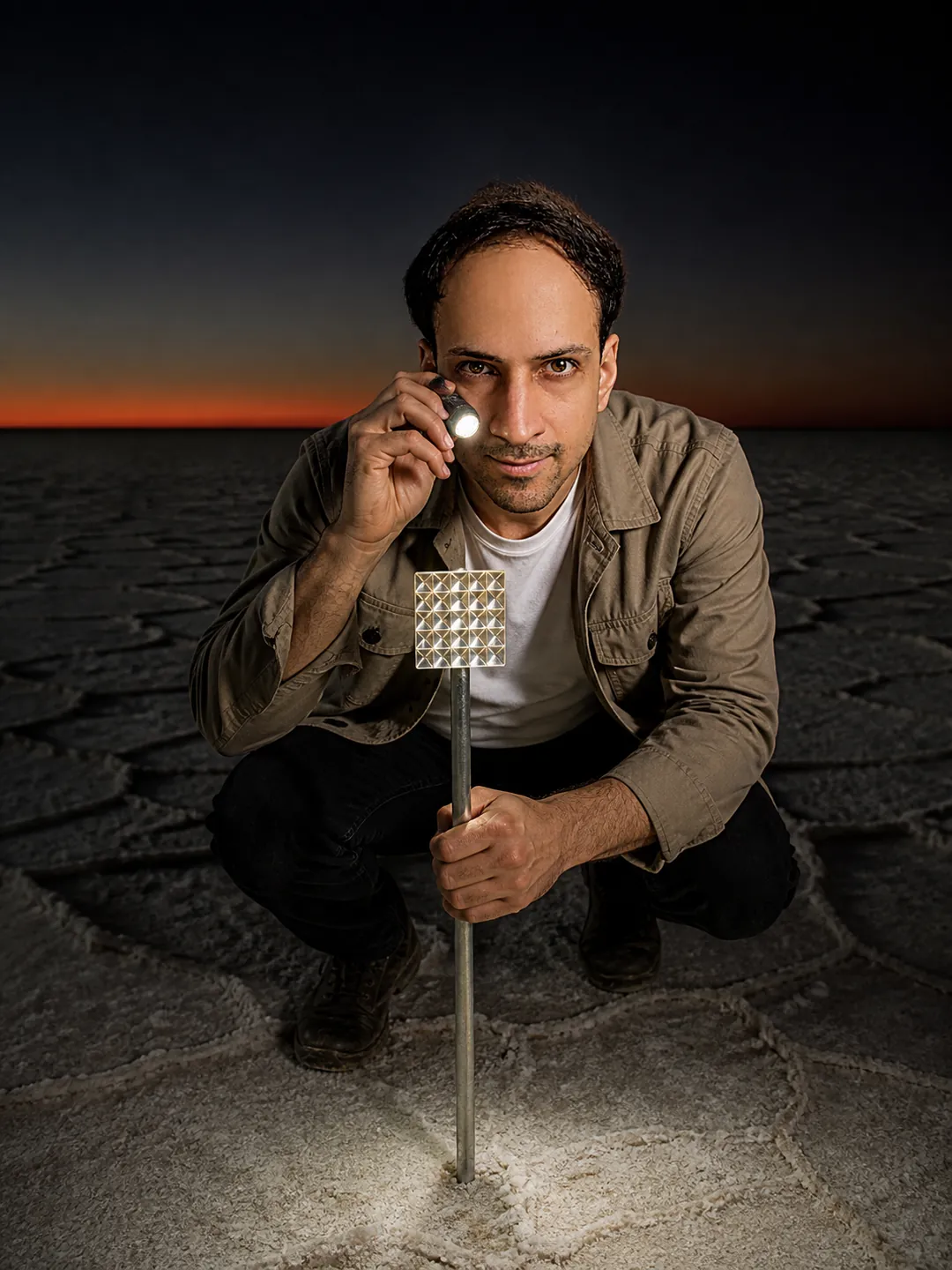
Quiet Emergence: Darkroom — AI Portrait Prompt
صورةAI Portraits

Turn your own photo into a conceptual bench-science portrait in a darkroom opened to daylight, its rinse trays racked to dry. Keeps your face unchanged.

من نص البرومبت

Use the attached reference photo as the identity reference: keep the same face, skin tone, hair and features as the person in that photo, without beautifying, aging or altering them. Treat that reference as the character anchor and change only the scene. Create a square 1:1 museum-catalog frame with a strong first read and a slower second read at exactly 2880x2880 pixels. Location: a darkroom opened to daylight, its rinse trays racked to dry. Show the subject in a dark denim jacket over a plain slate tee, rocking one shallow tray gently by its rim. The impossible-looking event must obey this clear system: a brine jar whose salt has climbed above its own waterline, a white crust wicking solution upward to build itself higher produces confident geometry in a place where nobody asked for any. Explore whether commitment deferred this long arrives all the stronger for the delay; direct expression and posture toward patient scrutiny, never melodrama or ad-like confidence. Use a 90mm framing that holds the grown geometry and their face in one plane of focus. Make the composition set liquid and solid on opposite sides of one clean diagonal. Render it as conceptual bench-science photography combining believable grown geometry, honest hand-and-glass interaction, precise material response, and quiet contemporary gallery restraint, using late golden side-light warming the whites while the room stays neutral and a palette of warm plaster, pale brine grey, and one date-brown accent. Photorealistic: this must read as a real photograph from a physical camera, never an illustration, painting, or 3D render. Resolve real surface detail: skin that reddens slightly under pressure, nail beds with honest colour, and knuckle creases that fold rather than blur. Keep one identity-locked person, credible hands and fingers, natural fabric, and coherent scale, contact, reflections, shadows, airflow, deformation, and materials. Background people only when essential, always secondary and clearly different. Avoid wizard-laboratory props, neon translucent minerals, floating crystal shards, motion-smeared growth trails, and jewelry-advert sparkle. No text, labels, logos, signatures, watermarks, random symbols, plastic skin, excessive bloom, or glossy AI finish.
Returned Light: Sabkha Salt Flat — AI Portrait Prompt
صورةAI Portraits

Turn your own photo into a high-concept optical portrait in a sabkha salt flat at dusk, horizon one unbroken line. Keeps your face unchanged.

من نص البرومبت

Use the attached reference photo as the identity reference: keep the same face, skin tone, hair and features as the person in that photo, without beautifying, aging or altering them. Treat that reference as the character anchor and change only the scene. Use a formal 3:4 environmental portrait with complete hands and meaningful objects inside frame at exactly 2480x3312 pixels. Location: a sabkha salt flat at dusk, horizon one unbroken line. Show them in a beige field jacket over a white tee, pressing a survey stake flush with the crust. Use this advanced image-making device as the core logic: a molded tile of tiny corner-cube prisms that lights end-to-end like a struck match when their lamp rides beside their eye answers each lamp with that lamp's own light and no other's. Explore why light that returns to its sender feels more like recognition than reflection; direct expression and posture toward collected surprise, never melodrama or ad-like confidence. Use an eye-level 80mm medium-format viewpoint with natural perspective and deep honest blacks. Make the composition point the strongest return at the lens, their face kept quiet. Render it as high-concept optical portraiture built from real return-path geometry, documentary night realism, precision lamp discipline, and emotionally restrained composition, using cool moonless darkness broken by one narrow torch beam and faint spill and a palette of asphalt grey, faded canvas, and one amber thread. Photorealistic: this must read as a real photograph from a physical camera, never an illustration, painting, or 3D render. Resolve real surface detail: skin that reddens slightly under pressure, nail beds with honest colour, and knuckle creases that fold rather than blur. Keep one identity-locked person, credible hands and fingers, natural fabric, and coherent scale, contact, reflections, shadows, airflow, deformation, and materials. Background people only when essential, always secondary and clearly different. Avoid laser-show haze walls, glowing animal eyes, CGI light tunnels, painted halos, and highway signage. No text, labels, logos, signatures, watermarks, random symbols, plastic skin, excessive bloom, or glossy AI finish.
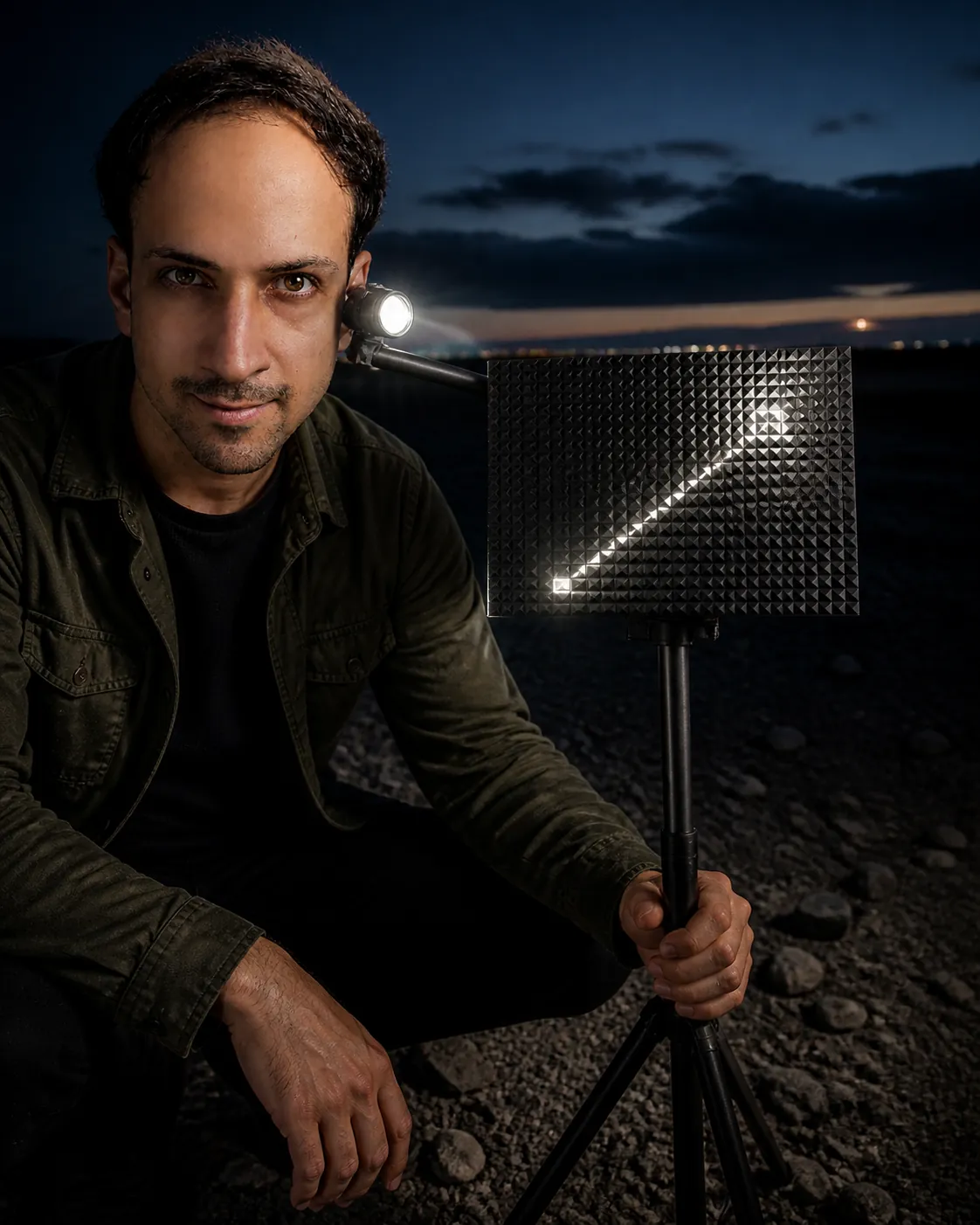
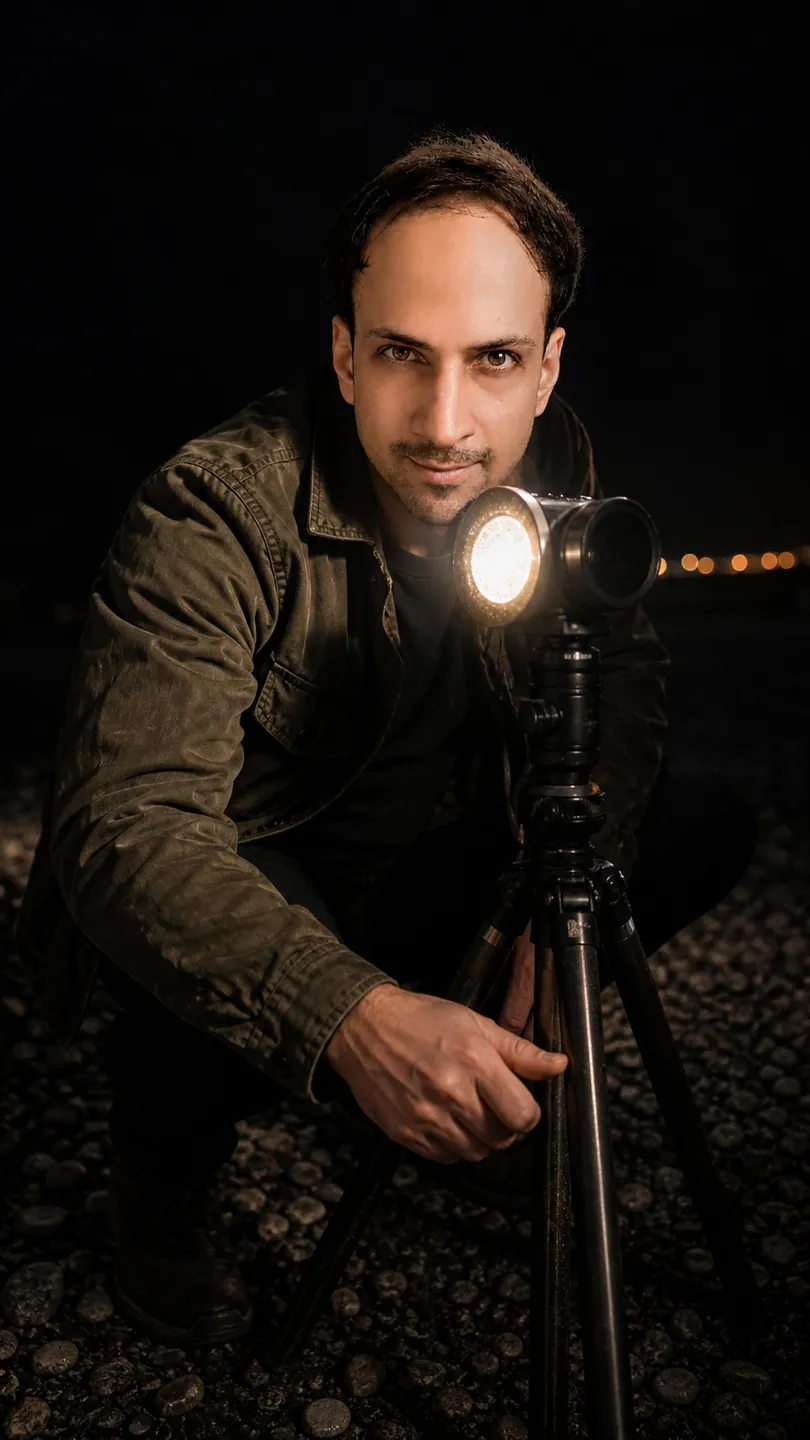
Returned Light: Gravel Plain — AI Portrait Prompt
صورةAI Portraits

Turn your own photo into a museum-grade demonstration portrait in a gravel plain at full dark beyond the city's last lights. Keeps your face unchanged.

من نص البرومبت

Use the attached reference photo as the identity reference: keep the same face, skin tone, hair and features as the person in that photo, without beautifying, aging or altering them. Treat that reference as the character anchor and change only the scene. Build a portrait 4:5 editorial artwork with protected negative space and a fully readable face at exactly 2560x3200 pixels. Location: a gravel plain at full dark beyond the city's last lights. Show them in a heavy olive overshirt over a dark thermal layer, planting a slim tripod leg firm with one press. The impossible-looking event must obey this clear system: a molded tile of tiny corner-cube prisms that lights end-to-end like a struck match when their lamp rides beside their eye returns illumination to its sender like a letter that knows its address. Explore why light that returns to its sender feels more like recognition than reflection; direct expression and posture toward patient verification, never melodrama or ad-like confidence. Frame from slightly low in the dark, their face lit by spill rather than beam. Make the composition hold the dark version and the blazing version inside one frame. Render it as museum-grade demonstration photography combining truthful on-axis brilliance, deep readable shadow detail, tactile instrument surfaces, and unhurried human presence, using low ambient dusk with a single handheld beam as the only key and a palette of night blue, bone grey, and one silver pinprick. Photorealistic: this must read as a real photograph from a physical camera, never an illustration, painting, or 3D render. Resolve real surface detail: dust settled where nobody wipes, fingerprint haze on glass, and edges rubbed pale by handling. Keep one identity-locked person, credible hands and fingers, natural fabric, and coherent scale, contact, reflections, shadows, airflow, deformation, and materials. Background people only when essential, always secondary and clearly different. Avoid laser-show haze walls, glowing animal eyes, CGI light tunnels, painted halos, and highway signage. No text, labels, logos, signatures, watermarks, random symbols, plastic skin, excessive bloom, or glossy AI finish.
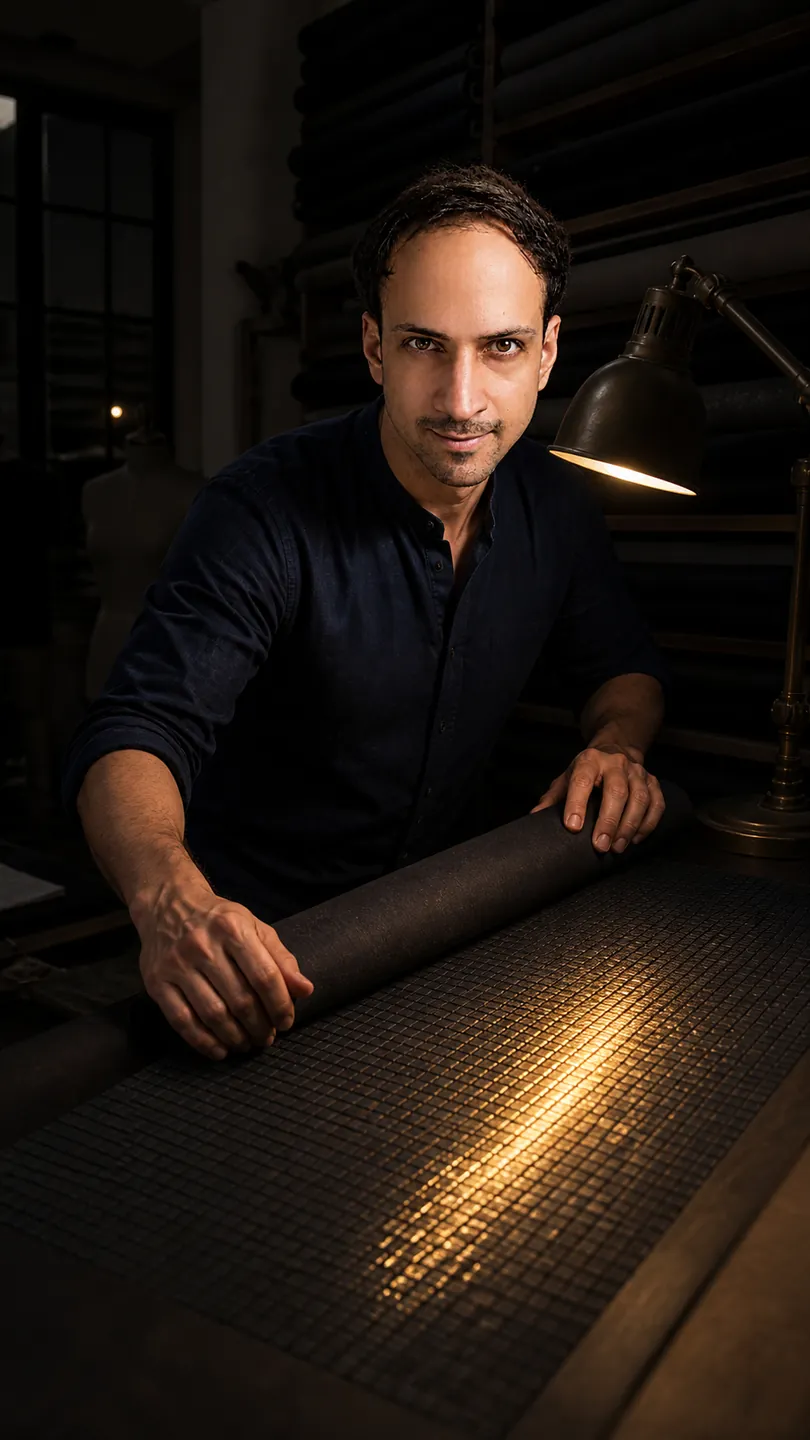
Returned Light: Tailor's Atelier — AI Portrait Prompt
صورةAI Portraits

Turn your own photo into a quiet experimental gallery portrait in a tailor's atelier after closing, cloth bolts racked high. Keeps your face unchanged.

من نص البرومبت

Use the attached reference photo as the identity reference: keep the same face, skin tone, hair and features as the person in that photo, without beautifying, aging or altering them. Treat that reference as the character anchor and change only the scene. Design a full-height 9:16 cinematic artwork that reads on a phone and rewards gallery-scale inspection at exactly 2144x3808 pixels. Location: a tailor's atelier after closing, cloth bolts racked high. Show them in a collarless indigo work shirt with sleeves rolled twice, unrolling a dark bolt one turn across the table. Build the artwork around this material rule: a molded tile of tiny corner-cube prisms that lights end-to-end like a struck match when their lamp rides beside their eye writes the observer's own position into the brightness it shows them. Explore why light that returns to its sender feels more like recognition than reflection; direct expression and posture toward attentive wonder, never melodrama or ad-like confidence. Frame in half-profile at chest height so the person and the answering light stay equally readable. Make the composition surround one small blaze with generous, honest darkness. Render it as quiet experimental gallery photography built around one working retroreflector, disciplined single-source lighting, true-to-life surface response, and patient observational framing, using cool moonless darkness broken by one narrow torch beam and faint spill and a palette of graphite, dusty sand, and one pale gold star. Photorealistic: this must read as a real photograph from a physical camera, never an illustration, painting, or 3D render. Give the air depth: falloff with distance and no artificial clarity far back. Resolve real surface detail: thread ends and slight pilling on worn cloth, hairline chips at every hard corner, and stone that is porous rather than smooth. Keep one identity-locked person, credible hands and fingers, natural fabric, and coherent scale, contact, reflections, shadows, airflow, deformation, and materials. Background people only when essential, always secondary and clearly different. Avoid laser-show haze walls, glowing animal eyes, CGI light tunnels, painted halos, and highway signage. No text, labels, logos, signatures, watermarks, random symbols, plastic skin, excessive bloom, or glossy AI finish.
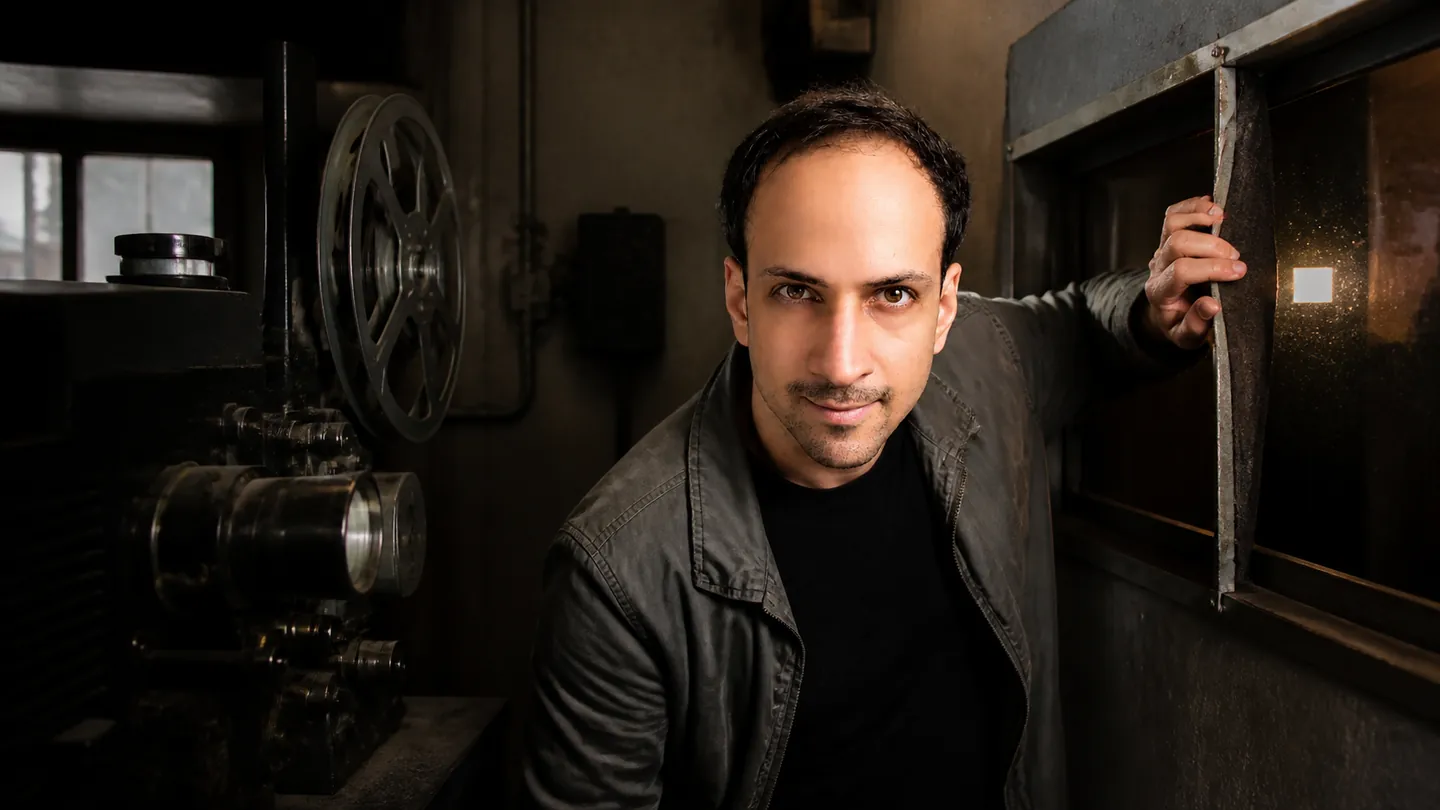
Returned Light: Projection Booth — AI Portrait Prompt
صورةAI Portraits

Turn your own photo into a high-concept optical portrait in the projection booth of a shuttered single-screen cinema. Keeps your face unchanged.

من نص البرومبت

Use the attached reference photo as the identity reference: keep the same face, skin tone, hair and features as the person in that photo, without beautifying, aging or altering them. Treat that reference as the character anchor and change only the scene. Compose a wide 16:9 narrative image where environment and subject carry equal meaning at exactly 3808x2144 pixels. Location: the projection booth of a shuttered single-screen cinema. Show them in a black crew-neck sweater under an open grey utility jacket, pressing the felt door seal flat with one thumb. Use this advanced image-making device as the core logic: a molded tile of tiny corner-cube prisms that lights end-to-end like a struck match when their lamp rides beside their eye shows one honest face to the axis and another to the room. Explore why light that returns to its sender feels more like recognition than reflection; direct expression and posture toward steady curiosity, never melodrama or ad-like confidence. Use a 90mm portrait lens with a small lamp rigged tight beside it so the return blazes lawfully at the camera. Make the composition let the off-axis dullness occupy most of the frame. Render it as high-concept optical portraiture built from real return-path geometry, documentary night realism, precision lamp discipline, and emotionally restrained composition, using late window light kept low so on-axis return outshines every ordinary reflection and a palette of asphalt grey, faded canvas, and one amber thread. Photorealistic: this must read as a real photograph from a physical camera, never an illustration, painting, or 3D render. Give the space honest scale: real distance between foreground, subject, and far wall. Resolve real surface detail: the difference between a wiped surface and a clean one, faint tide marks on ceramic, and metal dulled unevenly by touch. Keep one identity-locked person, credible hands and fingers, natural fabric, and coherent scale, contact, reflections, shadows, airflow, deformation, and materials. Background people only when essential, always secondary and clearly different. Avoid glowing sci-fi visors, hi-vis vest advertising poses, lens-flare starbursts, and neon cyberpunk streets. No text, labels, logos, signatures, watermarks, random symbols, plastic skin, excessive bloom, or glossy AI finish.
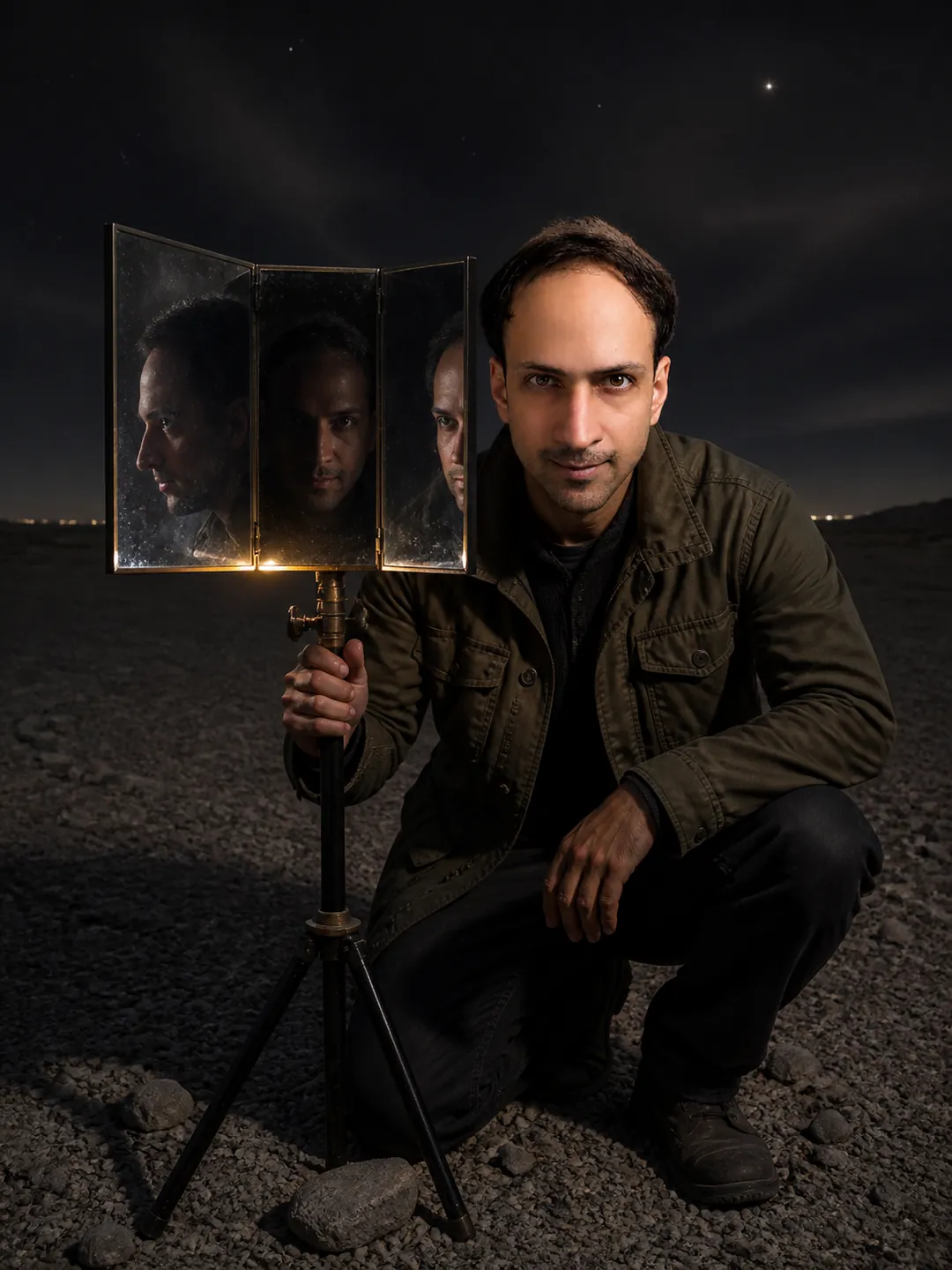
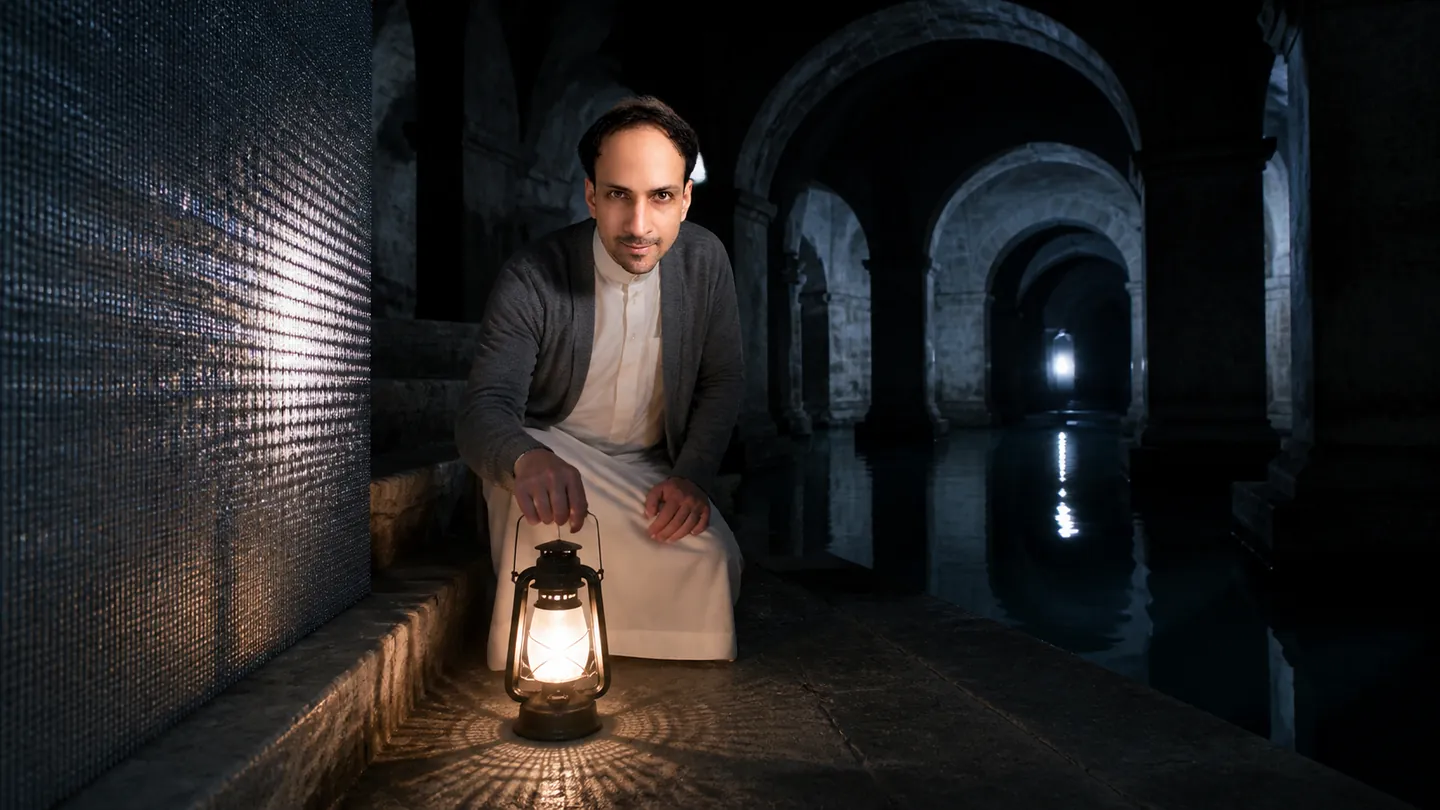
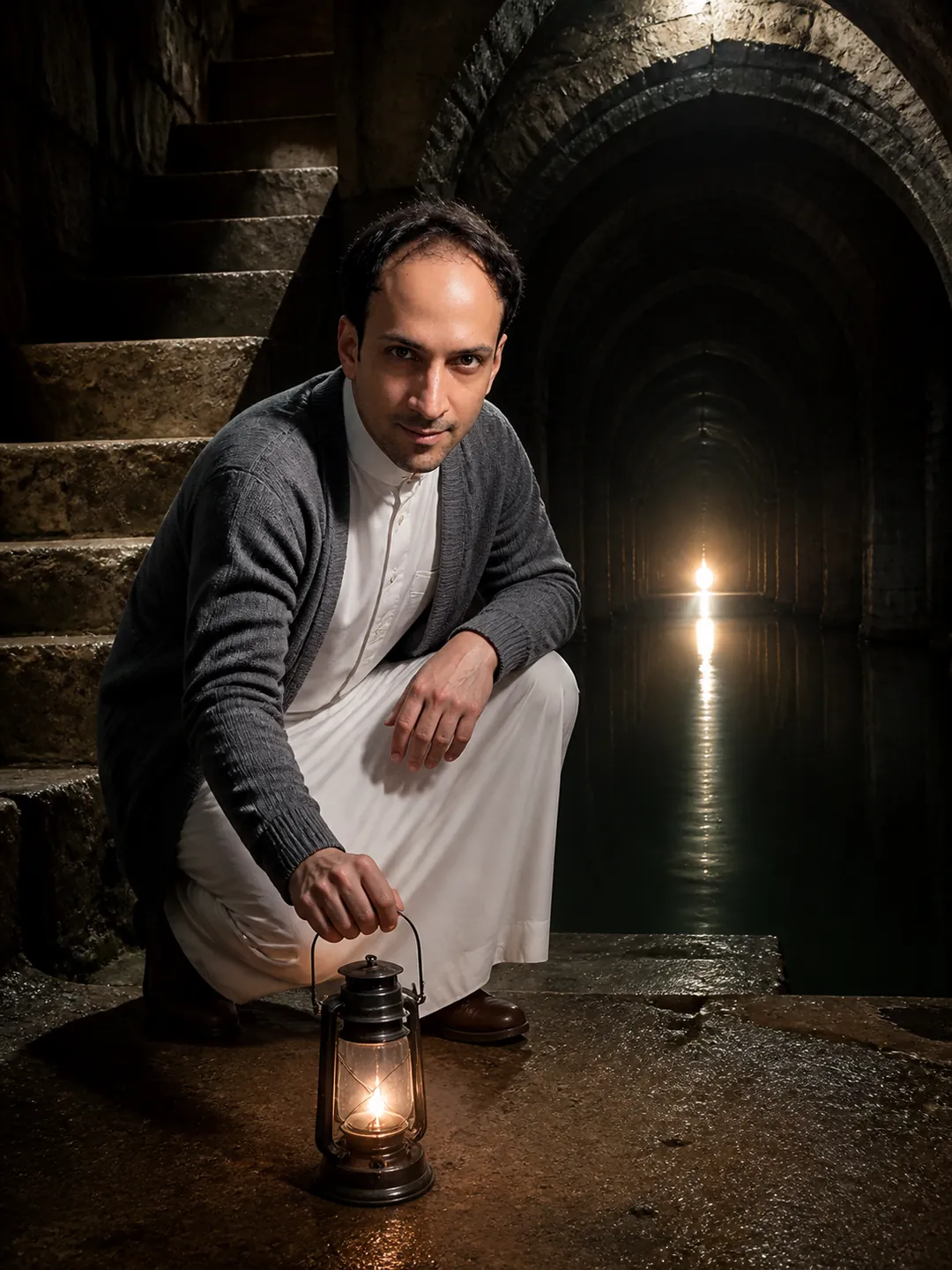
Asked and Answered: Vaulted Stone Cistern — AI Portrait Prompt
صورةAI Portraits

Turn your own photo into a high-concept optical portrait in a vaulted stone cistern reached by worn steps, cool and still. Keeps your face unchanged.

من نص البرومبت

Use the attached reference photo as the identity reference: keep the same face, skin tone, hair and features as the person in that photo, without beautifying, aging or altering them. Treat that reference as the character anchor and change only the scene. Compose a wide 16:9 narrative image where environment and subject carry equal meaning at exactly 3808x2144 pixels. Location: a vaulted stone cistern reached by worn steps, cool and still. Show them in a plain white traditional Gulf outfit under a grey winter cardigan, setting a storm lantern down on level stone. Build the artwork around this material rule: a glass-bead screen that blazes furnace-bright along their lamp's axis and shows dull grey one step aside shows one honest face to the axis and another to the room. Explore what it means to receive back exactly what was sent and nothing else; direct expression and posture toward gentle exactness, never melodrama or ad-like confidence. Use an eye-level 80mm medium-format viewpoint with natural perspective and deep honest blacks. Make the composition point the strongest return at the lens, their face kept quiet. Render it as high-concept optical portraiture built from real return-path geometry, documentary night realism, precision lamp discipline, and emotionally restrained composition, using cool moonless darkness broken by one narrow torch beam and faint spill and a palette of night blue, bone grey, and one silver pinprick. Photorealistic: this must read as a real photograph from a physical camera, never an illustration, painting, or 3D render. Give truthful depth cues: overlapping planes and shadows softening as they travel. Resolve real surface detail: wood grain read at honest scale, matte and gloss clearly separated, and no surface uniformly clean. Keep one identity-locked person, credible hands and fingers, natural fabric, and coherent scale, contact, reflections, shadows, airflow, deformation, and materials. Background people only when essential, always secondary and clearly different. Avoid glowing sci-fi visors, hi-vis vest advertising poses, lens-flare starbursts, and neon cyberpunk streets. No text, labels, logos, signatures, watermarks, random symbols, plastic skin, excessive bloom, or glossy AI finish.
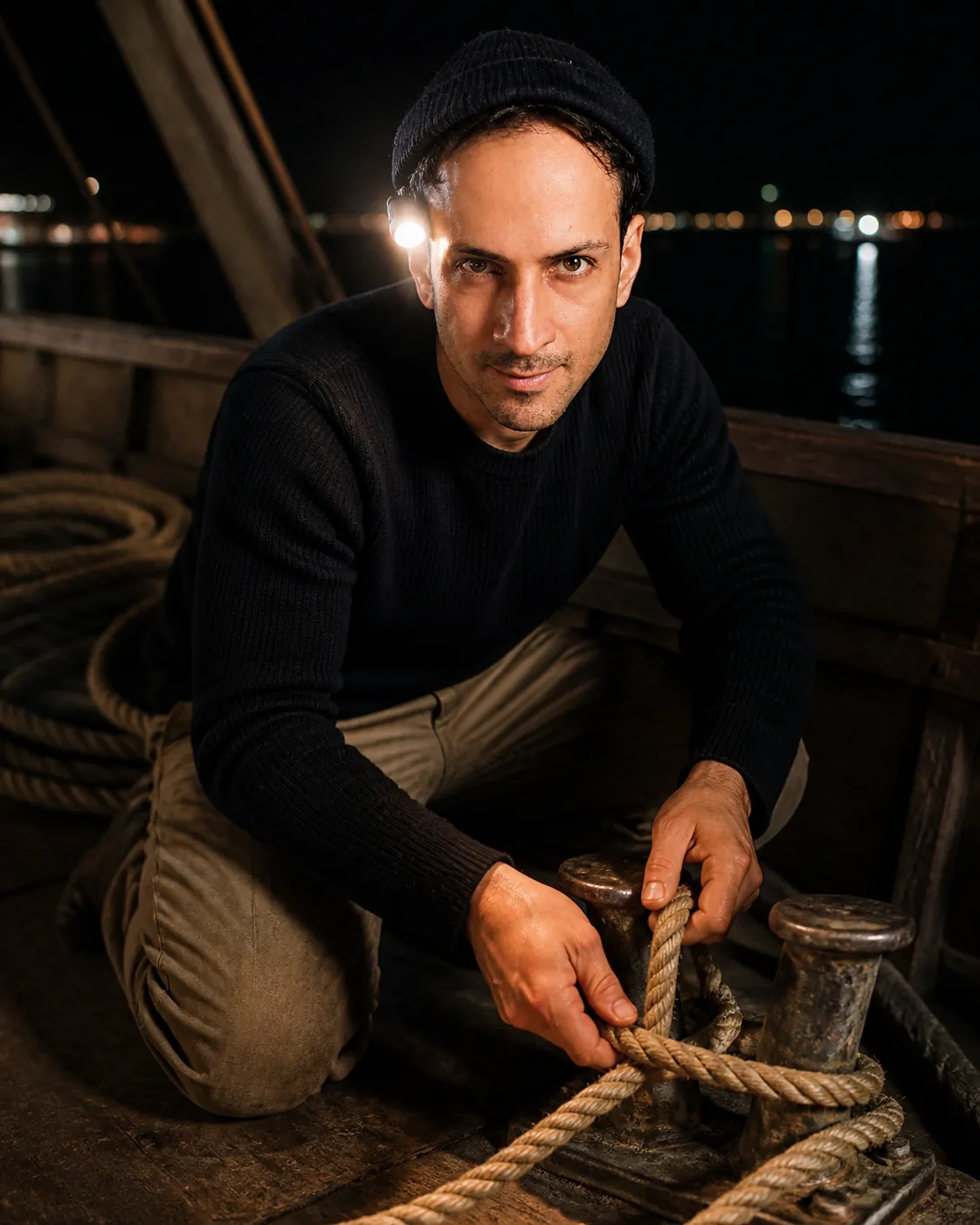
The Way Home: Gravel Plain — AI Portrait Prompt
صورةAI Portraits

Turn your own photo into a conceptual field-optics portrait in a gravel plain at full dark beyond the city's last lights. Keeps your face unchanged.

من نص البرومبت

Use the attached reference photo as the identity reference: keep the same face, skin tone, hair and features as the person in that photo, without beautifying, aging or altering them. Treat that reference as the character anchor and change only the scene. Use a formal 3:4 environmental portrait with complete hands and meaningful objects inside frame at exactly 2480x3312 pixels. Location: a gravel plain at full dark beyond the city's last lights. Show them in a heavy olive overshirt over a dark thermal layer, planting a slim tripod leg firm with one press. Use this advanced image-making device as the core logic: a hollow corner of three mirrors that pins their reflected gaze to its apex no matter where they move their head stays dark to every eye except the one beside the asking lamp. Explore how a surface can be truthfully dark and truthfully blazing in the same minute; direct expression and posture toward steady curiosity, never melodrama or ad-like confidence. Use an eye-level 80mm medium-format viewpoint with natural perspective and deep honest blacks. Make the composition point the strongest return at the lens, their face kept quiet. Render it as conceptual field-optics realism blending honest low-light exposure, physically accurate retroreflection, quiet darkened-space atmosphere, and calm human-scale editorial framing, using late window light kept low so on-axis return outshines every ordinary reflection and a palette of graphite, dusty sand, and one pale gold star. Photorealistic: this must read as a real photograph from a physical camera, never an illustration, painting, or 3D render. Resolve real surface detail: brass darkened in the recesses and bright where thumbs land, and lacquer crazed rather than perfect. Keep one identity-locked person, credible hands and fingers, natural fabric, and coherent scale, contact, reflections, shadows, airflow, deformation, and materials. Background people only when essential, always secondary and clearly different. Avoid glowing sci-fi visors, hi-vis vest advertising poses, lens-flare starbursts, and neon cyberpunk streets. No text, labels, logos, signatures, watermarks, random symbols, plastic skin, excessive bloom, or glossy AI finish.
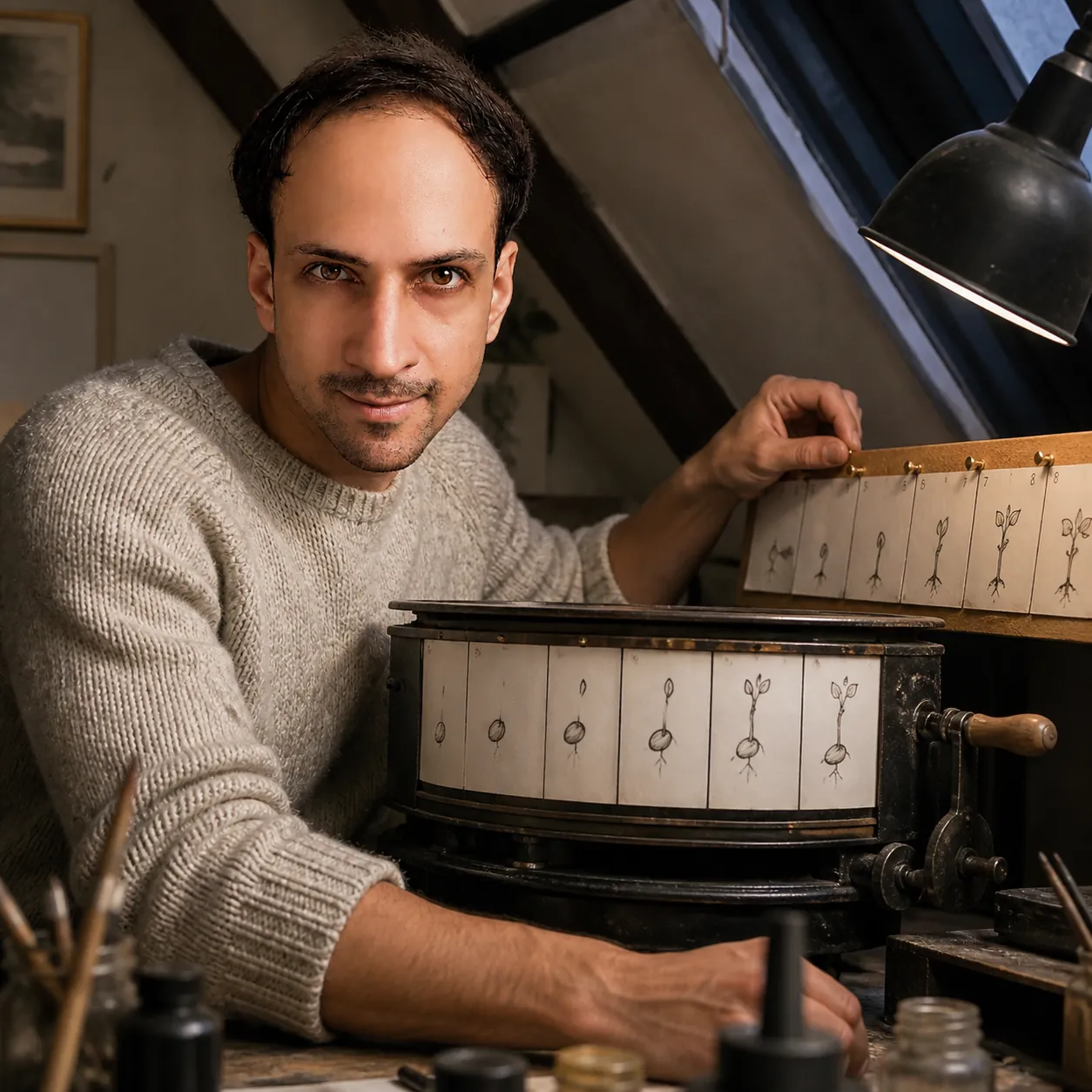
Returned Light: Deck of a Moored Dhow — AI Portrait Prompt
صورةAI Portraits

Turn your own photo into a quiet experimental gallery portrait in the deck of a moored dhow on a windless gulf night. Keeps your face unchanged.

من نص البرومبت

Use the attached reference photo as the identity reference: keep the same face, skin tone, hair and features as the person in that photo, without beautifying, aging or altering them. Treat that reference as the character anchor and change only the scene. Build a portrait 4:5 editorial artwork with protected negative space and a fully readable face at exactly 2560x3200 pixels. Location: the deck of a moored dhow on a windless gulf night. Show them in a navy watch cap, dark fisherman's sweater, and canvas work trousers, cleating a slack line with two practiced wraps. Build the artwork around this material rule: a molded tile of tiny corner-cube prisms that lights end-to-end like a struck match when their lamp rides beside their eye carries its answer home across distance that would starve scattered light. Explore why light that returns to its sender feels more like recognition than reflection; direct expression and posture toward humbled precision, never melodrama or ad-like confidence. Use a 90mm portrait lens with a small lamp rigged tight beside it so the return blazes lawfully at the camera. Make the composition let the off-axis dullness occupy most of the frame. Render it as quiet experimental gallery photography built around one working retroreflector, disciplined single-source lighting, true-to-life surface response, and patient observational framing, using soft overhead work light dimmed until the answering shine can dominate honestly and a palette of graphite, dusty sand, and one pale gold star. Photorealistic: this must read as a real photograph from a physical camera, never an illustration, painting, or 3D render. Resolve real surface detail: fine lint on dark fabric, water spotting on steel, and the soft rounding of edges that have been used for years. Keep one identity-locked person, credible hands and fingers, natural fabric, and coherent scale, contact, reflections, shadows, airflow, deformation, and materials. Background people only when essential, always secondary and clearly different. Avoid glowing sci-fi visors, hi-vis vest advertising poses, lens-flare starbursts, and neon cyberpunk streets. No text, labels, logos, signatures, watermarks, random symbols, plastic skin, excessive bloom, or glossy AI finish.
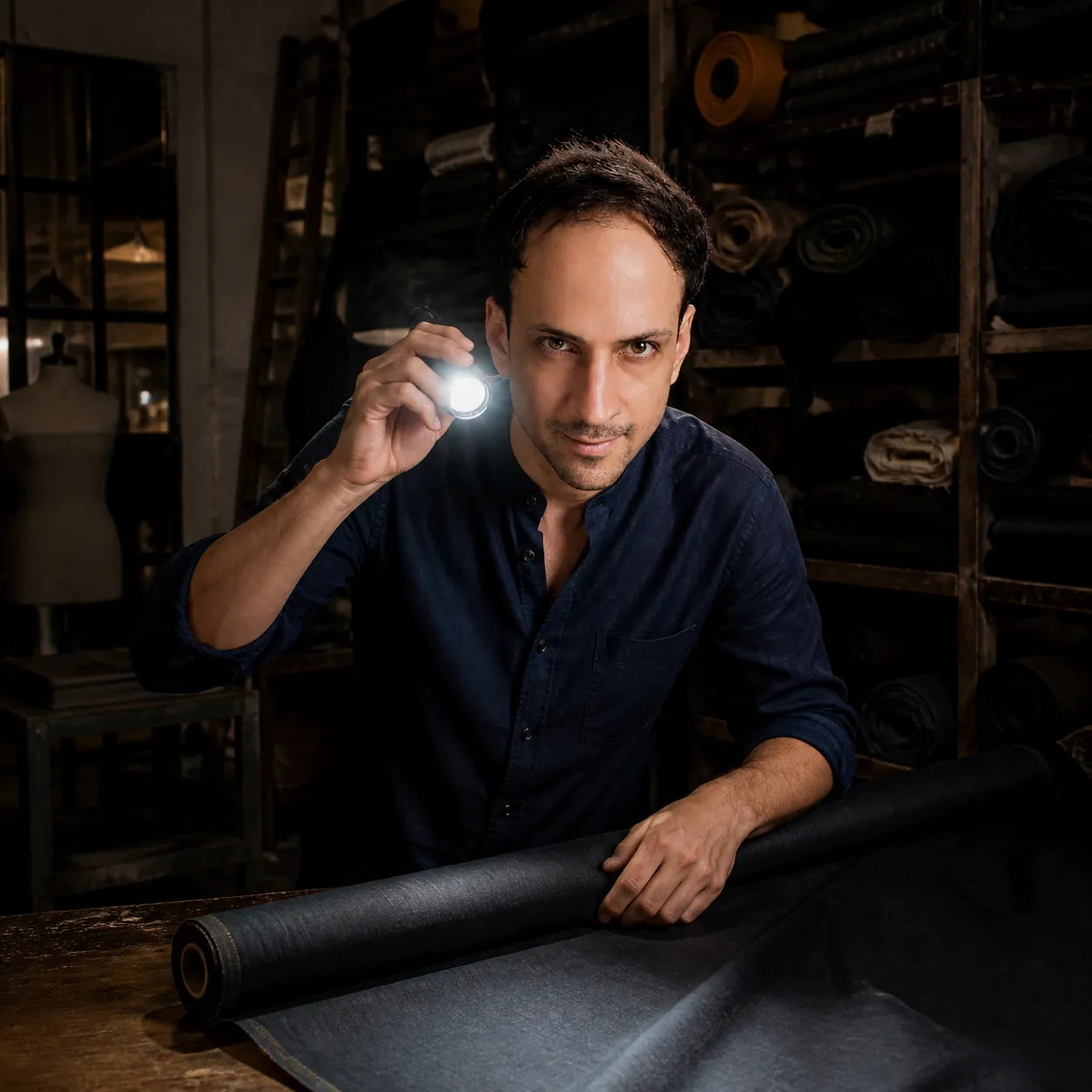
Strict Rhythm: Illustrator's Attic Studio — AI Portrait Prompt
صورةAI Portraits

Turn your own photo into a kinetic-sculpture portrait in an illustrator's attic studio, its drawing desk tilted toward a dormer. Keeps your face unchanged.

من نص البرومبت

Use the attached reference photo as the identity reference: keep the same face, skin tone, hair and features as the person in that photo, without beautifying, aging or altering them. Create a square 1:1 museum-catalog frame with a strong first read and a slower second read at exactly 2880x2880 pixels. Location: an illustrator's attic studio, its drawing desk tilted toward a dormer. Show the subject in an oatmeal fisherman sweater with sleeves pushed past the wrist, pinning a strip of numbered sketches to a cork rail. Use this advanced image-making device as the core logic: a hand-cranked mutoscope drum whose ring of ink-drawn cards flips a single seed through its whole germination in seconds turns strict mechanical repetition into one seamless appearance the eye trusts. Explore whether an illusion that confesses its whole mechanism still deserves the name; direct expression and posture toward modest certainty, never melodrama or ad-like confidence. Frame from across the bench at the machine's own height so person and mechanism meet as equals. Make the composition keep the room's stillness large around one small engine of motion. Render it as kinetic-sculpture photography grounded in believable machinery, honest depth of field, accurate frozen-motion physics, and unhurried editorial portrait craft, using one shaded work lamp over the apparatus and darkness kept honest beyond and a palette of deep charcoal, pale water-glass, and muted indigo. Photorealistic: this must read as a real photograph from a physical camera, never an illustration, painting, or 3D render. Resolve real surface detail: rubber gone chalky with age, painted metal chipped to primer, and plastic yellowed only where light reaches it. Keep one identity-locked person, credible hands and fingers, natural fabric, and coherent scale, contact, reflections, shadows, airflow, deformation, and materials. Background people only when essential, always secondary and clearly different. Avoid steampunk goggles and gears, CGI slow-motion splashes, projected film beams, carnival colors, and duplicated human figures. No text, labels, logos, signatures, watermarks, random symbols, plastic skin, excessive bloom, or glossy AI finish.
Sent Back: Tailor's Atelier — AI Portrait Prompt
صورةAI Portraits

Turn your own photo into a high-concept optical portrait in a tailor's atelier after closing, cloth bolts racked high. Keeps your face unchanged.

من نص البرومبت

Use the attached reference photo as the identity reference: keep the same face, skin tone, hair and features as the person in that photo, without beautifying, aging or altering them. Create a square 1:1 museum-catalog frame with a strong first read and a slower second read at exactly 2880x2880 pixels. Location: a tailor's atelier after closing, cloth bolts racked high. Show the subject in a collarless indigo work shirt with sleeves rolled twice, unrolling a dark bolt one turn across the table. Treat this mechanism as the frame’s governing rule: a shallow tray of dull volcanic dust that surges visibly brighter the instant their lamp is raised beside their eye keeps its full brightness for the one standing at the light's source. Explore why distance loses its power over light that refuses to scatter on the way; direct expression and posture toward steady curiosity, never melodrama or ad-like confidence. Frame in half-profile at chest height so the subject and the answering light stay equally readable. Make the composition point the strongest return at the lens, their face kept quiet. Render it as high-concept optical portraiture built from real return-path geometry, documentary night realism, precision lamp discipline, and emotionally restrained composition, using low ambient dusk with a single handheld beam as the only key and a palette of asphalt grey, faded canvas, and one amber thread. Photorealistic: this must read as a real photograph from a physical camera, never an illustration, painting, or 3D render. Resolve real surface detail: grout darker than tile, sealant slightly yellowed, and every joint showing a real tolerance gap. Keep one identity-locked subject, credible hands and fingers, natural fabric, and coherent scale, contact, reflections, shadows, airflow, deformation, and materials. Background people only when essential, always secondary and clearly different. Avoid glowing sci-fi visors, hi-vis vest advertising poses, lens-flare starbursts, and neon cyberpunk streets. No text, labels, logos, signatures, watermarks, random symbols, plastic skin, excessive bloom, or glossy AI finish.
Light Answers: Sabkha Salt Flat — AI Portrait Prompt
صورةAI Portraits

Turn your own photo into a conceptual field-optics portrait in a sabkha salt flat at dusk, horizon one unbroken line. Keeps your face unchanged.

من نص البرومبت

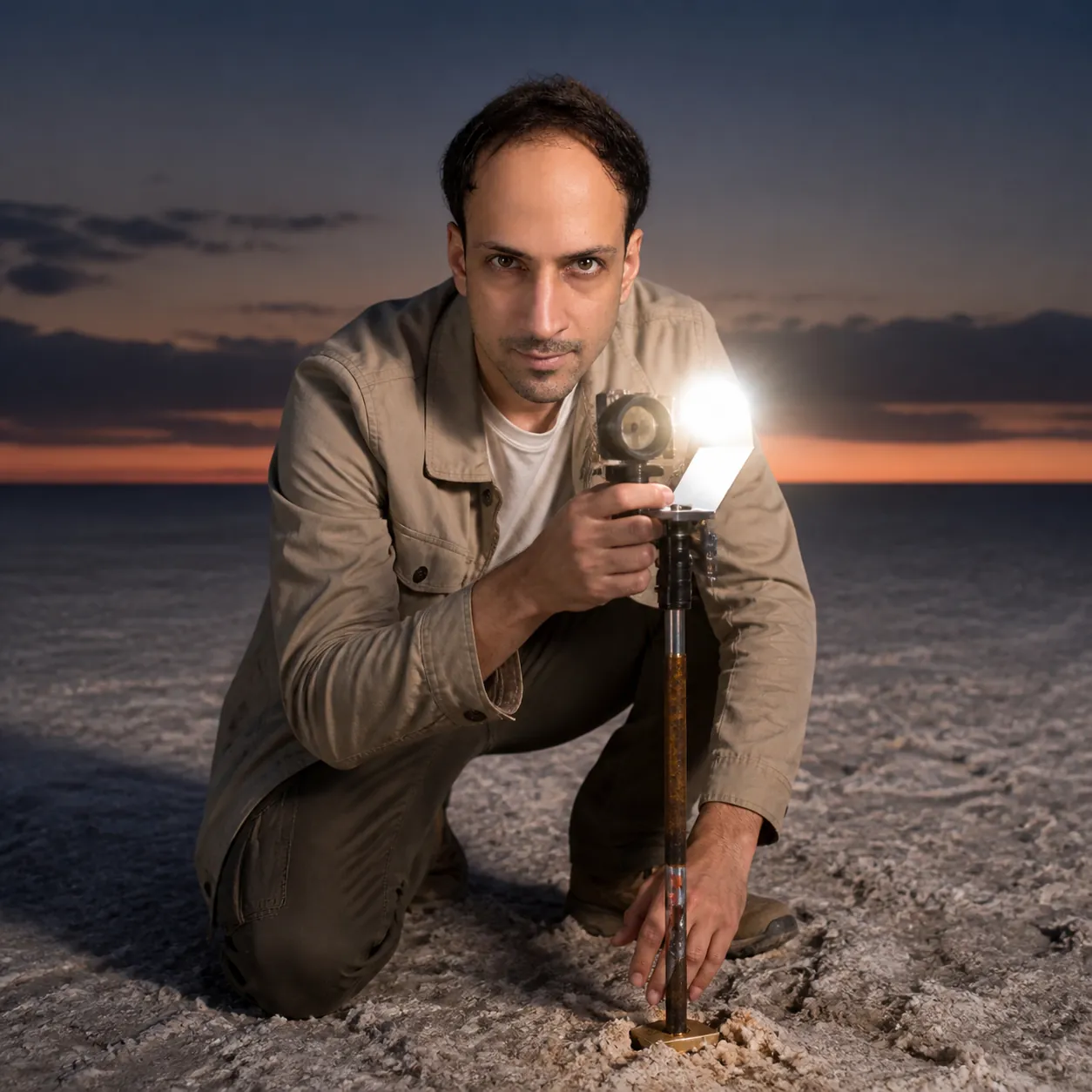
Use the attached reference photo as the identity reference: keep the same face, skin tone, hair and features as the person in that photo, without beautifying, aging or altering them. Create a square 1:1 museum-catalog frame with a strong first read and a slower second read at exactly 2880x2880 pixels. Location: a sabkha salt flat at dusk, horizon one unbroken line. Show the subject in a beige field jacket over a white tee, pressing a survey stake flush with the crust. The impossible-looking event must obey this clear system: a dull grey panel that ignites to hard glare only through a tilted half-mirror seating their lamp on their sight line turns the open air into a private channel between lamp and eye. Explore what a brightness only one person can witness says about shared reality; direct expression and posture toward patient verification, never melodrama or ad-like confidence. Use a 90mm portrait lens with a small lamp rigged tight beside it so the return blazes lawfully at the camera. Make the composition hold the dark version and the blazing version inside one frame. Render it as conceptual field-optics realism blending honest low-light exposure, physically accurate retroreflection, quiet darkened-space atmosphere, and calm human-scale editorial framing, using late window light kept low so on-axis return outshines every ordinary reflection and a palette of charcoal, unpolished brass, and one warm white blaze. Photorealistic: this must read as a real photograph from a physical camera, never an illustration, painting, or 3D render. Resolve real surface detail: skin that reddens slightly under pressure, nail beds with honest colour, and knuckle creases that fold rather than blur. Keep one identity-locked subject, credible hands and fingers, natural fabric, and coherent scale, contact, reflections, shadows, airflow, deformation, and materials. Background people only when essential, always secondary and clearly different. Avoid laser-show haze walls, glowing animal eyes, CGI light tunnels, painted halos, and highway signage. No text, labels, logos, signatures, watermarks, random symbols, plastic skin, excessive bloom, or glossy AI finish.
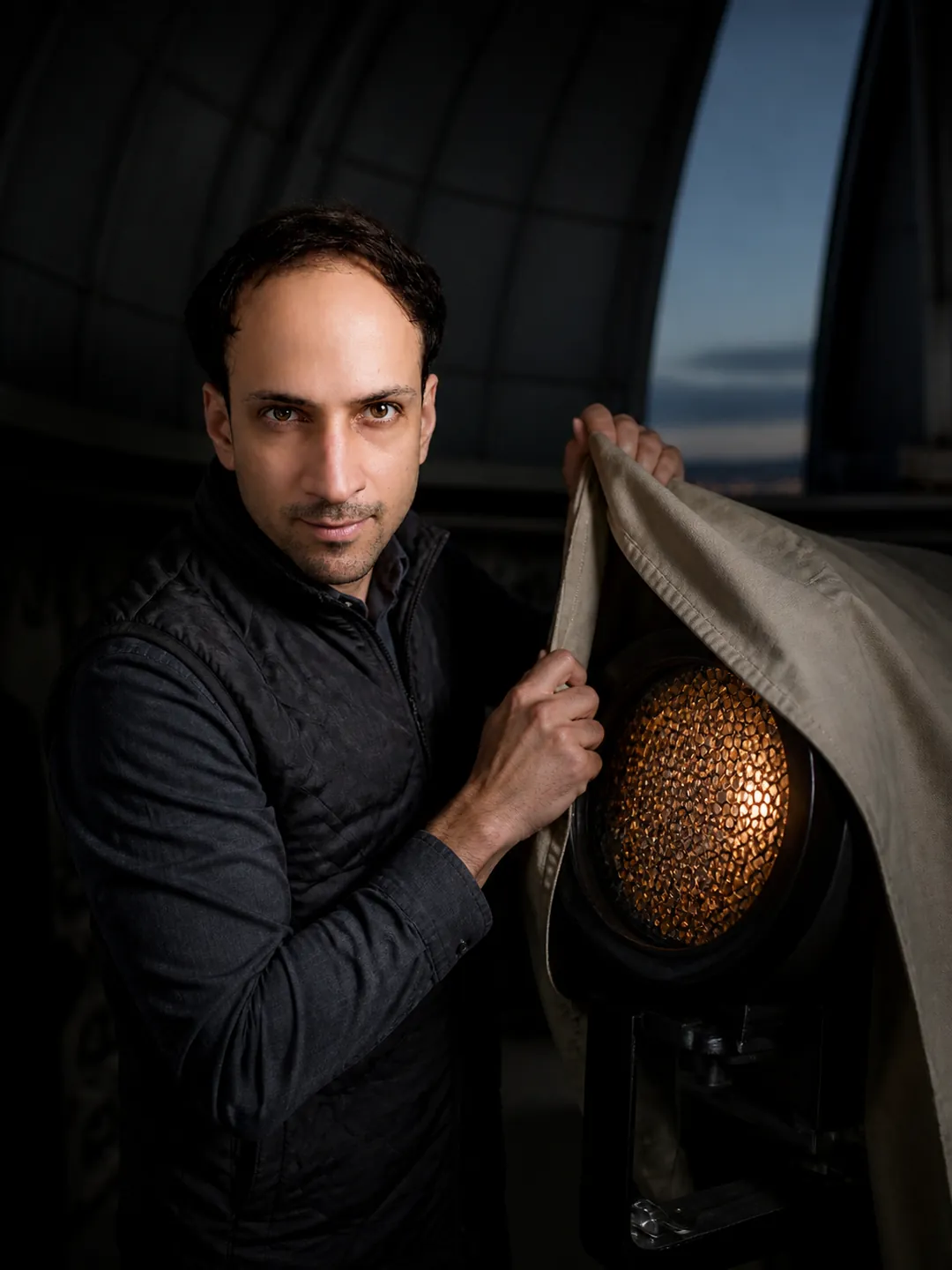
The Way Home: Catwalk — AI Portrait Prompt
صورةAI Portraits

Turn your own photo into a museum-grade demonstration portrait in the catwalk of a small university observatory under a closed dome. Keeps your face unchanged.

من نص البرومبت

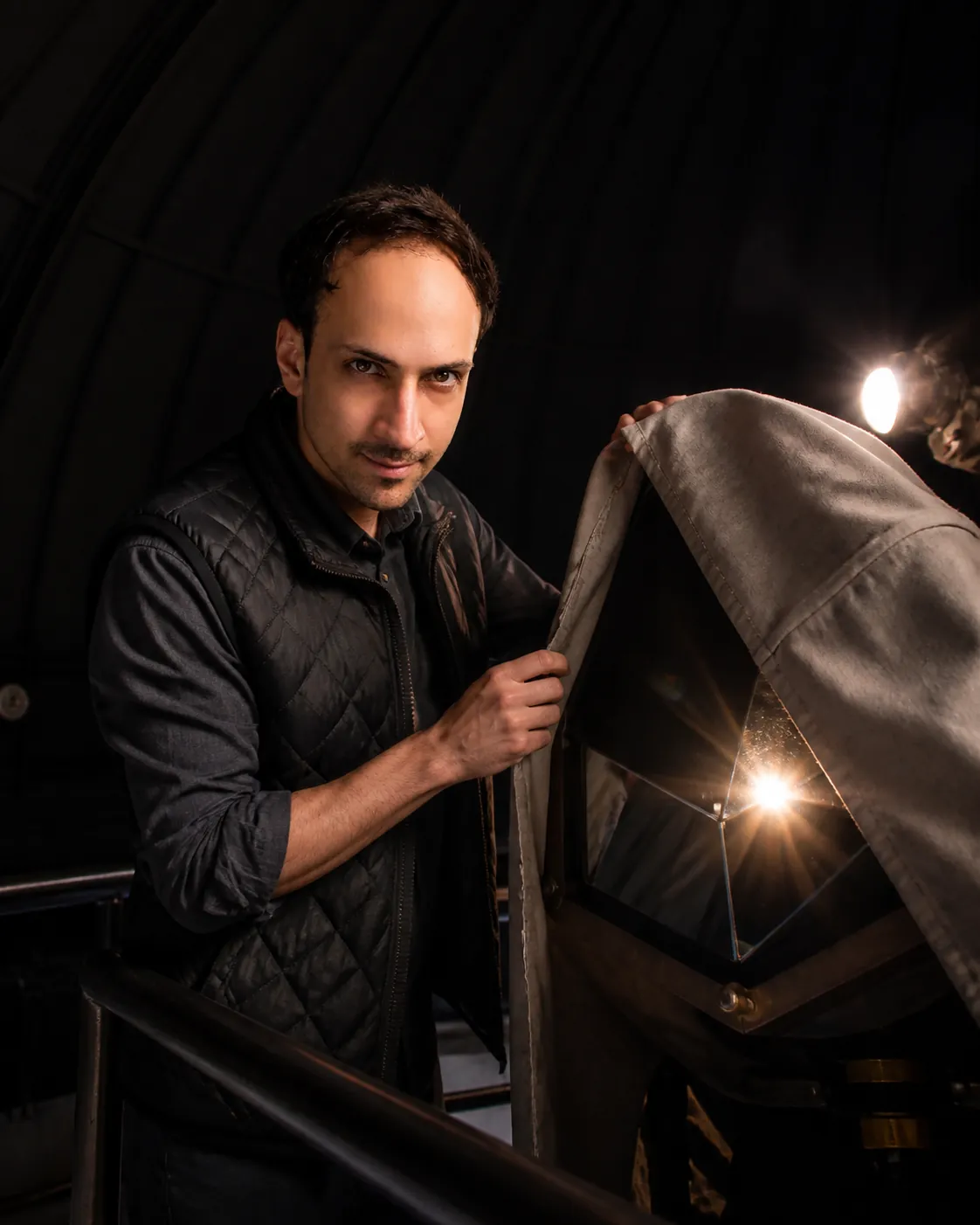
Use the attached reference photo as the identity reference: keep the same face, skin tone, hair and features as the person in that photo, without beautifying, aging or altering them. Treat that reference as the character anchor and change only the scene. Build a portrait 4:5 editorial artwork with protected negative space and a fully readable face at exactly 2560x3200 pixels. Location: the catwalk of a small university observatory under a closed dome. Show them in a quilted charcoal gilet over a slate flannel shirt, drawing a canvas dust cover back with both hands. Build the artwork around this material rule: a hollow corner of three mirrors that pins their reflected gaze to its apex no matter where they move their head returns illumination to its sender like a letter that knows its address. Explore how a surface can be truthfully dark and truthfully blazing in the same minute; direct expression and posture toward attentive wonder, never melodrama or ad-like confidence. Use a 90mm portrait lens with a small lamp rigged tight beside it so the return blazes lawfully at the camera. Make the composition let the off-axis dullness occupy most of the frame. Render it as museum-grade demonstration photography combining truthful on-axis brilliance, deep readable shadow detail, tactile instrument surfaces, and unhurried human presence, using cool moonless darkness broken by one narrow torch beam and faint spill and a palette of charcoal, unpolished brass, and one warm white blaze. Photorealistic: this must read as a real photograph from a physical camera, never an illustration, painting, or 3D render. Resolve real surface detail: cotton that hangs by its own weight, seams that pucker very slightly, and collars softened by washing. Keep one identity-locked person, credible hands and fingers, natural fabric, and coherent scale, contact, reflections, shadows, airflow, deformation, and materials. Background people only when essential, always secondary and clearly different. Avoid laser-show haze walls, glowing animal eyes, CGI light tunnels, painted halos, and highway signage. No text, labels, logos, signatures, watermarks, random symbols, plastic skin, excessive bloom, or glossy AI finish.
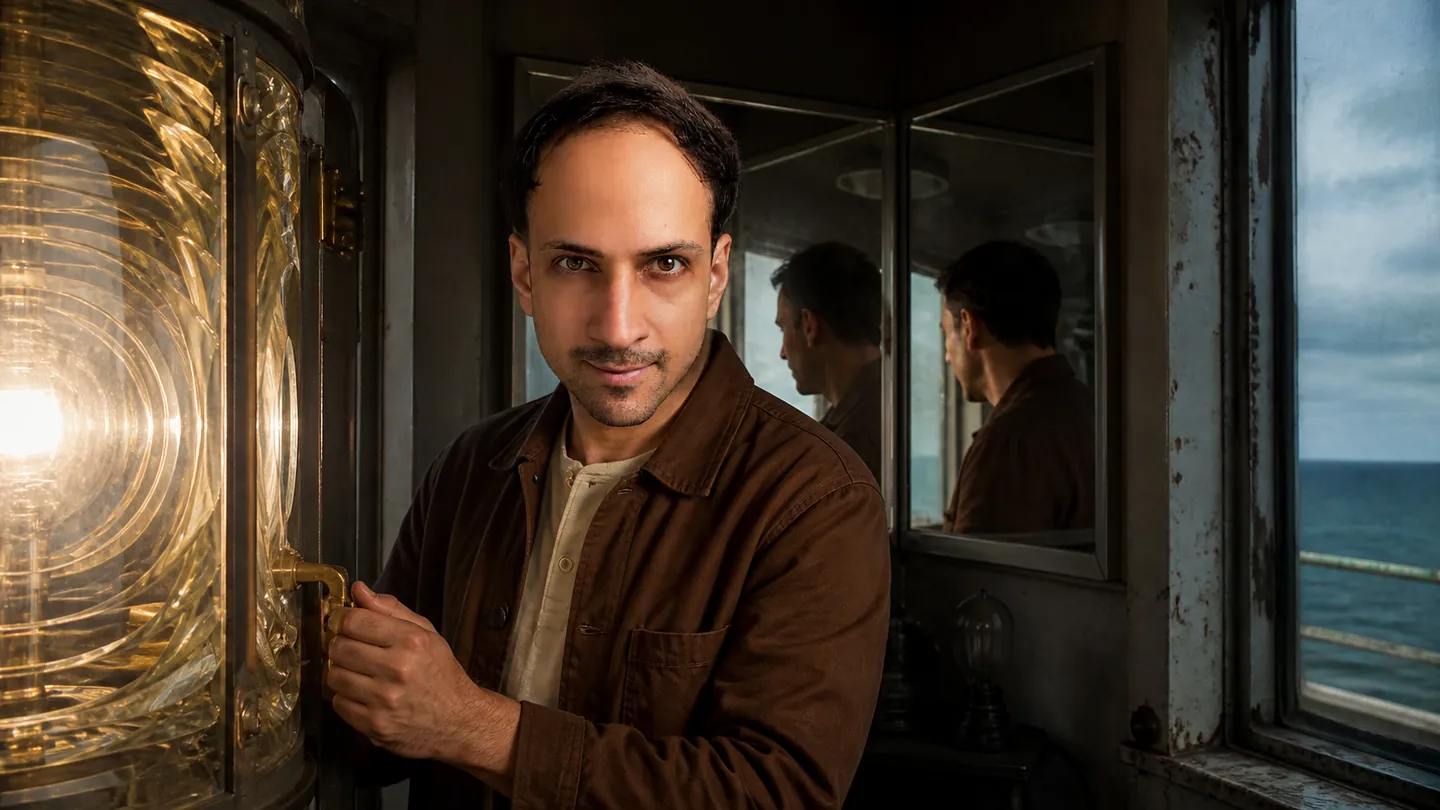
Returned Light: Lamp Room — AI Portrait Prompt
صورةAI Portraits

Turn your own photo into a museum-grade demonstration portrait in the lamp room of a decommissioned coastal lighthouse. Keeps your face unchanged.

من نص البرومبت

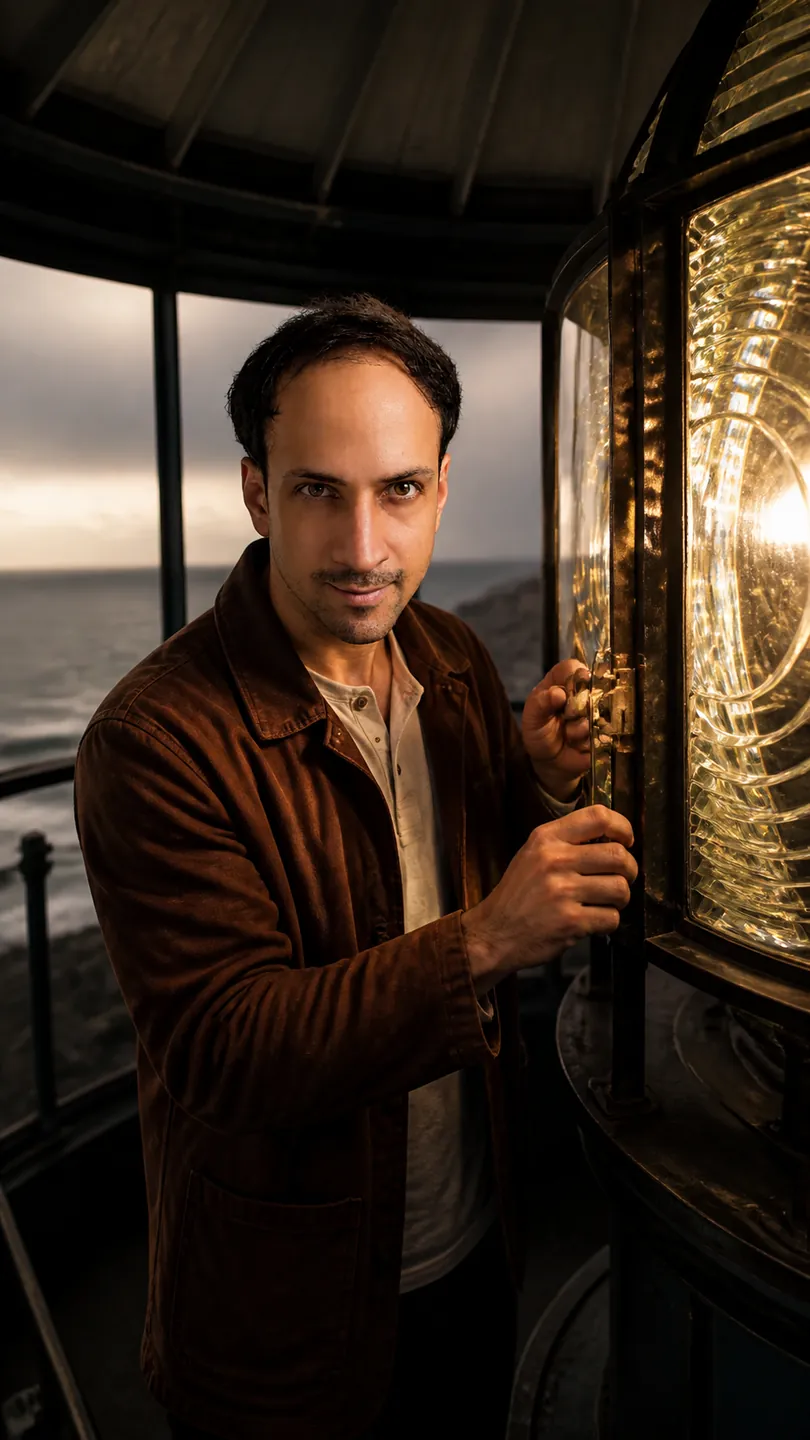
Use the attached reference photo as the identity reference: keep the same face, skin tone, hair and features as the person in that photo, without beautifying, aging or altering them. Treat that reference as the character anchor and change only the scene. Design a full-height 9:16 cinematic artwork that reads on a phone and rewards gallery-scale inspection at exactly 2144x3808 pixels. Location: the lamp room of a decommissioned coastal lighthouse. Show them in a rust-brown chore coat over a cream henley, latching the brass door of the lamp cage shut. Make one rigorous physical condition the conceptual engine: a molded tile of tiny corner-cube prisms that lights end-to-end like a struck match when their lamp rides beside their eye gives arriving light a way back to the place it started from. Explore why light that returns to its sender feels more like recognition than reflection; direct expression and posture toward gentle exactness, never melodrama or ad-like confidence. Frame from slightly low in the dark, their face lit by spill rather than beam. Make the composition hold the dark version and the blazing version inside one frame. Render it as museum-grade demonstration photography combining truthful on-axis brilliance, deep readable shadow detail, tactile instrument surfaces, and unhurried human presence, using late window light kept low so on-axis return outshines every ordinary reflection and a palette of lamp black, slate grey, and one pale-fire cone. Photorealistic: this must read as a real photograph from a physical camera, never an illustration, painting, or 3D render. Give the space honest scale: real distance between foreground, subject, and far wall. Resolve real surface detail: glass with real thickness at its edge, reflections that carry the room's actual colour, and dust visible only at grazing angles. Keep one identity-locked person, credible hands and fingers, natural fabric, and coherent scale, contact, reflections, shadows, airflow, deformation, and materials. Background people only when essential, always secondary and clearly different. Avoid glowing sci-fi visors, hi-vis vest advertising poses, lens-flare starbursts, and neon cyberpunk streets. No text, labels, logos, signatures, watermarks, random symbols, plastic skin, excessive bloom, or glossy AI finish.
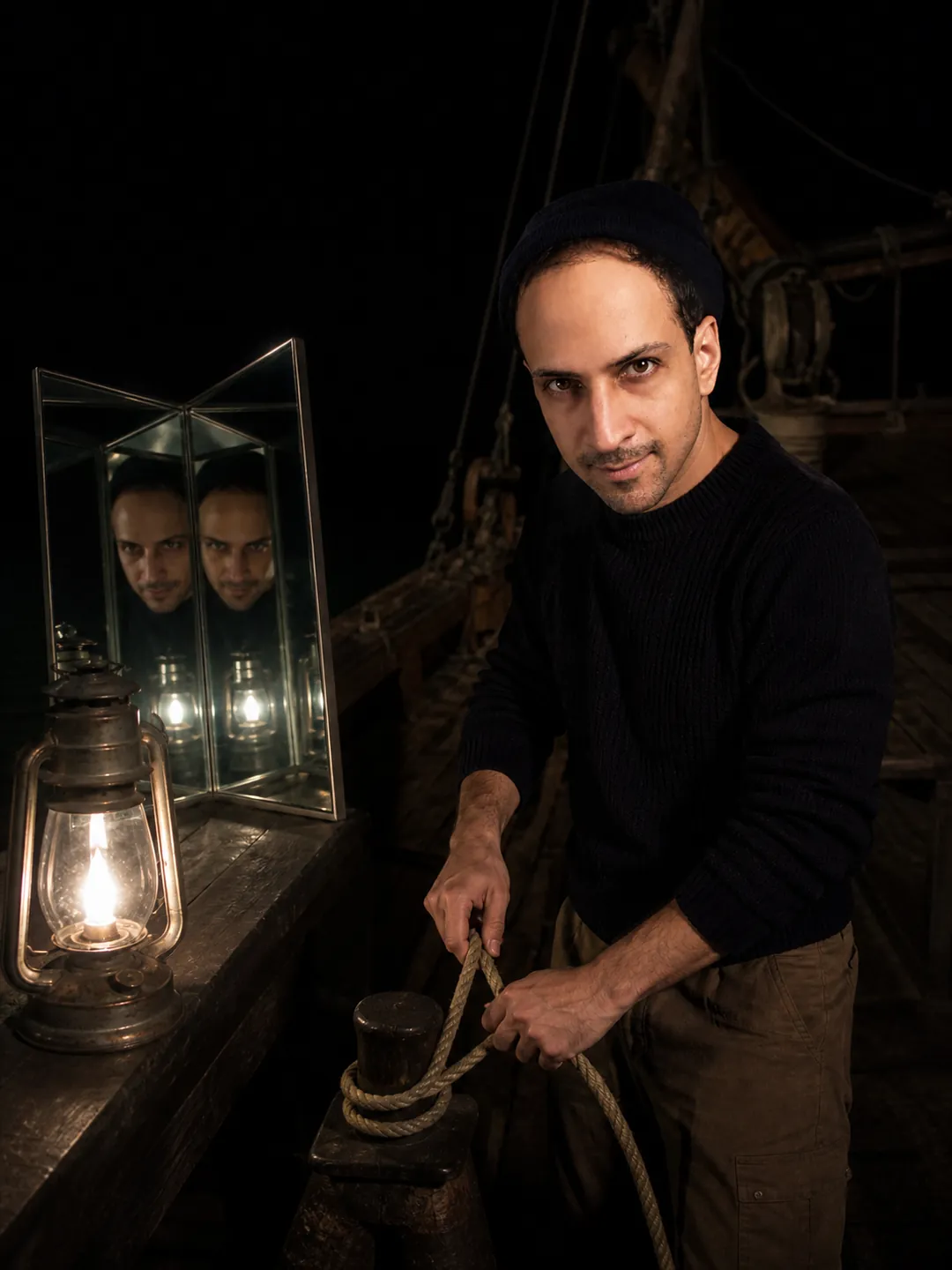
The Way Home: Sabkha Salt Flat — AI Portrait Prompt
صورةAI Portraits

Turn your own photo into a museum-grade demonstration portrait in a sabkha salt flat at dusk, horizon one unbroken line. Keeps your face unchanged.

من نص البرومبت

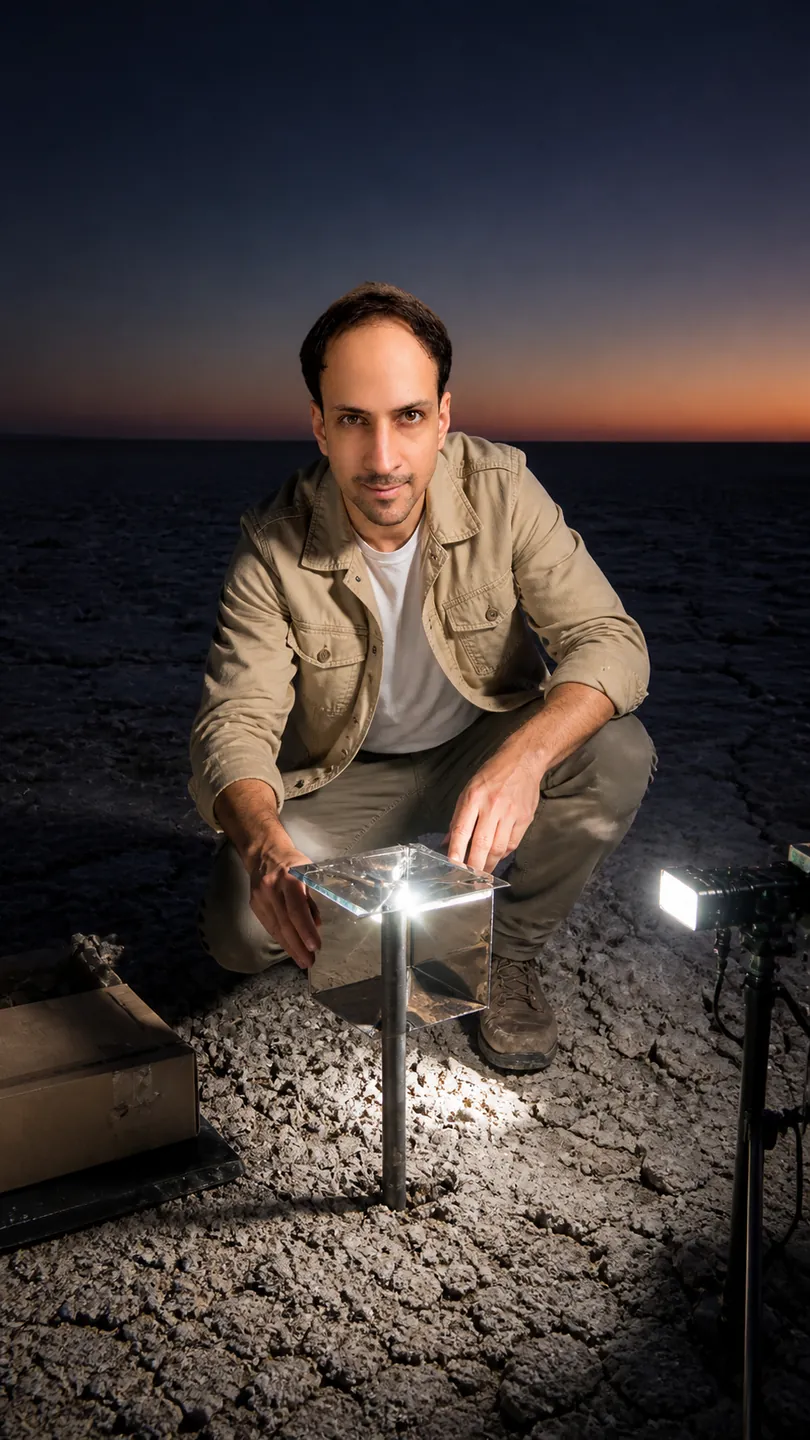
Use the attached reference photo as the identity reference: keep the same face, skin tone, hair and features as the person in that photo, without beautifying, aging or altering them. Treat that reference as the character anchor and change only the scene. Design a full-height 9:16 cinematic artwork that reads on a phone and rewards gallery-scale inspection at exactly 2144x3808 pixels. Location: a sabkha salt flat at dusk, horizon one unbroken line. Show them in a beige field jacket over a white tee, pressing a survey stake flush with the crust. Treat this mechanism as the frame’s governing rule: a hollow corner of three mirrors that pins their reflected gaze to its apex no matter where they move their head gives arriving light a way back to the place it started from. Explore how a surface can be truthfully dark and truthfully blazing in the same minute; direct expression and posture toward quiet astonishment, never melodrama or ad-like confidence. Use a 90mm portrait lens with a small lamp rigged tight beside it so the return blazes lawfully at the camera. Make the composition let the off-axis dullness occupy most of the frame. Render it as museum-grade demonstration photography combining truthful on-axis brilliance, deep readable shadow detail, tactile instrument surfaces, and unhurried human presence, using low ambient dusk with a single handheld beam as the only key and a palette of night blue, bone grey, and one silver pinprick. Photorealistic: this must read as a real photograph from a physical camera, never an illustration, painting, or 3D render. Give the frame volume: faint density deepest in the room, contrast easing at the edges. Resolve real surface detail: label-free packaging showing carton fibre, cardboard bruised at the corners, and tape lifting slightly at one end. Keep one identity-locked person, credible hands and fingers, natural fabric, and coherent scale, contact, reflections, shadows, airflow, deformation, and materials. Background people only when essential, always secondary and clearly different. Avoid glowing sci-fi visors, hi-vis vest advertising poses, lens-flare starbursts, and neon cyberpunk streets. No text, labels, logos, signatures, watermarks, random symbols, plastic skin, excessive bloom, or glossy AI finish.
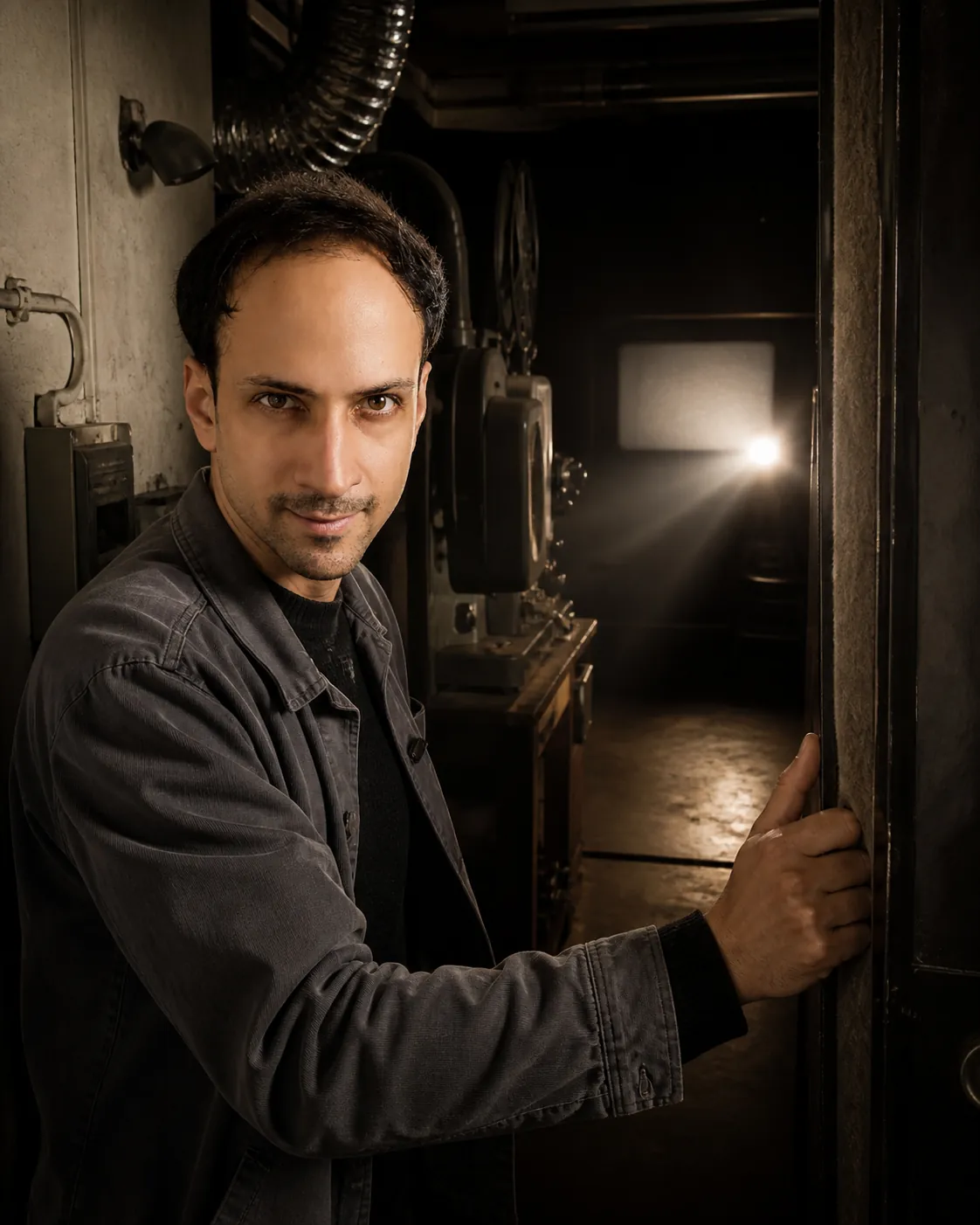
The Way Home: Deck of a Moored Dhow — AI Portrait Prompt
صورةAI Portraits

Turn your own photo into a high-concept optical portrait in the deck of a moored dhow on a windless gulf night. Keeps your face unchanged.

من نص البرومبت

Use the attached reference photo as the identity reference: keep the same face, skin tone, hair and features as the person in that photo, without beautifying, aging or altering them. Treat that reference as the character anchor and change only the scene. Use a formal 3:4 environmental portrait with complete hands and meaningful objects inside frame at exactly 2480x3312 pixels. Location: the deck of a moored dhow on a windless gulf night. Show them in a navy watch cap, dark fisherman's sweater, and canvas work trousers, cleating a slack line with two practiced wraps. The impossible-looking event must obey this clear system: a hollow corner of three mirrors that pins their reflected gaze to its apex no matter where they move their head answers each lamp with that lamp's own light and no other's. Explore how a surface can be truthfully dark and truthfully blazing in the same minute; direct expression and posture toward watchful calm, never melodrama or ad-like confidence. Frame in half-profile at chest height so the person and the answering light stay equally readable. Make the composition surround one small blaze with generous, honest darkness. Render it as high-concept optical portraiture built from real return-path geometry, documentary night realism, precision lamp discipline, and emotionally restrained composition, using one small practical held near the lens axis with the room falling dark and a palette of lamp black, slate grey, and one pale-fire cone. Photorealistic: this must read as a real photograph from a physical camera, never an illustration, painting, or 3D render. Resolve real surface detail: hair with individual strands catching light, fine hair of uneven length, and skin oil giving a low uneven sheen. Keep one identity-locked person, credible hands and fingers, natural fabric, and coherent scale, contact, reflections, shadows, airflow, deformation, and materials. Background people only when essential, always secondary and clearly different. Avoid laser-show haze walls, glowing animal eyes, CGI light tunnels, painted halos, and highway signage. No text, labels, logos, signatures, watermarks, random symbols, plastic skin, excessive bloom, or glossy AI finish.
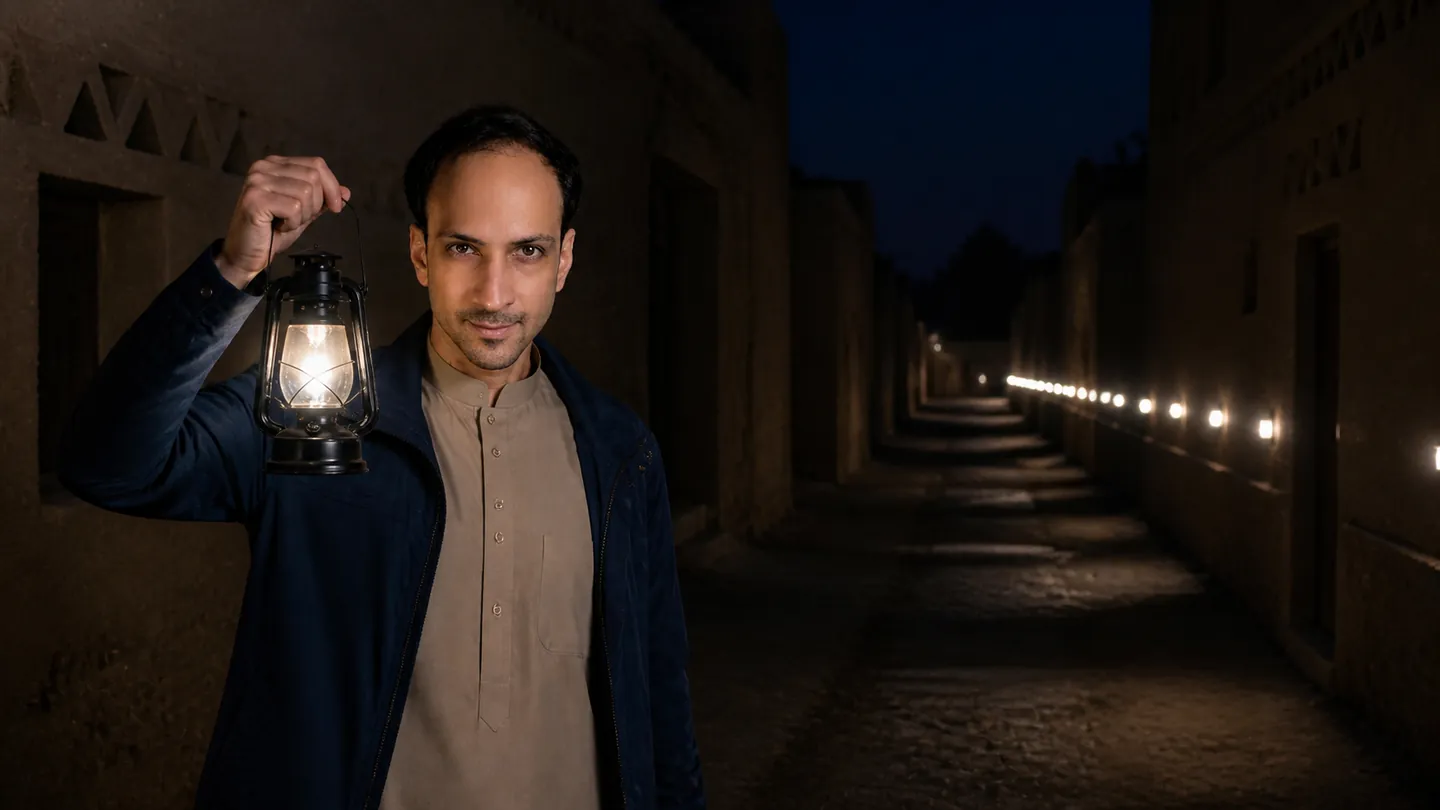
Asked and Answered: Projection Booth — AI Portrait Prompt
صورةAI Portraits

Turn your own photo into a conceptual field-optics portrait in the projection booth of a shuttered single-screen cinema. Keeps your face unchanged.

من نص البرومبت

Use the attached reference photo as the identity reference: keep the same face, skin tone, hair and features as the person in that photo, without beautifying, aging or altering them. Treat that reference as the character anchor and change only the scene. Build a portrait 4:5 editorial artwork with protected negative space and a fully readable face at exactly 2560x3200 pixels. Location: the projection booth of a shuttered single-screen cinema. Show them in a black crew-neck sweater under an open grey utility jacket, pressing the felt door seal flat with one thumb. Make one rigorous physical condition the conceptual engine: a glass-bead screen that blazes furnace-bright along their lamp's axis and shows dull grey one step aside carries its answer home across distance that would starve scattered light. Explore what it means to receive back exactly what was sent and nothing else; direct expression and posture toward quiet astonishment, never melodrama or ad-like confidence. Use a measured 35mm environmental view, them at one-third, the returning light deeper in frame. Make the composition align lamp, eye, and return along one legible line. Render it as conceptual field-optics realism blending honest low-light exposure, physically accurate retroreflection, quiet darkened-space atmosphere, and calm human-scale editorial framing, using one small practical held near the lens axis with the room falling dark and a palette of graphite, dusty sand, and one pale gold star. Photorealistic: this must read as a real photograph from a physical camera, never an illustration, painting, or 3D render. Resolve real surface detail: the difference between a wiped surface and a clean one, faint tide marks on ceramic, and metal dulled unevenly by touch. Keep one identity-locked person, credible hands and fingers, natural fabric, and coherent scale, contact, reflections, shadows, airflow, deformation, and materials. Background people only when essential, always secondary and clearly different. Avoid glowing sci-fi visors, hi-vis vest advertising poses, lens-flare starbursts, and neon cyberpunk streets. No text, labels, logos, signatures, watermarks, random symbols, plastic skin, excessive bloom, or glossy AI finish.
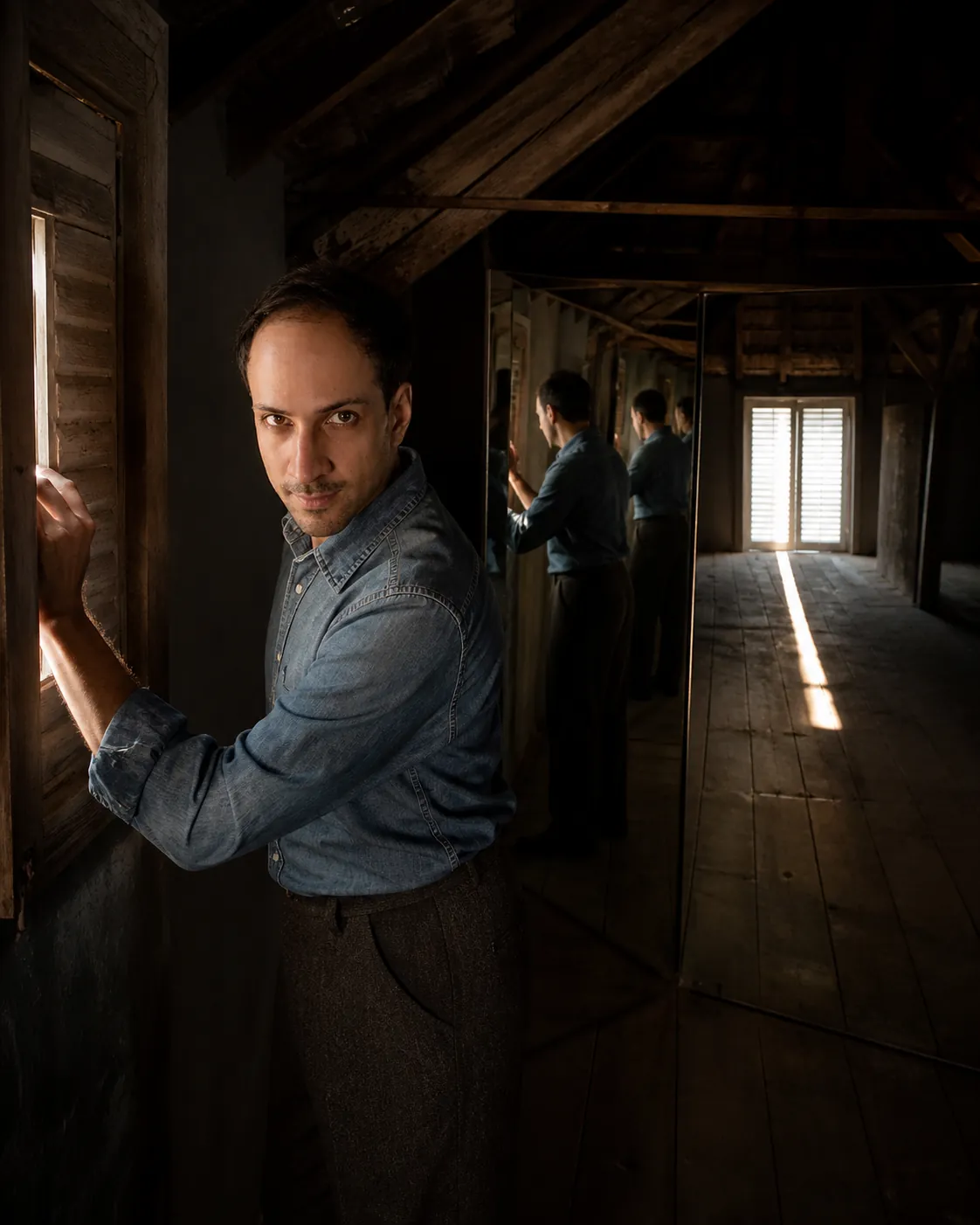
Returned Light: Mud-Brick Alley — AI Portrait Prompt
صورةAI Portraits

Turn your own photo into a conceptual field-optics portrait in a mud-brick alley in old Diriyah after nightfall. Keeps your face unchanged.

من نص البرومبت

Use the attached reference photo as the identity reference: keep the same face, skin tone, hair and features as the person in that photo, without beautifying, aging or altering them. Treat that reference as the character anchor and change only the scene. Compose a wide 16:9 narrative image where environment and subject carry equal meaning at exactly 3808x2144 pixels. Location: a mud-brick alley in old Diriyah after nightfall. Show them in a light navy jacket worn open over a sand-toned traditional Gulf outfit, raising a hand lantern slowly to shoulder height. The impossible-looking event must obey this clear system: a molded tile of tiny corner-cube prisms that lights end-to-end like a struck match when their lamp rides beside their eye reads their alignment with the light as a plain change in brightness. Explore why light that returns to its sender feels more like recognition than reflection; direct expression and posture toward watchful calm, never melodrama or ad-like confidence. Use a measured 35mm environmental view, them at one-third, the returning light deeper in frame. Make the composition align lamp, eye, and return along one legible line. Render it as conceptual field-optics realism blending honest low-light exposure, physically accurate retroreflection, quiet darkened-space atmosphere, and calm human-scale editorial framing, using one small practical held near the lens axis with the room falling dark and a palette of night blue, bone grey, and one silver pinprick. Photorealistic: this must read as a real photograph from a physical camera, never an illustration, painting, or 3D render. Give the frame volume: faint density deepest in the room, contrast easing at the edges. Resolve real surface detail: floor finish worn along the walked line, skirting marked at shoe height, and corners darker than the open floor. Keep one identity-locked person, credible hands and fingers, natural fabric, and coherent scale, contact, reflections, shadows, airflow, deformation, and materials. Background people only when essential, always secondary and clearly different. Avoid laser-show haze walls, glowing animal eyes, CGI light tunnels, painted halos, and highway signage. No text, labels, logos, signatures, watermarks, random symbols, plastic skin, excessive bloom, or glossy AI finish.
The Way Home: Raftered Attic Loft — AI Portrait Prompt
صورةAI Portraits

Turn your own photo into a quiet experimental gallery portrait in a raftered attic loft with one shuttered dormer and swept boards. Keeps your face unchanged.

من نص البرومبت

Use the attached reference photo as the identity reference: keep the same face, skin tone, hair and features as the person in that photo, without beautifying, aging or altering them. Treat that reference as the character anchor and change only the scene. Build a portrait 4:5 editorial artwork with protected negative space and a fully readable face at exactly 2560x3200 pixels. Location: a raftered attic loft with one shuttered dormer and swept boards. Show them in a washed denim shirt buttoned up and dark wool trousers, sliding the dormer shutter to a narrow slit. Make one rigorous physical condition the conceptual engine: a hollow corner of three mirrors that pins their reflected gaze to its apex no matter where they move their head carries its answer home across distance that would starve scattered light. Explore how a surface can be truthfully dark and truthfully blazing in the same minute; direct expression and posture toward gentle exactness, never melodrama or ad-like confidence. Use a measured 35mm environmental view, them at one-third, the returning light deeper in frame. Make the composition align lamp, eye, and return along one legible line. Render it as quiet experimental gallery photography built around one working retroreflector, disciplined single-source lighting, true-to-life surface response, and patient observational framing, using late window light kept low so on-axis return outshines every ordinary reflection and a palette of asphalt grey, faded canvas, and one amber thread. Photorealistic: this must read as a real photograph from a physical camera, never an illustration, painting, or 3D render. Resolve real surface detail: fine grit in the texture of concrete, efflorescence at damp edges, and hairline cracks that follow stress. Keep one identity-locked person, credible hands and fingers, natural fabric, and coherent scale, contact, reflections, shadows, airflow, deformation, and materials. Background people only when essential, always secondary and clearly different. Avoid glowing sci-fi visors, hi-vis vest advertising poses, lens-flare starbursts, and neon cyberpunk streets. No text, labels, logos, signatures, watermarks, random symbols, plastic skin, excessive bloom, or glossy AI finish.
Asked and Answered: Catwalk — AI Portrait Prompt
صورةAI Portraits

Turn your own photo into a conceptual field-optics portrait in the catwalk of a small university observatory under a closed dome. Keeps your face unchanged.

من نص البرومبت

Use the attached reference photo as the identity reference: keep the same face, skin tone, hair and features as the person in that photo, without beautifying, aging or altering them. Treat that reference as the character anchor and change only the scene. Use a formal 3:4 environmental portrait with complete hands and meaningful objects inside frame at exactly 2480x3312 pixels. Location: the catwalk of a small university observatory under a closed dome. Show them in a quilted charcoal gilet over a slate flannel shirt, drawing a canvas dust cover back with both hands. The impossible-looking event must obey this clear system: a glass-bead screen that blazes furnace-bright along their lamp's axis and shows dull grey one step aside stays dark to every eye except the one beside the asking lamp. Explore what it means to receive back exactly what was sent and nothing else; direct expression and posture toward humbled precision, never melodrama or ad-like confidence. Frame in half-profile at chest height so the person and the answering light stay equally readable. Make the composition surround one small blaze with generous, honest darkness. Render it as conceptual field-optics realism blending honest low-light exposure, physically accurate retroreflection, quiet darkened-space atmosphere, and calm human-scale editorial framing, using low ambient dusk with a single handheld beam as the only key and a palette of asphalt grey, faded canvas, and one amber thread. Photorealistic: this must read as a real photograph from a physical camera, never an illustration, painting, or 3D render. Resolve real surface detail: true skin texture with pores and fine hair at the hairline, and fabric that creases where it is actually stressed. Keep one identity-locked person, credible hands and fingers, natural fabric, and coherent scale, contact, reflections, shadows, airflow, deformation, and materials. Background people only when essential, always secondary and clearly different. Avoid glowing sci-fi visors, hi-vis vest advertising poses, lens-flare starbursts, and neon cyberpunk streets. No text, labels, logos, signatures, watermarks, random symbols, plastic skin, excessive bloom, or glossy AI finish.
Asked and Answered: Gravel Plain — AI Portrait Prompt
صورةAI Portraits

Turn your own photo into a quiet experimental gallery portrait in a gravel plain at full dark beyond the city's last lights. Keeps your face unchanged.

من نص البرومبت

Use the attached reference photo as the identity reference: keep the same face, skin tone, hair and features as the person in that photo, without beautifying, aging or altering them. Treat that reference as the character anchor and change only the scene. Design a full-height 9:16 cinematic artwork that reads on a phone and rewards gallery-scale inspection at exactly 2144x3808 pixels. Location: a gravel plain at full dark beyond the city's last lights. Show them in a heavy olive overshirt over a dark thermal layer, planting a slim tripod leg firm with one press. Treat this mechanism as the frame’s governing rule: a glass-bead screen that blazes furnace-bright along their lamp's axis and shows dull grey one step aside writes the observer's own position into the brightness it shows them. Explore what it means to receive back exactly what was sent and nothing else; direct expression and posture toward collected surprise, never melodrama or ad-like confidence. Use a 90mm portrait lens with a small lamp rigged tight beside it so the return blazes lawfully at the camera. Make the composition let the off-axis dullness occupy most of the frame. Render it as quiet experimental gallery photography built around one working retroreflector, disciplined single-source lighting, true-to-life surface response, and patient observational framing, using soft overhead work light dimmed until the answering shine can dominate honestly and a palette of lamp black, slate grey, and one pale-fire cone. Photorealistic: this must read as a real photograph from a physical camera, never an illustration, painting, or 3D render. Give the frame volume: faint density deepest in the room, contrast easing at the edges. Resolve real surface detail: dust settled where nobody wipes, fingerprint haze on glass, and edges rubbed pale by handling. Keep one identity-locked person, credible hands and fingers, natural fabric, and coherent scale, contact, reflections, shadows, airflow, deformation, and materials. Background people only when essential, always secondary and clearly different. Avoid laser-show haze walls, glowing animal eyes, CGI light tunnels, painted halos, and highway signage. No text, labels, logos, signatures, watermarks, random symbols, plastic skin, excessive bloom, or glossy AI finish.
The Way Home: Lamp Room — AI Portrait Prompt
صورةAI Portraits

Turn your own photo into a conceptual field-optics portrait in the lamp room of a decommissioned coastal lighthouse. Keeps your face unchanged.

من نص البرومبت

Use the attached reference photo as the identity reference: keep the same face, skin tone, hair and features as the person in that photo, without beautifying, aging or altering them. Treat that reference as the character anchor and change only the scene. Compose a wide 16:9 narrative image where environment and subject carry equal meaning at exactly 3808x2144 pixels. Location: the lamp room of a decommissioned coastal lighthouse. Show them in a rust-brown chore coat over a cream henley, latching the brass door of the lamp cage shut. Build the artwork around this material rule: a hollow corner of three mirrors that pins their reflected gaze to its apex no matter where they move their head reads their alignment with the light as a plain change in brightness. Explore how a surface can be truthfully dark and truthfully blazing in the same minute; direct expression and posture toward patient verification, never melodrama or ad-like confidence. Use an eye-level 80mm medium-format viewpoint with natural perspective and deep honest blacks. Make the composition point the strongest return at the lens, their face kept quiet. Render it as conceptual field-optics realism blending honest low-light exposure, physically accurate retroreflection, quiet darkened-space atmosphere, and calm human-scale editorial framing, using soft overhead work light dimmed until the answering shine can dominate honestly and a palette of charcoal, unpolished brass, and one warm white blaze. Photorealistic: this must read as a real photograph from a physical camera, never an illustration, painting, or 3D render. Give truthful depth cues: overlapping planes and shadows softening as they travel. Resolve real surface detail: rubber gone chalky with age, painted metal chipped to primer, and plastic yellowed only where light reaches it. Keep one identity-locked person, credible hands and fingers, natural fabric, and coherent scale, contact, reflections, shadows, airflow, deformation, and materials. Background people only when essential, always secondary and clearly different. Avoid laser-show haze walls, glowing animal eyes, CGI light tunnels, painted halos, and highway signage. No text, labels, logos, signatures, watermarks, random symbols, plastic skin, excessive bloom, or glossy AI finish.

Returned Light: Vaulted Stone Cistern — AI Portrait Prompt
صورةAI Portraits

Turn your own photo into a conceptual field-optics portrait in a vaulted stone cistern reached by worn steps, cool and still. Keeps your face unchanged.

من نص البرومبت

Use the attached reference photo as the identity reference: keep the same face, skin tone, hair and features as the person in that photo, without beautifying, aging or altering them. Treat that reference as the character anchor and change only the scene. Use a formal 3:4 environmental portrait with complete hands and meaningful objects inside frame at exactly 2480x3312 pixels. Location: a vaulted stone cistern reached by worn steps, cool and still. Show them in a plain white traditional Gulf outfit under a grey winter cardigan, setting a storm lantern down on level stone. Treat this mechanism as the frame’s governing rule: a molded tile of tiny corner-cube prisms that lights end-to-end like a struck match when their lamp rides beside their eye stays dark to every eye except the one beside the asking lamp. Explore why light that returns to its sender feels more like recognition than reflection; direct expression and posture toward sober delight, never melodrama or ad-like confidence. Use a measured 35mm environmental view, them at one-third, the returning light deeper in frame. Make the composition align lamp, eye, and return along one legible line. Render it as conceptual field-optics realism blending honest low-light exposure, physically accurate retroreflection, quiet darkened-space atmosphere, and calm human-scale editorial framing, using soft overhead work light dimmed until the answering shine can dominate honestly and a palette of charcoal, unpolished brass, and one warm white blaze. Photorealistic: this must read as a real photograph from a physical camera, never an illustration, painting, or 3D render. Resolve real surface detail: wood grain read at honest scale, matte and gloss clearly separated, and no surface uniformly clean. Keep one identity-locked person, credible hands and fingers, natural fabric, and coherent scale, contact, reflections, shadows, airflow, deformation, and materials. Background people only when essential, always secondary and clearly different. Avoid glowing sci-fi visors, hi-vis vest advertising poses, lens-flare starbursts, and neon cyberpunk streets. No text, labels, logos, signatures, watermarks, random symbols, plastic skin, excessive bloom, or glossy AI finish.
