تخطَّ إلى المحتوى
جميع التصنيفات

AI Portraits

Portrait prompts you can use with your own photo.

3845 برومبتات•0 مشتركين
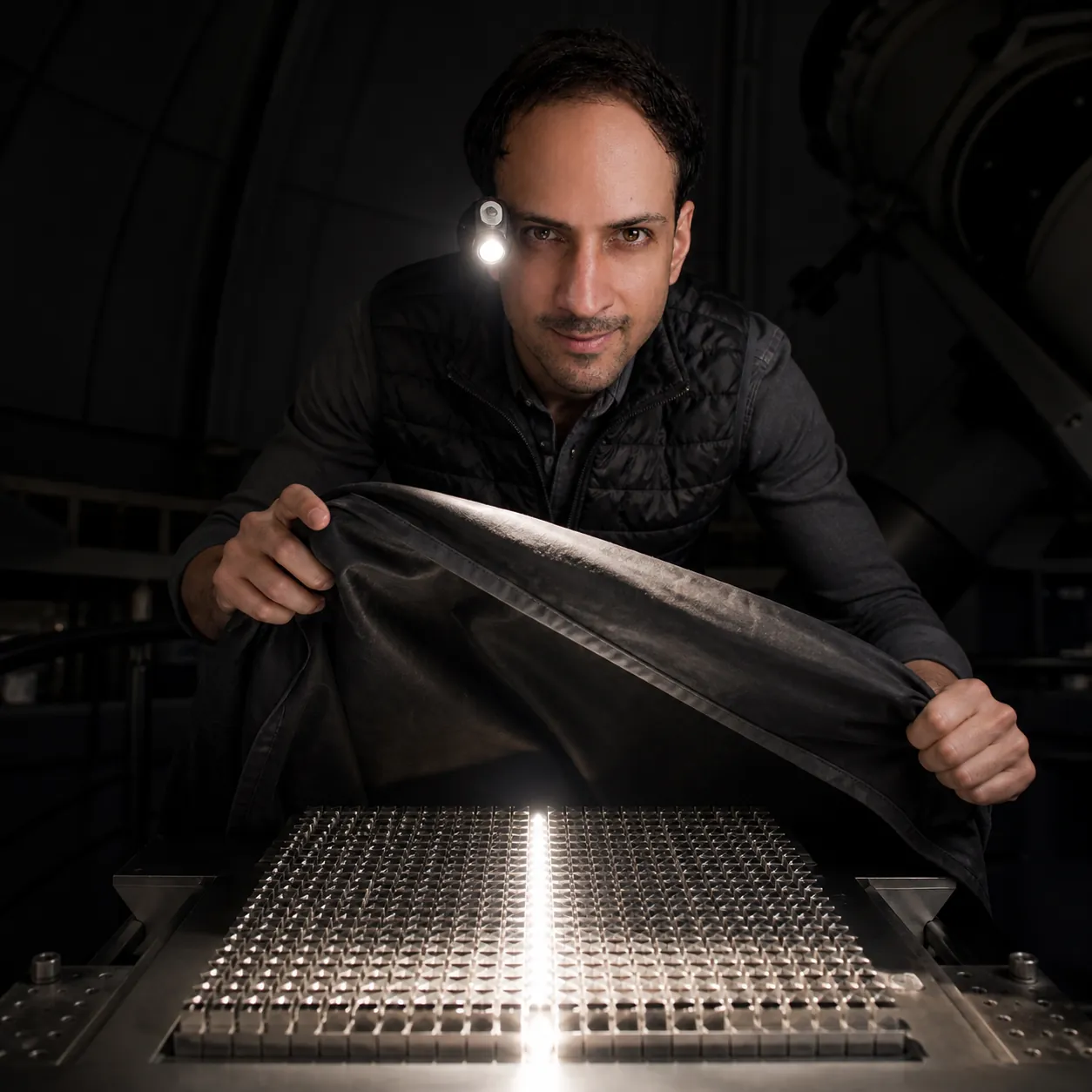
Returned Light: Catwalk — AI Portrait Prompt
صورةAI Portraits

Turn your own photo into a high-concept optical portrait in the catwalk of a small university observatory under a closed dome. Keeps your face unchanged.

من نص البرومبت

Use the attached reference photo as the identity reference: keep the same face, skin tone, hair and features as the person in that photo, without beautifying, aging or altering them. Create a square 1:1 museum-catalog frame with a strong first read and a slower second read at exactly 2880x2880 pixels. Location: the catwalk of a small university observatory under a closed dome. Show the subject in a quilted charcoal gilet over a slate flannel shirt, drawing a canvas dust cover back with both hands. Make one rigorous physical condition the conceptual engine: a molded tile of tiny corner-cube prisms that lights end-to-end like a struck match when their lamp rides beside their eye keeps its full brightness for the one standing at the light's source. Explore why light that returns to its sender feels more like recognition than reflection; direct expression and posture toward quiet astonishment, never melodrama or ad-like confidence. Use an eye-level 80mm medium-format viewpoint with natural perspective and deep honest blacks. Make the composition point the strongest return at the lens, their face kept quiet. Render it as high-concept optical portraiture built from real return-path geometry, documentary night realism, precision lamp discipline, and emotionally restrained composition, using one small practical held near the lens axis with the room falling dark and a palette of lamp black, slate grey, and one pale-fire cone. Photorealistic: this must read as a real photograph from a physical camera, never an illustration, painting, or 3D render. Resolve real surface detail: true skin texture with pores and fine hair at the hairline, and fabric that creases where it is actually stressed. Keep one identity-locked subject, credible hands and fingers, natural fabric, and coherent scale, contact, reflections, shadows, airflow, deformation, and materials. Background people only when essential, always secondary and clearly different. Avoid glowing sci-fi visors, hi-vis vest advertising poses, lens-flare starbursts, and neon cyberpunk streets. No text, labels, logos, signatures, watermarks, random symbols, plastic skin, excessive bloom, or glossy AI finish.
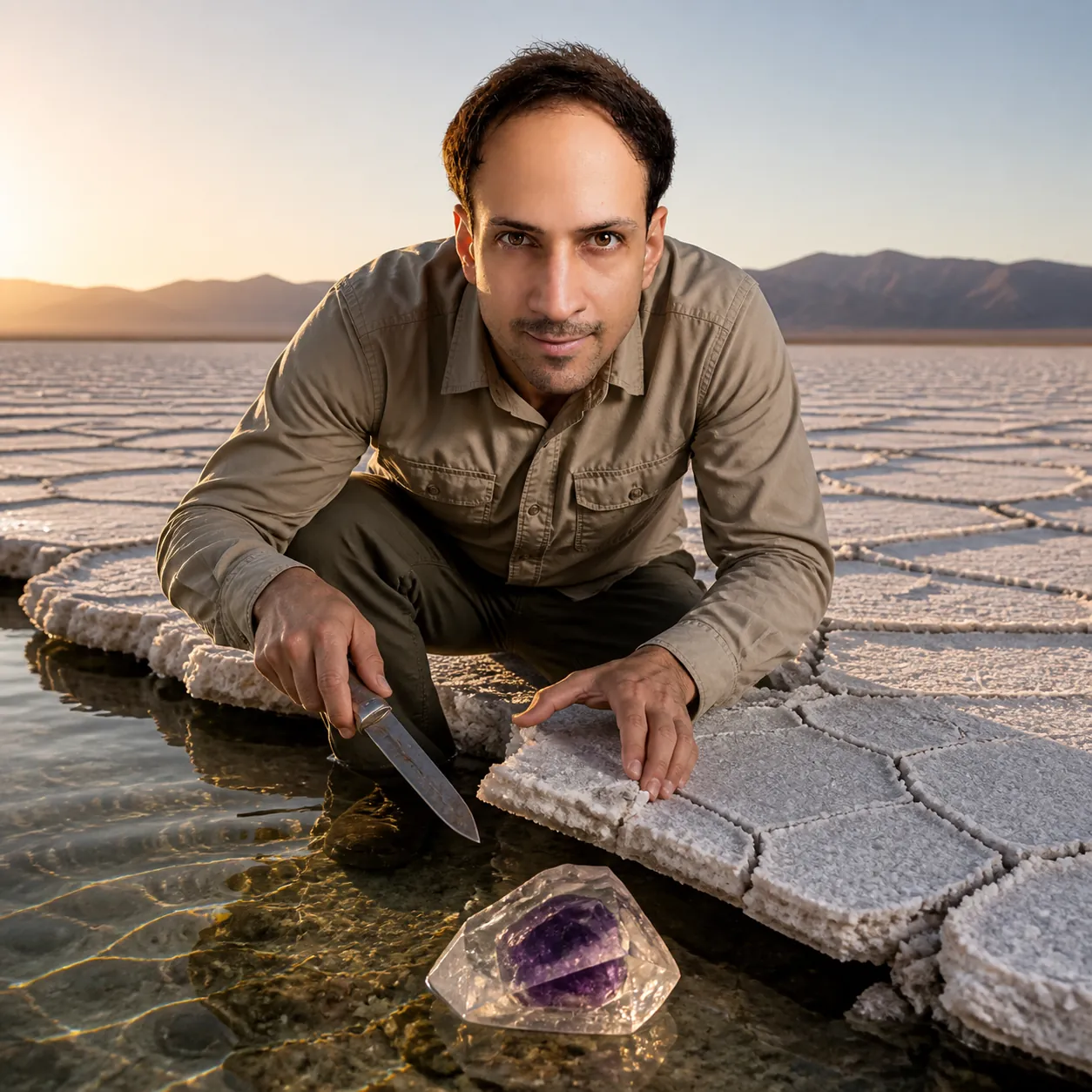
Out of Solution: Cracked White Edge — AI Portrait Prompt
صورةAI Portraits

Turn your own photo into a high-concept chemistry portrait in the cracked white edge of a sabkha salt flat at low sun. Keeps your face unchanged.

من نص البرومبت

Use the attached reference photo as the identity reference: keep the same face, skin tone, hair and features as the person in that photo, without beautifying, aging or altering them. Treat that reference as the character anchor and change only the scene. Create a square 1:1 museum-catalog frame with a strong first read and a slower second read at exactly 2880x2880 pixels. Location: the cracked white edge of a sabkha salt flat at low sun. Show the subject in a dust-toned field shirt with sleeves buttoned at the wrist, crouching to free one salt plate with a flat knife. The impossible-looking event must obey this clear system: a two-tone crystal with a violet chrome-alum heart jacketed in clear potassium alum, one lattice continued across two different chemistries turns a liquid's dissolved cargo into architecture a hand could rest on. Explore how much of building is simply removing the reasons not to begin; direct expression and posture toward unhurried focus, never melodrama or ad-like confidence. Use a 90mm framing that holds the grown geometry and their face in one plane of focus. Make the composition set liquid and solid on opposite sides of one clean diagonal. Render it as high-concept chemistry portraiture built from real supersaturation phenomena, true laboratory-glass materiality, restrained documentary honesty, and quietly monumental still-life composition, using hard low window sun refracted through glassware into small honest caustics and a palette of putty, brushed steel, and one violet chrome-alum note. Photorealistic: this must read as a real photograph from a physical camera, never an illustration, painting, or 3D render. Resolve real surface detail: brass darkened in the recesses and bright where thumbs land, and lacquer crazed rather than perfect. Keep one identity-locked person, credible hands and fingers, natural fabric, and coherent scale, contact, reflections, shadows, airflow, deformation, and materials. Background people only when essential, always secondary and clearly different. Avoid glowing magic crystals, amethyst geode caves, gemstone treasure piles, frosted window fakery, and CGI diamond shards. No text, labels, logos, signatures, watermarks, random symbols, plastic skin, excessive bloom, or glossy AI finish.
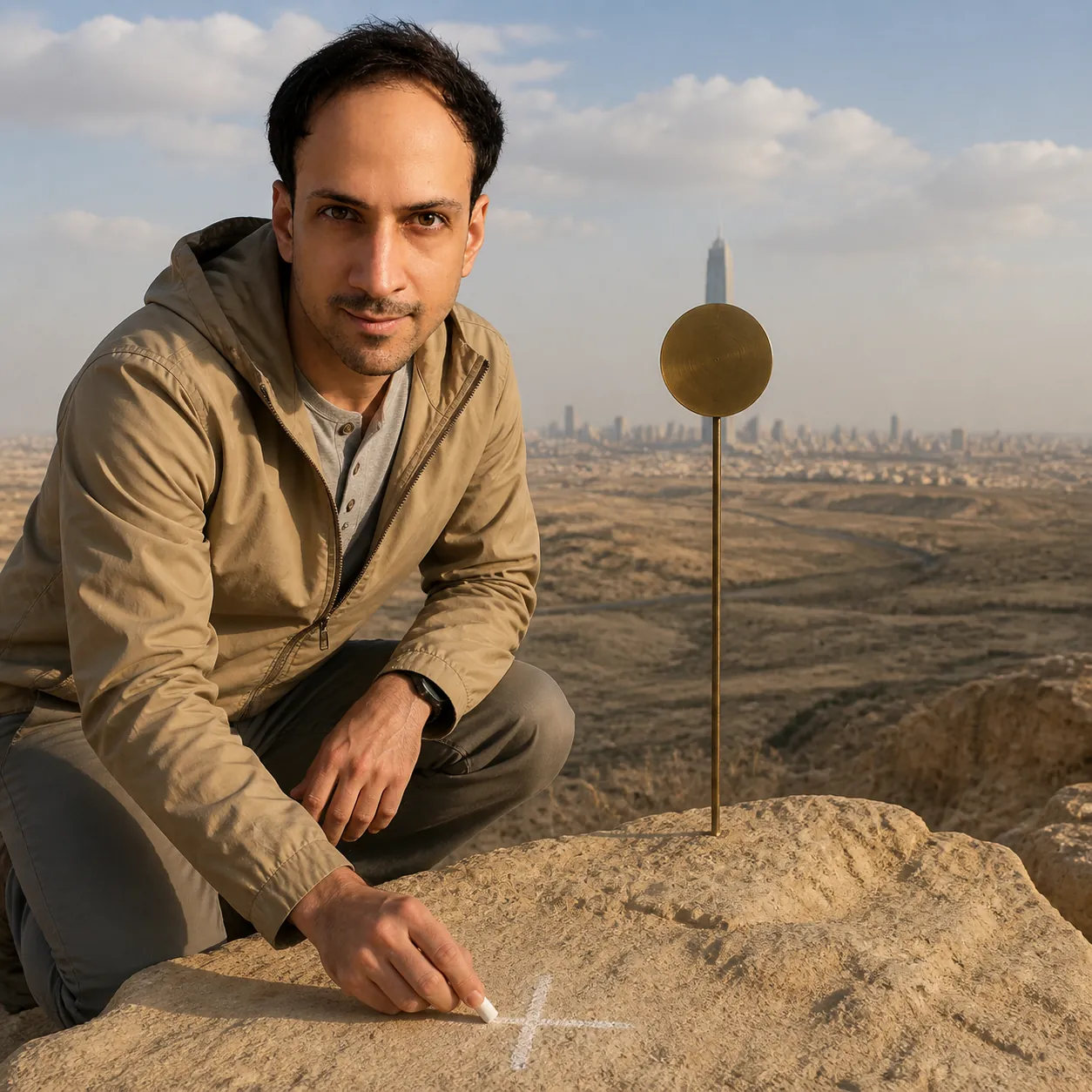
The Eye's Ruler: Limestone Escarpment Edge Northwest — AI Portrait Prompt
صورةAI Portraits

Turn your own photo into a portrait in the limestone escarpment edge northwest of Riyadh in late amber light. Keeps your face unchanged.

من نص البرومبت

Use the attached reference photo as the identity reference: keep the same face, skin tone, hair and features as the person in that photo, without beautifying, aging or altering them. Create a square 1:1 museum-catalog frame with a strong first read and a slower second read at exactly 2880x2880 pixels. Location: the limestone escarpment edge northwest of Riyadh in late amber light. Show the subject in a sand-toned windbreaker zipped over a stone henley and canvas trousers, chalking a small cross on the rock at their feet. Use this advanced image-making device as the core logic: a polished brass disc on a slender stand that exactly eclipses the tallest distant high-rise from the lens's fixed station achieves its entire effect without altering a single object it shows. Explore whether size is something objects own or something distances lend them; direct expression and posture toward attentive calm, never melodrama or ad-like confidence. Frame at the demonstration's own height so the optical event and their eyes share one axis. Make the composition seat the illusion dead center and let them stand off-axis. Render it as museum-grade demonstration photography combining true forced-perspective staging, honest depth-of-field behavior, believable material scale cues, and restrained contemporary art direction, using clean window daylight falling across near objects and far ground alike and a palette of dust beige, asphalt grey, and a single brick red. Photorealistic: this must read as a real photograph from a physical camera, never an illustration, painting, or 3D render. Resolve real surface detail: thread ends and slight pilling on worn cloth, hairline chips at every hard corner, and stone that is porous rather than smooth. Keep one identity-locked person, credible hands and fingers, natural fabric, and coherent scale, contact, reflections, shadows, airflow, deformation, and materials. Background people only when essential, always secondary and clearly different. Avoid surreal scale collage, floating figures, painted anamorphic pavement, and dollhouse cartoon styling. No text, labels, logos, signatures, watermarks, random symbols, plastic skin, excessive bloom, or glossy AI finish.
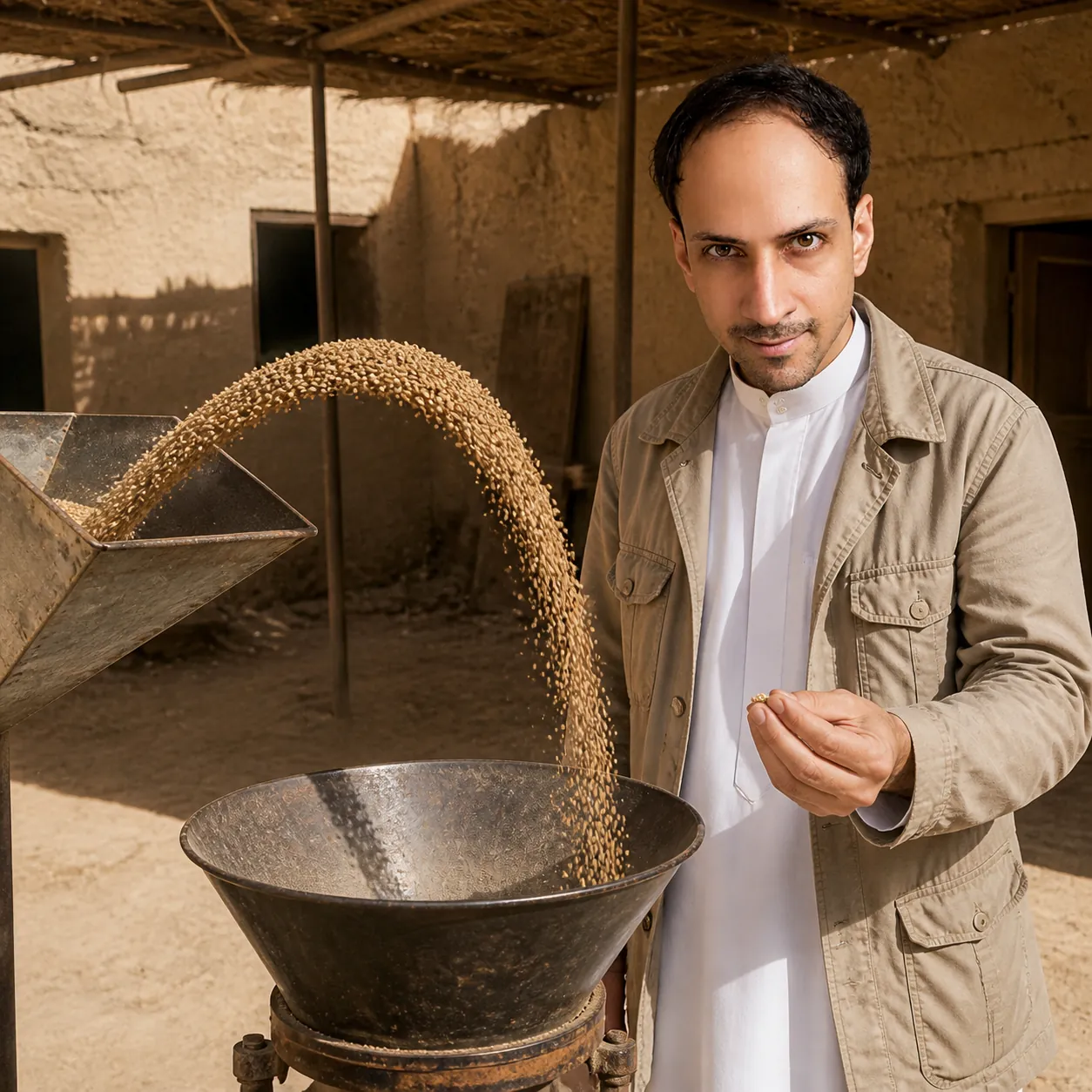
Grains Deciding: Swept Courtyard — AI Portrait Prompt
صورةAI Portraits

Turn your own photo into a gallery-grade experimental portrait in the swept courtyard of a mud-brick farmhouse at the desert's edge. Keeps your face unchanged.

من نص البرومبت

Use the attached reference photo as the identity reference: keep the same face, skin tone, hair and features as the person in that photo, without beautifying, aging or altering them. Create a square 1:1 museum-catalog frame with a strong first read and a slower second read at exactly 2880x2880 pixels. Location: the swept courtyard of a mud-brick farmhouse at the desert's edge. Show the subject in a plain white traditional Gulf outfit under a light tan field jacket, rolling three test grains between thumb and forefinger. Build the artwork around this material rule: a clear funnel of coarse grains whose pour has locked itself into a stable arch bridging the open throat shows dry grains refusing to be fully solid or fully liquid. Explore what the desert has been quietly demonstrating beside every road for centuries; direct expression and posture toward earned familiarity, never melodrama or ad-like confidence. Use a composed 35mm environmental view that gives the apparatus and the subject equal standing. Make the composition keep the background silent so the grains do the talking. Render it as gallery-grade experimental photography built from working sand demonstrations, sun-bleached field styling, honest grain-level physics, and calm scientific candor, using soft canvas-filtered shade cut by one hard sliver of noon and a palette of warm quartz beige, gunmetal grey, and one oxide-red seam. Photorealistic: this must read as a real photograph from a physical camera, never an illustration, painting, or 3D render. Resolve real surface detail: label-free packaging showing carton fibre, cardboard bruised at the corners, and tape lifting slightly at one end. Keep one identity-locked subject, credible hands and fingers, natural fabric, and coherent scale, contact, reflections, shadows, airflow, deformation, and materials. Background people only when essential, always secondary and clearly different. Avoid swirling sandstorm vortices, glowing hourglass fantasy, levitating sand spirals, cymatic pattern plates, and heroic dune-top silhouettes. No text, labels, logos, signatures, watermarks, random symbols, plastic skin, excessive bloom, or glossy AI finish.
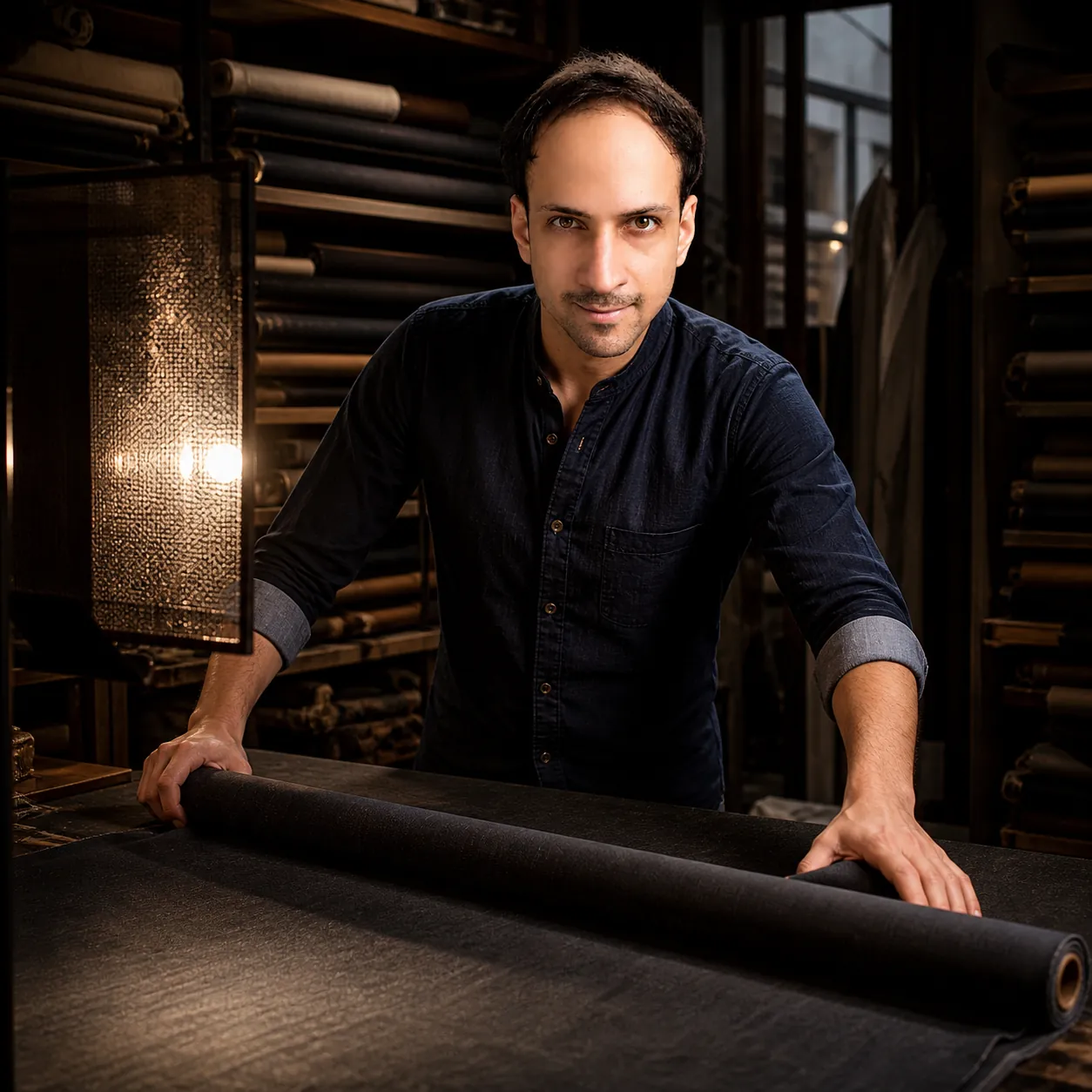
Asked and Answered: Tailor's Atelier — AI Portrait Prompt
صورةAI Portraits

Turn your own photo into a museum-grade demonstration portrait in a tailor's atelier after closing, cloth bolts racked high. Keeps your face unchanged.

من نص البرومبت

Use the attached reference photo as the identity reference: keep the same face, skin tone, hair and features as the person in that photo, without beautifying, aging or altering them. Create a square 1:1 museum-catalog frame with a strong first read and a slower second read at exactly 2880x2880 pixels. Location: a tailor's atelier after closing, cloth bolts racked high. Show the subject in a collarless indigo work shirt with sleeves rolled twice, unrolling a dark bolt one turn across the table. Use this advanced image-making device as the core logic: a glass-bead screen that blazes furnace-bright along their lamp's axis and shows dull grey one step aside turns the open air into a private channel between lamp and eye. Explore what it means to receive back exactly what was sent and nothing else; direct expression and posture toward watchful calm, never melodrama or ad-like confidence. Frame from slightly low in the dark, their face lit by spill rather than beam. Make the composition hold the dark version and the blazing version inside one frame. Render it as museum-grade demonstration photography combining truthful on-axis brilliance, deep readable shadow detail, tactile instrument surfaces, and unhurried human presence, using late window light kept low so on-axis return outshines every ordinary reflection and a palette of charcoal, unpolished brass, and one warm white blaze. Photorealistic: this must read as a real photograph from a physical camera, never an illustration, painting, or 3D render. Resolve real surface detail: thread ends and slight pilling on worn cloth, hairline chips at every hard corner, and stone that is porous rather than smooth. Keep one identity-locked subject, credible hands and fingers, natural fabric, and coherent scale, contact, reflections, shadows, airflow, deformation, and materials. Background people only when essential, always secondary and clearly different. Avoid laser-show haze walls, glowing animal eyes, CGI light tunnels, painted halos, and highway signage. No text, labels, logos, signatures, watermarks, random symbols, plastic skin, excessive bloom, or glossy AI finish.
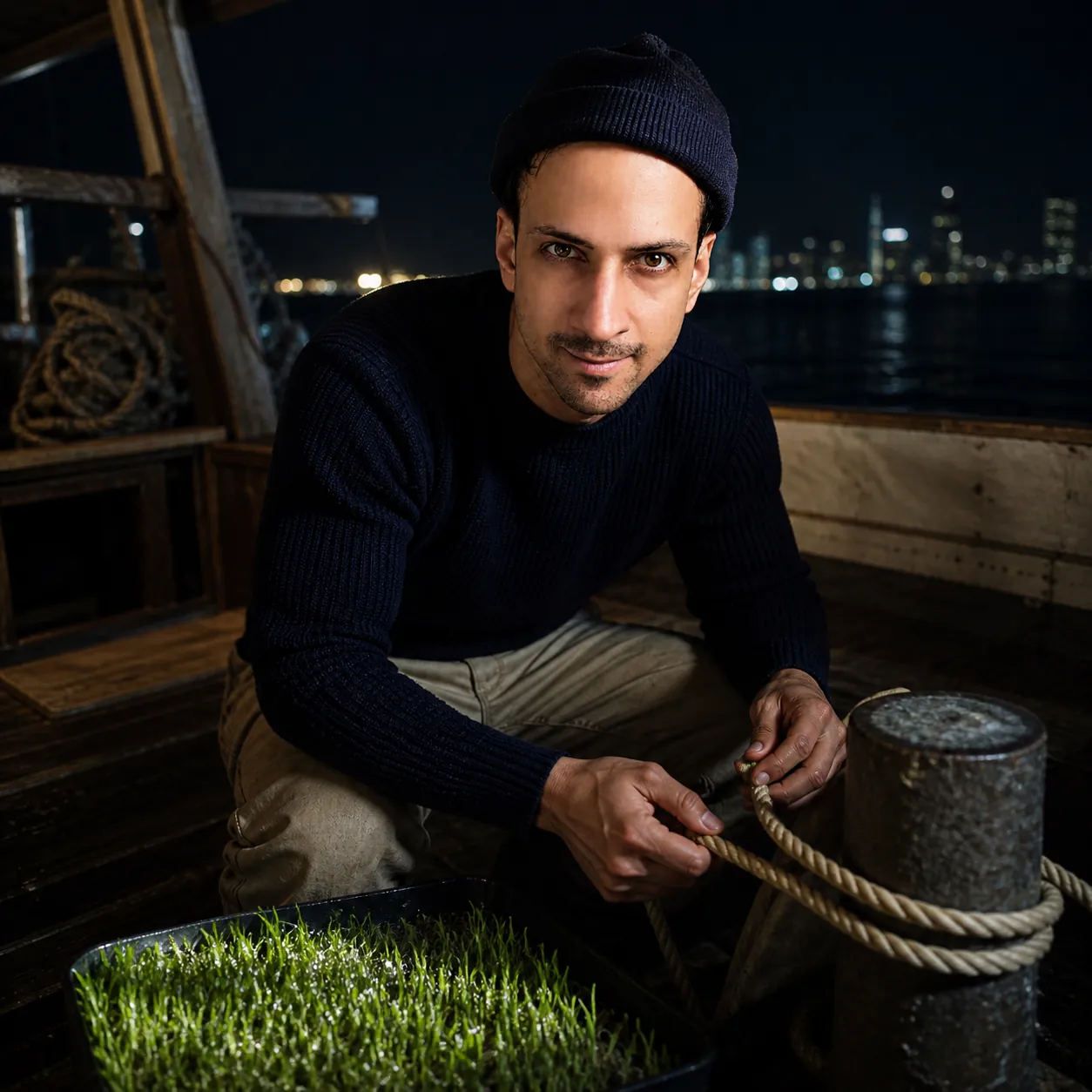
Zero Angle: Deck of a Moored Dhow — AI Portrait Prompt
صورةAI Portraits

Turn your own photo into a quiet experimental gallery portrait in the deck of a moored dhow on a windless gulf night. Keeps your face unchanged.

من نص البرومبت

Use the attached reference photo as the identity reference: keep the same face, skin tone, hair and features as the person in that photo, without beautifying, aging or altering them. Create a square 1:1 museum-catalog frame with a strong first read and a slower second read at exactly 2880x2880 pixels. Location: the deck of a moored dhow on a windless gulf night. Show the subject in a navy watch cap, dark fisherman's sweater, and canvas work trousers, cleating a slack line with two practiced wraps. Make one rigorous physical condition the conceptual engine: a nursery tray of dew-beaded grass that raises a soft bright halo around the shadow of their head and nowhere else keeps its full brightness for the one standing at the light's source. Explore why standing in the right place can matter more than owning the brighter lamp; direct expression and posture toward gentle exactness, never melodrama or ad-like confidence. Use an eye-level 80mm medium-format viewpoint with natural perspective and deep honest blacks. Make the composition point the strongest return at the lens, their face kept quiet. Render it as quiet experimental gallery photography built around one working retroreflector, disciplined single-source lighting, true-to-life surface response, and patient observational framing, using late window light kept low so on-axis return outshines every ordinary reflection and a palette of night blue, bone grey, and one silver pinprick. Photorealistic: this must read as a real photograph from a physical camera, never an illustration, painting, or 3D render. Resolve real surface detail: fine lint on dark fabric, water spotting on steel, and the soft rounding of edges that have been used for years. Keep one identity-locked subject, credible hands and fingers, natural fabric, and coherent scale, contact, reflections, shadows, airflow, deformation, and materials. Background people only when essential, always secondary and clearly different. Avoid glowing sci-fi visors, hi-vis vest advertising poses, lens-flare starbursts, and neon cyberpunk streets. No text, labels, logos, signatures, watermarks, random symbols, plastic skin, excessive bloom, or glossy AI finish.
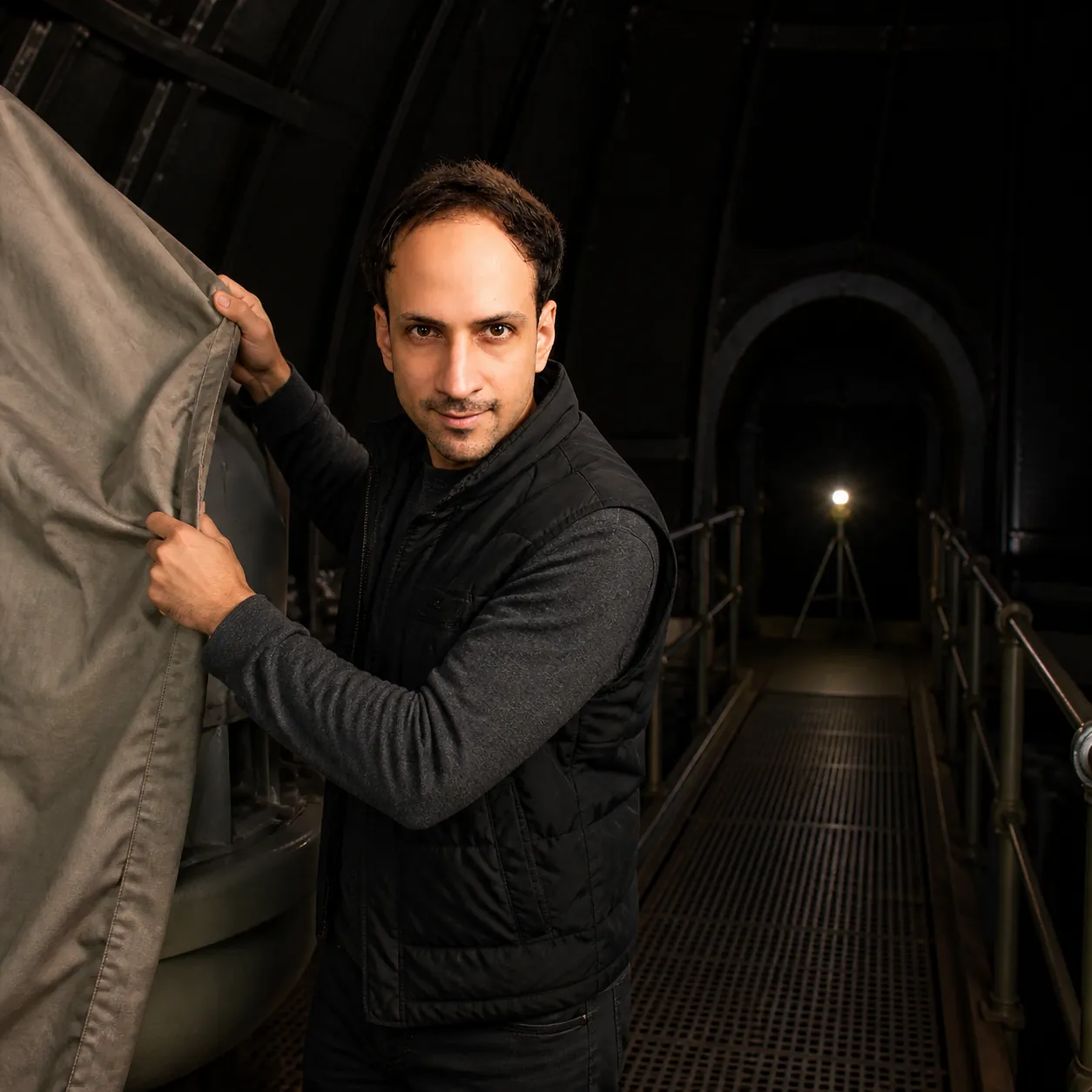
The Quiet Reply: Catwalk — AI Portrait Prompt
صورةAI Portraits

Turn your own photo into a quiet experimental gallery portrait in the catwalk of a small university observatory under a closed dome. Keeps your face unchanged.

من نص البرومبت

Use the attached reference photo as the identity reference: keep the same face, skin tone, hair and features as the person in that photo, without beautifying, aging or altering them. Create a square 1:1 museum-catalog frame with a strong first read and a slower second read at exactly 2880x2880 pixels. Location: the catwalk of a small university observatory under a closed dome. Show the subject in a quilted charcoal gilet over a slate flannel shirt, drawing a canvas dust cover back with both hands. Build the artwork around this material rule: a surveyor's corner prism stationed far down the dark that answers their small torch with one clean star of returned light turns the open air into a private channel between lamp and eye. Explore how geometry alone can address a reply to one eye and no other; direct expression and posture toward earned conviction, never melodrama or ad-like confidence. Use a measured 35mm environmental view, the subject at one-third, the returning light deeper in frame. Make the composition let the off-axis dullness occupy most of the frame. Render it as quiet experimental gallery photography built around one working retroreflector, disciplined single-source lighting, true-to-life surface response, and patient observational framing, using soft overhead work light dimmed until the answering shine can dominate honestly and a palette of charcoal, unpolished brass, and one warm white blaze. Photorealistic: this must read as a real photograph from a physical camera, never an illustration, painting, or 3D render. Resolve real surface detail: cotton that hangs by its own weight, seams that pucker very slightly, and collars softened by washing. Keep one identity-locked subject, credible hands and fingers, natural fabric, and coherent scale, contact, reflections, shadows, airflow, deformation, and materials. Background people only when essential, always secondary and clearly different. Avoid laser-show haze walls, glowing animal eyes, CGI light tunnels, painted halos, and highway signage. No text, labels, logos, signatures, watermarks, random symbols, plastic skin, excessive bloom, or glossy AI finish.
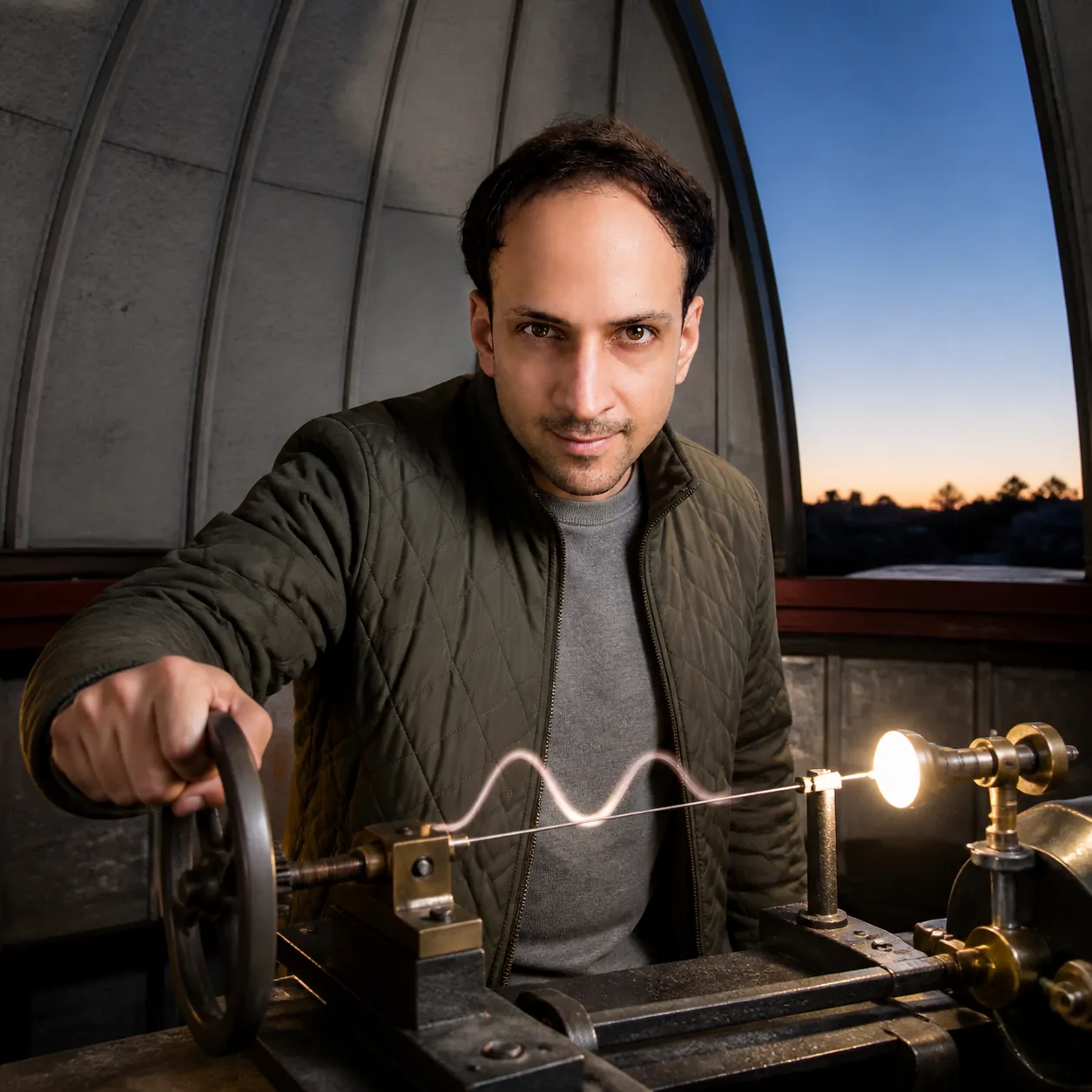
The Turned Instant: Small Teaching Observatory — AI Portrait Prompt
صورةAI Portraits

Turn your own photo into a museum-demonstration portrait in a small teaching observatory under its half-open dome before dawn. Keeps your face unchanged.

من نص البرومبت

Use the attached reference photo as the identity reference: keep the same face, skin tone, hair and features as the person in that photo, without beautifying, aging or altering them. Create a square 1:1 museum-catalog frame with a strong first read and a slower second read at exactly 2880x2880 pixels. Location: a small teaching observatory under its half-open dome before dawn. Show the subject in a quilted olive liner jacket zipped over a grey sweatshirt, cranking the dome shutter one hand-width wider. Make one rigorous physical condition the conceptual engine: a clamped steel tine ringing far too fast to see until a strobe slows its blur into one lazily waving curve recruits the viewer's own persistence of vision as its final moving part. Explore why a full lawful explanation enlarges the astonishment instead of spending it; direct expression and posture toward quiet astonishment, never melodrama or ad-like confidence. Use an eye-level 85mm portrait view with the apparatus sharing their focal plane at honest scale. Make the composition give their hand, the mechanism, and their gaze one connected diagonal. Render it as museum-demonstration realism combining hand-finished brass and tin surfaces, physically exact motion sampling, readable human presence, and restrained curatorial styling, using cool dusk ambience balanced by a single warm practical near the machine and a palette of soot grey, unpainted card, and one band of vermilion. Photorealistic: this must read as a real photograph from a physical camera, never an illustration, painting, or 3D render. Resolve real surface detail: fine grit in the texture of concrete, efflorescence at damp edges, and hairline cracks that follow stress. Keep one identity-locked subject, credible hands and fingers, natural fabric, and coherent scale, contact, reflections, shadows, airflow, deformation, and materials. Background people only when essential, always secondary and clearly different. Avoid film-strip borders, cartoon motion lines, ghosted multiple faces, glowing hologram spin, and sparks flying off machinery. No text, labels, logos, signatures, watermarks, random symbols, plastic skin, excessive bloom, or glossy AI finish.
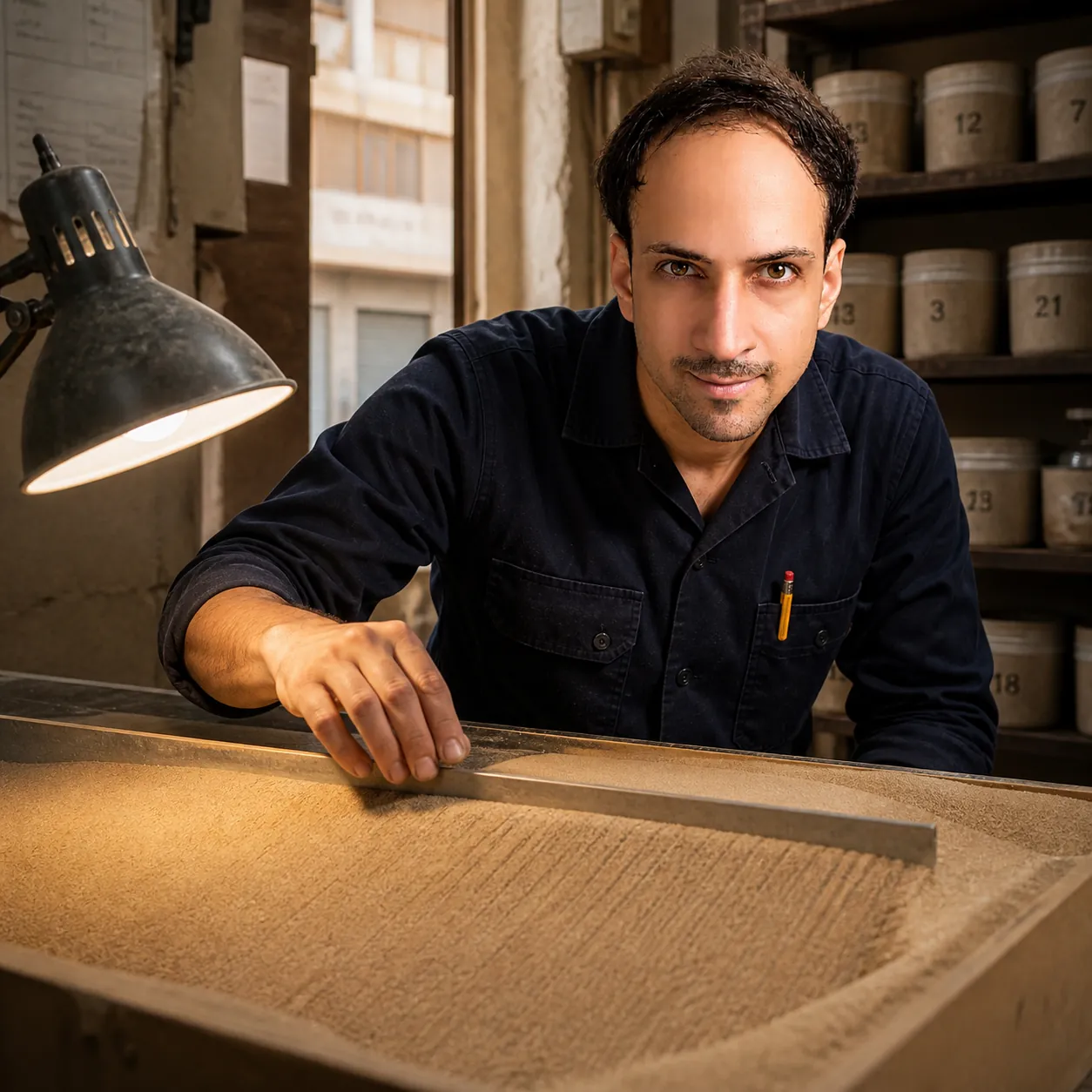
Fifth State: Back-Street Riyadh Workshop — AI Portrait Prompt
صورةAI Portraits

Turn your own photo into a conceptual earth-science portrait in a back-street Riyadh workshop with sand samples in numbered tins. Keeps your face unchanged.

من نص البرومبت

Use the attached reference photo as the identity reference: keep the same face, skin tone, hair and features as the person in that photo, without beautifying, aging or altering them. Treat that reference as the character anchor and change only the scene. Create a square 1:1 museum-catalog frame with a strong first read and a slower second read at exactly 2880x2880 pixels. Location: a back-street Riyadh workshop with sand samples in numbered tins. Show the subject in a navy work shirt with a pencil clipped at the chest, drawing a straightedge slowly across a bed of grains. Treat this mechanism as the frame’s governing rule: a booming dune face whose sheared upper layer they release with one slow hand-drag, avalanching as a single humming sheet gives the desert's most ordinary material the standing of an exact instrument. Explore why a material older than the mountains still refuses to pick a state; direct expression and posture toward attentive calm, never melodrama or ad-like confidence. Frame from just above the sand's surface so its grain-scale horizon leads to their level gaze. Make the composition let one sharp edge of settled grains cross the frame diagonally. Render it as conceptual earth-science portraiture combining tactile working apparatus, believable granular flow, restrained contemporary art direction, and unhurried human presence, using one bare work lamp angled low across the sand's textured surface and a palette of dune ivory, matte charcoal, and one indigo band. Photorealistic: this must read as a real photograph from a physical camera, never an illustration, painting, or 3D render. Resolve real surface detail: paper fibre visible at cut edges, plastic that shows mould lines, and paint thicker where a brush turned. Keep one identity-locked person, credible hands and fingers, natural fabric, and coherent scale, contact, reflections, shadows, airflow, deformation, and materials. Background people only when essential, always secondary and clearly different. Avoid falconry props, camel caravans, CGI sand tornadoes, face-morphing sand sculptures, and endless untouched postcard dunes. No text, labels, logos, signatures, watermarks, random symbols, plastic skin, excessive bloom, or glossy AI finish.
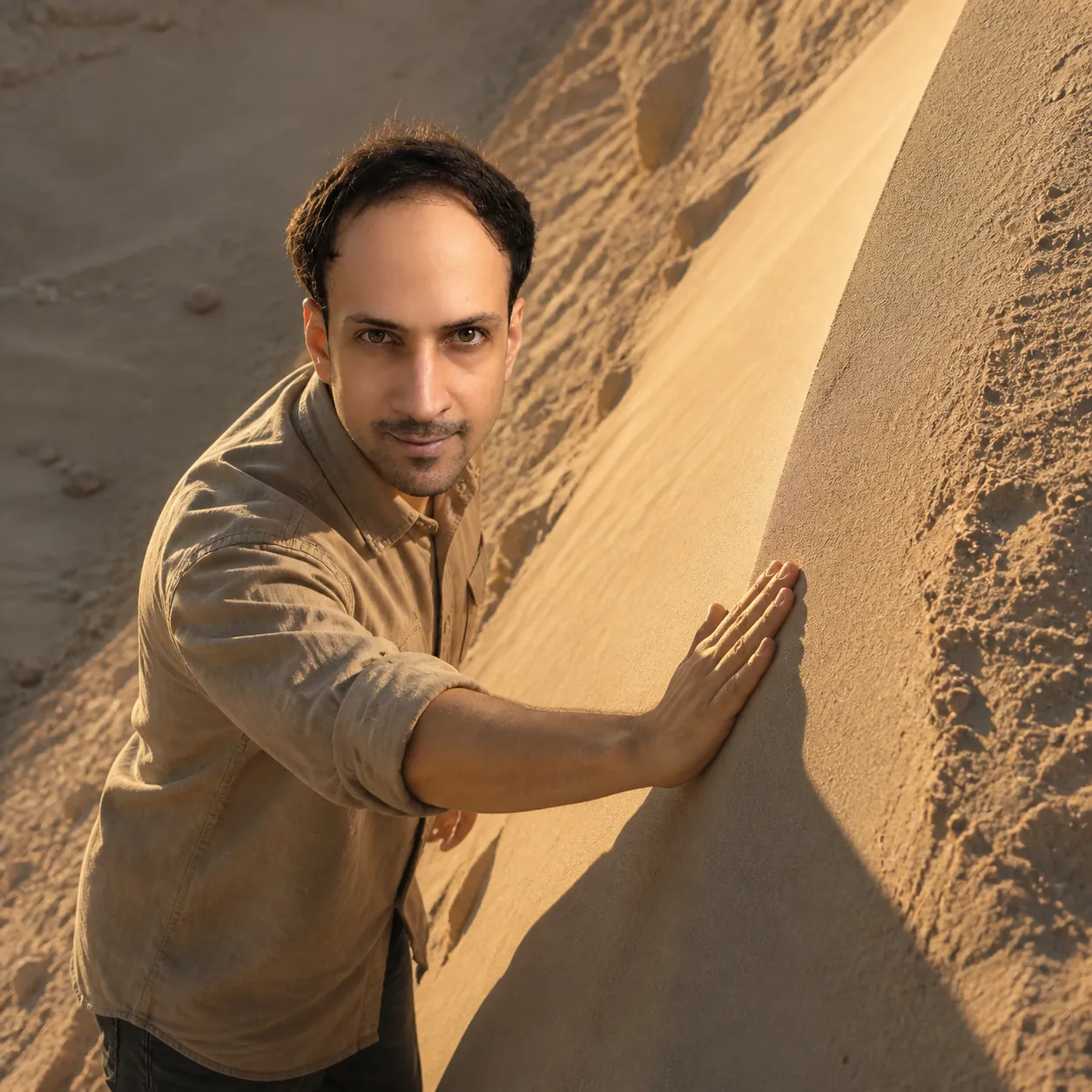
Grain Treaty: Steep Leeward Face — AI Portrait Prompt
صورةAI Portraits

Turn your own photo into a gallery-grade experimental portrait in the steep leeward face of an isolated dune in late afternoon. Keeps your face unchanged.

من نص البرومبت

Use the attached reference photo as the identity reference: keep the same face, skin tone, hair and features as the person in that photo, without beautifying, aging or altering them. Create a square 1:1 museum-catalog frame with a strong first read and a slower second read at exactly 2880x2880 pixels. Location: the steep leeward face of an isolated dune in late afternoon. Show the subject in a dust-toned field shirt with sleeves rolled past the forearms, pressing one flat palm slowly along the slope's brink. Build the artwork around this material rule: a soft canvas cushion of loose grains that turns rigid as fired brick the moment they draw its air out gives the desert's most ordinary material the standing of an exact instrument. Explore how order can rise out of shaking, spilling, and other engines of disorder; direct expression and posture toward attentive calm, never melodrama or ad-like confidence. Use a composed 35mm environmental view that gives the apparatus and the subject equal standing. Make the composition place their hands and the demonstration inside one unbroken triangle. Render it as gallery-grade experimental photography built from working sand demonstrations, sun-bleached field styling, honest grain-level physics, and calm scientific candor, using soft canvas-filtered shade cut by one hard sliver of noon and a palette of dune ivory, matte charcoal, and one indigo band. Photorealistic: this must read as a real photograph from a physical camera, never an illustration, painting, or 3D render. Resolve real surface detail: cotton that hangs by its own weight, seams that pucker very slightly, and collars softened by washing. Keep one identity-locked subject, credible hands and fingers, natural fabric, and coherent scale, contact, reflections, shadows, airflow, deformation, and materials. Background people only when essential, always secondary and clearly different. Avoid falconry props, camel caravans, CGI sand tornadoes, face-morphing sand sculptures, and endless untouched postcard dunes. No text, labels, logos, signatures, watermarks, random symbols, plastic skin, excessive bloom, or glossy AI finish.
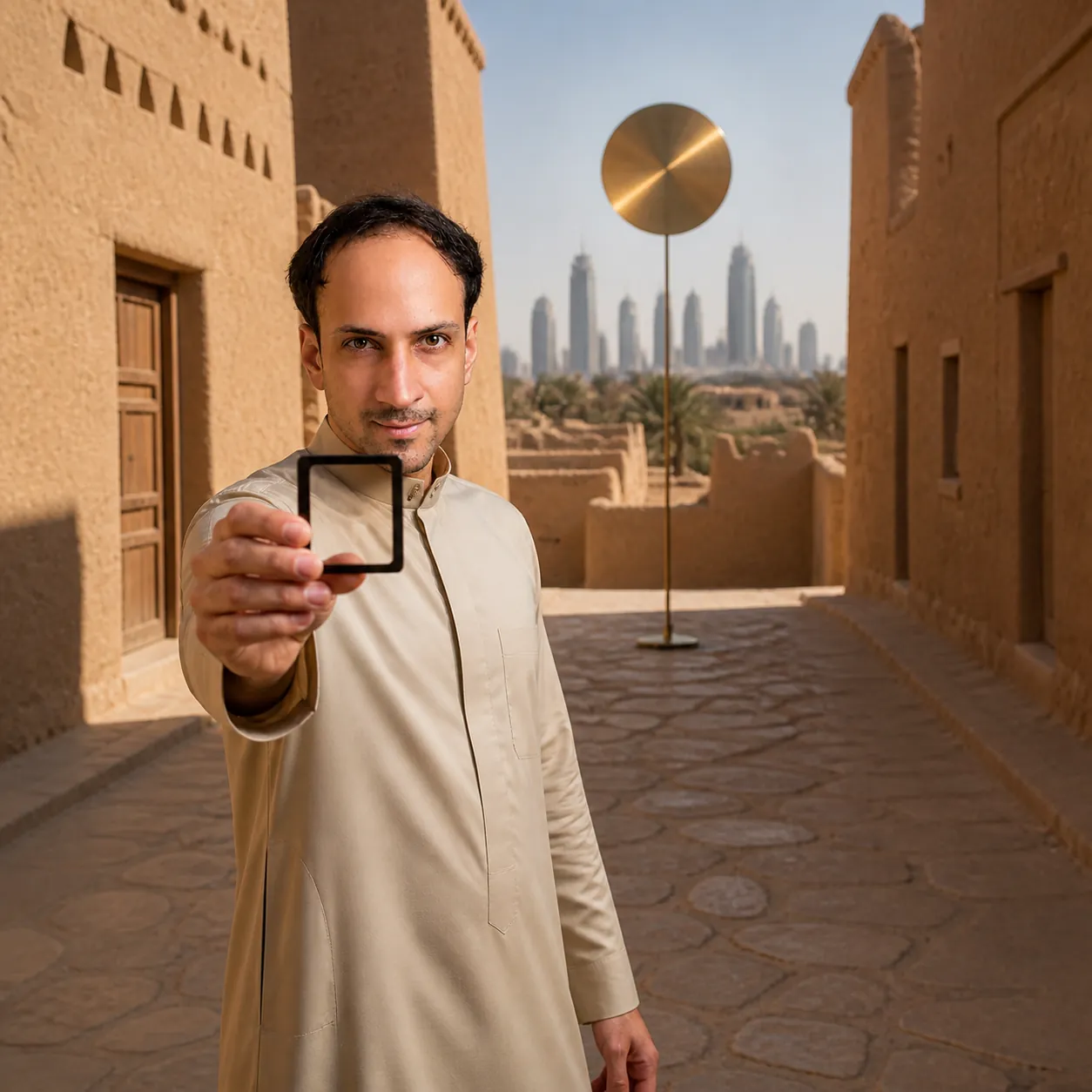
The Eye's Ruler: Heritage Mud-Brick Alley — AI Portrait Prompt
صورةAI Portraits

Turn your own photo into a gallery-grade perspective portrait in a heritage mud-brick alley in Diriyah restored and empty at noon. Keeps your face unchanged.

من نص البرومبت

Use the attached reference photo as the identity reference: keep the same face, skin tone, hair and features as the person in that photo, without beautifying, aging or altering them. Create a square 1:1 museum-catalog frame with a strong first read and a slower second read at exactly 2880x2880 pixels. Location: a heritage mud-brick alley in Diriyah restored and empty at noon. Show the subject in a summer-weight beige traditional Gulf outfit and simple leather sandals, holding a small frame card at arm's length. The impossible-looking event must obey this clear system: a polished brass disc on a slender stand that exactly eclipses the tallest distant high-rise from the lens's fixed station defeats the eye's scale instinct with nothing but honest, lawful geometry. Explore whether size is something objects own or something distances lend them; direct expression and posture toward grounded awe, never melodrama or ad-like confidence. Use a slightly elevated 35mm viewpoint with honest verticals and no exaggerated perspective stretch. Make the composition grant the smallest object the frame's greatest visual weight. Render it as gallery-grade perspective photography built from real sightline alignments, measured camera placement, physically accurate focus falloff, and unhurried dignified portrait values, using late low sun raking the scene so every shadow states its distance and a palette of bone white, deep umber, and one restrained teal. Photorealistic: this must read as a real photograph from a physical camera, never an illustration, painting, or 3D render. Resolve real surface detail: glass with real thickness at its edge, reflections that carry the room's actual colour, and dust visible only at grazing angles. Keep one identity-locked person, credible hands and fingers, natural fabric, and coherent scale, contact, reflections, shadows, airflow, deformation, and materials. Background people only when essential, always secondary and clearly different. Avoid shrunken-person composites, giant-monster posing, fake miniature blur filters, candy-toy oversaturation, and warped fisheye streets. No text, labels, logos, signatures, watermarks, random symbols, plastic skin, excessive bloom, or glossy AI finish.
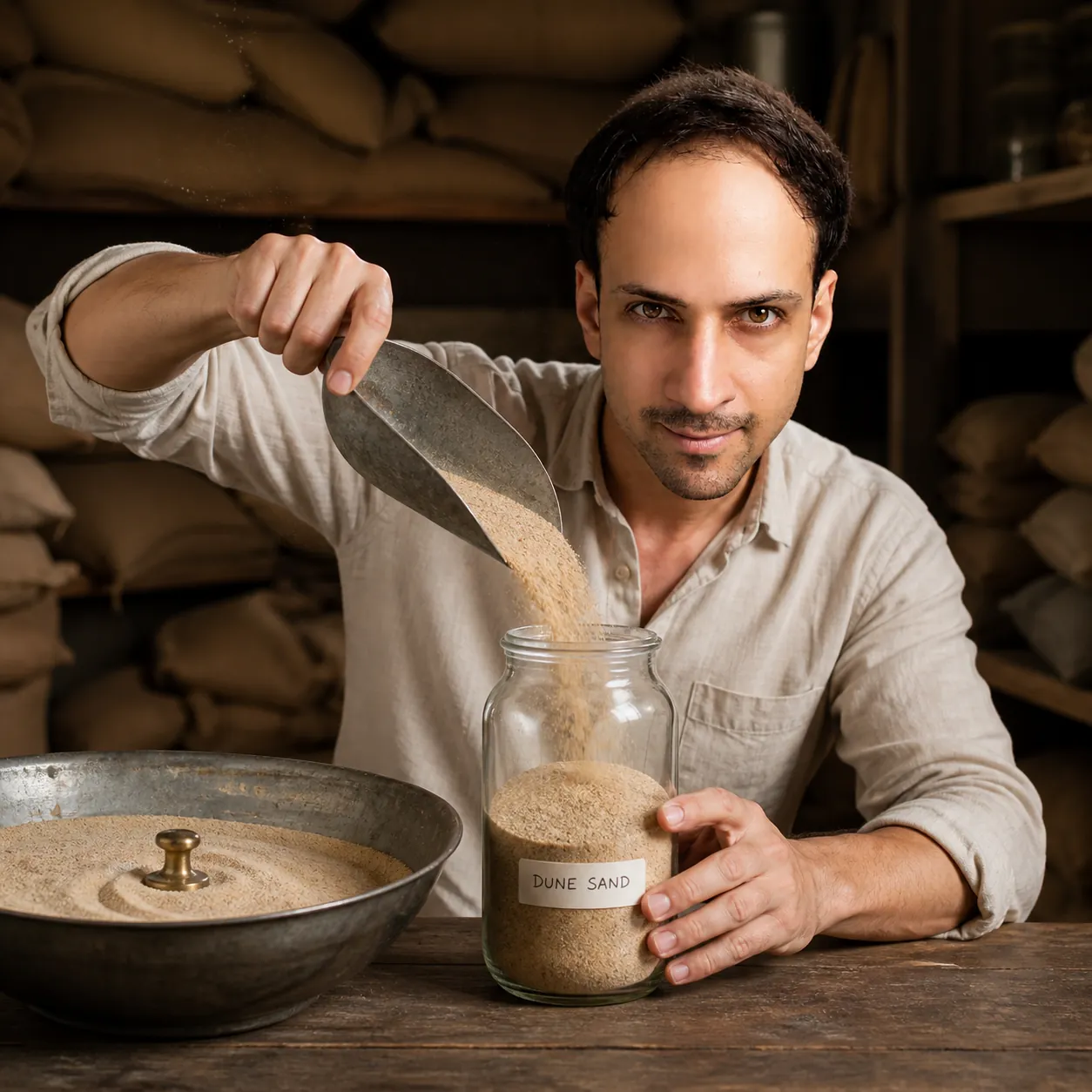
The Dry Tide: Date-Farm Storehouse — AI Portrait Prompt
صورةAI Portraits

Turn your own photo into a portrait in a date-farm storehouse with burlap sacks and one cleared plank table. Keeps your face unchanged.

من نص البرومبت

Use the attached reference photo as the identity reference: keep the same face, skin tone, hair and features as the person in that photo, without beautifying, aging or altering them. Create a square 1:1 museum-catalog frame with a strong first read and a slower second read at exactly 2880x2880 pixels. Location: a date-farm storehouse with burlap sacks and one cleared plank table. Show the subject in an oatmeal linen shirt buttoned to one below the collar, funneling dune sand into a labeled glass jar. The impossible-looking event must obey this clear system: a basin of dune sand fed by hidden air through its floor, simmering like a liquid a brass weight sinks into shows dry grains refusing to be fully solid or fully liquid. Explore whether a heap that sorts, sings, and locks deserves the word inert; direct expression and posture toward quiet reckoning, never melodrama or ad-like confidence. Use a 90mm close-portrait framing where single airborne grains near the lens stay physically plausible against their focused face. Make the composition place their hands and the demonstration inside one unbroken triangle. Render it as gallery-grade experimental photography built from working sand demonstrations, sun-bleached field styling, honest grain-level physics, and calm scientific candor, using low raking desert sun that turns every ridge of grains into relief and a palette of sifted taupe, worn steel, and a low amber accent. Photorealistic: this must read as a real photograph from a physical camera, never an illustration, painting, or 3D render. Resolve real surface detail: glass with real thickness at its edge, reflections that carry the room's actual colour, and dust visible only at grazing angles. Keep one identity-locked subject, credible hands and fingers, natural fabric, and coherent scale, contact, reflections, shadows, airflow, deformation, and materials. Background people only when essential, always secondary and clearly different. Avoid swirling sandstorm vortices, glowing hourglass fantasy, levitating sand spirals, cymatic pattern plates, and heroic dune-top silhouettes. No text, labels, logos, signatures, watermarks, random symbols, plastic skin, excessive bloom, or glossy AI finish.
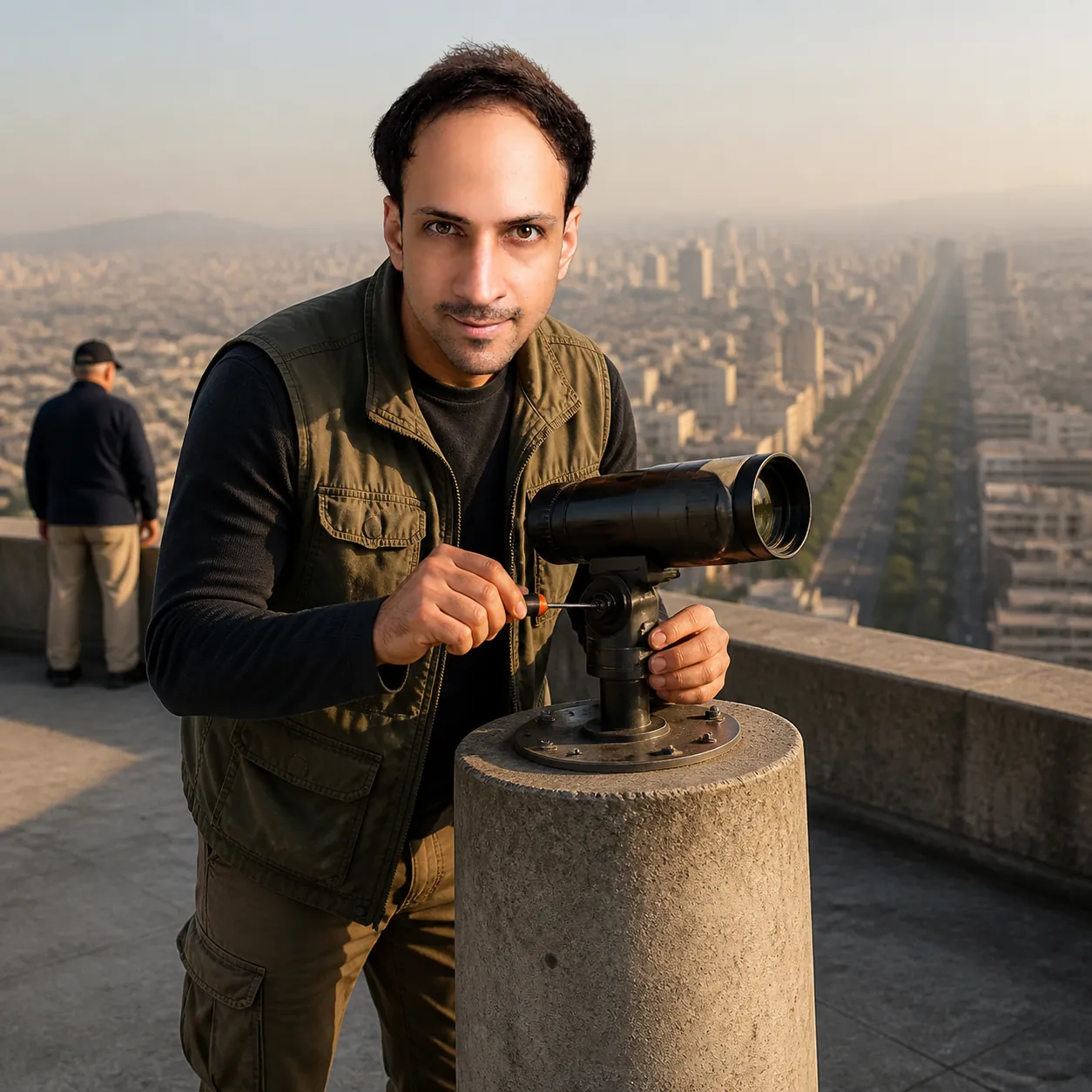
Pocket Giant: Hilltop Triangulation Pillar — AI Portrait Prompt
صورةAI Portraits

Turn your own photo into a conceptual scale-study portrait in a hilltop triangulation pillar above the city's northern districts. Keeps your face unchanged.

من نص البرومبت

Use the attached reference photo as the identity reference: keep the same face, skin tone, hair and features as the person in that photo, without beautifying, aging or altering them. Create a square 1:1 museum-catalog frame with a strong first read and a slower second read at exactly 2880x2880 pixels. Location: a hilltop triangulation pillar above the city's northern districts. Show the subject in an olive utility vest over a long-sleeve base layer and cargo trousers, screwing a panoramic head onto the pillar's center bolt. Treat this mechanism as the frame’s governing rule: a long telephoto rig whose ground glass stacks a full kilometer of boulevard into one flat, layered plane achieves its entire effect without altering a single object it shows. Explore where the miniature ends and the world begins when light treats both alike; direct expression and posture toward careful conviction, never melodrama or ad-like confidence. Frame from one marked standing position so the alignment lands exactly and their face stays readable. Make the composition keep one honest scale reference standing quietly inside the frame. Render it as conceptual scale-study realism combining architectural miniature exactness, truthful shadow geometry, unretouched photographic optics, and quiet human-centered observational framing, using late low sun raking the scene so every shadow states its distance and a palette of warm grey concrete, pale haze, and one signal orange. Photorealistic: this must read as a real photograph from a physical camera, never an illustration, painting, or 3D render. Resolve real surface detail: floor finish worn along the walked line, skirting marked at shoe height, and corners darker than the open floor. Keep one identity-locked person, credible hands and fingers, natural fabric, and coherent scale, contact, reflections, shadows, airflow, deformation, and materials. Background people only when essential, always secondary and clearly different. Avoid surreal scale collage, floating figures, painted anamorphic pavement, and dollhouse cartoon styling. No text, labels, logos, signatures, watermarks, random symbols, plastic skin, excessive bloom, or glossy AI finish.
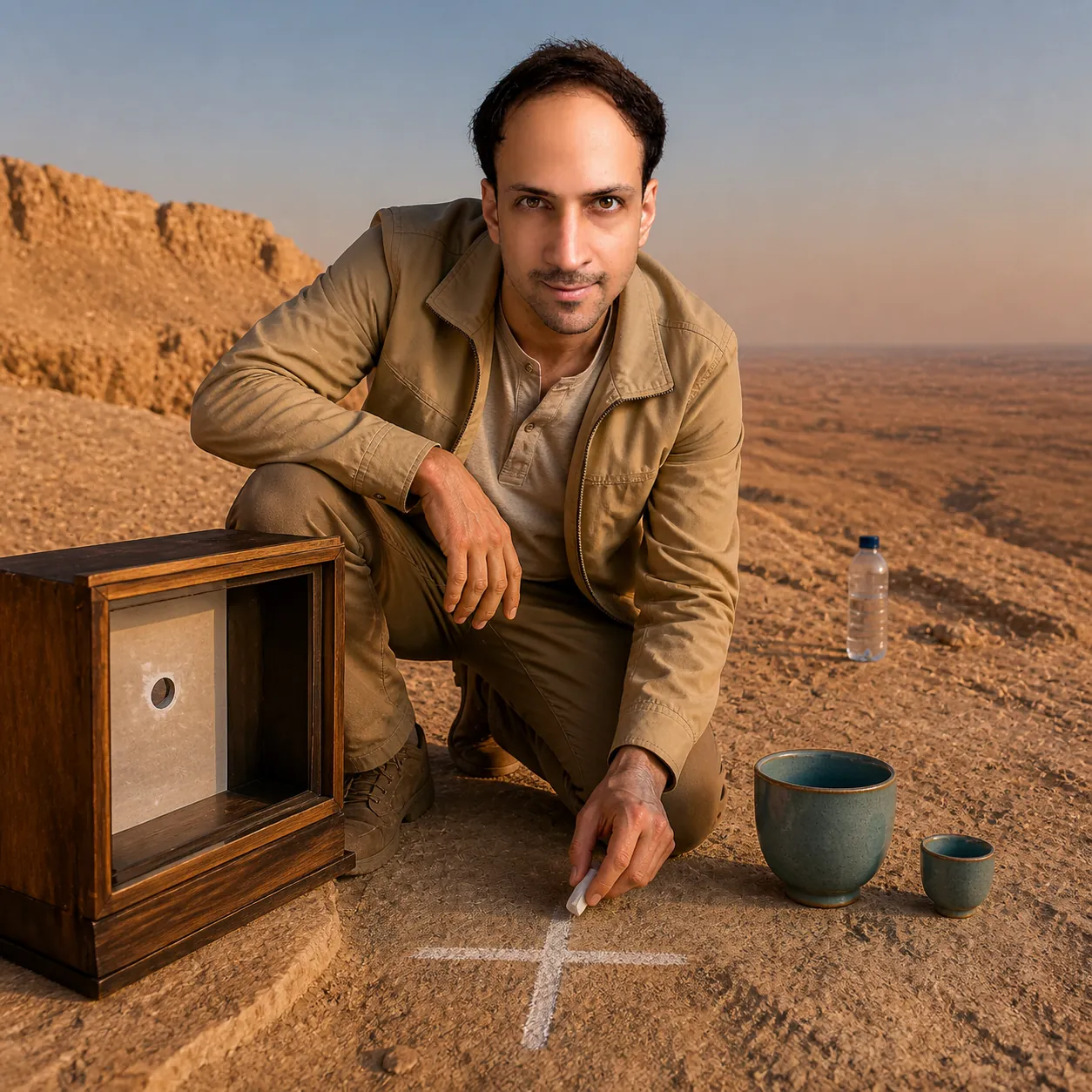
Second Look: Limestone Escarpment Edge Northwest — AI Portrait Prompt
صورةAI Portraits

Turn your own photo into a high-concept optical portrait in the limestone escarpment edge northwest of Riyadh in late amber light. Keeps your face unchanged.

من نص البرومبت

Use the attached reference photo as the identity reference: keep the same face, skin tone, hair and features as the person in that photo, without beautifying, aging or altering them. Create a square 1:1 museum-catalog frame with a strong first read and a slower second read at exactly 2880x2880 pixels. Location: the limestone escarpment edge northwest of Riyadh in late amber light. Show the subject in a sand-toned windbreaker zipped over a stone henley and canvas trousers, chalking a small cross on the rock at their feet. Treat this mechanism as the frame’s governing rule: a waist-high skewed room model whose drilled peephole makes two identical cups read as giant and dwarf defeats the eye's scale instinct with nothing but honest, lawful geometry. Explore what becomes of grandeur when distance can quietly negotiate its size; direct expression and posture toward grounded awe, never melodrama or ad-like confidence. Frame from one marked standing position so the alignment lands exactly and their face stays readable. Make the composition keep one honest scale reference standing quietly inside the frame. Render it as high-concept optical portraiture built from lawful lens geometry, documentary street realism, model-shop craft fidelity, and patient editorial composition, using one collimated key with crisp parallel shadows and soft neutral fill and a palette of bone white, deep umber, and one restrained teal. Photorealistic: this must read as a real photograph from a physical camera, never an illustration, painting, or 3D render. Resolve real surface detail: grout darker than tile, sealant slightly yellowed, and every joint showing a real tolerance gap. Keep one identity-locked person, credible hands and fingers, natural fabric, and coherent scale, contact, reflections, shadows, airflow, deformation, and materials. Background people only when essential, always secondary and clearly different. Avoid shrunken-person composites, giant-monster posing, fake miniature blur filters, candy-toy oversaturation, and warped fisheye streets. No text, labels, logos, signatures, watermarks, random symbols, plastic skin, excessive bloom, or glossy AI finish.
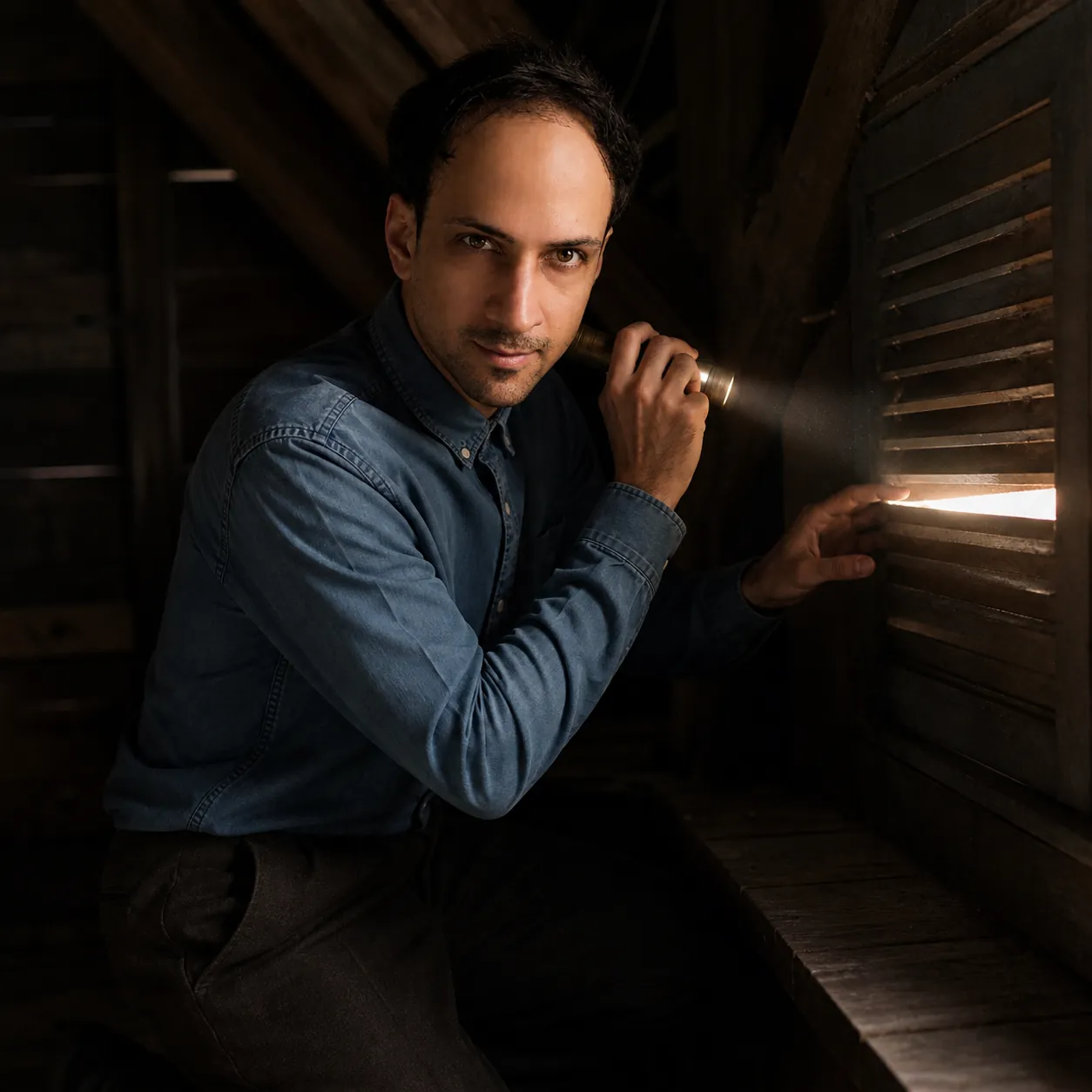
Returned Light: Raftered Attic Loft — AI Portrait Prompt
صورةAI Portraits

Turn your own photo into a conceptual field-optics portrait in a raftered attic loft with one shuttered dormer and swept boards. Keeps your face unchanged.

من نص البرومبت

Use the attached reference photo as the identity reference: keep the same face, skin tone, hair and features as the person in that photo, without beautifying, aging or altering them. Create a square 1:1 museum-catalog frame with a strong first read and a slower second read at exactly 2880x2880 pixels. Location: a raftered attic loft with one shuttered dormer and swept boards. Show the subject in a washed denim shirt buttoned up and dark wool trousers, sliding the dormer shutter to a narrow slit. Treat this mechanism as the frame’s governing rule: a molded tile of tiny corner-cube prisms that lights end-to-end like a struck match when their lamp rides beside their eye turns the open air into a private channel between lamp and eye. Explore why light that returns to its sender feels more like recognition than reflection; direct expression and posture toward earned conviction, never melodrama or ad-like confidence. Frame in half-profile at chest height so the subject and the answering light stay equally readable. Make the composition surround one small blaze with generous, honest darkness. Render it as conceptual field-optics realism blending honest low-light exposure, physically accurate retroreflection, quiet darkened-space atmosphere, and calm human-scale editorial framing, using low ambient dusk with a single handheld beam as the only key and a palette of charcoal, unpolished brass, and one warm white blaze. Photorealistic: this must read as a real photograph from a physical camera, never an illustration, painting, or 3D render. Resolve real surface detail: paper fibre visible at cut edges, plastic that shows mould lines, and paint thicker where a brush turned. Keep one identity-locked subject, credible hands and fingers, natural fabric, and coherent scale, contact, reflections, shadows, airflow, deformation, and materials. Background people only when essential, always secondary and clearly different. Avoid laser-show haze walls, glowing animal eyes, CGI light tunnels, painted halos, and highway signage. No text, labels, logos, signatures, watermarks, random symbols, plastic skin, excessive bloom, or glossy AI finish.
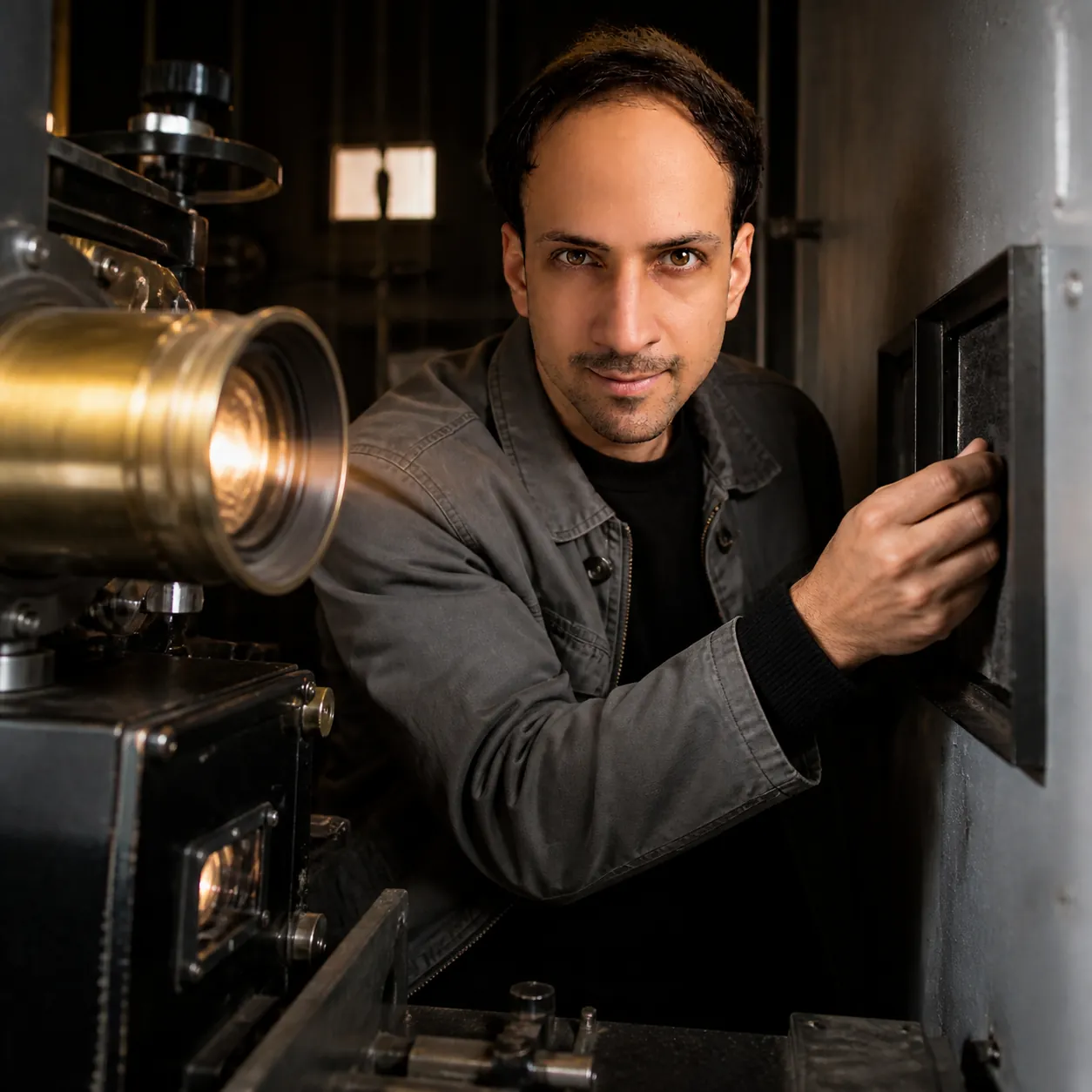
One Witness: Projection Booth — AI Portrait Prompt
صورةAI Portraits

Turn your own photo into a high-concept optical portrait in the projection booth of a shuttered single-screen cinema. Keeps your face unchanged.

من نص البرومبت

Use the attached reference photo as the identity reference: keep the same face, skin tone, hair and features as the person in that photo, without beautifying, aging or altering them. Create a square 1:1 museum-catalog frame with a strong first read and a slower second read at exactly 2880x2880 pixels. Location: the projection booth of a shuttered single-screen cinema. Show the subject in a black crew-neck sweater under an open grey utility jacket, pressing the felt door seal flat with one thumb. Make one rigorous physical condition the conceptual engine: a brass cat's-eye cell, a lens over a mirror, that keeps sending their beam home even as they tilt it keeps its full brightness for the one standing at the light's source. Explore where the boundary lies between observing a phenomenon and being part of its optics; direct expression and posture toward sober delight, never melodrama or ad-like confidence. Use an eye-level 80mm medium-format viewpoint with natural perspective and deep honest blacks. Make the composition align lamp, eye, and return along one legible line. Render it as high-concept optical portraiture built from real return-path geometry, documentary night realism, precision lamp discipline, and emotionally restrained composition, using late window light kept low so on-axis return outshines every ordinary reflection and a palette of graphite, dusty sand, and one pale gold star. Photorealistic: this must read as a real photograph from a physical camera, never an illustration, painting, or 3D render. Resolve real surface detail: the difference between a wiped surface and a clean one, faint tide marks on ceramic, and metal dulled unevenly by touch. Keep one identity-locked subject, credible hands and fingers, natural fabric, and coherent scale, contact, reflections, shadows, airflow, deformation, and materials. Background people only when essential, always secondary and clearly different. Avoid glowing sci-fi visors, hi-vis vest advertising poses, lens-flare starbursts, and neon cyberpunk streets. No text, labels, logos, signatures, watermarks, random symbols, plastic skin, excessive bloom, or glossy AI finish.
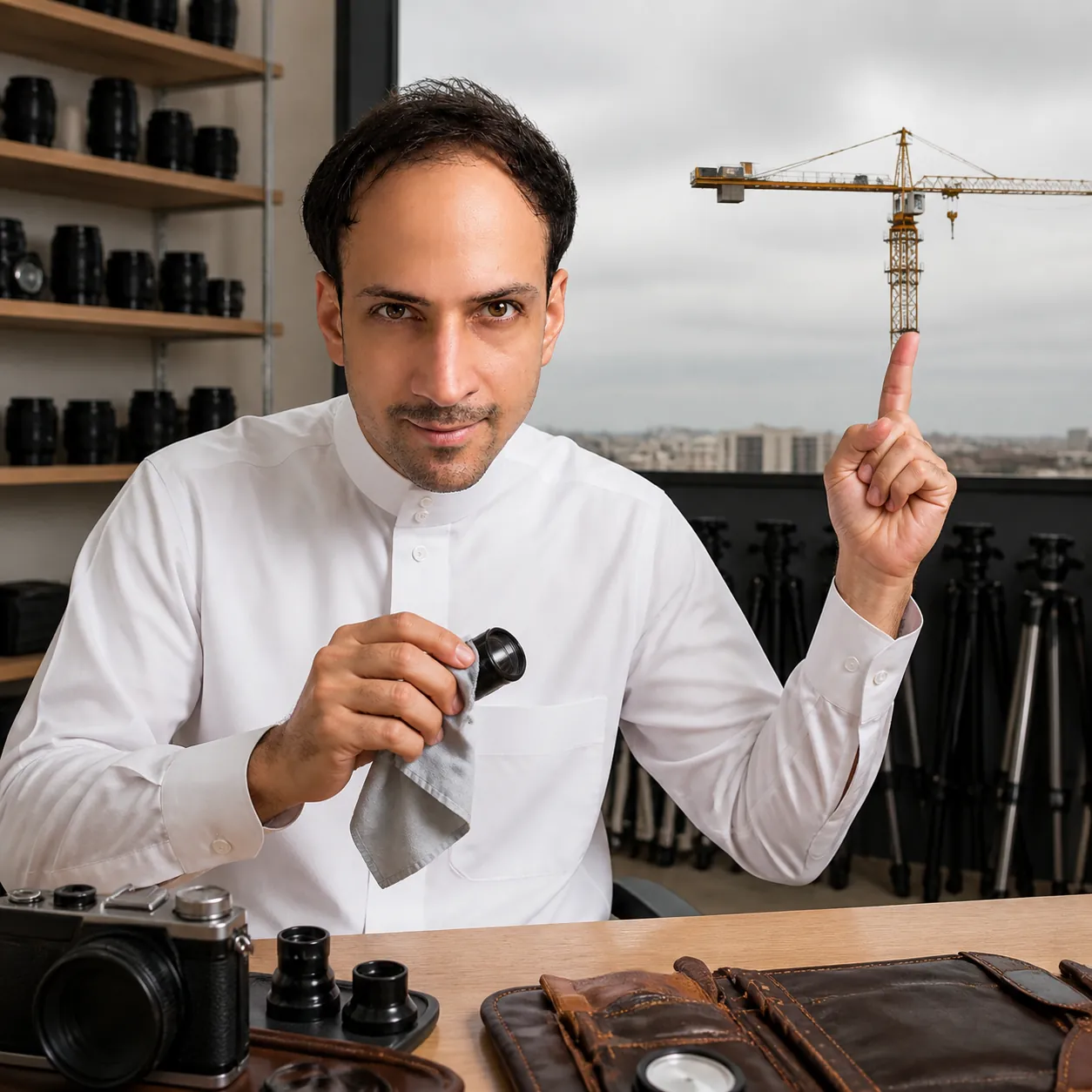
Scale Undone: Camera-Club Meeting Room — AI Portrait Prompt
صورةAI Portraits

Turn your own photo into a museum-grade demonstration portrait in a camera-club meeting room with tripods folded along one wall. Keeps your face unchanged.

من نص البرومبت

Use the attached reference photo as the identity reference: keep the same face, skin tone, hair and features as the person in that photo, without beautifying, aging or altering them. Create a square 1:1 museum-catalog frame with a strong first read and a slower second read at exactly 2880x2880 pixels. Location: a camera-club meeting room with tripods folded along one wall. Show the subject in a plain white traditional Gulf outfit pressed crisp, sleeves left full and buttoned, cleaning a loupe with slow circles of a cloth. Treat this mechanism as the frame’s governing rule: a distant tower crane that settles weightlessly onto their raised fingertip when the camera holds one surveyed vantage achieves its entire effect without altering a single object it shows. Explore how a viewpoint can rebuild the world without moving a single object; direct expression and posture toward careful conviction, never melodrama or ad-like confidence. Frame from one marked standing position so the alignment lands exactly and their face stays readable. Make the composition align their gaze with the exact line the illusion depends on. Render it as museum-grade demonstration photography combining true forced-perspective staging, honest depth-of-field behavior, believable material scale cues, and restrained contemporary art direction, using flat overcast daylight that removes haze cues and levels every distance and a palette of basswood blond, matte black, and a thin brass glint. Photorealistic: this must read as a real photograph from a physical camera, never an illustration, painting, or 3D render. Resolve real surface detail: leather creased along the lines of use, stitching slightly irregular, and edges burnished from contact. Keep one identity-locked person, credible hands and fingers, natural fabric, and coherent scale, contact, reflections, shadows, airflow, deformation, and materials. Background people only when essential, always secondary and clearly different. Avoid surreal scale collage, floating figures, painted anamorphic pavement, and dollhouse cartoon styling. No text, labels, logos, signatures, watermarks, random symbols, plastic skin, excessive bloom, or glossy AI finish.
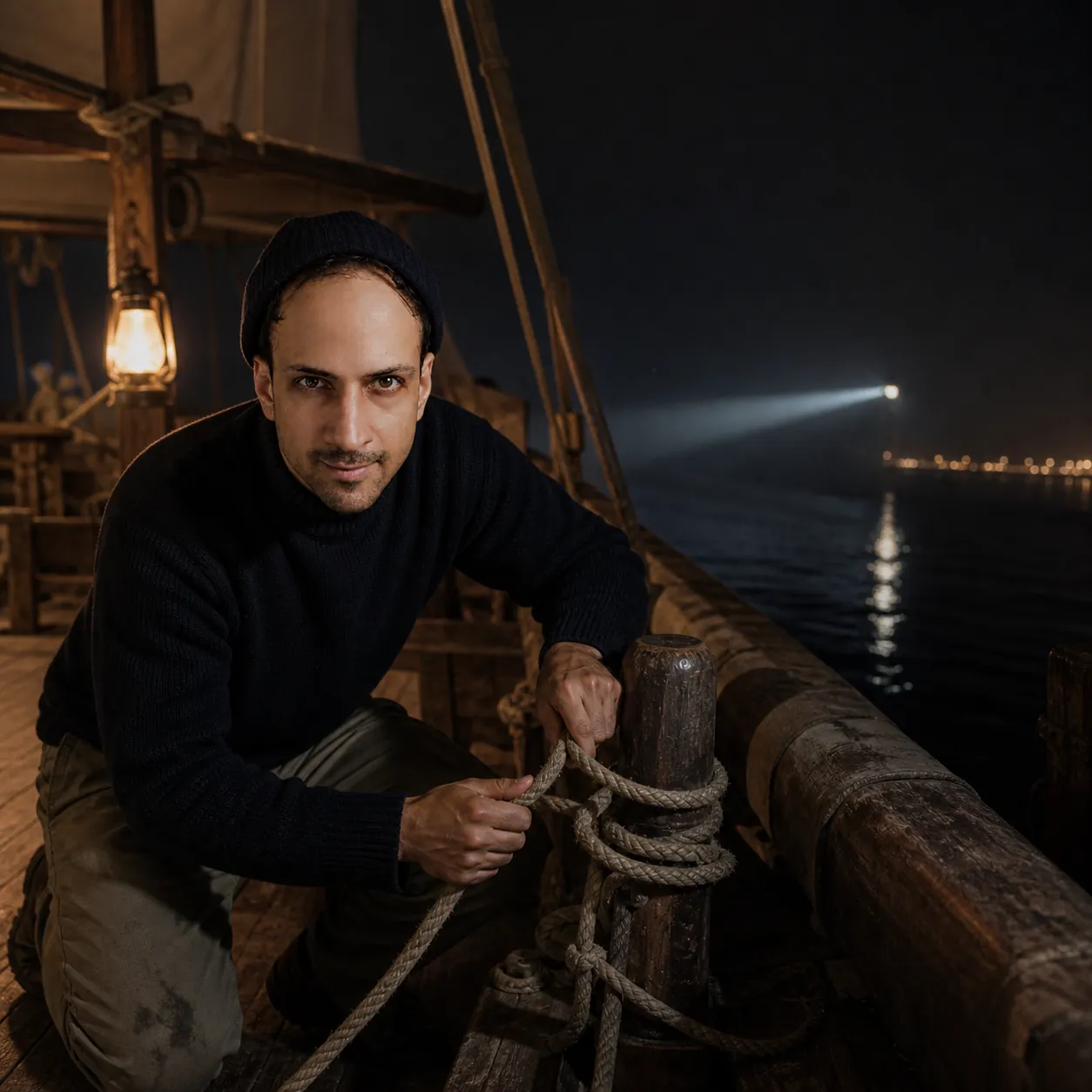
Full Circle: Deck of a Moored Dhow — AI Portrait Prompt
صورةAI Portraits

Turn your own photo into a conceptual field-optics portrait in the deck of a moored dhow on a windless gulf night. Keeps your face unchanged.

من نص البرومبت

Use the attached reference photo as the identity reference: keep the same face, skin tone, hair and features as the person in that photo, without beautifying, aging or altering them. Create a square 1:1 museum-catalog frame with a strong first read and a slower second read at exactly 2880x2880 pixels. Location: the deck of a moored dhow on a windless gulf night. Show the subject in a navy watch cap, dark fisherman's sweater, and canvas work trousers, cleating a slack line with two practiced wraps. Build the artwork around this material rule: a fist-sized corner-cube prism that catches a thin beam in chalk haze and sends it home exactly parallel to its arrival turns the open air into a private channel between lamp and eye. Explore how it feels to ask the dark a question and be answered instantly; direct expression and posture toward attentive wonder, never melodrama or ad-like confidence. Use a measured 35mm environmental view, the subject at one-third, the returning light deeper in frame. Make the composition let the off-axis dullness occupy most of the frame. Render it as conceptual field-optics realism blending honest low-light exposure, physically accurate retroreflection, quiet darkened-space atmosphere, and calm human-scale editorial framing, using low ambient dusk with a single handheld beam as the only key and a palette of graphite, dusty sand, and one pale gold star. Photorealistic: this must read as a real photograph from a physical camera, never an illustration, painting, or 3D render. Resolve real surface detail: hair with individual strands catching light, fine hairs of uneven length, and skin oil giving a low uneven sheen. Keep one identity-locked subject, credible hands and fingers, natural fabric, and coherent scale, contact, reflections, shadows, airflow, deformation, and materials. Background people only when essential, always secondary and clearly different. Avoid laser-show haze walls, glowing animal eyes, CGI light tunnels, painted halos, and highway signage. No text, labels, logos, signatures, watermarks, random symbols, plastic skin, excessive bloom, or glossy AI finish.
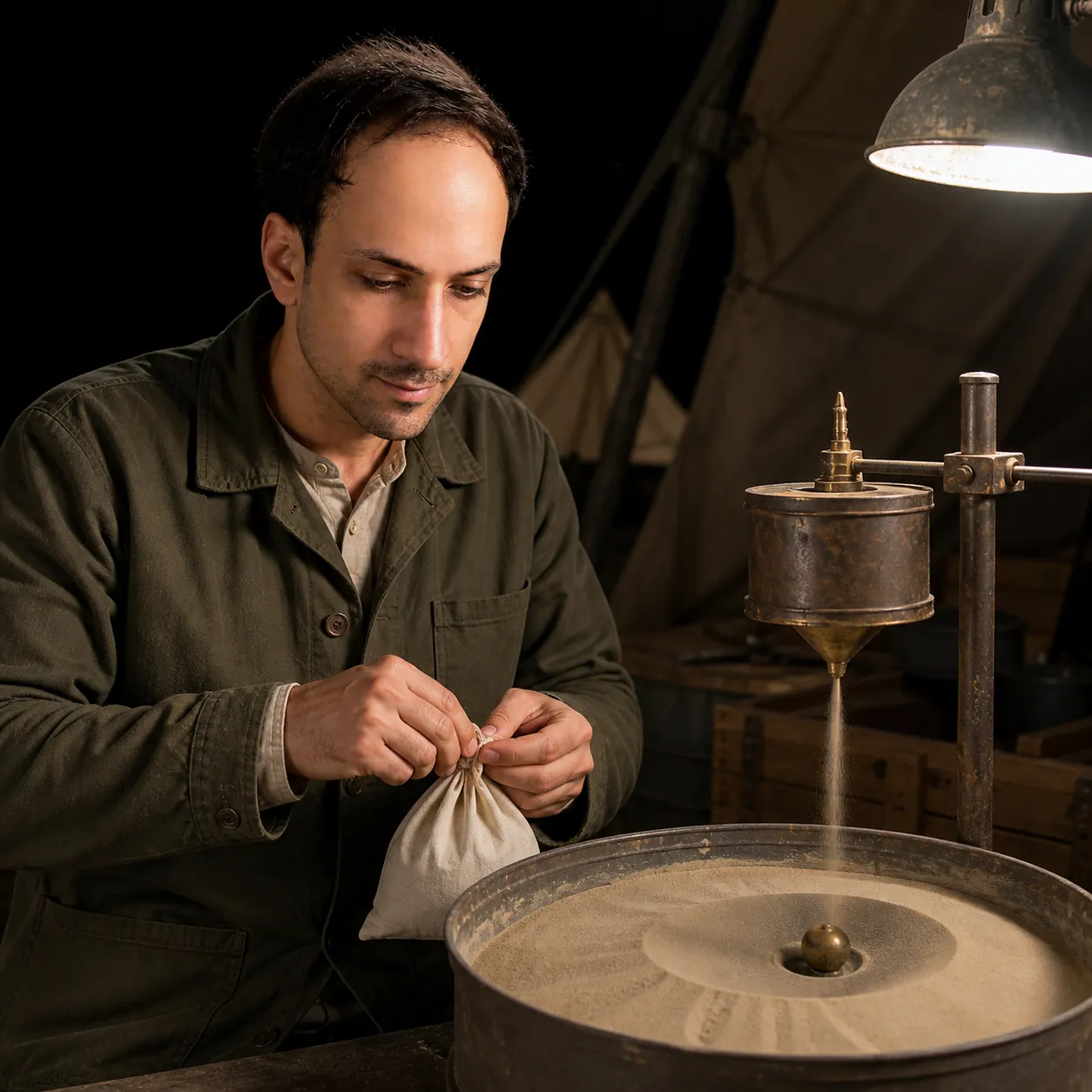
The Dry Tide: Field Camp — AI Portrait Prompt
صورةAI Portraits

Turn your own photo into a museum-grade demonstration portrait in a field camp under one work lamp after the wind has died. Keeps your face unchanged.

من نص البرومبت

Use the attached reference photo as the identity reference: keep the same face, skin tone, hair and features as the person in that photo, without beautifying, aging or altering them. Treat that reference as the character anchor and change only the scene. Create a square 1:1 museum-catalog frame with a strong first read and a slower second read at exactly 2880x2880 pixels. Location: a field camp under one work lamp after the wind has died. Show the subject in an olive chore coat buttoned over a collarless cotton shirt, knotting the drawstring of a small canvas sample bag. Use this advanced image-making device as the core logic: a basin of dune sand fed by hidden air through its floor, simmering like a liquid a brass weight sinks into gives the desert's most ordinary material the standing of an exact instrument. Explore whether a heap that sorts, sings, and locks deserves the word inert; direct expression and posture toward settled focus, never melodrama or ad-like confidence. Frame past their shoulder toward the demonstration, their profile softly readable at the frame's edge. Make the composition hold one calm empty interval between them and the mechanism. Render it as museum-grade demonstration realism combining truthful sand behavior, high-fidelity portrait photography, weathered field-equipment materiality, and physically exact grain-scale detail, using clean directional laboratory light shaped to keep single falling grains visible and a palette of dune ivory, matte charcoal, and one indigo band. Photorealistic: this must read as a real photograph from a physical camera, never an illustration, painting, or 3D render. Resolve real surface detail: thread ends and slight pilling on worn cloth, hairline chips at every hard corner, and stone that is porous rather than smooth. Keep one identity-locked person, credible hands and fingers, natural fabric, and coherent scale, contact, reflections, shadows, airflow, deformation, and materials. Background people only when essential, always secondary and clearly different. Avoid falconry props, camel caravans, CGI sand tornadoes, face-morphing sand sculptures, and endless untouched postcard dunes. No text, labels, logos, signatures, watermarks, random symbols, plastic skin, excessive bloom, or glossy AI finish.
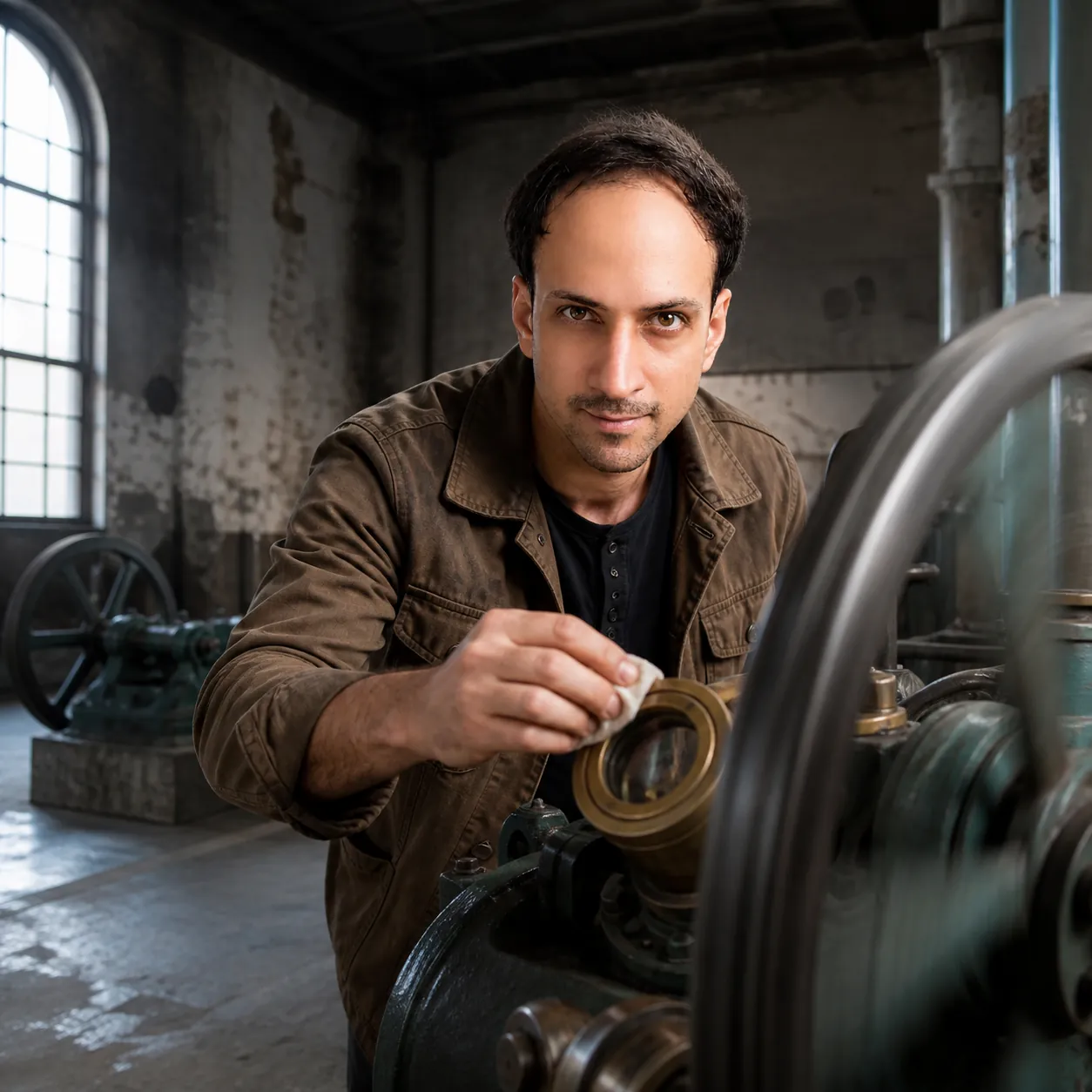
Between Frames: Decommissioned Pump Hall — AI Portrait Prompt
صورةAI Portraits

Turn your own photo into a portrait in a decommissioned pump hall, its painted machinery bolted to concrete plinths. Keeps your face unchanged.

من نص البرومبت

Use the attached reference photo as the identity reference: keep the same face, skin tone, hair and features as the person in that photo, without beautifying, aging or altering them. Create a square 1:1 museum-catalog frame with a strong first read and a slower second read at exactly 2880x2880 pixels. Location: a decommissioned pump hall, its painted machinery bolted to concrete plinths. Show the subject in a brown canvas jacket over a faded black henley, polishing a brass sight-glass clear with one slow thumb. Treat this mechanism as the frame’s governing rule: a spoked flywheel spinning at full speed that their strobe knob walks from a standstill into slow, deliberate reverse turns strict mechanical repetition into one seamless appearance the eye trusts. Explore how strict repetition can impersonate growth while nothing on the table grows; direct expression and posture toward collected surprise, never melodrama or ad-like confidence. Frame past the working apparatus from slightly behind it, keeping their attentive face sharp beyond the blur. Make the composition oppose the machine's blur against their perfectly still attention. Render it as kinetic-sculpture photography grounded in believable machinery, honest depth of field, accurate frozen-motion physics, and unhurried editorial portrait craft, using one cool low-angle key with soft continuous fill and honest shadows and a palette of lamp black, worn tin, and one arc of verdigris. Photorealistic: this must read as a real photograph from a physical camera, never an illustration, painting, or 3D render. Resolve real surface detail: floor finish worn along the walked line, skirting marked at shoe height, and corners darker than the open floor. Keep one identity-locked subject, credible hands and fingers, natural fabric, and coherent scale, contact, reflections, shadows, airflow, deformation, and materials. Background people only when essential, always secondary and clearly different. Avoid steampunk goggles and gears, CGI slow-motion splashes, projected film beams, carnival colors, and duplicated human figures. No text, labels, logos, signatures, watermarks, random symbols, plastic skin, excessive bloom, or glossy AI finish.
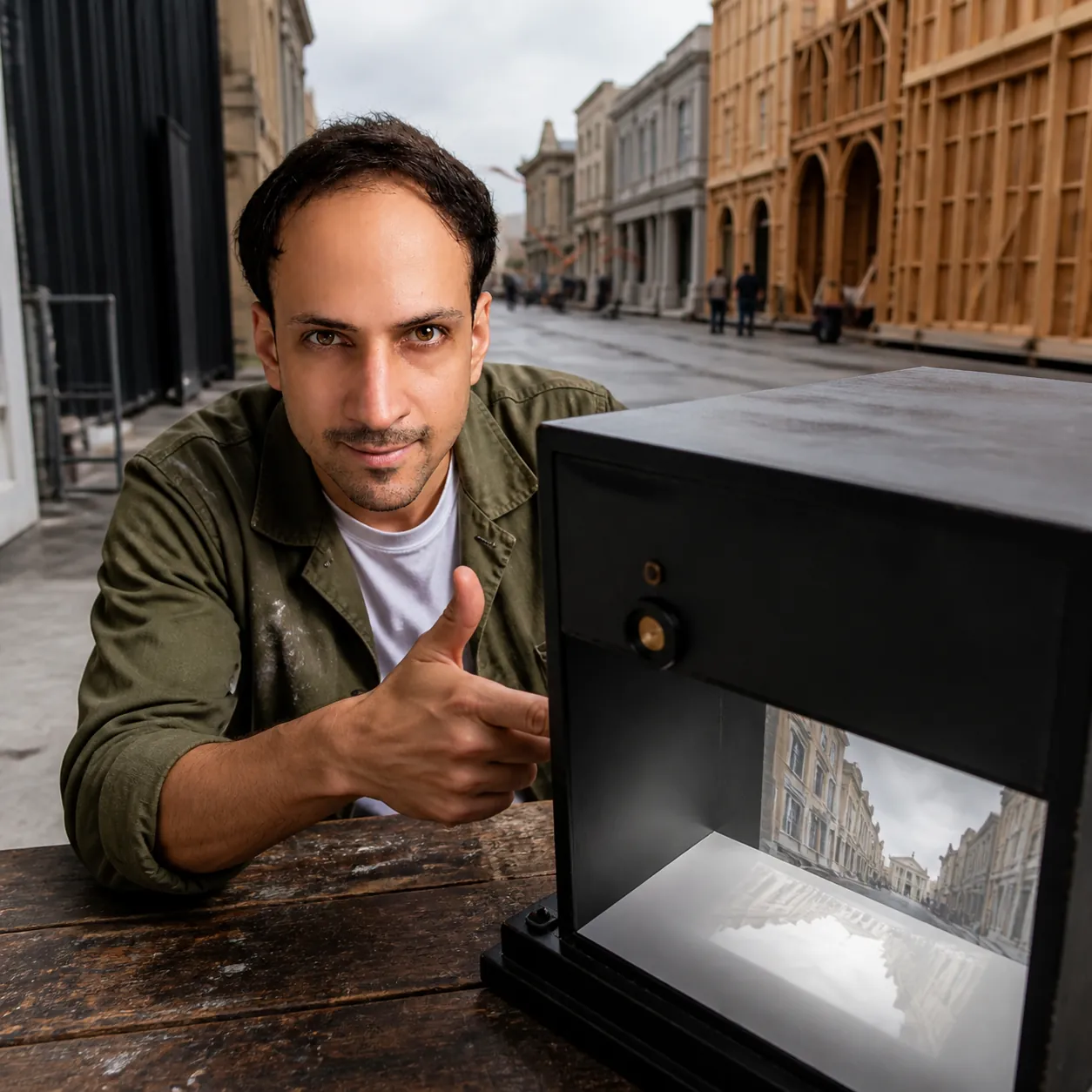
Distance Negotiates: Film Studio's Backlot Lane — AI Portrait Prompt
صورةAI Portraits

Turn your own photo into a museum-grade demonstration portrait in a film studio's backlot lane of half-built facade fronts. Keeps your face unchanged.

من نص البرومبت

Use the attached reference photo as the identity reference: keep the same face, skin tone, hair and features as the person in that photo, without beautifying, aging or altering them. Create a square 1:1 museum-catalog frame with a strong first read and a slower second read at exactly 2880x2880 pixels. Location: a film studio's backlot lane of half-built facade fronts. Show the subject in a canvas shop coat in faded olive over a white tee, sighting down their extended thumb toward the facade fronts. The impossible-looking event must obey this clear system: a table-sized obscura box whose pinhole lays the sunlit surroundings, inverted and alive, across its white floor achieves its entire effect without altering a single object it shows. Explore what remains of certainty when the eye's oldest ruler fails politely; direct expression and posture toward measured delight, never melodrama or ad-like confidence. Use a slightly elevated 35mm viewpoint with honest verticals and no exaggerated perspective stretch. Make the composition grant the smallest object the frame's greatest visual weight. Render it as museum-grade demonstration photography combining true forced-perspective staging, honest depth-of-field behavior, believable material scale cues, and restrained contemporary art direction, using one collimated key with crisp parallel shadows and soft neutral fill and a palette of overcast silver, limestone buff, and one dark cedar green. Photorealistic: this must read as a real photograph from a physical camera, never an illustration, painting, or 3D render. Resolve real surface detail: condensation beading at true size, liquid meniscus curving against glass, and wet surfaces darker than dry ones. Keep one identity-locked person, credible hands and fingers, natural fabric, and coherent scale, contact, reflections, shadows, airflow, deformation, and materials. Background people only when essential, always secondary and clearly different. Avoid surreal scale collage, floating figures, painted anamorphic pavement, and dollhouse cartoon styling. No text, labels, logos, signatures, watermarks, random symbols, plastic skin, excessive bloom, or glossy AI finish.
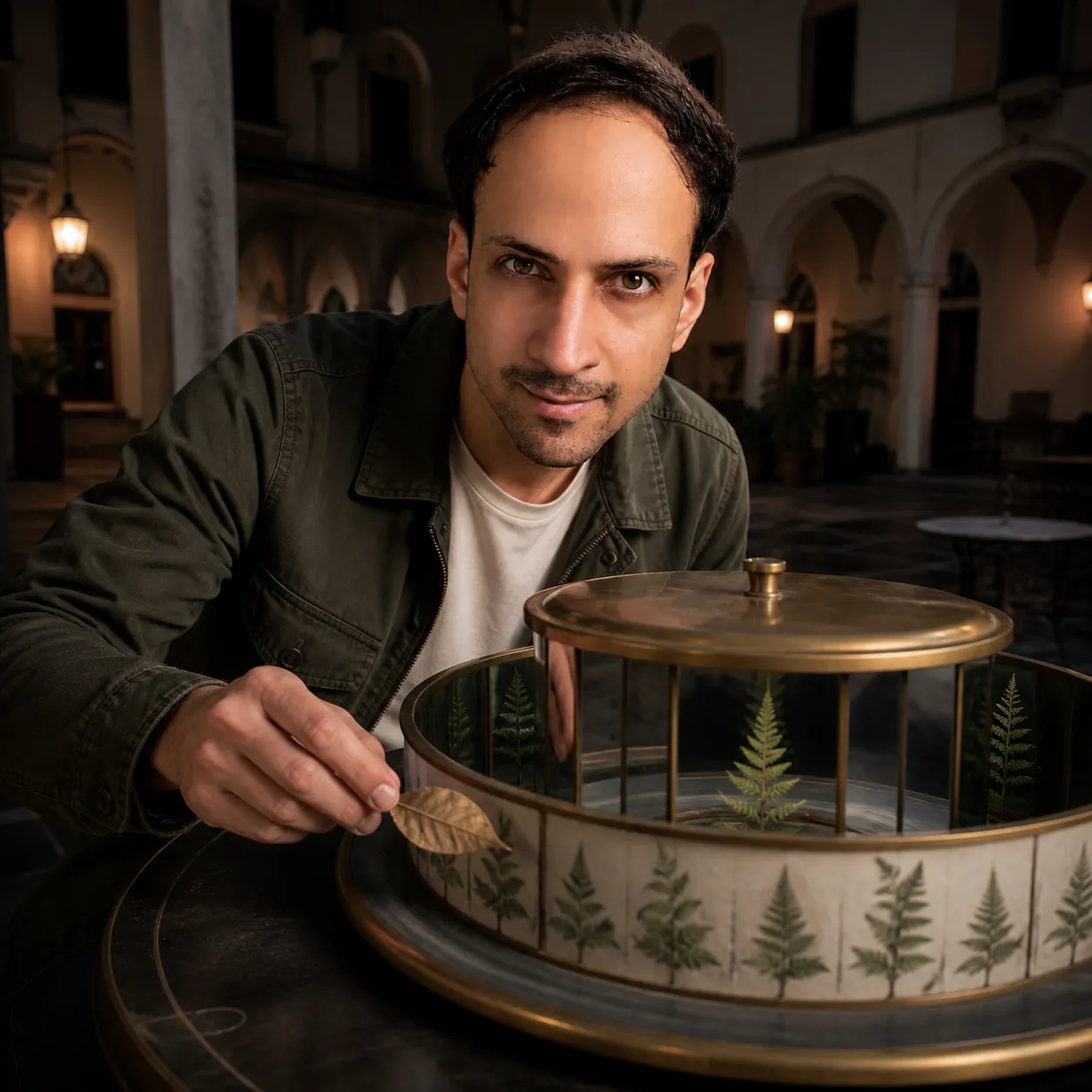
Time in Slices: Tiled Hotel Courtyard Whose Fountain — AI Portrait Prompt
صورةAI Portraits

Turn your own photo into a museum-demonstration portrait in a tiled hotel courtyard whose fountain is switched off for the night. Keeps your face unchanged.

من نص البرومبت

Use the attached reference photo as the identity reference: keep the same face, skin tone, hair and features as the person in that photo, without beautifying, aging or altering them. Create a square 1:1 museum-catalog frame with a strong first read and a slower second read at exactly 2880x2880 pixels. Location: a tiled hotel courtyard whose fountain is switched off for the night. Show the subject in a dark olive field jacket over an off-white crew-neck, lifting a fallen leaf from the dry fountain basin. Use this advanced image-making device as the core logic: a brass praxinoscope whose central drum of mirrors steadies a painted fern strip into one unfurling frond floating at its center turns strict mechanical repetition into one seamless appearance the eye trusts. Explore whether stillness manufactured by perfect timing is rest or the strictest discipline; direct expression and posture toward modest certainty, never melodrama or ad-like confidence. Frame from across the bench at the machine's own height so person and mechanism meet as equals. Make the composition let one sharp resolved detail ride inside surrounding motion blur. Render it as museum-demonstration realism combining hand-finished brass and tin surfaces, physically exact motion sampling, readable human presence, and restrained curatorial styling, using narrow theatrical beams carving the moving parts out of a quiet room and a palette of gypsum white, shadowed grey, and a thin brass line. Photorealistic: this must read as a real photograph from a physical camera, never an illustration, painting, or 3D render. Resolve real surface detail: thread ends and slight pilling on worn cloth, hairline chips at every hard corner, and stone that is porous rather than smooth. Keep one identity-locked subject, credible hands and fingers, natural fabric, and coherent scale, contact, reflections, shadows, airflow, deformation, and materials. Background people only when essential, always secondary and clearly different. Avoid steampunk goggles and gears, CGI slow-motion splashes, projected film beams, carnival colors, and duplicated human figures. No text, labels, logos, signatures, watermarks, random symbols, plastic skin, excessive bloom, or glossy AI finish.
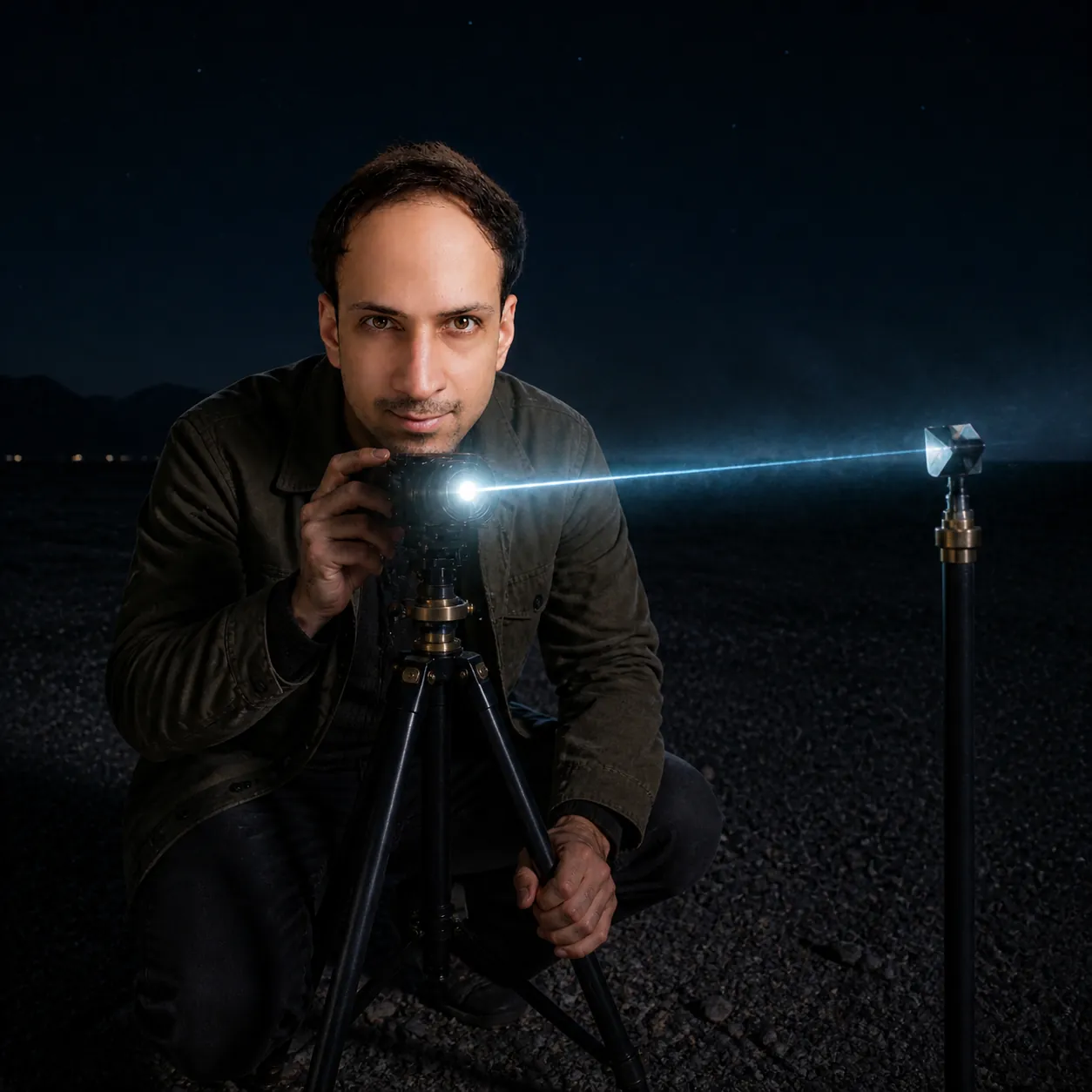
Full Circle: Gravel Plain — AI Portrait Prompt
صورةAI Portraits

Turn your own photo into a high-concept optical portrait in a gravel plain at full dark beyond the city's last lights. Keeps your face unchanged.

من نص البرومبت

Use the attached reference photo as the identity reference: keep the same face, skin tone, hair and features as the person in that photo, without beautifying, aging or altering them. Create a square 1:1 museum-catalog frame with a strong first read and a slower second read at exactly 2880x2880 pixels. Location: a gravel plain at full dark beyond the city's last lights. Show the subject in a heavy olive overshirt over a dark thermal layer, planting a slim tripod leg firm with one press. The impossible-looking event must obey this clear system: a fist-sized corner-cube prism that catches a thin beam in chalk haze and sends it home exactly parallel to its arrival keeps its full brightness for the one standing at the light's source. Explore how it feels to ask the dark a question and be answered instantly; direct expression and posture toward gentle exactness, never melodrama or ad-like confidence. Use a 90mm portrait lens with a small lamp rigged tight beside it so the return blazes lawfully at the camera. Make the composition hold the dark version and the blazing version inside one frame. Render it as high-concept optical portraiture built from real return-path geometry, documentary night realism, precision lamp discipline, and emotionally restrained composition, using one small practical held near the lens axis with the room falling dark and a palette of night blue, bone grey, and one silver pinprick. Photorealistic: this must read as a real photograph from a physical camera, never an illustration, painting, or 3D render. Resolve real surface detail: brass darkened in the recesses and bright where thumbs land, and lacquer crazed rather than perfect. Keep one identity-locked subject, credible hands and fingers, natural fabric, and coherent scale, contact, reflections, shadows, airflow, deformation, and materials. Background people only when essential, always secondary and clearly different. Avoid glowing sci-fi visors, hi-vis vest advertising poses, lens-flare starbursts, and neon cyberpunk streets. No text, labels, logos, signatures, watermarks, random symbols, plastic skin, excessive bloom, or glossy AI finish.
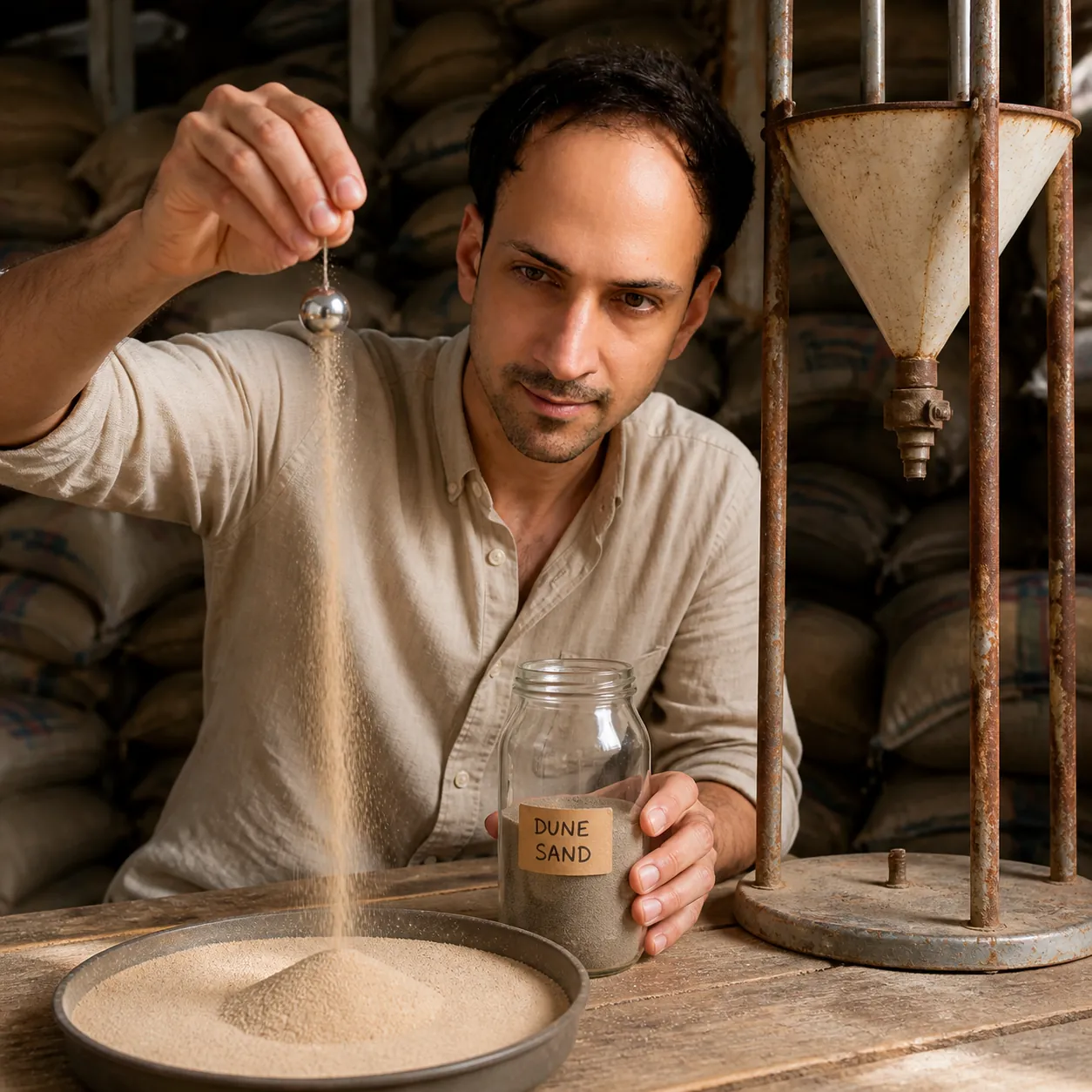
Sand's Grammar: Date-Farm Storehouse — AI Portrait Prompt
صورةAI Portraits

Turn your own photo into a conceptual earth-science portrait in a date-farm storehouse with burlap sacks and one cleared plank table. Keeps your face unchanged.

من نص البرومبت

Use the attached reference photo as the identity reference: keep the same face, skin tone, hair and features as the person in that photo, without beautifying, aging or altering them. Create a square 1:1 museum-catalog frame with a strong first read and a slower second read at exactly 2880x2880 pixels. Location: a date-farm storehouse with burlap sacks and one cleared plank table. Show the subject in an oatmeal linen shirt buttoned to one below the collar, funneling dune sand into a labeled glass jar. Use this advanced image-making device as the core logic: a dish of loose fine sand firing a narrow vertical jet back up along the path of a dropped steel ball gives the desert's most ordinary material the standing of an exact instrument. Explore whether they are conducting the demonstration or merely giving the sand its cue; direct expression and posture toward settled focus, never melodrama or ad-like confidence. Frame past their shoulder toward the demonstration, their profile softly readable at the frame's edge. Make the composition let one sharp edge of settled grains cross the frame diagonally. Render it as conceptual earth-science portraiture combining tactile working apparatus, believable granular flow, restrained contemporary art direction, and unhurried human presence, using soft canvas-filtered shade cut by one hard sliver of noon and a palette of bleached bone, shadow grey, and one line of terracotta. Photorealistic: this must read as a real photograph from a physical camera, never an illustration, painting, or 3D render. Resolve real surface detail: rubber gone chalky with age, painted metal chipped to primer, and plastic yellowed only where light reaches it. Keep one identity-locked subject, credible hands and fingers, natural fabric, and coherent scale, contact, reflections, shadows, airflow, deformation, and materials. Background people only when essential, always secondary and clearly different. Avoid falconry props, camel caravans, CGI sand tornadoes, face-morphing sand sculptures, and endless untouched postcard dunes. No text, labels, logos, signatures, watermarks, random symbols, plastic skin, excessive bloom, or glossy AI finish.
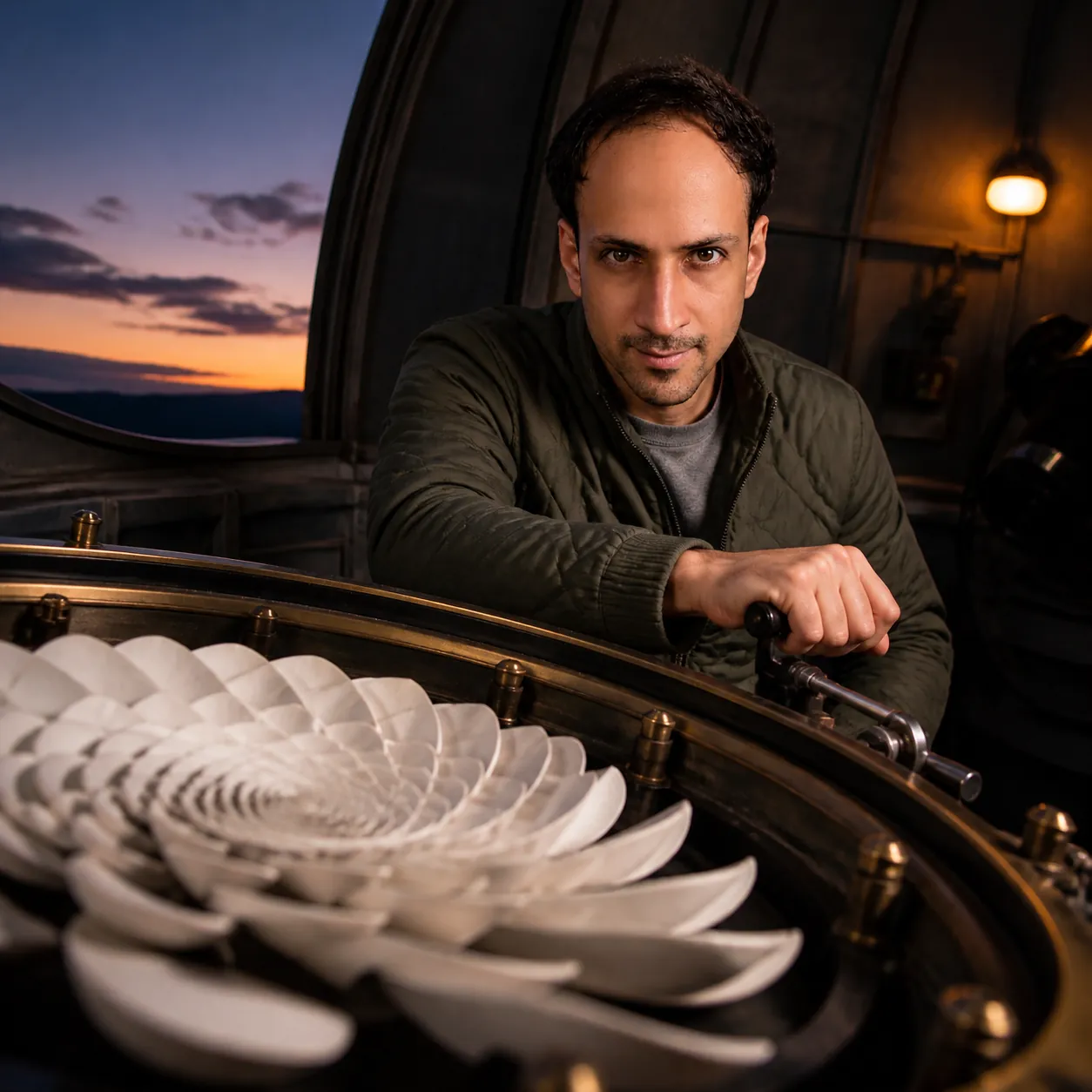
Assembled Motion: Small Teaching Observatory — AI Portrait Prompt
صورةAI Portraits

Turn your own photo into a kinetic-sculpture portrait in a small teaching observatory under its half-open dome before dawn. Keeps your face unchanged.

من نص البرومبت

Use the attached reference photo as the identity reference: keep the same face, skin tone, hair and features as the person in that photo, without beautifying, aging or altering them. Create a square 1:1 museum-catalog frame with a strong first read and a slower second read at exactly 2880x2880 pixels. Location: a small teaching observatory under its half-open dome before dawn. Show the subject in a quilted olive liner jacket zipped over a grey sweatshirt, cranking the dome shutter one hand-width wider. Treat this mechanism as the frame’s governing rule: a sculpted gypsum bloom whose petals, arranged at the golden angle, cascade outward forever while the spinning form is strobed turns strict mechanical repetition into one seamless appearance the eye trusts. Explore why motion the eye assembles itself feels more alive than motion merely present; direct expression and posture toward disciplined curiosity, never melodrama or ad-like confidence. Frame past the working apparatus from slightly behind it, keeping their attentive face sharp beyond the blur. Make the composition keep the room's stillness large around one small engine of motion. Render it as kinetic-sculpture photography grounded in believable machinery, honest depth of field, accurate frozen-motion physics, and unhurried editorial portrait craft, using dim amber house light holding steady while the mechanism supplies all urgency and a palette of gypsum white, shadowed grey, and a thin brass line. Photorealistic: this must read as a real photograph from a physical camera, never an illustration, painting, or 3D render. Resolve real surface detail: paper fibre visible at cut edges, plastic that shows mould lines, and paint thicker where a brush turned. Keep one identity-locked subject, credible hands and fingers, natural fabric, and coherent scale, contact, reflections, shadows, airflow, deformation, and materials. Background people only when essential, always secondary and clearly different. Avoid steampunk goggles and gears, CGI slow-motion splashes, projected film beams, carnival colors, and duplicated human figures. No text, labels, logos, signatures, watermarks, random symbols, plastic skin, excessive bloom, or glossy AI finish.
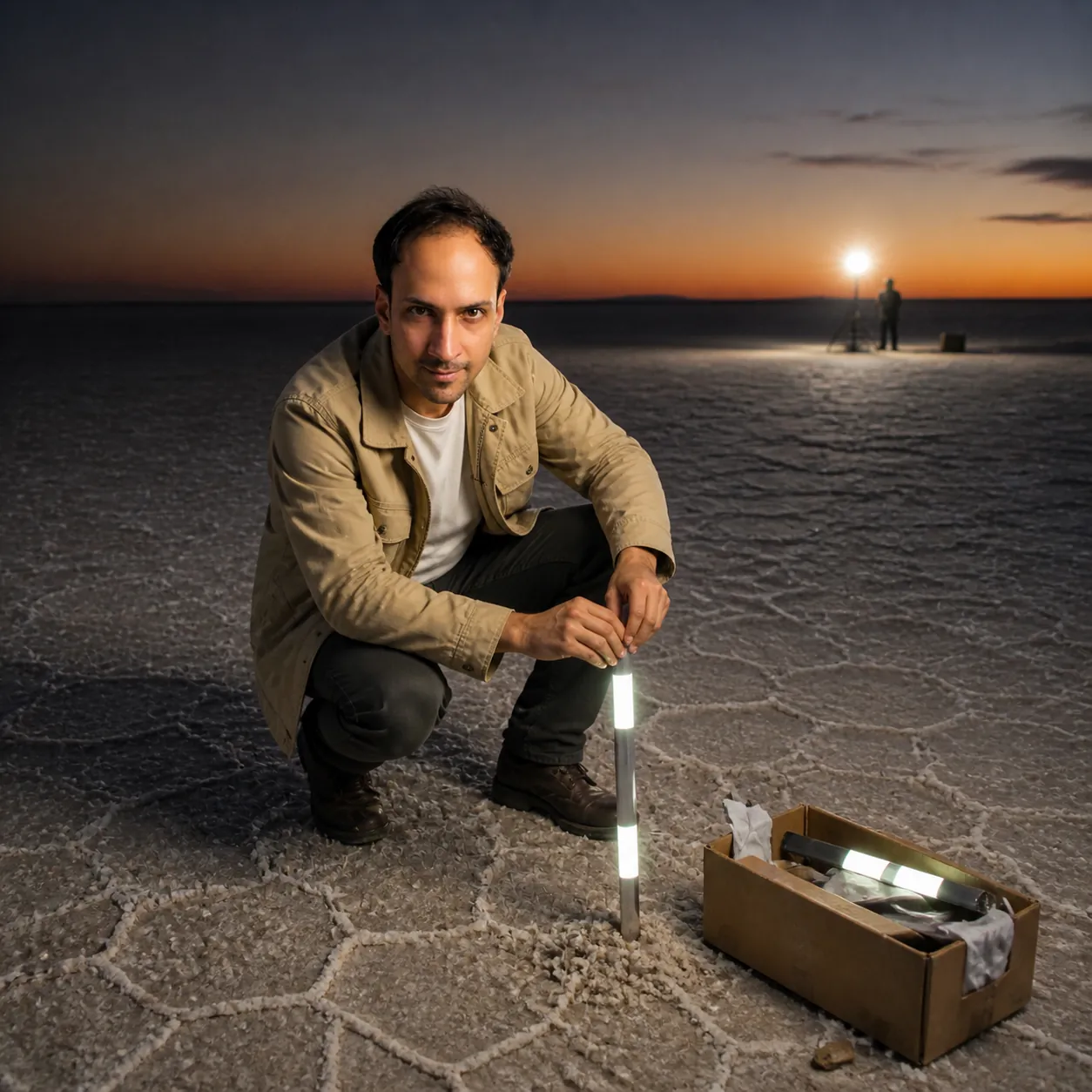
Private Fire: Sabkha Salt Flat — AI Portrait Prompt
صورةAI Portraits

Turn your own photo into a quiet experimental gallery portrait in a sabkha salt flat at dusk, horizon one unbroken line. Keeps your face unchanged.

من نص البرومبت

Use the attached reference photo as the identity reference: keep the same face, skin tone, hair and features as the person in that photo, without beautifying, aging or altering them. Create a square 1:1 museum-catalog frame with a strong first read and a slower second read at exactly 2880x2880 pixels. Location: a sabkha salt flat at dusk, horizon one unbroken line. Show the subject in a beige field jacket over a white tee, pressing a survey stake flush with the crust. Build the artwork around this material rule: a swatch of retroreflective cloth that photographs as grey fabric or white fire depending on where the flash stands keeps its full brightness for the one standing at the light's source. Explore whether an answer that only the asker can see still counts as public truth; direct expression and posture toward humbled precision, never melodrama or ad-like confidence. Use a measured 35mm environmental view, the subject at one-third, the returning light deeper in frame. Make the composition align lamp, eye, and return along one legible line. Render it as quiet experimental gallery photography built around one working retroreflector, disciplined single-source lighting, true-to-life surface response, and patient observational framing, using soft overhead work light dimmed until the answering shine can dominate honestly and a palette of lamp black, slate grey, and one pale-fire cone. Photorealistic: this must read as a real photograph from a physical camera, never an illustration, painting, or 3D render. Resolve real surface detail: label-free packaging showing carton fibre, cardboard bruised at the corners, and tape lifting slightly at one end. Keep one identity-locked subject, credible hands and fingers, natural fabric, and coherent scale, contact, reflections, shadows, airflow, deformation, and materials. Background people only when essential, always secondary and clearly different. Avoid glowing sci-fi visors, hi-vis vest advertising poses, lens-flare starbursts, and neon cyberpunk streets. No text, labels, logos, signatures, watermarks, random symbols, plastic skin, excessive bloom, or glossy AI finish.
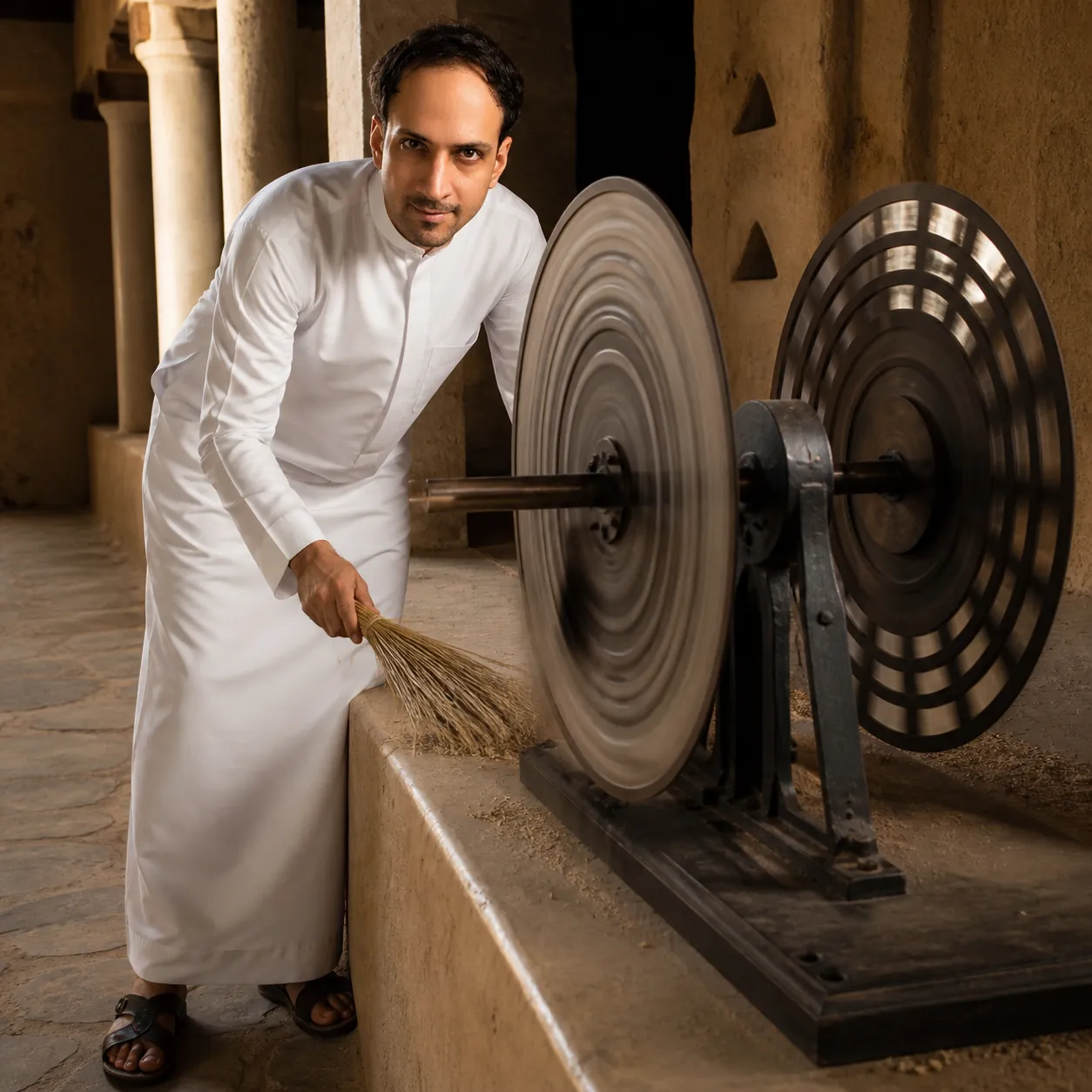
The Patient Machine: Restored Mud-Brick Colonnade — AI Portrait Prompt
صورةAI Portraits

Turn your own photo into a kinetic-sculpture portrait in a restored mud-brick colonnade in Diriyah holding late afternoon shade. Keeps your face unchanged.

من نص البرومبت

Use the attached reference photo as the identity reference: keep the same face, skin tone, hair and features as the person in that photo, without beautifying, aging or altering them. Create a square 1:1 museum-catalog frame with a strong first read and a slower second read at exactly 2880x2880 pixels. Location: a restored mud-brick colonnade in Diriyah holding late afternoon shade. Show the subject in a crisp white cotton traditional Gulf outfit with plain dark leather sandals, sweeping straw dust from a low plaster ledge. Build the artwork around this material rule: an anorthoscope pairing two counter-spinning disks, one smeared with a stretched spiral that snaps into clear stillness through the other's slit turns strict mechanical repetition into one seamless appearance the eye trusts. Explore why the darkness between glimpses carries as much of the performance as light; direct expression and posture toward steady fascination, never melodrama or ad-like confidence. Use a shutter just slow enough that moving parts blur truthfully while their face stays sharp. Make the composition hold one margin of honest darkness where the lamplight gives out. Render it as kinetic-sculpture photography grounded in believable machinery, honest depth of field, accurate frozen-motion physics, and unhurried editorial portrait craft, using dim amber house light holding steady while the mechanism supplies all urgency and a palette of iron black, aged ivory, and one dull copper accent. Photorealistic: this must read as a real photograph from a physical camera, never an illustration, painting, or 3D render. Resolve real surface detail: hair with individual strands catching light and skin oil giving a low uneven sheen. Keep one identity-locked person, credible hands and fingers, natural fabric, and coherent scale, contact, reflections, shadows, airflow, deformation, and materials. Background people only when essential, always secondary and clearly different. Avoid steampunk goggles and gears, CGI slow-motion splashes, projected film beams, carnival colors, and duplicated human figures. No text, labels, logos, signatures, watermarks, random symbols, plastic skin, excessive bloom, or glossy AI finish.
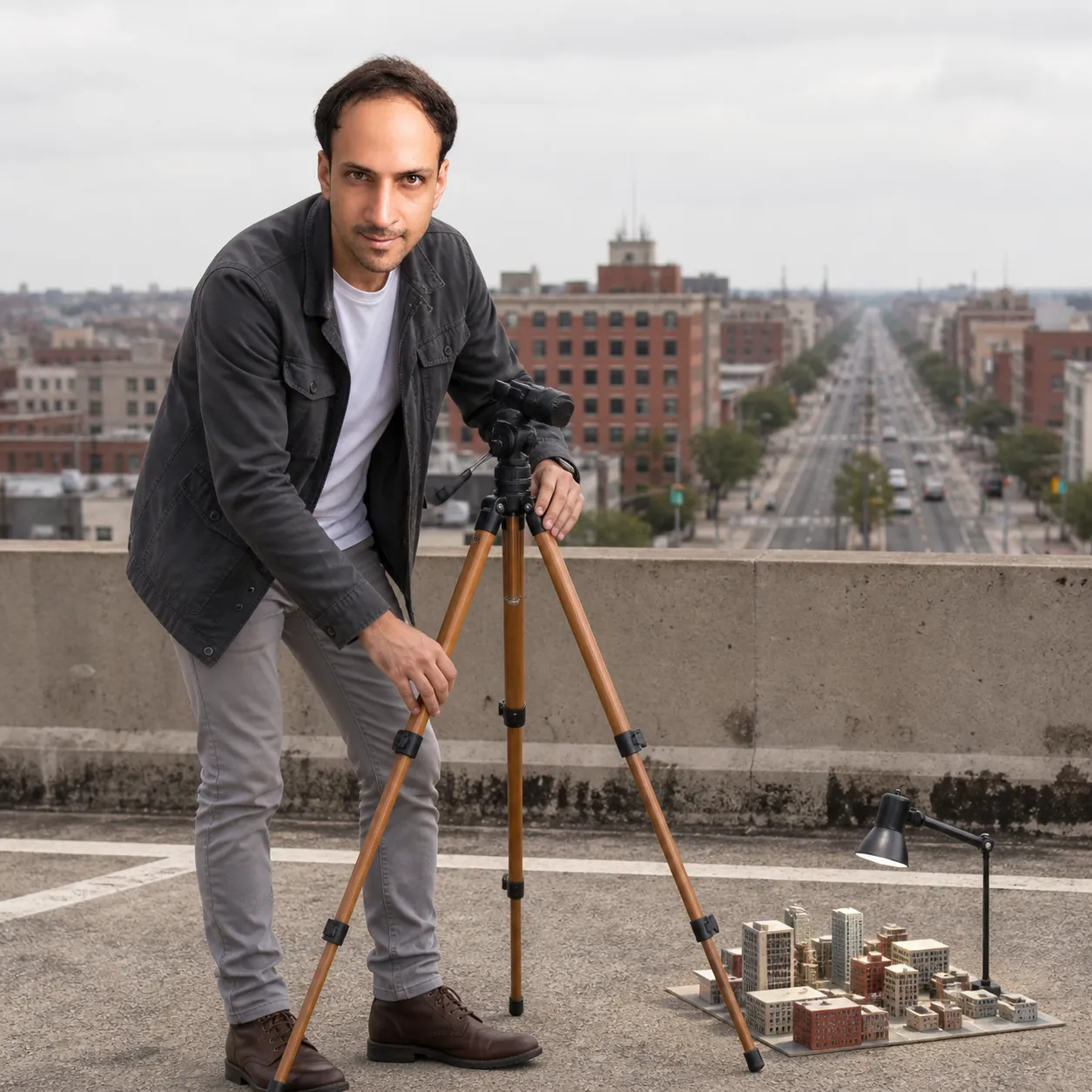
Viewpoint Rules: Top Deck of an Empty Parking Garage — AI Portrait Prompt
صورةAI Portraits

Turn your own photo into a portrait in the top deck of an empty parking garage overlooking a straight boulevard. Keeps your face unchanged.

من نص البرومبت

Use the attached reference photo as the identity reference: keep the same face, skin tone, hair and features as the person in that photo, without beautifying, aging or altering them. Create a square 1:1 museum-catalog frame with a strong first read and a slower second read at exactly 2880x2880 pixels. Location: the top deck of an empty parking garage overlooking a straight boulevard. Show the subject in a graphite field jacket over a plain white tee and grey chinos, spreading a wooden tripod's legs against the parapet curb. Build the artwork around this material rule: a knee-high model district under a collimated lamp whose parallel shadows copy the true noon sun to the exact degree achieves its entire effect without altering a single object it shows. Explore why a lawful illusion grows stronger the more carefully it is inspected; direct expression and posture toward composed surprise, never melodrama or ad-like confidence. Use a long 200mm compression view across open distance, keeping them and the far structure equally sharp. Make the composition grant the smallest object the frame's greatest visual weight. Render it as gallery-grade perspective photography built from real sightline alignments, measured camera placement, physically accurate focus falloff, and unhurried dignified portrait values, using flat overcast daylight that removes haze cues and levels every distance and a palette of dust beige, asphalt grey, and a single brick red. Photorealistic: this must read as a real photograph from a physical camera, never an illustration, painting, or 3D render. Resolve real surface detail: cotton that hangs by its own weight, seams that pucker very slightly, and collars softened by washing. Keep one identity-locked person, credible hands and fingers, natural fabric, and coherent scale, contact, reflections, shadows, airflow, deformation, and materials. Background people only when essential, always secondary and clearly different. Avoid surreal scale collage, floating figures, painted anamorphic pavement, and dollhouse cartoon styling. No text, labels, logos, signatures, watermarks, random symbols, plastic skin, excessive bloom, or glossy AI finish.
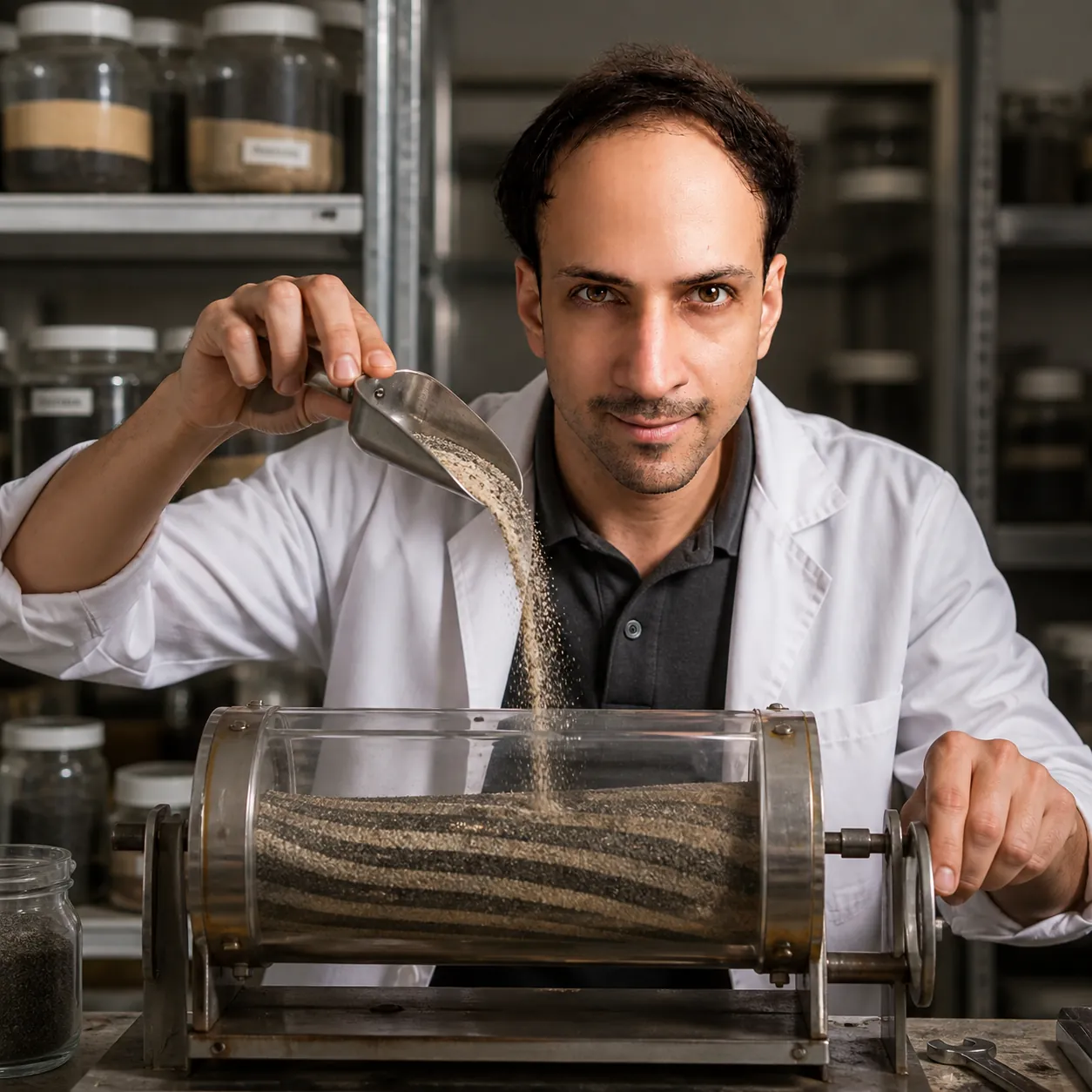
Undecided Matter: Granular-Physics Lab — AI Portrait Prompt
صورةAI Portraits

Turn your own photo into a high-concept field-physics portrait in a granular-physics lab with labeled sand jars on steel shelving. Keeps your face unchanged.

من نص البرومبت

Use the attached reference photo as the identity reference: keep the same face, skin tone, hair and features as the person in that photo, without beautifying, aging or altering them. Create a square 1:1 museum-catalog frame with a strong first read and a slower second read at exactly 2880x2880 pixels. Location: a granular-physics lab with labeled sand jars on steel shelving. Show the subject in a white lab coat worn open over a slate-grey polo, pouring a thin ribbon of sand from a steel scoop. Make one rigorous physical condition the conceptual engine: a slowly hand-turned clear drum in which mixed light and dark grains sort themselves into crisp alternating bands shows dry grains refusing to be fully solid or fully liquid. Explore where the boundary runs between a material and a crowd of objects; direct expression and posture toward field patience, never melodrama or ad-like confidence. Use an eye-level 50mm view with natural perspective and both of their hands kept readable. Make the composition keep the background silent so the grains do the talking. Render it as high-concept field-physics portraiture built from real granular mechanics, documentary desert realism, instrument-grade experimental staging, and emotionally restrained observational lighting, using clean directional laboratory light shaped to keep single falling grains visible and a palette of soft ochre, cool slate, and one deep olive note. Photorealistic: this must read as a real photograph from a physical camera, never an illustration, painting, or 3D render. Resolve real surface detail: the difference between a wiped surface and a clean one, faint tide marks on ceramic, and metal dulled unevenly by touch. Keep one identity-locked subject, credible hands and fingers, natural fabric, and coherent scale, contact, reflections, shadows, airflow, deformation, and materials. Background people only when essential, always secondary and clearly different. Avoid swirling sandstorm vortices, glowing hourglass fantasy, levitating sand spirals, cymatic pattern plates, and heroic dune-top silhouettes. No text, labels, logos, signatures, watermarks, random symbols, plastic skin, excessive bloom, or glossy AI finish.

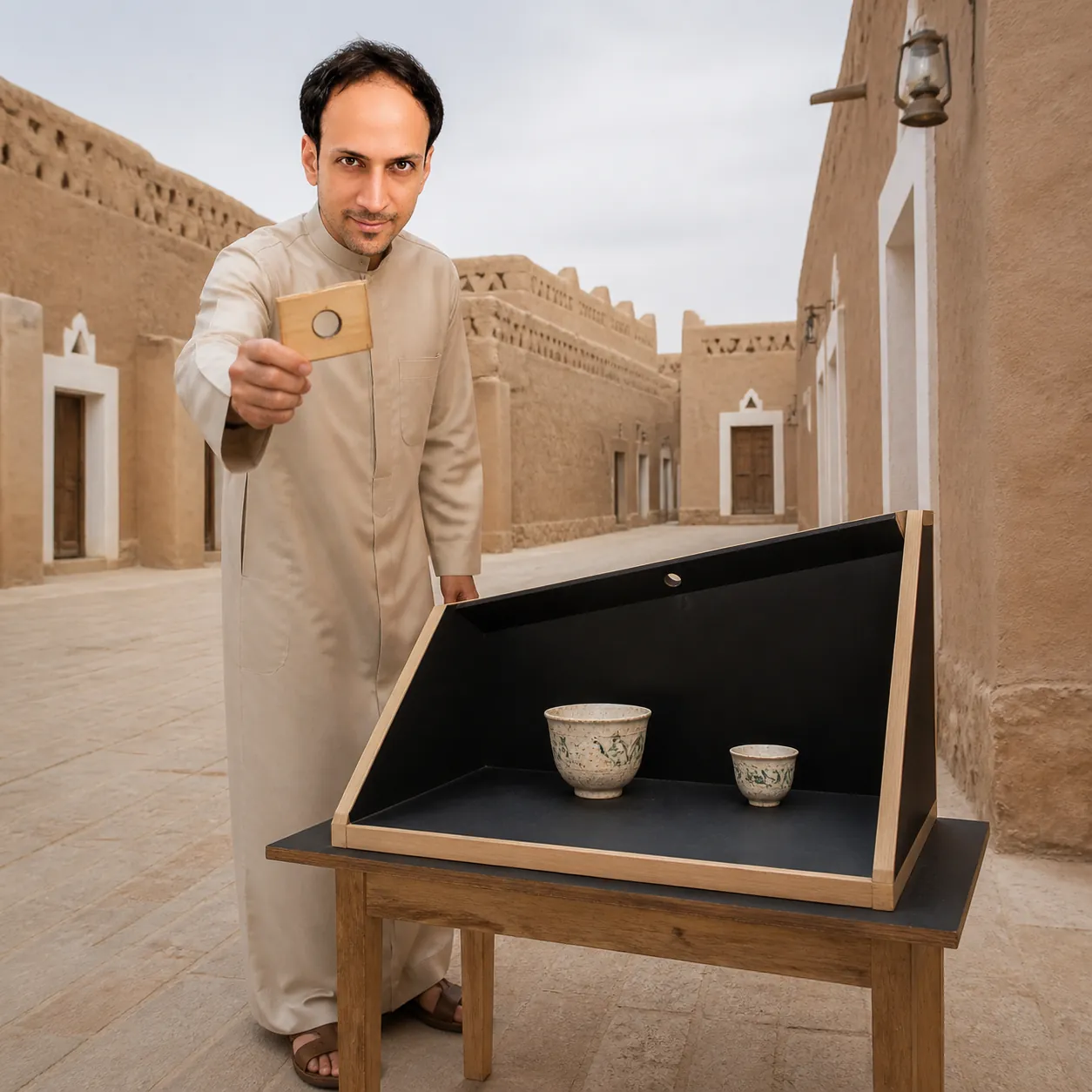
Second Look: Heritage Mud-Brick Alley — AI Portrait Prompt
صورةAI Portraits

Turn your own photo into a conceptual scale-study portrait in a heritage mud-brick alley in Diriyah restored and empty at noon. Keeps your face unchanged.

من نص البرومبت

Use the attached reference photo as the identity reference: keep the same face, skin tone, hair and features as the person in that photo, without beautifying, aging or altering them. Create a square 1:1 museum-catalog frame with a strong first read and a slower second read at exactly 2880x2880 pixels. Location: a heritage mud-brick alley in Diriyah restored and empty at noon. Show the subject in a summer-weight beige traditional Gulf outfit and simple leather sandals, holding a small frame card at arm's length. Use this advanced image-making device as the core logic: a waist-high skewed room model whose drilled peephole makes two identical cups read as giant and dwarf achieves its entire effect without altering a single object it shows. Explore what becomes of grandeur when distance can quietly negotiate its size; direct expression and posture toward attentive calm, never melodrama or ad-like confidence. Frame at the demonstration's own height so the optical event and their eyes share one axis. Make the composition align their gaze with the exact line the illusion depends on. Render it as conceptual scale-study realism combining architectural miniature exactness, truthful shadow geometry, unretouched photographic optics, and quiet human-centered observational framing, using flat overcast daylight that removes haze cues and levels every distance and a palette of basswood blond, matte black, and a thin brass glint. Photorealistic: this must read as a real photograph from a physical camera, never an illustration, painting, or 3D render. Resolve real surface detail: rubber gone chalky with age, painted metal chipped to primer, and plastic yellowed only where light reaches it. Keep one identity-locked person, credible hands and fingers, natural fabric, and coherent scale, contact, reflections, shadows, airflow, deformation, and materials. Background people only when essential, always secondary and clearly different. Avoid surreal scale collage, floating figures, painted anamorphic pavement, and dollhouse cartoon styling. No text, labels, logos, signatures, watermarks, random symbols, plastic skin, excessive bloom, or glossy AI finish.
