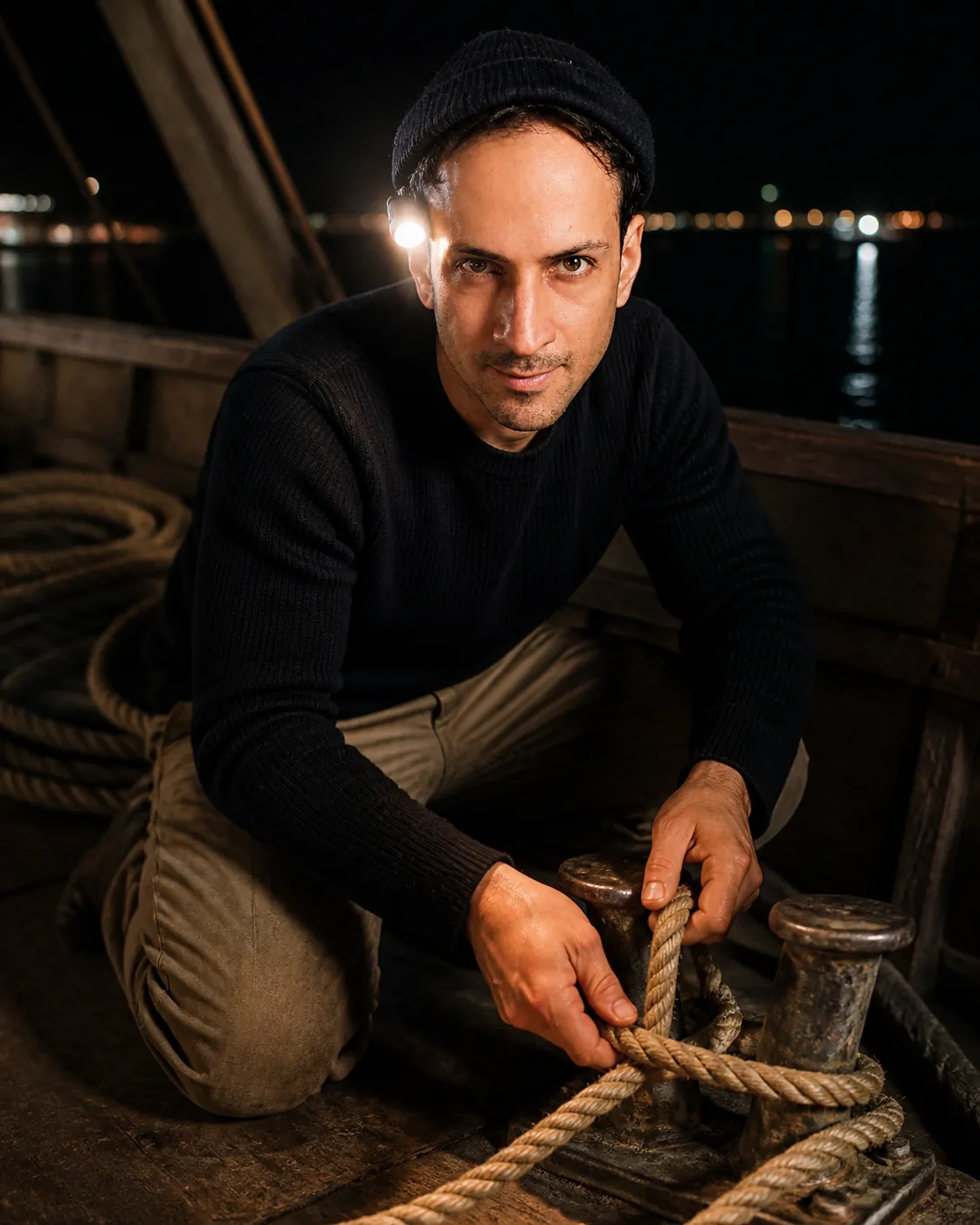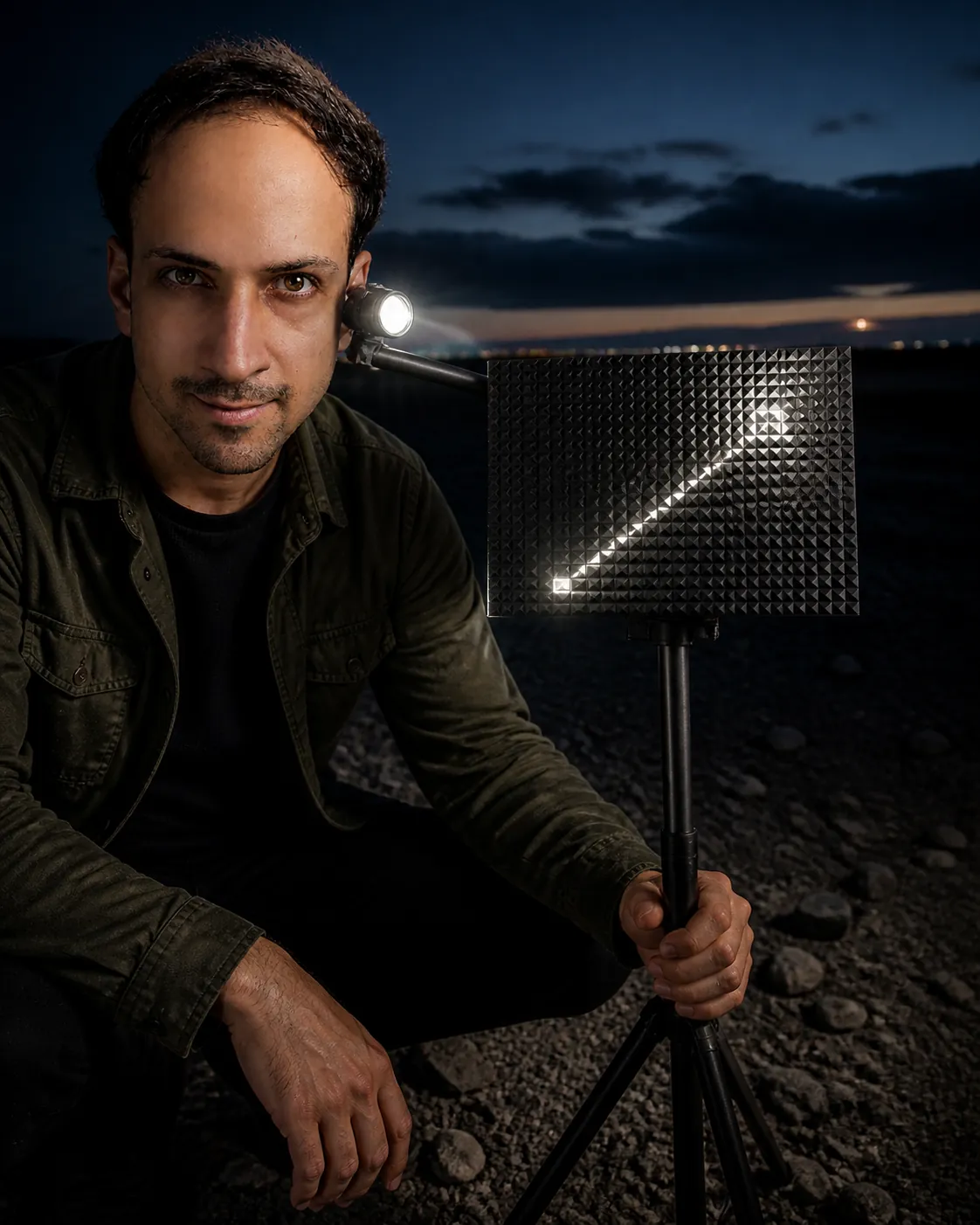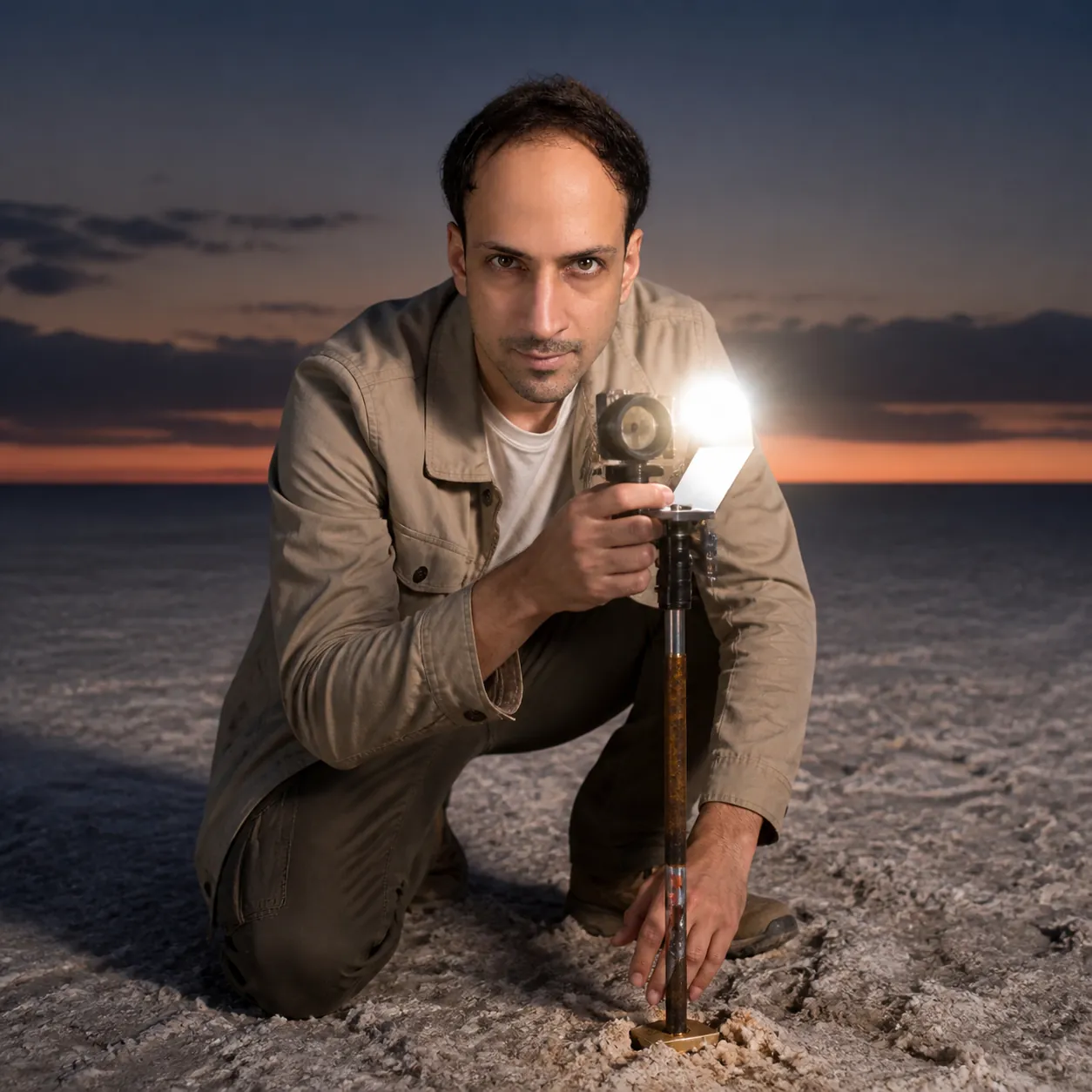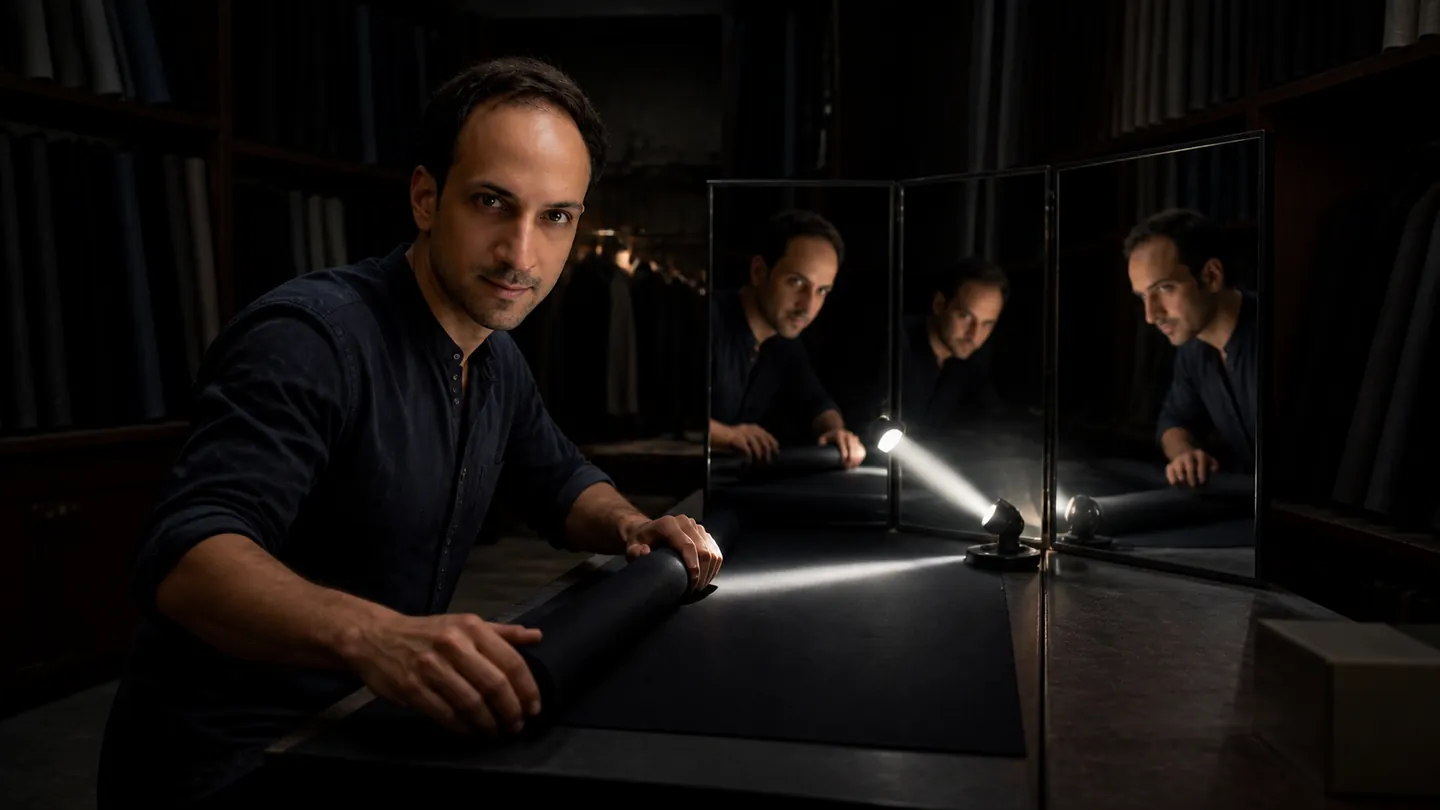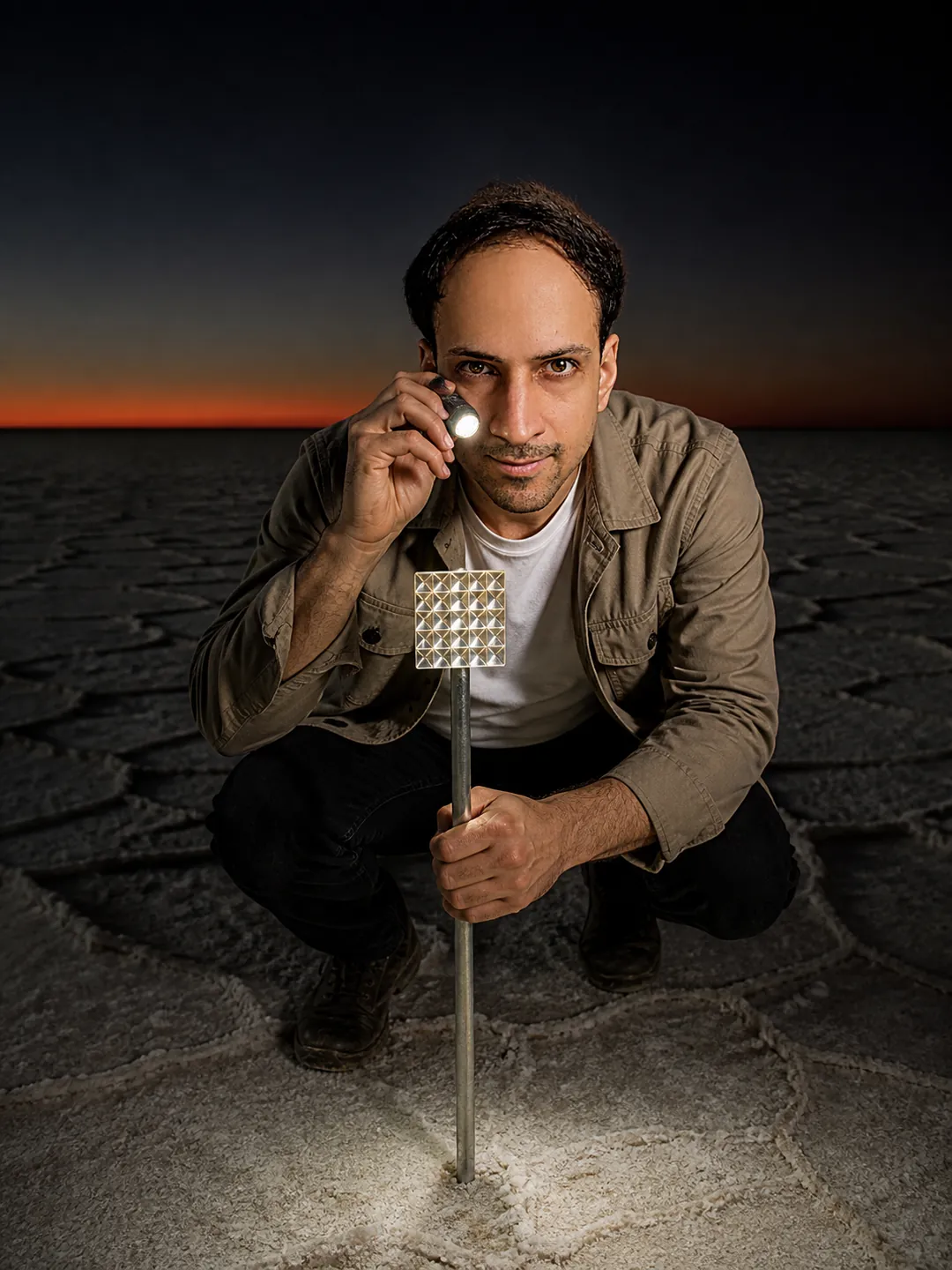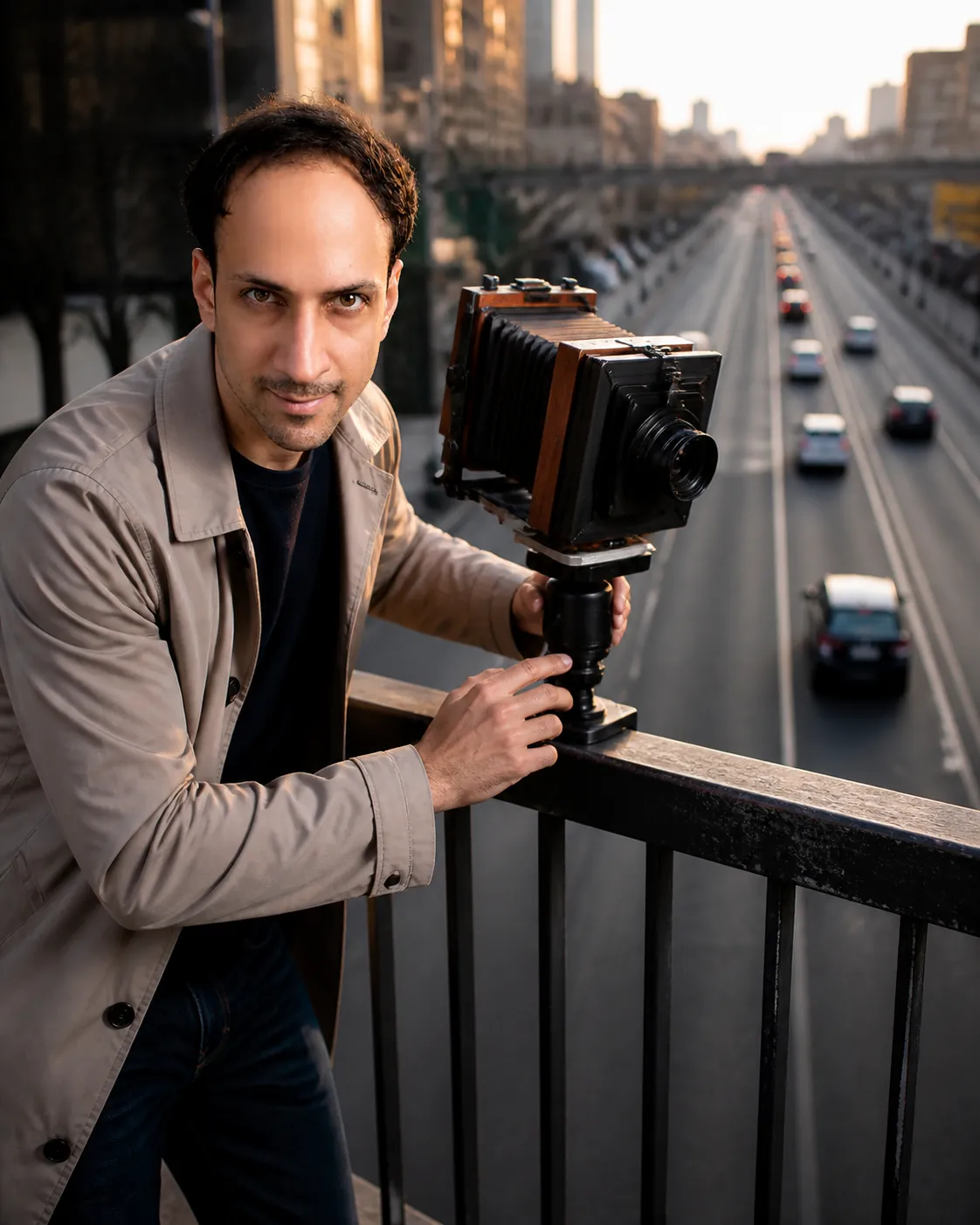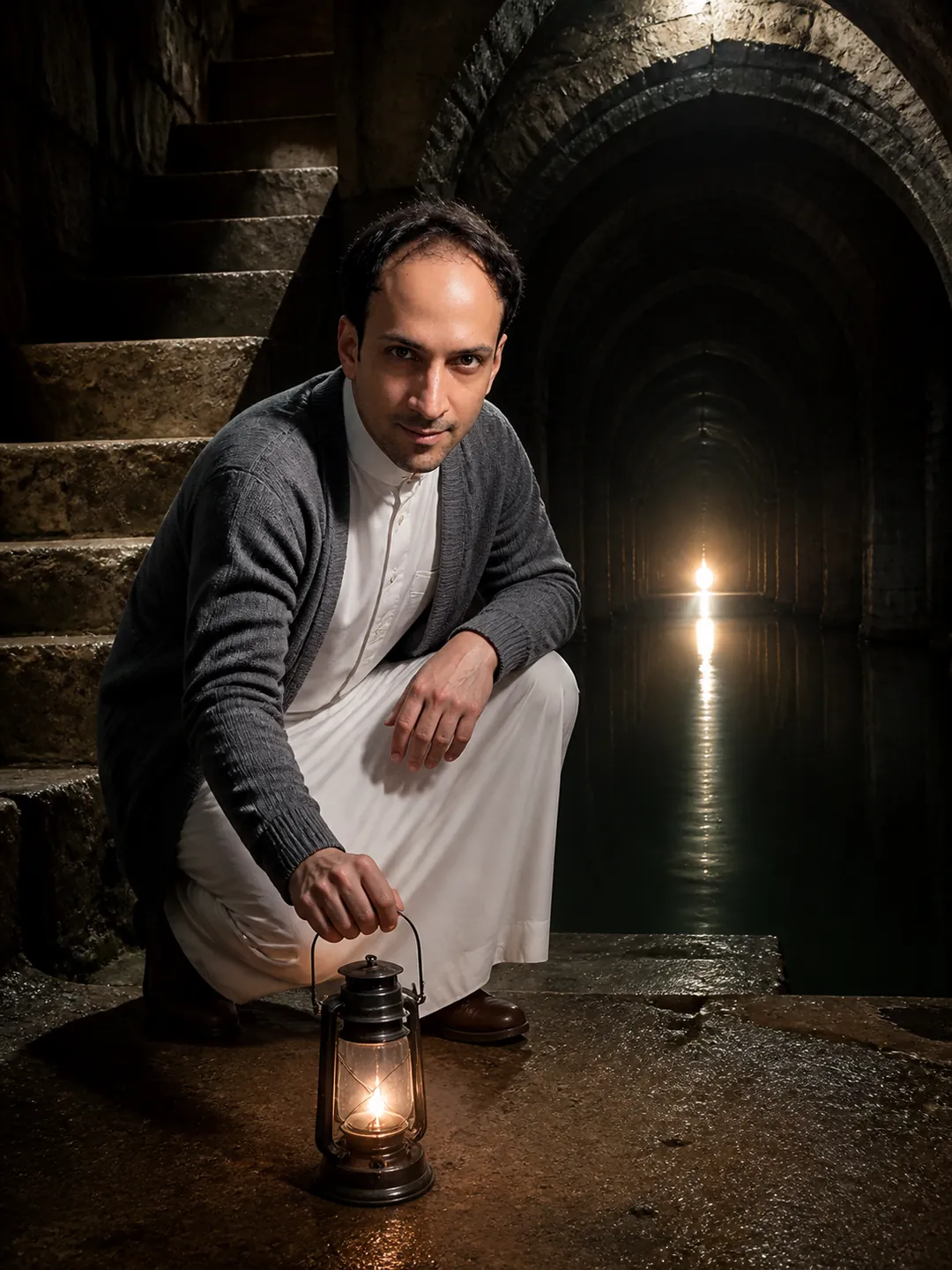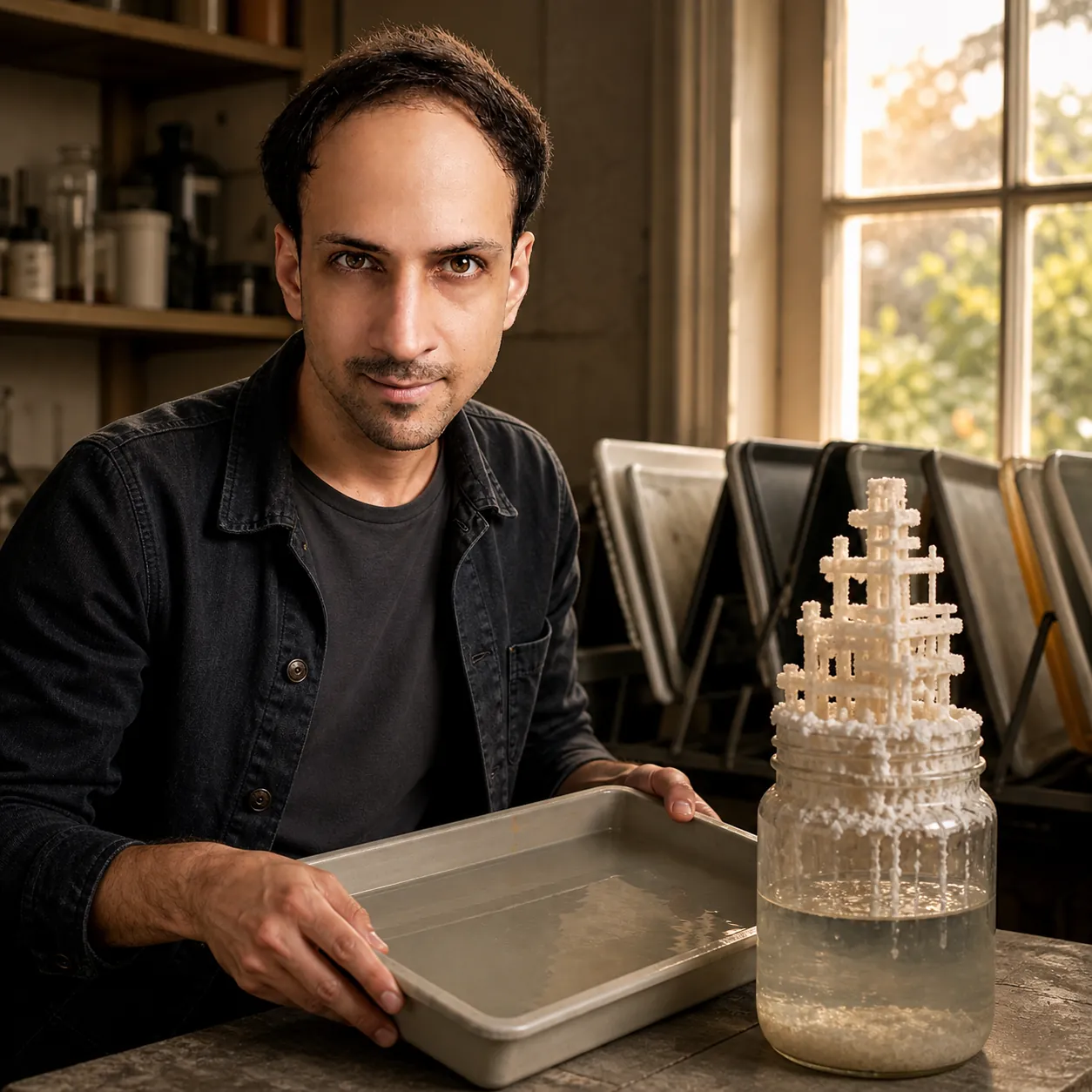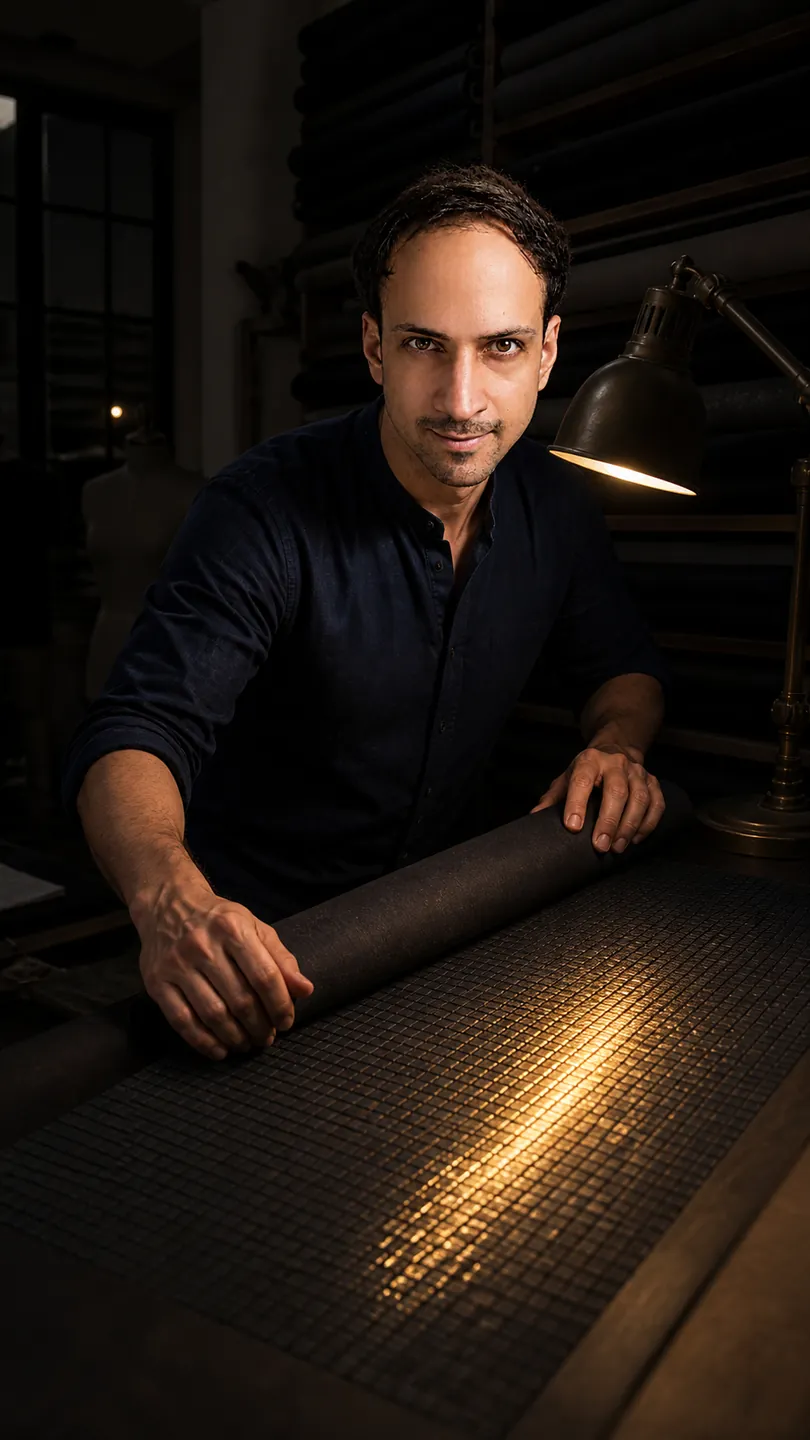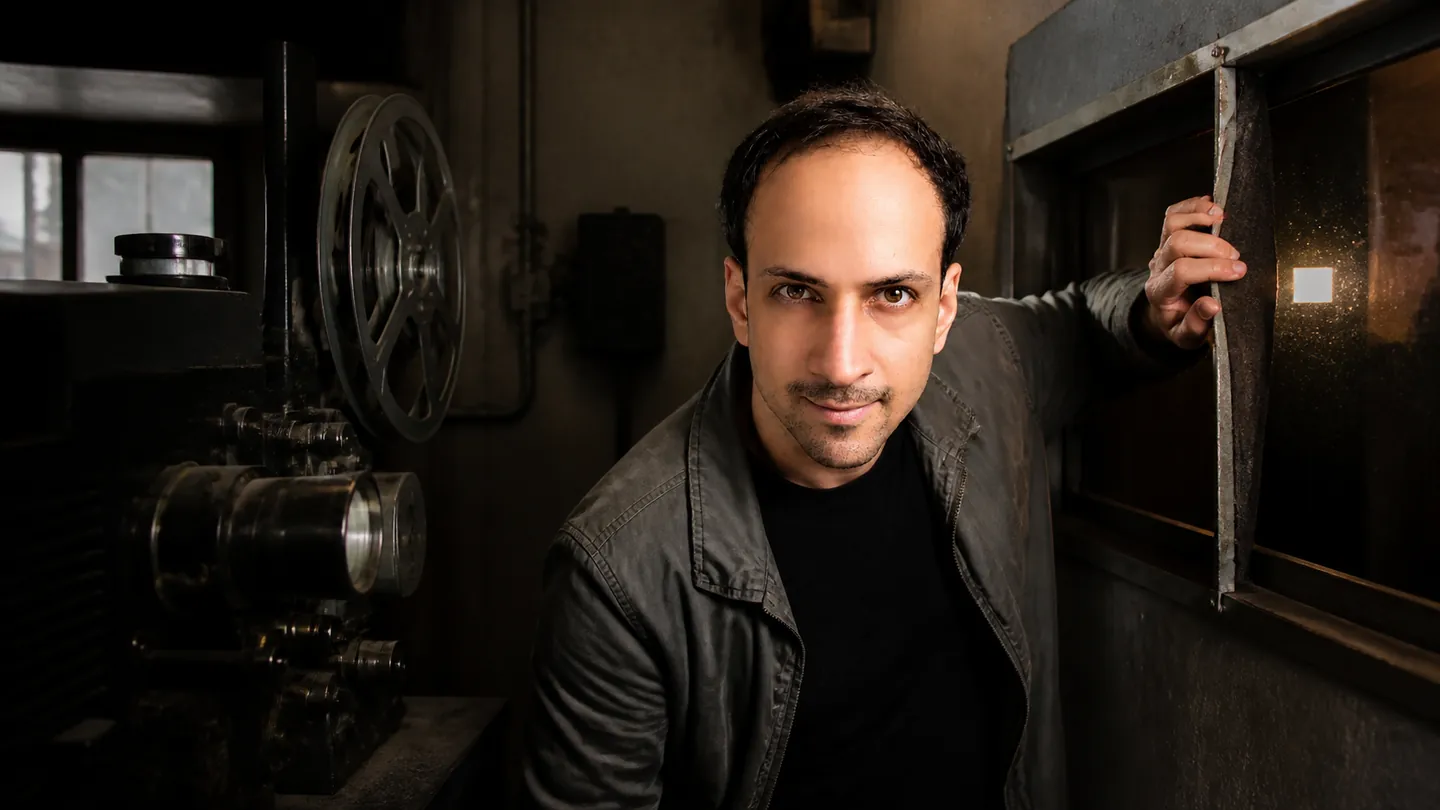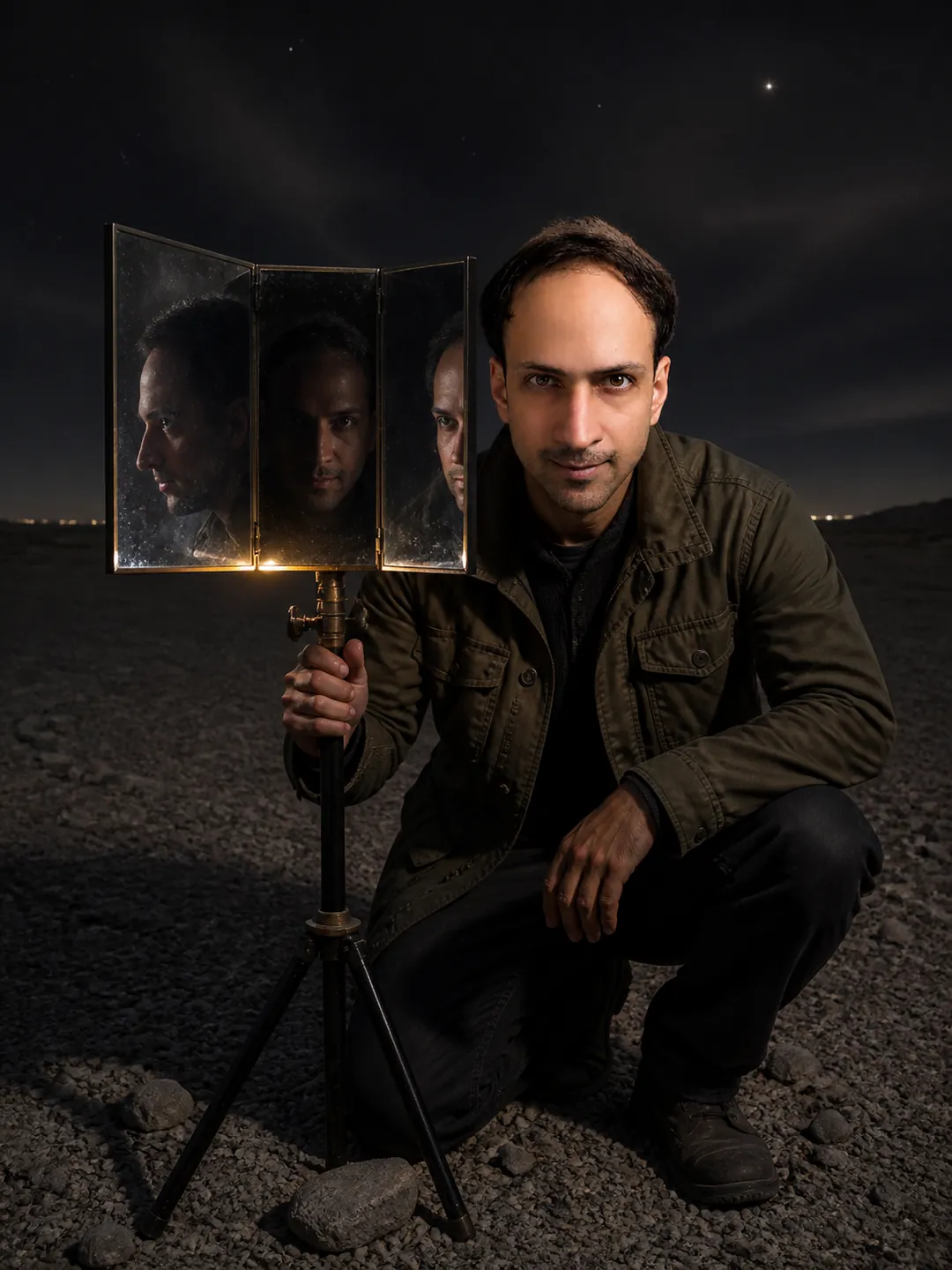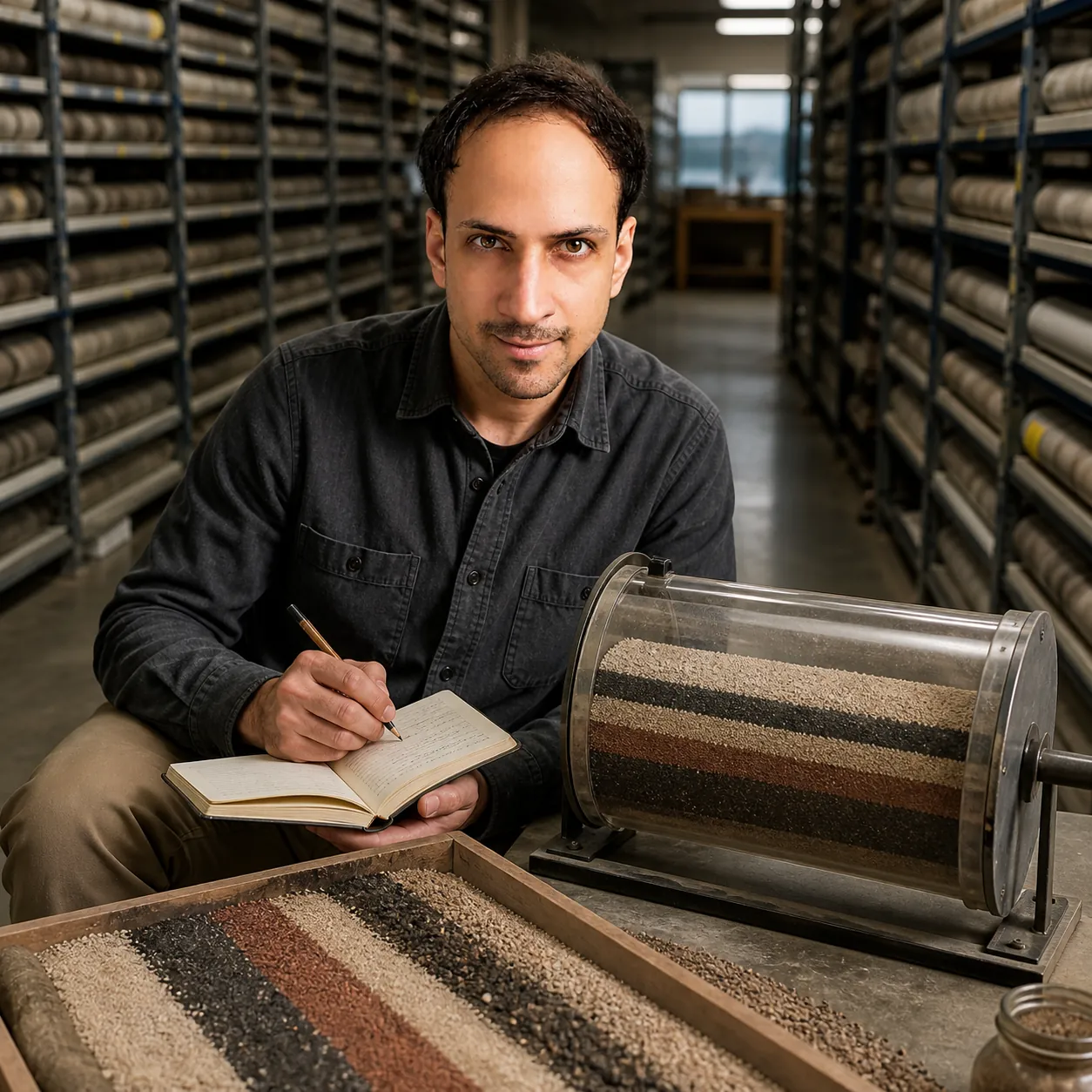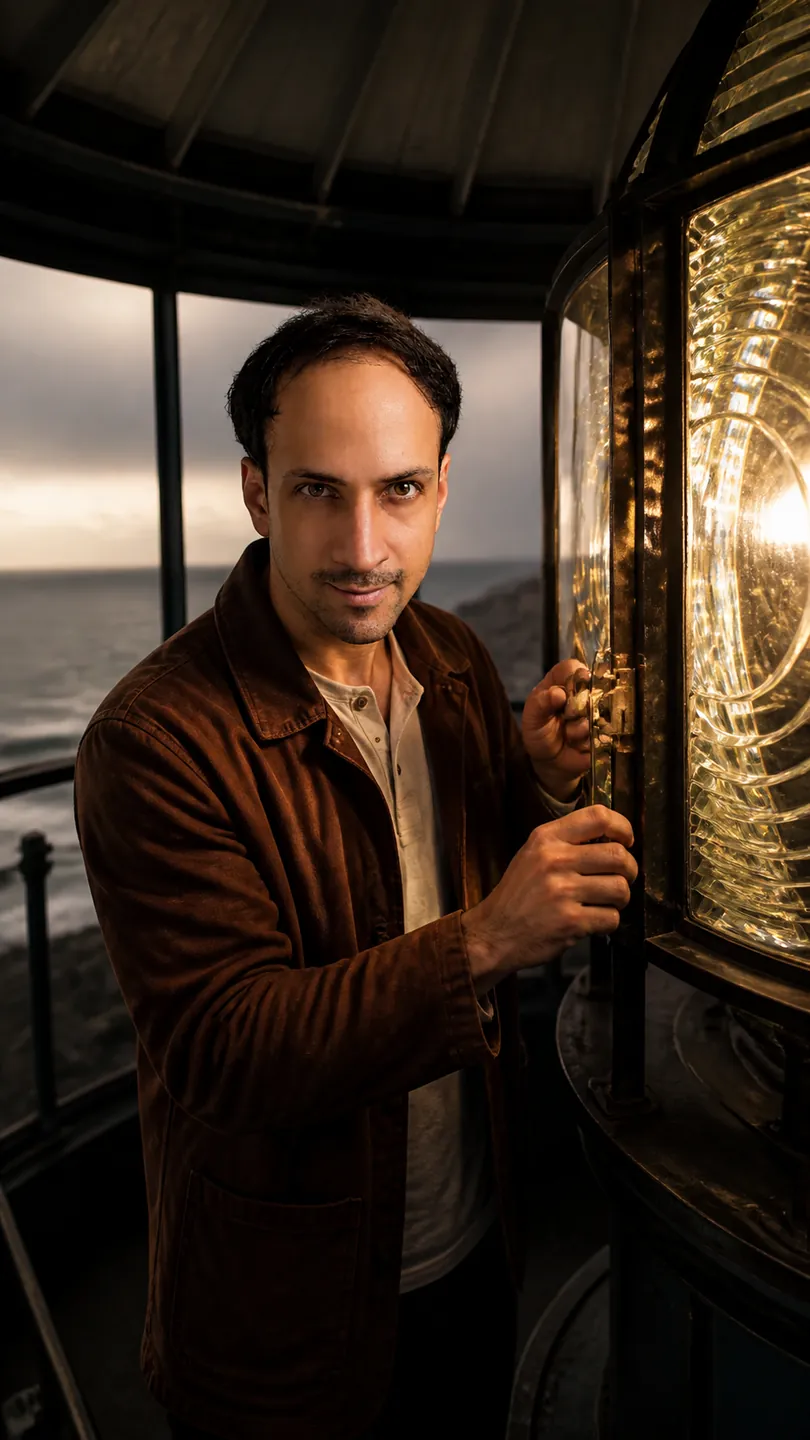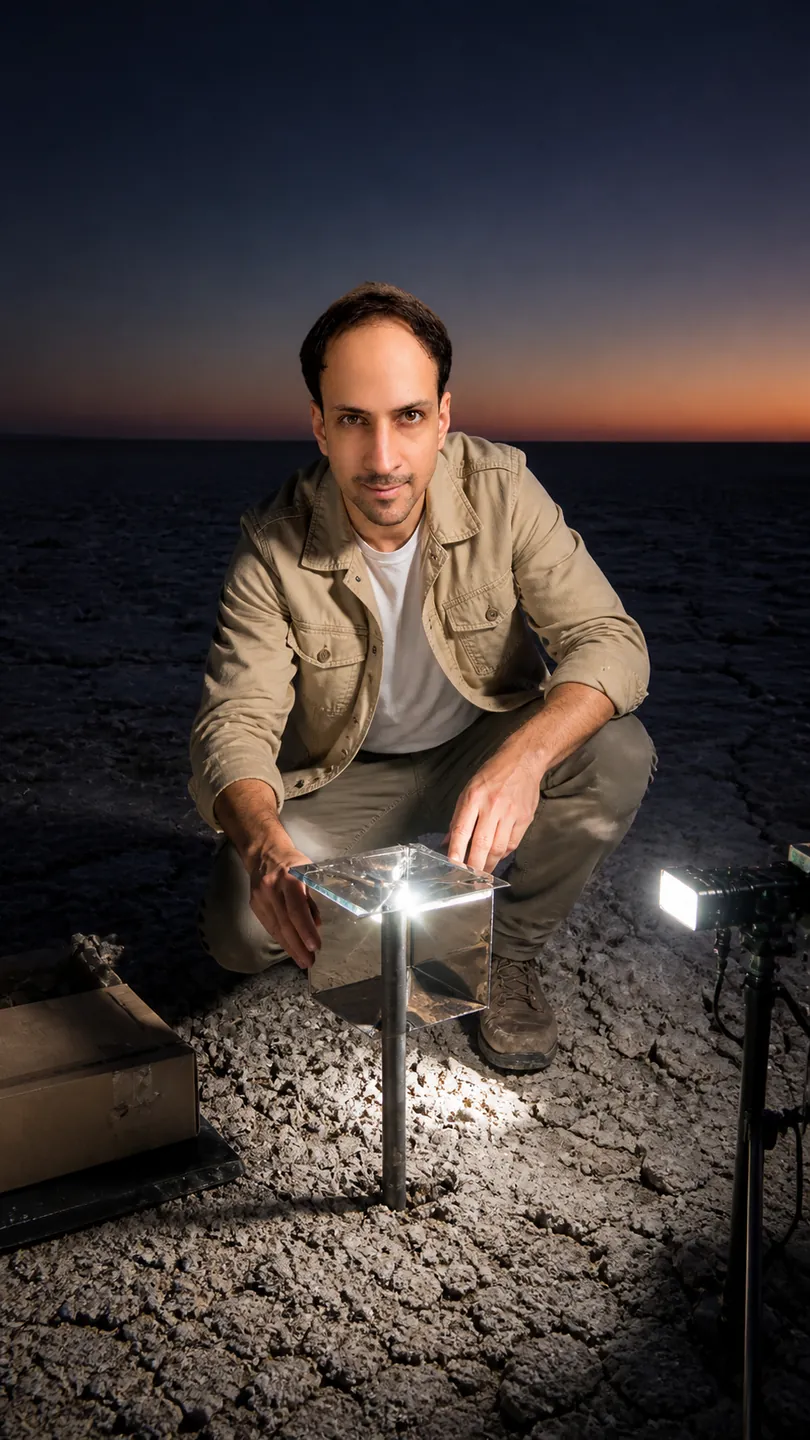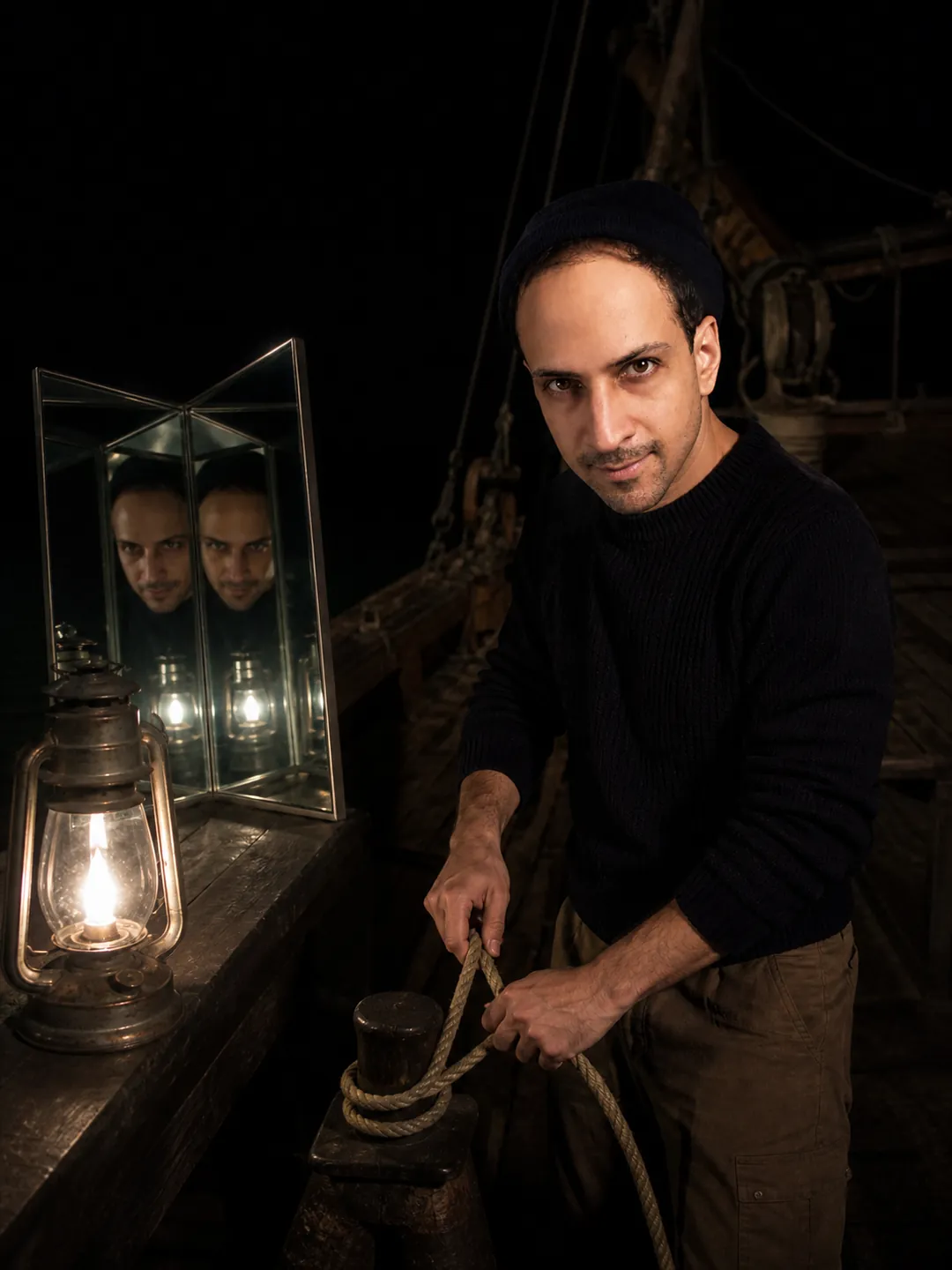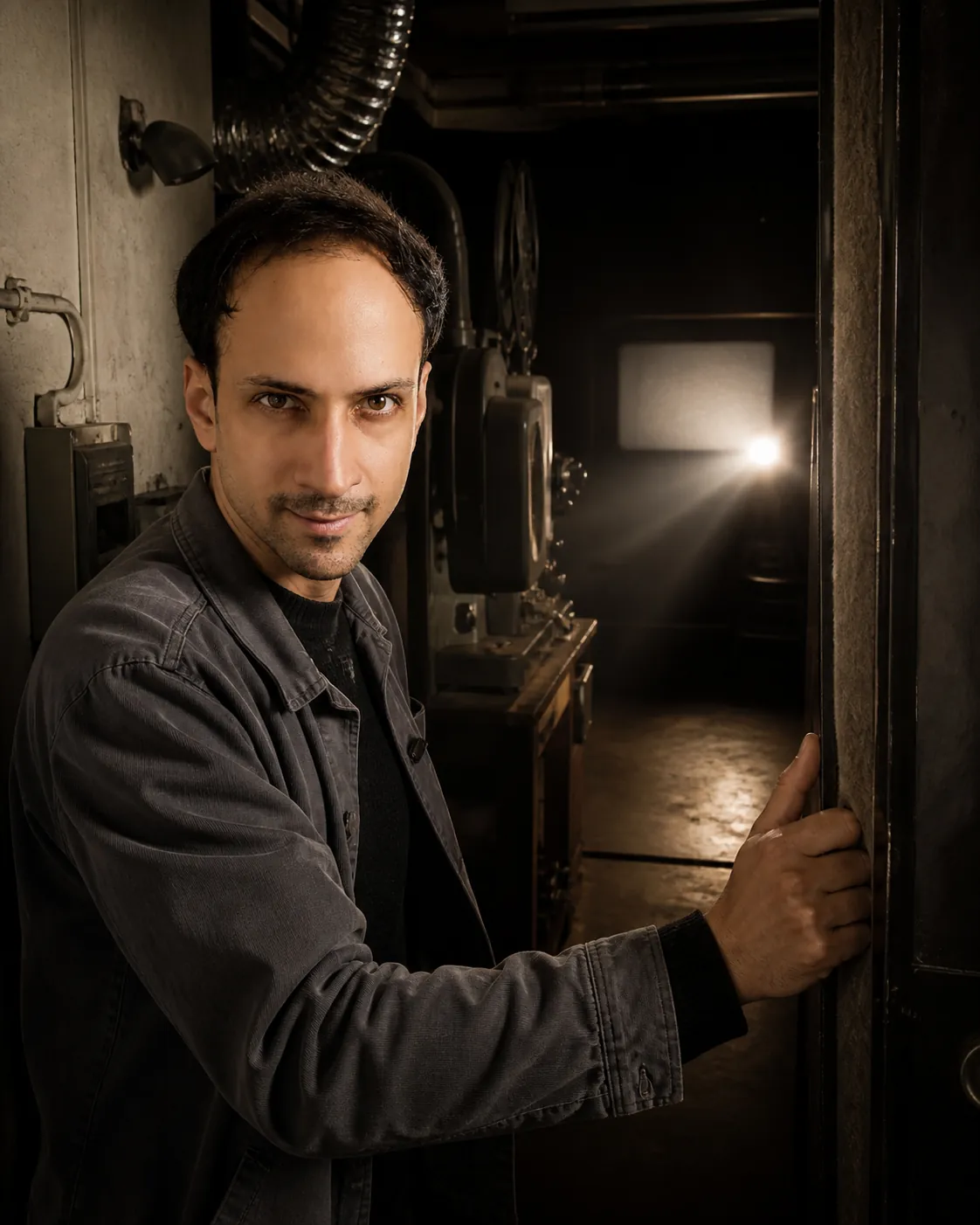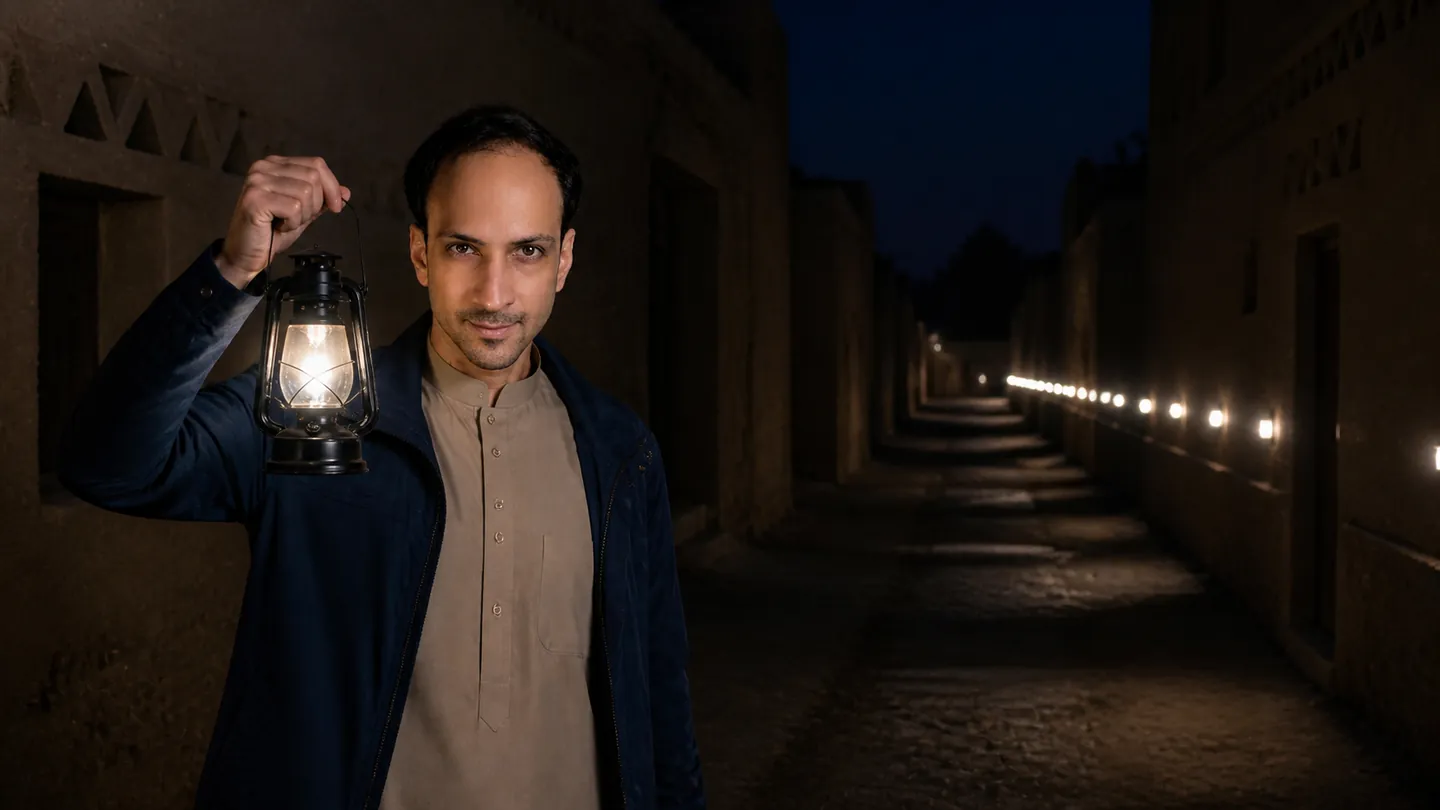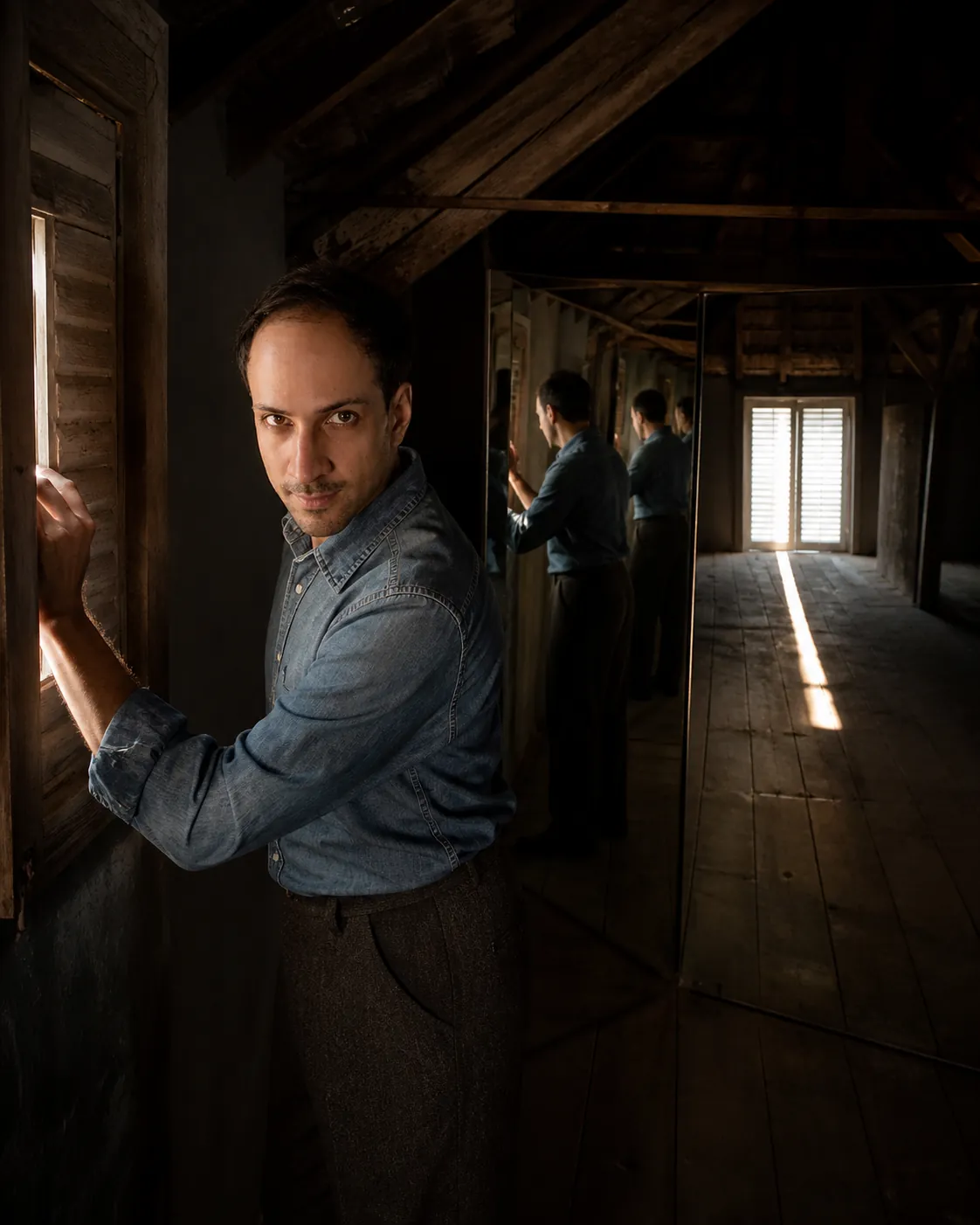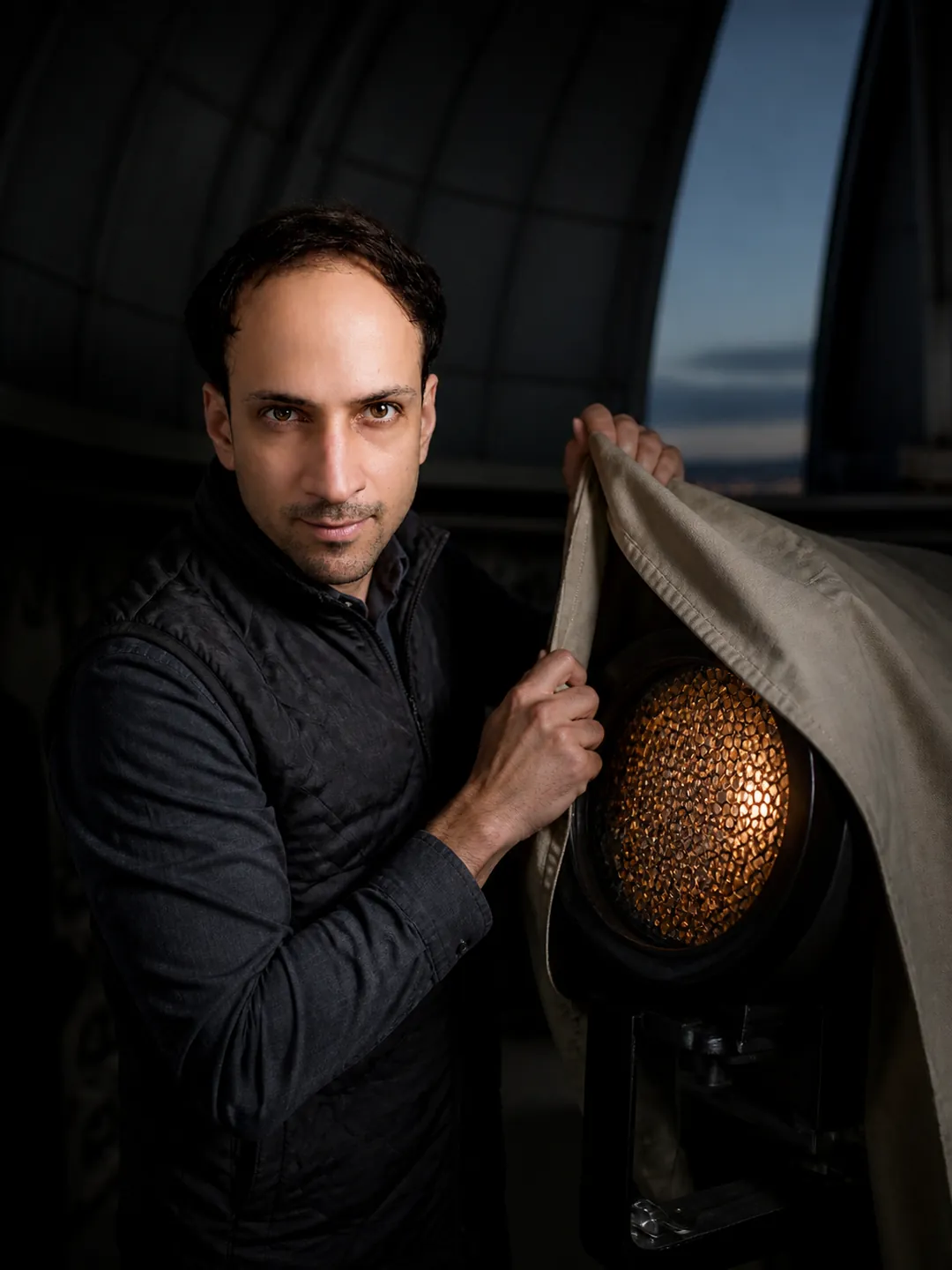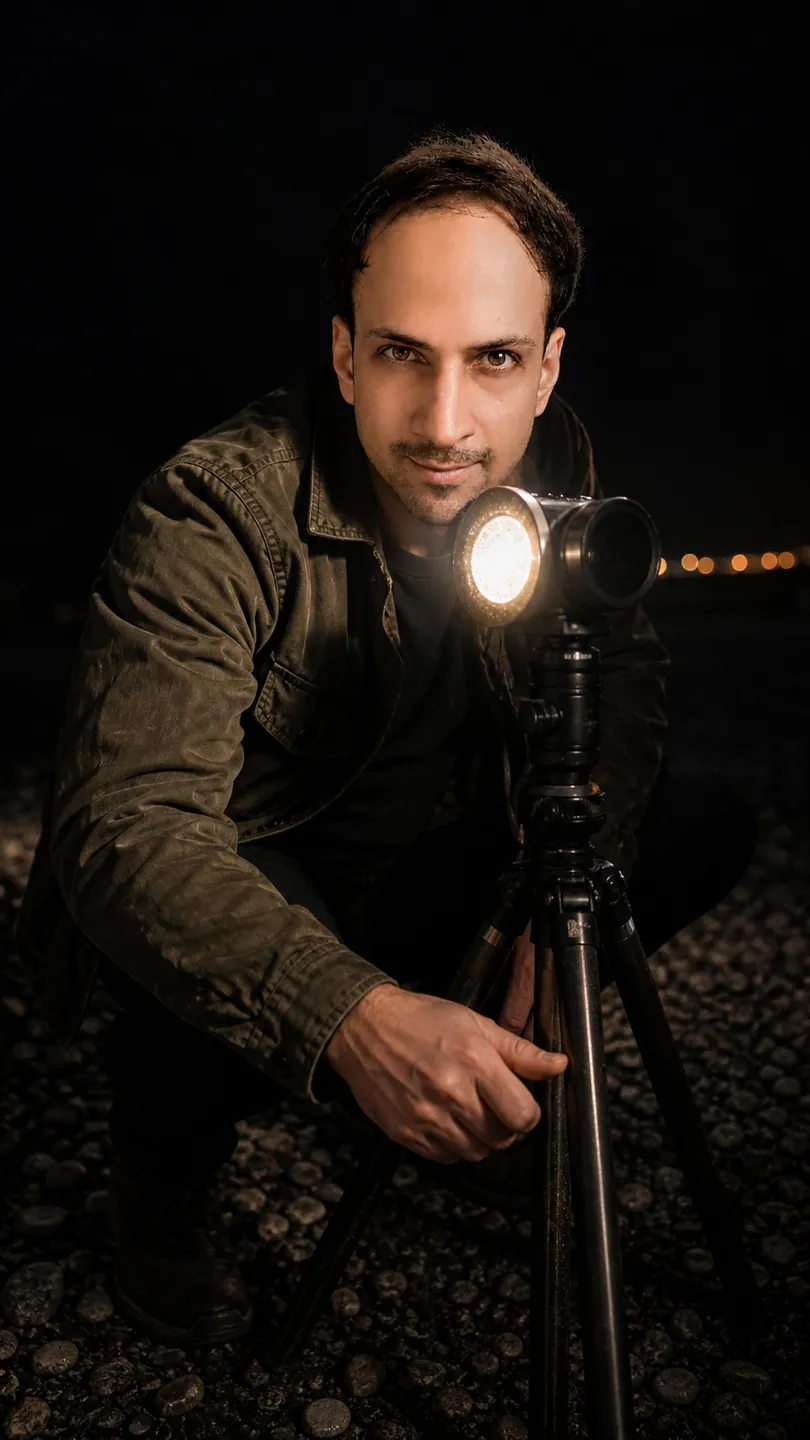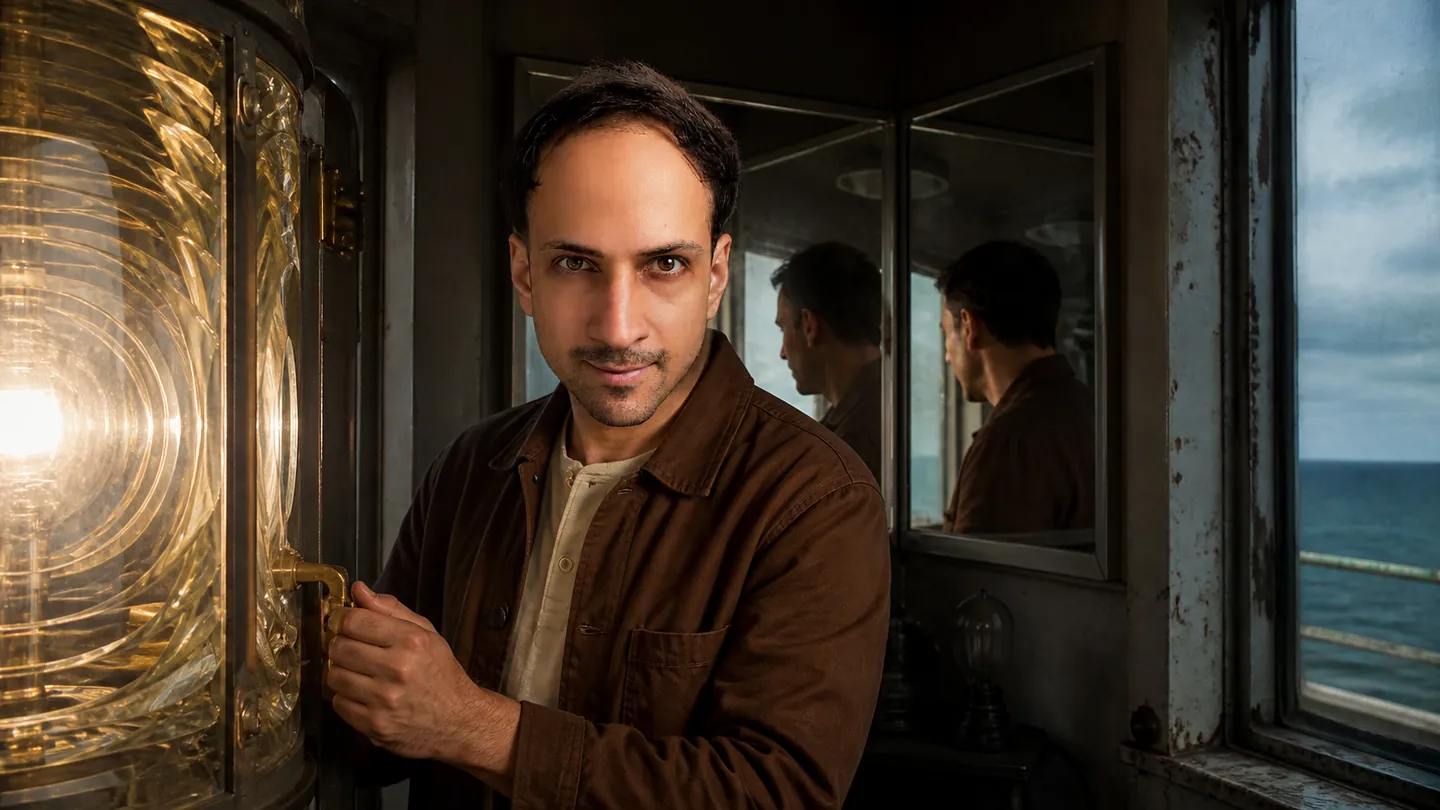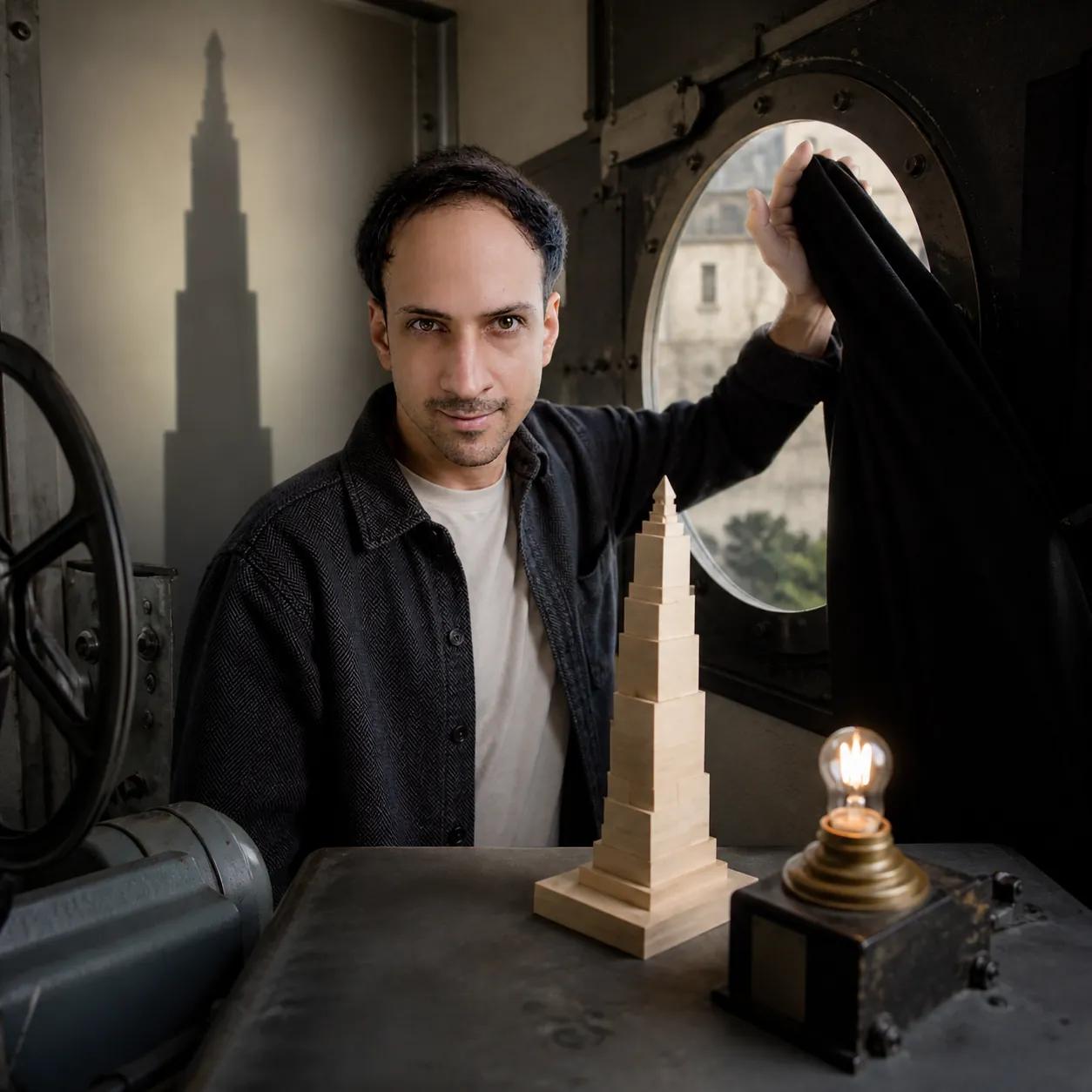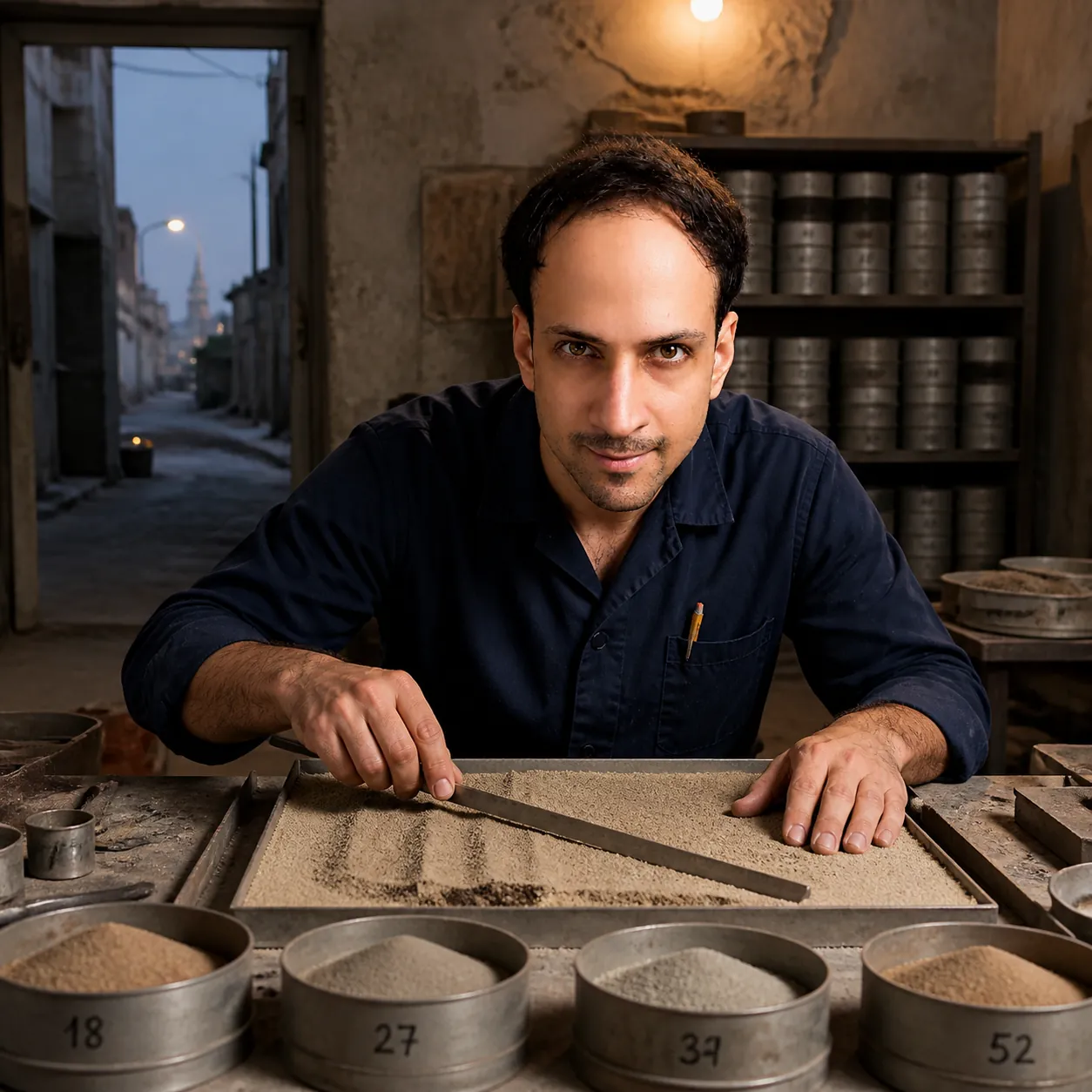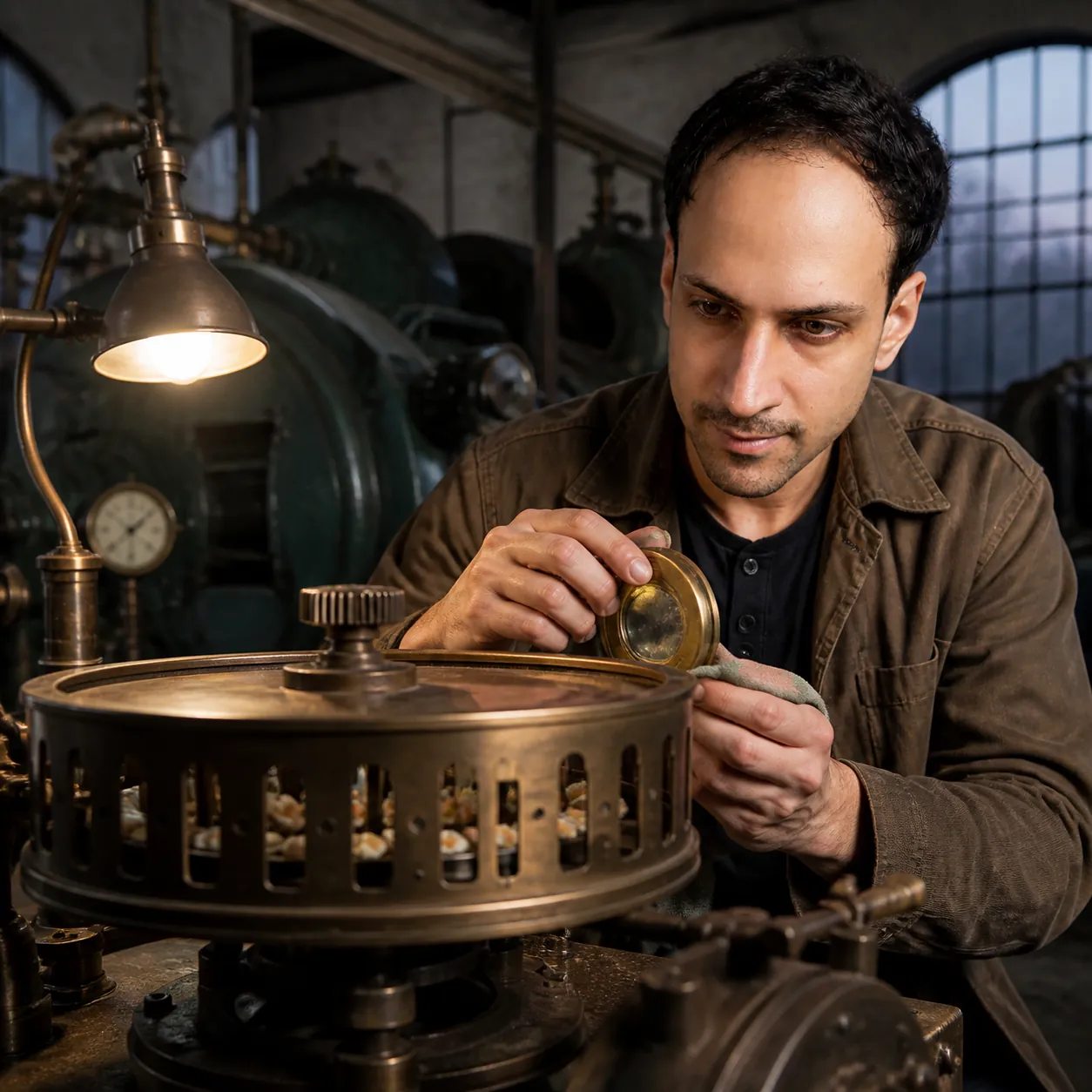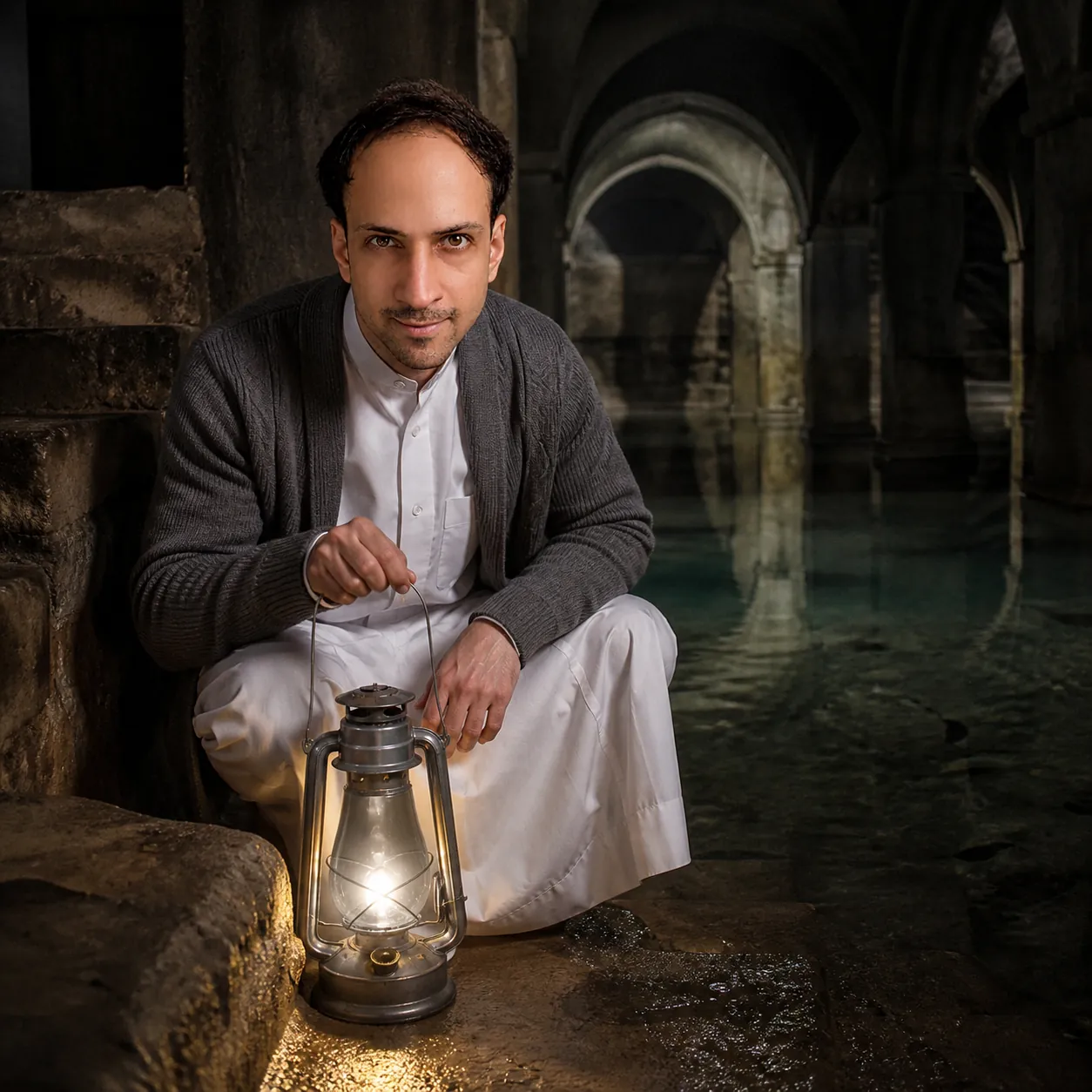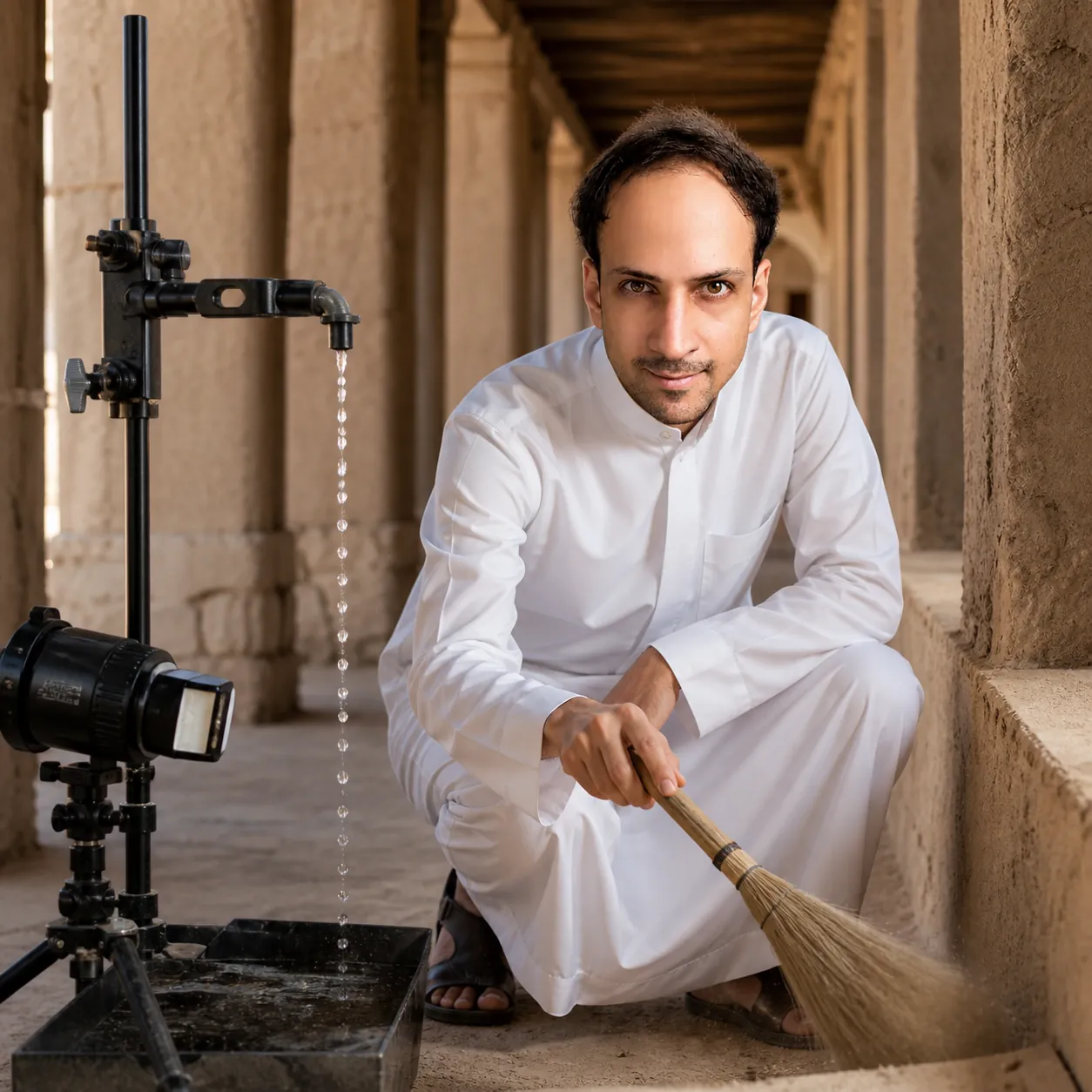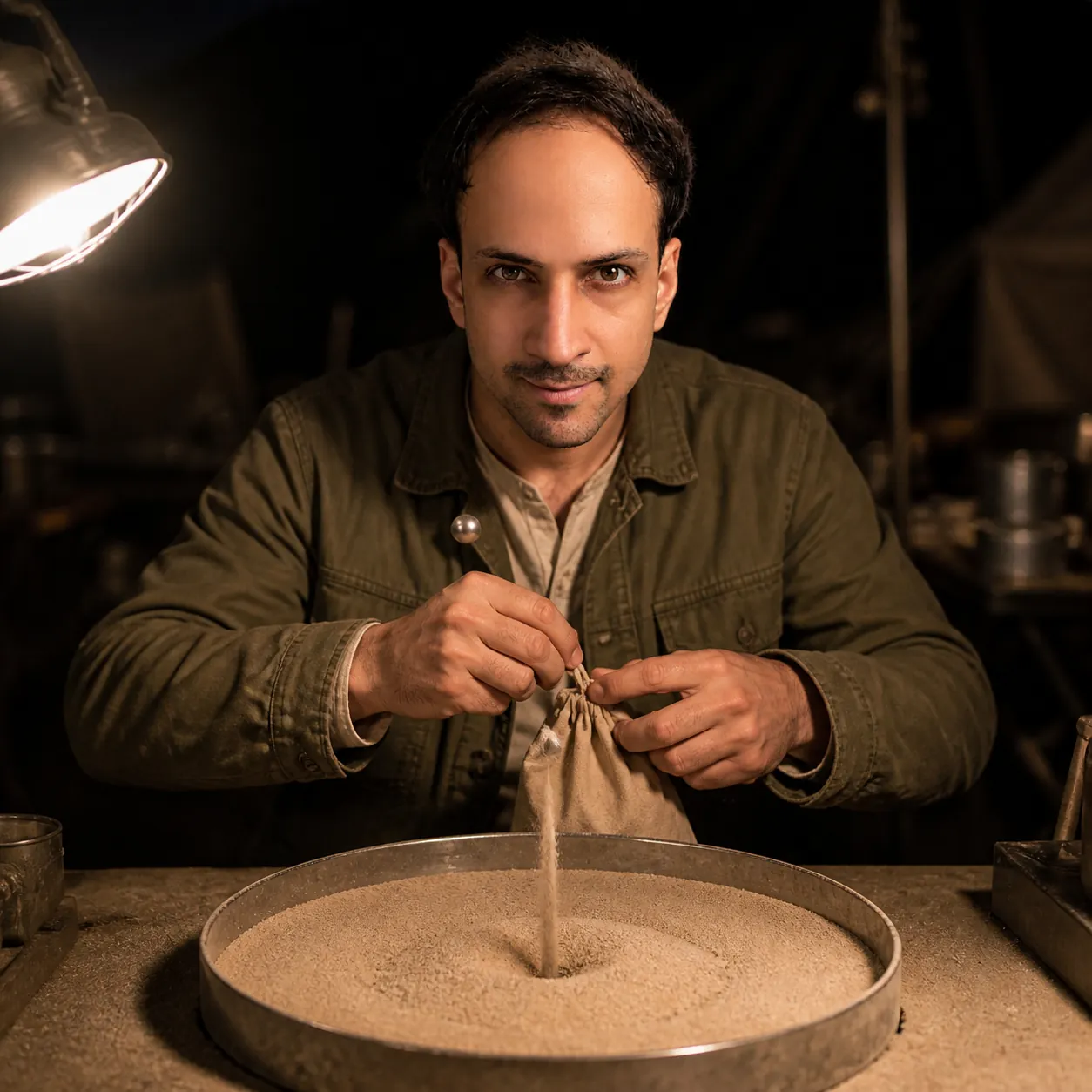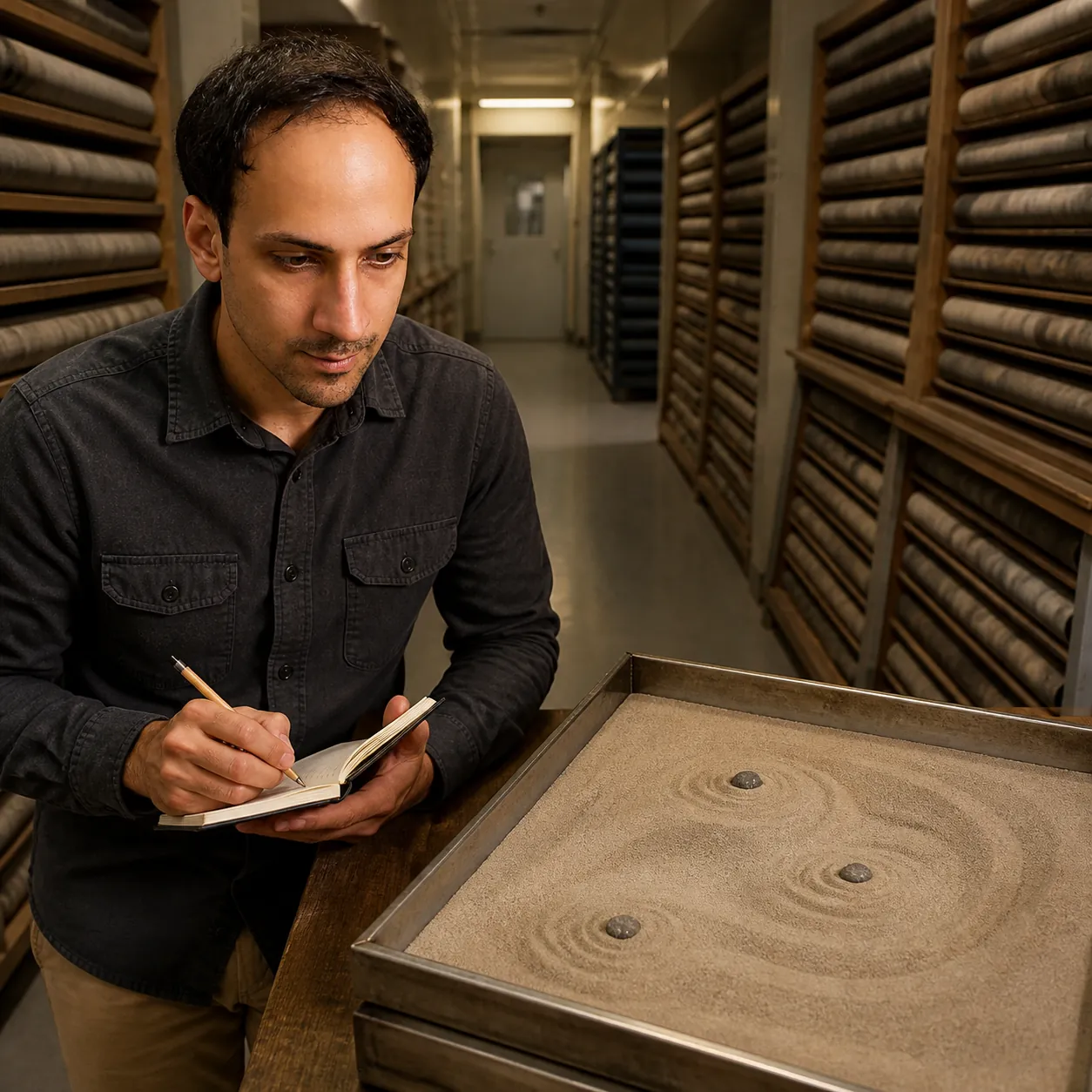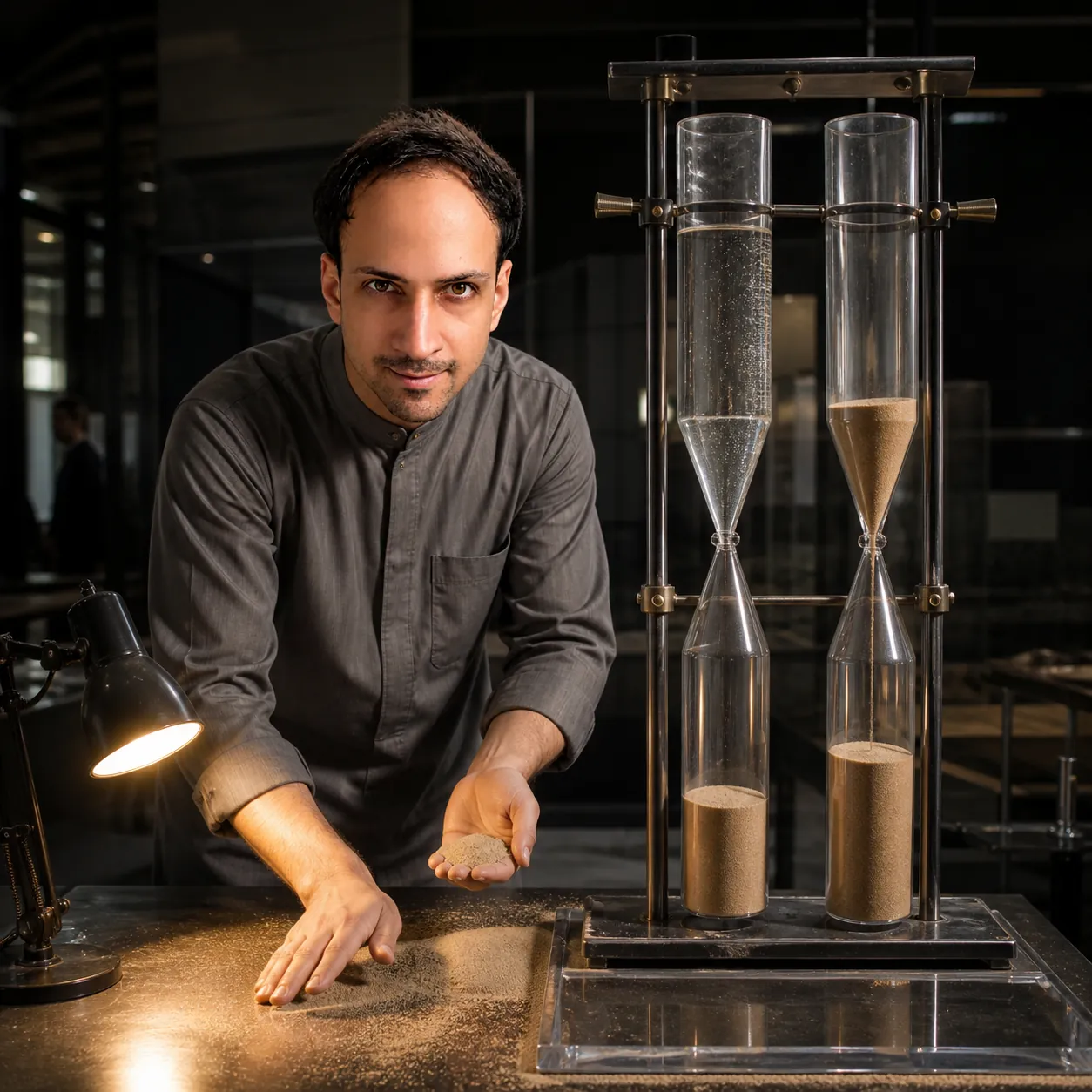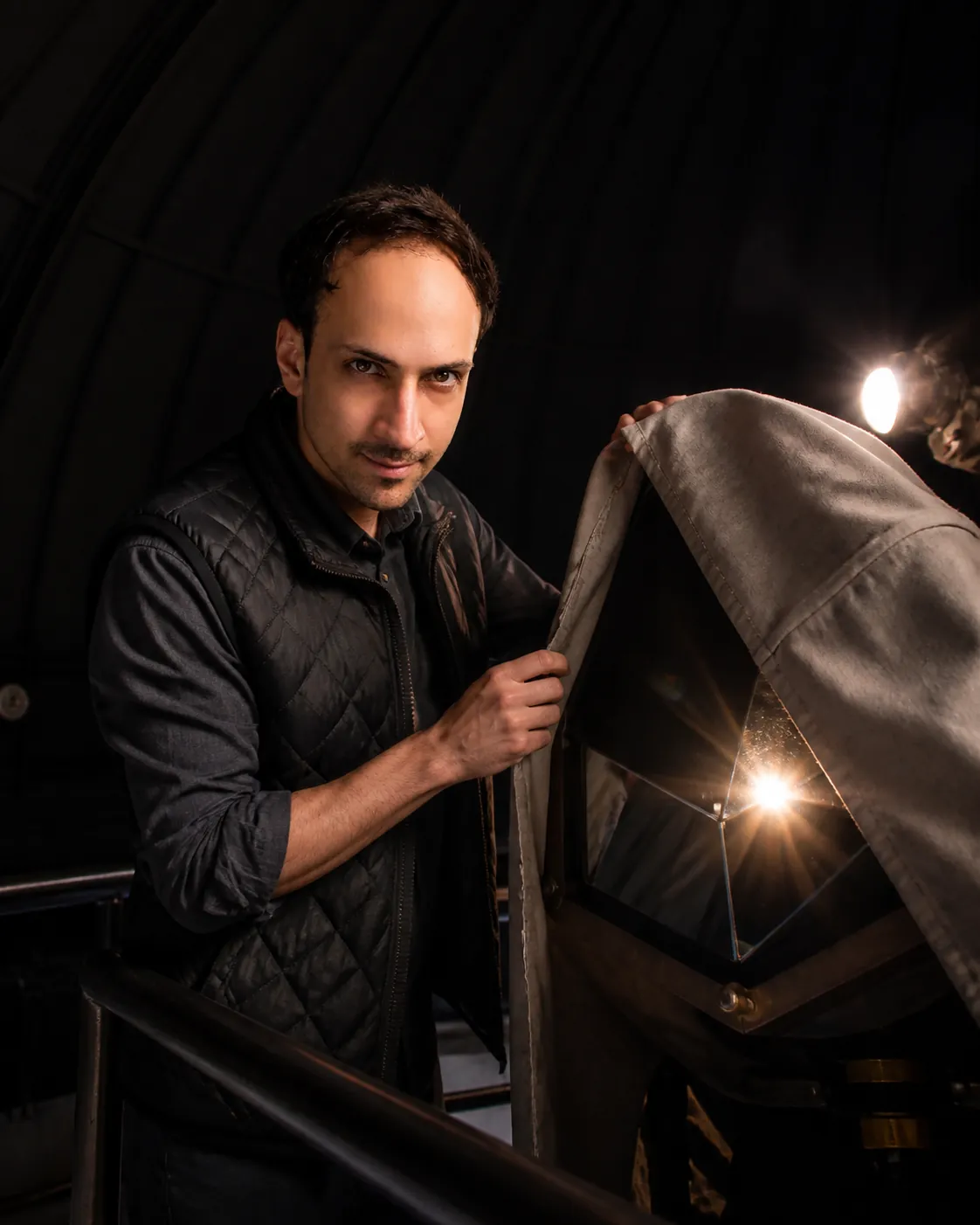
Turn your own photo into a museum-grade demonstration portrait in the catwalk of a small university observatory under a closed dome. Keeps your face unchanged.
من نص البرومبت
Use the attached reference photo as the identity reference: keep the same face, skin tone, hair and features as the person in that photo, without beautifying, aging or altering them. Treat that reference as the character anchor and change only the scene. Build a portrait 4:5 editorial artwork with protected negative space and a fully readable face at exactly 2560x3200 pixels. Location: the catwalk of a small university observatory under a closed dome. Show them in a quilted charcoal gilet over a slate flannel shirt, drawing a canvas dust cover back with both hands. Build the artwork around this material rule: a hollow corner of three mirrors that pins their reflected gaze to its apex no matter where they move their head returns illumination to its sender like a letter that knows its address. Explore how a surface can be truthfully dark and truthfully blazing in the same minute; direct expression and posture toward attentive wonder, never melodrama or ad-like confidence. Use a 90mm portrait lens with a small lamp rigged tight beside it so the return blazes lawfully at the camera. Make the composition let the off-axis dullness occupy most of the frame. Render it as museum-grade demonstration photography combining truthful on-axis brilliance, deep readable shadow detail, tactile instrument surfaces, and unhurried human presence, using cool moonless darkness broken by one narrow torch beam and faint spill and a palette of charcoal, unpolished brass, and one warm white blaze. Photorealistic: this must read as a real photograph from a physical camera, never an illustration, painting, or 3D render. Resolve real surface detail: cotton that hangs by its own weight, seams that pucker very slightly, and collars softened by washing. Keep one identity-locked person, credible hands and fingers, natural fabric, and coherent scale, contact, reflections, shadows, airflow, deformation, and materials. Background people only when essential, always secondary and clearly different. Avoid laser-show haze walls, glowing animal eyes, CGI light tunnels, painted halos, and highway signage. No text, labels, logos, signatures, watermarks, random symbols, plastic skin, excessive bloom, or glossy AI finish.