تخطَّ إلى المحتوى
جميع التصنيفات

AI Portraits

Portrait prompts you can use with your own photo.

3845 برومبتات•0 مشتركين
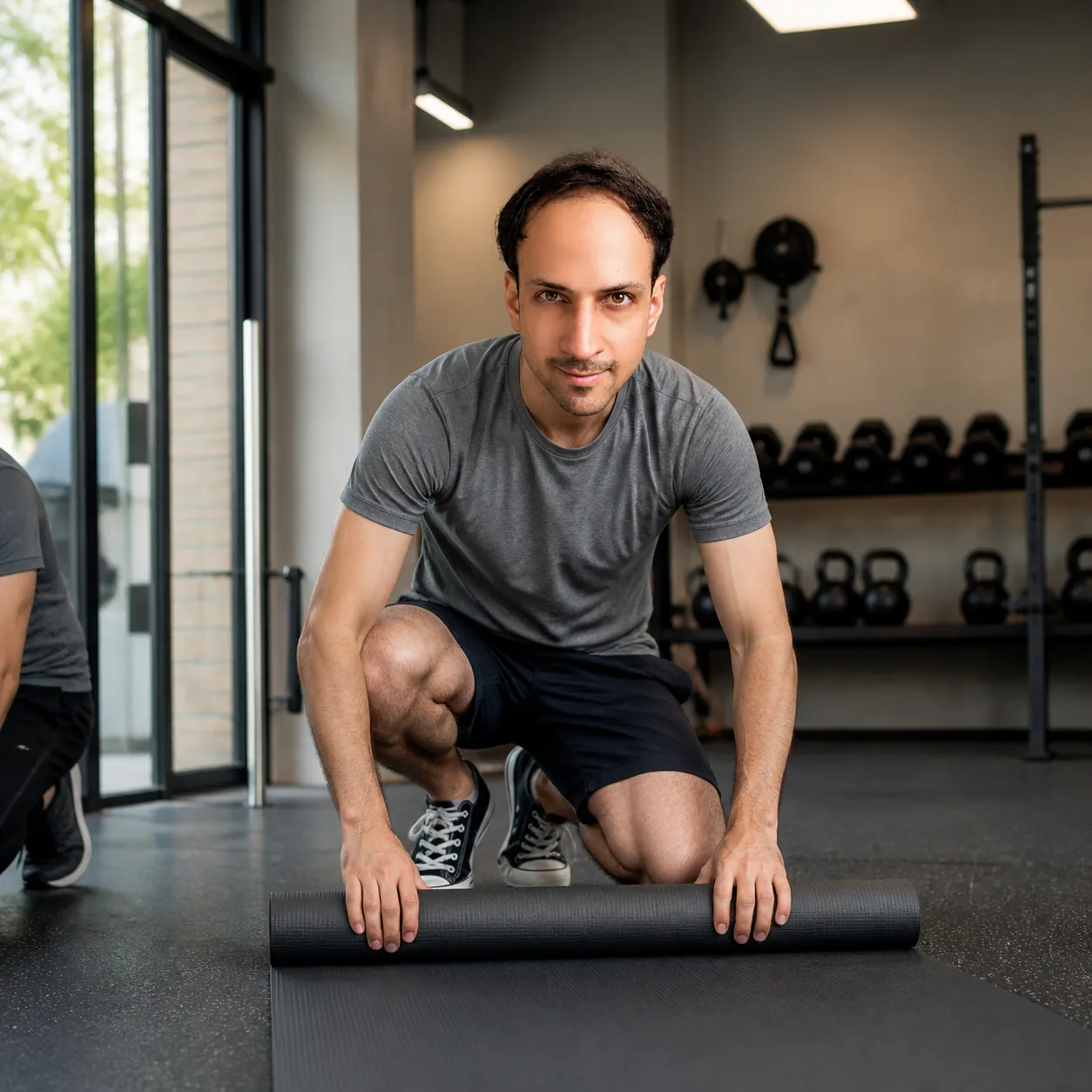
Rolling Out the Mat — AI Portrait Prompt
صورةAI Portraits

Turn your own photo into a plain reportage portrait in a neighbourhood gym's stretching corner in the slow late morning. Keeps your face unchanged.

من نص البرومبت

Use the attached reference photo as the identity reference: keep the same face, skin tone, hair and features as the person in that photo, without beautifying, aging or altering them. Create a square 1:1 museum-catalog frame with a strong first read and a slower second read at exactly 2880x2880 pixels. Location: a neighbourhood gym's stretching corner in the slow late morning. Show the subject in a grey training top, dark shorts, and low canvas trainers, rolling a foam mat out along the floor line. Hide the whole argument in this ordinary moment: a line of paired things whose last hand's width of space stays clear, tended as carefully as the rest makes its clearest statement out of the one thing withheld. Explore whether a gap tended daily is still a gap or has become structure; expression composed and unremarkable, carrying settled attention, the weight held below anyone's threshold of notice. Use a quiet wide view including one neighbouring person only as a partial sleeve. Make the composition keep every spacing even enough to look accidental. Render it as plain reportage realism using real furniture, accurate light falloff, unposed body language, and museum-grade material detail, using even mixed light from a glazed frontage and switched-on ceiling panels and a palette of putty, cool graphite, and a single worn amber tone. Photorealistic: this must read as a real photograph from a physical camera, never an illustration, painting, or 3D render. Resolve real surface detail: visible weave in cloth, fine scratches on metal, and the faint unevenness of painted walls. Keep one identity-locked person, credible hands and fingers, natural fabric, and coherent scale, contact, reflections, shadows, airflow, deformation, and materials. Background people only when essential, always secondary and clearly different. Avoid visible sadness, head in hands, staring through windows, candles, and memorial arrangements. No text, labels, logos, signatures, watermarks, random symbols, plastic skin, excessive bloom, or glossy AI finish.
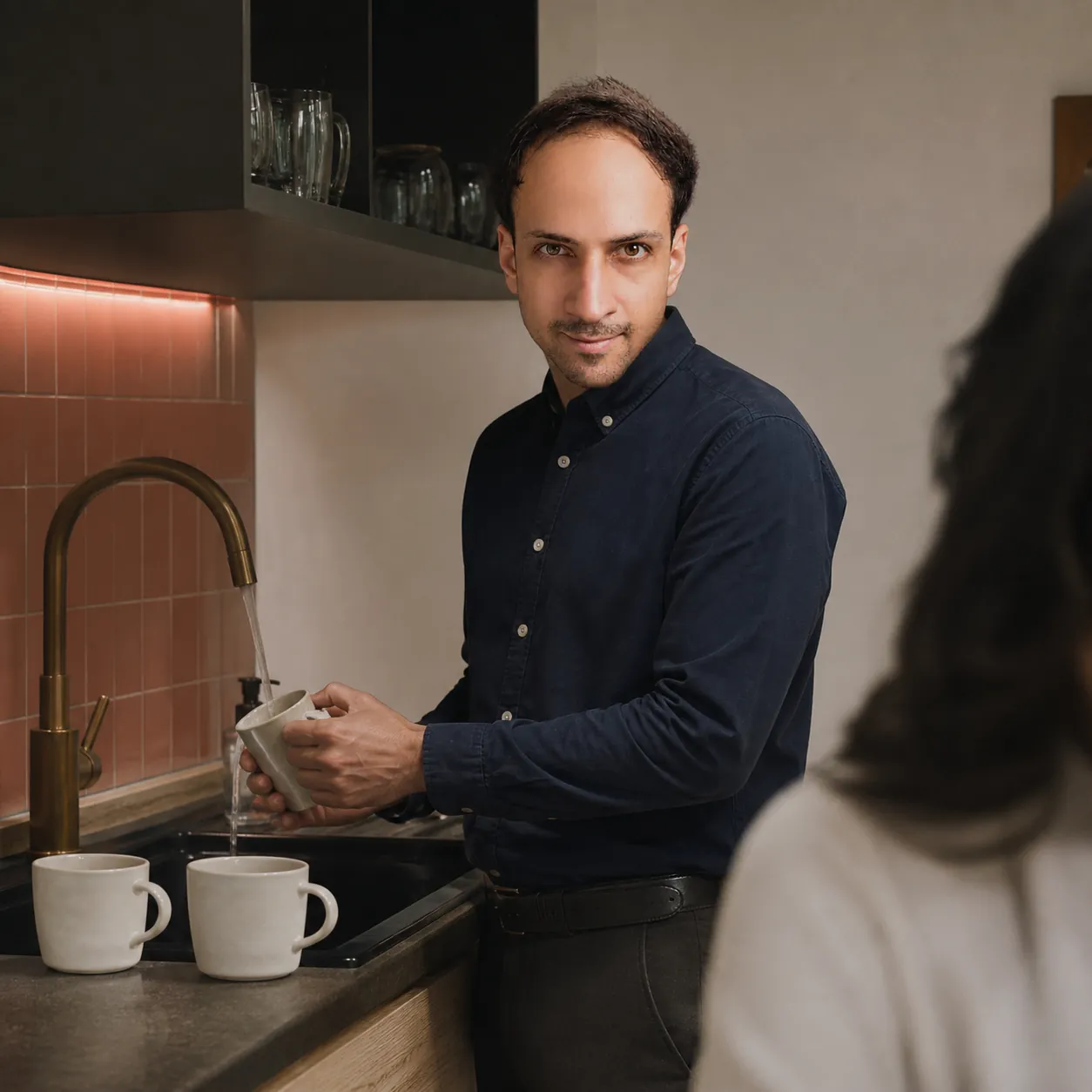
The Room Put Back in Order — AI Portrait Prompt
صورةAI Portraits

Turn your own photo into an unforced documentary portrait in a shared office pantry where a colleague is rinsing your own mug. Keeps your face unchanged.

من نص البرومبت

Use the attached reference photo as the identity reference: keep the same face, skin tone, hair and features as the person in that photo, without beautifying, aging or altering them. Create a square 1:1 museum-catalog frame with a strong first read and a slower second read at exactly 2880x2880 pixels. Location: a shared office pantry where a colleague is rinsing their own mug. Show the subject in a navy shirt with the collar button still fastened and dark trousers, setting two clean mugs side by side on the counter. Photograph this as though nothing were happening: a room already put back in order around one thing nobody has dealt with, still standing where the evening left it prices a calm that everyone else has always mistaken for a personality. Explore how the length of a pause can be more honest than any expression; expression composed and unremarkable, carrying easy composure, the weight held until the room empties. Frame the subject at mid-torso from a seated companion's height so their hands and face share one plane. Make the composition keep one other person present only as a partial edge. Render it as unforced documentary portraiture built from ordinary domestic realism, restrained contemporary art direction, honest skin rendering, and patient observational framing, using an overhead room fitting left on at its ordinary evening brightness and a palette of pale plaster, charcoal, and a narrow band of terracotta. Photorealistic: this must read as a real photograph from a physical camera, never an illustration, painting, or 3D render. Resolve real surface detail: brass darkened in the recesses and bright where thumbs land, and lacquer crazed rather than perfect. Keep one identity-locked person, credible hands and fingers, natural fabric, and coherent scale, contact, reflections, shadows, airflow, deformation, and materials. Background people only when essential, always secondary and clearly different. Avoid head in hands, slumped shoulders, staring out of windows, visible tears, and sad-eyed lighting. No text, labels, logos, signatures, watermarks, random symbols, plastic skin, excessive bloom, or glossy AI finish.
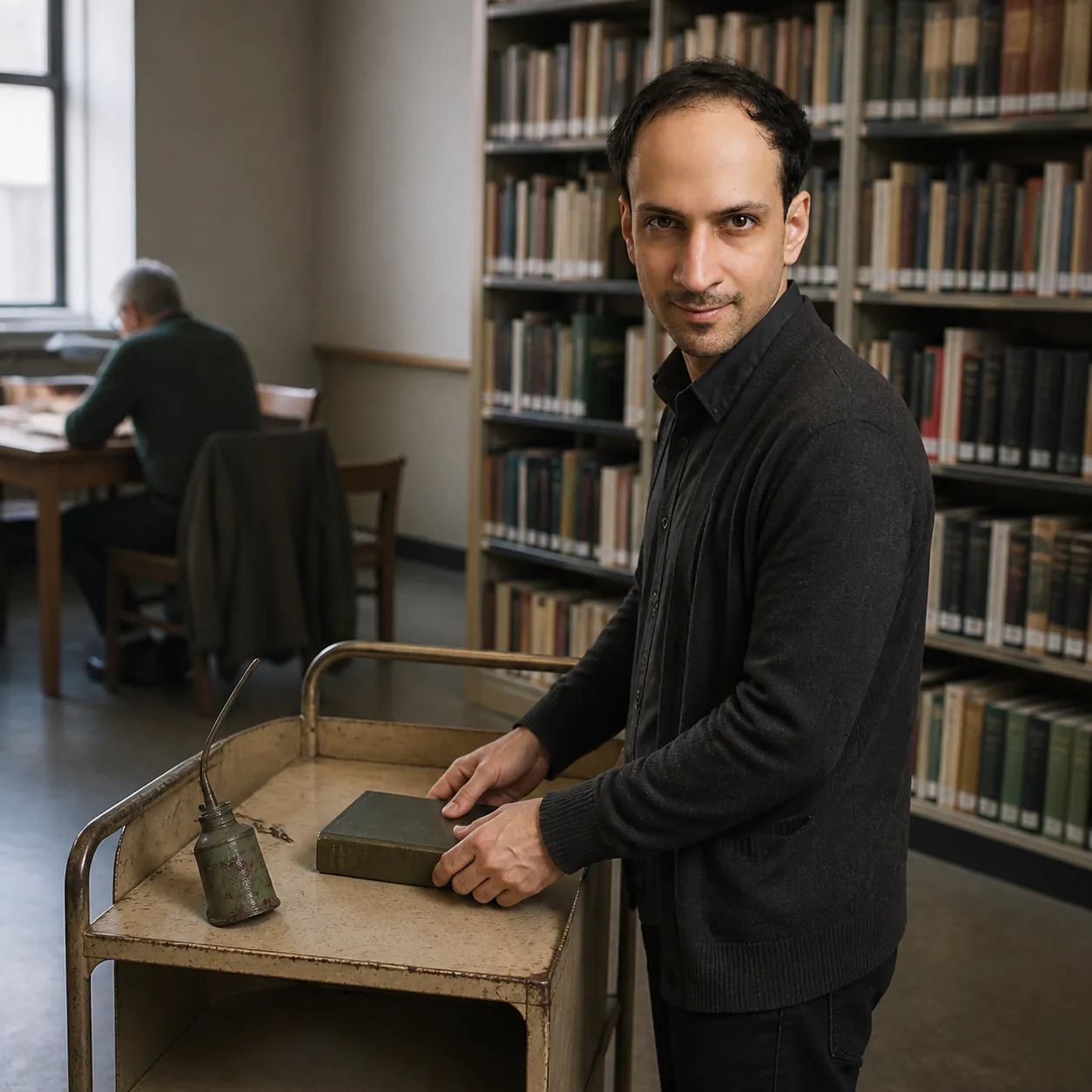
Quiet Returns, Darkened Spout — AI Portrait Prompt
صورةAI Portraits

Turn your own photo into an understated reportage portrait in a library reading room with one other reader's coat on a chair. Keeps your face unchanged.

من نص البرومبت

Use the attached reference photo as the identity reference: keep the same face, skin tone, hair and features as the person in that photo, without beautifying, aging or altering them. Create a square 1:1 museum-catalog frame with a strong first read and a slower second read at exactly 2880x2880 pixels. Location: a library reading room with one other reader's coat on a chair. Show the subject in a thin charcoal cardigan over a plain buttoned shirt, laying a closed book flat on the returns trolley. Make this the only tell, easy to miss: a small oil can that leans at the angle a hinge has taught it, its spout darkened only along one side lets accumulated wear stand as the only proof that any of this recurred. Explore what wear records that memory does not, and why the record matters; expression composed and unremarkable, carrying matter-of-fact care, the weight held under the ordinariness of the act. Place the camera slightly behind their shoulder so the worn surface and their face both register. Make the composition let the worn mark sit lower than their hands. Render it as understated reportage portraiture built from truthful household materials, believable use marks, calm neutral styling, and unhurried everyday timing, using flat overcast daylight through one window, even across the room and unglamorous and a palette of warm grey, unbleached cotton, and one muted olive accent. Photorealistic: this must read as a real photograph from a physical camera, never an illustration, painting, or 3D render. Resolve real surface detail: floor finish worn along the walked line, skirting marked at shoe height, and corners darker than the open floor. Keep one identity-locked person, credible hands and fingers, natural fabric, and coherent scale, contact, reflections, shadows, airflow, deformation, and materials. Background people only when essential, always secondary and clearly different. Avoid boulder or mountain symbolism, hamster wheels, spinning clock faces, treadmills, and weary shoulder-slumped posture. No text, labels, logos, signatures, watermarks, random symbols, plastic skin, excessive bloom, or glossy AI finish.
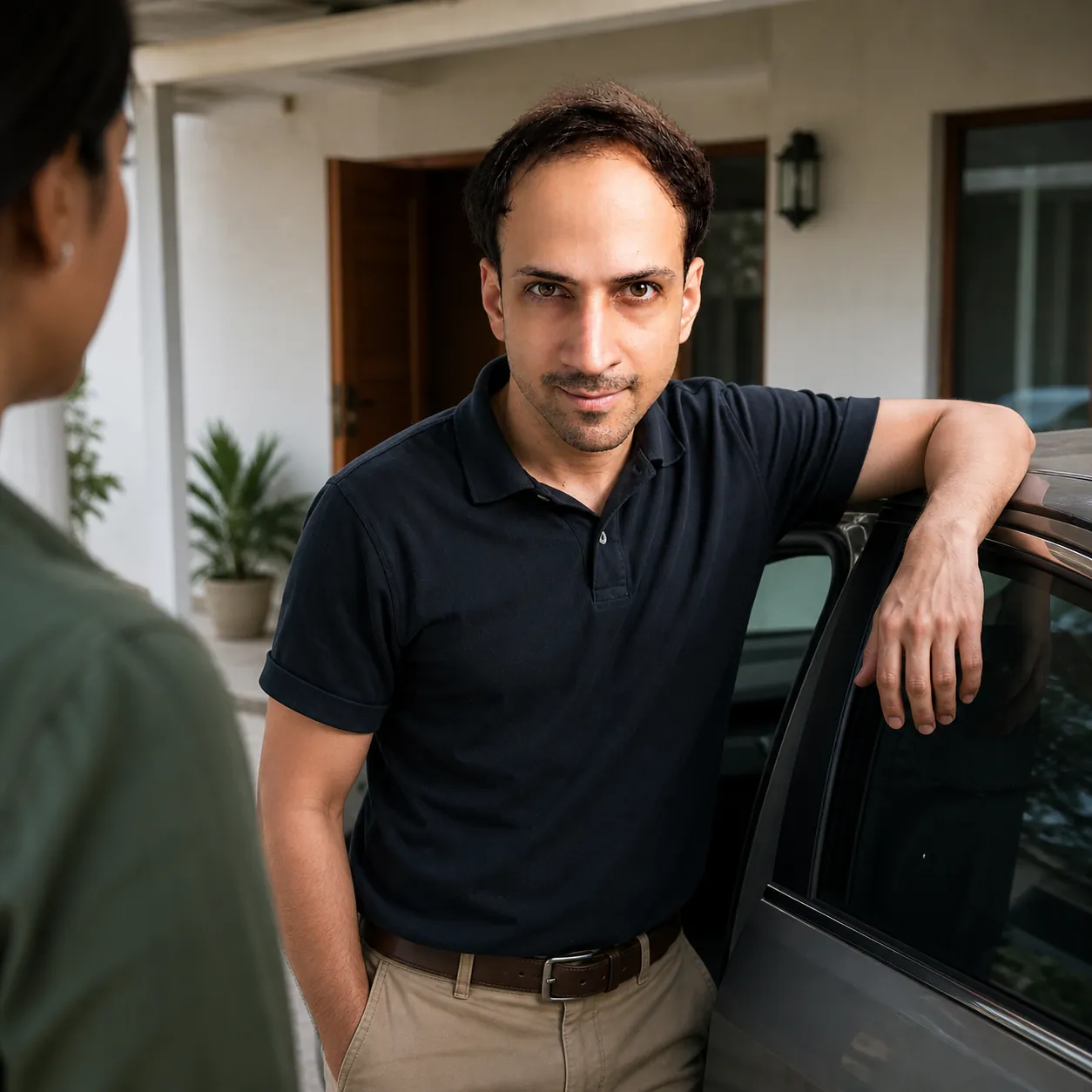
Hand on the Open Car Door — AI Portrait Prompt
صورةAI Portraits

Turn your own photo into an unforced documentary portrait in a parked car in the family driveway, house door open behind. Keeps your face unchanged.

من نص البرومبت

Use the attached reference photo as the identity reference: keep the same face, skin tone, hair and features as the person in that photo, without beautifying, aging or altering them. Create a square 1:1 museum-catalog frame with a strong first read and a slower second read at exactly 2880x2880 pixels. Location: a parked car in the family driveway, house door open behind. Show the subject in a dark polo shirt with straight khaki trousers and rolled sleeves, resting one hand on the open car door's upper edge. Hide the whole argument in this ordinary moment: a chin still lowered from a second nod the moment never required, the first already taken as a complete answer says the closest true thing the available language will actually hold. Explore whether a state without a name is any less real for lacking one; expression composed and unremarkable, carrying quiet competence, the weight held below the reach of words. Use a 35mm three-quarter view close enough to include one nearby sleeve that is not theirs. Make the composition hold one area of stillness inside an otherwise ordinary room. Render it as unforced documentary portraiture built from natural domestic staging, honest skin rendering, restrained contemporary styling, and patient observational timing, using open shade from a covered walkway, contrast low and skin texture visible and a palette of warm grey, pale plaster, and one muted olive accent. Photorealistic: this must read as a real photograph from a physical camera, never an illustration, painting, or 3D render. Resolve real surface detail: wood grain read at honest scale, matte and gloss clearly separated, and no surface uniformly clean. Keep one identity-locked person, credible hands and fingers, natural fabric, and coherent scale, contact, reflections, shadows, airflow, deformation, and materials. Background people only when essential, always secondary and clearly different. Avoid tears, head in hands, staring through windows, hunched silhouettes, and any object announcing illness. No text, labels, logos, signatures, watermarks, random symbols, plastic skin, excessive bloom, or glossy AI finish.
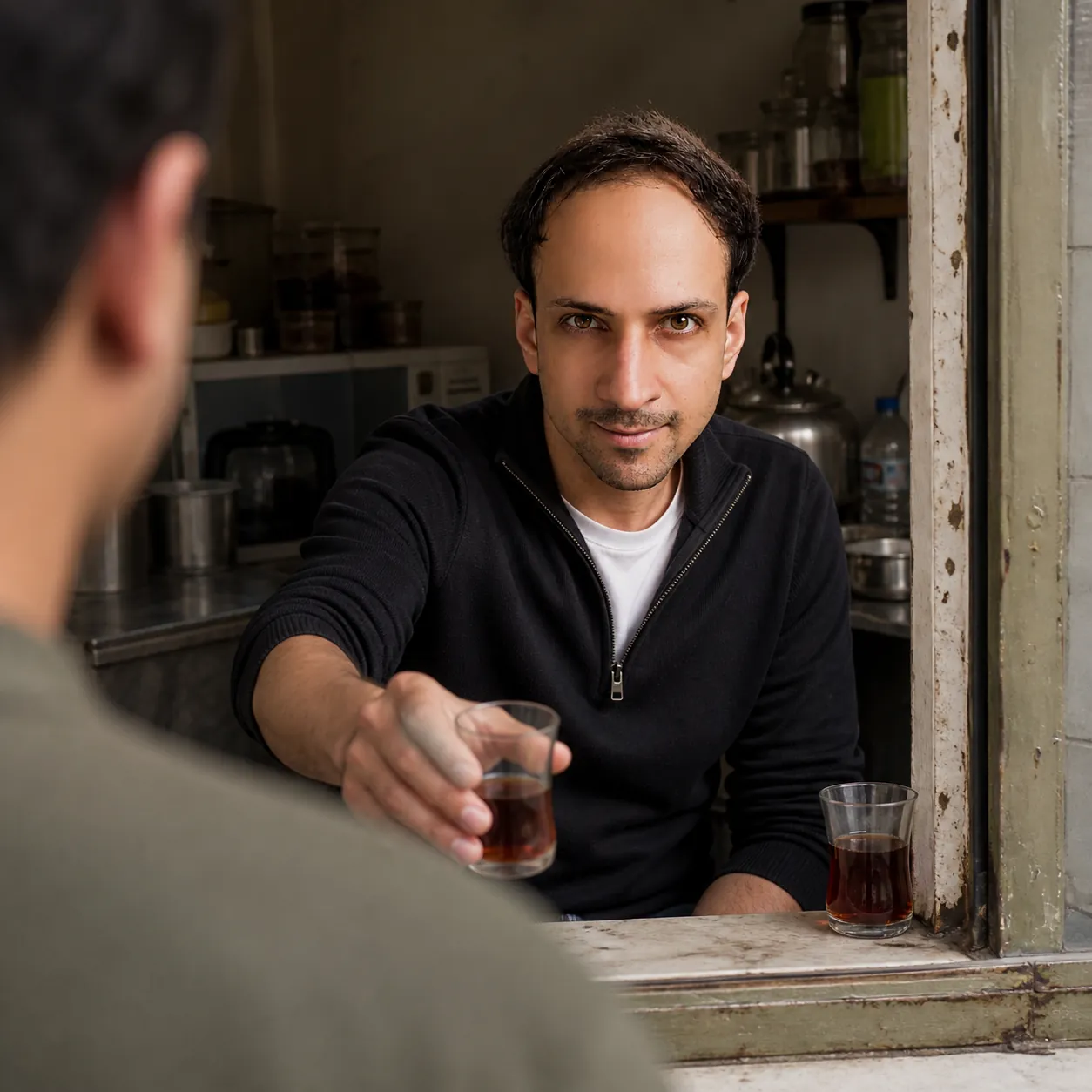
Hot Glass at the Tea Stall — AI Portrait Prompt
صورةAI Portraits

Turn your own photo into a photorealistic portrait in a pavement tea stall window where the seller works just inside. Keeps your face unchanged.

من نص البرومبت

Use the attached reference photo as the identity reference: keep the same face, skin tone, hair and features as the person in that photo, without beautifying, aging or altering them. Create a square 1:1 museum-catalog frame with a strong first read and a slower second read at exactly 2880x2880 pixels. Location: a pavement tea stall window where the seller works just inside. Show the subject in a black quarter-zip over a plain white tee with sleeves pushed back, taking a hot glass by its rim between finger and thumb. Make this the only tell, easy to miss: a glass set down beside them, its surface gone still, inside a pause that has outlasted the exchange it belongs to spends time where a sentence should have gone and loses nothing. Explore how courtesy and accuracy can both be satisfied by one short reply; expression composed and unremarkable, carrying relaxed readiness, the weight held just behind the courtesy. Place the lens slightly behind a second person's shoulder, keeping that shoulder soft and never blocking them. Make the composition give the delayed hand as much space as the face. Render it as plain reportage photography made from ordinary contemporary Saudi interiors, believable props, natural posture, and completely undramatic lighting choices, using flat afternoon daylight through a plain window, shadows soft and unremarkable and a palette of warm grey, pale plaster, and one muted olive accent. Photorealistic: this must read as a real photograph from a physical camera, never an illustration, painting, or 3D render. Resolve real surface detail: floor finish worn along the walked line, skirting marked at shoe height, and corners darker than the open floor. Keep one identity-locked person, credible hands and fingers, natural fabric, and coherent scale, contact, reflections, shadows, airflow, deformation, and materials. Background people only when essential, always secondary and clearly different. Avoid rain-streaked glass, shadow-bar drama, clasped praying hands, symbolic empty chairs, and heroic poster framing. No text, labels, logos, signatures, watermarks, random symbols, plastic skin, excessive bloom, or glossy AI finish.
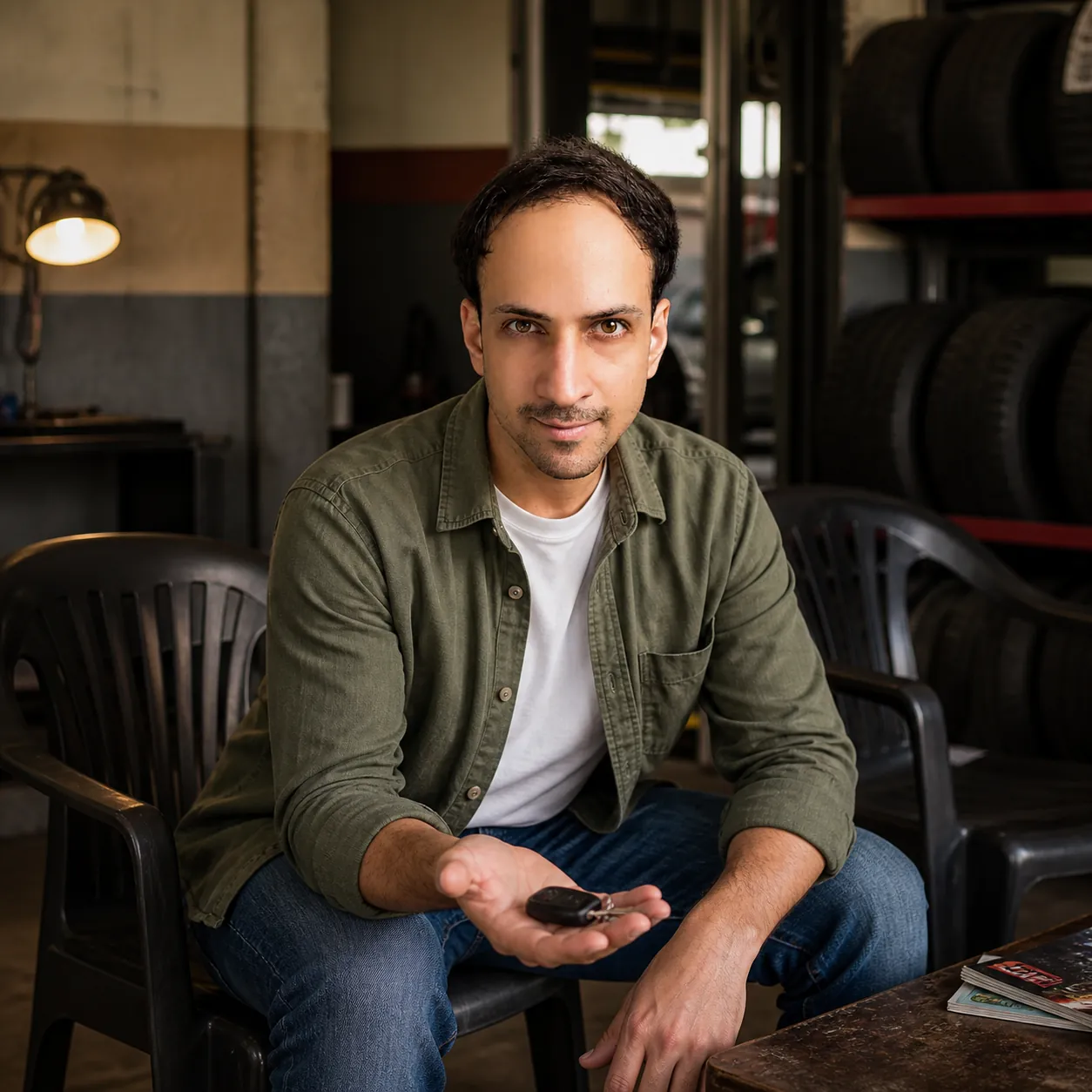
Car Key at the Tyre Shop — AI Portrait Prompt
صورةAI Portraits

Turn your own photo into a photorealistic portrait in a tyre shop's customer corner with plastic chairs and a low table. Keeps your face unchanged.

من نص البرومبت

Use the attached reference photo as the identity reference: keep the same face, skin tone, hair and features as the person in that photo, without beautifying, aging or altering them. Create a square 1:1 museum-catalog frame with a strong first read and a slower second read at exactly 2880x2880 pixels. Location: a tyre shop's customer corner with plastic chairs and a low table. Show the subject in a faded olive work shirt over a white undershirt and jeans, turning a car key over once in their palm. Let the weight sit here and look like nothing: an open hand halted halfway through the turn that a sentence usually begins with, holding exactly where the words ran out says the closest true thing the available language will actually hold. Explore where description stops and an ordinary life continues on without it; expression composed and unremarkable, carrying neighbourly evenness, the weight held below the reach of words. Use an eye-level 50mm view at conversational distance, natural perspective and a shallow but honest depth. Make the composition give the delayed hand as much space as the face. Render it as gallery-grade quiet realism assembling lived-in rooms, precise gesture observation, muted material texture, and framing that never announces its subject, using late-day interior light already turning grey, with one lamp switched on early and a palette of sand beige, dark brown, and one brick-red thread. Photorealistic: this must read as a real photograph from a physical camera, never an illustration, painting, or 3D render. Resolve real surface detail: fine lint on dark fabric, water spotting on steel, and the soft rounding of edges that have been used for years. Keep one identity-locked person, credible hands and fingers, natural fabric, and coherent scale, contact, reflections, shadows, airflow, deformation, and materials. Background people only when essential, always secondary and clearly different. Avoid tears, head in hands, staring through windows, hunched silhouettes, and any object announcing illness. No text, labels, logos, signatures, watermarks, random symbols, plastic skin, excessive bloom, or glossy AI finish.
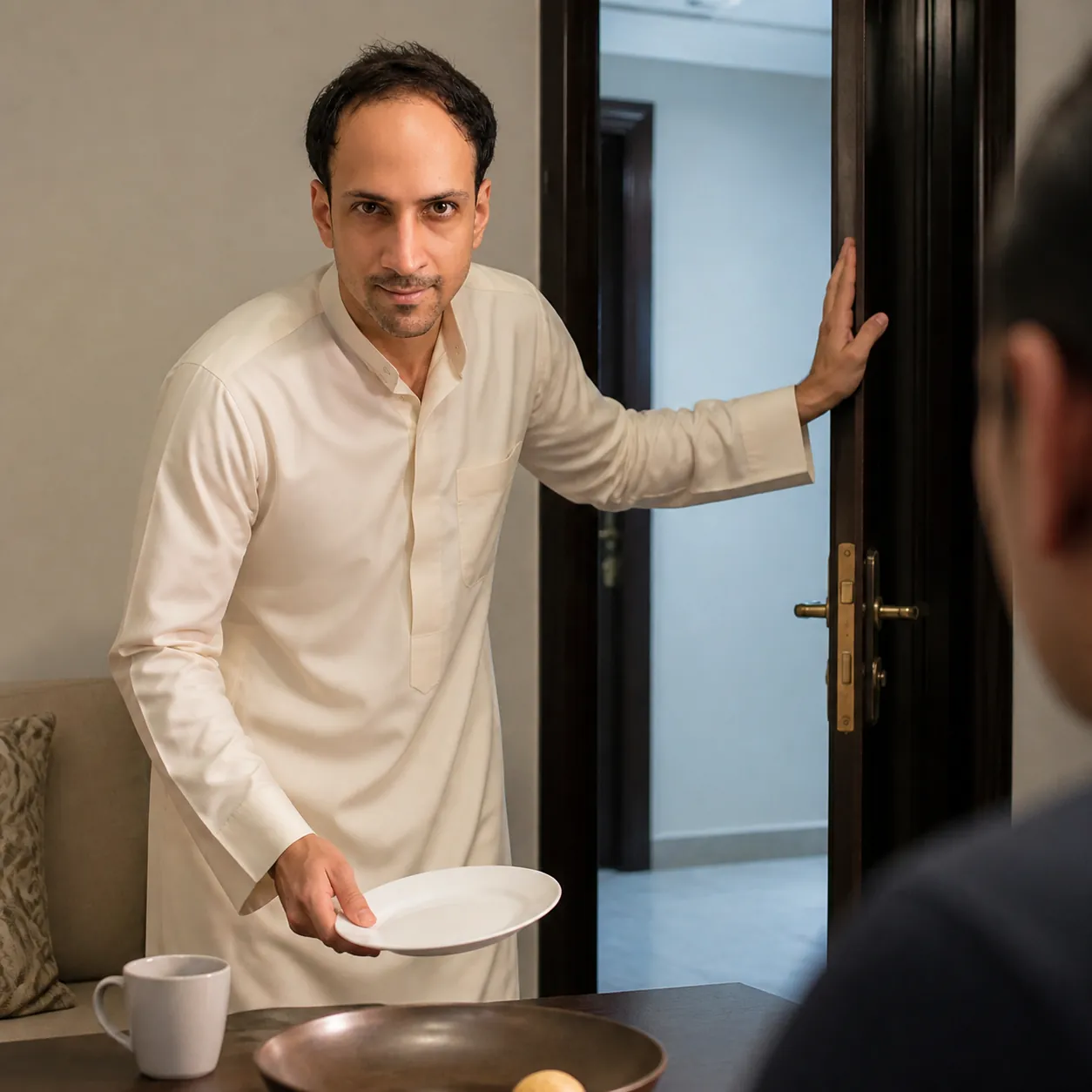
Gathering the Empty Plate — AI Portrait Prompt
صورةAI Portraits

Turn your own photo into a photorealistic portrait in a family sitting room with another cup already on the low table. Keeps your face unchanged.

من نص البرومبت

Use the attached reference photo as the identity reference: keep the same face, skin tone, hair and features as the person in that photo, without beautifying, aging or altering them. Create a square 1:1 museum-catalog frame with a strong first read and a slower second read at exactly 2880x2880 pixels. Location: a family sitting room with another cup already on the low table. Show the subject in an ivory traditional Gulf outfit with the collar open and no ghutra, gathering an empty plate from the low table. Make this the only tell, easy to miss: a hand still flat on a door whose catch seated a full second before their palm agreed to leave it spends time where a sentence should have gone and loses nothing. Explore why an honest answer can be shorter than the thing it is reporting; expression composed and unremarkable, carrying ordinary politeness, the weight held just behind the courtesy. Place the lens slightly behind a second person's shoulder, keeping that shoulder soft and never blocking the subject. Make the composition hold one area of stillness inside an otherwise ordinary room. Render it as plain reportage photography made from ordinary contemporary Saudi interiors, believable props, natural posture, and completely undramatic lighting choices, using overhead office fluorescents evened out by daylight from the corridor beyond and a palette of soft bone, dark charcoal, and a low amber note. Photorealistic: this must read as a real photograph from a physical camera, never an illustration, painting, or 3D render. Resolve real surface detail: paper fibre visible at cut edges, plastic that shows mould lines, and paint thicker where a brush turned. Keep one identity-locked person, credible hands and fingers, natural fabric, and coherent scale, contact, reflections, shadows, airflow, deformation, and materials. Background people only when essential, always secondary and clearly different. Avoid rain-streaked glass, shadow-bar drama, clasped praying hands, symbolic empty chairs, and heroic poster framing. No text, labels, logos, signatures, watermarks, random symbols, plastic skin, excessive bloom, or glossy AI finish.
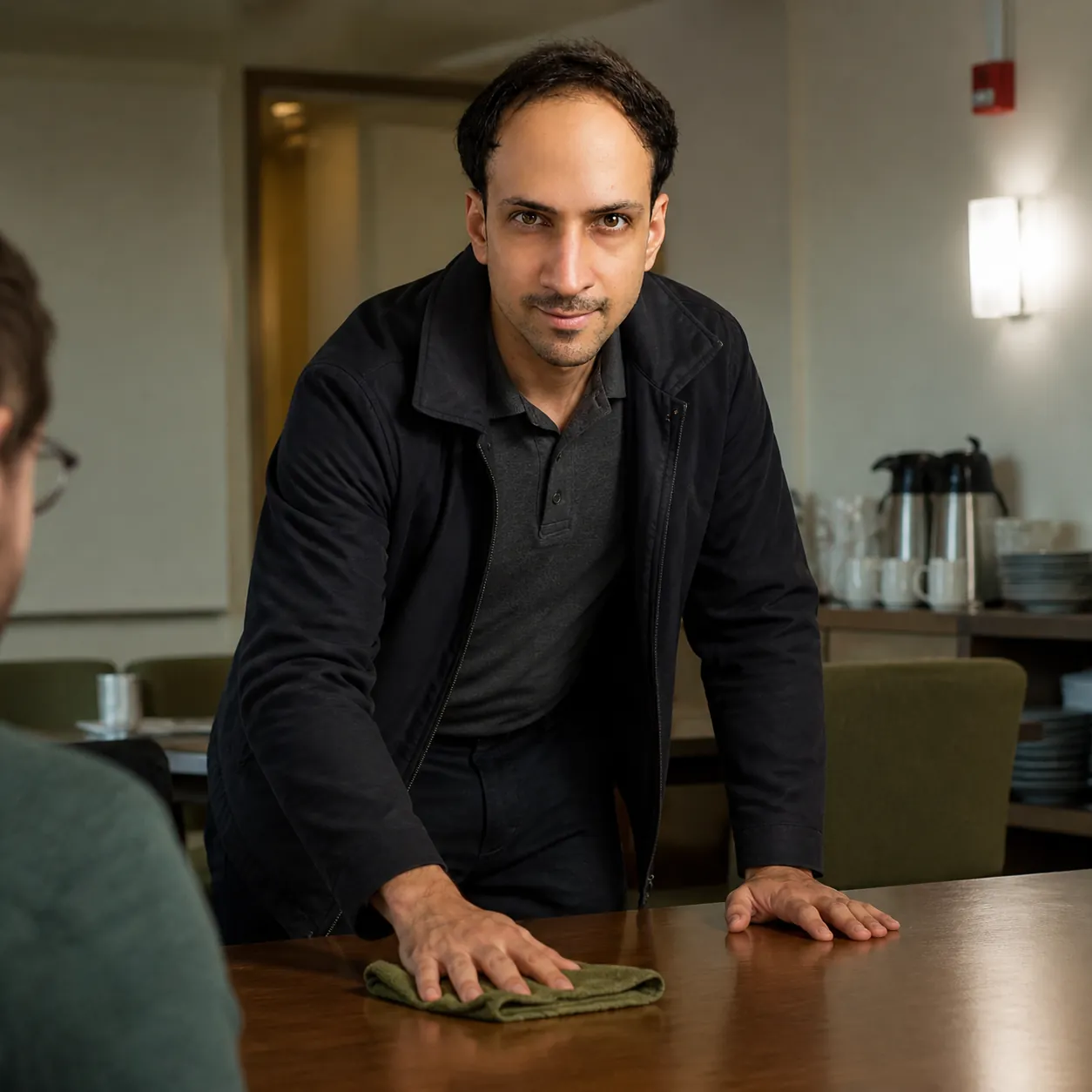
Jacket On in the Staff Room — AI Portrait Prompt
صورةAI Portraits

Turn your own photo into a portrait in a university staff room emptying out after a long afternoon meeting. Keeps your face unchanged.

من نص البرومبت

Use the attached reference photo as the identity reference: keep the same face, skin tone, hair and features as the person in that photo, without beautifying, aging or altering them. Create a square 1:1 museum-catalog frame with a strong first read and a slower second read at exactly 2880x2880 pixels. Location: a university staff room emptying out after a long afternoon meeting. Show the subject in a slate knit polo tucked into dark chinos, wiping the table's far end with a folded cloth. Photograph this as though nothing were happening: an outdoor jacket still on their shoulders well inside the building, where every reason to keep it on stopped applying minutes ago assigns the whole cost to a later hour with nobody else in it. Explore why nobody thinks to ask what the steadiest person in the room spent; expression composed and unremarkable, carrying unhurried civility, the weight held just under the courtesy. Frame the subject at mid-torso from a seated companion's height so their hands and face share one plane. Make the composition keep one other person present only as a partial edge. Render it as gallery-grade domestic reportage built from truthful available light, unglamorous room detail, natural fabric behavior, and unhurried human presence, using mixed household light from two practicals, neither one dramatic nor flattering and a palette of soft taupe, cool white, and a single olive-green note. Photorealistic: this must read as a real photograph from a physical camera, never an illustration, painting, or 3D render. Resolve real surface detail: skin that reddens slightly under pressure, nail beds with honest colour, and knuckle creases that fold rather than blur. Keep one identity-locked person, credible hands and fingers, natural fabric, and coherent scale, contact, reflections, shadows, airflow, deformation, and materials. Background people only when essential, always secondary and clearly different. Avoid pill bottles, loosened ties, clenched fists, rain-streaked glass, and any heroic stoic-warrior posing. No text, labels, logos, signatures, watermarks, random symbols, plastic skin, excessive bloom, or glossy AI finish.
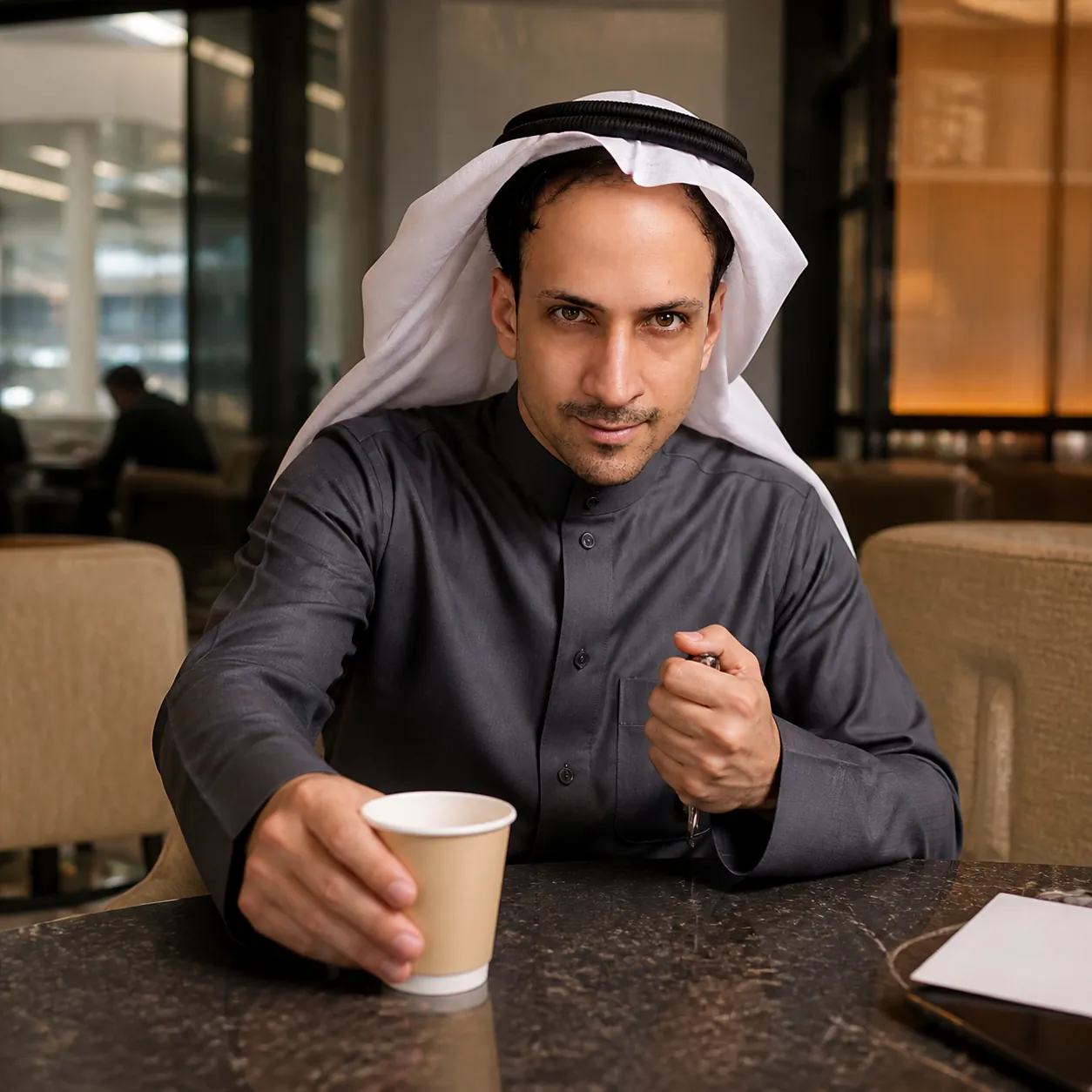
Paper Cup at the Terminal Café — AI Portrait Prompt
صورةAI Portraits

Turn your own photo into a portrait in an intercity terminal cafe corner where the next table has just emptied. Keeps your face unchanged.

من نص البرومبت

Use the attached reference photo as the identity reference: keep the same face, skin tone, hair and features as the person in that photo, without beautifying, aging or altering them. Create a square 1:1 museum-catalog frame with a strong first read and a slower second read at exactly 2880x2880 pixels. Location: an intercity terminal cafe corner where the next table has just emptied. Show the subject in a dark grey traditional Gulf outfit and a neatly folded white ghutra, sliding a paper cup into the middle of the table. Photograph this as though nothing were happening: a set of house keys still closed inside their fist, warmed to skin temperature, which they have not yet set down anywhere prices a calm that everyone else has always mistaken for a personality. Explore how an ordinary delay can be read as an invoice by anyone counting; expression composed and unremarkable, carrying mild readiness, the weight held just under the courtesy. Frame the subject at mid-torso from a seated companion's height so their hands and face share one plane. Make the composition let one finished task sit unnoticed at the frame's edge. Render it as museum-scale contemporary portraiture combining sober documentary craft, accurate everyday surfaces, believable clothing weight, and emotionally intelligent restraint, using an overhead room fitting left on at its ordinary evening brightness and a palette of sand beige, slate grey, and one deep amber accent. Photorealistic: this must read as a real photograph from a physical camera, never an illustration, painting, or 3D render. Resolve real surface detail: glass with real thickness at its edge, reflections that carry the room's actual colour, and dust visible only at grazing angles. Keep one identity-locked person, credible hands and fingers, natural fabric, and coherent scale, contact, reflections, shadows, airflow, deformation, and materials. Background people only when essential, always secondary and clearly different. Avoid head in hands, slumped shoulders, staring out of windows, visible tears, and sad-eyed lighting. No text, labels, logos, signatures, watermarks, random symbols, plastic skin, excessive bloom, or glossy AI finish.
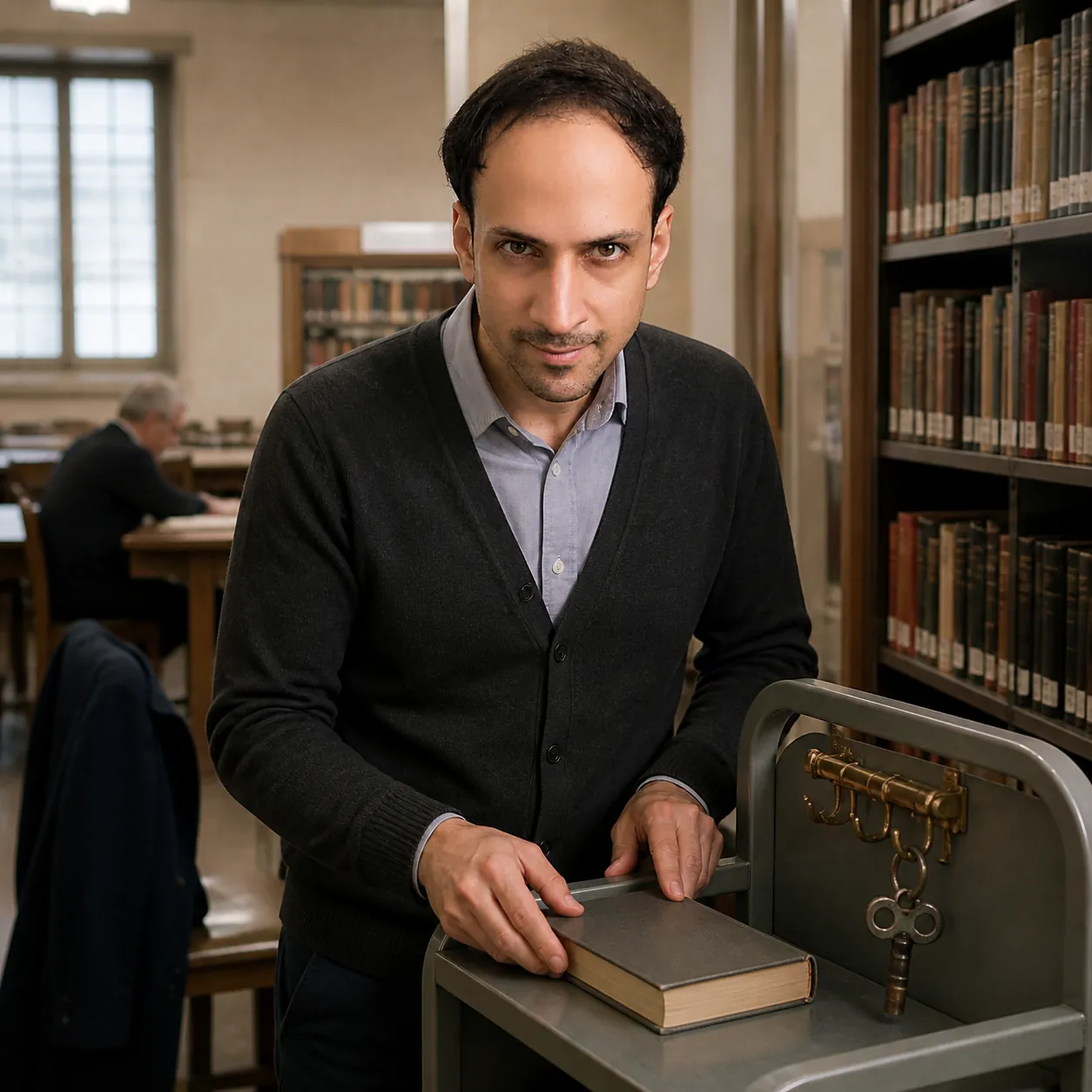
Library Returns and a Clock Key — AI Portrait Prompt
صورةAI Portraits

Turn your own photo into a modest editorial portrait in a library reading room with one other reader's coat on a chair. Keeps your face unchanged.

من نص البرومبت

Use the attached reference photo as the identity reference: keep the same face, skin tone, hair and features as the person in that photo, without beautifying, aging or altering them. Create a square 1:1 museum-catalog frame with a strong first read and a slower second read at exactly 2880x2880 pixels. Location: a library reading room with one other reader's coat on a chair. Show the subject in a thin charcoal cardigan over a plain buttoned shirt, laying a closed book flat on the returns trolley. Hide the whole argument in this ordinary moment: a clock key whose bow has worn thin on the two sides used by their fingers, hung on its own hook keeps an honest count of its own repetitions without asking anyone to notice. Explore how a person decides that tomorrow's identical task is not bad news; expression composed and unremarkable, carrying unhurried attention, the weight held entirely inside the routine. Use a steady waist-level 35mm framing that keeps the whole small task inside one honest rectangle. Make the composition give equal weight to their face and the used surface. Render it as modest editorial realism combining lived-in interior detail, physically correct wear patterns, sober color handling, and completely undramatic staging, using late-afternoon indoor light with no direct sun, cool and completely undramatic and a palette of sand beige, graphite, and a quiet stripe of brass. Photorealistic: this must read as a real photograph from a physical camera, never an illustration, painting, or 3D render. Resolve real surface detail: visible weave in cloth, fine scratches on metal, and the faint unevenness of painted walls. Keep one identity-locked person, credible hands and fingers, natural fabric, and coherent scale, contact, reflections, shadows, airflow, deformation, and materials. Background people only when essential, always secondary and clearly different. Avoid visible sadness, head-in-hands poses, staring out of windows, sighing postures, and any object announcing illness. No text, labels, logos, signatures, watermarks, random symbols, plastic skin, excessive bloom, or glossy AI finish.
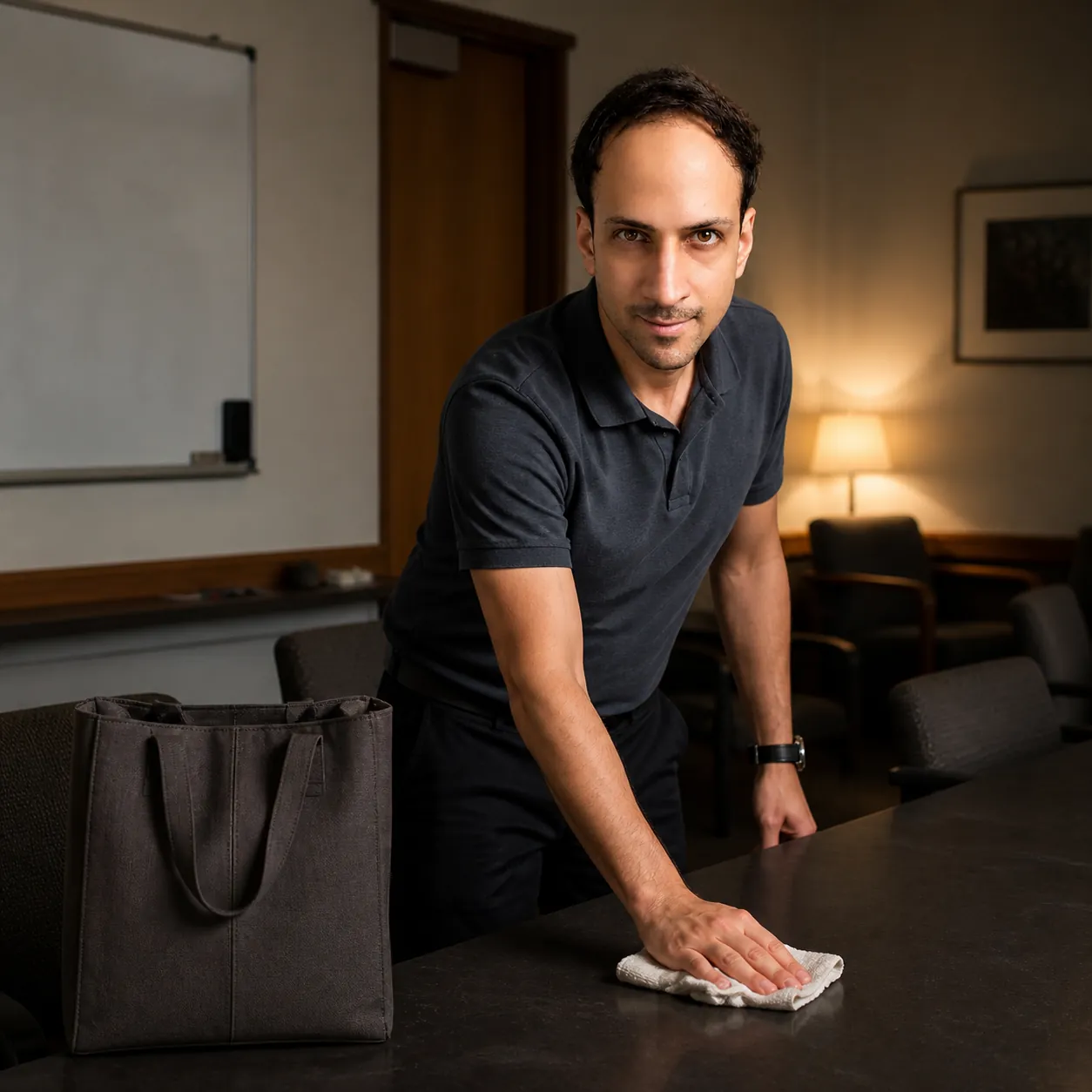
Wiping the Far End of the Table — AI Portrait Prompt
صورةAI Portraits

Turn your own photo into a museum-scale contemporary portrait in a university staff room emptying out after a long afternoon meeting. Keeps your face unchanged.

من نص البرومبت

Use the attached reference photo as the identity reference: keep the same face, skin tone, hair and features as the person in that photo, without beautifying, aging or altering them. Create a square 1:1 museum-catalog frame with a strong first read and a slower second read at exactly 2880x2880 pixels. Location: a university staff room emptying out after a long afternoon meeting. Show the subject in a slate knit polo tucked into dark chinos, wiping the table's far end with a folded cloth. Build the frame on this unremarkable detail: a bag set down upright and squared to the surface, whose handles still hold the shape their grip pressed into them prices a calm that everyone else has always mistaken for a personality. Explore whether equanimity is a trait they have or a purchase they keep making; expression composed and unremarkable, carrying quiet competence, the weight held somewhere after this hour. Shoot at 85mm from standing height so the surface near their hand stays fully readable. Make the composition read as an ordinary photograph until the second look. Render it as museum-scale contemporary portraiture combining sober documentary craft, accurate everyday surfaces, believable clothing weight, and emotionally intelligent restraint, using one warm lamp near the seating with the rest of the room dim and a palette of warm grey, unbleached linen, and one muted brass accent. Photorealistic: this must read as a real photograph from a physical camera, never an illustration, painting, or 3D render. Resolve real surface detail: label-free packaging showing carton fibre, cardboard bruised at the corners, and tape lifting slightly at one end. Keep one identity-locked person, credible hands and fingers, natural fabric, and coherent scale, contact, reflections, shadows, airflow, deformation, and materials. Background people only when essential, always secondary and clearly different. Avoid head in hands, slumped shoulders, staring out of windows, visible tears, and sad-eyed lighting. No text, labels, logos, signatures, watermarks, random symbols, plastic skin, excessive bloom, or glossy AI finish.
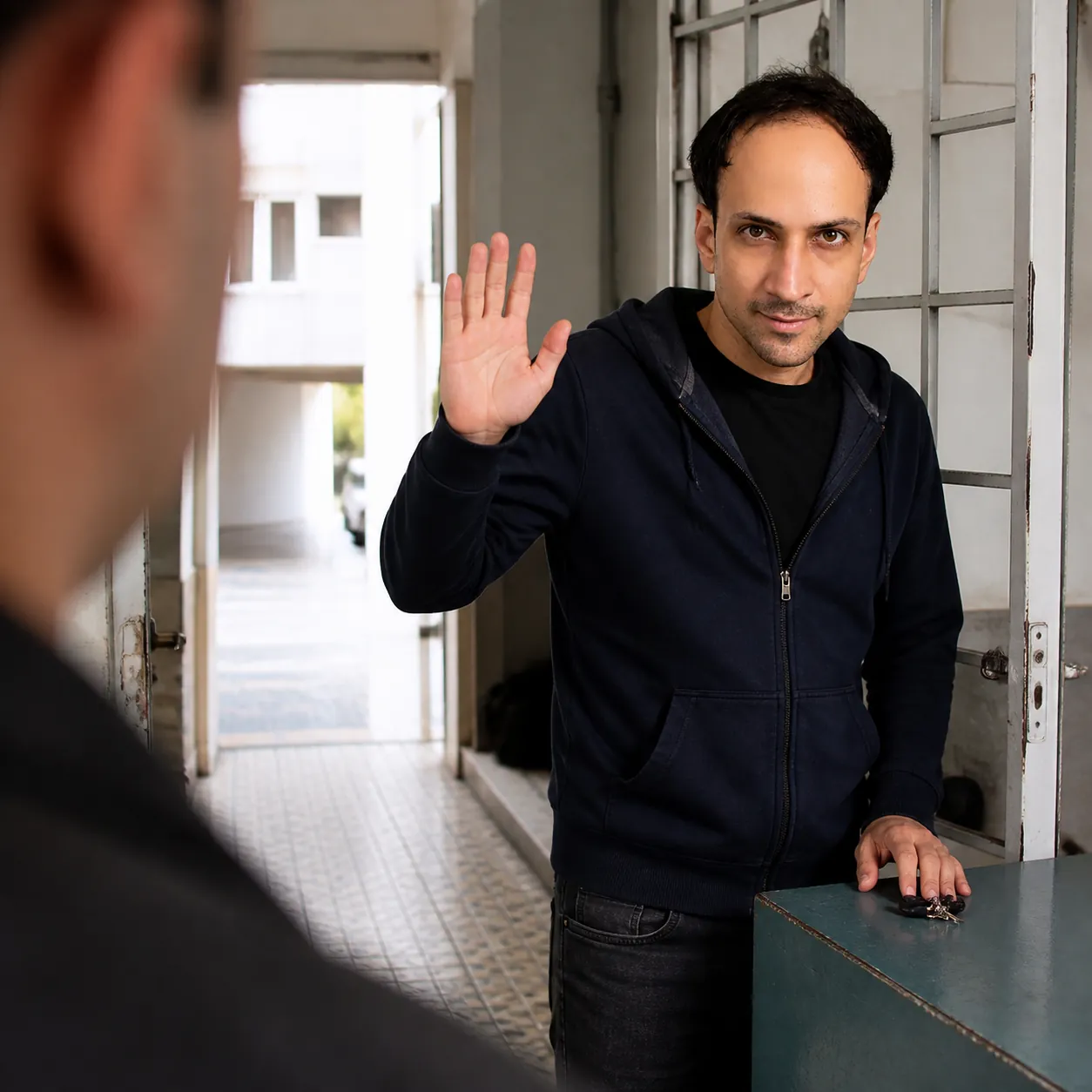
A Greeting Without Breaking Stride — AI Portrait Prompt
صورةAI Portraits

Turn your own photo into a portrait in a residential building entrance where the guard's chair stands beside the door. Keeps your face unchanged.

من نص البرومبت

Use the attached reference photo as the identity reference: keep the same face, skin tone, hair and features as the person in that photo, without beautifying, aging or altering them. Create a square 1:1 museum-catalog frame with a strong first read and a slower second read at exactly 2880x2880 pixels. Location: a residential building entrance where the guard's chair stands beside the door. Show the subject in a navy zip-up hoodie over a plain tee and dark jeans, lifting one hand in greeting without breaking stride. Make this the only tell, easy to miss: a small object their hand lifted and returned to the same patch of surface it had occupied a moment earlier says the closest true thing the available language will actually hold. Explore what the timing of an answer reports that its wording never could; expression composed and unremarkable, carrying steady friendliness, the weight held without disturbing the exchange. Place the lens slightly behind a second person's shoulder, keeping that shoulder soft and never blocking them. Make the composition give the delayed hand as much space as the face. Render it as unforced documentary portraiture built from natural domestic staging, honest skin rendering, restrained contemporary styling, and patient observational timing, using overhead office fluorescents evened out by daylight from the corridor beyond and a palette of cool concrete, off-white, and a single dusty teal. Photorealistic: this must read as a real photograph from a physical camera, never an illustration, painting, or 3D render. Resolve real surface detail: grout darker than tile, sealant slightly yellowed, and every joint showing a real tolerance gap. Keep one identity-locked person, credible hands and fingers, natural fabric, and coherent scale, contact, reflections, shadows, airflow, deformation, and materials. Background people only when essential, always secondary and clearly different. Avoid tears, head in hands, staring through windows, hunched silhouettes, and any object announcing illness. No text, labels, logos, signatures, watermarks, random symbols, plastic skin, excessive bloom, or glossy AI finish.
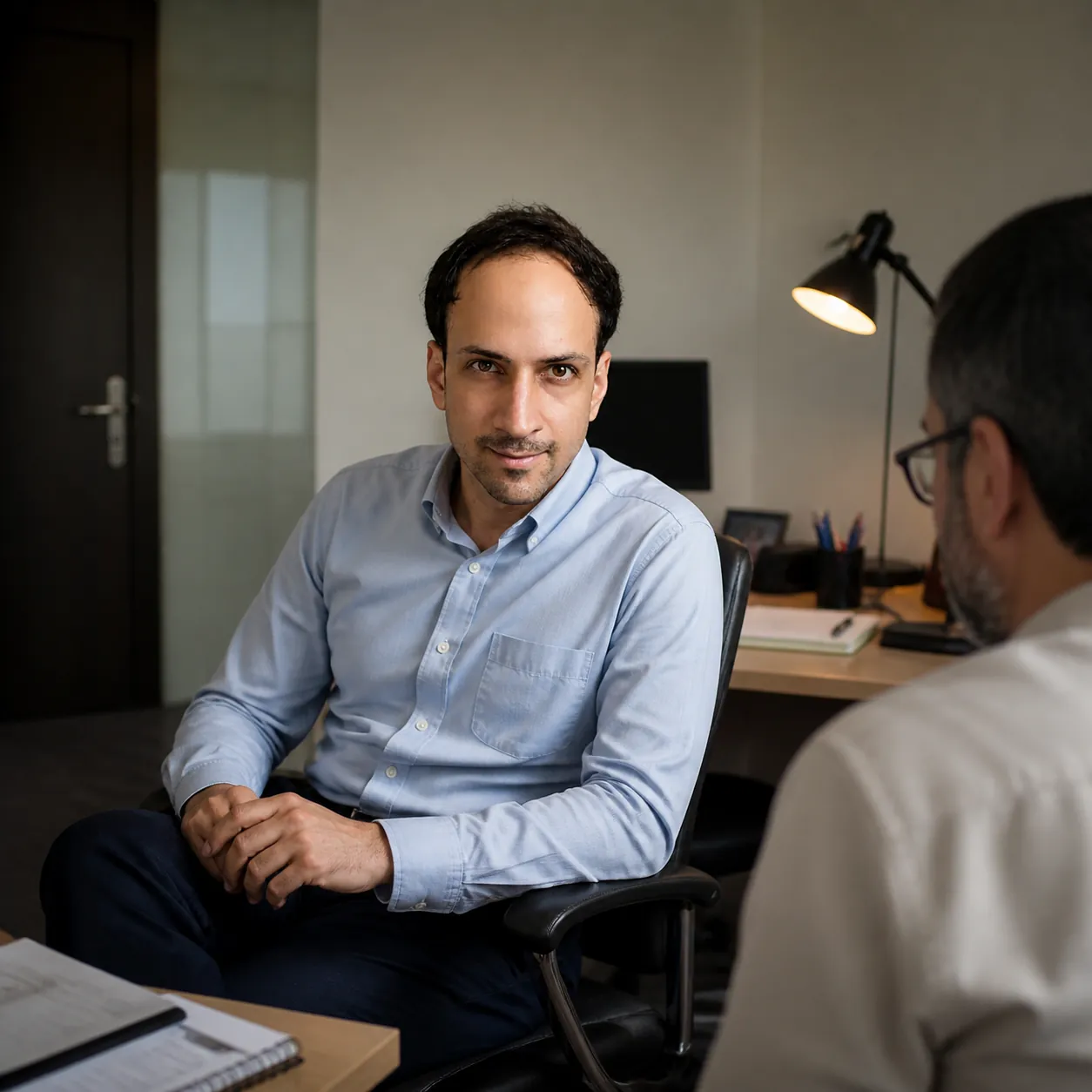
A Quarter Turn Toward the Door — AI Portrait Prompt
صورةAI Portraits

Turn your own photo into a photorealistic portrait in a shared university office where a colleague's desk faces the far wall. Keeps your face unchanged.

من نص البرومبت

Use the attached reference photo as the identity reference: keep the same face, skin tone, hair and features as the person in that photo, without beautifying, aging or altering them. Create a square 1:1 museum-catalog frame with a strong first read and a slower second read at exactly 2880x2880 pixels. Location: a shared university office where a colleague's desk faces the far wall. Show the subject in a light blue oxford shirt tucked into pressed navy trousers, turning their chair a quarter turn toward the open door. Photograph this as though nothing were happening: a chin still lowered from a second nod the moment never required, the first already taken as a complete answer spends time where a sentence should have gone and loses nothing. Explore whether a state without a name is any less real for lacking one; expression composed and unremarkable, carrying everyday warmth, the weight held inside the ordinary tempo. Frame the subject at chest height so their hands and face stay equally readable in one plane. Make the composition keep the second person partial and never the focus. Render it as plain reportage photography made from ordinary contemporary Saudi interiors, believable props, natural posture, and completely undramatic lighting choices, using late-day interior light already turning grey, with one lamp switched on early and a palette of soft bone, dark charcoal, and a low amber note. Photorealistic: this must read as a real photograph from a physical camera, never an illustration, painting, or 3D render. Resolve real surface detail: skin that reddens slightly under pressure, nail beds with honest colour, and knuckle creases that fold rather than blur. Keep one identity-locked person, credible hands and fingers, natural fabric, and coherent scale, contact, reflections, shadows, airflow, deformation, and materials. Background people only when essential, always secondary and clearly different. Avoid rain-streaked glass, shadow-bar drama, clasped praying hands, symbolic empty chairs, and heroic poster framing. No text, labels, logos, signatures, watermarks, random symbols, plastic skin, excessive bloom, or glossy AI finish.
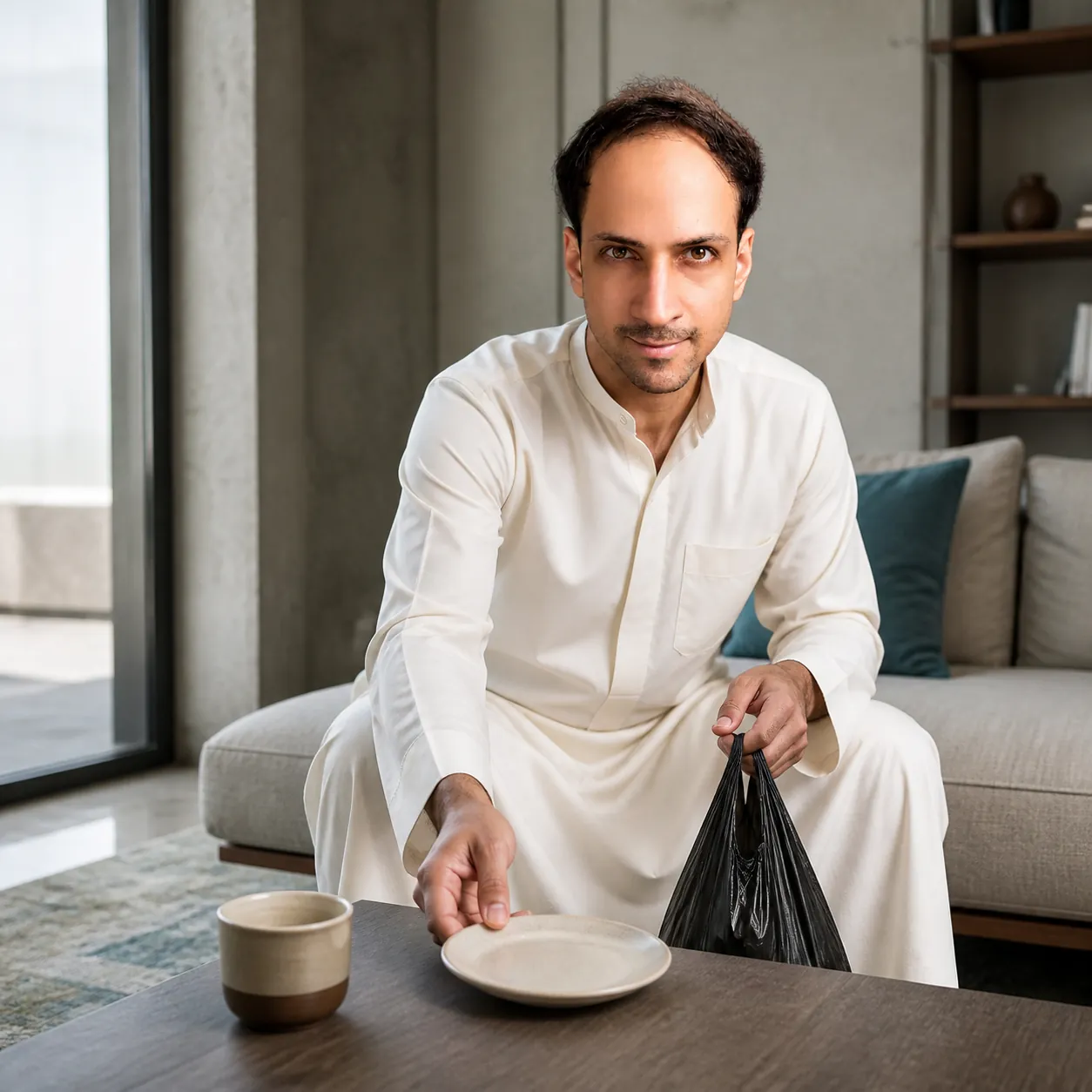
Gathering the Empty Plate — AI Portrait Prompt
صورةAI Portraits

Turn your own photo into a quiet editorial portrait in a family sitting room with another cup already on the low table. Keeps your face unchanged.

من نص البرومبت

Use the attached reference photo as the identity reference: keep the same face, skin tone, hair and features as the person in that photo, without beautifying, aging or altering them. Create a square 1:1 museum-catalog frame with a strong first read and a slower second read at exactly 2880x2880 pixels. Location: a family sitting room with another cup already on the low table. Show the subject in an ivory traditional Gulf outfit with the collar open and no ghutra, gathering an empty plate from the low table. Let the weight sit here and look like nothing: a bag still hanging from two fingers beside a clear surface that has been free since well before they stopped walking says the closest true thing the available language will actually hold. Explore why the smallest polite word is sometimes the most exact one available; expression composed and unremarkable, carrying mild attentiveness, the weight held below the reach of words. Use an eye-level 50mm view at conversational distance, natural perspective and a shallow but honest depth. Make the composition read as an unremarkable snapshot until the timing detail registers. Render it as quiet editorial realism combining true-to-life interiors, accurate everyday clothing, unposed body language, and photography that refuses to dramatize, using open shade from a covered walkway, contrast low and skin texture visible and a palette of cool concrete, off-white, and a single dusty teal. Photorealistic: this must read as a real photograph from a physical camera, never an illustration, painting, or 3D render. Resolve real surface detail: fine grit in the texture of concrete, efflorescence at damp edges, and hairline cracks that follow stress. Keep one identity-locked person, credible hands and fingers, natural fabric, and coherent scale, contact, reflections, shadows, airflow, deformation, and materials. Background people only when essential, always secondary and clearly different. Avoid tears, head in hands, staring through windows, hunched silhouettes, and any object announcing illness. No text, labels, logos, signatures, watermarks, random symbols, plastic skin, excessive bloom, or glossy AI finish.
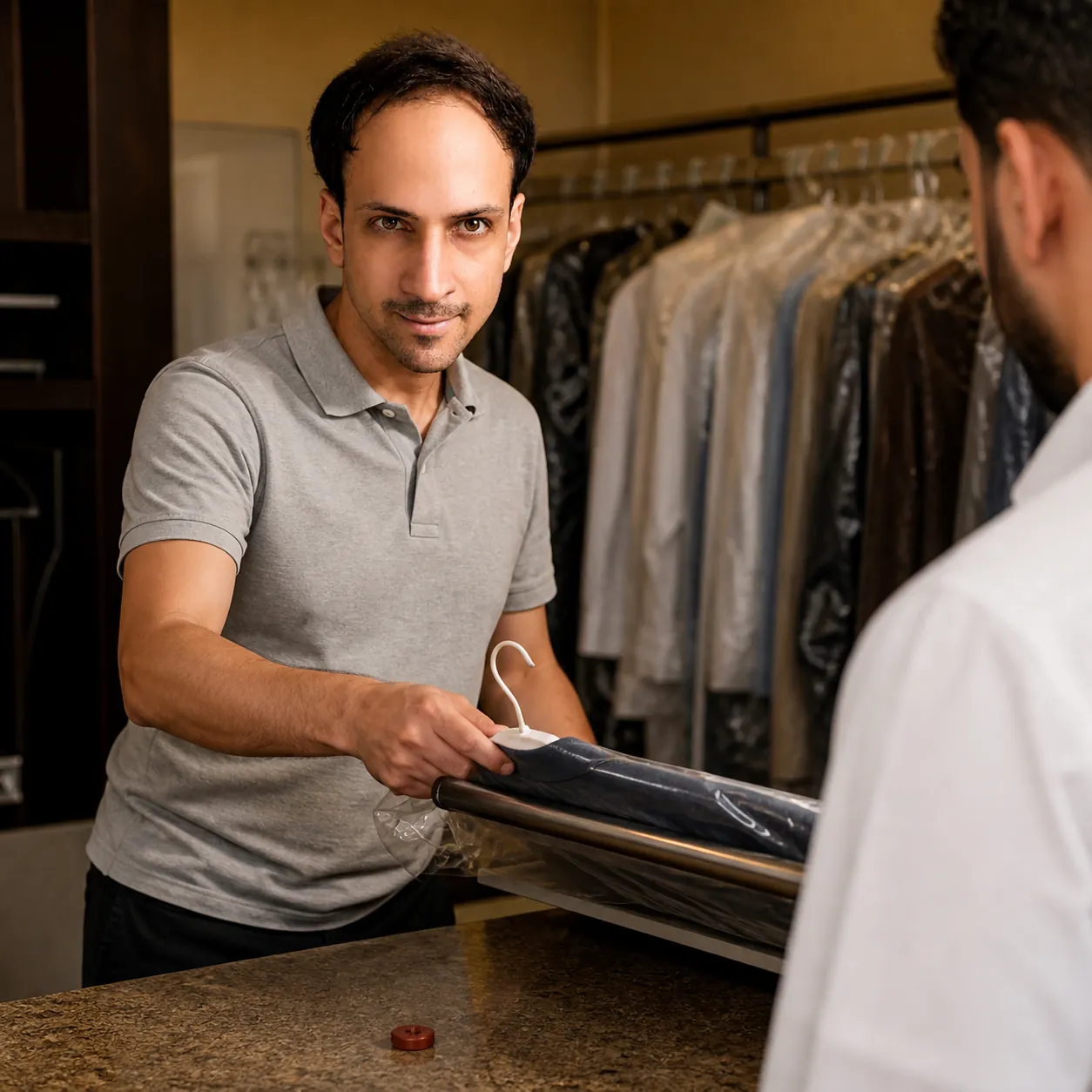
Hanger Along the Counter Rail — AI Portrait Prompt
صورةAI Portraits

Turn your own photo into a photorealistic portrait in a dry cleaner's counter where pressed garments turn on the rail behind. Keeps your face unchanged.

من نص البرومبت

Use the attached reference photo as the identity reference: keep the same face, skin tone, hair and features as the person in that photo, without beautifying, aging or altering them. Create a square 1:1 museum-catalog frame with a strong first read and a slower second read at exactly 2880x2880 pixels. Location: a dry cleaner's counter where pressed garments turn on the rail behind. Show the subject in a stone-grey polo and dark trousers with one folded cuff, sliding a hanger along the counter rail toward the attendant. Hide the whole argument in this ordinary moment: a small object their hand lifted and returned to the same patch of surface it had occupied a moment earlier spends time where a sentence should have gone and loses nothing. Explore what the timing of an answer reports that its wording never could; expression composed and unremarkable, carrying workaday patience, the weight held under a level, unhurried voice. Use a 35mm three-quarter view close enough to include one nearby sleeve that is not theirs. Make the composition hold one area of stillness inside an otherwise ordinary room. Render it as plain reportage photography made from ordinary contemporary Saudi interiors, believable props, natural posture, and completely undramatic lighting choices, using one warm ceiling fitting doing all the work in an ordinary room and a palette of sand beige, dark brown, and one brick-red thread. Photorealistic: this must read as a real photograph from a physical camera, never an illustration, painting, or 3D render. Resolve real surface detail: rubber gone chalky with age, painted metal chipped to primer, and plastic yellowed only where light reaches it. Keep one identity-locked person, credible hands and fingers, natural fabric, and coherent scale, contact, reflections, shadows, airflow, deformation, and materials. Background people only when essential, always secondary and clearly different. Avoid rain-streaked glass, shadow-bar drama, clasped praying hands, symbolic empty chairs, and heroic poster framing. No text, labels, logos, signatures, watermarks, random symbols, plastic skin, excessive bloom, or glossy AI finish.
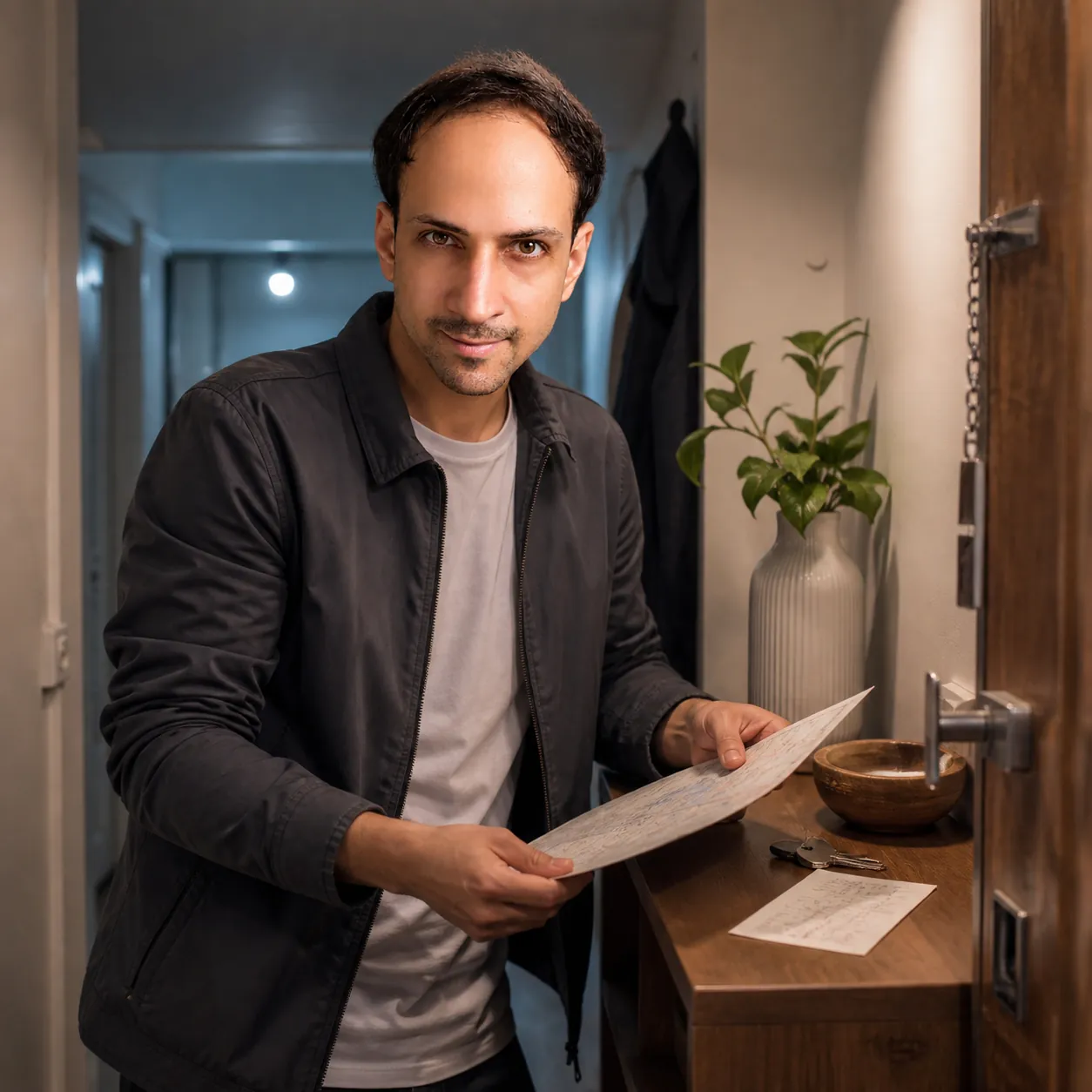
Route Card on the Hall Shelf — AI Portrait Prompt
صورةAI Portraits

Turn your own photo into a quiet civic-documentary portrait in a narrow apartment entrance hall with a shelf beside the door. Keeps your face unchanged.

من نص البرومبت

Use the attached reference photo as the identity reference: keep the same face, skin tone, hair and features as the person in that photo, without beautifying, aging or altering them. Create a square 1:1 museum-catalog frame with a strong first read and a slower second read at exactly 2880x2880 pixels. Location: a narrow apartment entrance hall with a shelf beside the door. Show the subject in a charcoal zip-front jacket over a plain white tee, unfolding a route card flat on the hall shelf. Let one honest object carry what the face will not: a pencilled route line on a scrap card that stays weighted under the door keys, its turnings already walked twice indoors turns an ordinary errand into the day's largest piece of engineering. Explore why a twelve-minute errand needs a morning of planning nobody will ever see; expression occupied, not expressive, carrying logistical calm, difficulty stated as logistics rather than lament. Use a 50mm eye-level view from inside the room with the doorway kept at the edge. Make the composition give the object they are handling more acuity than the room. Render it as quiet civic-documentary portraiture built from real errand logistics, contemporary Saudi street texture, honest domestic materials, and unhurried observational framing, using one sodium streetlight reaching a doorway with cool interior spill behind them and a palette of concrete grey, cold white, and one sodium-orange accent. Photorealistic: this must read as a real photograph from a physical camera, never an illustration, painting, or 3D render. Resolve real surface detail: true skin texture with pores and fine hair at the hairline, and fabric that creases where it is actually stressed. Keep one identity-locked person, credible hands and fingers, natural fabric, and coherent scale, contact, reflections, shadows, airflow, deformation, and materials. Background people only when essential, always secondary and clearly different. Avoid hero-poster stances, golden-hour wellness glow, posing at camera, and chest-clutching gestures. No text, labels, logos, signatures, watermarks, random symbols, plastic skin, excessive bloom, or glossy AI finish.
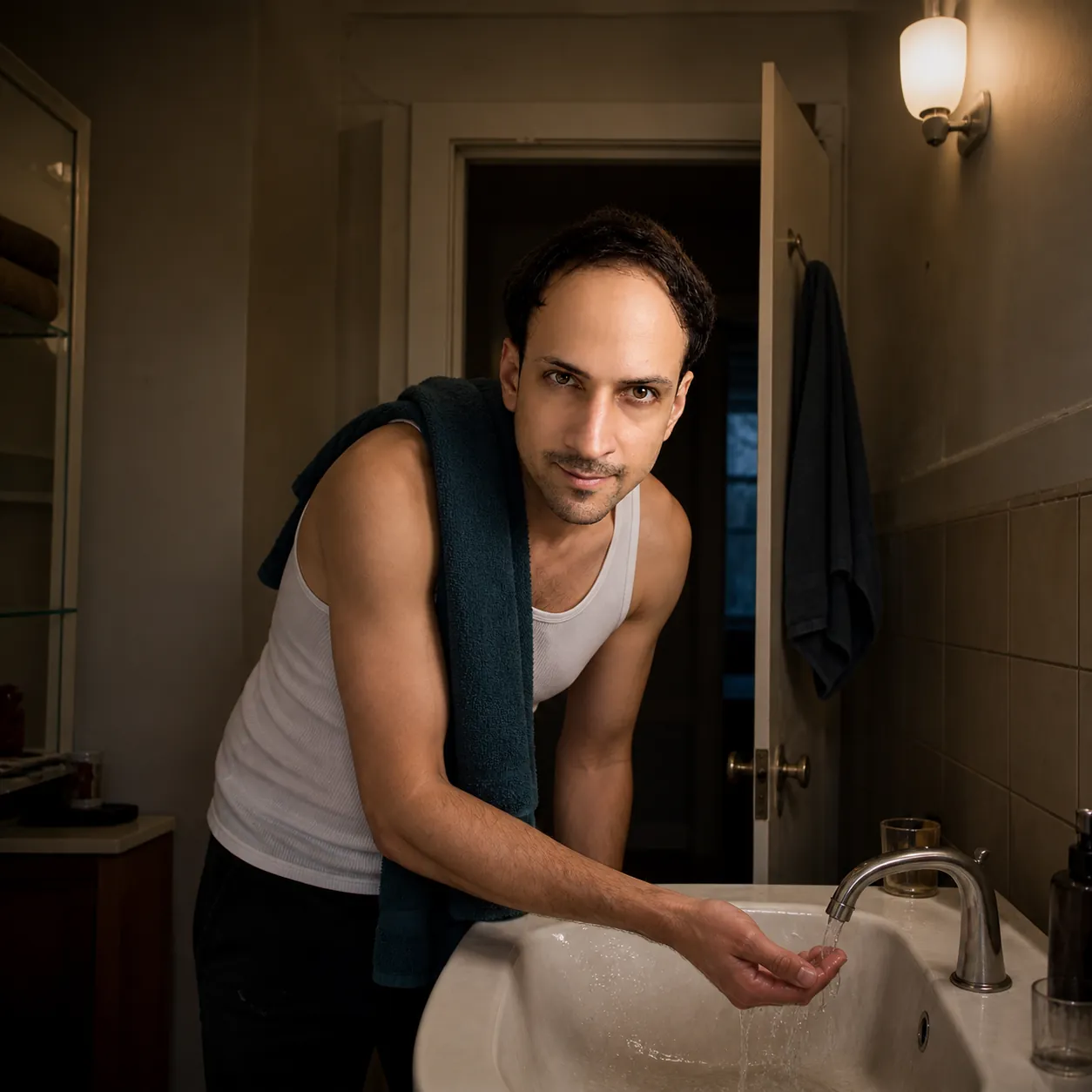
Rinsing the Basin, Door Hooked Open — AI Portrait Prompt
صورةAI Portraits

Turn your own photo into a museum-grade domestic portrait in a bathroom lit by one wall lamp, its door hooked open. Keeps your face unchanged.

من نص البرومبت

Use the attached reference photo as the identity reference: keep the same face, skin tone, hair and features as the person in that photo, without beautifying, aging or altering them. Create a square 1:1 museum-catalog frame with a strong first read and a slower second read at exactly 2880x2880 pixels. Location: a bathroom lit by one wall lamp, its door hooked open. Show them in a plain white undershirt with a towel across one shoulder, rinsing the basin down with one cupped hand. The difficulty must be visible in this, not in their expression: a fan left off for weeks, switched on at last, its noise finally allowed to cover the hall holds an ordinary task open a moment longer than the task requires. Explore what a room costs when every sound in it must first be named; expression occupied, not expressive, carrying level attention, difficulty stated without ever naming a reason. Frame from the near corner at standing height with their hands closest to camera. Make the composition let their standing position read before the chore does. Render it as museum-grade domestic realism built from reportage portraiture, true material response, plain interior architecture, and restrained contemporary art direction, using low evening interior light with the far rooms left dimmer and a palette of sand beige, concrete grey, and one teal towel. Photorealistic: this must read as a real photograph from a physical camera, never an illustration, painting, or 3D render. Resolve real surface detail: thread ends and slight pilling on worn cloth, hairline chips at every hard corner, and stone that is porous rather than smooth. Keep one identity-locked person, credible hands and fingers, natural fabric, and coherent scale, contact, reflections, shadows, airflow, deformation, and materials. Background people only when essential, always secondary and clearly different. Avoid thriller shadows, keyhole peering, weapons or uniforms, and staged startle reactions. No text, labels, logos, signatures, watermarks, random symbols, plastic skin, excessive bloom, or glossy AI finish.
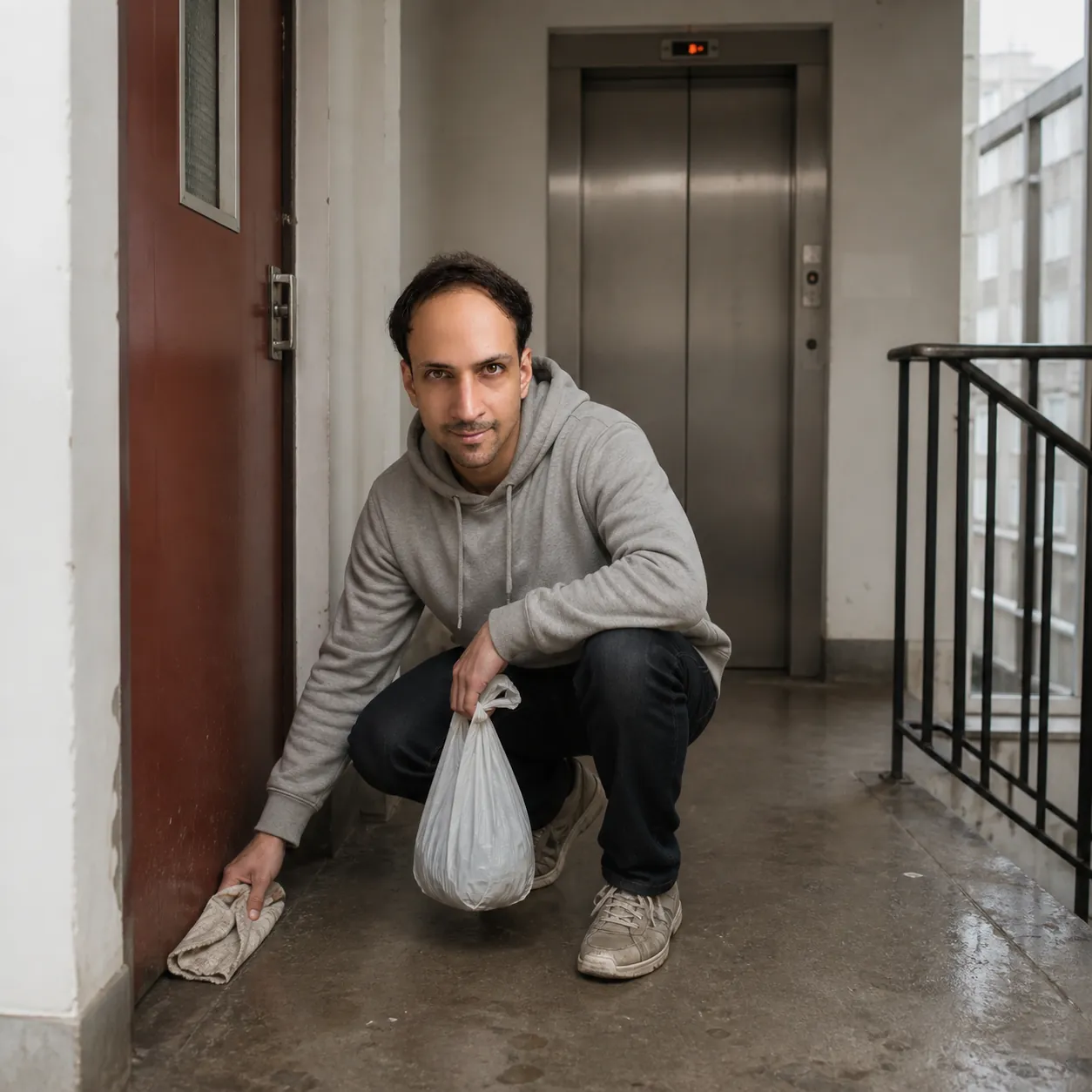
Cloth Under the Fire Door — AI Portrait Prompt
صورةAI Portraits

Turn your own photo into a portrait in a tower block's upper stairwell landing beside a closed lift lobby. Keeps your face unchanged.

من نص البرومبت

Use the attached reference photo as the identity reference: keep the same face, skin tone, hair and features as the person in that photo, without beautifying, aging or altering them. Create a square 1:1 museum-catalog frame with a strong first read and a slower second read at exactly 2880x2880 pixels. Location: a tower block's upper stairwell landing beside a closed lift lobby. Show the subject in a light grey hoodie over dark jeans and worn trainers, wedging a folded cloth under the fire door. Let one honest object carry what the face will not: a single bought item in a bag folded small, carried from a shop that was entered and left inside its quietest minutes turns an ordinary errand into the day's largest piece of engineering. Explore why an exit has to be located before an errand can begin; expression occupied, not expressive, carrying earned matter-of-factness, difficulty stated quietly enough to require attention. Use a 50mm eye-level view from inside the room with the doorway kept at the edge. Make the composition give the object they are handling more acuity than the room. Render it as gallery-scale observational realism combining tactile household objects, truthful stairwell and forecourt materials, natural fabric behaviour, and calm human-centred composition, using even overcast daylight entering a shopfront with no warm colour push and a palette of smoke grey, bone white, and one faded shopfront red. Photorealistic: this must read as a real photograph from a physical camera, never an illustration, painting, or 3D render. Resolve real surface detail: fine lint on dark fabric, water spotting on steel, and the soft rounding of edges that have been used for years. Keep one identity-locked person, credible hands and fingers, natural fabric, and coherent scale, contact, reflections, shadows, airflow, deformation, and materials. Background people only when essential, always secondary and clearly different. Avoid hero-poster stances, golden-hour wellness glow, posing at camera, and chest-clutching gestures. No text, labels, logos, signatures, watermarks, random symbols, plastic skin, excessive bloom, or glossy AI finish.
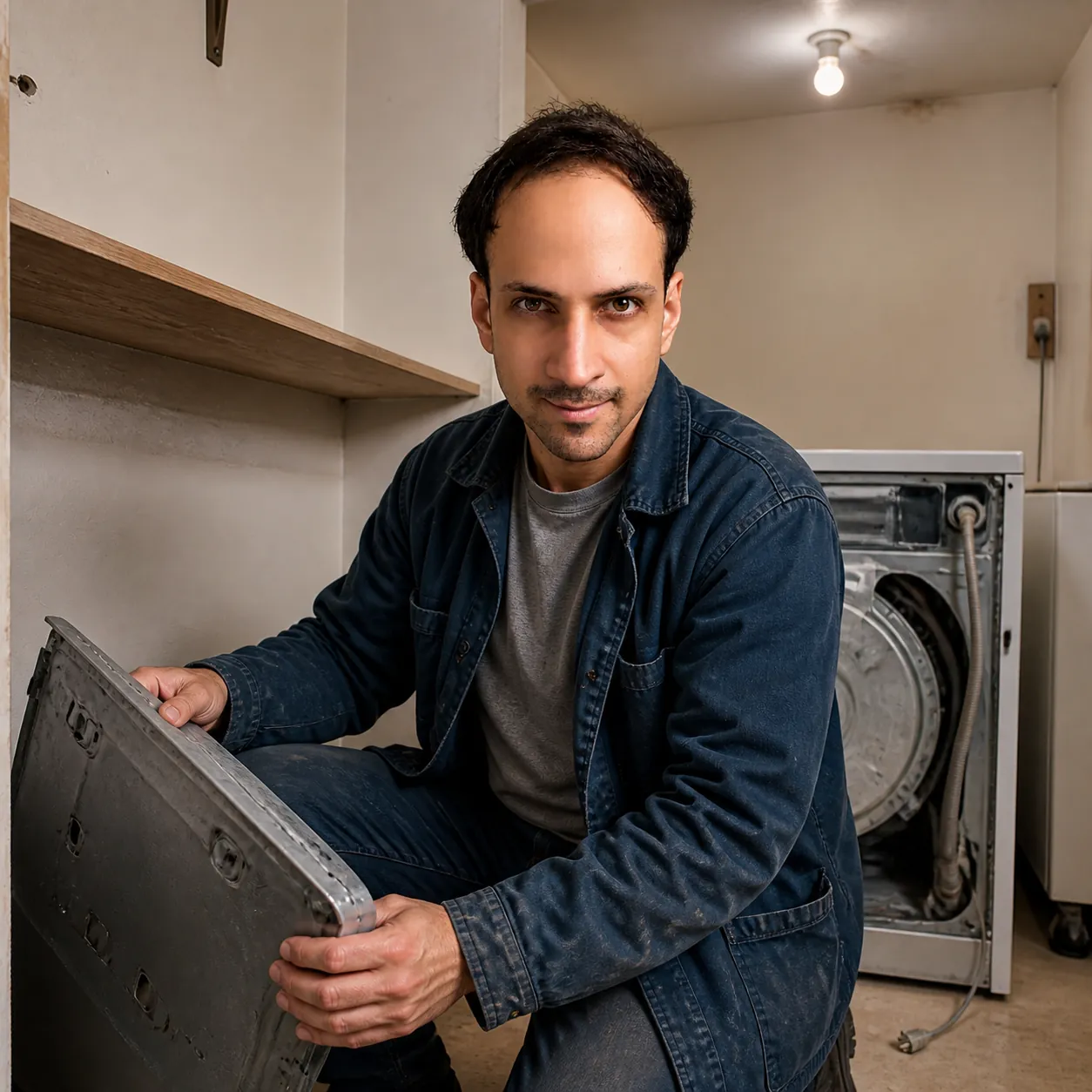
A Dust Line in the Laundry Corner — AI Portrait Prompt
صورةAI Portraits

Turn your own photo into an archival still-life portrait in a laundry corner where a stopped washing machine stands unplugged. Keeps your face unchanged.

من نص البرومبت

Use the attached reference photo as the identity reference: keep the same face, skin tone, hair and features as the person in that photo, without beautifying, aging or altering them. Create a square 1:1 museum-catalog frame with a strong first read and a slower second read at exactly 2880x2880 pixels. Location: a laundry corner where a stopped washing machine stands unplugged. Show the subject in a worn indigo chore jacket over a grey tee, leaning a removed back panel against the wall. Anchor the frame to this piece of ordinary evidence: a single cleared shelf whose pale dust line still shows the footprint of everything just carried out of the room shows care and accumulation arriving from exactly the same impulse. Explore where the work actually happens when nothing in the room appears to move; expression occupied, not expressive, carrying worn diligence, difficulty stated as arithmetic rather than confession. Place the camera at shelf height so held objects meet the lens squarely. Make the composition weight the frame toward what stays rather than what leaves. Render it as archival still-life portraiture combining catalogue-clear object rendering, believable domestic wear, controlled neutral colour, and patient unstyled editorial realism, using one bare ceiling fitting doing all the work, shadows short and honest and a palette of pale gypsum, tea-stained paper, and a narrow rust accent. Photorealistic: this must read as a real photograph from a physical camera, never an illustration, painting, or 3D render. Resolve real surface detail: hair with individual strands catching light, short hairs of uneven length, and skin oil giving a low uneven sheen. Keep one identity-locked person, credible hands and fingers, natural fabric, and coherent scale, contact, reflections, shadows, airflow, deformation, and materials. Background people only when essential, always secondary and clearly different. Avoid clear-out crews, shame poses, posing at camera, teetering junk towers, and melancholy without labour. No text, labels, logos, signatures, watermarks, random symbols, plastic skin, excessive bloom, or glossy AI finish.
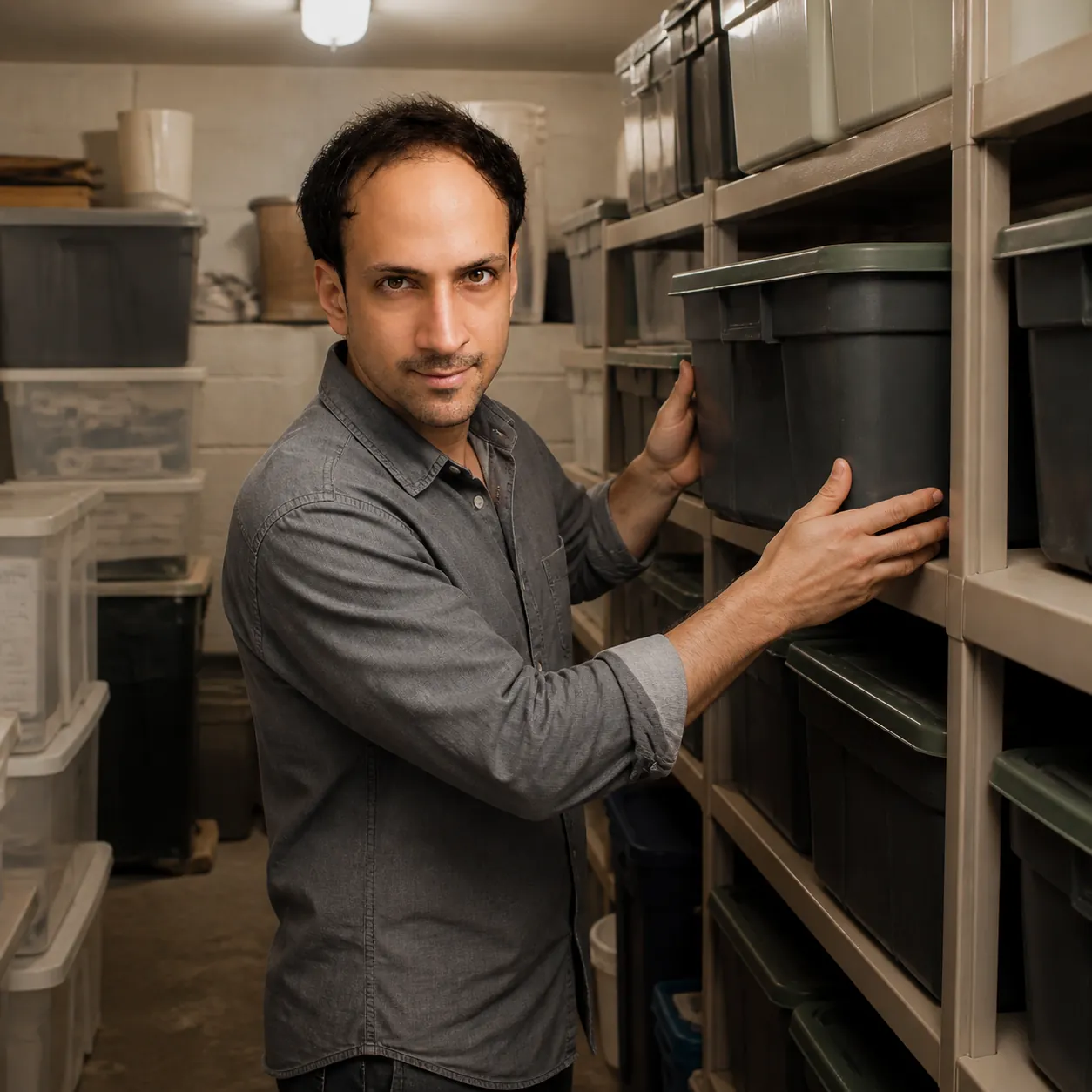
One Tub Out of Place — AI Portrait Prompt
صورةAI Portraits

Turn your own photo into an observational still-life portrait in a windowless storage room lined with plastic tubs and shelving. Keeps your face unchanged.

من نص البرومبت

Use the attached reference photo as the identity reference: keep the same face, skin tone, hair and features as the person in that photo, without beautifying, aging or altering them. Create a square 1:1 museum-catalog frame with a strong first read and a slower second read at exactly 2880x2880 pixels. Location: a windowless storage room lined with plastic tubs and shelving. Show the subject in an untucked grey button-down with the cuffs turned back once, sliding a stacked tub back into its slot. Make this piece of unglamorous evidence the whole argument: a pair of near-identical boxes side by side, the newer a replacement that is wrong in one load-bearing way carries a whole routine on one part that nobody outside would notice. Explore why one substituted item can cost an entire afternoon of rebuilding; expression occupied, not expressive, carrying practical stubbornness, difficulty stated quietly, in the objects alone. Use a slightly high 40mm angle that shows the whole interrupted arrangement at once. Make the composition let the routine's line visibly break at one point. Render it as observational still-life portraiture built from real household objects, matter-of-fact framing, accurate fabric behavior, and gallery-scale detail without polish, using one ceiling fitting doing all the work, shadows soft and low and a palette of pale sand, soft charcoal, and faded plastic green. Photorealistic: this must read as a real photograph from a physical camera, never an illustration, painting, or 3D render. Resolve real surface detail: paper fibre visible at cut edges, plastic that shows mould lines, and paint thicker where a brush turned. Keep one identity-locked person, credible hands and fingers, natural fabric, and coherent scale, contact, reflections, shadows, airflow, deformation, and materials. Background people only when essential, always secondary and clearly different. Avoid melancholy posed at windows, showroom kitchens, hands clutching the head, inspirational lighting, and clockwork-brain imagery. No text, labels, logos, signatures, watermarks, random symbols, plastic skin, excessive bloom, or glossy AI finish.
The Second Knot — AI Portrait Prompt
صورةAI Portraits

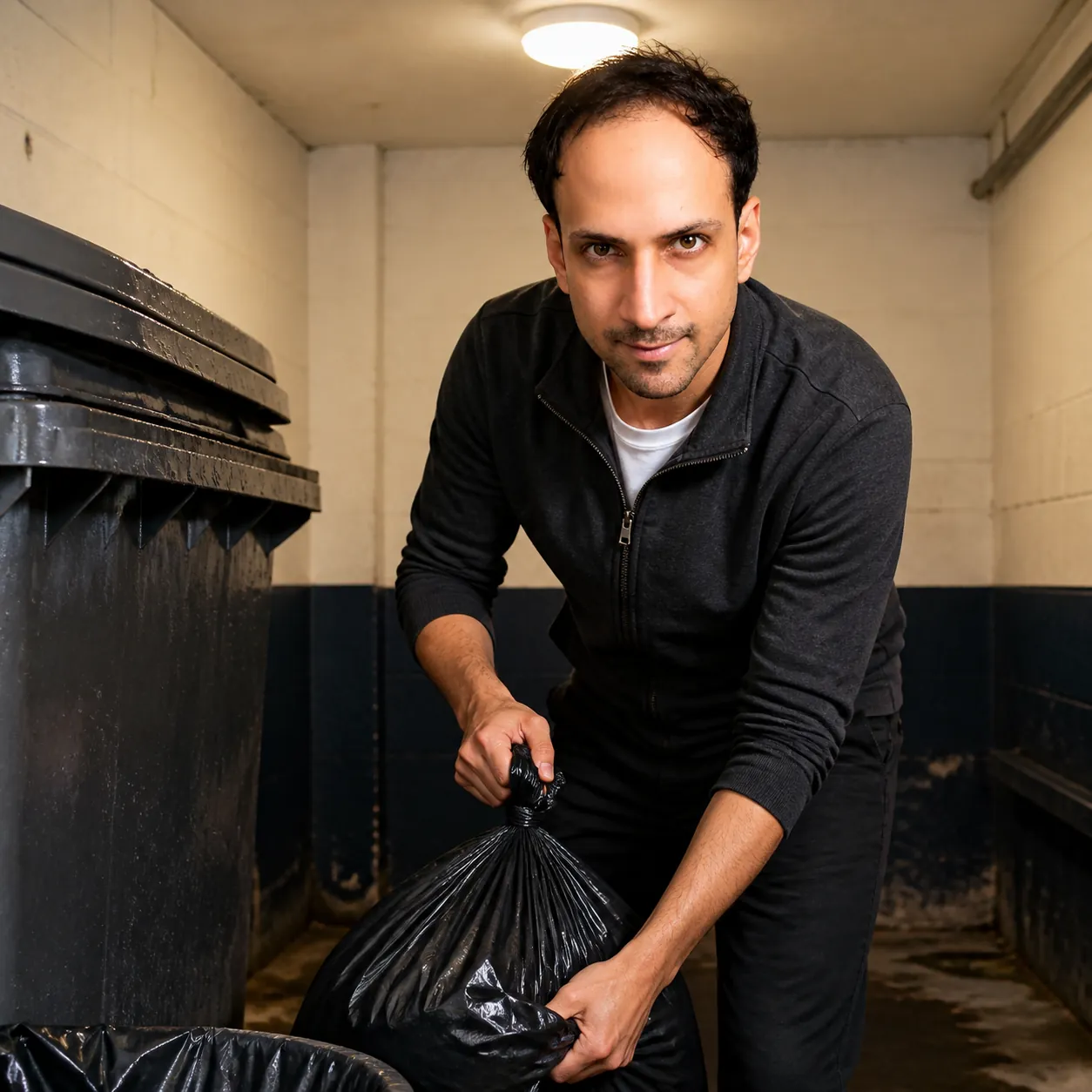
Turn your own photo into a museum-grade observational portrait in a ground-floor bin store behind an apartment block's rear door. Keeps your face unchanged.

من نص البرومبت

Use the attached reference photo as the identity reference: keep the same face, skin tone, hair and features as the person in that photo, without beautifying, aging or altering them. Create a square 1:1 museum-catalog frame with a strong first read and a slower second read at exactly 2880x2880 pixels. Location: a ground-floor bin store behind an apartment block's rear door. Show them in a dark grey zip-front sweatshirt over a white tee, setting a knotted liner down beside the wheeled bin. Build the image around this small, exact tableau: a bin liner given a second knot before it leaves the cupboard, one knot never being enough against the smell shows competence and difficulty occupying the same square metre of floor. Explore whether an accommodation is a limitation or simply the correct tool selected; expression occupied, not expressive, carrying level concentration, difficulty stated without inviting sympathy. Frame at chest height so the accommodation and their occupied face share one honest plane. Make the composition place the source of the load outside their line of sight. Render it as museum-grade observational portraiture built from ordinary domestic labour, accurate surface texture, plain interior architecture, and restrained contemporary art direction, using one ceiling fitting doing all the work, shadows short and plain and a palette of chalk white, deep charcoal, and one faded indigo. Photorealistic: this must read as a real photograph from a physical camera, never an illustration, painting, or 3D render. Resolve real surface detail: condensation beading at true size, liquid meniscus curving against glass, and wet surfaces darker than dry ones. Keep one identity-locked person, credible hands and fingers, natural fabric, and coherent scale, contact, reflections, shadows, airflow, deformation, and materials. Background people only when essential, always secondary and clearly different. Avoid glowing sound waves, sensory-overload blur effects, and mood portraits without labour. No text, labels, logos, signatures, watermarks, random symbols, plastic skin, excessive bloom, or glossy AI finish.
Squaring the Majlis Table — AI Portrait Prompt
صورةAI Portraits

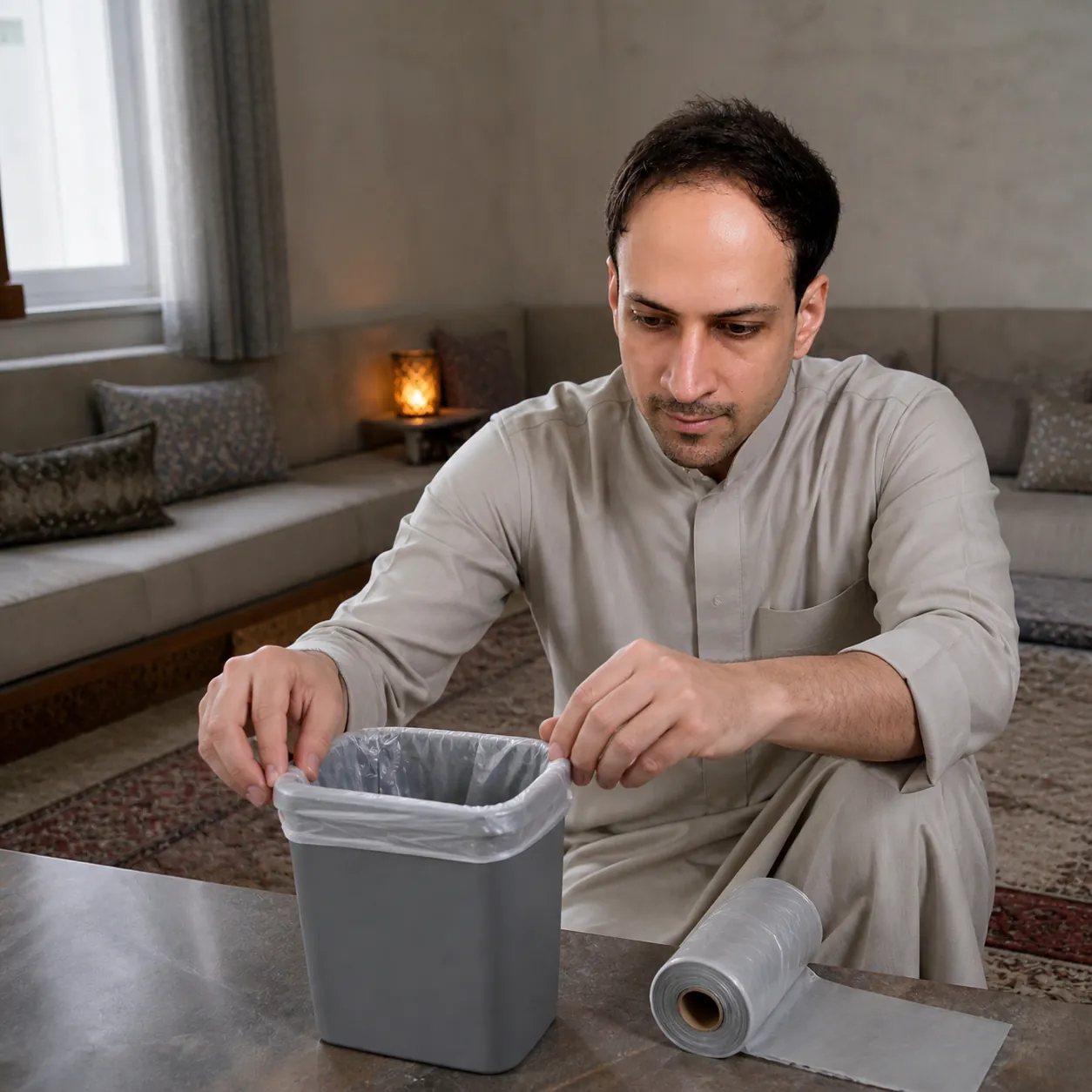
Turn your own photo into a photorealistic portrait in a family majlis in the hour before the evening meal. Keeps your face unchanged.

من نص البرومبت

Use the attached reference photo as the identity reference: keep the same face, skin tone, hair and features as the person in that photo, without beautifying, aging or altering them. Create a square 1:1 museum-catalog frame with a strong first read and a slower second read at exactly 2880x2880 pixels. Location: a family majlis in the hour before the evening meal. Show the subject in a soft beige traditional Gulf outfit with sleeves pushed above the wrist, squaring a low table against the wall line. Build the image around this small, exact tableau: an unlined bin standing open beside a roll of liners that run two fingers narrow of its rim turns a five-minute job into an hour of starting the order again. Explore what it costs to rebuild an order that already worked well; expression occupied, not expressive, carrying unhurried recalculation, difficulty stated as ordinary fact. Frame at chest height so the object and their working hands share one plane. Make the composition weight the small object above the whole room. Render it as restrained editorial realism assembled from ordinary interiors, credible domestic clutter, exact material weight, and composition that refuses to dramatize, using flat overcast daylight through one window, no shaped highlights and a palette of concrete grey, bone white, and one amber lamp glow. Photorealistic: this must read as a real photograph from a physical camera, never an illustration, painting, or 3D render. Resolve real surface detail: glass with real thickness at its edge, reflections that carry the room's actual colour, and dust visible only at grazing angles. Keep one identity-locked person, credible hands and fingers, natural fabric, and coherent scale, contact, reflections, shadows, airflow, deformation, and materials. Background people only when essential, always secondary and clearly different. Avoid hero poses, golden-hour wellness glow, eye contact with the lens, minimalist styling, and puzzle-piece symbolism. No text, labels, logos, signatures, watermarks, random symbols, plastic skin, excessive bloom, or glossy AI finish.
Still to Be Sorted — AI Portrait Prompt
صورةAI Portraits

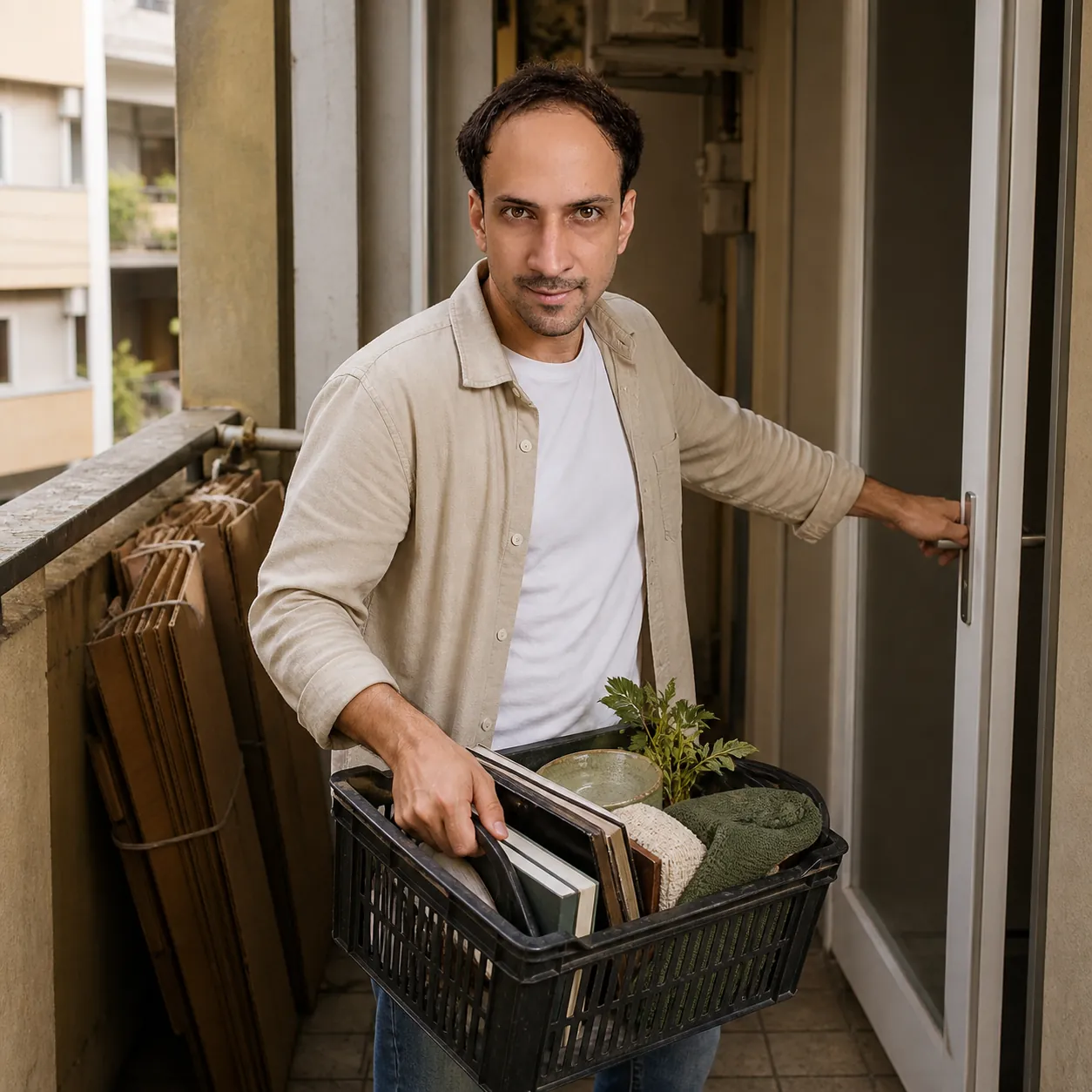
Turn your own photo into a portrait in a service balcony with flattened cardboard leaning against the rail. Keeps your face unchanged.

من نص البرومبت

Use the attached reference photo as the identity reference: keep the same face, skin tone, hair and features as the person in that photo, without beautifying, aging or altering them. Create a square 1:1 museum-catalog frame with a strong first read and a slower second read at exactly 2880x2880 pixels. Location: a service balcony with flattened cardboard leaning against the rail. Show the subject in a light sand overshirt over a white tee and jeans, hooking the balcony door open against the wall. Make this piece of unglamorous evidence the whole argument: a plastic crate of things still to be sorted, its handles worn smooth from being carried into a fourth room turns a small errand into the longest decision of the week. Explore how order can grow steadily heavier without ever becoming any kind of mess; expression occupied, not expressive, carrying quiet stewardship, difficulty stated as arithmetic rather than confession. Use an 85mm portrait length compressing the kept things gently behind their shoulder. Make the composition give the kept object more definition than the surrounding room. Render it as quiet domestic documentary realism combining unstyled interior photography, honest household materials, precise object description, and unhurried observational framing, using one bare ceiling fitting doing all the work, shadows short and honest and a palette of bleached linen, concrete grey, and a single olive accent. Photorealistic: this must read as a real photograph from a physical camera, never an illustration, painting, or 3D render. Resolve real surface detail: grout darker than tile, sealant slightly yellowed, and every joint showing a real tolerance gap. Keep one identity-locked person, credible hands and fingers, natural fabric, and coherent scale, contact, reflections, shadows, airflow, deformation, and materials. Background people only when essential, always secondary and clearly different. Avoid squalor, vermin, rotting food, hero-poster staging, and any wellness-aesthetic glow that replaces visible work. No text, labels, logos, signatures, watermarks, random symbols, plastic skin, excessive bloom, or glossy AI finish.
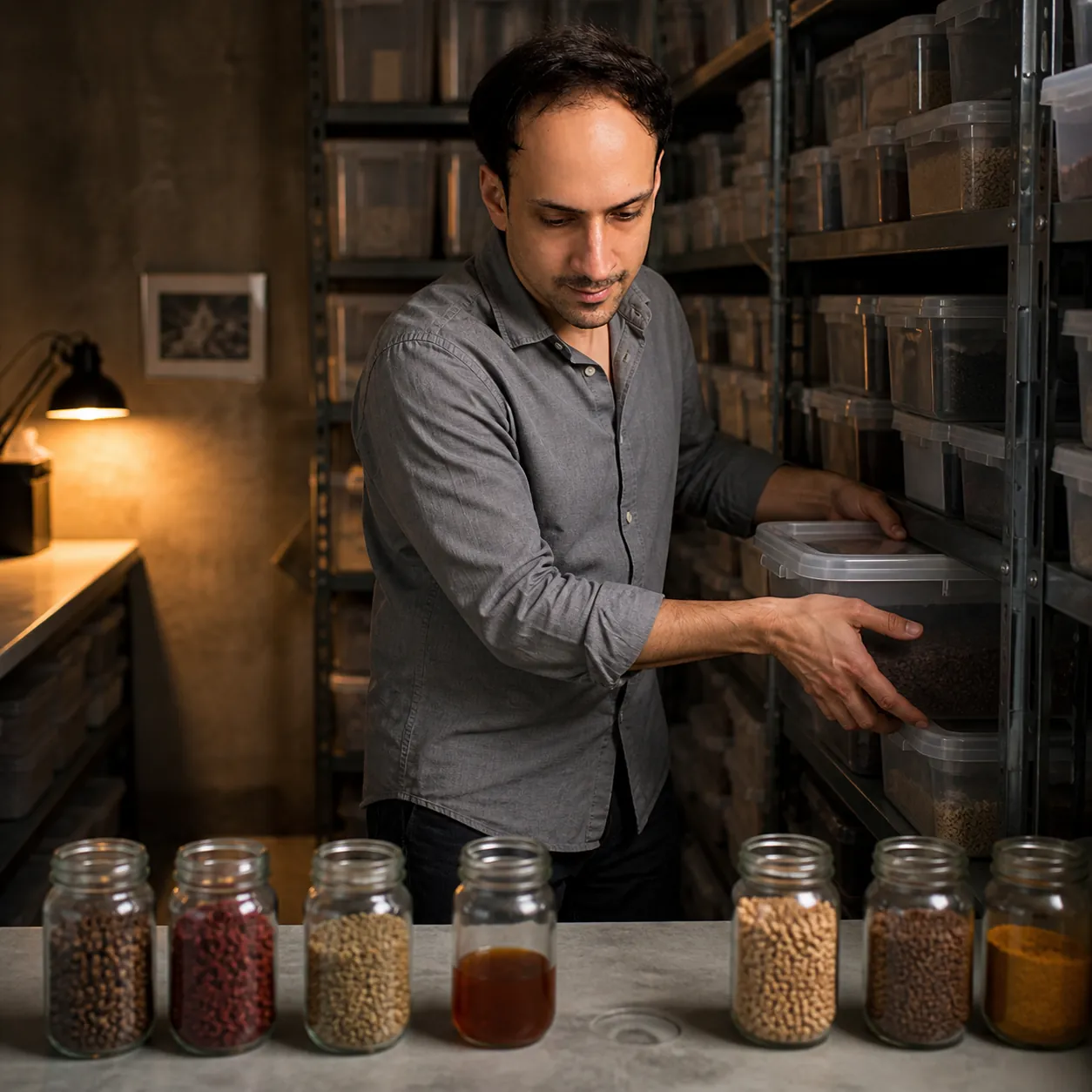
Hand on the Handbrake — AI Portrait Prompt
صورةAI Portraits

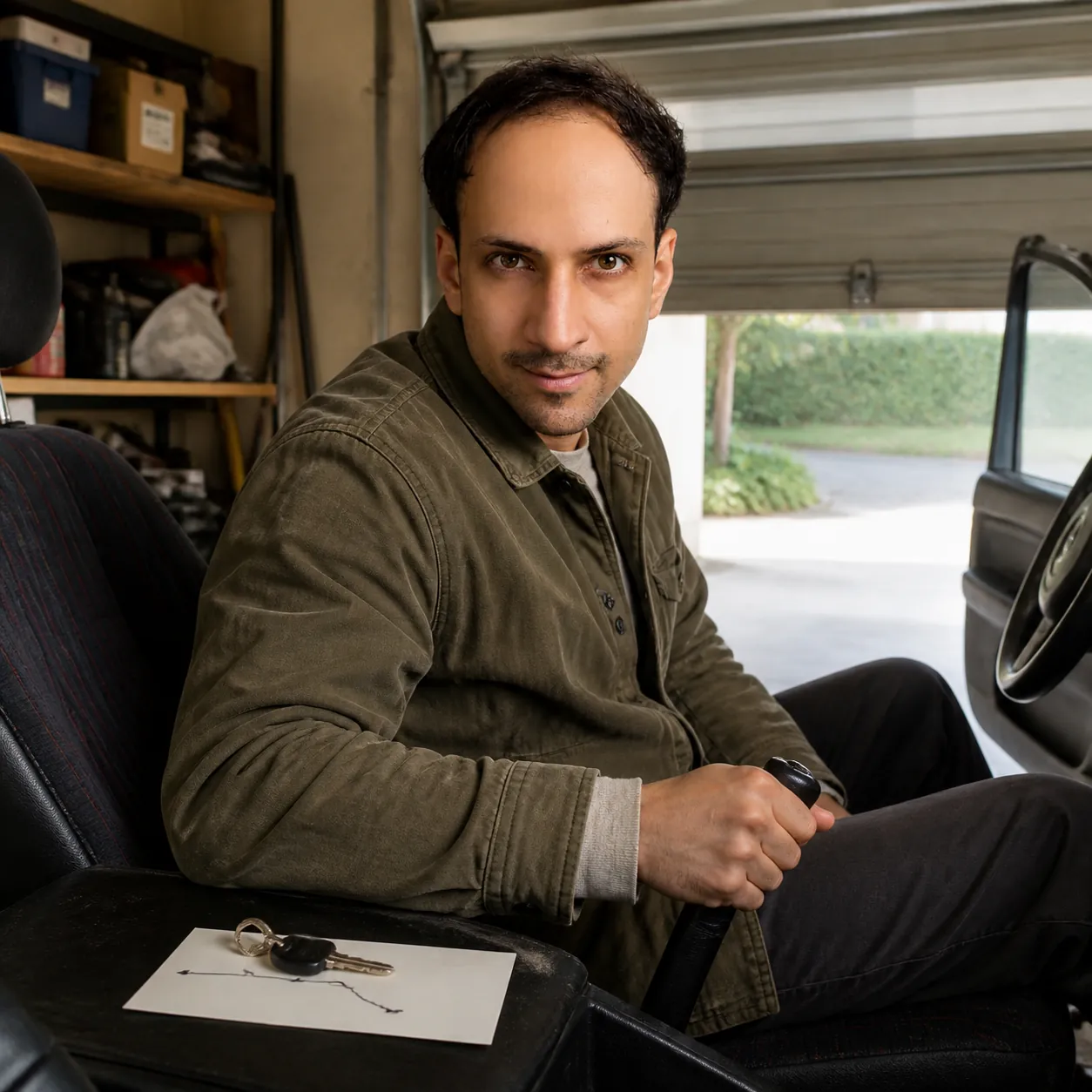
Turn your own photo into a reportage-grade threshold portrait in a single-car home garage with its roller door raised waist-high. Keeps your face unchanged.

من نص البرومبت

Use the attached reference photo as the identity reference: keep the same face, skin tone, hair and features as the person in that photo, without beautifying, aging or altering them. Create a square 1:1 museum-catalog frame with a strong first read and a slower second read at exactly 2880x2880 pixels. Location: a single-car home garage with its roller door raised waist-high. Show the subject in a faded olive chore jacket over a plain long-sleeve shirt, gripping the handbrake lever without releasing it. Make this piece of unglamorous evidence the whole argument: a pencilled route line on a scrap card that stays weighted under the door keys, its turnings already walked twice indoors spends a whole morning's calculation on something a neighbour does absently. Explore why a twelve-minute errand needs a morning of planning nobody will ever see; expression occupied, not expressive, carrying unhurried stubbornness, difficulty stated with the flatness of routine. Use an 85mm view from just off their shoulder, keeping the face readable in three-quarter turn. Make the composition let the prepared object outweigh the unfinished journey behind it. Render it as reportage-grade threshold photography built from ordinary retail surfaces, credible packaging materials, physically correct shadow behaviour, and patient non-theatrical staging, using flat overhead fluorescent light from a shop ceiling with restrained contrast and a palette of warm plaster, dark walnut, and one band of brass. Photorealistic: this must read as a real photograph from a physical camera, never an illustration, painting, or 3D render. Resolve real surface detail: paper fibre visible at cut edges, plastic that shows mould lines, and paint thicker where a brush turned. Keep one identity-locked person, credible hands and fingers, natural fabric, and coherent scale, contact, reflections, shadows, airflow, deformation, and materials. Background people only when essential, always secondary and clearly different. Avoid rain-streaked window sorrow, huddled foetal poses, blurred crowd chaos, and curtain-peeking paranoia. No text, labels, logos, signatures, watermarks, random symbols, plastic skin, excessive bloom, or glossy AI finish.
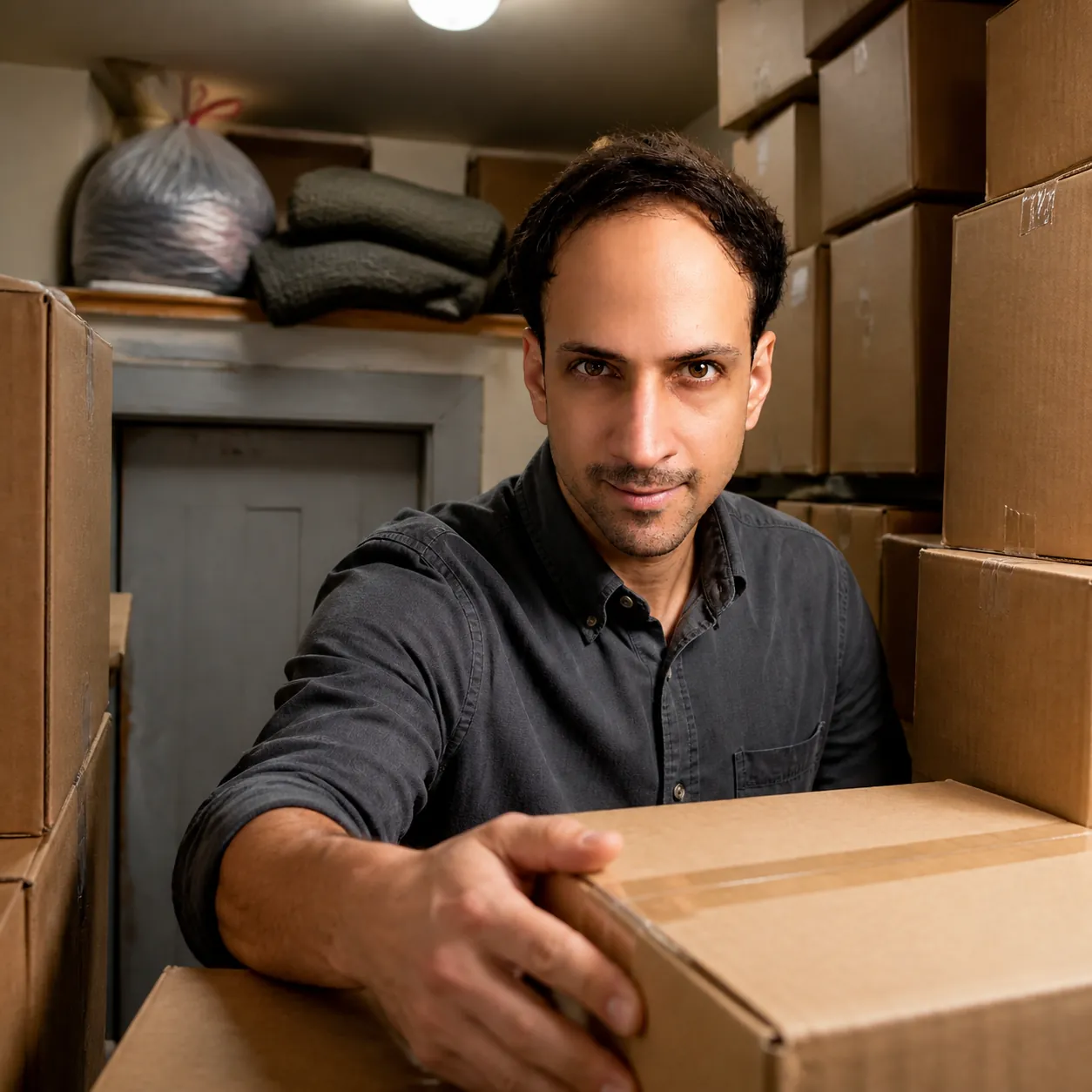
A Gap in the Storage Row — AI Portrait Prompt
صورةAI Portraits

Turn your own photo into a museum-grade domestic portrait in a windowless storage room lined with plastic tubs and shelving. Keeps your face unchanged.

من نص البرومبت

Use the attached reference photo as the identity reference: keep the same face, skin tone, hair and features as the person in that photo, without beautifying, aging or altering them. Create a square 1:1 museum-catalog frame with a strong first read and a slower second read at exactly 2880x2880 pixels. Location: a windowless storage room lined with plastic tubs and shelving. Show the subject in an untucked grey button-down with the cuffs turned back once, sliding a stacked tub back into its slot. Let one honest object carry what the face will not: a row of ingredients set out in strict order of use, with a space that is one missing jar wide turns a five-minute job into an hour of starting the order again. Explore why a small change is never a small problem to solve; expression occupied, not expressive, carrying methodical patience, difficulty stated at its actual scale. Use a 50mm eye-level view with the object nearer than their hands. Make the composition show the gap in the order, not the objects. Render it as museum-grade domestic portraiture combining plain reportage framing, truthful worn surfaces, physically correct contact shadows, and unhurried everyday staging, using late-evening interior lamplight balanced against the dim blue outside the glass and a palette of concrete grey, bone white, and one amber lamp glow. Photorealistic: this must read as a real photograph from a physical camera, never an illustration, painting, or 3D render. Resolve real surface detail: fine grit in the texture of concrete, efflorescence at damp edges, and hairline cracks that follow stress. Keep one identity-locked person, credible hands and fingers, natural fabric, and coherent scale, contact, reflections, shadows, airflow, deformation, and materials. Background people only when essential, always secondary and clearly different. Avoid hero poses, golden-hour wellness glow, eye contact with the lens, minimalist styling, and puzzle-piece symbolism. No text, labels, logos, signatures, watermarks, random symbols, plastic skin, excessive bloom, or glossy AI finish.
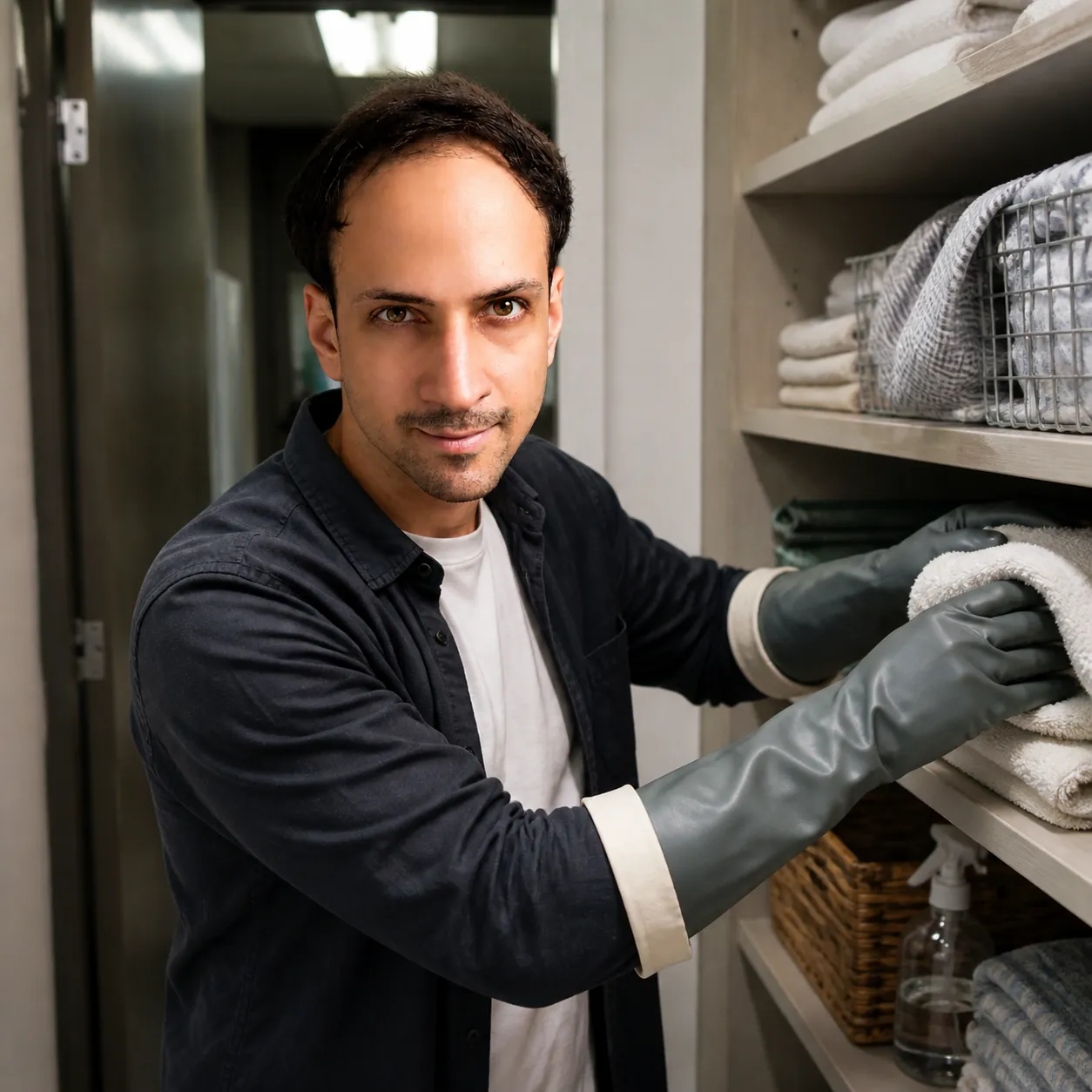
Boxes Stacked Shoulder-High — AI Portrait Prompt
صورةAI Portraits

Turn your own photo into an archival still-life portrait in a small back room stacked shoulder-high with taped cardboard boxes. Keeps your face unchanged.

من نص البرومبت

Use the attached reference photo as the identity reference: keep the same face, skin tone, hair and features as the person in that photo, without beautifying, aging or altering them. Create a square 1:1 museum-catalog frame with a strong first read and a slower second read at exactly 2880x2880 pixels. Location: a small back room stacked shoulder-high with taped cardboard boxes. Show the subject in a charcoal work shirt buttoned to the second button, sliding one taped box forward on the stack. Make this piece of unglamorous evidence the whole argument: a tied donation bag whose top two jumpers have already been lifted back onto the shelf above the door shows care and accumulation arriving from exactly the same impulse. Explore why the hardest part of a small clearing job is the deciding; expression occupied, not expressive, carrying level judgement, difficulty stated in the register of ordinary work. Use an 85mm portrait length compressing the kept things gently behind their shoulder. Make the composition put their working hand nearer the lens than their face. Render it as archival still-life portraiture combining catalogue-clear object rendering, believable domestic wear, controlled neutral colour, and patient unstyled editorial realism, using one bare ceiling fitting doing all the work, shadows short and honest and a palette of warm cardboard tan, cool grey, and dulled brass. Photorealistic: this must read as a real photograph from a physical camera, never an illustration, painting, or 3D render. Resolve real surface detail: paper fibre visible at cut edges, plastic that shows mould lines, and paint thicker where a brush turned. Keep one identity-locked person, credible hands and fingers, natural fabric, and coherent scale, contact, reflections, shadows, airflow, deformation, and materials. Background people only when essential, always secondary and clearly different. Avoid clear-out crews, shame poses, posing at camera, teetering junk towers, and melancholy without labour. No text, labels, logos, signatures, watermarks, random symbols, plastic skin, excessive bloom, or glossy AI finish.
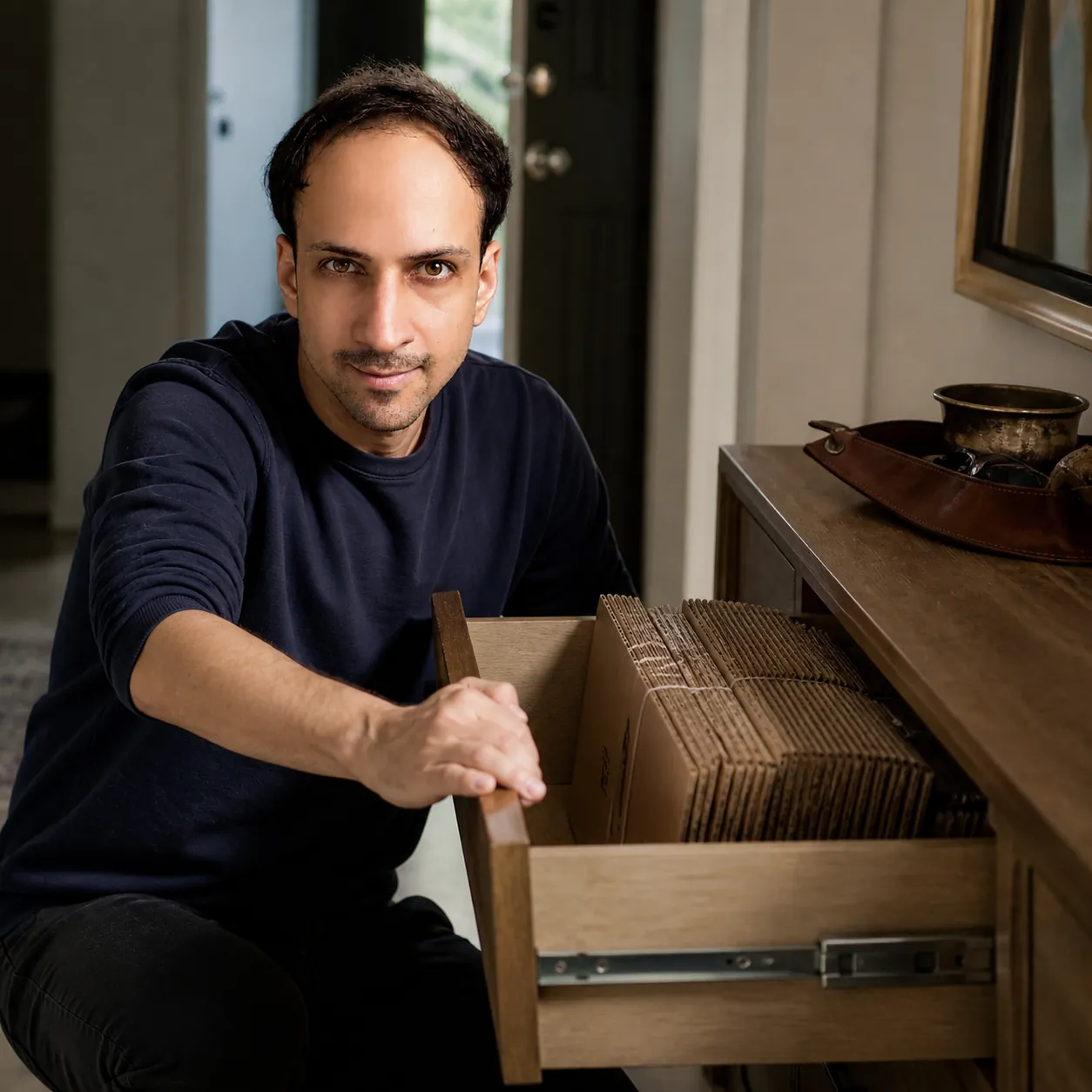
The Cleared Half of the Shelf — AI Portrait Prompt
صورةAI Portraits

Turn your own photo into a restrained editorial portrait in a hallway storage cupboard opened wide onto half-sorted shelves. Keeps your face unchanged.

من نص البرومبت

Use the attached reference photo as the identity reference: keep the same face, skin tone, hair and features as the person in that photo, without beautifying, aging or altering them. Create a square 1:1 museum-catalog frame with a strong first read and a slower second read at exactly 2880x2880 pixels. Location: a hallway storage cupboard opened wide onto half-sorted shelves. Show them in a soft indigo overshirt over a white crew-neck, sliding a folded towel onto the shelf's cleared half. Build the image around this small, exact tableau: a pair of long rubber gloves pulled on for a job that does not need them, cuffs turned back at the forearm makes the cost of an ordinary chore visible without making it a complaint. Explore what a completed chore is worth when the route to it was expensive; expression occupied, not expressive, carrying steady economy, difficulty stated as ordinary upkeep. Frame at chest height so the accommodation and their occupied face share one honest plane. Make the composition place the source of the load outside their line of sight. Render it as restrained editorial realism built from real chore apparatus, believable domestic wear, exact fabric and metal texture, and unsentimental framing, using flat retail fluorescent with a cool cast and unflattering falloff and a palette of unbleached cotton, dull steel, and one olive note. Photorealistic: this must read as a real photograph from a physical camera, never an illustration, painting, or 3D render. Resolve real surface detail: glass with real thickness at its edge, reflections that carry the room's actual colour, and dust visible only at grazing angles. Keep one identity-locked person, credible hands and fingers, natural fabric, and coherent scale, contact, reflections, shadows, airflow, deformation, and materials. Background people only when essential, always secondary and clearly different. Avoid hands clamped over ears, meltdown theatrics, and hero poses at camera. No text, labels, logos, signatures, watermarks, random symbols, plastic skin, excessive bloom, or glossy AI finish.
The Flattened Cardboard Column — AI Portrait Prompt
صورةAI Portraits

Turn your own photo into a museum-grade domestic portrait in a hallway console drawer pulled right out onto its runners. Keeps your face unchanged.

من نص البرومبت

Use the attached reference photo as the identity reference: keep the same face, skin tone, hair and features as the person in that photo, without beautifying, aging or altering them. Create a square 1:1 museum-catalog frame with a strong first read and a slower second read at exactly 2880x2880 pixels. Location: a hallway console drawer pulled right out onto its runners. Show the subject in a dark navy sweatshirt with the sleeves pushed up, steadying the open drawer with one flat hand. Make this piece of unglamorous evidence the whole argument: a column of flattened cardboard boxes that were squared, tied, and stood upright because not one has a broken corner shows care and accumulation arriving from exactly the same impulse. Explore how much labour hides inside a decision nobody else will ever see; expression occupied, not expressive, carrying sober economy, difficulty stated as arithmetic rather than confession. Use an 85mm portrait length compressing the kept things gently behind their shoulder. Make the composition put their working hand nearer the lens than their face. Render it as museum-grade domestic portraiture built from plain-room reportage, accurate cardboard and glass materiality, restrained art direction, and unsentimental observation, using cool morning ambience from an open door, warmed slightly by interior walls and a palette of dust beige, cold steel, and one worn indigo note. Photorealistic: this must read as a real photograph from a physical camera, never an illustration, painting, or 3D render. Resolve real surface detail: leather creased along the lines of use, stitching slightly irregular, and edges burnished from contact. Keep one identity-locked person, credible hands and fingers, natural fabric, and coherent scale, contact, reflections, shadows, airflow, deformation, and materials. Background people only when essential, always secondary and clearly different. Avoid clear-out crews, shame poses, posing at camera, teetering junk towers, and melancholy without labour. No text, labels, logos, signatures, watermarks, random symbols, plastic skin, excessive bloom, or glossy AI finish.
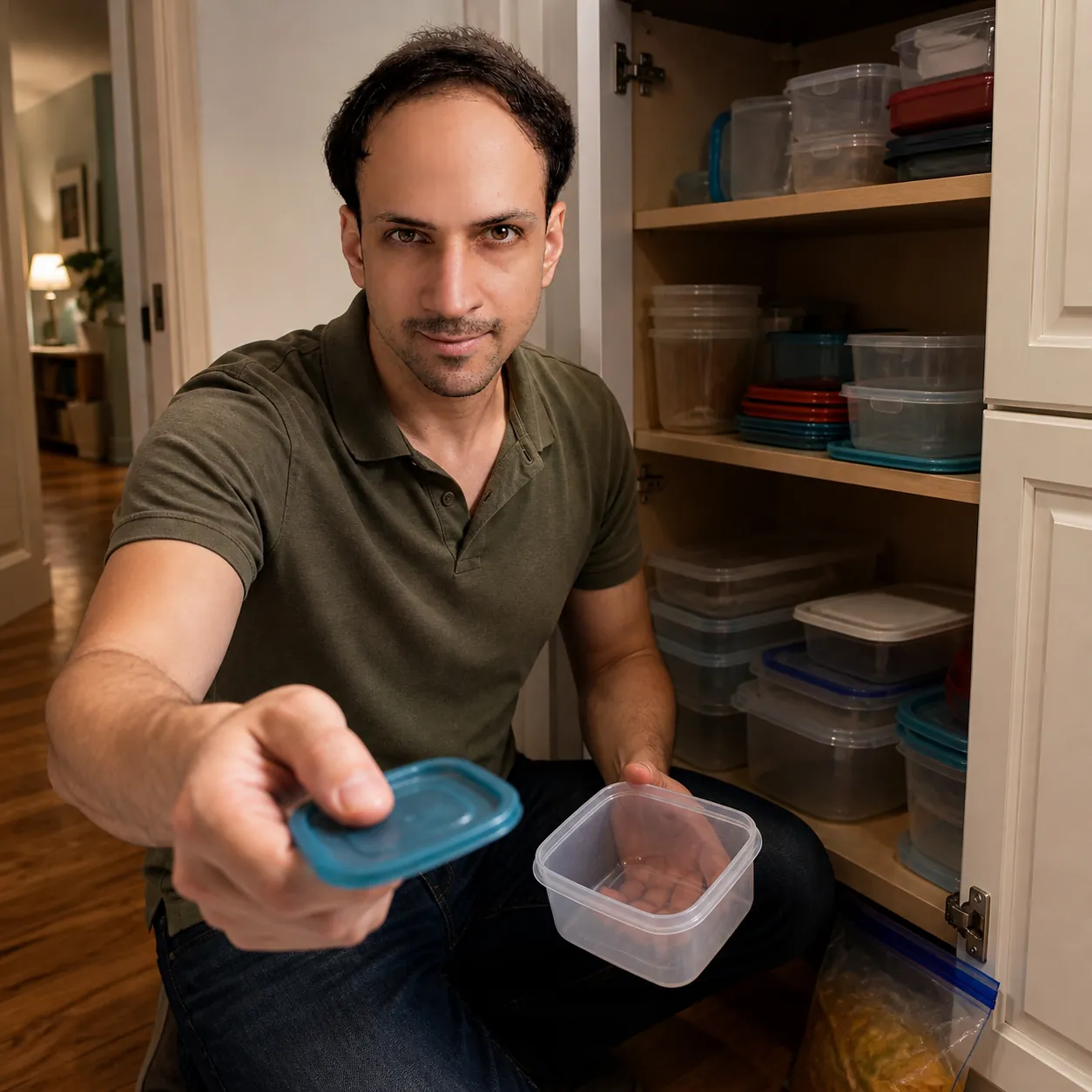
A Sealed Bag Set Apart — AI Portrait Prompt
صورةAI Portraits

Turn your own photo into a quiet domestic documentary portrait in a kitchen cupboard opened on stacked plastic food containers. Keeps your face unchanged.

من نص البرومبت

Use the attached reference photo as the identity reference: keep the same face, skin tone, hair and features as the person in that photo, without beautifying, aging or altering them. Create a square 1:1 museum-catalog frame with a strong first read and a slower second read at exactly 2880x2880 pixels. Location: a kitchen cupboard opened on stacked plastic food containers. Show the subject in a faded olive polo shirt with the collar left open, matching one lid to its container by sight. The difficulty must be visible in this, not in their expression: a sealed bag set apart on the floor from the rest, the only one of them not to be reopened turns a small errand into the longest decision of the week. Explore what one genuinely emptied space costs compared with an afternoon of tidying; expression occupied, not expressive, carrying patient inventory, difficulty stated quietly enough to be missed once. Hold a static 40mm frame at standing height with their working hand visible. Make the composition put their working hand nearer the lens than their face. Render it as quiet domestic documentary realism combining unstyled interior photography, honest household materials, precise object description, and unhurried observational framing, using a low domestic lamp plus spill from the corridor, both plainly motivated and a palette of kraft brown, plaster white, and one faded teal. Photorealistic: this must read as a real photograph from a physical camera, never an illustration, painting, or 3D render. Resolve real surface detail: wood grain read at honest scale, matte and gloss clearly separated, and no surface uniformly clean. Keep one identity-locked person, credible hands and fingers, natural fabric, and coherent scale, contact, reflections, shadows, airflow, deformation, and materials. Background people only when essential, always secondary and clearly different. Avoid squalor, vermin, rotting food, hero-poster staging, and any wellness-aesthetic glow that replaces visible work. No text, labels, logos, signatures, watermarks, random symbols, plastic skin, excessive bloom, or glossy AI finish.

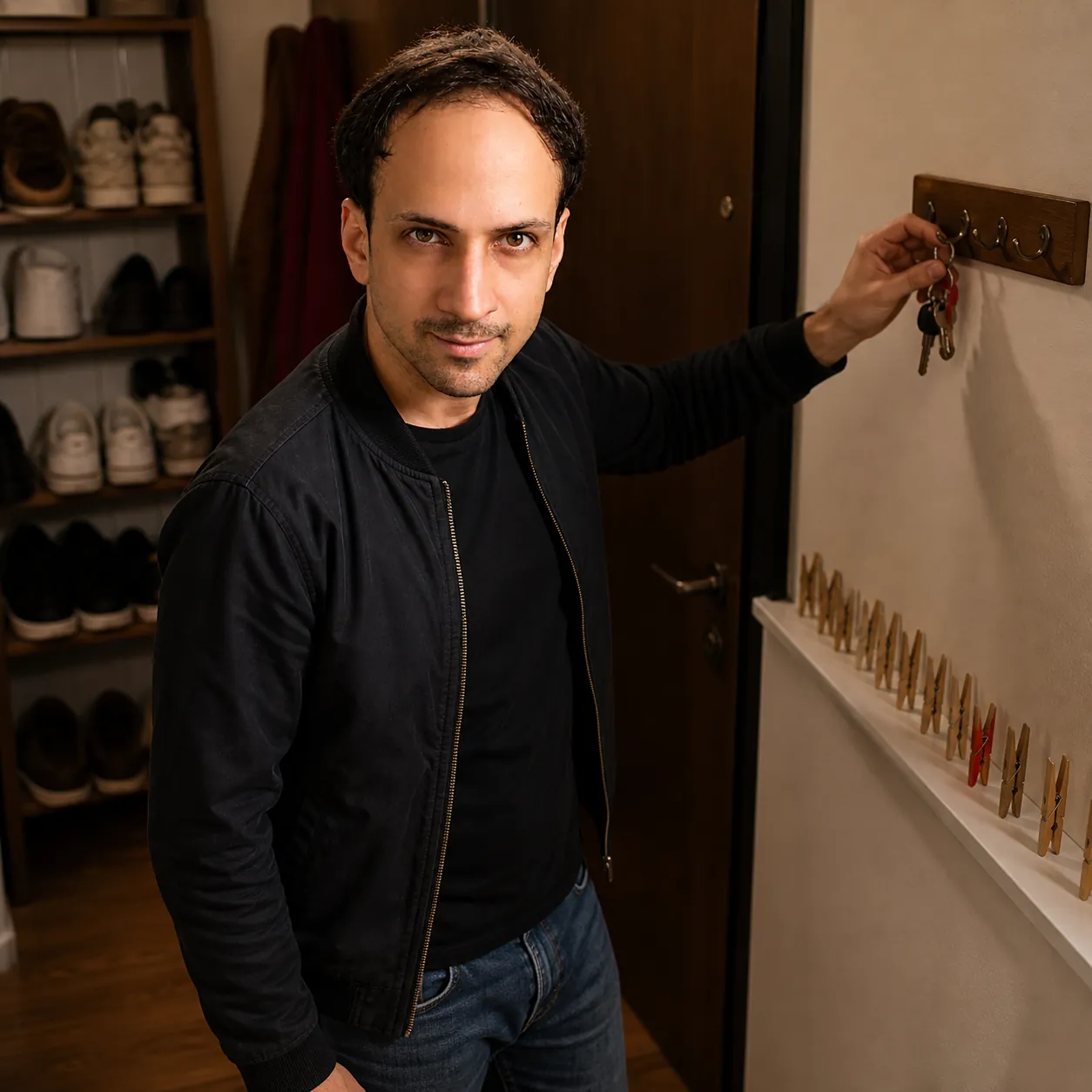
Steps Worked Out From Scratch — AI Portrait Prompt
صورةAI Portraits

Turn your own photo into an observational still-life portrait in an apartment entryway with a shoe rack and wall hook. Keeps your face unchanged.

من نص البرومبت

Use the attached reference photo as the identity reference: keep the same face, skin tone, hair and features as the person in that photo, without beautifying, aging or altering them. Create a square 1:1 museum-catalog frame with a strong first read and a slower second read at exactly 2880x2880 pixels. Location: an apartment entryway with a shoe rack and wall hook. Show the subject in a lightweight zip jacket over a plain crew-neck and jeans, hanging a set of keys on the wall hook. Anchor the frame to this piece of ordinary evidence: a line of clothes pegs along a ledge that mark the steps they have had to work out from scratch carries a whole routine on one part that nobody outside would notice. Explore whether a rebuilt routine can ever feel as cheap as the original; expression occupied, not expressive, carrying level determination, difficulty stated without inviting pity. Place the camera at standing height, close enough that one arm's reach fills it. Make the composition weight the small object above the whole room. Render it as observational still-life portraiture built from real household objects, matter-of-fact framing, accurate fabric behavior, and gallery-scale detail without polish, using one ceiling fitting doing all the work, shadows soft and low and a palette of flat beige, deep brown, and one red accent. Photorealistic: this must read as a real photograph from a physical camera, never an illustration, painting, or 3D render. Resolve real surface detail: hair with individual strands catching light, short hairs of uneven length, and skin oil giving a low uneven sheen. Keep one identity-locked person, credible hands and fingers, natural fabric, and coherent scale, contact, reflections, shadows, airflow, deformation, and materials. Background people only when essential, always secondary and clearly different. Avoid melancholy posed at windows, showroom kitchens, hands clutching the head, inspirational lighting, and clockwork-brain imagery. No text, labels, logos, signatures, watermarks, random symbols, plastic skin, excessive bloom, or glossy AI finish.
