تخطَّ إلى المحتوى
جميع التصنيفات

AI Portraits

Portrait prompts you can use with your own photo.

3845 برومبتات•0 مشتركين
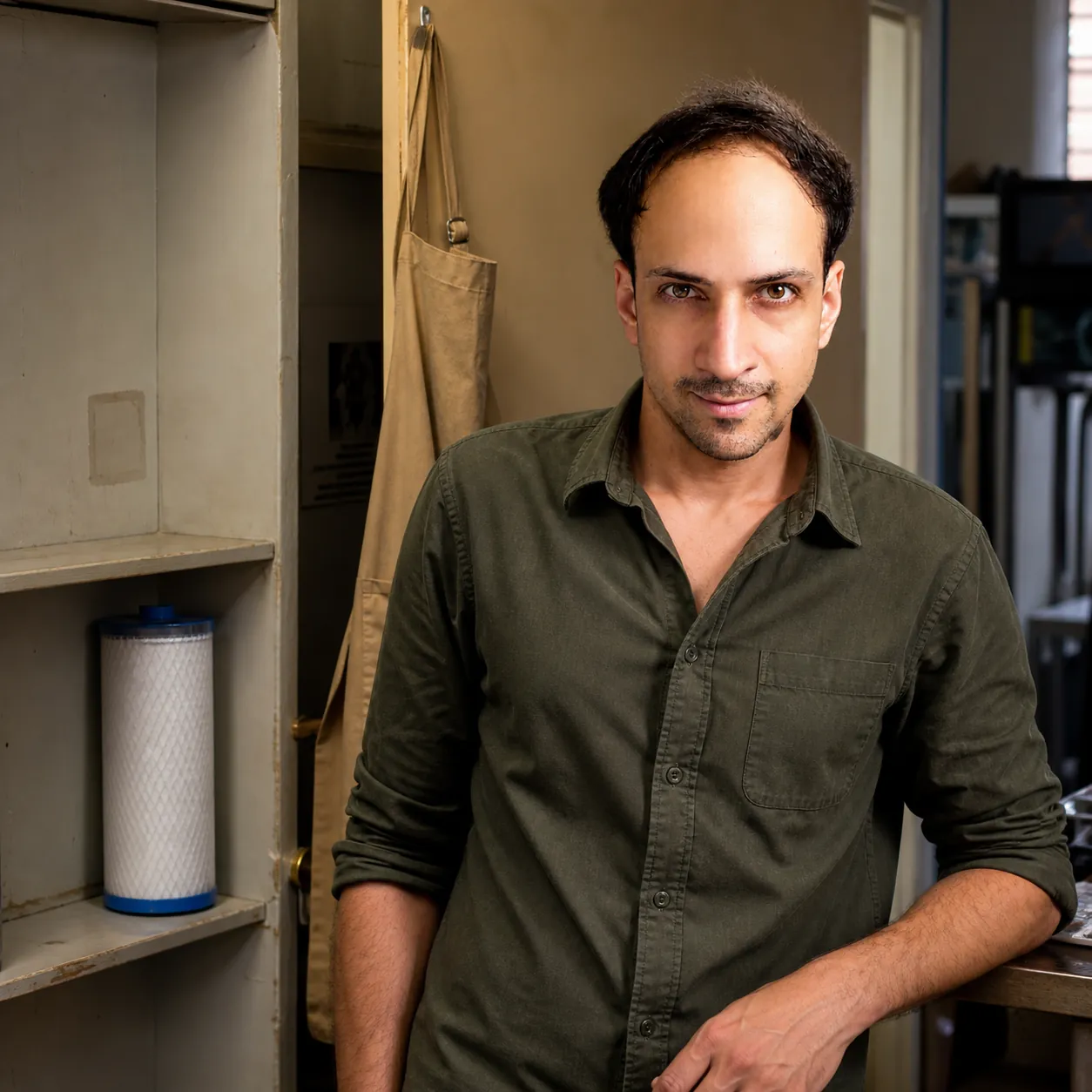
The Spare Filter Cartridge — AI Portrait Prompt
صورةAI Portraits

Turn your own photo into an understated reportage portrait in a small family shop's back office one step behind the counter. Keeps your face unchanged.

من نص البرومبت

Use the attached reference photo as the identity reference: keep the same face, skin tone, hair and features as the person in that photo, without beautifying, aging or altering them. Create a square 1:1 museum-catalog frame with a strong first read and a slower second read at exactly 2880x2880 pixels. Location: a small family shop's back office one step behind the counter. Show the subject in a plain olive shirt with the top button left open, hanging a canvas apron on the back of the door. Build the frame on this unremarkable detail: a spare filter cartridge waiting in the cupboard corner whose paint has dulled in one square under every previous spare lets accumulated wear stand as the only proof that any of this recurred. Explore how a small ordinary job carries an argument nobody in the room hears; expression composed and unremarkable, carrying ordinary steadiness, the weight held where competence covers it completely. Shoot at 85mm with the worn detail sharp and the rest of the room gently soft. Make the composition place them slightly off-center with room left unused. Render it as understated reportage portraiture built from truthful household materials, believable use marks, calm neutral styling, and unhurried everyday timing, using a single kitchen strip light with soft bounce off pale cabinet fronts and a palette of sand beige, graphite, and a quiet stripe of brass. Photorealistic: this must read as a real photograph from a physical camera, never an illustration, painting, or 3D render. Resolve real surface detail: hair with individual strands catching light, short regrowth of uneven length, and skin oil giving a low uneven sheen. Keep one identity-locked person, credible hands and fingers, natural fabric, and coherent scale, contact, reflections, shadows, airflow, deformation, and materials. Background people only when essential, always secondary and clearly different. Avoid boulder or mountain symbolism, hamster wheels, spinning clock faces, treadmills, and weary shoulder-slumped posture. No text, labels, logos, signatures, watermarks, random symbols, plastic skin, excessive bloom, or glossy AI finish.
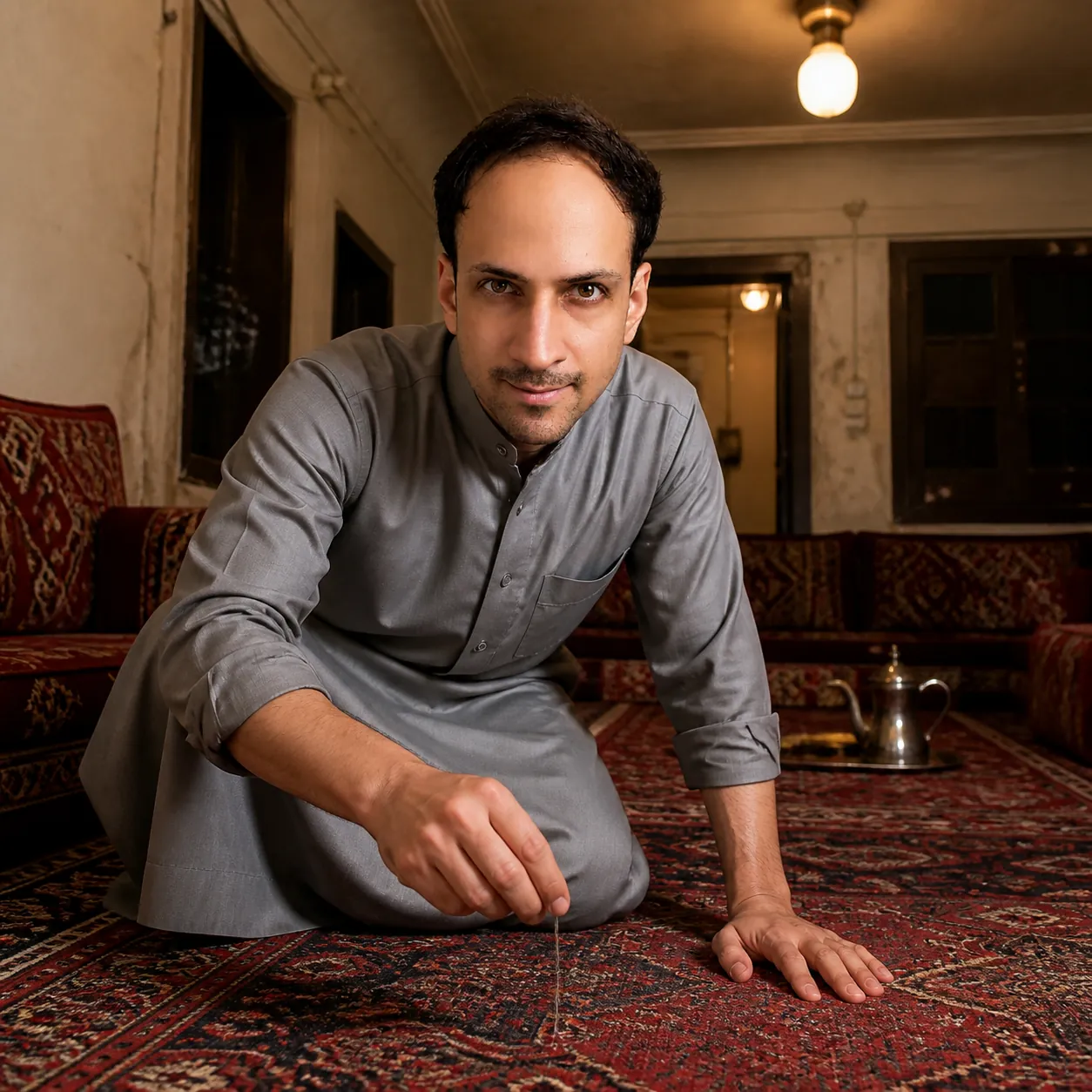
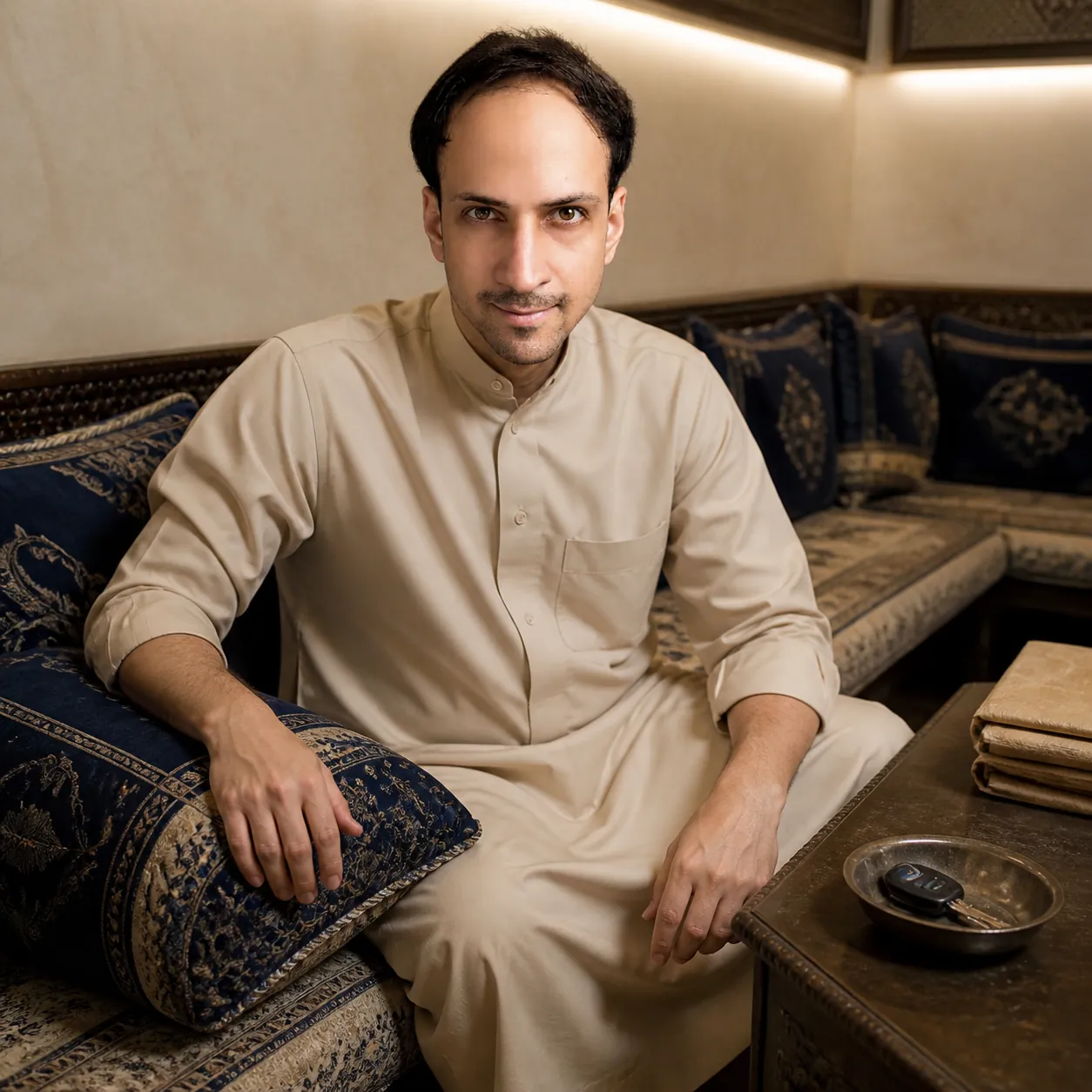
A Fresh Bulb in the Majlis — AI Portrait Prompt
صورةAI Portraits

Turn your own photo into a quiet observational portrait in a majlis with the guests' cushions still pressed from the evening. Keeps your face unchanged.

من نص البرومبت

Use the attached reference photo as the identity reference: keep the same face, skin tone, hair and features as the person in that photo, without beautifying, aging or altering them. Create a square 1:1 museum-catalog frame with a strong first read and a slower second read at exactly 2880x2880 pixels. Location: a majlis with the guests' cushions still pressed from the evening. Show the subject in a soft grey traditional Gulf outfit worn without a bisht, sleeves pushed back, lifting a stray thread off the rug pile. Hide the whole argument in this ordinary moment: a fresh bulb turned into the one ceiling fitting whose collar is rubbed bright in a narrow band from many quarter turns lets accumulated wear stand as the only proof that any of this recurred. Explore what separates steady acceptance from giving up when both look equally calm; expression composed and unremarkable, carrying undramatic focus, the weight held below the level of remark. Use a steady waist-level 35mm framing that keeps the whole small task inside one honest rectangle. Make the composition give equal weight to their face and the used surface. Render it as quiet observational photography combining ordinary interior realism, accurate surface aging, unmannered composition, and naturally readable skin texture, using one warm domestic bulb plus ambient hallway spill, both entirely unstyled and a palette of pale plaster, worn steel, and one band of amber. Photorealistic: this must read as a real photograph from a physical camera, never an illustration, painting, or 3D render. Resolve real surface detail: thread ends and slight pilling on worn cloth, hairline chips at every hard corner, and stone that is porous rather than smooth. Keep one identity-locked person, credible hands and fingers, natural fabric, and coherent scale, contact, reflections, shadows, airflow, deformation, and materials. Background people only when essential, always secondary and clearly different. Avoid boulder or mountain symbolism, hamster wheels, spinning clock faces, treadmills, and weary shoulder-slumped posture. No text, labels, logos, signatures, watermarks, random symbols, plastic skin, excessive bloom, or glossy AI finish.
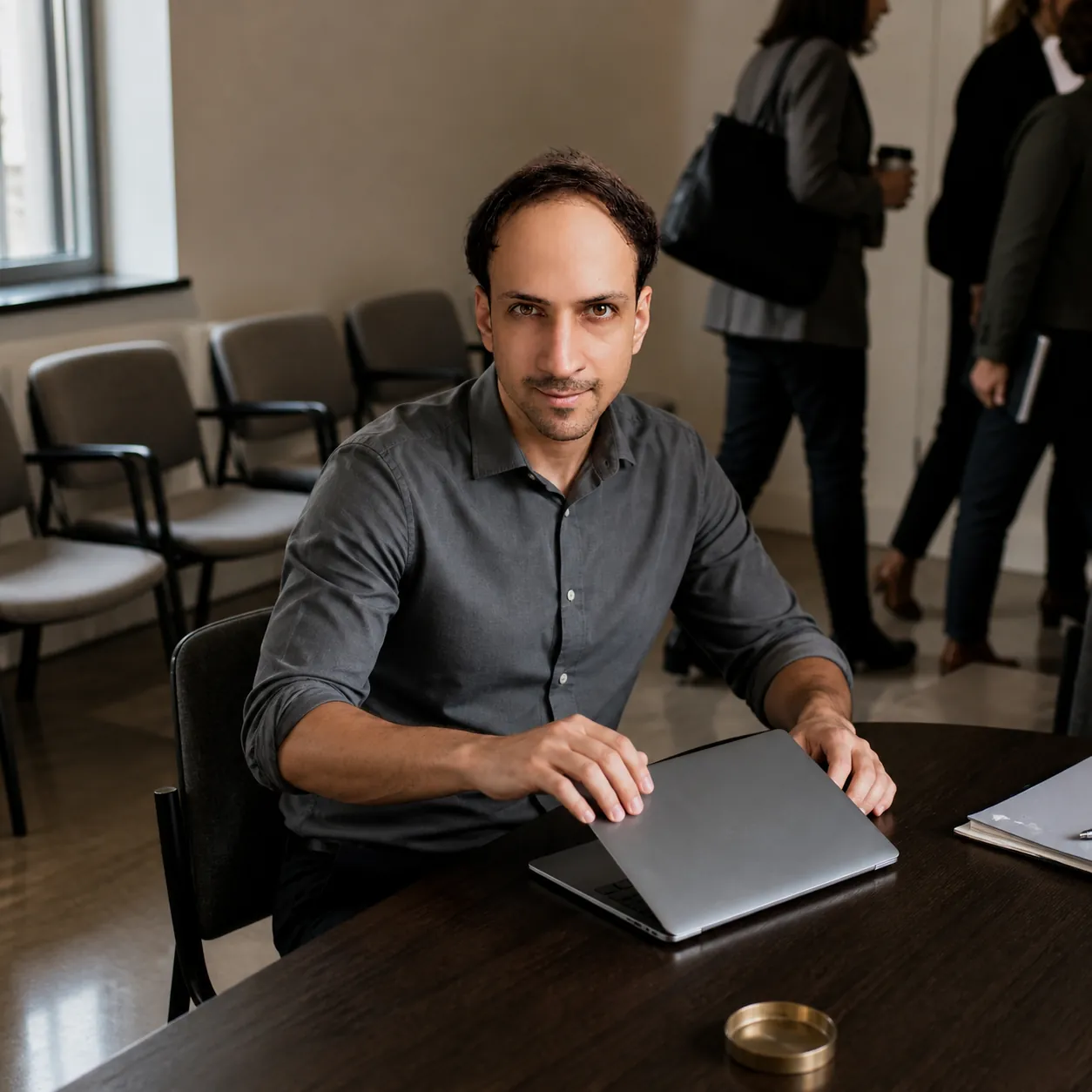
One Seat Short — AI Portrait Prompt
صورةAI Portraits

Turn your own photo into a photorealistic portrait in a small office meeting room emptying while the others file out. Keeps your face unchanged.

من نص البرومبت

Use the attached reference photo as the identity reference: keep the same face, skin tone, hair and features as the person in that photo, without beautifying, aging or altering them. Create a square 1:1 museum-catalog frame with a strong first read and a slower second read at exactly 2880x2880 pixels. Location: a small office meeting room emptying while the others file out. Show the subject in a stone-grey button-down tucked in with the cuffs folded twice, closing a laptop lid without looking down at it. Make this the only tell, easy to miss: a row of seats that stops one short of what the space holds, spaced so nothing reads as missing carries the load of the whole scene on what is not there. Explore why a room set one place short can be the most accurate account; expression composed and unremarkable, carrying steady efficiency, the weight held in the space nobody counts. Place the lens just above the surface so hands and face share one plane. Make the composition hold the room's lines true so nothing appears staged. Render it as understated editorial photography made from ordinary rooms, believable wear, precise spacing, and unhurried attention to intervals, using ordinary window daylight from one side with gentle bounce off the floor and a palette of pale sand, soft charcoal, and one dull brass note. Photorealistic: this must read as a real photograph from a physical camera, never an illustration, painting, or 3D render. Resolve real surface detail: paper fibre visible at cut edges, plastic that shows mould lines, and paint thicker where a brush turned. Keep one identity-locked person, credible hands and fingers, natural fabric, and coherent scale, contact, reflections, shadows, airflow, deformation, and materials. Background people only when essential, always secondary and clearly different. Avoid symbolic empty chairs, dust-sheeted furniture, framed portraits, theatrical shadows, and medication props. No text, labels, logos, signatures, watermarks, random symbols, plastic skin, excessive bloom, or glossy AI finish.
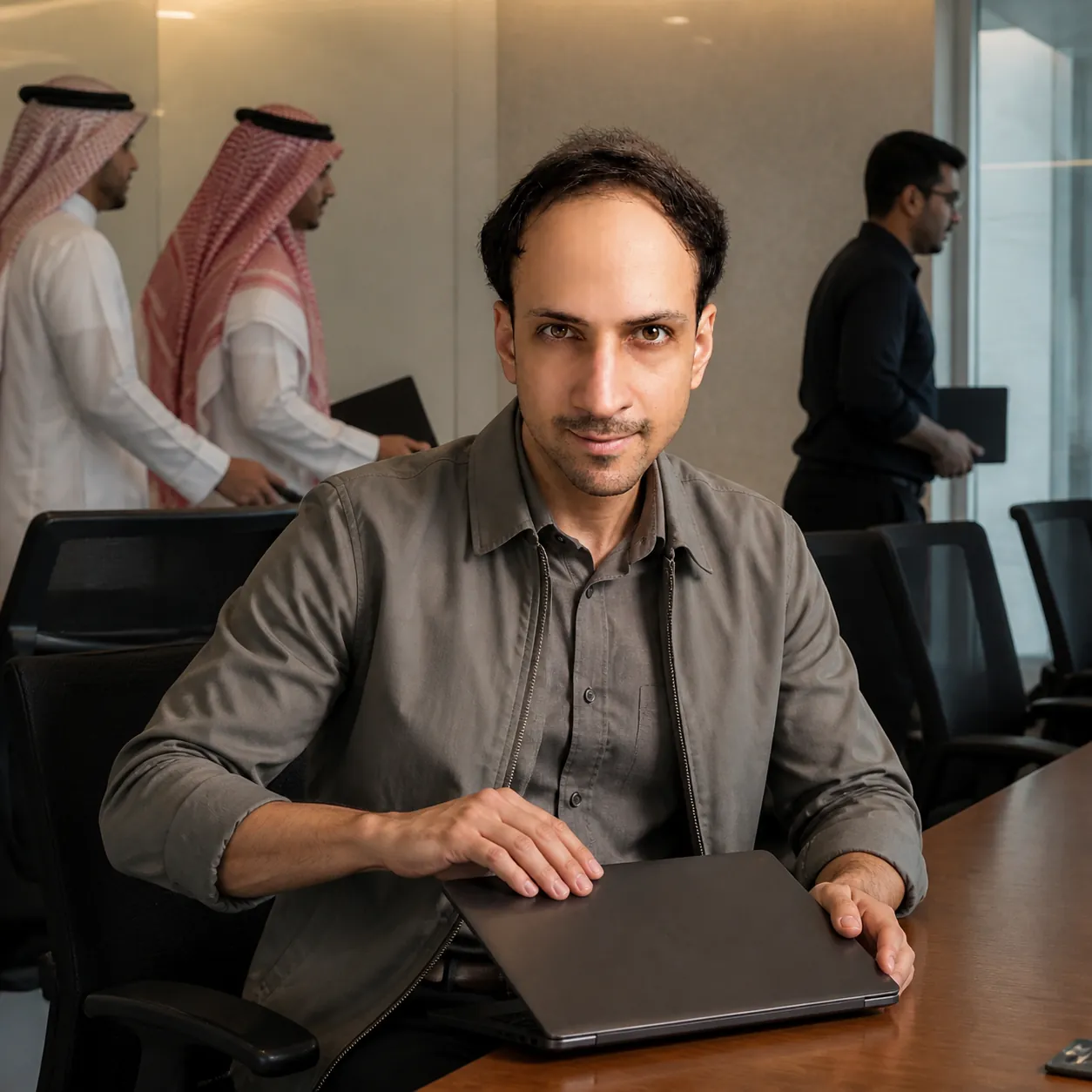
Ready to Leave — AI Portrait Prompt
صورةAI Portraits

Turn your own photo into an observational portrait in a small office meeting room emptying while the others file out. Keeps your face unchanged.

من نص البرومبت

Use the attached reference photo as the identity reference: keep the same face, skin tone, hair and features as the person in that photo, without beautifying, aging or altering them. Create a square 1:1 museum-catalog frame with a strong first read and a slower second read at exactly 2880x2880 pixels. Location: a small office meeting room emptying while the others file out. Show the subject in a stone-grey button-down tucked in with the cuffs folded twice, closing a laptop lid without looking down at it. Let the weight sit here and look like nothing: a light outer layer that stays fastened indoors, worn without discomfort in a room everyone else has settled into makes its clearest statement out of the one thing withheld. Explore how a readiness to leave becomes the quietest fact in a warm room; expression composed and unremarkable, carrying workaday ease, the weight held without disturbing one surface. Use a 50mm eye-level view at conversational distance with natural perspective and restrained depth. Make the composition let the gap fall exactly on a natural sightline. Render it as observational realism combining everyday Saudi interiors, accurate domestic surfaces, unforced natural behaviour, and calm photojournalistic discipline, using even mixed light from a glazed frontage and switched-on ceiling panels and a palette of oatmeal, slate grey, and a narrow band of teal. Photorealistic: this must read as a real photograph from a physical camera, never an illustration, painting, or 3D render. Resolve real surface detail: fine grit in the texture of concrete, efflorescence at damp edges, and hairline cracks that follow stress. Keep one identity-locked person, credible hands and fingers, natural fabric, and coherent scale, contact, reflections, shadows, airflow, deformation, and materials. Background people only when essential, always secondary and clearly different. Avoid visible sadness, head in hands, staring through windows, candles, and memorial arrangements. No text, labels, logos, signatures, watermarks, random symbols, plastic skin, excessive bloom, or glossy AI finish.
Cushions Squared in the Majlis — AI Portrait Prompt
صورةAI Portraits

Turn your own photo into a portrait in a family majlis with cushions squared along two walls and one low table. Keeps your face unchanged.

من نص البرومبت

Use the attached reference photo as the identity reference: keep the same face, skin tone, hair and features as the person in that photo, without beautifying, aging or altering them. Create a square 1:1 museum-catalog frame with a strong first read and a slower second read at exactly 2880x2880 pixels. Location: a family majlis with cushions squared along two walls and one low table. Show the subject in a plain sand-coloured traditional Gulf outfit, sleeves pushed once above the wrist, aligning one floor cushion square to the wall. Let one honest object carry what the face will not: a set of car keys still warm in a shallow tray beside the folded bags of a drive they cannot retrace measures the distance between doing a thing and being there for it. Explore how a room learned by heart can still require checking every morning; expression occupied, not expressive, carrying plain persistence, difficulty stated in the plainest available terms. Use an eye-level 50mm view at counter height with restrained depth and no perspective stretch. Make the composition give the finished work more sharpness. Render it as gallery-scale household realism built from credible hands, correct water and fabric behaviour, and calm compositional discipline, using a single under-cabinet strip plus ambient room light, nothing theatrical anywhere and a palette of soft bone, slate, and a single field of faded indigo. Photorealistic: this must read as a real photograph from a physical camera, never an illustration, painting, or 3D render. Resolve real surface detail: fine lint on dark fabric, water spotting on steel, and the soft rounding of edges that have been used for years. Keep one identity-locked person, credible hands and fingers, natural fabric, and coherent scale, contact, reflections, shadows, airflow, deformation, and materials. Background people only when essential, always secondary and clearly different. Avoid double exposures, transparent bodies, out-of-body views, and mirrors returning a different person. No text, labels, logos, signatures, watermarks, random symbols, plastic skin, excessive bloom, or glossy AI finish.
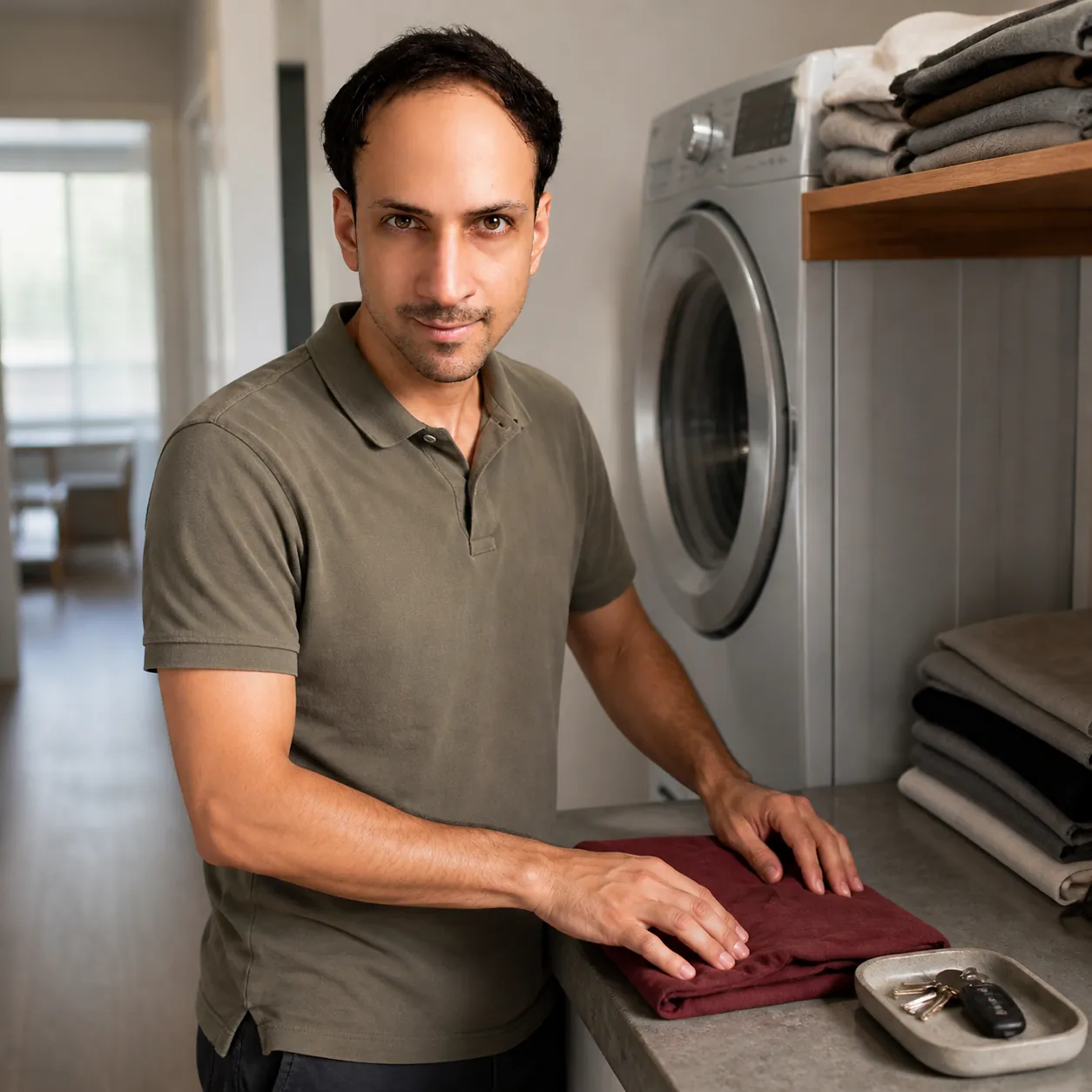
Shirt Squared to the Edge — AI Portrait Prompt
صورةAI Portraits

Turn your own photo into a museum-grade chore portrait in a laundry nook off the hallway with a front-loader and a folding shelf. Keeps your face unchanged.

من نص البرومبت

Use the attached reference photo as the identity reference: keep the same face, skin tone, hair and features as the person in that photo, without beautifying, aging or altering them. Create a square 1:1 museum-catalog frame with a strong first read and a slower second read at exactly 2880x2880 pixels. Location: a laundry nook off the hallway with a front-loader and a folding shelf. Show the subject in a faded olive polo over plain dark cotton trousers, squaring a folded shirt to the shelf edge. Anchor the frame to this piece of ordinary evidence: a set of car keys still warm in a shallow tray beside the folded bags of a drive they cannot retrace lets the work go on at full strength on a borrowed sort of day. Explore how a room learned by heart can still require checking every morning; expression occupied, not expressive, carrying workmanlike calm, difficulty stated without reaching for sympathy. Place the lens at hand height so the object and their eyes hold one plane. Make the composition place the point of contact nearer the lens. Render it as museum-grade chore photography combining high-fidelity skin, accurate steel and glass reflections, matter-of-fact staging, and observational framing, using early indirect daylight with low contrast and honest skin texture throughout and a palette of warm grey concrete, dry sand, and one muted brick red. Photorealistic: this must read as a real photograph from a physical camera, never an illustration, painting, or 3D render. Resolve real surface detail: dust settled where nobody wipes, fingerprint haze on glass, and edges rubbed pale by handling. Keep one identity-locked person, credible hands and fingers, natural fabric, and coherent scale, contact, reflections, shadows, airflow, deformation, and materials. Background people only when essential, always secondary and clearly different. Avoid hero poses, golden-hour styling, posing at camera, and melancholy without visible labour. No text, labels, logos, signatures, watermarks, random symbols, plastic skin, excessive bloom, or glossy AI finish.

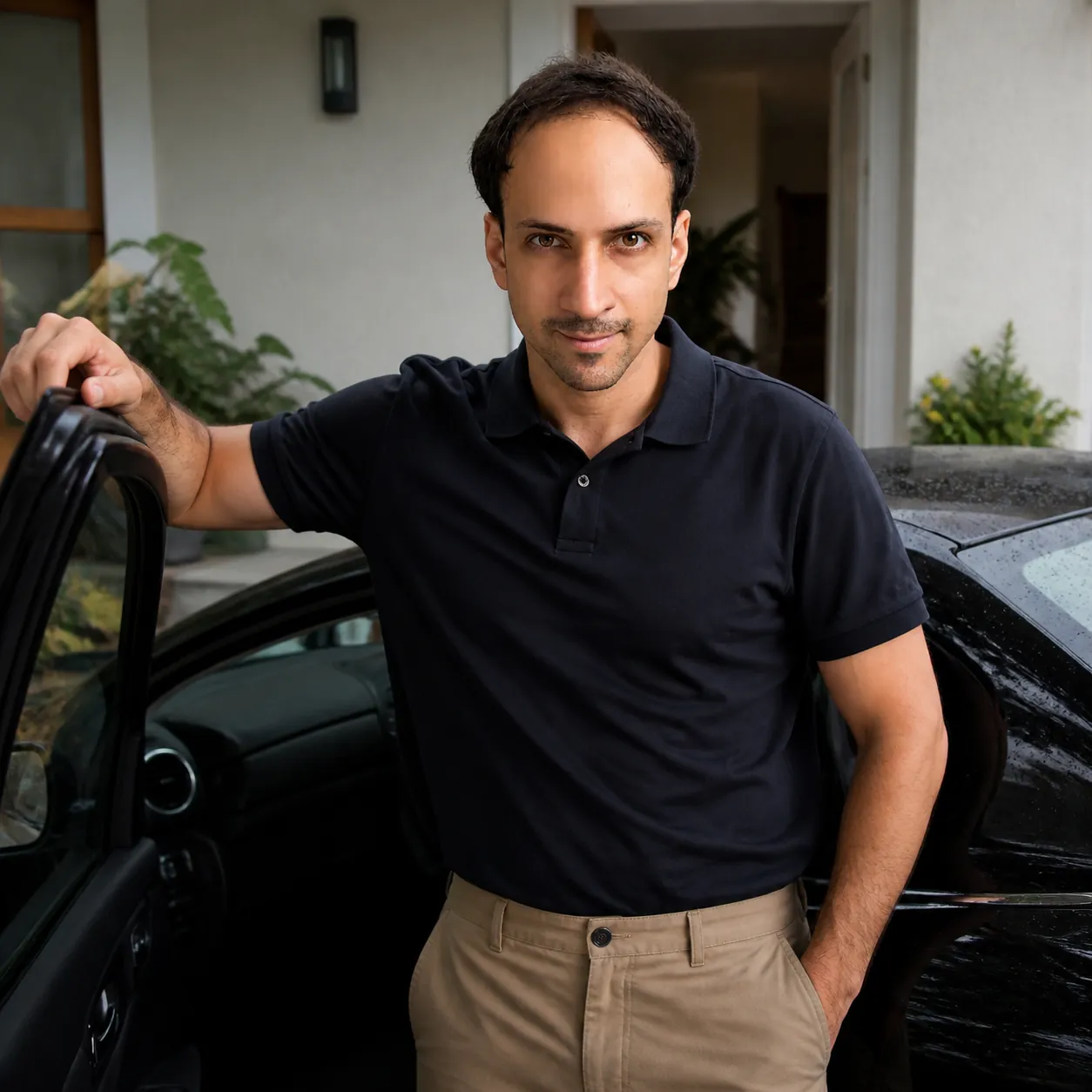
Hand on the Open Car Door — AI Portrait Prompt
صورةAI Portraits

Turn your own photo into a quiet editorial portrait in a parked car in the family driveway, house door open behind. Keeps your face unchanged.

من نص البرومبت

Use the attached reference photo as the identity reference: keep the same face, skin tone, hair and features as the person in that photo, without beautifying, aging or altering them. Create a square 1:1 museum-catalog frame with a strong first read and a slower second read at exactly 2880x2880 pixels. Location: a parked car in the family driveway, house door open behind. Show the subject in a dark polo shirt with straight khaki trousers and rolled sleeves, resting one hand on the open car door's upper edge. Photograph this as though nothing were happening: a free seat within reach that they have not taken, the call answered on both feet as though it were brief spends time where a sentence should have gone and loses nothing. Explore whether silence can be rigorous rather than evasive when words genuinely run out; expression composed and unremarkable, carrying everyday warmth, the weight held just behind the courtesy. Frame the subject at chest height so their hands and their face stay equally readable in one plane. Make the composition leave the strongest evidence at the edge of the frame. Render it as quiet editorial realism combining true-to-life interiors, accurate everyday clothing, unposed body language, and photography that refuses to dramatize, using overhead office fluorescents evened out by daylight from the corridor beyond and a palette of steel grey, milk white, and a quiet mustard accent. Photorealistic: this must read as a real photograph from a physical camera, never an illustration, painting, or 3D render. Resolve real surface detail: condensation beading at true size, liquid meniscus curving against glass, and wet surfaces darker than dry ones. Keep one identity-locked person, credible hands and fingers, natural fabric, and coherent scale, contact, reflections, shadows, airflow, deformation, and materials. Background people only when essential, always secondary and clearly different. Avoid rain-streaked glass, shadow-bar drama, clasped praying hands, symbolic empty chairs, and heroic poster framing. No text, labels, logos, signatures, watermarks, random symbols, plastic skin, excessive bloom, or glossy AI finish.
At the Dry Cleaner's Counter — AI Portrait Prompt
صورةAI Portraits

Turn your own photo into a photorealistic portrait in a dry cleaner's counter where pressed garments turn on the rail behind. Keeps your face unchanged.

من نص البرومبت

Use the attached reference photo as the identity reference: keep the same face, skin tone, hair and features as the person in that photo, without beautifying, aging or altering them. Create a square 1:1 museum-catalog frame with a strong first read and a slower second read at exactly 2880x2880 pixels. Location: a dry cleaner's counter where pressed garments turn on the rail behind. Show the subject in a stone-grey polo and dark trousers with one folded cuff, sliding a hanger along the counter rail toward the attendant. Photograph this as though nothing were happening: a phone lowered face-down within a second of a long answer becoming the short one they finally sent says the closest true thing the available language will actually hold. Explore what a person owes a question their language was never built to answer; expression composed and unremarkable, carrying steady friendliness, the weight held inside the ordinary tempo. Frame the subject at chest height so their hands and their face stay equally readable in one plane. Make the composition leave the strongest evidence at the edge of the frame. Render it as gallery-grade quiet realism assembling lived-in rooms, precise gesture observation, muted material texture, and framing that never announces its subject, using flat afternoon daylight through a plain window, shadows soft and unremarkable and a palette of cool concrete, off-white, and a single dusty teal. Photorealistic: this must read as a real photograph from a physical camera, never an illustration, painting, or 3D render. Resolve real surface detail: glass with real thickness at its edge, reflections that carry the room's actual colour, and dust visible only at grazing angles. Keep one identity-locked person, credible hands and fingers, natural fabric, and coherent scale, contact, reflections, shadows, airflow, deformation, and materials. Background people only when essential, always secondary and clearly different. Avoid tears, head in hands, staring through windows, hunched silhouettes, and any object announcing illness. No text, labels, logos, signatures, watermarks, random symbols, plastic skin, excessive bloom, or glossy AI finish.
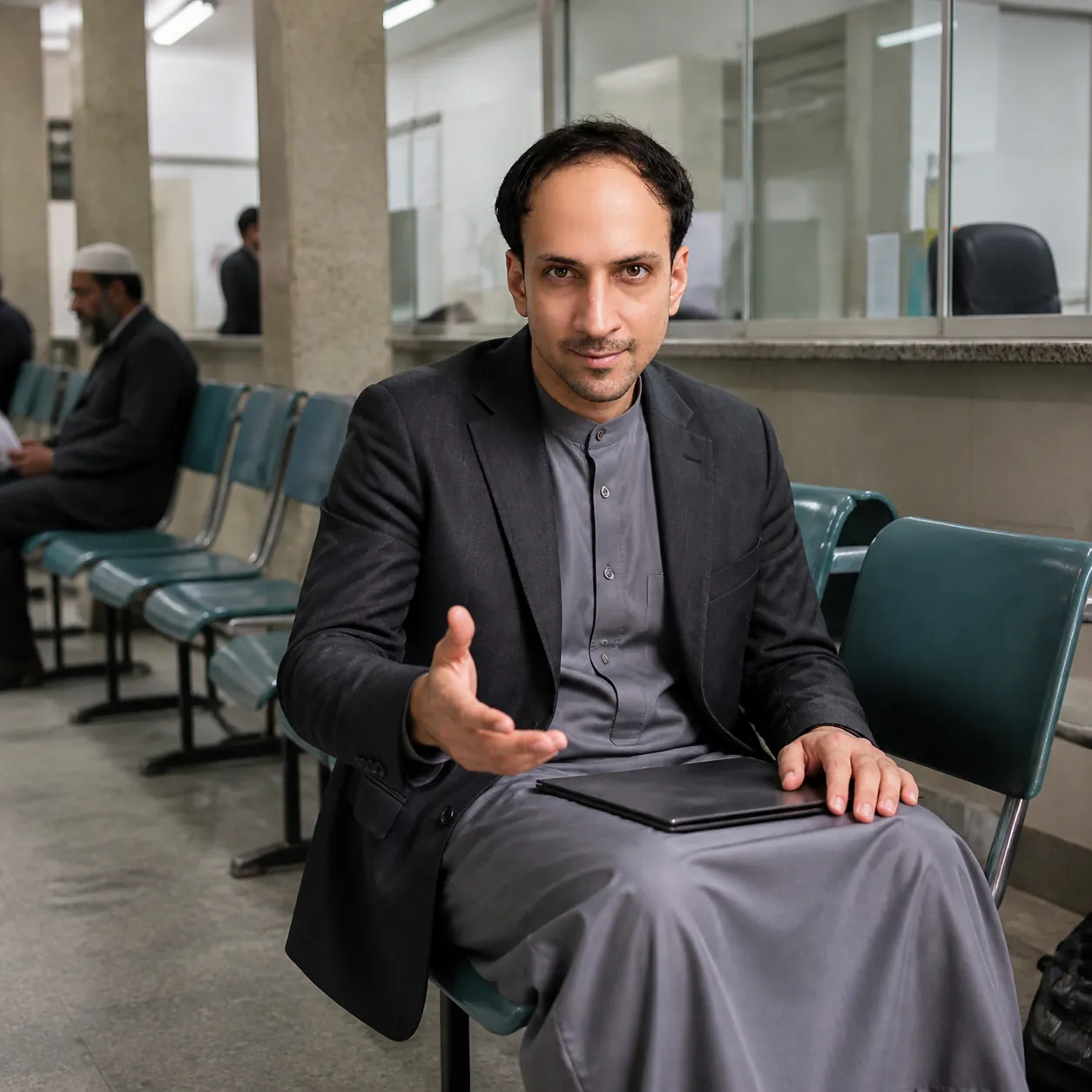
Folder Across the Knees — AI Portrait Prompt
صورةAI Portraits

Turn your own photo into a quiet editorial portrait in a municipal service office waiting row of bolted seats under strip lighting. Keeps your face unchanged.

من نص البرومبت

Use the attached reference photo as the identity reference: keep the same face, skin tone, hair and features as the person in that photo, without beautifying, aging or altering them. Create a square 1:1 museum-catalog frame with a strong first read and a slower second read at exactly 2880x2880 pixels. Location: a municipal service office waiting row of bolted seats under strip lighting. Show the subject in a plain grey traditional Gulf outfit under a thin charcoal blazer, setting a slim folder flat across their knees. Build the frame on this unremarkable detail: an open hand halted halfway through the turn that a sentence usually begins with, holding exactly where the words ran out spends time where a sentence should have gone and loses nothing. Explore where description stops and an ordinary life continues on without it; expression composed and unremarkable, carrying unremarkable ease, the weight held under a level, unhurried voice. Shoot a quiet 85mm portrait from standing height, with the room's ordinary depth left intact behind them. Make the composition read as an unremarkable snapshot until the timing detail registers. Render it as quiet editorial realism combining true-to-life interiors, accurate everyday clothing, unposed body language, and photography that refuses to dramatize, using open shade from a covered walkway, contrast low and skin texture visible and a palette of cool concrete, off-white, and a single dusty teal. Photorealistic: this must read as a real photograph from a physical camera, never an illustration, painting, or 3D render. Resolve real surface detail: dust settled where nobody wipes, fingerprint haze on glass, and edges rubbed pale by handling. Keep one identity-locked person, credible hands and fingers, natural fabric, and coherent scale, contact, reflections, shadows, airflow, deformation, and materials. Background people only when essential, always secondary and clearly different. Avoid rain-streaked glass, shadow-bar drama, clasped praying hands, symbolic empty chairs, and heroic poster framing. No text, labels, logos, signatures, watermarks, random symbols, plastic skin, excessive bloom, or glossy AI finish.
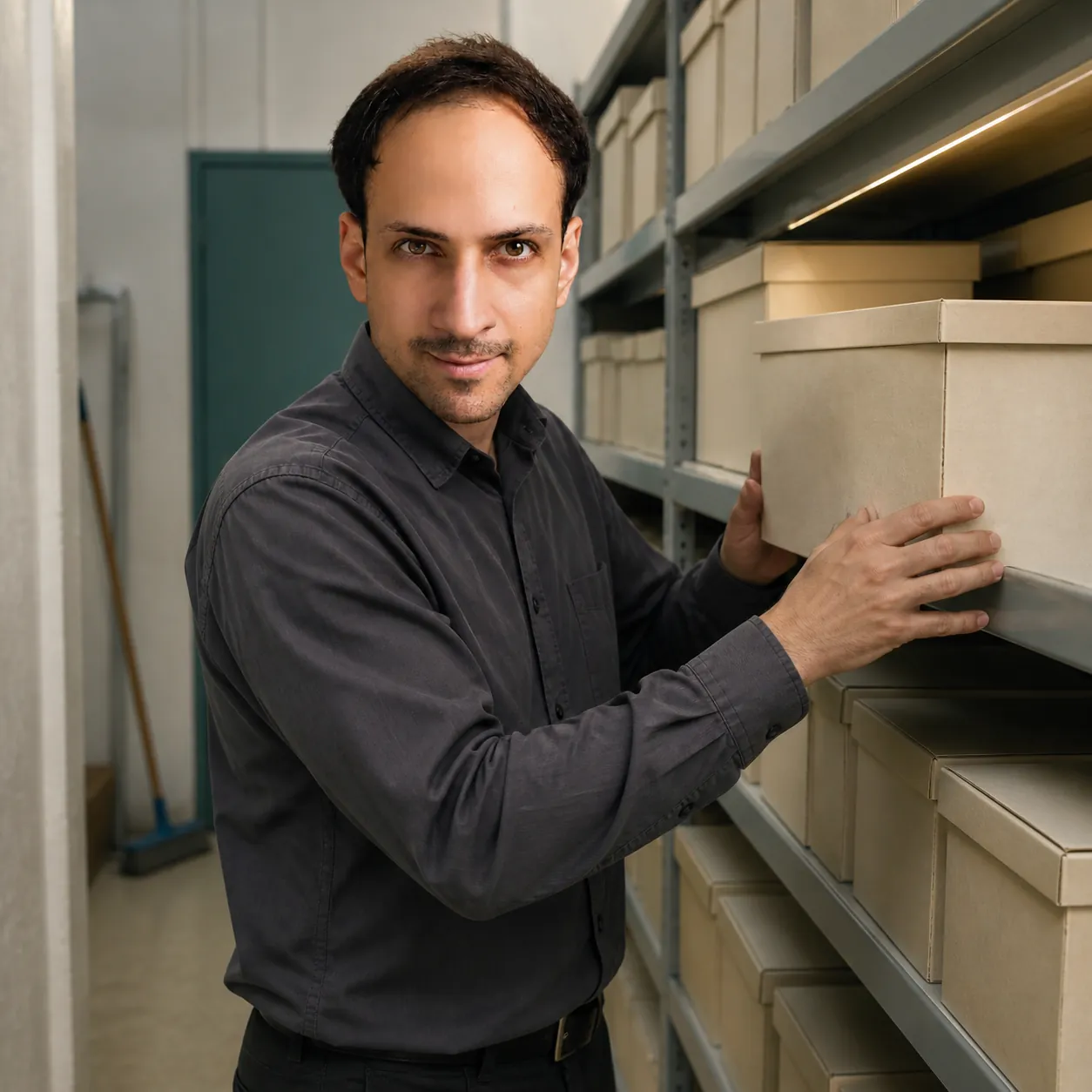
Storage Room Shelf — AI Portrait Prompt
صورةAI Portraits

Turn your own photo into a photorealistic portrait in a small storage room lined with lidded boxes on metal shelving. Keeps your face unchanged.

من نص البرومبت

Use the attached reference photo as the identity reference: keep the same face, skin tone, hair and features as the person in that photo, without beautifying, aging or altering them. Create a square 1:1 museum-catalog frame with a strong first read and a slower second read at exactly 2880x2880 pixels. Location: a small storage room lined with lidded boxes on metal shelving. Show the subject in a charcoal work shirt buttoned to the wrist over dark trousers, easing one lidded box back onto its shelf. Build the image around this small, exact tableau: a floor swept clean in one direction with the broom already stood back behind the door and no dust left anywhere lets the work go on at full strength on a borrowed sort of day. Explore where the labour actually sits when the visible task looks effortless; expression occupied, not expressive, carrying practised routine, difficulty stated as an ordinary fact. Frame just behind their shoulder so the finished work leads and their face stays readable. Make the composition keep one reflective surface slightly softer. Render it as quiet interior portraiture assembled from truthful domestic light, worn everyday surfaces, precise object placement, and human-centred documentary realism, using a single under-cabinet strip plus ambient room light, nothing theatrical anywhere and a palette of pale plaster, unbleached cotton, and a narrow band of teal. Photorealistic: this must read as a real photograph from a physical camera, never an illustration, painting, or 3D render. Resolve real surface detail: skin that reddens slightly under pressure, nail beds with honest colour, and knuckle creases that fold rather than blur. Keep one identity-locked person, credible hands and fingers, natural fabric, and coherent scale, contact, reflections, shadows, airflow, deformation, and materials. Background people only when essential, always secondary and clearly different. Avoid hero poses, golden-hour styling, posing at camera, and melancholy without visible labour. No text, labels, logos, signatures, watermarks, random symbols, plastic skin, excessive bloom, or glossy AI finish.
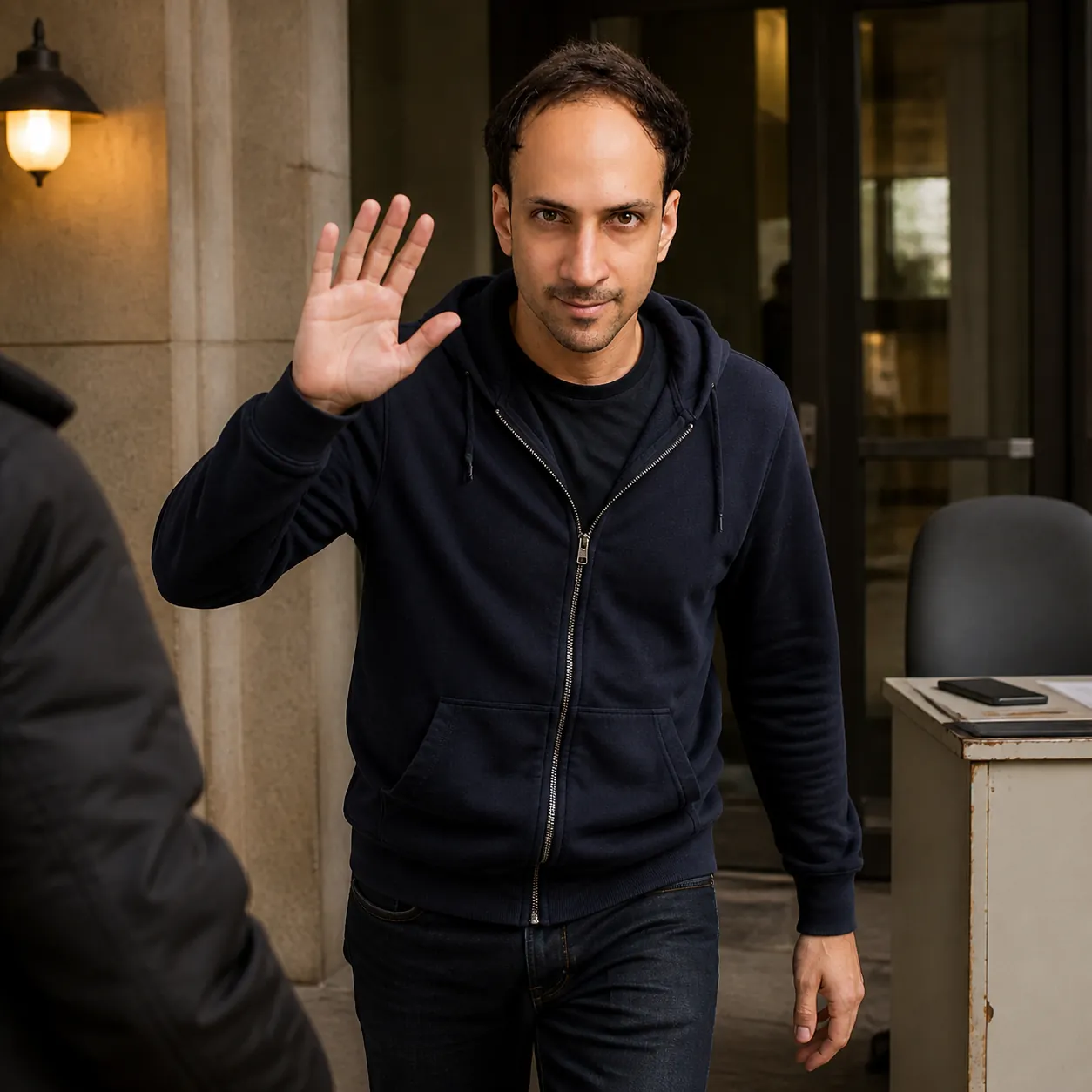
A Wave Without Breaking Stride — AI Portrait Prompt
صورةAI Portraits

Turn your own photo into a portrait in a residential building entrance where the guard's chair stands beside the door. Keeps your face unchanged.

من نص البرومبت

Use the attached reference photo as the identity reference: keep the same face, skin tone, hair and features as the person in that photo, without beautifying, aging or altering them. Create a square 1:1 museum-catalog frame with a strong first read and a slower second read at exactly 2880x2880 pixels. Location: a residential building entrance where the guard's chair stands beside the door. Show the subject in a navy zip-up hoodie over a plain tee and dark jeans, lifting one hand in greeting without breaking stride. Hide the whole argument in this ordinary moment: a phone lowered face-down within a second of a long answer becoming the short one they finally sent spends time where a sentence should have gone and loses nothing. Explore what a person owes a question their language was never built to answer; expression composed and unremarkable, carrying workaday patience, the weight held below the reach of words. Use a 35mm three-quarter view close enough to include one nearby sleeve that is not theirs. Make the composition keep the second person partial and never the focus. Render it as quiet editorial realism combining true-to-life interiors, accurate everyday clothing, unposed body language, and photography that refuses to dramatize, using late-day interior light already turning grey, with one lamp switched on early and a palette of soft bone, dark charcoal, and a low amber note. Photorealistic: this must read as a real photograph from a physical camera, never an illustration, painting, or 3D render. Resolve real surface detail: thread ends and slight pilling on worn cloth, hairline chips at every hard corner, and stone that is porous rather than smooth. Keep one identity-locked person, credible hands and fingers, natural fabric, and coherent scale, contact, reflections, shadows, airflow, deformation, and materials. Background people only when essential, always secondary and clearly different. Avoid rain-streaked glass, shadow-bar drama, clasped praying hands, symbolic empty chairs, and heroic poster framing. No text, labels, logos, signatures, watermarks, random symbols, plastic skin, excessive bloom, or glossy AI finish.
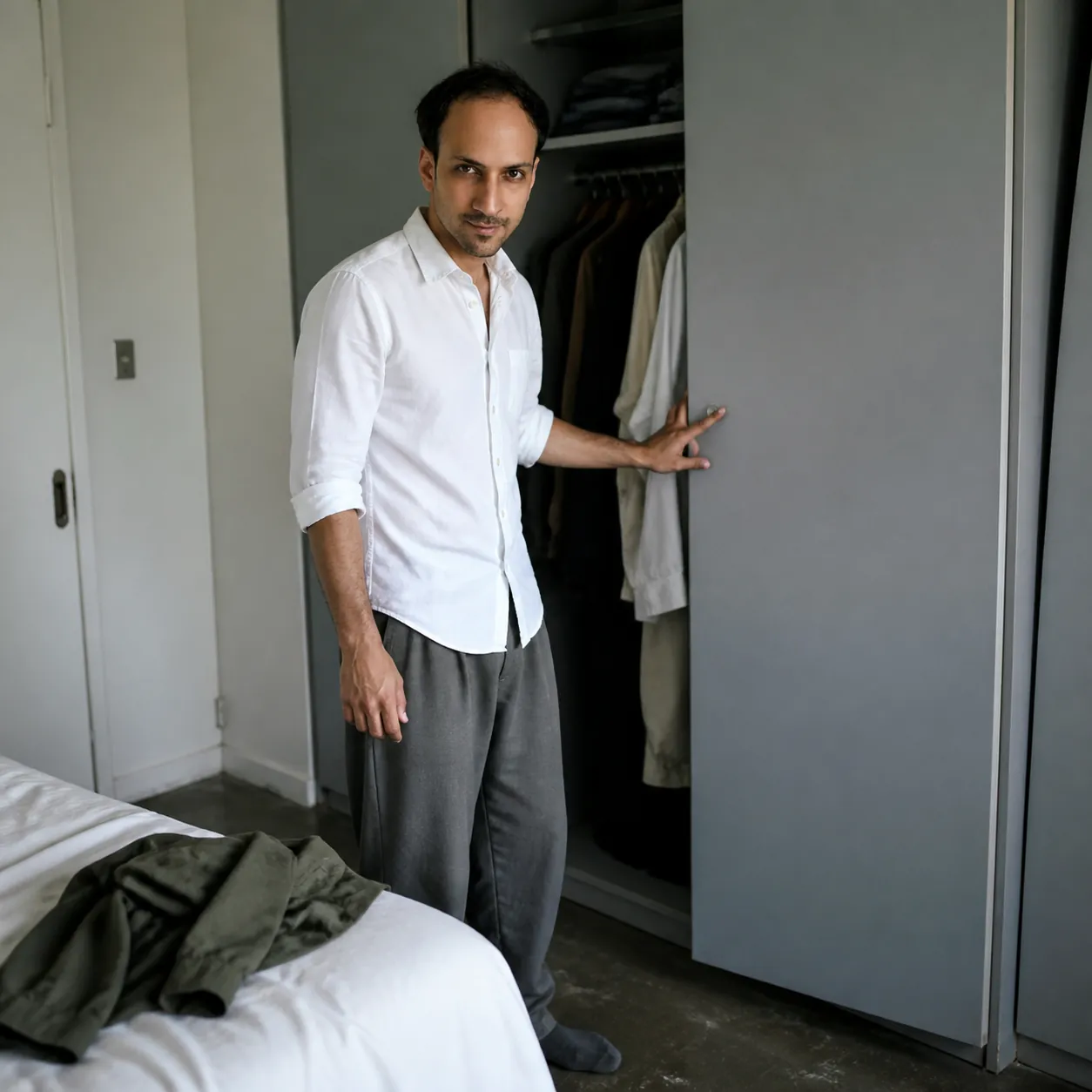
Bedroom Wardrobe, Doors Open — AI Portrait Prompt
صورةAI Portraits

Turn your own photo into a photorealistic portrait in a plain bedroom with the wardrobe doors standing open. Keeps your face unchanged.

من نص البرومبت

Use the attached reference photo as the identity reference: keep the same face, skin tone, hair and features as the person in that photo, without beautifying, aging or altering them. Create a square 1:1 museum-catalog frame with a strong first read and a slower second read at exactly 2880x2880 pixels. Location: a plain bedroom with the wardrobe doors standing open. Show the subject in a white cotton shirt untucked over loose grey trousers, drawing a wardrobe door shut with two fingers. Make this piece of unglamorous evidence the whole argument: a cold tap run over both wrists mid-chore until the water stops reading as information and starts reading as cold lets the work go on at full strength on a borrowed sort of day. Explore what evidence a person keeps when recollection stops issuing receipts; expression occupied, not expressive, carrying level attention, difficulty stated quietly, the way work states things. Use a 90mm portrait length that compresses the room gently without flattening their hands. Make the composition give the finished work more sharpness. Render it as quiet interior portraiture assembled from truthful domestic light, worn everyday surfaces, precise object placement, and human-centred documentary realism, using flat overcast daylight through a single pane with no directional drama and a palette of cool white tile, brushed steel, and one dull olive. Photorealistic: this must read as a real photograph from a physical camera, never an illustration, painting, or 3D render. Resolve real surface detail: floor finish worn along the walked line, skirting marked at shoe height, and corners darker than the open floor. Keep one identity-locked person, credible hands and fingers, natural fabric, and coherent scale, contact, reflections, shadows, airflow, deformation, and materials. Background people only when essential, always secondary and clearly different. Avoid hero poses, golden-hour styling, posing at camera, and melancholy without visible labour. No text, labels, logos, signatures, watermarks, random symbols, plastic skin, excessive bloom, or glossy AI finish.
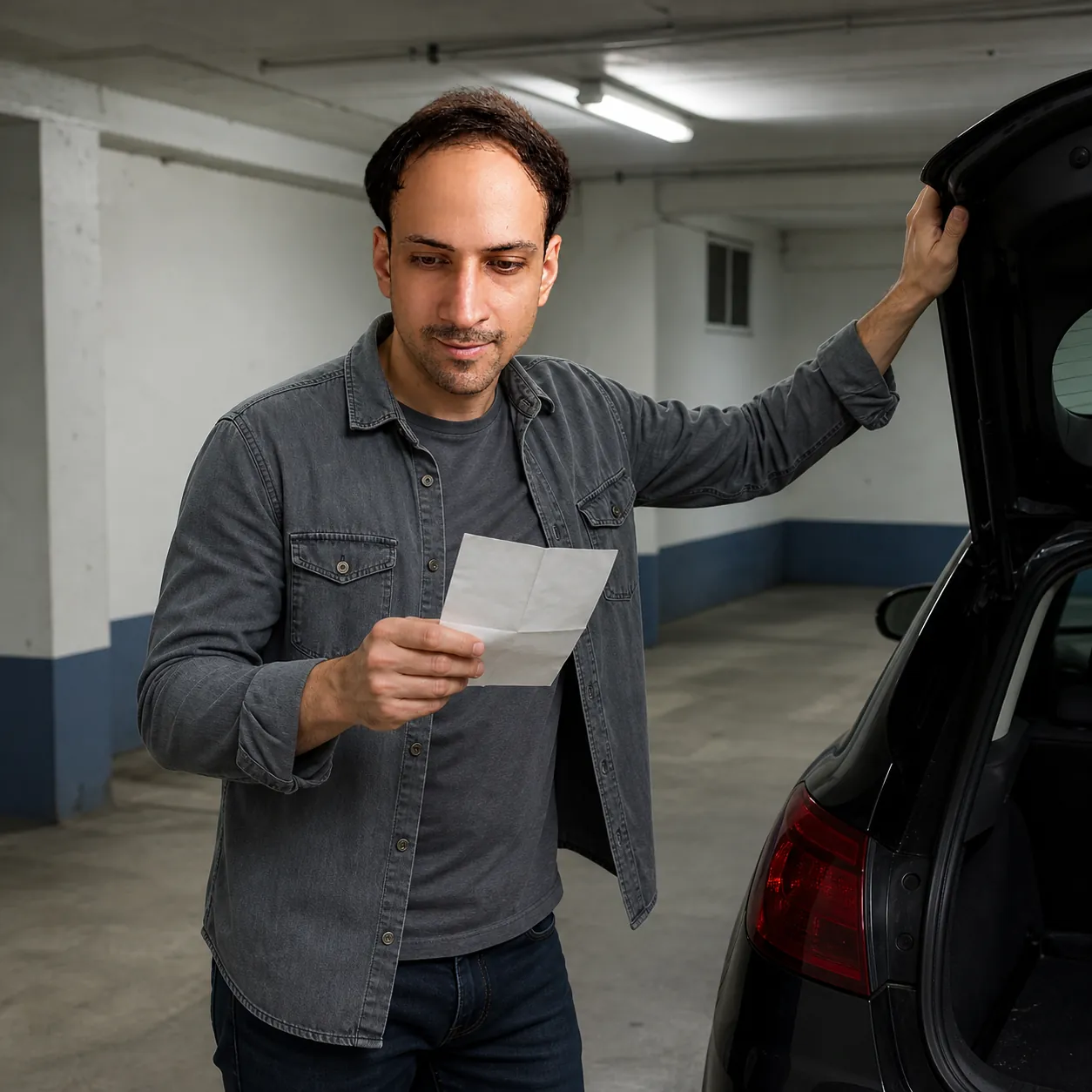
Car Park Bay, Boot Closing — AI Portrait Prompt
صورةAI Portraits

Turn your own photo into a photorealistic portrait in an underground residential car park bay beside your own parked car. Keeps your face unchanged.

من نص البرومبت

Use the attached reference photo as the identity reference: keep the same face, skin tone, hair and features as the person in that photo, without beautifying, aging or altering them. Create a square 1:1 museum-catalog frame with a strong first read and a slower second read at exactly 2880x2880 pixels. Location: an underground residential car park bay beside their own parked car. Show the subject in a stone-grey overshirt over a plain tee and dark jeans, closing the car boot with one flat hand. The difficulty must be visible in this, not in their expression: a shopping list in their own handwriting held at the distance they keep for other people's paper, every item already ticked lets the work go on at full strength on a borrowed sort of day. Explore how a household runs at full standard on a day held at one remove; expression occupied, not expressive, carrying measured deliberateness, difficulty stated without reaching for sympathy. Shoot slightly across the work surface at chest height with natural perspective and no distortion. Make the composition leave the tidied half of the room emptier. Render it as quiet interior portraiture assembled from truthful domestic light, worn everyday surfaces, precise object placement, and human-centred documentary realism, using cool fluorescent tube light evened by pale walls and matte surfaces and a palette of soft bone, slate, and a single field of faded indigo. Photorealistic: this must read as a real photograph from a physical camera, never an illustration, painting, or 3D render. Resolve real surface detail: rubber gone chalky with age, painted metal chipped to primer, and plastic yellowed only where light reaches it. Keep one identity-locked person, credible hands and fingers, natural fabric, and coherent scale, contact, reflections, shadows, airflow, deformation, and materials. Background people only when essential, always secondary and clearly different. Avoid hero poses, golden-hour styling, posing at camera, and melancholy without visible labour. No text, labels, logos, signatures, watermarks, random symbols, plastic skin, excessive bloom, or glossy AI finish.
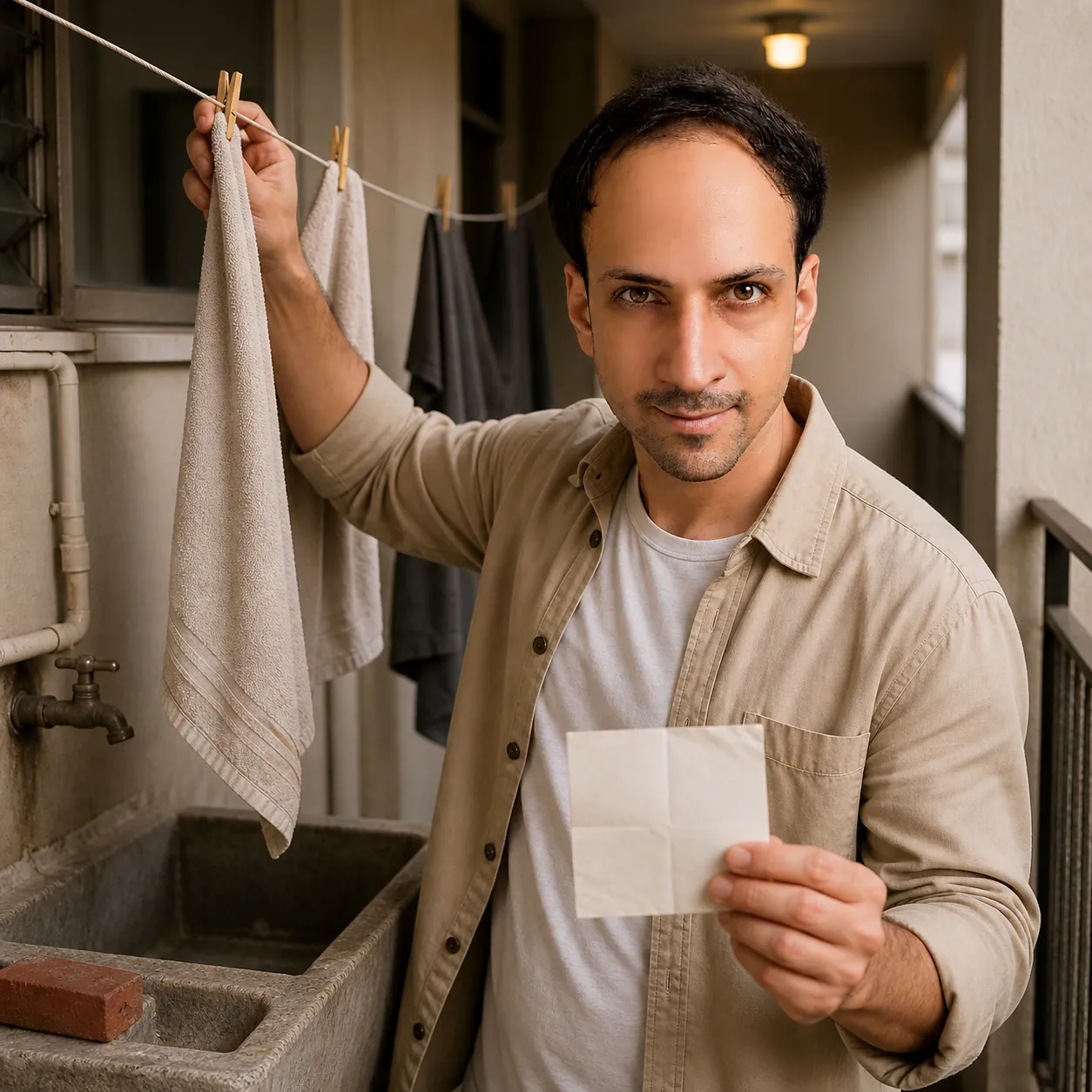
The List in Their Own Hand — AI Portrait Prompt
صورةAI Portraits

Turn your own photo into an unsentimental domestic portrait in a service balcony with a drying line and a low utility sink. Keeps your face unchanged.

من نص البرومبت

Use the attached reference photo as the identity reference: keep the same face, skin tone, hair and features as the person in that photo, without beautifying, aging or altering them. Create a square 1:1 museum-catalog frame with a strong first read and a slower second read at exactly 2880x2880 pixels. Location: a service balcony with a drying line and a low utility sink. Show the subject in a light beige overshirt open over a white cotton undershirt, pegging one damp towel to the drying line. Make this piece of unglamorous evidence the whole argument: a shopping list in their own handwriting held at the distance they keep for other people's paper, every item already ticked measures the distance between doing a thing and being there for it. Explore how a household runs at full standard on a day held at one remove; expression occupied, not expressive, carrying quiet method, difficulty stated with the steadiness of routine. Use a 90mm portrait length that compresses the room gently without flattening their hands. Make the composition give the finished work more sharpness. Render it as unsentimental domestic realism built from documentary portraiture, honest household materials, plain interiors, and restrained art direction, using one warm ceiling fitting doing all the work, shadows soft and readable and a palette of warm grey concrete, dry sand, and one muted brick red. Photorealistic: this must read as a real photograph from a physical camera, never an illustration, painting, or 3D render. Resolve real surface detail: grout darker than tile, sealant slightly yellowed, and every joint showing a real tolerance gap. Keep one identity-locked person, credible hands and fingers, natural fabric, and coherent scale, contact, reflections, shadows, airflow, deformation, and materials. Background people only when essential, always secondary and clearly different. Avoid double exposures, transparent bodies, out-of-body views, and mirrors returning a different person. No text, labels, logos, signatures, watermarks, random symbols, plastic skin, excessive bloom, or glossy AI finish.
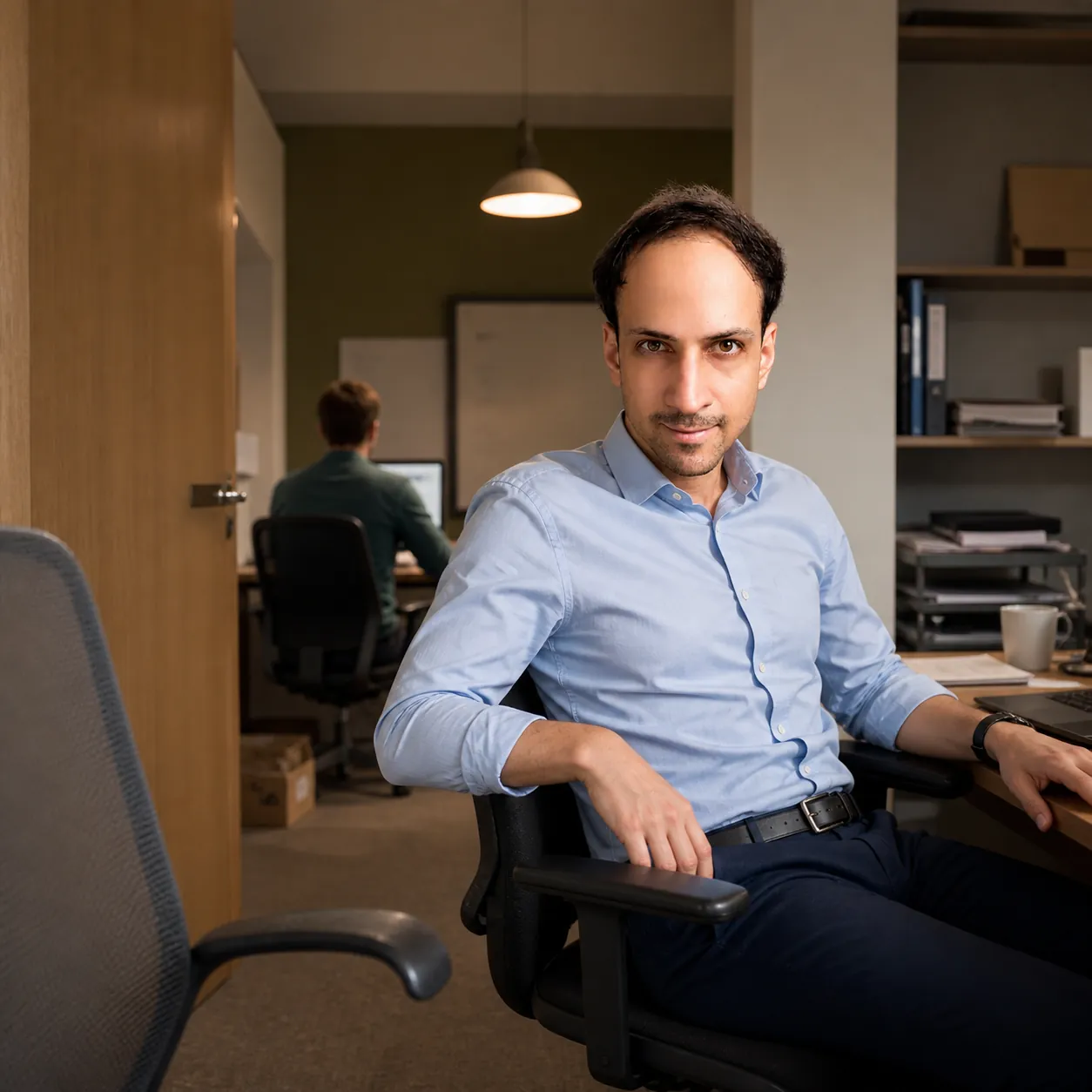
Chair Turned Toward the Door — AI Portrait Prompt
صورةAI Portraits

Turn your own photo into a photorealistic portrait in a shared university office where a colleague's desk faces the far wall. Keeps your face unchanged.

من نص البرومبت

Use the attached reference photo as the identity reference: keep the same face, skin tone, hair and features as the person in that photo, without beautifying, aging or altering them. Create a square 1:1 museum-catalog frame with a strong first read and a slower second read at exactly 2880x2880 pixels. Location: a shared university office where a colleague's desk faces the far wall. Show the subject in a light blue oxford shirt tucked into pressed navy trousers, turning their chair a quarter turn toward the open door. Build the frame on this unremarkable detail: a free seat within reach that they have not taken, the call answered on both feet as though it were brief says the closest true thing the available language will actually hold. Explore whether silence can be rigorous rather than evasive when words genuinely run out; expression composed and unremarkable, carrying quiet competence, the weight held without disturbing the exchange. Shoot a quiet 85mm portrait from standing height, with the room's ordinary depth left intact behind them. Make the composition read as an unremarkable snapshot until the timing detail registers. Render it as gallery-grade quiet realism assembling lived-in rooms, precise gesture observation, muted material texture, and framing that never announces its subject, using one warm ceiling fitting doing all the work in an ordinary room and a palette of warm grey, pale plaster, and one muted olive accent. Photorealistic: this must read as a real photograph from a physical camera, never an illustration, painting, or 3D render. Resolve real surface detail: label-free packaging showing carton fibre, cardboard bruised at the corners, and tape lifting slightly at one end. Keep one identity-locked person, credible hands and fingers, natural fabric, and coherent scale, contact, reflections, shadows, airflow, deformation, and materials. Background people only when essential, always secondary and clearly different. Avoid tears, head in hands, staring through windows, hunched silhouettes, and any object announcing illness. No text, labels, logos, signatures, watermarks, random symbols, plastic skin, excessive bloom, or glossy AI finish.
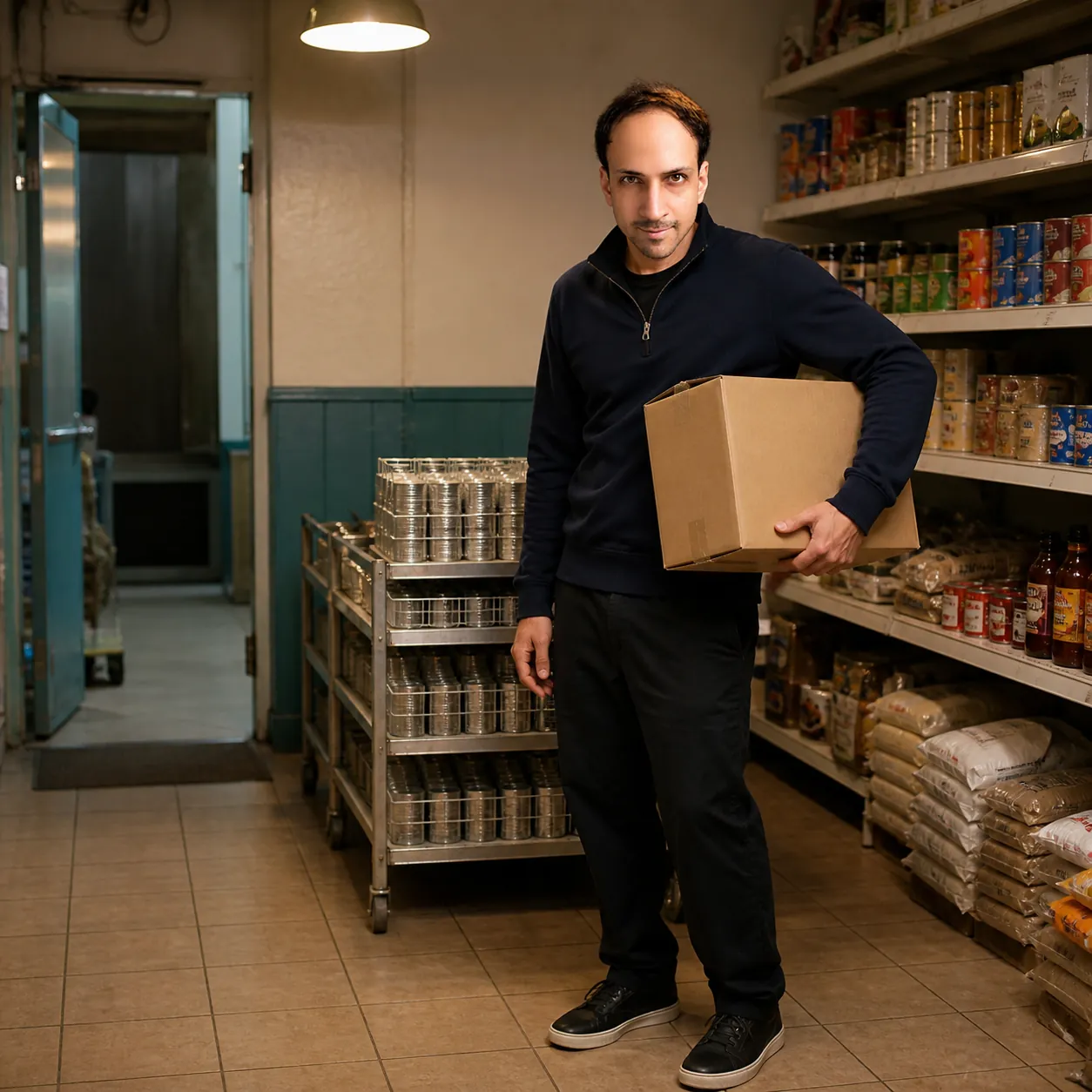
Carton at Closing Time — AI Portrait Prompt
صورةAI Portraits

Turn your own photo into a photorealistic portrait in a neighbourhood corner shop aisle of shelved tins and sacks at closing. Keeps your face unchanged.

من نص البرومبت

Use the attached reference photo as the identity reference: keep the same face, skin tone, hair and features as the person in that photo, without beautifying, aging or altering them. Create a square 1:1 museum-catalog frame with a strong first read and a slower second read at exactly 2880x2880 pixels. Location: a neighbourhood corner shop aisle of shelved tins and sacks at closing. Show the subject in a navy quarter-zip over straight dark trousers and plain trainers, lifting one plain carton into the crook of their arm. Make this piece of unglamorous evidence the whole argument: a draining rack stacked into faultless ranks by a washing-up they have no memory of beginning or finishing lets the work go on at full strength on a borrowed sort of day. Explore why a task can be finished perfectly and remembered by nobody; expression occupied, not expressive, carrying unhurried checking, difficulty stated quietly, the way work states things. Use a 90mm portrait length that compresses the room gently without flattening their hands. Make the composition leave the tidied half of the room emptier. Render it as quiet interior portraiture assembled from truthful domestic light, worn everyday surfaces, precise object placement, and human-centred documentary realism, using one warm ceiling fitting doing all the work, shadows soft and readable and a palette of pale plaster, unbleached cotton, and a narrow band of teal. Photorealistic: this must read as a real photograph from a physical camera, never an illustration, painting, or 3D render. Resolve real surface detail: paper fibre visible at cut edges, plastic that shows mould lines, and paint thicker where a brush turned. Keep one identity-locked person, credible hands and fingers, natural fabric, and coherent scale, contact, reflections, shadows, airflow, deformation, and materials. Background people only when essential, always secondary and clearly different. Avoid hero poses, golden-hour styling, posing at camera, and melancholy without visible labour. No text, labels, logos, signatures, watermarks, random symbols, plastic skin, excessive bloom, or glossy AI finish.
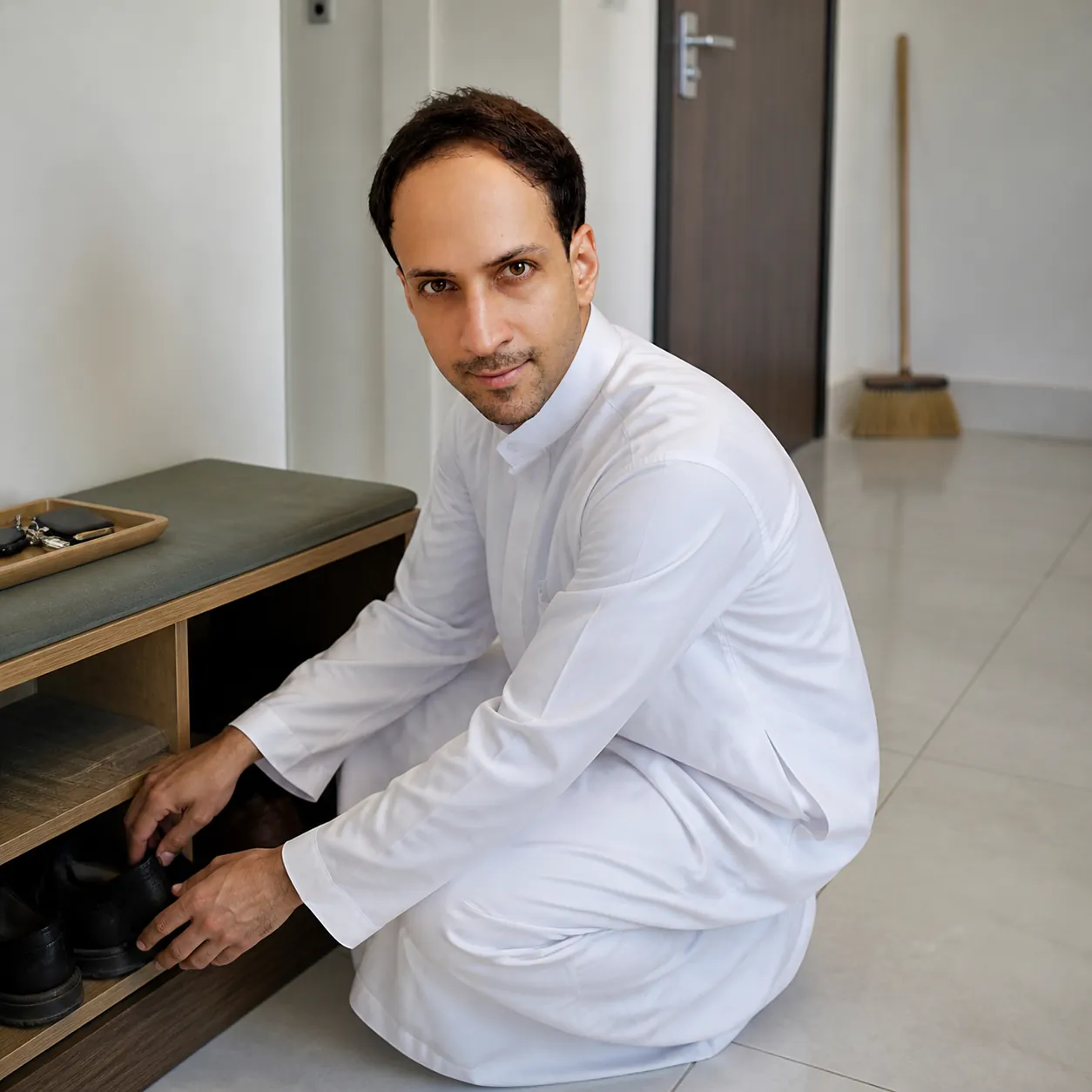
Swept Floor, Parallel Shoes — AI Portrait Prompt
صورةAI Portraits

Turn your own photo into an unsentimental domestic portrait in an apartment entrance hall with a shoe bench and a key tray. Keeps your face unchanged.

من نص البرومبت

Use the attached reference photo as the identity reference: keep the same face, skin tone, hair and features as the person in that photo, without beautifying, aging or altering them. Create a square 1:1 museum-catalog frame with a strong first read and a slower second read at exactly 2880x2880 pixels. Location: an apartment entrance hall with a shoe bench and a key tray. Show the subject in a plain white traditional Gulf outfit with the sleeves shaken straight, lining both shoes parallel under the bench. The difficulty must be visible in this, not in their expression: a floor swept clean in one direction with the broom already stood back behind the door and no dust left anywhere measures the distance between doing a thing and being there for it. Explore where the labour actually sits when the visible task looks effortless; expression occupied, not expressive, carrying sober diligence, difficulty stated in the plainest available terms. Shoot slightly across the work surface at chest height with natural perspective and no distortion. Make the composition leave the tidied half of the room emptier. Render it as unsentimental domestic realism built from documentary portraiture, honest household materials, plain interiors, and restrained art direction, using early indirect daylight with low contrast and honest skin texture throughout and a palette of cool white tile, brushed steel, and one dull olive. Photorealistic: this must read as a real photograph from a physical camera, never an illustration, painting, or 3D render. Resolve real surface detail: wood grain read at honest scale, matte and gloss clearly separated, and no surface uniformly clean. Keep one identity-locked person, credible hands and fingers, natural fabric, and coherent scale, contact, reflections, shadows, airflow, deformation, and materials. Background people only when essential, always secondary and clearly different. Avoid double exposures, transparent bodies, out-of-body views, and mirrors returning a different person. No text, labels, logos, signatures, watermarks, random symbols, plastic skin, excessive bloom, or glossy AI finish.
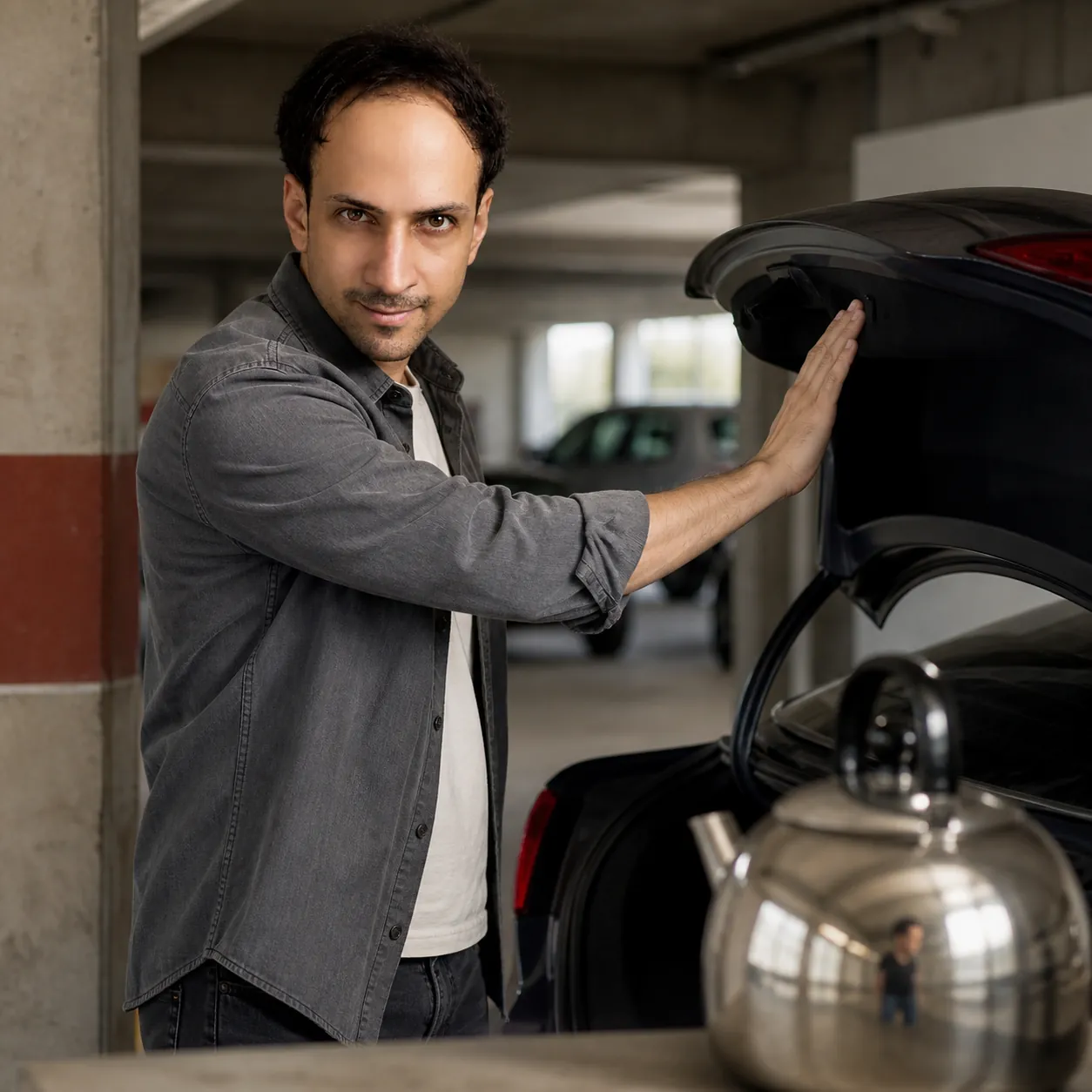
Boot Closed With a Flat Hand — AI Portrait Prompt
صورةAI Portraits

Turn your own photo into a gallery-scale household portrait in an underground residential car park bay beside your own parked car. Keeps your face unchanged.

من نص البرومبت

Use the attached reference photo as the identity reference: keep the same face, skin tone, hair and features as the person in that photo, without beautifying, aging or altering them. Create a square 1:1 museum-catalog frame with a strong first read and a slower second read at exactly 2880x2880 pixels. Location: an underground residential car park bay beside their own parked car. Show the subject in a stone-grey overshirt over a plain tee and dark jeans, closing the car boot with one flat hand. Build the image around this small, exact tableau: a kettle's curved flank returning a small, warped reflection of them that takes a moment longer to resolve than it should measures the distance between doing a thing and being there for it. Explore what a plain object can confirm that looking at it cannot; expression occupied, not expressive, carrying quiet method, difficulty stated as an ordinary fact. Frame just behind their shoulder so the finished work leads and their face stays readable. Make the composition hold plain air between their hand and the object. Render it as gallery-scale household realism built from credible hands, correct water and fabric behaviour, and calm compositional discipline, using flat overcast daylight through a single pane with no directional drama and a palette of warm grey concrete, dry sand, and one muted brick red. Photorealistic: this must read as a real photograph from a physical camera, never an illustration, painting, or 3D render. Resolve real surface detail: glass with real thickness at its edge, reflections that carry the room's actual colour, and dust visible only at grazing angles. Keep one identity-locked person, credible hands and fingers, natural fabric, and coherent scale, contact, reflections, shadows, airflow, deformation, and materials. Background people only when essential, always secondary and clearly different. Avoid double exposures, transparent bodies, out-of-body views, and mirrors returning a different person. No text, labels, logos, signatures, watermarks, random symbols, plastic skin, excessive bloom, or glossy AI finish.
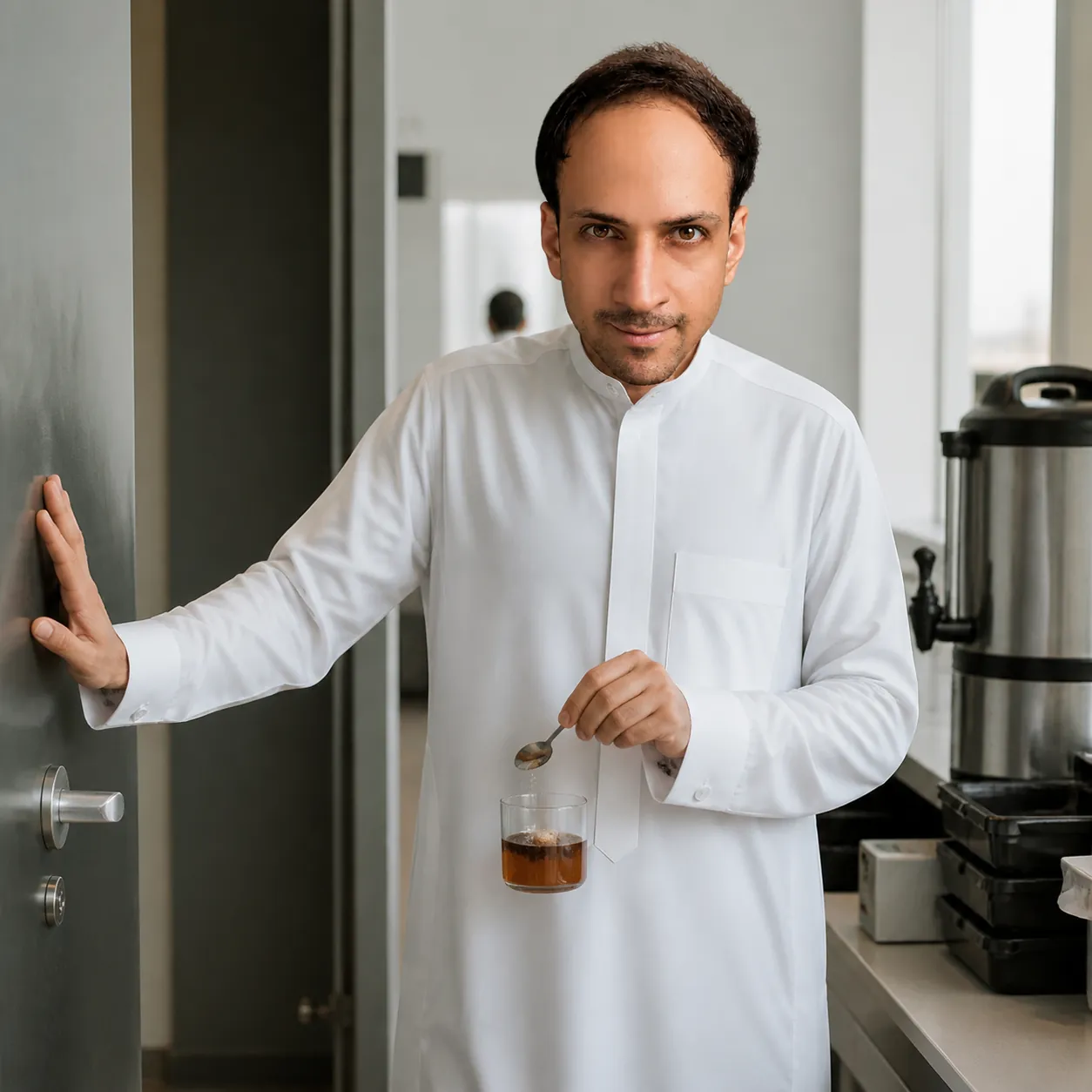
Sugar Stirred at the Tea Point — AI Portrait Prompt
صورةAI Portraits

Turn your own photo into an unforced documentary portrait in a shared office tea point with a boiler urn and stacked trays. Keeps your face unchanged.

من نص البرومبت

Use the attached reference photo as the identity reference: keep the same face, skin tone, hair and features as the person in that photo, without beautifying, aging or altering them. Create a square 1:1 museum-catalog frame with a strong first read and a slower second read at exactly 2880x2880 pixels. Location: a shared office tea point with a boiler urn and stacked trays. Show the subject in a pressed white traditional Gulf outfit with its cuffs buttoned and sleeves unrolled, stirring sugar into a glass and lifting the spoon clear. Let the weight sit here and look like nothing: a hand still flat on a door whose catch seated a full second before their palm agreed to leave it says the closest true thing the available language will actually hold. Explore why an honest answer can be shorter than the thing it is reporting; expression composed and unremarkable, carrying mild attentiveness, the weight held inside the ordinary tempo. Use an eye-level 50mm view at conversational distance, natural perspective and a shallow but honest depth. Make the composition give the delayed hand as much space as the face. Render it as unforced documentary portraiture built from natural domestic staging, honest skin rendering, restrained contemporary styling, and patient observational timing, using flat afternoon daylight through a plain window, shadows soft and unremarkable and a palette of warm grey, pale plaster, and one muted olive accent. Photorealistic: this must read as a real photograph from a physical camera, never an illustration, painting, or 3D render. Resolve real surface detail: true skin texture with pores and fine hair at the hairline, and fabric that creases where it is actually stressed. Keep one identity-locked person, credible hands and fingers, natural fabric, and coherent scale, contact, reflections, shadows, airflow, deformation, and materials. Background people only when essential, always secondary and clearly different. Avoid tears, head in hands, staring through windows, hunched silhouettes, and any object announcing illness. No text, labels, logos, signatures, watermarks, random symbols, plastic skin, excessive bloom, or glossy AI finish.
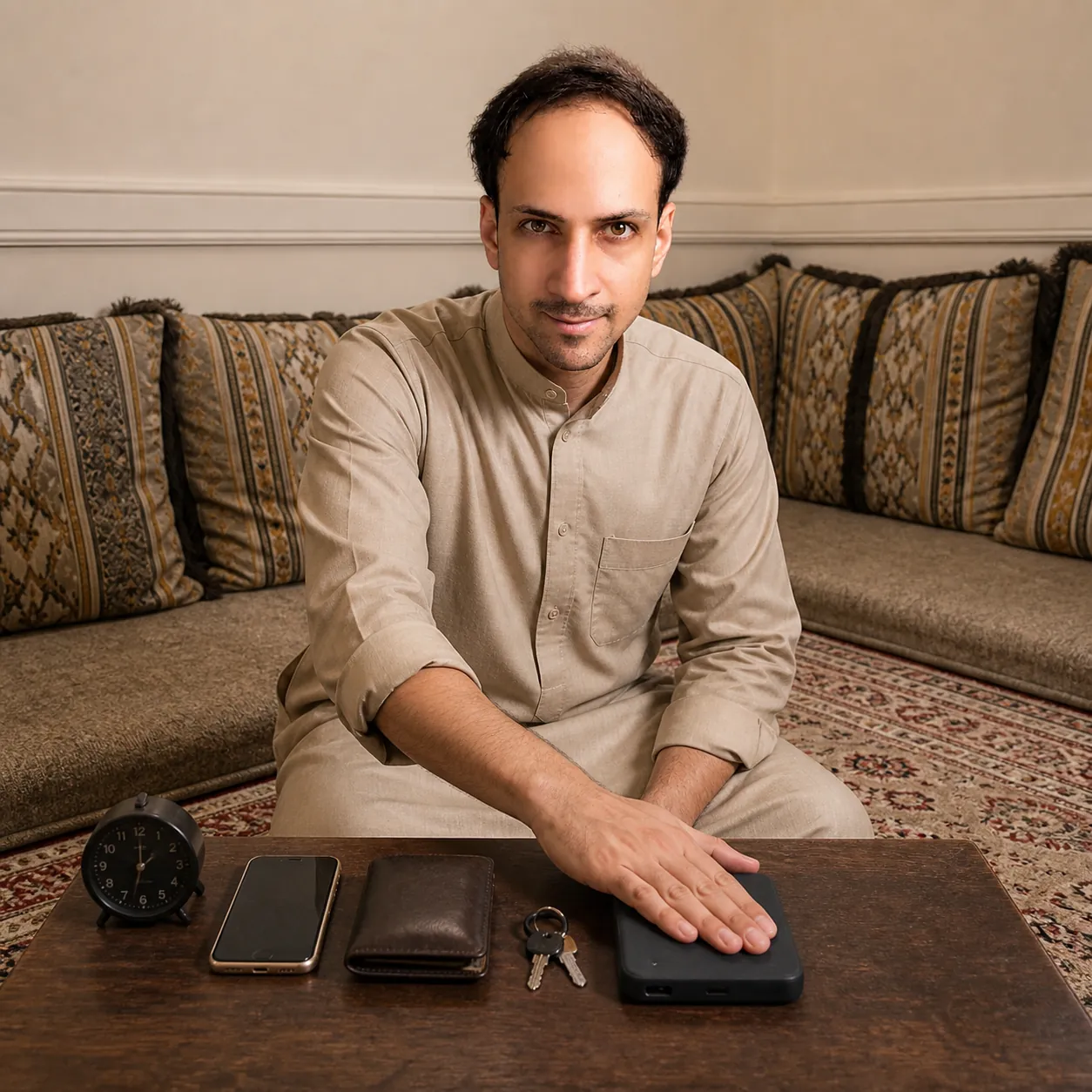
Majlis Cushion Against the Wall — AI Portrait Prompt
صورةAI Portraits

Turn your own photo into a photorealistic portrait in a family majlis with cushions squared along two walls and one low table. Keeps your face unchanged.

من نص البرومبت

Use the attached reference photo as the identity reference: keep the same face, skin tone, hair and features as the person in that photo, without beautifying, aging or altering them. Create a square 1:1 museum-catalog frame with a strong first read and a slower second read at exactly 2880x2880 pixels. Location: a family majlis with cushions squared along two walls and one low table. Show the subject in a plain sand-coloured traditional Gulf outfit, sleeves pushed once above the wrist, aligning one floor cushion square to the wall. Anchor the frame to this piece of ordinary evidence: a row of five ordinary household objects named under their breath mid-task, one palm resting flat on the last of them lets the work go on at full strength on a borrowed sort of day. Explore what it costs to finish a job and still have to verify it; expression occupied, not expressive, carrying workmanlike calm, difficulty stated with the steadiness of routine. Place the lens at hand height so the object and their eyes hold one plane. Make the composition hold plain air between their hand and the object. Render it as quiet interior portraiture assembled from truthful domestic light, worn everyday surfaces, precise object placement, and human-centred documentary realism, using one warm ceiling fitting doing all the work, shadows soft and readable and a palette of oat linen, cool graphite, and one thin line of brass. Photorealistic: this must read as a real photograph from a physical camera, never an illustration, painting, or 3D render. Resolve real surface detail: hair with individual strands catching light, short hairs of uneven length, and skin oil giving a low uneven sheen. Keep one identity-locked person, credible hands and fingers, natural fabric, and coherent scale, contact, reflections, shadows, airflow, deformation, and materials. Background people only when essential, always secondary and clearly different. Avoid hero poses, golden-hour styling, posing at camera, and melancholy without visible labour. No text, labels, logos, signatures, watermarks, random symbols, plastic skin, excessive bloom, or glossy AI finish.
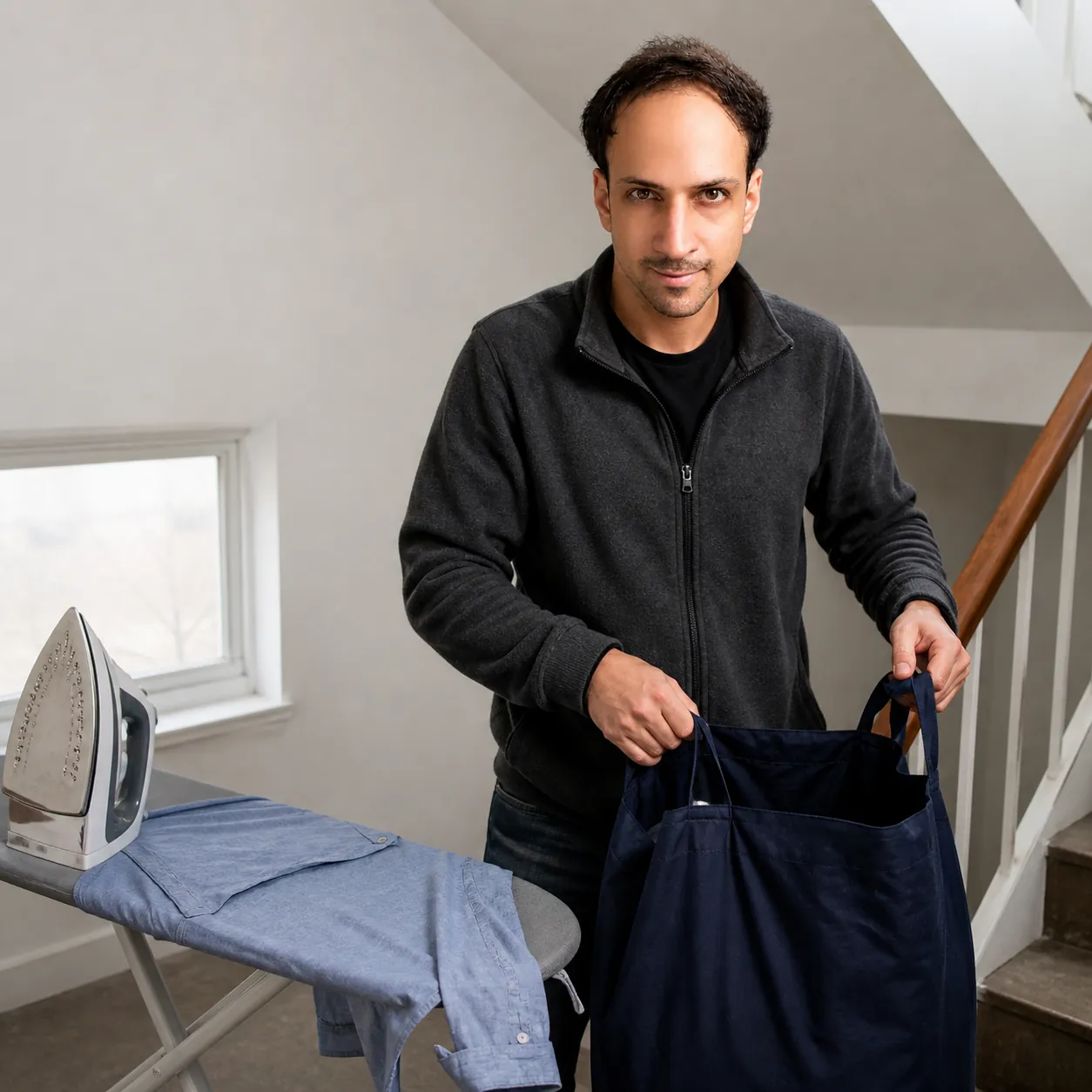
Bag Shifted on the Landing — AI Portrait Prompt
صورةAI Portraits

Turn your own photo into a portrait in a residential stairwell landing between two floors, one window at knee height. Keeps your face unchanged.

من نص البرومبت

Use the attached reference photo as the identity reference: keep the same face, skin tone, hair and features as the person in that photo, without beautifying, aging or altering them. Create a square 1:1 museum-catalog frame with a strong first read and a slower second read at exactly 2880x2880 pixels. Location: a residential stairwell landing between two floors, one window at knee height. Show the subject in a dark grey zip fleece over a plain crew-neck shirt, shifting a full carrier bag to their other hand. Make this piece of unglamorous evidence the whole argument: a shirt cooling on a board beside an upright iron, its sleeve crease sharper than anything they remember making by hand lets the work go on at full strength on a borrowed sort of day. Explore how much work it takes to stay inside an ordinary five-minute chore; expression occupied, not expressive, carrying level attention, difficulty stated with the steadiness of routine. Use a 90mm portrait length that compresses the room gently without flattening their hands. Make the composition leave the tidied half of the room emptier. Render it as museum-grade chore photography combining high-fidelity skin, accurate steel and glass reflections, matter-of-fact staging, and observational framing, using cool fluorescent tube light evened by pale walls and matte surfaces and a palette of soft bone, slate, and a single field of faded indigo. Photorealistic: this must read as a real photograph from a physical camera, never an illustration, painting, or 3D render. Resolve real surface detail: leather creased along the lines of use, stitching slightly irregular, and edges burnished from contact. Keep one identity-locked person, credible hands and fingers, natural fabric, and coherent scale, contact, reflections, shadows, airflow, deformation, and materials. Background people only when essential, always secondary and clearly different. Avoid hero poses, golden-hour styling, posing at camera, and melancholy without visible labour. No text, labels, logos, signatures, watermarks, random symbols, plastic skin, excessive bloom, or glossy AI finish.
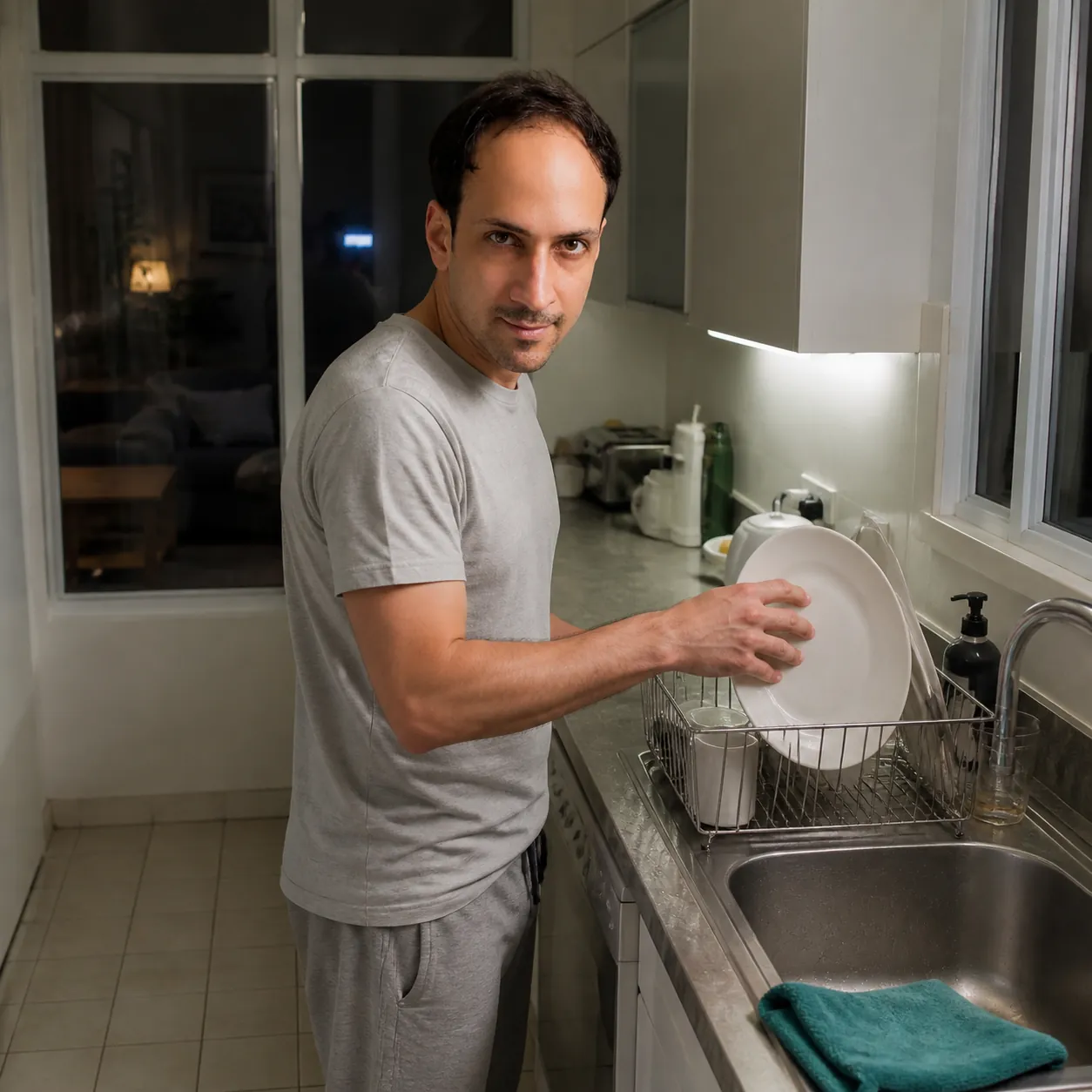
Kitchen Chore on Autopilot — AI Portrait Prompt
صورةAI Portraits

Turn your own photo into a gallery-scale household portrait in a narrow galley kitchen where the counter runs unbroken to the window. Keeps your face unchanged.

من نص البرومبت

Use the attached reference photo as the identity reference: keep the same face, skin tone, hair and features as the person in that photo, without beautifying, aging or altering them. Create a square 1:1 museum-catalog frame with a strong first read and a slower second read at exactly 2880x2880 pixels. Location: a narrow galley kitchen where the counter runs unbroken to the window. Show the subject in a soft grey lounge tee and drawstring cotton trousers, sleeves plain, stacking one clean plate onto the drying rack. Anchor the frame to this piece of ordinary evidence: a living room of four years' residence seen through its own window glass, every object correct and arranged like a set lets the work go on at full strength on a borrowed sort of day. Explore why the smallest grounding act costs more effort than the chore around it; expression occupied, not expressive, carrying unhurried checking, difficulty stated without reaching for sympathy. Place the lens at hand height so the object and their eyes hold one plane. Make the composition hold plain air between their hand and the object. Render it as gallery-scale household realism built from credible hands, correct water and fabric behaviour, and calm compositional discipline, using cool fluorescent tube light evened by pale walls and matte surfaces and a palette of pale plaster, unbleached cotton, and a narrow band of teal. Photorealistic: this must read as a real photograph from a physical camera, never an illustration, painting, or 3D render. Resolve real surface detail: cotton that hangs by its own weight, seams that pucker very slightly, and collars softened by washing. Keep one identity-locked person, credible hands and fingers, natural fabric, and coherent scale, contact, reflections, shadows, airflow, deformation, and materials. Background people only when essential, always secondary and clearly different. Avoid hero poses, golden-hour styling, posing at camera, and melancholy without visible labour. No text, labels, logos, signatures, watermarks, random symbols, plastic skin, excessive bloom, or glossy AI finish.
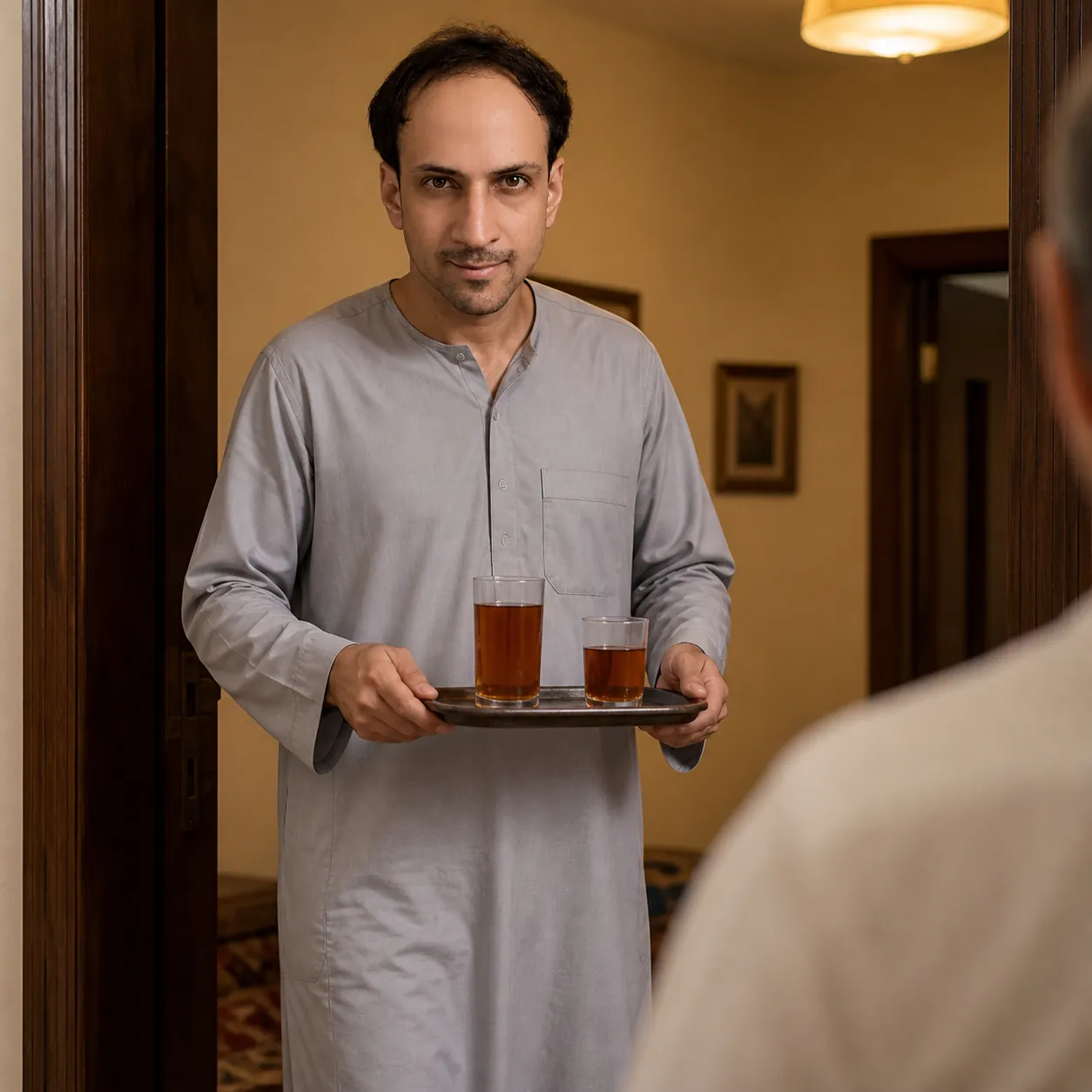
Two Glasses Toward the Room — AI Portrait Prompt
صورةAI Portraits

Turn your own photo into a quiet editorial portrait in a hallway outside a room where an unseen conversation keeps going. Keeps your face unchanged.

من نص البرومبت

Use the attached reference photo as the identity reference: keep the same face, skin tone, hair and features as the person in that photo, without beautifying, aging or altering them. Create a square 1:1 museum-catalog frame with a strong first read and a slower second read at exactly 2880x2880 pixels. Location: a hallway outside a room where an unseen conversation keeps going. Show the subject in a soft pale-grey cotton traditional Gulf outfit worn at home with plain sandals, carrying two glasses on a small tray toward the room. Make this the only tell, easy to miss: a glass filled for someone else higher than their own, the pouring lasting exactly as long as the pause it covers spends time where a sentence should have gone and loses nothing. Explore how a pause can be more accurate than any sentence the room expects; expression composed and unremarkable, carrying relaxed readiness, the weight held without disturbing the exchange. Place the lens slightly behind a second person's shoulder, keeping that shoulder soft and never blocking the subject. Make the composition hold one area of stillness inside an otherwise ordinary room. Render it as quiet editorial realism combining true-to-life interiors, accurate everyday clothing, unposed body language, and photography that refuses to dramatize, using one warm ceiling fitting doing all the work in an ordinary room and a palette of sand beige, dark brown, and one brick-red thread. Photorealistic: this must read as a real photograph from a physical camera, never an illustration, painting, or 3D render. Resolve real surface detail: leather creased along the lines of use, stitching slightly irregular, and edges burnished from contact. Keep one identity-locked person, credible hands and fingers, natural fabric, and coherent scale, contact, reflections, shadows, airflow, deformation, and materials. Background people only when essential, always secondary and clearly different. Avoid rain-streaked glass, shadow-bar drama, clasped praying hands, symbolic empty chairs, and heroic poster framing. No text, labels, logos, signatures, watermarks, random symbols, plastic skin, excessive bloom, or glossy AI finish.
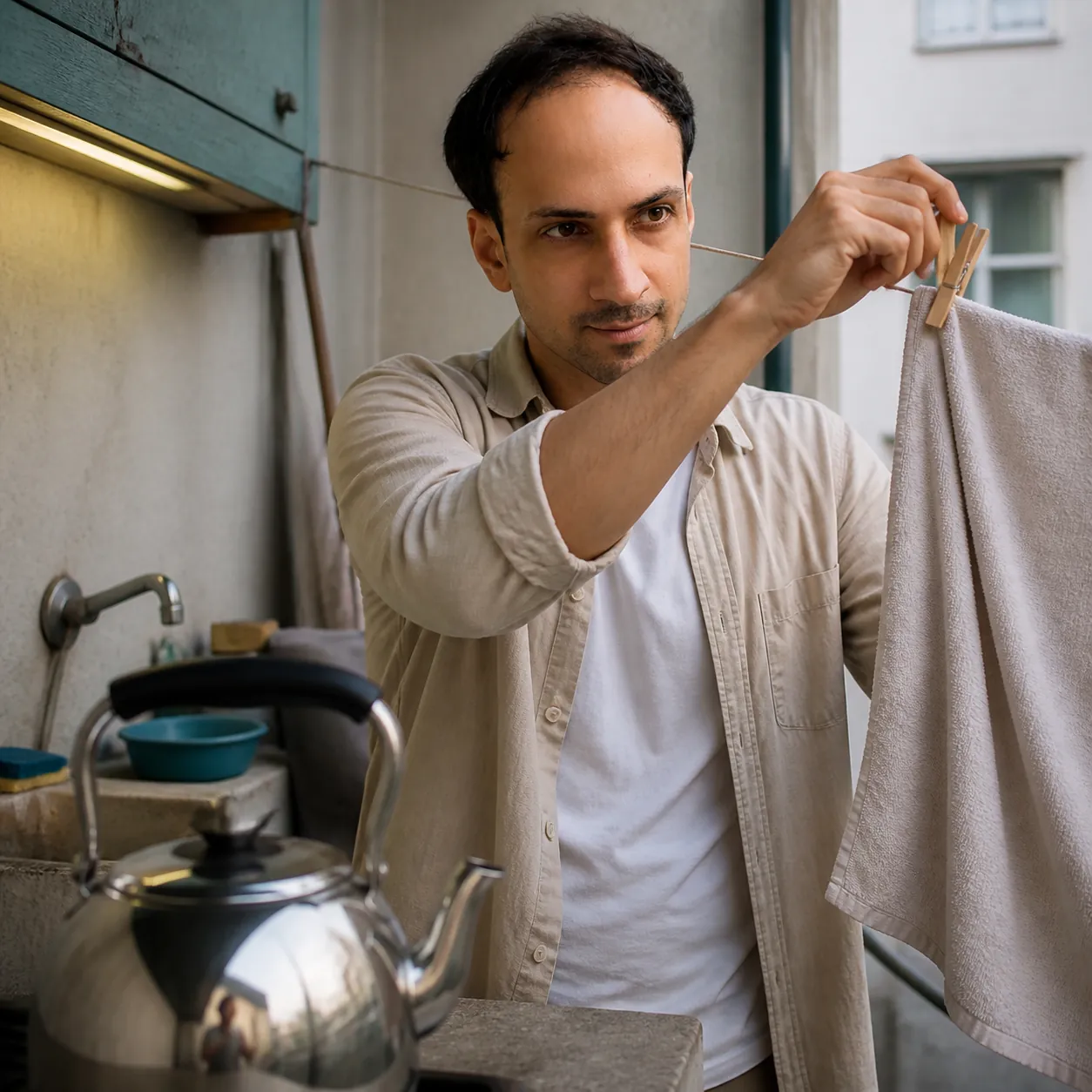
Towel on the Drying Line — AI Portrait Prompt
صورةAI Portraits

Turn your own photo into a museum-grade chore portrait in a service balcony with a drying line and a low utility sink. Keeps your face unchanged.

من نص البرومبت

Use the attached reference photo as the identity reference: keep the same face, skin tone, hair and features as the person in that photo, without beautifying, aging or altering them. Create a square 1:1 museum-catalog frame with a strong first read and a slower second read at exactly 2880x2880 pixels. Location: a service balcony with a drying line and a low utility sink. Show the subject in a light beige overshirt open over a white cotton undershirt, pegging one damp towel to the drying line. The difficulty must be visible in this, not in their expression: a kettle's curved flank returning a small, warped reflection of them that takes a moment longer to resolve than it should lets the work go on at full strength on a borrowed sort of day. Explore what a plain object can confirm that looking at it cannot; expression occupied, not expressive, carrying measured deliberateness, difficulty stated in the plainest available terms. Shoot slightly across the work surface at chest height with natural perspective and no distortion. Make the composition keep one reflective surface slightly softer. Render it as museum-grade chore photography combining high-fidelity skin, accurate steel and glass reflections, matter-of-fact staging, and observational framing, using a single under-cabinet strip plus ambient room light, nothing theatrical anywhere and a palette of pale plaster, unbleached cotton, and a narrow band of teal. Photorealistic: this must read as a real photograph from a physical camera, never an illustration, painting, or 3D render. Resolve real surface detail: thread ends and slight pilling on worn cloth, hairline chips at every hard corner, and stone that is porous rather than smooth. Keep one identity-locked person, credible hands and fingers, natural fabric, and coherent scale, contact, reflections, shadows, airflow, deformation, and materials. Background people only when essential, always secondary and clearly different. Avoid hero poses, golden-hour styling, posing at camera, and melancholy without visible labour. No text, labels, logos, signatures, watermarks, random symbols, plastic skin, excessive bloom, or glossy AI finish.
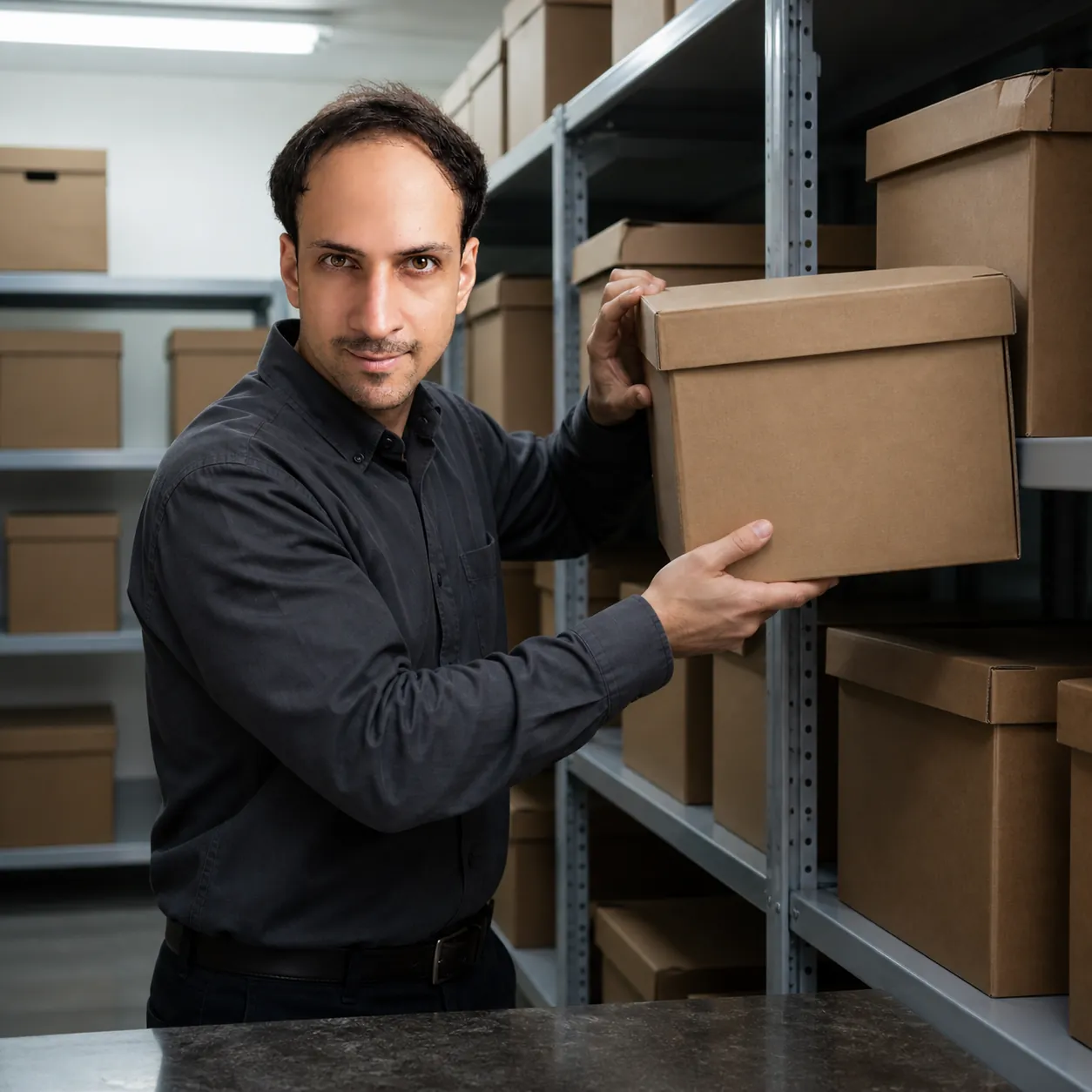
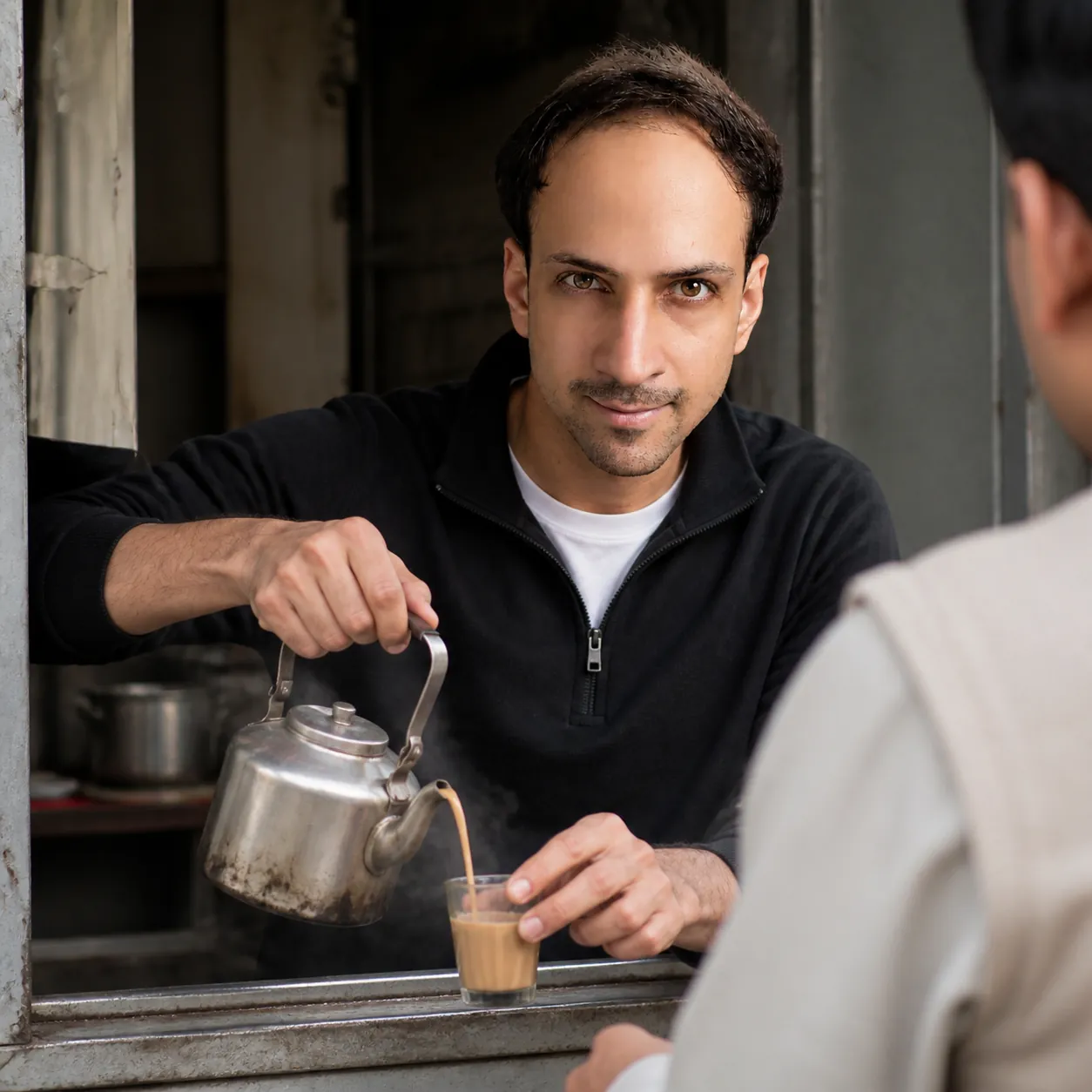
Hot Glass at the Tea Stall — AI Portrait Prompt
صورةAI Portraits

Turn your own photo into a photorealistic portrait in a pavement tea stall window where the seller works just inside. Keeps your face unchanged.

من نص البرومبت

Use the attached reference photo as the identity reference: keep the same face, skin tone, hair and features as the person in that photo, without beautifying, aging or altering them. Create a square 1:1 museum-catalog frame with a strong first read and a slower second read at exactly 2880x2880 pixels. Location: a pavement tea stall window where the seller works just inside. Show the subject in a black quarter-zip over a plain white tee with sleeves pushed back, taking a hot glass by its rim between finger and thumb. Hide the whole argument in this ordinary moment: a glass filled for someone else higher than their own, the pouring lasting exactly as long as the pause it covers says the closest true thing the available language will actually hold. Explore how a pause can be more accurate than any sentence the room expects; expression composed and unremarkable, carrying practical calm, the weight held under a level, unhurried voice. Use a 35mm three-quarter view close enough to include one nearby sleeve that is not theirs. Make the composition keep the second person partial and never the focus. Render it as gallery-grade quiet realism assembling lived-in rooms, precise gesture observation, muted material texture, and framing that never announces its subject, using open shade from a covered walkway, contrast low and skin texture visible and a palette of steel grey, milk white, and a quiet mustard accent. Photorealistic: this must read as a real photograph from a physical camera, never an illustration, painting, or 3D render. Resolve real surface detail: visible weave in cloth, fine scratches on metal, and the faint unevenness of painted walls. Keep one identity-locked person, credible hands and fingers, natural fabric, and coherent scale, contact, reflections, shadows, airflow, deformation, and materials. Background people only when essential, always secondary and clearly different. Avoid tears, head in hands, staring through windows, hunched silhouettes, and any object announcing illness. No text, labels, logos, signatures, watermarks, random symbols, plastic skin, excessive bloom, or glossy AI finish.
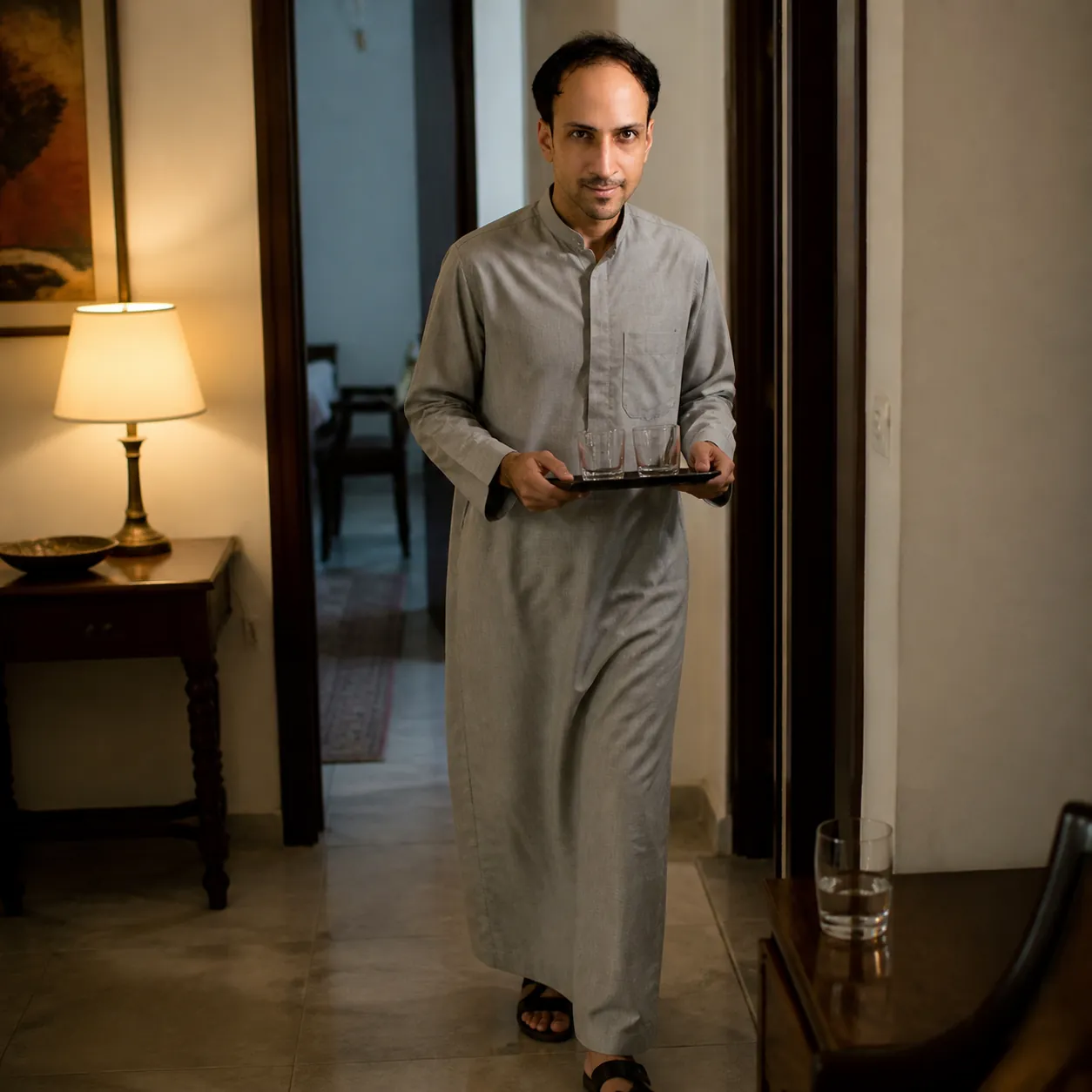
Box Back on the Shelf — AI Portrait Prompt
صورةAI Portraits

Turn your own photo into a gallery-scale household portrait in a small storage room lined with lidded boxes on metal shelving. Keeps your face unchanged.

من نص البرومبت

Use the attached reference photo as the identity reference: keep the same face, skin tone, hair and features as the person in that photo, without beautifying, aging or altering them. Create a square 1:1 museum-catalog frame with a strong first read and a slower second read at exactly 2880x2880 pixels. Location: a small storage room lined with lidded boxes on metal shelving. Show the subject in a charcoal work shirt buttoned to the wrist over dark trousers, easing one lidded box back onto its shelf. Anchor the frame to this piece of ordinary evidence: a wiped stone counter touched a second time with one bare palm, purely for the confirmation that comes back through the skin measures the distance between doing a thing and being there for it. Explore whether competence counts as presence when the two arrive separately; expression occupied, not expressive, carrying sober diligence, difficulty stated with the steadiness of routine. Place the lens at hand height so the object and their eyes hold one plane. Make the composition place the point of contact nearer the lens. Render it as gallery-scale household realism built from credible hands, correct water and fabric behaviour, and calm compositional discipline, using cool fluorescent tube light evened by pale walls and matte surfaces and a palette of cool white tile, brushed steel, and one dull olive. Photorealistic: this must read as a real photograph from a physical camera, never an illustration, painting, or 3D render. Resolve real surface detail: label-free packaging showing carton fibre, cardboard bruised at the corners, and tape lifting slightly at one end. Keep one identity-locked person, credible hands and fingers, natural fabric, and coherent scale, contact, reflections, shadows, airflow, deformation, and materials. Background people only when essential, always secondary and clearly different. Avoid double exposures, transparent bodies, out-of-body views, and mirrors returning a different person. No text, labels, logos, signatures, watermarks, random symbols, plastic skin, excessive bloom, or glossy AI finish.
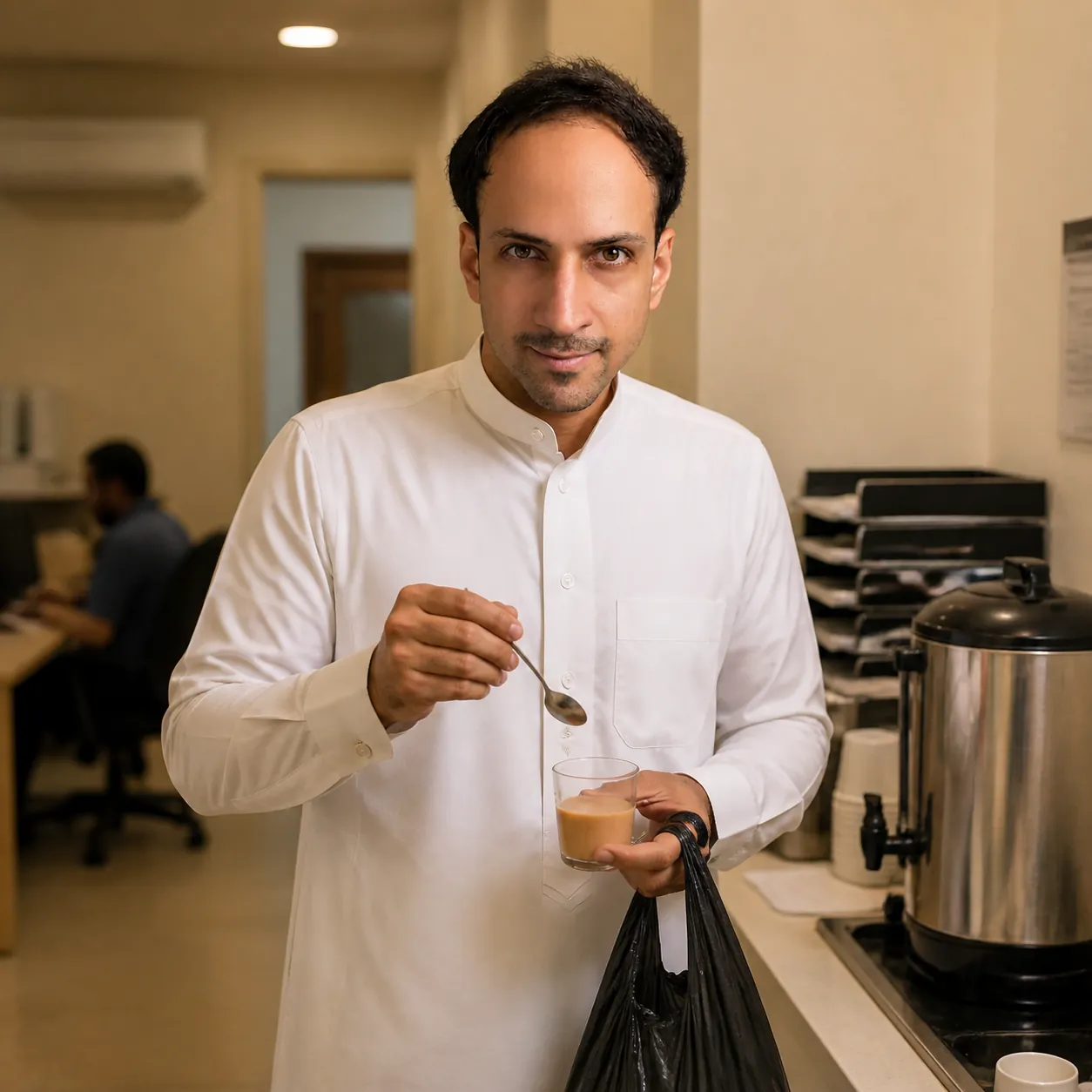
Two Glasses Down the Hallway — AI Portrait Prompt
صورةAI Portraits

Turn your own photo into an unforced documentary portrait in a hallway outside a room where an unseen conversation keeps going. Keeps your face unchanged.

من نص البرومبت

Use the attached reference photo as the identity reference: keep the same face, skin tone, hair and features as the person in that photo, without beautifying, aging or altering them. Create a square 1:1 museum-catalog frame with a strong first read and a slower second read at exactly 2880x2880 pixels. Location: a hallway outside a room where an unseen conversation keeps going. Show the subject in a soft cotton traditional Gulf house outfit in pale grey with plain sandals, carrying two glasses on a small tray toward the room. Let the weight sit here and look like nothing: a glass set down beside them, its surface gone still, inside a pause that has outlasted the exchange it belongs to says the closest true thing the available language will actually hold. Explore how courtesy and accuracy can both be satisfied by one short reply; expression composed and unremarkable, carrying practical calm, the weight held inside the ordinary tempo. Use an eye-level 50mm view at conversational distance, natural perspective and a shallow but honest depth. Make the composition read as an unremarkable snapshot until the timing detail registers. Render it as unforced documentary portraiture built from natural domestic staging, honest skin rendering, restrained contemporary styling, and patient observational timing, using late-day interior light already turning grey, with one lamp switched on early and a palette of steel grey, milk white, and a quiet mustard accent. Photorealistic: this must read as a real photograph from a physical camera, never an illustration, painting, or 3D render. Resolve real surface detail: the difference between a wiped surface and a clean one, faint tide marks on ceramic, and metal dulled unevenly by touch. Keep one identity-locked person, credible hands and fingers, natural fabric, and coherent scale, contact, reflections, shadows, airflow, deformation, and materials. Background people only when essential, always secondary and clearly different. Avoid tears, head in hands, staring through windows, hunched silhouettes, and any object announcing illness. No text, labels, logos, signatures, watermarks, random symbols, plastic skin, excessive bloom, or glossy AI finish.
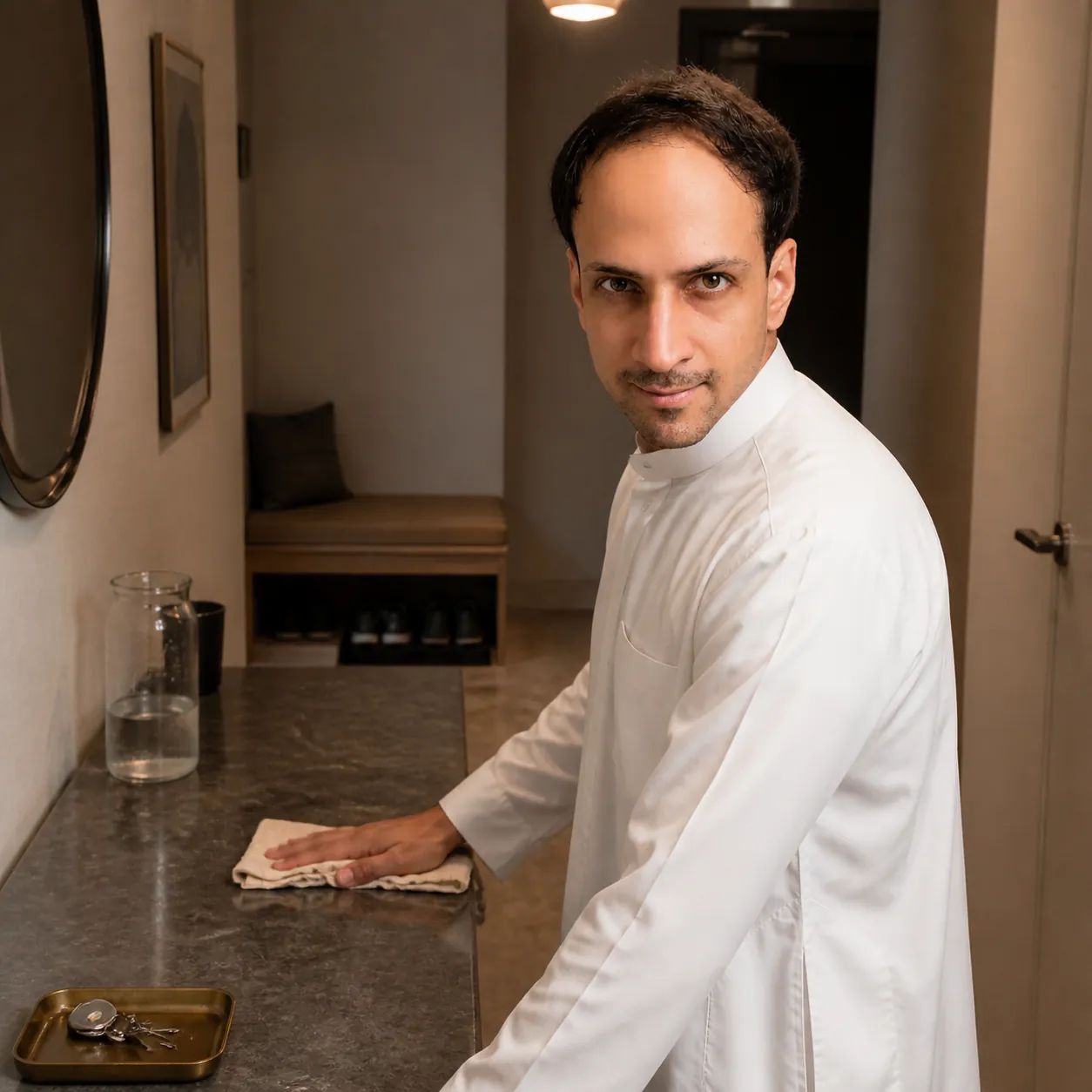
Sugar Stirred at the Tea Point — AI Portrait Prompt
صورةAI Portraits

Turn your own photo into a photorealistic portrait in a shared office tea point with a boiler urn and stacked trays. Keeps your face unchanged.

من نص البرومبت

Use the attached reference photo as the identity reference: keep the same face, skin tone, hair and features as the person in that photo, without beautifying, aging or altering them. Create a square 1:1 museum-catalog frame with a strong first read and a slower second read at exactly 2880x2880 pixels. Location: a shared office tea point with a boiler urn and stacked trays. Show the subject in a pressed white traditional Gulf outfit with its cuffs buttoned and sleeves unrolled, stirring sugar into a glass and lifting the spoon clear. Build the frame on this unremarkable detail: a bag still hanging from two fingers beside a clear surface that has been free since well before they stopped walking spends time where a sentence should have gone and loses nothing. Explore why the smallest polite word is sometimes the most exact one available; expression composed and unremarkable, carrying ordinary politeness, the weight held under a level, unhurried voice. Shoot a quiet 85mm portrait from standing height, with the room's ordinary depth left intact behind them. Make the composition leave the strongest evidence at the edge of the frame. Render it as gallery-grade quiet realism assembling lived-in rooms, precise gesture observation, muted material texture, and framing that never announces its subject, using one warm ceiling fitting doing all the work in an ordinary room and a palette of soft bone, dark charcoal, and a low amber note. Photorealistic: this must read as a real photograph from a physical camera, never an illustration, painting, or 3D render. Resolve real surface detail: cotton that hangs by its own weight, seams that pucker very slightly, and collars softened by washing. Keep one identity-locked person, credible hands and fingers, natural fabric, and coherent scale, contact, reflections, shadows, airflow, deformation, and materials. Background people only when essential, always secondary and clearly different. Avoid rain-streaked glass, shadow-bar drama, clasped praying hands, symbolic empty chairs, and heroic poster framing. No text, labels, logos, signatures, watermarks, random symbols, plastic skin, excessive bloom, or glossy AI finish.
Shoes Lined Under the Bench — AI Portrait Prompt
صورةAI Portraits

Turn your own photo into a museum-grade chore portrait in an apartment entrance hall with a shoe bench and a key tray. Keeps your face unchanged.

من نص البرومبت

Use the attached reference photo as the identity reference: keep the same face, skin tone, hair and features as the person in that photo, without beautifying, aging or altering them. Create a square 1:1 museum-catalog frame with a strong first read and a slower second read at exactly 2880x2880 pixels. Location: an apartment entrance hall with a shoe bench and a key tray. Show the subject in a plain white traditional Gulf outfit with the sleeves shaken straight, lining both shoes parallel under the bench. Build the image around this small, exact tableau: a wiped stone counter touched a second time with one bare palm, purely for the confirmation that comes back through the skin lets the work go on at full strength on a borrowed sort of day. Explore whether competence counts as presence when the two arrive separately; expression occupied, not expressive, carrying practised routine, difficulty stated quietly, the way work states things. Frame just behind their shoulder so the finished work leads and their face stays readable. Make the composition hold plain air between their hand and the object. Render it as museum-grade chore photography combining high-fidelity skin, accurate steel and glass reflections, matter-of-fact staging, and observational framing, using one warm ceiling fitting doing all the work, shadows soft and readable and a palette of oat linen, cool graphite, and one thin line of brass. Photorealistic: this must read as a real photograph from a physical camera, never an illustration, painting, or 3D render. Resolve real surface detail: condensation beading at true size, liquid meniscus curving against glass, and wet surfaces darker than dry ones. Keep one identity-locked person, credible hands and fingers, natural fabric, and coherent scale, contact, reflections, shadows, airflow, deformation, and materials. Background people only when essential, always secondary and clearly different. Avoid hero poses, golden-hour styling, posing at camera, and melancholy without visible labour. No text, labels, logos, signatures, watermarks, random symbols, plastic skin, excessive bloom, or glossy AI finish.

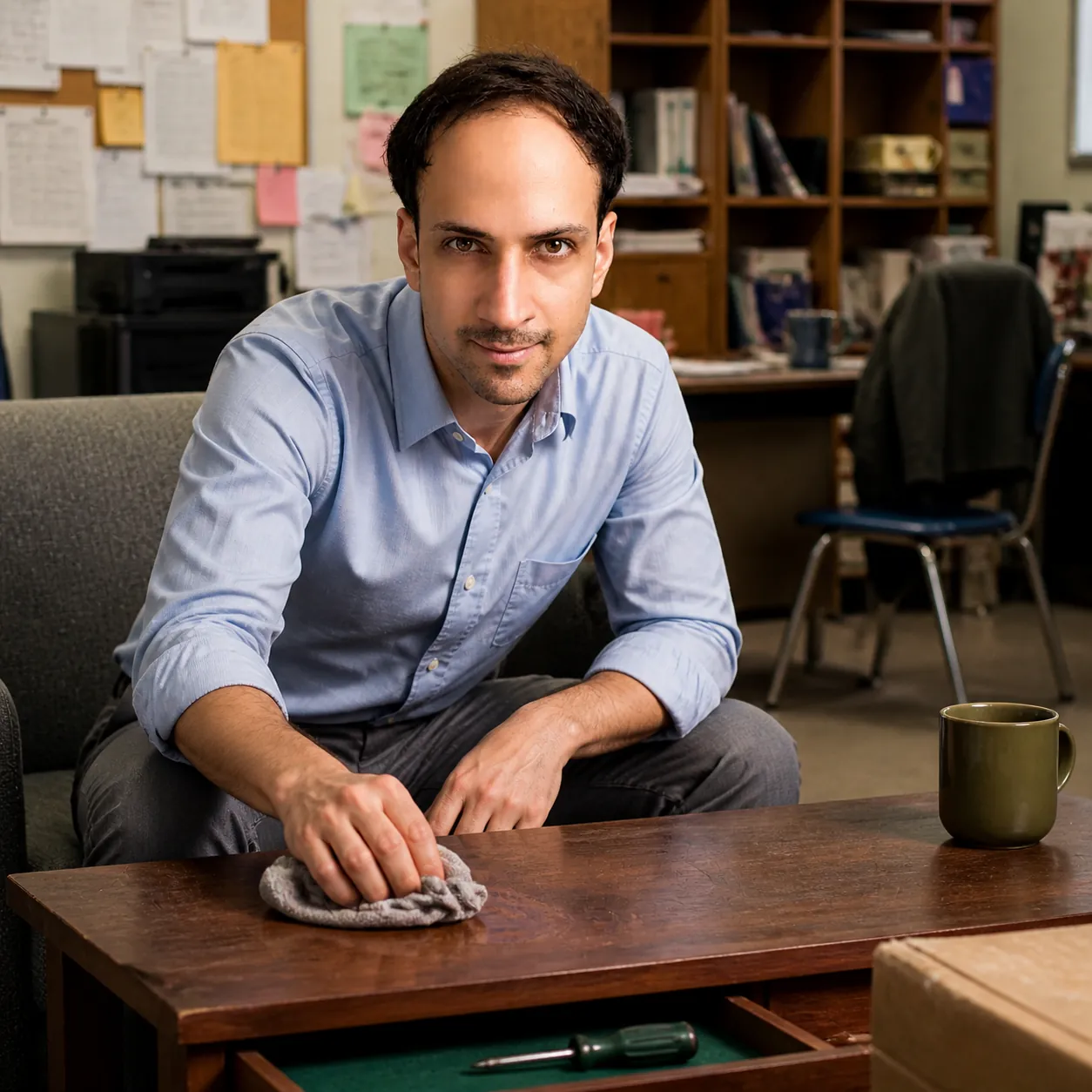
Between Periods in the Staff Room — AI Portrait Prompt
صورةAI Portraits

Turn your own photo into a modest editorial portrait in a school staff workroom between periods, one other chair pushed back. Keeps your face unchanged.

من نص البرومبت

Use the attached reference photo as the identity reference: keep the same face, skin tone, hair and features as the person in that photo, without beautifying, aging or altering them. Create a square 1:1 museum-catalog frame with a strong first read and a slower second read at exactly 2880x2880 pixels. Location: a school staff workroom between periods, one other chair pushed back. Show the subject in a soft blue oxford shirt tucked into pressed grey trousers, wiping a ring of water off the low table. Build the frame on this unremarkable detail: a short screwdriver lying in the drawer groove its own handle has pressed into the felt over many quiet returns keeps an honest count of its own repetitions without asking anyone to notice. Explore whether living with something recurring is failure or simply an accurate arrangement; expression composed and unremarkable, carrying quiet efficiency, the weight held where competence covers it completely. Shoot at 85mm with the worn detail sharp and the rest of the room gently soft. Make the composition keep the second person's belongings present but never explained. Render it as modest editorial realism combining lived-in interior detail, physically correct wear patterns, sober color handling, and completely undramatic staging, using ordinary ceiling fluorescents softened by distance, leaving mild shadows under everything and a palette of warm grey, unbleached cotton, and one muted olive accent. Photorealistic: this must read as a real photograph from a physical camera, never an illustration, painting, or 3D render. Resolve real surface detail: label-free packaging showing carton fibre, cardboard bruised at the corners, and tape lifting slightly at one end. Keep one identity-locked person, credible hands and fingers, natural fabric, and coherent scale, contact, reflections, shadows, airflow, deformation, and materials. Background people only when essential, always secondary and clearly different. Avoid visible sadness, head-in-hands poses, staring out of windows, sighing postures, and any object announcing illness. No text, labels, logos, signatures, watermarks, random symbols, plastic skin, excessive bloom, or glossy AI finish.
