جاري التحميل...


جاري التحميل...
Create a square 1:1 museum-catalog frame with a strong first read and a slower second read at exactly 2880x2880 pixels. Location: a family sitting room with...
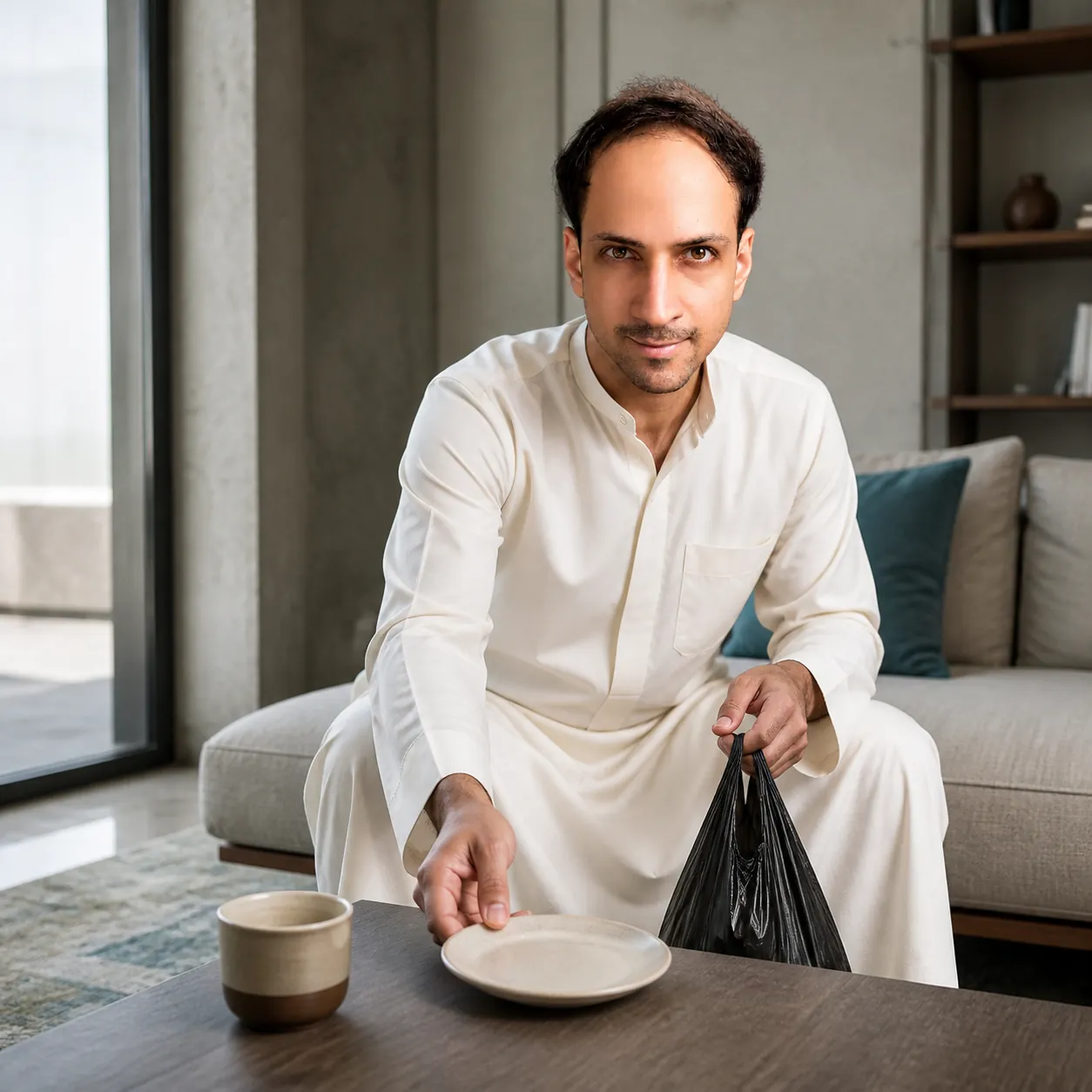
Use the attached reference photo as the identity reference: keep the same face, skin tone, hair and features as the person in that photo, without beautifying, aging or altering them. Create a square 1:1 museum-catalog frame with a strong first read and a slower second read at exactly 2880x2880 pixels. Location: a family sitting room with another cup already on the low table. Show the subject in an ivory traditional Gulf outfit with the collar open and no ghutra, gathering an empty plate from the low table. Let the weight sit here and look like nothing: a bag still hanging from two fingers beside a clear surface that has been free since well before they stopped walking says the closest true thing the available language will actually hold. Explore why the smallest polite word is sometimes the most exact one available; expression composed and unremarkable, carrying mild attentiveness, the weight held below the reach of words. Use an eye-level 50mm view at conversational distance, natural perspective and a shallow but honest depth. Make the composition read as an unremarkable snapshot until the timing detail registers. Render it as quiet editorial realism combining true-to-life interiors, accurate everyday clothing, unposed body language, and photography that refuses to dramatize, using open shade from a covered walkway, contrast low and skin texture visible and a palette of cool concrete, off-white, and a single dusty teal. Photorealistic: this must read as a real photograph from a physical camera, never an illustration, painting, or 3D render. Resolve real surface detail: fine grit in the texture of concrete, efflorescence at damp edges, and hairline cracks that follow stress. Keep one identity-locked person, credible hands and fingers, natural fabric, and coherent scale, contact, reflections, shadows, airflow, deformation, and materials. Background people only when essential, always secondary and clearly different. Avoid tears, head in hands, staring through windows, hunched silhouettes, and any object announcing illness. No text, labels, logos, signatures, watermarks, random symbols, plastic skin, excessive bloom, or glossy AI finish.
Treat that reference as the character anchor and change only the scene. Create a square 1:1 museum-catalog frame with a strong first read and a slower...
Treat that reference as the character anchor and change only the scene. Create a square 1:1 museum-catalog frame with a strong first read and a slower...
Treat that reference as the character anchor and change only the scene. Create a square 1:1 museum-catalog frame with a strong first read and a slower...
Treat that reference as the character anchor and change only the scene. Create a square 1:1 museum-catalog frame with a strong first read and a slower...
Treat that reference as the character anchor and change only the scene. Create a square 1:1 museum-catalog frame with a strong first read and a slower...
Treat that reference as the character anchor and change only the scene. Create a square 1:1 museum-catalog frame with a strong first read and a slower...
Treat that reference as the character anchor and change only the scene. Create a square 1:1 museum-catalog frame with a strong first read and a slower...
Treat that reference as the character anchor and change only the scene. Create a square 1:1 museum-catalog frame with a strong first read and a slower...
Treat that reference as the character anchor and change only the scene. Create a square 1:1 museum-catalog frame with a strong first read and a slower...
Treat that reference as the character anchor and change only the scene. Create a square 1:1 museum-catalog frame with a strong first read and a slower...
Treat that reference as the character anchor and change only the scene. Create a square 1:1 museum-catalog frame with a strong first read and a slower...
Treat that reference as the character anchor and change only the scene. Create a square 1:1 museum-catalog frame with a strong first read and a slower...