جاري التحميل...


جاري التحميل...
Create a square 1:1 museum-catalog frame with a strong first read and a slower second read at exactly 2880x2880 pixels. Location: a long rope-walk shed with...
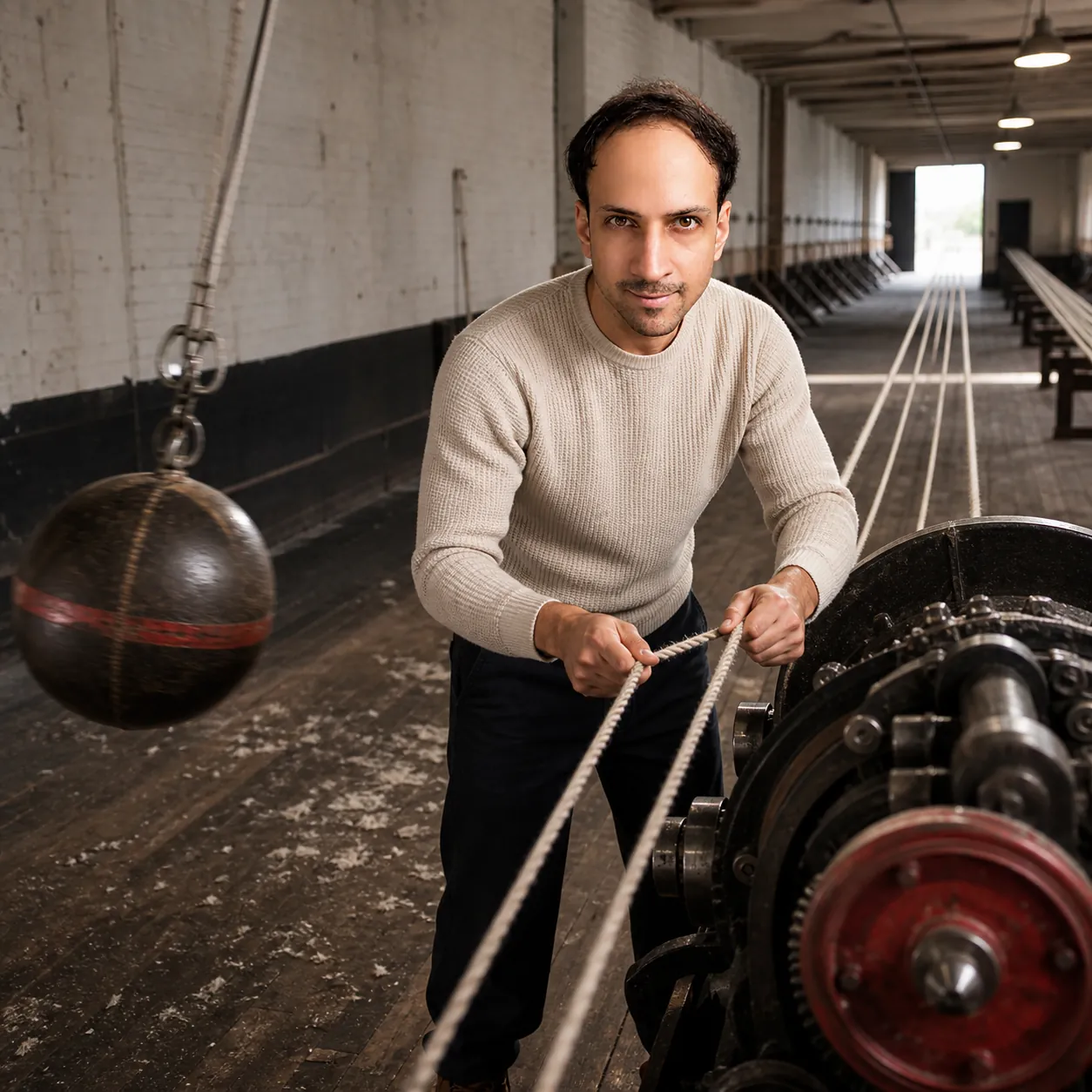
Use the attached reference photo as the identity reference: keep the same face, skin tone, hair and features as the person in that photo, without beautifying, aging or altering them. Create a square 1:1 museum-catalog frame with a strong first read and a slower second read at exactly 2880x2880 pixels. Location: a long rope-walk shed with strands stretched toward its far door. Show the subject in an oatmeal waffle-knit pullover and straight dark canvas trousers, twisting two loose strands into one even cord. The impossible-looking event must obey this clear system: a heavy pendulum on a long cable whose swing grows wide from fingertip pushes delivered only at its exact returning beat pays out only what was honestly deposited, yet the timing feels generous. Explore what the body learns when finishing arrives as sound instead of silence; direct expression and posture toward quiet momentum, never melodrama or ad-like confidence. Use an 85mm portrait view with the machine's nearest moving part softly large in the foreground. Make the composition keep the next unmoved element sharpest, the frame's quiet promise. Render it as gallery-grade process photography built from lawful moving apparatus, honest material wear, physically believable mass, and unhurried human observation, using clean directional daylight from one open door, falling off into readable shadow and a palette of chalk white, cast iron, and one lacquered red accent. Photorealistic: this must read as a real photograph from a physical camera, never an illustration, painting, or 3D render. Resolve real surface detail: skin that reddens slightly under pressure, nail beds with honest colour, and knuckle creases that fold rather than blur. Keep one identity-locked person, credible hands and fingers, natural fabric, and coherent scale, contact, reflections, shadows, airflow, deformation, and materials. Background people only when essential, always secondary and clearly different. Avoid Rube Goldberg clutter, floating holographic interfaces, trophy-shelf staging, neon motivational glow, and impossibly frictionless chrome machinery. No text, labels, logos, signatures, watermarks, random symbols, plastic skin, excessive bloom, or glossy AI finish.
Treat that reference as the character anchor and change only the scene. Create a square 1:1 museum-catalog frame with a strong first read and a slower...
Treat that reference as the character anchor and change only the scene. Create a square 1:1 museum-catalog frame with a strong first read and a slower...
Treat that reference as the character anchor and change only the scene. Create a square 1:1 museum-catalog frame with a strong first read and a slower...
Treat that reference as the character anchor and change only the scene. Create a square 1:1 museum-catalog frame with a strong first read and a slower...
Treat that reference as the character anchor and change only the scene. Create a square 1:1 museum-catalog frame with a strong first read and a slower...
Treat that reference as the character anchor and change only the scene. Create a square 1:1 museum-catalog frame with a strong first read and a slower...
Treat that reference as the character anchor and change only the scene. Create a square 1:1 museum-catalog frame with a strong first read and a slower...
Treat that reference as the character anchor and change only the scene. Create a square 1:1 museum-catalog frame with a strong first read and a slower...
Treat that reference as the character anchor and change only the scene. Create a square 1:1 museum-catalog frame with a strong first read and a slower...
Treat that reference as the character anchor and change only the scene. Create a square 1:1 museum-catalog frame with a strong first read and a slower...
Treat that reference as the character anchor and change only the scene. Create a square 1:1 museum-catalog frame with a strong first read and a slower...
Treat that reference as the character anchor and change only the scene. Create a square 1:1 museum-catalog frame with a strong first read and a slower...