جاري التحميل...


جاري التحميل...
Create a square 1:1 museum-catalog frame with a strong first read and a slower second read. Location: a library alcove where a painted ceiling panel meets...
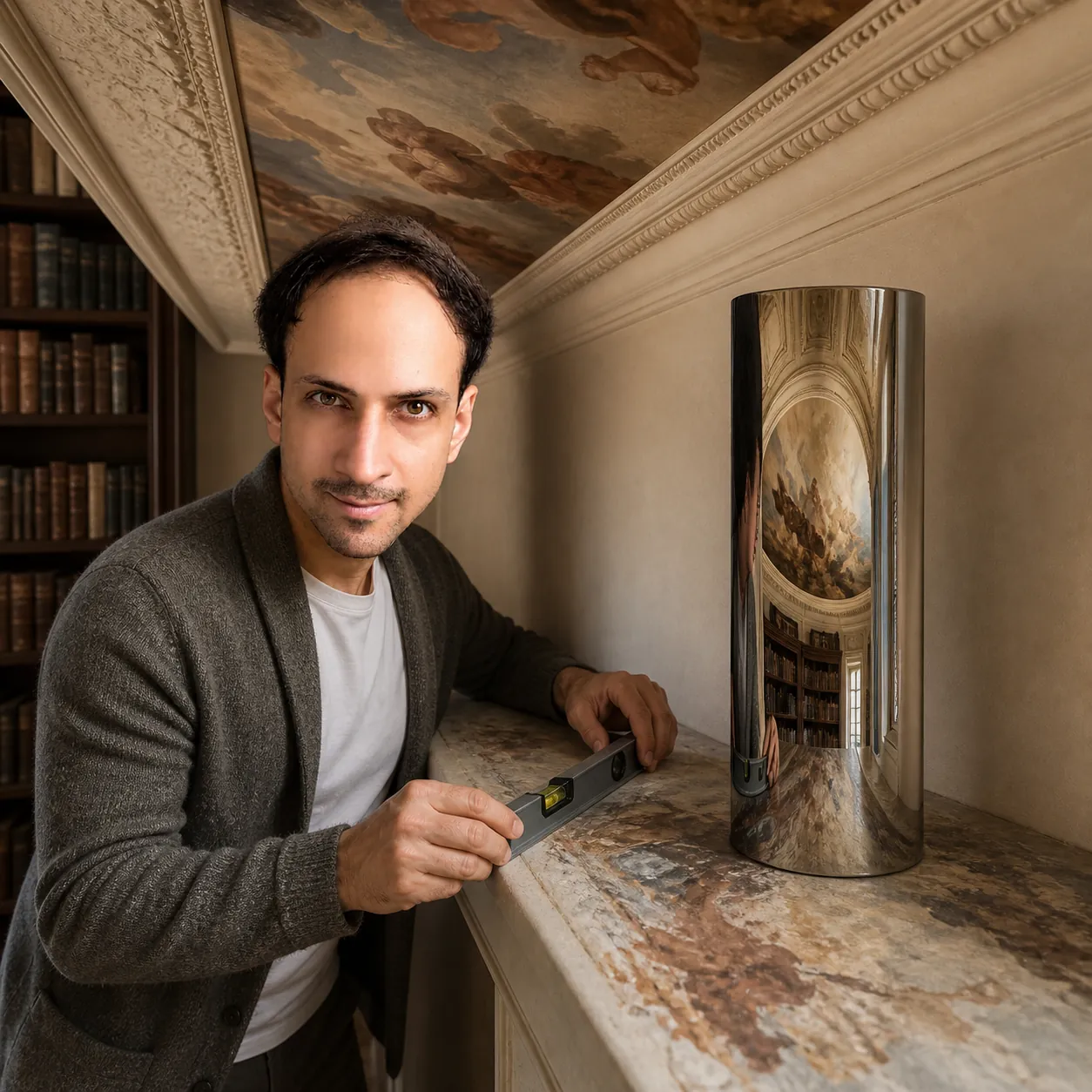
Use the attached reference photo as the identity reference: keep the same face, skin tone, hair and features as the person in that photo, without beautifying, aging or altering them. Create a square 1:1 museum-catalog frame with a strong first read and a slower second read. Location: a library alcove where a painted ceiling panel meets real molding. Show the subject in a tweed-grey cardigan over a soft white shirt, setting a bubble level onto the alcove shelf. The impossible-looking event must obey this clear system: a polished steel cylinder standing on a smeared, unreadable painting that its curved reflection restores to a sharp scene makes meaning appear only for the viewer willing to stand in the right place. Explore whether a perfectly designed error is error or mastery; direct expression and posture toward playful rigor, never melodrama or ad-like confidence. Use a measured wide 28mm view with the subject near one-third of the frame and no stretched limbs. Make the composition give the confession seam more light than the deception. Render it as gallery-grade optical-illusion photography built from real aligned installations, quiet plaster-and-chalk materials, accurate shadow logic, and unhurried observational framing, using high, diffused desert daylight moderated by real shade and bounced warm ground light and a palette of sandstone, deep shadow brown, and pale sky. Keep one identity-locked person, credible hands and fingers, natural fabric, and coherent scale, contact, reflections, shadows, airflow, deformation, and materials. Background people only when essential, always secondary and clearly different. Avoid melting-clock surrealism, endless staircases, floating islands, impossible Escher tributes played straight, and green-screen composites. No text, labels, logos, signatures, watermarks, random symbols, plastic skin, excessive bloom, or glossy AI finish.
Treat that reference as the character anchor and change only the scene. Create a square 1:1 museum-catalog frame with a strong first read and a slower...
Treat that reference as the character anchor and change only the scene. Create a square 1:1 museum-catalog frame with a strong first read and a slower...
Treat that reference as the character anchor and change only the scene. Create a square 1:1 museum-catalog frame with a strong first read and a slower...
Treat that reference as the character anchor and change only the scene. Create a square 1:1 museum-catalog frame with a strong first read and a slower...
Treat that reference as the character anchor and change only the scene. Create a square 1:1 museum-catalog frame with a strong first read and a slower...
Treat that reference as the character anchor and change only the scene. Create a square 1:1 museum-catalog frame with a strong first read and a slower...
Treat that reference as the character anchor and change only the scene. Create a square 1:1 museum-catalog frame with a strong first read and a slower...
Treat that reference as the character anchor and change only the scene. Create a square 1:1 museum-catalog frame with a strong first read and a slower...
Treat that reference as the character anchor and change only the scene. Create a square 1:1 museum-catalog frame with a strong first read and a slower...
Treat that reference as the character anchor and change only the scene. Create a square 1:1 museum-catalog frame with a strong first read and a slower...
Treat that reference as the character anchor and change only the scene. Create a square 1:1 museum-catalog frame with a strong first read and a slower...
Treat that reference as the character anchor and change only the scene. Create a square 1:1 museum-catalog frame with a strong first read and a slower...