جاري التحميل...


جاري التحميل...
Create a square 1:1 museum-catalog frame with a strong first read and a slower second read. Location: a white gallery alcove with one waist-high plinth and...
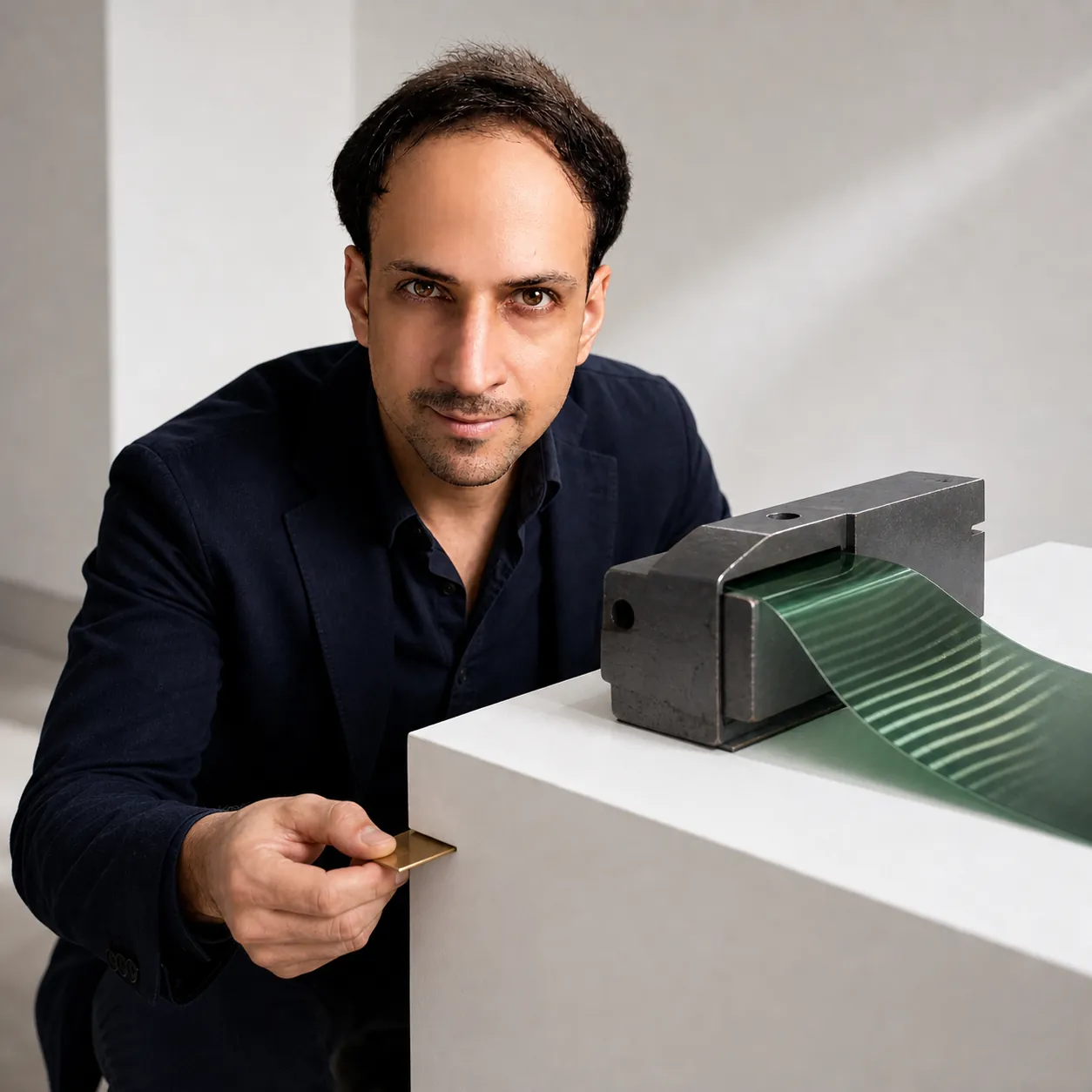
Use the attached reference photo as the identity reference: keep the same face, skin tone, hair and features as the person in that photo, without beautifying, aging or altering them. Create a square 1:1 museum-catalog frame with a strong first read and a slower second read. Location: a white gallery alcove with one waist-high plinth and fresh wall paint. Show the subject in a navy unstructured jacket over an open-collar shirt, seating a small brass shim under one plinth corner. The impossible-looking event must obey this clear system: a green viewing film laid halfway across a plain machine part, showing pale stripes where hidden poles alternate turns an invisible force into structure the eye can walk through. Explore how one object can tell two true stories at the same instant; direct expression and posture toward humbled attention, never melodrama or ad-like confidence. Use a 100mm macro-to-portrait hybrid: one magnetized detail near the lens and the subject's face readable beyond it, both physically plausible. Make the composition keep every trace of force sharp while the room behind stays quiet and soft. Render it as high-concept physics portraiture built from real electromagnetic phenomena, documentary realism, precision-instrument design, and emotionally intelligent composition, using soft north-facing daylight with restrained contrast and visible skin texture and a palette of iron grey, pale sand, and one deep green accent. Keep one identity-locked person, credible hands and fingers, natural fabric, and coherent scale, contact, reflections, shadows, airflow, deformation, and materials. Background people only when essential, always secondary and clearly different. Avoid school-demo horseshoe magnets, levitating superhero poses, glowing force fields, CGI liquid chrome, and lightning arcs. No text, labels, logos, signatures, watermarks, random symbols, plastic skin, excessive bloom, or glossy AI finish.
Treat that reference as the character anchor and change only the scene. Create a square 1:1 museum-catalog frame with a strong first read and a slower...
Treat that reference as the character anchor and change only the scene. Create a square 1:1 museum-catalog frame with a strong first read and a slower...
Treat that reference as the character anchor and change only the scene. Create a square 1:1 museum-catalog frame with a strong first read and a slower...
Treat that reference as the character anchor and change only the scene. Create a square 1:1 museum-catalog frame with a strong first read and a slower...
Treat that reference as the character anchor and change only the scene. Create a square 1:1 museum-catalog frame with a strong first read and a slower...
Treat that reference as the character anchor and change only the scene. Create a square 1:1 museum-catalog frame with a strong first read and a slower...
Treat that reference as the character anchor and change only the scene. Create a square 1:1 museum-catalog frame with a strong first read and a slower...
Treat that reference as the character anchor and change only the scene. Create a square 1:1 museum-catalog frame with a strong first read and a slower...
Treat that reference as the character anchor and change only the scene. Create a square 1:1 museum-catalog frame with a strong first read and a slower...
Treat that reference as the character anchor and change only the scene. Create a square 1:1 museum-catalog frame with a strong first read and a slower...
Treat that reference as the character anchor and change only the scene. Create a square 1:1 museum-catalog frame with a strong first read and a slower...
Treat that reference as the character anchor and change only the scene. Create a square 1:1 museum-catalog frame with a strong first read and a slower...