جاري التحميل...


جاري التحميل...
Create a square 1:1 museum-catalog frame with a strong first read and a slower second read. Location: a drafting studio with survey instruments parked on a...
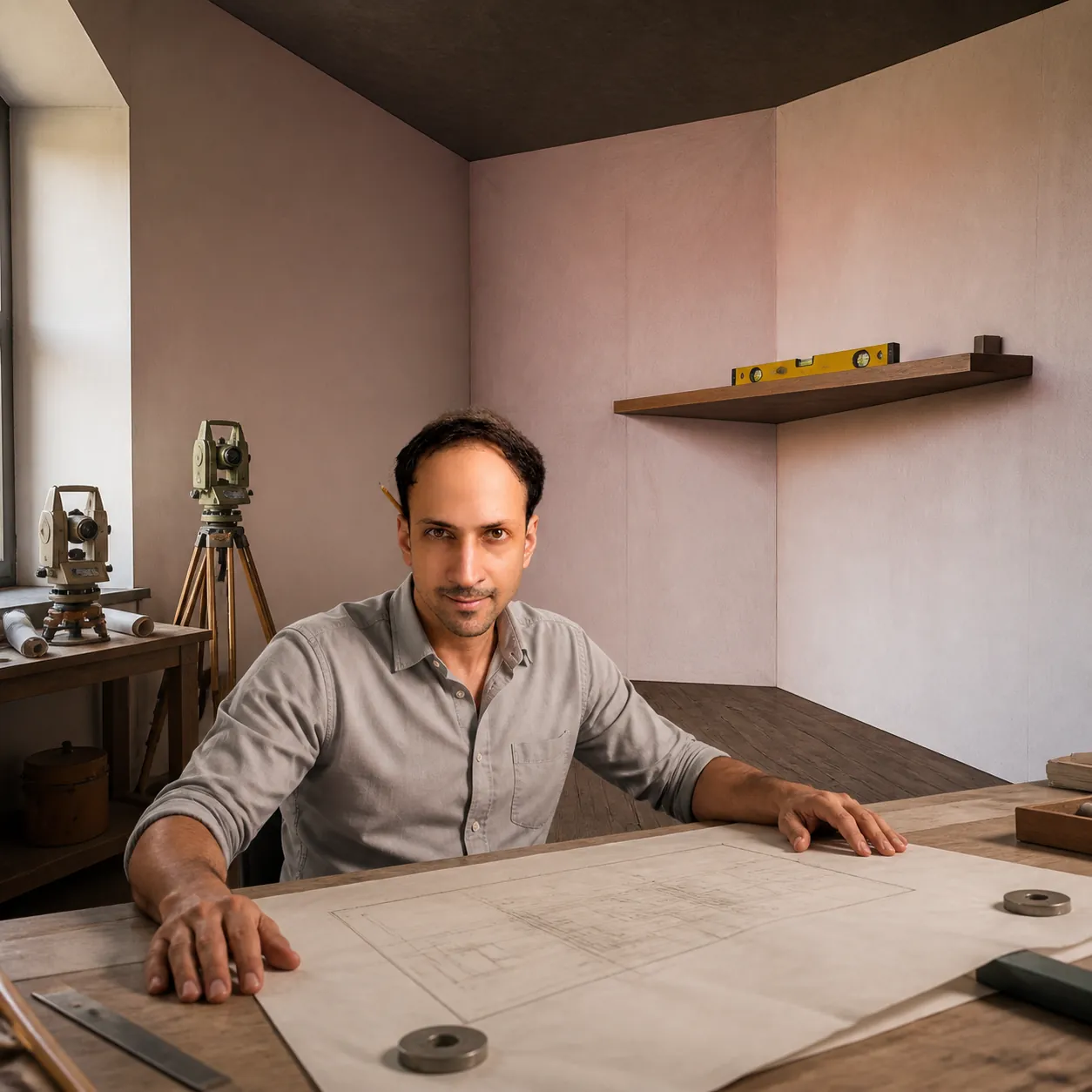
Use the attached reference photo as the identity reference: keep the same face, skin tone, hair and features as the person in that photo, without beautifying, aging or altering them. Create a square 1:1 museum-catalog frame with a strong first read and a slower second read. Location: a drafting studio with survey instruments parked on a side bench. Show the subject in a pale grey work shirt with a pencil behind one ear, weighting a curled drawing flat with two steel washers. The impossible-looking event must obey this clear system: an Ames-style room corner whose skewed walls make a level shelf appear impossibly steep lets true scale arrive gently and retire the illusion without breaking it. Explore which of the eye's oldest habits would fail an honest audit; direct expression and posture toward guarded openness, never melodrama or ad-like confidence. Use a measured wide 28mm view with the subject near one-third of the frame and no stretched limbs. Make the composition give the confession seam more light than the deception. Render it as museum-scale illusion realism combining high-fidelity portrait photography, truthful projective geometry, hand-made materiality, and physically accurate light agreement, using a broad window-shaped key with gentle falloff, soft negative fill, and no beauty-light flattening and a palette of soft plaster pink, charcoal, and clean off-white. Keep one identity-locked subject, credible hands and fingers, natural fabric, and coherent scale, contact, reflections, shadows, airflow, deformation, and materials. Background people only when essential, always secondary and clearly different. Avoid theme-park 3D chalk-art gimmicks, fisheye warping, kaleidoscope filters, dream-sequence blur, and gravity-defying poses. No text, labels, logos, signatures, watermarks, random symbols, plastic skin, excessive bloom, or glossy AI finish.
Treat that reference as the character anchor and change only the scene. Create a square 1:1 museum-catalog frame with a strong first read and a slower...
Treat that reference as the character anchor and change only the scene. Create a square 1:1 museum-catalog frame with a strong first read and a slower...
Treat that reference as the character anchor and change only the scene. Create a square 1:1 museum-catalog frame with a strong first read and a slower...
Treat that reference as the character anchor and change only the scene. Create a square 1:1 museum-catalog frame with a strong first read and a slower...
Treat that reference as the character anchor and change only the scene. Create a square 1:1 museum-catalog frame with a strong first read and a slower...
Treat that reference as the character anchor and change only the scene. Create a square 1:1 museum-catalog frame with a strong first read and a slower...
Treat that reference as the character anchor and change only the scene. Create a square 1:1 museum-catalog frame with a strong first read and a slower...
Treat that reference as the character anchor and change only the scene. Create a square 1:1 museum-catalog frame with a strong first read and a slower...
Treat that reference as the character anchor and change only the scene. Create a square 1:1 museum-catalog frame with a strong first read and a slower...
Treat that reference as the character anchor and change only the scene. Create a square 1:1 museum-catalog frame with a strong first read and a slower...
Treat that reference as the character anchor and change only the scene. Create a square 1:1 museum-catalog frame with a strong first read and a slower...
Treat that reference as the character anchor and change only the scene. Create a square 1:1 museum-catalog frame with a strong first read and a slower...