جاري التحميل...


جاري التحميل...
Create a square 1:1 museum-catalog frame with a strong first read and a slower second read at exactly 2880x2880 pixels. Location: the nineteenth-floor...
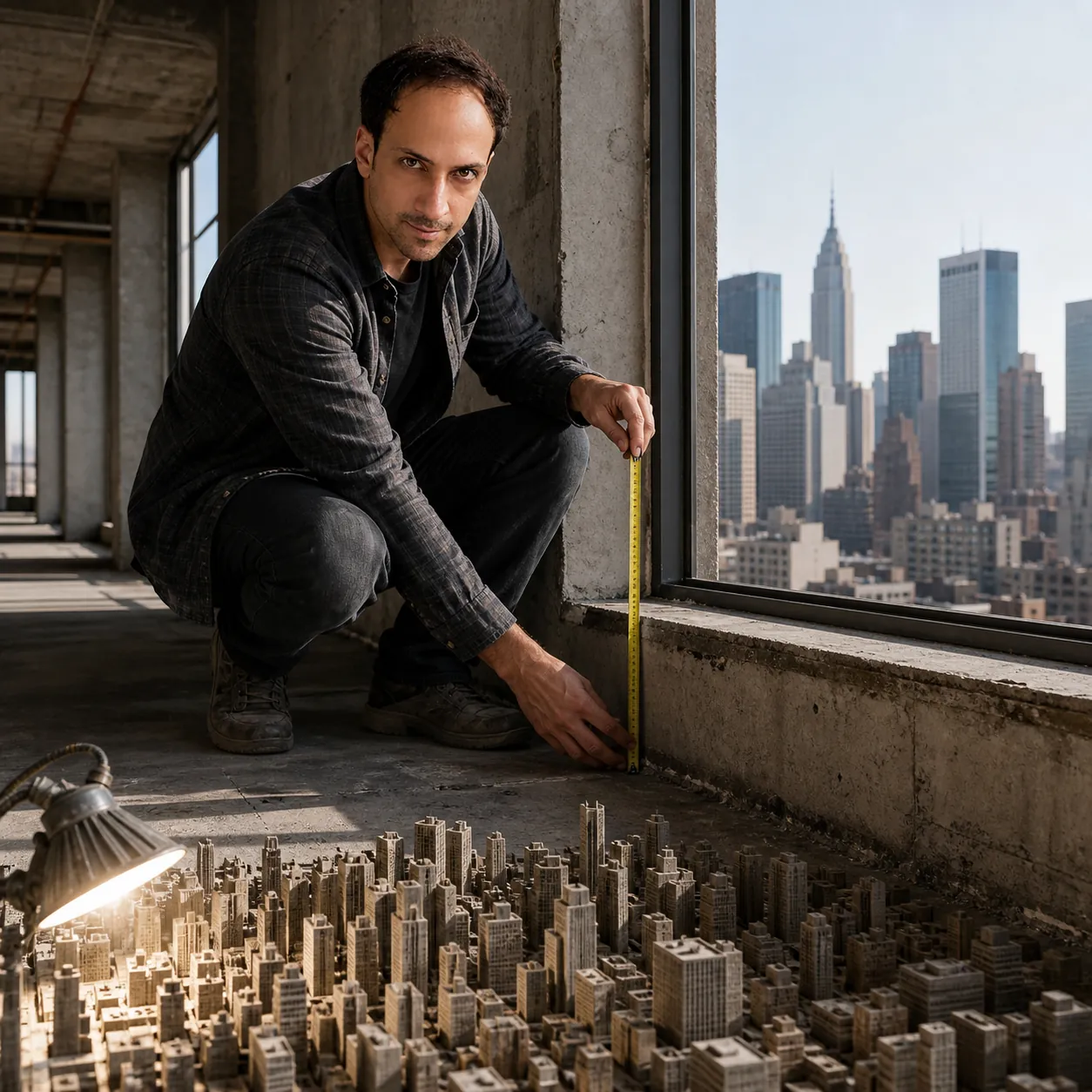
Use the attached reference photo as the identity reference: keep the same face, skin tone, hair and features as the person in that photo, without beautifying, aging or altering them. Create a square 1:1 museum-catalog frame with a strong first read and a slower second read at exactly 2880x2880 pixels. Location: the nineteenth-floor window of an unfinished tower, floor swept bare. Show the subject in a slate flannel shirt jacket buttoned once over a charcoal tee, measuring the window's sill height with a pocket tape. Make one rigorous physical condition the conceptual engine: a knee-high model district under a collimated lamp whose parallel shadows copy the true noon sun to the exact degree defeats the eye's scale instinct with nothing but honest, lawful geometry. Explore why a lawful illusion grows stronger the more carefully it is inspected; direct expression and posture toward quiet astonishment, never melodrama or ad-like confidence. Use an eye-level 50mm view stopped far down so near objects and far architecture hold equal focus. Make the composition hold near and far in equal sharpness against the eye's expectation. Render it as museum-grade demonstration photography combining true forced-perspective staging, honest depth-of-field behavior, believable material scale cues, and restrained contemporary art direction, using a single practical lamp held low, its beam spreading lawfully with distance and a palette of bone white, deep umber, and one restrained teal. Photorealistic: this must read as a real photograph from a physical camera, never an illustration, painting, or 3D render. Resolve real surface detail: fine grit in the texture of concrete, efflorescence at damp edges, and hairline cracks that follow stress. Keep one identity-locked person, credible hands and fingers, natural fabric, and coherent scale, contact, reflections, shadows, airflow, deformation, and materials. Background people only when essential, always secondary and clearly different. Avoid shrunken-person composites, giant-monster posing, fake miniature blur filters, candy-toy oversaturation, and warped fisheye streets. No text, labels, logos, signatures, watermarks, random symbols, plastic skin, excessive bloom, or glossy AI finish.
Treat that reference as the character anchor and change only the scene. Create a square 1:1 museum-catalog frame with a strong first read and a slower...
Treat that reference as the character anchor and change only the scene. Create a square 1:1 museum-catalog frame with a strong first read and a slower...
Treat that reference as the character anchor and change only the scene. Create a square 1:1 museum-catalog frame with a strong first read and a slower...
Treat that reference as the character anchor and change only the scene. Create a square 1:1 museum-catalog frame with a strong first read and a slower...
Treat that reference as the character anchor and change only the scene. Create a square 1:1 museum-catalog frame with a strong first read and a slower...
Treat that reference as the character anchor and change only the scene. Create a square 1:1 museum-catalog frame with a strong first read and a slower...
Treat that reference as the character anchor and change only the scene. Create a square 1:1 museum-catalog frame with a strong first read and a slower...
Treat that reference as the character anchor and change only the scene. Create a square 1:1 museum-catalog frame with a strong first read and a slower...
Treat that reference as the character anchor and change only the scene. Create a square 1:1 museum-catalog frame with a strong first read and a slower...
Treat that reference as the character anchor and change only the scene. Create a square 1:1 museum-catalog frame with a strong first read and a slower...
Treat that reference as the character anchor and change only the scene. Create a square 1:1 museum-catalog frame with a strong first read and a slower...
Treat that reference as the character anchor and change only the scene. Create a square 1:1 museum-catalog frame with a strong first read and a slower...