جاري التحميل...


جاري التحميل...
Create a square 1:1 museum-catalog frame with a strong first read and a slower second read. Location: a glass-walled corridor between two lab wings, empty...
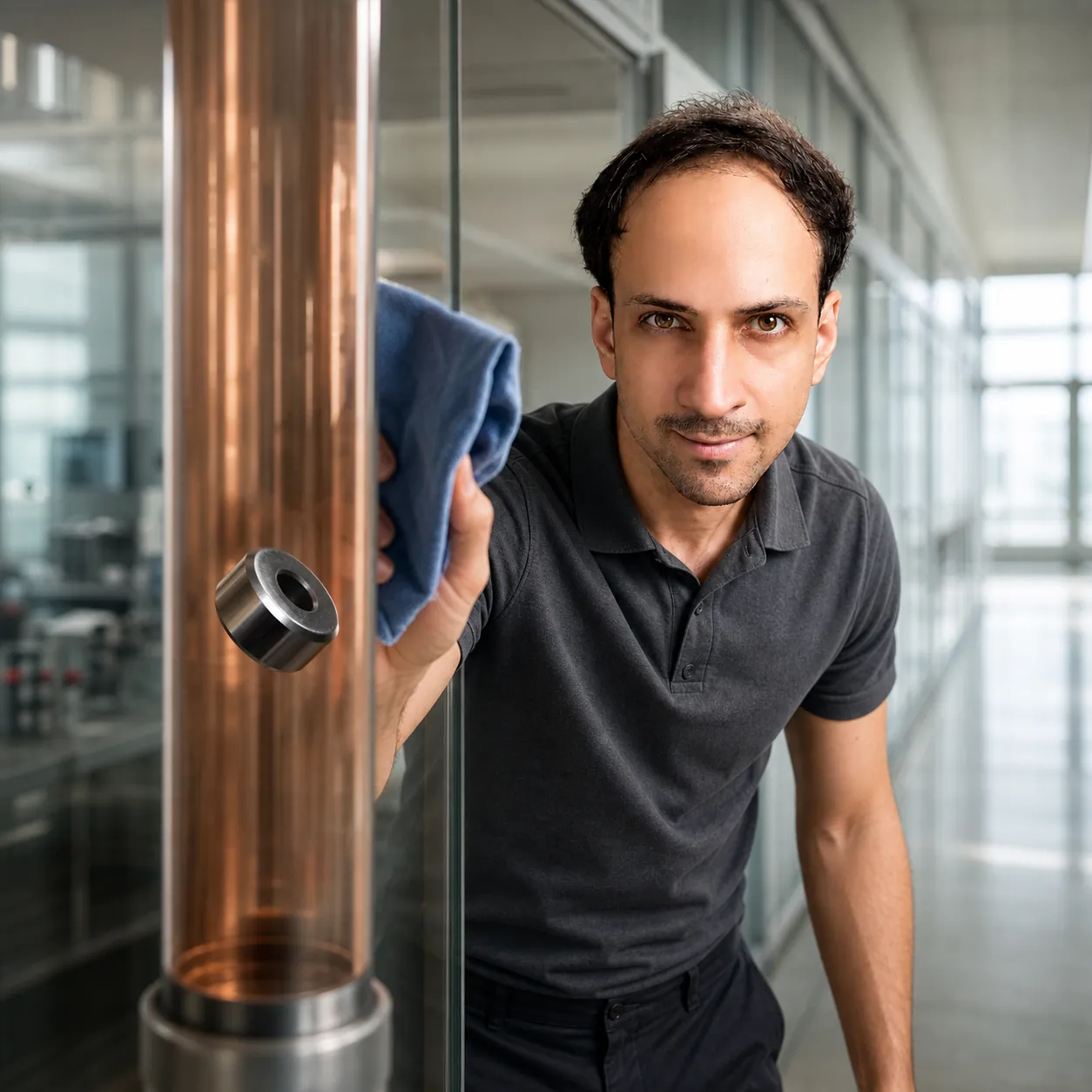
Use the attached reference photo as the identity reference: keep the same face, skin tone, hair and features as the person in that photo, without beautifying, aging or altering them. Create a square 1:1 museum-catalog frame with a strong first read and a slower second read. Location: a glass-walled corridor between two lab wings, empty at midday. Show the subject in a slate-grey knit polo and pressed dark chinos, wiping one clear panel with a folded microfiber cloth. The impossible-looking event must obey this clear system: a thick copper tube down which a dropped magnet sinks in impossible slow motion without touching the walls treats force as something that can be recorded as faithfully as light. Explore why slowing a fall can feel more powerful than stopping it; direct expression and posture toward patient discovery, never melodrama or ad-like confidence. Use a 100mm macro-to-portrait hybrid: one magnetized detail near the lens and the subject's face readable beyond it, both physically plausible. Make the composition keep every trace of force sharp while the room behind stays quiet and soft. Render it as conceptual laboratory portraiture combining tactile scientific apparatus, restrained contemporary art direction, believable mechanisms, and human-centered editorial realism, using clean laboratory illumination shaped into directional zones rather than flat brightness and a palette of graphite, bone white, and a narrow band of cobalt. Keep one identity-locked person, credible hands and fingers, natural fabric, and coherent scale, contact, reflections, shadows, airflow, deformation, and materials. Background people only when essential, always secondary and clearly different. Avoid cartoon magnet iconography, floating debris vortices, electric sparks, sci-fi antigravity platforms, and mirror-polished chrome liquid. No text, labels, logos, signatures, watermarks, random symbols, plastic skin, excessive bloom, or glossy AI finish.
Treat that reference as the character anchor and change only the scene. Create a square 1:1 museum-catalog frame with a strong first read and a slower...
Treat that reference as the character anchor and change only the scene. Create a square 1:1 museum-catalog frame with a strong first read and a slower...
Treat that reference as the character anchor and change only the scene. Create a square 1:1 museum-catalog frame with a strong first read and a slower...
Treat that reference as the character anchor and change only the scene. Create a square 1:1 museum-catalog frame with a strong first read and a slower...
Treat that reference as the character anchor and change only the scene. Create a square 1:1 museum-catalog frame with a strong first read and a slower...
Treat that reference as the character anchor and change only the scene. Create a square 1:1 museum-catalog frame with a strong first read and a slower...
Treat that reference as the character anchor and change only the scene. Create a square 1:1 museum-catalog frame with a strong first read and a slower...
Treat that reference as the character anchor and change only the scene. Create a square 1:1 museum-catalog frame with a strong first read and a slower...
Treat that reference as the character anchor and change only the scene. Create a square 1:1 museum-catalog frame with a strong first read and a slower...
Treat that reference as the character anchor and change only the scene. Create a square 1:1 museum-catalog frame with a strong first read and a slower...
Treat that reference as the character anchor and change only the scene. Create a square 1:1 museum-catalog frame with a strong first read and a slower...
Treat that reference as the character anchor and change only the scene. Create a square 1:1 museum-catalog frame with a strong first read and a slower...