جاري التحميل...


جاري التحميل...
Create a square 1:1 museum-catalog frame with a strong first read and a slower second read. Location: a clean small boiler room, gauges steady, pipes...
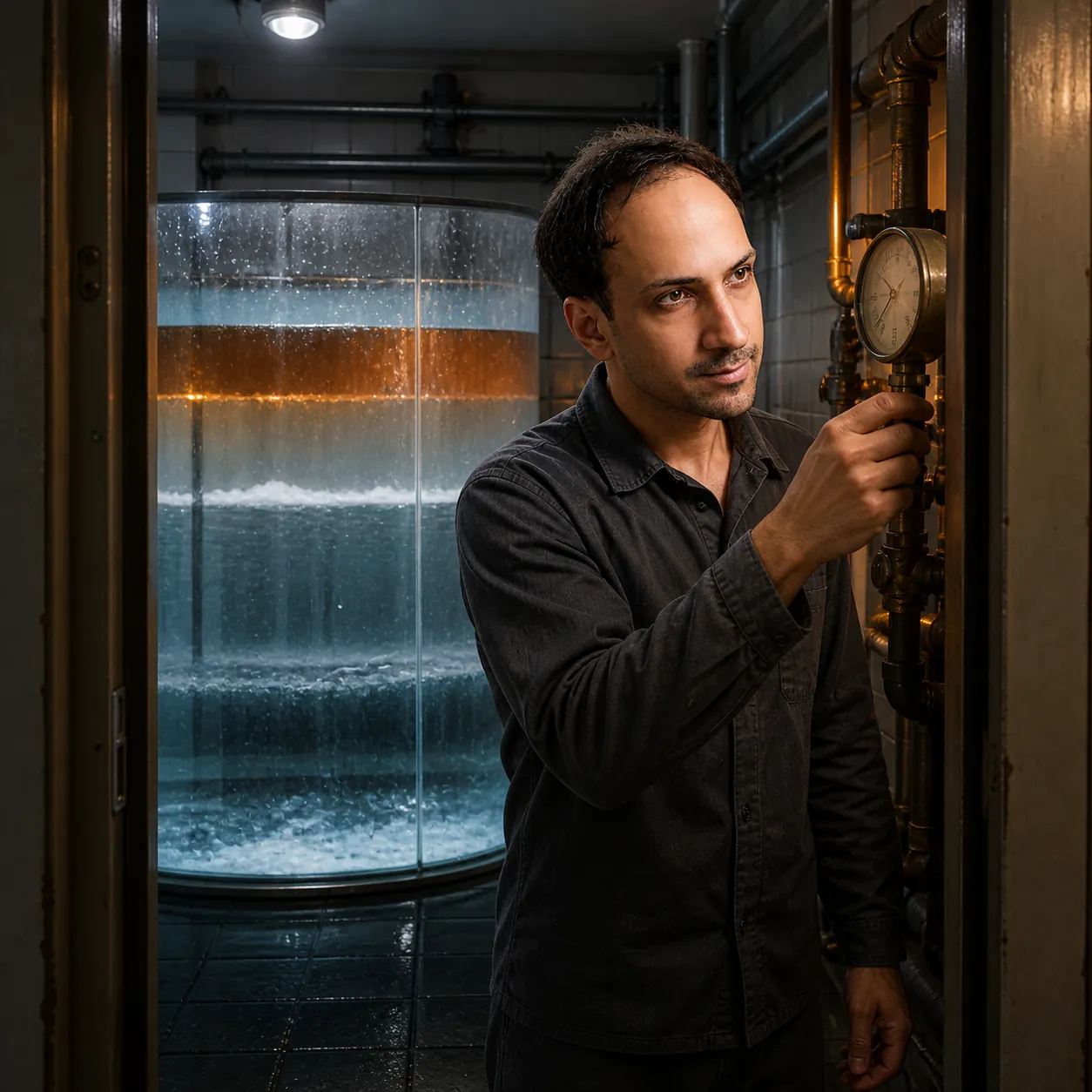
Use the attached reference photo as the identity reference: keep the same face, skin tone, hair and features as the person in that photo, without beautifying, aging or altering them. Create a square 1:1 museum-catalog frame with a strong first read and a slower second read. Location: a clean small boiler room, gauges steady, pipes ticking with heat. Show the subject in a slate work shirt buttoned to the collarbone, reading one brass gauge at eye level. Use this advanced image-making device as the core logic: a clear-walled plunge tank whose water holds visible strata, surface chill over deeper darker cold, marked by dye bands shows warmth as territory that must be actively held rather than owned. Explore whether naming the layers of a hard thing makes it enterable; direct expression and posture toward sober resolve, never melodrama or ad-like confidence. Frame through the doorway between climates so both temperatures render in one exposure. Make the composition let the cold occupy more area and the warmth more weight. Render it as gallery-grade thermal photography built from genuine temperature strata, quiet industrial fixtures, accurate flushed-skin response, and unhurried observational framing, using clean tiled-room illumination with honest specular control on wet surfaces and a palette of ice clear, charcoal, and one band of kiln orange. Keep one identity-locked person, credible hands and fingers, natural fabric, and coherent scale, contact, reflections, shadows, airflow, deformation, and materials. Background people only when essential, always secondary and clearly different. Avoid macho ice-bath bravado, screaming faces, chiseled-torso fitness posing, motivational-poster steam, and frozen-beard theatrics. No text, labels, logos, signatures, watermarks, random symbols, plastic skin, excessive bloom, or glossy AI finish.
Treat that reference as the character anchor and change only the scene. Create a square 1:1 museum-catalog frame with a strong first read and a slower...
Treat that reference as the character anchor and change only the scene. Create a square 1:1 museum-catalog frame with a strong first read and a slower...
Treat that reference as the character anchor and change only the scene. Create a square 1:1 museum-catalog frame with a strong first read and a slower...
Treat that reference as the character anchor and change only the scene. Create a square 1:1 museum-catalog frame with a strong first read and a slower...
Treat that reference as the character anchor and change only the scene. Create a square 1:1 museum-catalog frame with a strong first read and a slower...
Treat that reference as the character anchor and change only the scene. Create a square 1:1 museum-catalog frame with a strong first read and a slower...
Treat that reference as the character anchor and change only the scene. Create a square 1:1 museum-catalog frame with a strong first read and a slower...
Treat that reference as the character anchor and change only the scene. Create a square 1:1 museum-catalog frame with a strong first read and a slower...
Treat that reference as the character anchor and change only the scene. Create a square 1:1 museum-catalog frame with a strong first read and a slower...
Treat that reference as the character anchor and change only the scene. Create a square 1:1 museum-catalog frame with a strong first read and a slower...
Treat that reference as the character anchor and change only the scene. Create a square 1:1 museum-catalog frame with a strong first read and a slower...
Treat that reference as the character anchor and change only the scene. Create a square 1:1 museum-catalog frame with a strong first read and a slower...