جاري التحميل...


جاري التحميل...
Create a square 1:1 museum-catalog frame with a strong first read and a slower second read. Location: a stone bench beside a mirrored column seam in a quiet...
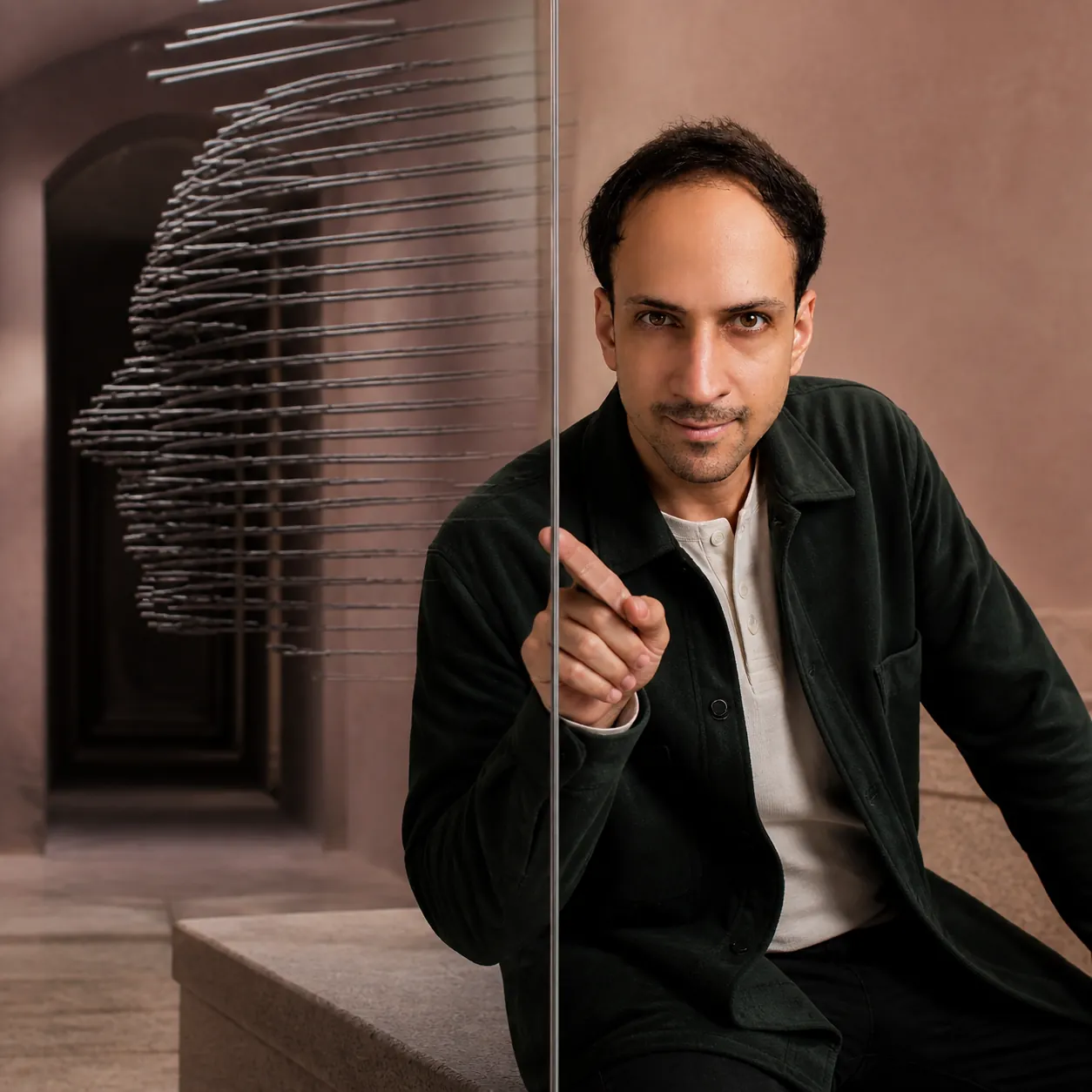
Use the attached reference photo as the identity reference: keep the same face, skin tone, hair and features as the person in that photo, without beautifying, aging or altering them. Create a square 1:1 museum-catalog frame with a strong first read and a slower second read. Location: a stone bench beside a mirrored column seam in a quiet lobby. Show the subject in a deep green overshirt over an ecru henley, running one finger down the mirror's visible seam. Use this advanced image-making device as the core logic: dozens of suspended steel rods that assemble into a perfect profile portrait from one aligned doorway makes meaning appear only for the viewer willing to stand in the right place. Explore who is responsible for meaning that no single part contains; direct expression and posture toward quiet recognition, never melodrama or ad-like confidence. Use a 100mm macro-to-portrait hybrid: the illusion's telltale seam near the lens and the subject's face readable beyond it, both physically plausible. Make the composition let their shadow obey the real room, not the painted one. Render it as gallery-grade optical-illusion photography built from real aligned installations, quiet plaster-and-chalk materials, accurate shadow logic, and unhurried observational framing, using a single overhead practical softened by the surrounding architecture, leaving readable shadow detail and a palette of soft plaster pink, charcoal, and clean off-white. Keep one identity-locked person, credible hands and fingers, natural fabric, and coherent scale, contact, reflections, shadows, airflow, deformation, and materials. Background people only when essential, always secondary and clearly different. Avoid melting-clock surrealism, endless staircases, floating islands, impossible Escher tributes played straight, and green-screen composites. No text, labels, logos, signatures, watermarks, random symbols, plastic skin, excessive bloom, or glossy AI finish.
Treat that reference as the character anchor and change only the scene. Create a square 1:1 museum-catalog frame with a strong first read and a slower...
Treat that reference as the character anchor and change only the scene. Create a square 1:1 museum-catalog frame with a strong first read and a slower...
Treat that reference as the character anchor and change only the scene. Create a square 1:1 museum-catalog frame with a strong first read and a slower...
Treat that reference as the character anchor and change only the scene. Create a square 1:1 museum-catalog frame with a strong first read and a slower...
Treat that reference as the character anchor and change only the scene. Create a square 1:1 museum-catalog frame with a strong first read and a slower...
Treat that reference as the character anchor and change only the scene. Create a square 1:1 museum-catalog frame with a strong first read and a slower...
Treat that reference as the character anchor and change only the scene. Create a square 1:1 museum-catalog frame with a strong first read and a slower...
Treat that reference as the character anchor and change only the scene. Create a square 1:1 museum-catalog frame with a strong first read and a slower...
Treat that reference as the character anchor and change only the scene. Create a square 1:1 museum-catalog frame with a strong first read and a slower...
Treat that reference as the character anchor and change only the scene. Create a square 1:1 museum-catalog frame with a strong first read and a slower...
Treat that reference as the character anchor and change only the scene. Create a square 1:1 museum-catalog frame with a strong first read and a slower...
Treat that reference as the character anchor and change only the scene. Create a square 1:1 museum-catalog frame with a strong first read and a slower...