جاري التحميل...


جاري التحميل...
Create a square 1:1 museum-catalog frame with a strong first read and a slower second read. Location: a study nook of labeled box files and one green-shaded...
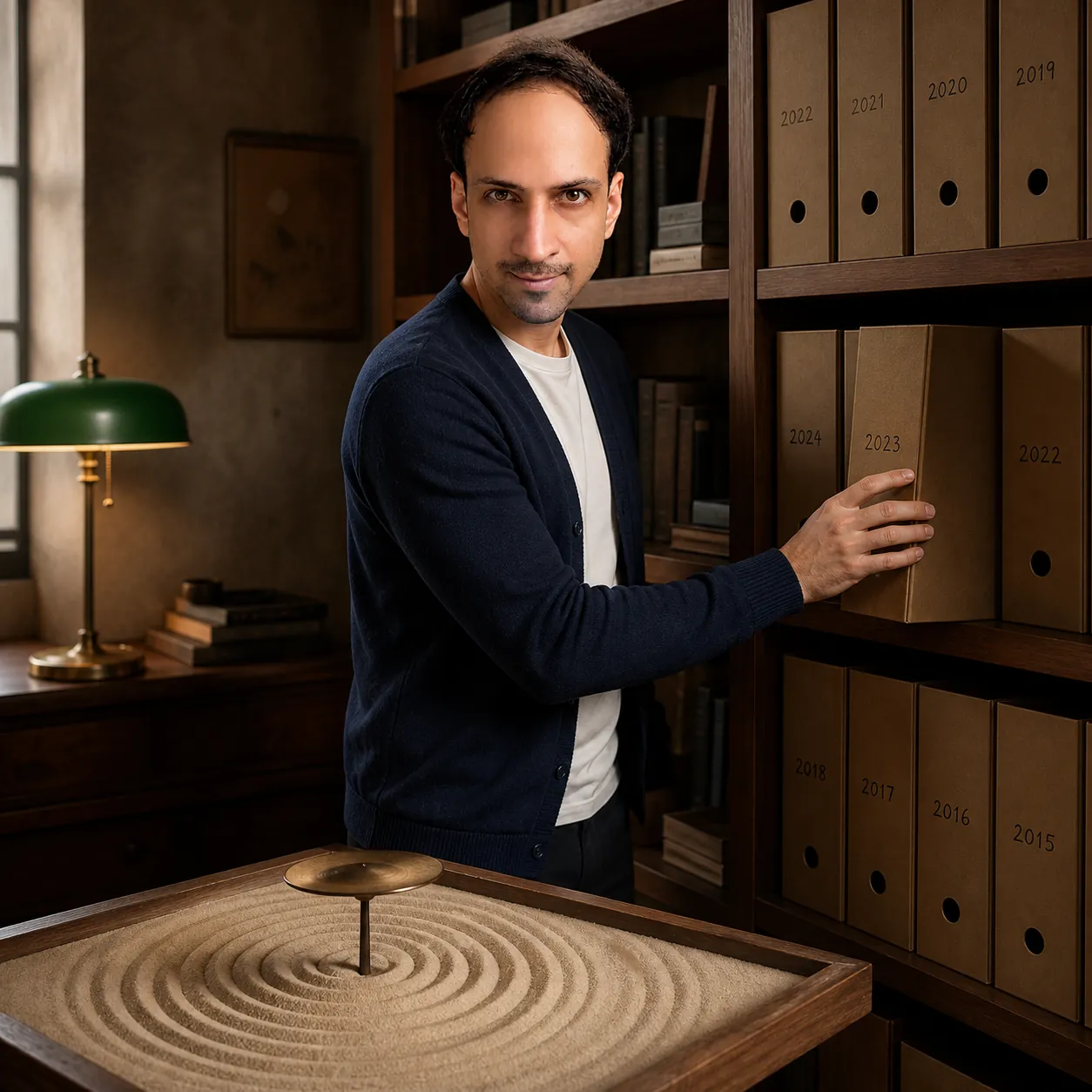
Use the attached reference photo as the identity reference: keep the same face, skin tone, hair and features as the person in that photo, without beautifying, aging or altering them. Create a square 1:1 museum-catalog frame with a strong first read and a slower second read. Location: a study nook of labeled box files and one green-shaded lamp. Show the subject in a fine navy cardigan over a soft white shirt, sliding one labeled box file back into its gap. Build the artwork around this material rule: a standing balance plate that scribes their quiet sway into fine sand, this year's loop drawn tighter inside last year's retires the language of emergency in favor of dated, boring care. Explore which direction progress points when the goal is stillness; direct expression and posture toward quiet accountability, never melodrama or ad-like confidence. Use a measured wide 28mm view with the subject near one-third of the frame and no stretched limbs. Make the composition keep every sign of care sharper than any sign of age. Render it as museum-scale archival realism combining high-fidelity portrait photography, truthful patina and wear, disciplined warm neutrals, and physically accurate aging of materials, using a broad window-shaped key with gentle falloff, soft negative fill, and no beauty-light flattening and a palette of walnut brown, pale parchment, and muted steel. Keep one identity-locked person, credible hands and fingers, natural fabric, and coherent scale, contact, reflections, shadows, airflow, deformation, and materials. Background people only when essential, always secondary and clearly different. Avoid hospital drama, IV drips, gym-transformation posing, supplement-bottle product shots, and glowing DNA helices. No text, labels, logos, signatures, watermarks, random symbols, plastic skin, excessive bloom, or glossy AI finish.
Treat that reference as the character anchor and change only the scene. Create a square 1:1 museum-catalog frame with a strong first read and a slower...
Treat that reference as the character anchor and change only the scene. Create a square 1:1 museum-catalog frame with a strong first read and a slower...
Treat that reference as the character anchor and change only the scene. Create a square 1:1 museum-catalog frame with a strong first read and a slower...
Treat that reference as the character anchor and change only the scene. Create a square 1:1 museum-catalog frame with a strong first read and a slower...
Treat that reference as the character anchor and change only the scene. Create a square 1:1 museum-catalog frame with a strong first read and a slower...
Treat that reference as the character anchor and change only the scene. Create a square 1:1 museum-catalog frame with a strong first read and a slower...
Treat that reference as the character anchor and change only the scene. Create a square 1:1 museum-catalog frame with a strong first read and a slower...
Treat that reference as the character anchor and change only the scene. Create a square 1:1 museum-catalog frame with a strong first read and a slower...
Treat that reference as the character anchor and change only the scene. Create a square 1:1 museum-catalog frame with a strong first read and a slower...
Treat that reference as the character anchor and change only the scene. Create a square 1:1 museum-catalog frame with a strong first read and a slower...
Treat that reference as the character anchor and change only the scene. Create a square 1:1 museum-catalog frame with a strong first read and a slower...
Treat that reference as the character anchor and change only the scene. Create a square 1:1 museum-catalog frame with a strong first read and a slower...