جاري التحميل...


جاري التحميل...
Create a square 1:1 museum-catalog frame with a strong first read and a slower second read. Location: a whitewashed courtyard with one surveyed brass marker...
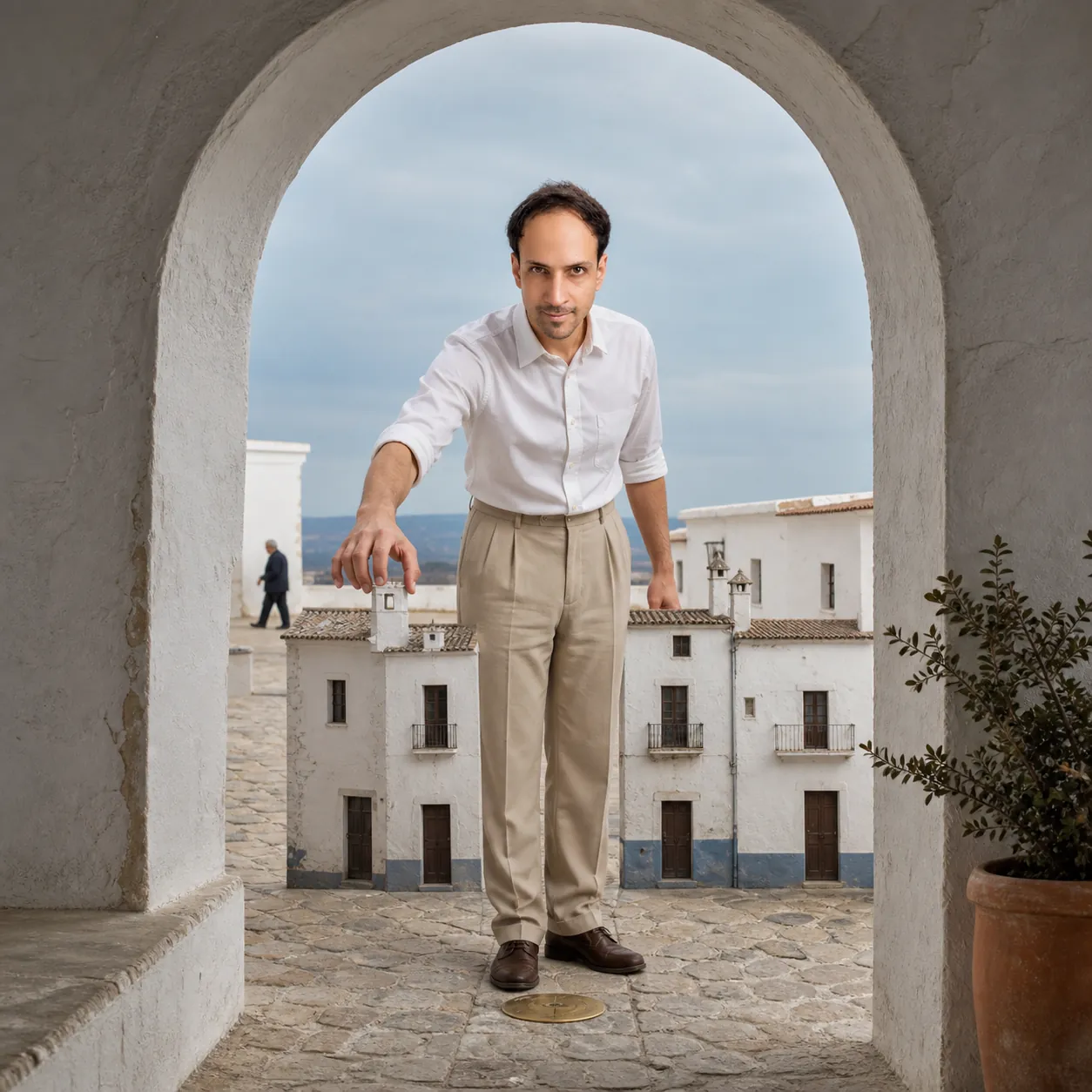
Use the attached reference photo as the identity reference: keep the same face, skin tone, hair and features as the person in that photo, without beautifying, aging or altering them. Create a square 1:1 museum-catalog frame with a strong first read and a slower second read. Location: a whitewashed courtyard with one surveyed brass marker set in the paving. Show the subject in a clean white shirt tucked into pleated sand trousers, aligning their shoe toes exactly to the brass marker. Build the artwork around this material rule: a hand-built miniature street facade holding perfect scale against the real skyline until their hand enters the frame lets true scale arrive gently and retire the illusion without breaking it. Explore how gently reality can end an illusion without violence; direct expression and posture toward alert skepticism, never melodrama or ad-like confidence. Frame through one real architectural opening, with the foreground sharp enough to feel physical but never covering the face. Make the composition give the confession seam more light than the deception. Render it as gallery-grade optical-illusion photography built from real aligned installations, quiet plaster-and-chalk materials, accurate shadow logic, and unhurried observational framing, using even overcast plaza light that keeps every painted edge honest and a palette of bone, graphite, and a single plane of cerulean. Keep one identity-locked person, credible hands and fingers, natural fabric, and coherent scale, contact, reflections, shadows, airflow, deformation, and materials. Background people only when essential, always secondary and clearly different. Avoid theme-park 3D chalk-art gimmicks, fisheye warping, kaleidoscope filters, dream-sequence blur, and gravity-defying poses. No text, labels, logos, signatures, watermarks, random symbols, plastic skin, excessive bloom, or glossy AI finish.
Treat that reference as the character anchor and change only the scene. Create a square 1:1 museum-catalog frame with a strong first read and a slower...
Treat that reference as the character anchor and change only the scene. Create a square 1:1 museum-catalog frame with a strong first read and a slower...
Treat that reference as the character anchor and change only the scene. Create a square 1:1 museum-catalog frame with a strong first read and a slower...
Treat that reference as the character anchor and change only the scene. Create a square 1:1 museum-catalog frame with a strong first read and a slower...
Treat that reference as the character anchor and change only the scene. Create a square 1:1 museum-catalog frame with a strong first read and a slower...
Treat that reference as the character anchor and change only the scene. Create a square 1:1 museum-catalog frame with a strong first read and a slower...
Treat that reference as the character anchor and change only the scene. Create a square 1:1 museum-catalog frame with a strong first read and a slower...
Treat that reference as the character anchor and change only the scene. Create a square 1:1 museum-catalog frame with a strong first read and a slower...
Treat that reference as the character anchor and change only the scene. Create a square 1:1 museum-catalog frame with a strong first read and a slower...
Treat that reference as the character anchor and change only the scene. Create a square 1:1 museum-catalog frame with a strong first read and a slower...
Treat that reference as the character anchor and change only the scene. Create a square 1:1 museum-catalog frame with a strong first read and a slower...
Treat that reference as the character anchor and change only the scene. Create a square 1:1 museum-catalog frame with a strong first read and a slower...