جاري التحميل...


جاري التحميل...
Create a square 1:1 museum-catalog frame with a strong first read and a slower second read. Location: a small home-lab bench with a scale, thermometer, and...
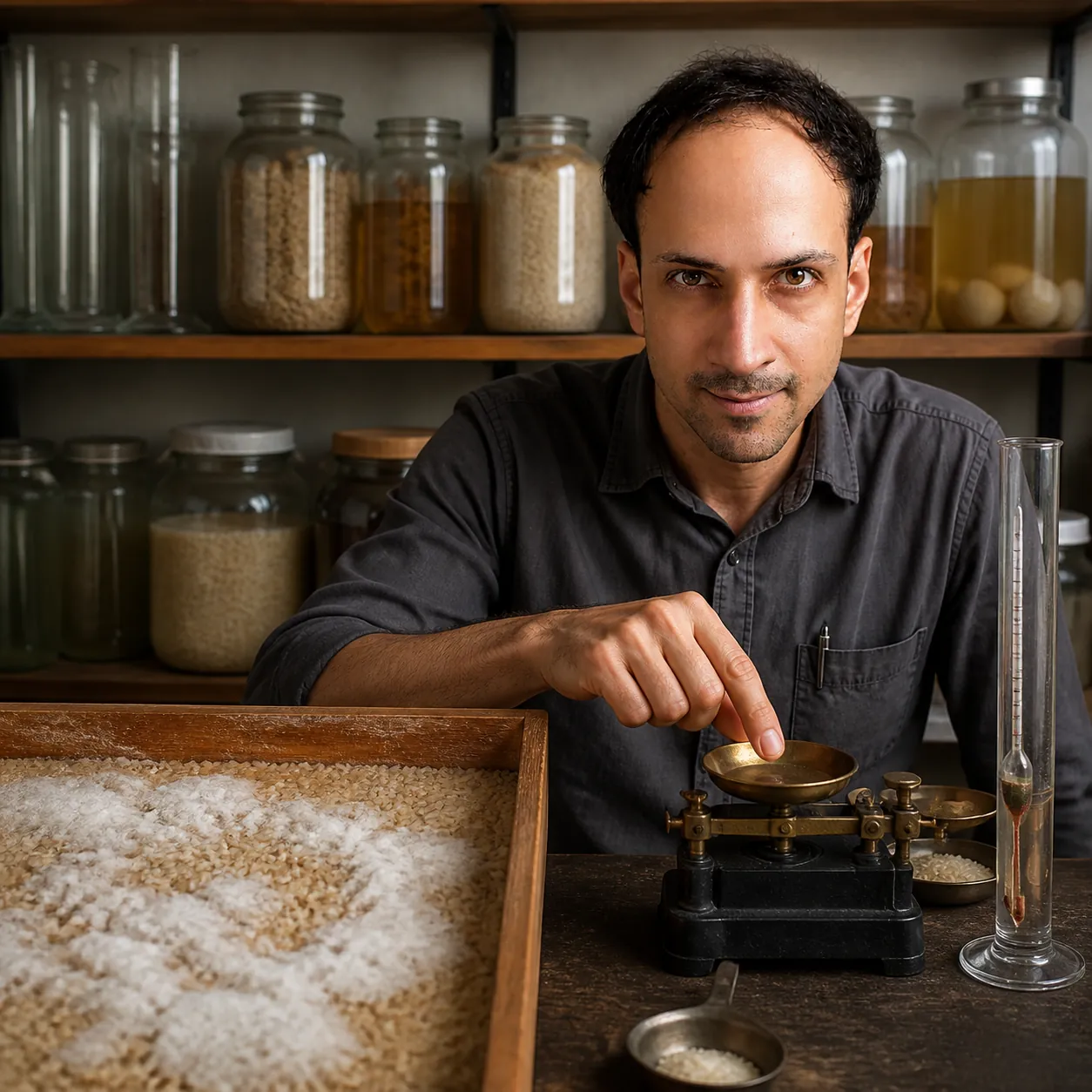
Use the attached reference photo as the identity reference: keep the same face, skin tone, hair and features as the person in that photo, without beautifying, aging or altering them. Create a square 1:1 museum-catalog frame with a strong first read and a slower second read. Location: a small home-lab bench with a scale, thermometer, and clean cylinders. Show the subject in a slate-grey work shirt with a pen in the chest pocket, zeroing a small brass scale with one fingertip. Treat this mechanism as the frame’s governing rule: a cedar tray of rice where white koji bloom has mapped the tray's warm zones in drifts of snowy mycelium shows the exact geometry of a shift of work no one witnessed. Explore what an organism can measure that an instrument cannot; direct expression and posture toward calm coexistence, never melodrama or ad-like confidence. Frame along the shelf line so the jars recede in honest focus and they anchor the nearest third. Make the composition show one culture at rest beside one at full work. Render it as museum-scale still-life realism combining high-fidelity portrait photography, truthful glass and brine optics, patient natural color, and physically accurate bubbles and bloom, using a broad window-shaped key with gentle falloff, soft negative fill, and no beauty-light flattening and a palette of honey gold, smoke grey, and cool glass green. Keep one identity-locked subject, credible hands and fingers, natural fabric, and coherent scale, contact, reflections, shadows, airflow, deformation, and materials. Background people only when essential, always secondary and clearly different. Avoid probiotic-supplement bottles, gut-diagram infographics, glowing bacteria renders, petri-dish sci-fi, and sourdough-influencer clichés. No text, labels, logos, signatures, watermarks, random symbols, plastic skin, excessive bloom, or glossy AI finish.
Treat that reference as the character anchor and change only the scene. Create a square 1:1 museum-catalog frame with a strong first read and a slower...
Treat that reference as the character anchor and change only the scene. Create a square 1:1 museum-catalog frame with a strong first read and a slower...
Treat that reference as the character anchor and change only the scene. Create a square 1:1 museum-catalog frame with a strong first read and a slower...
Treat that reference as the character anchor and change only the scene. Create a square 1:1 museum-catalog frame with a strong first read and a slower...
Treat that reference as the character anchor and change only the scene. Create a square 1:1 museum-catalog frame with a strong first read and a slower...
Treat that reference as the character anchor and change only the scene. Create a square 1:1 museum-catalog frame with a strong first read and a slower...
Treat that reference as the character anchor and change only the scene. Create a square 1:1 museum-catalog frame with a strong first read and a slower...
Treat that reference as the character anchor and change only the scene. Create a square 1:1 museum-catalog frame with a strong first read and a slower...
Treat that reference as the character anchor and change only the scene. Create a square 1:1 museum-catalog frame with a strong first read and a slower...
Treat that reference as the character anchor and change only the scene. Create a square 1:1 museum-catalog frame with a strong first read and a slower...
Treat that reference as the character anchor and change only the scene. Create a square 1:1 museum-catalog frame with a strong first read and a slower...
Treat that reference as the character anchor and change only the scene. Create a square 1:1 museum-catalog frame with a strong first read and a slower...