جاري التحميل...


جاري التحميل...
Create a square 1:1 museum-catalog frame with a strong first read and a slower second read. Location: a Riyadh service lane before dawn deliveries. Show the...
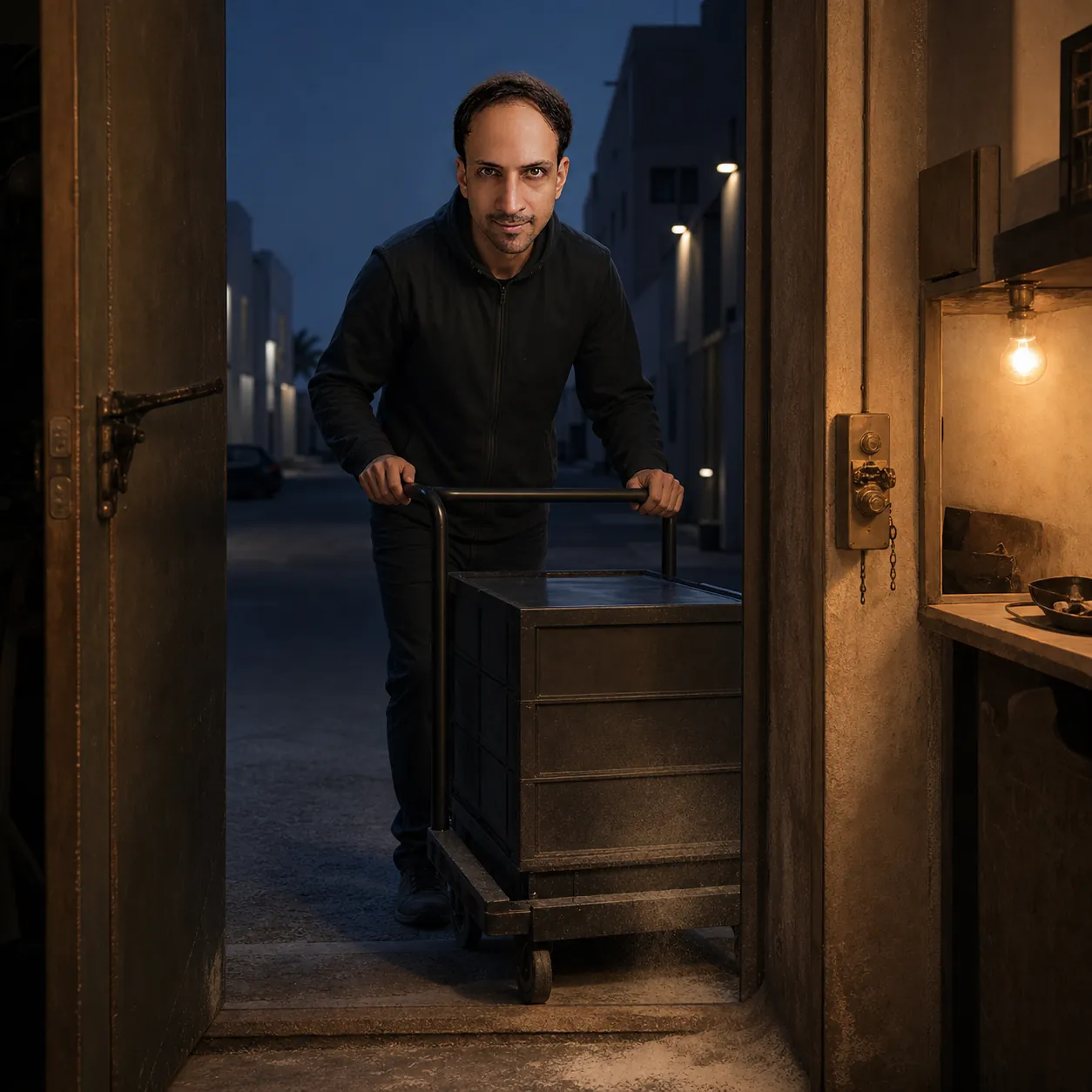
Use the attached reference photo as the identity reference: keep the same face, skin tone, hair and features as the person in that photo, without beautifying, aging or altering them. Create a square 1:1 museum-catalog frame with a strong first read and a slower second read. Location: a Riyadh service lane before dawn deliveries. Show the subject in lightweight performance layers with no logos or exaggerated technical detailing, guiding a silent trolley over a rough threshold without waking nearby homes. Make one rigorous physical condition the conceptual engine: fine dust revealing every surface a hidden mechanism has touched dissolves the path after the agreed task is complete. Explore permission as a living relationship rather than a one-time click; direct expression and posture toward watchful autonomy, never melodrama or ad-like confidence. Frame through one real architectural opening, with the foreground sharp enough to feel physical but never covering the face. Make the composition show a mechanism that can be changed from their side only. Render it as museum-grade privacy allegory rendered through physical materials, architectural light, documentary portrait fidelity, and rigorous cause-and-effect, using quiet blue-hour ambient light with one low-intensity tungsten interior source and a palette of smoked glass, parchment, and muted brass without luxury gloss. Keep one identity-locked person, credible hands and fingers, natural fabric, and coherent scale, contact, reflections, shadows, airflow, deformation, and materials. Background people only when essential, always secondary and clearly different. Avoid padlocks, fingerprint icons, hooded hackers, surveillance-camera clichés, and floating cybersecurity graphics. No text, labels, logos, signatures, watermarks, random symbols, plastic skin, excessive bloom, or glossy AI finish.
Treat that reference as the character anchor and change only the scene. Create a square 1:1 museum-catalog frame with a strong first read and a slower...
Treat that reference as the character anchor and change only the scene. Create a square 1:1 museum-catalog frame with a strong first read and a slower...
Treat that reference as the character anchor and change only the scene. Create a square 1:1 museum-catalog frame with a strong first read and a slower...
Treat that reference as the character anchor and change only the scene. Create a square 1:1 museum-catalog frame with a strong first read and a slower...
Treat that reference as the character anchor and change only the scene. Create a square 1:1 museum-catalog frame with a strong first read and a slower...
Treat that reference as the character anchor and change only the scene. Create a square 1:1 museum-catalog frame with a strong first read and a slower...
Treat that reference as the character anchor and change only the scene. Create a square 1:1 museum-catalog frame with a strong first read and a slower...
Treat that reference as the character anchor and change only the scene. Create a square 1:1 museum-catalog frame with a strong first read and a slower...
Treat that reference as the character anchor and change only the scene. Create a square 1:1 museum-catalog frame with a strong first read and a slower...
Treat that reference as the character anchor and change only the scene. Create a square 1:1 museum-catalog frame with a strong first read and a slower...
Treat that reference as the character anchor and change only the scene. Create a square 1:1 museum-catalog frame with a strong first read and a slower...
Treat that reference as the character anchor and change only the scene. Create a square 1:1 museum-catalog frame with a strong first read and a slower...