جاري التحميل...


جاري التحميل...
Create a square 1:1 museum-catalog frame with a strong first read and a slower second read. Location: a shaded concrete loading dock while noon glare burns...
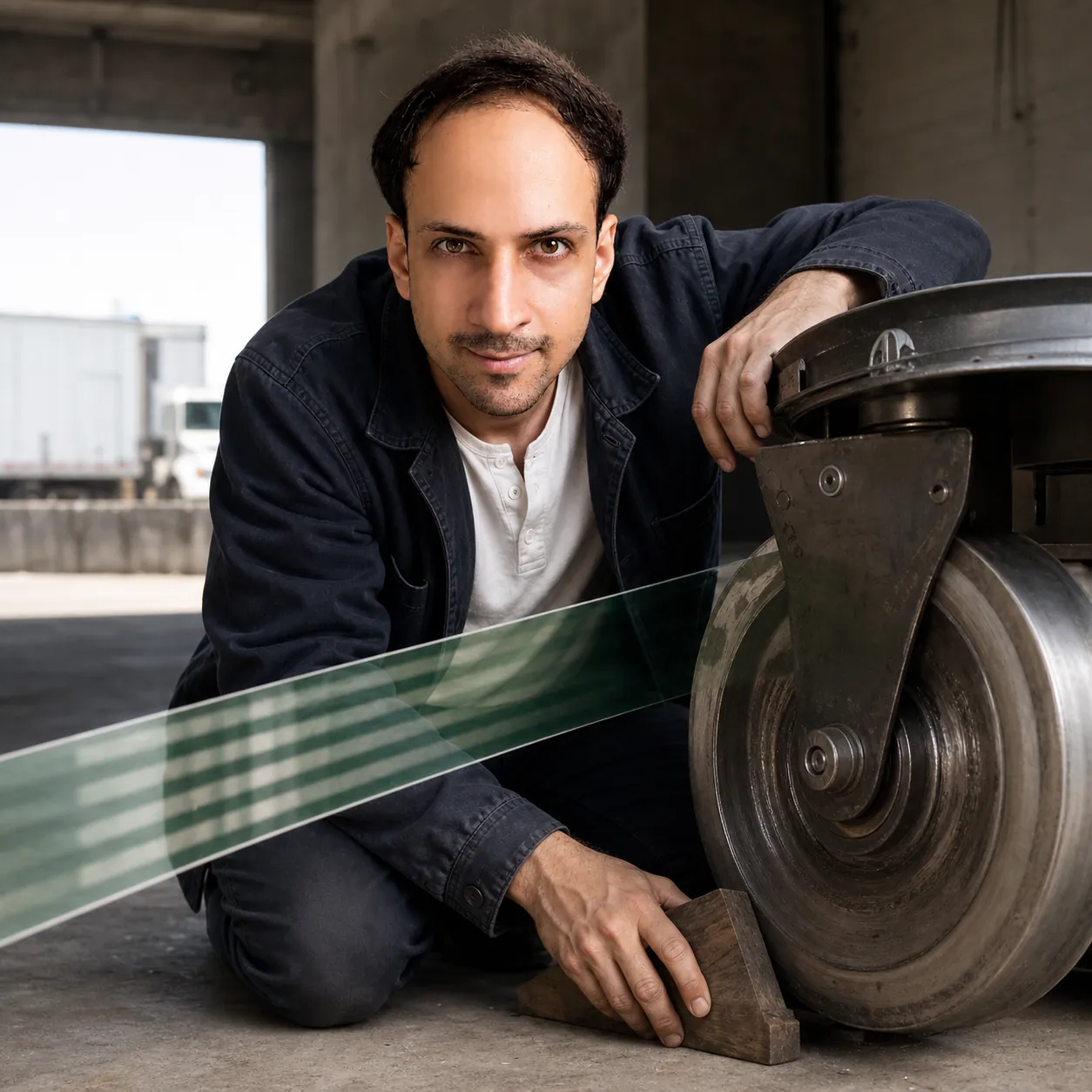
Use the attached reference photo as the identity reference: keep the same face, skin tone, hair and features as the person in that photo, without beautifying, aging or altering them. Create a square 1:1 museum-catalog frame with a strong first read and a slower second read. Location: a shaded concrete loading dock while noon glare burns outside. Show the subject in a faded indigo chore jacket over a white henley, chocking a pallet wheel with a wooden wedge. Build the artwork around this material rule: a green viewing film laid halfway across a plain machine part, showing pale stripes where hidden poles alternate treats force as something that can be recorded as faithfully as light. Explore how one object can tell two true stories at the same instant; direct expression and posture toward quiet command, never melodrama or ad-like confidence. Frame across the work surface at chest height so the demonstration and their eyes share one focal plane. Make the composition let one field line exit the frame unresolved. Render it as conceptual laboratory portraiture combining tactile scientific apparatus, restrained contemporary art direction, believable mechanisms, and human-centered editorial realism, using a single overhead practical softened by the surrounding architecture, leaving readable shadow detail and a palette of charcoal, silvered copper, and muted ivory. Keep one identity-locked subject, credible hands and fingers, natural fabric, and coherent scale, contact, reflections, shadows, airflow, deformation, and materials. Background people only when essential, always secondary and clearly different. Avoid cartoon magnet iconography, floating debris vortices, electric sparks, sci-fi antigravity platforms, and mirror-polished chrome liquid. No text, labels, logos, signatures, watermarks, random symbols, plastic skin, excessive bloom, or glossy AI finish.
Treat that reference as the character anchor and change only the scene. Create a square 1:1 museum-catalog frame with a strong first read and a slower...
Treat that reference as the character anchor and change only the scene. Create a square 1:1 museum-catalog frame with a strong first read and a slower...
Treat that reference as the character anchor and change only the scene. Create a square 1:1 museum-catalog frame with a strong first read and a slower...
Treat that reference as the character anchor and change only the scene. Create a square 1:1 museum-catalog frame with a strong first read and a slower...
Treat that reference as the character anchor and change only the scene. Create a square 1:1 museum-catalog frame with a strong first read and a slower...
Treat that reference as the character anchor and change only the scene. Create a square 1:1 museum-catalog frame with a strong first read and a slower...
Treat that reference as the character anchor and change only the scene. Create a square 1:1 museum-catalog frame with a strong first read and a slower...
Treat that reference as the character anchor and change only the scene. Create a square 1:1 museum-catalog frame with a strong first read and a slower...
Treat that reference as the character anchor and change only the scene. Create a square 1:1 museum-catalog frame with a strong first read and a slower...
Treat that reference as the character anchor and change only the scene. Create a square 1:1 museum-catalog frame with a strong first read and a slower...
Treat that reference as the character anchor and change only the scene. Create a square 1:1 museum-catalog frame with a strong first read and a slower...
Treat that reference as the character anchor and change only the scene. Create a square 1:1 museum-catalog frame with a strong first read and a slower...