جاري التحميل...


جاري التحميل...
Create a square 1:1 museum-catalog frame with a strong first read and a slower second read at exactly 2880x2880 pixels. Location: a tinsmith's alcove...
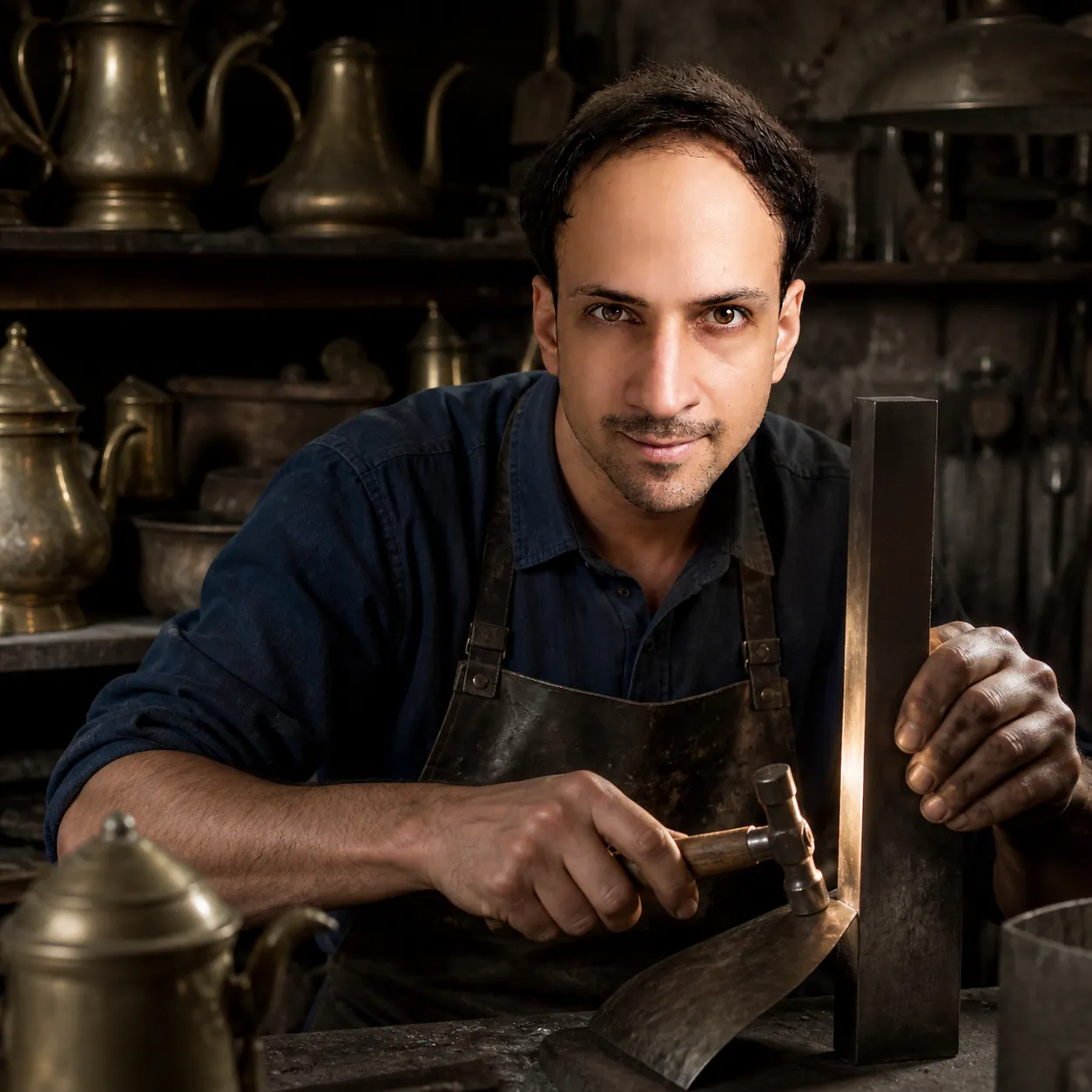
Use the attached reference photo as the identity reference: keep the same face, skin tone, hair and features as the person in that photo, without beautifying, aging or altering them. Create a square 1:1 museum-catalog frame with a strong first read and a slower second read at exactly 2880x2880 pixels. Location: a tinsmith's alcove stacked with brass coffee pots awaiting repair. Show the subject in a worn leather half-apron over a rolled-sleeve indigo shirt, chasing a dent outward with taps too light to hear. Make one rigorous physical condition the conceptual engine: a backlit master straightedge laid against a fresh-planed edge, the only gap between them a seam of light thinner than paper turns patient maintenance into evidence the naked eye can verify at a glance. Explore how small corrections accumulate into a truth no single pass could reach; direct expression and posture toward honed patience, never melodrama or ad-like confidence. Use an eye-level 85mm portrait viewpoint with natural perspective and shallow, honest depth of field. Make the composition keep both hands inside the light and everything else in shadow. Render it as workshop still-life portraiture combining truthful tool physics, visible micro-texture on steel and skin, disciplined shadow work, and museum-label sobriety, using warm tungsten spill from behind the tool, rim-lighting steel and knuckles and a palette of gunmetal, chalk white, and one stripe of Prussian blue. Photorealistic: this must read as a real photograph from a physical camera, never an illustration, painting, or 3D render. Resolve real surface detail: fine grit in the texture of concrete, efflorescence at damp edges, and hairline cracks that follow stress. Keep one identity-locked person, credible hands and fingers, natural fabric, and coherent scale, contact, reflections, shadows, airflow, deformation, and materials. Background people only when essential, always secondary and clearly different. Avoid sparking grinder wheels, glowing forge steel, sawdust clouds, and staged rustic tool walls. No text, labels, logos, signatures, watermarks, random symbols, plastic skin, excessive bloom, or glossy AI finish.
Treat that reference as the character anchor and change only the scene. Create a square 1:1 museum-catalog frame with a strong first read and a slower...
Treat that reference as the character anchor and change only the scene. Create a square 1:1 museum-catalog frame with a strong first read and a slower...
Treat that reference as the character anchor and change only the scene. Create a square 1:1 museum-catalog frame with a strong first read and a slower...
Treat that reference as the character anchor and change only the scene. Create a square 1:1 museum-catalog frame with a strong first read and a slower...
Treat that reference as the character anchor and change only the scene. Create a square 1:1 museum-catalog frame with a strong first read and a slower...
Treat that reference as the character anchor and change only the scene. Create a square 1:1 museum-catalog frame with a strong first read and a slower...
Treat that reference as the character anchor and change only the scene. Create a square 1:1 museum-catalog frame with a strong first read and a slower...
Treat that reference as the character anchor and change only the scene. Create a square 1:1 museum-catalog frame with a strong first read and a slower...
Treat that reference as the character anchor and change only the scene. Create a square 1:1 museum-catalog frame with a strong first read and a slower...
Treat that reference as the character anchor and change only the scene. Create a square 1:1 museum-catalog frame with a strong first read and a slower...
Treat that reference as the character anchor and change only the scene. Create a square 1:1 museum-catalog frame with a strong first read and a slower...
Treat that reference as the character anchor and change only the scene. Create a square 1:1 museum-catalog frame with a strong first read and a slower...