جاري التحميل...


جاري التحميل...
Create a square 1:1 museum-catalog frame with a strong first read and a slower second read. Location: a home garage with a plywood rig and clamped lamps....
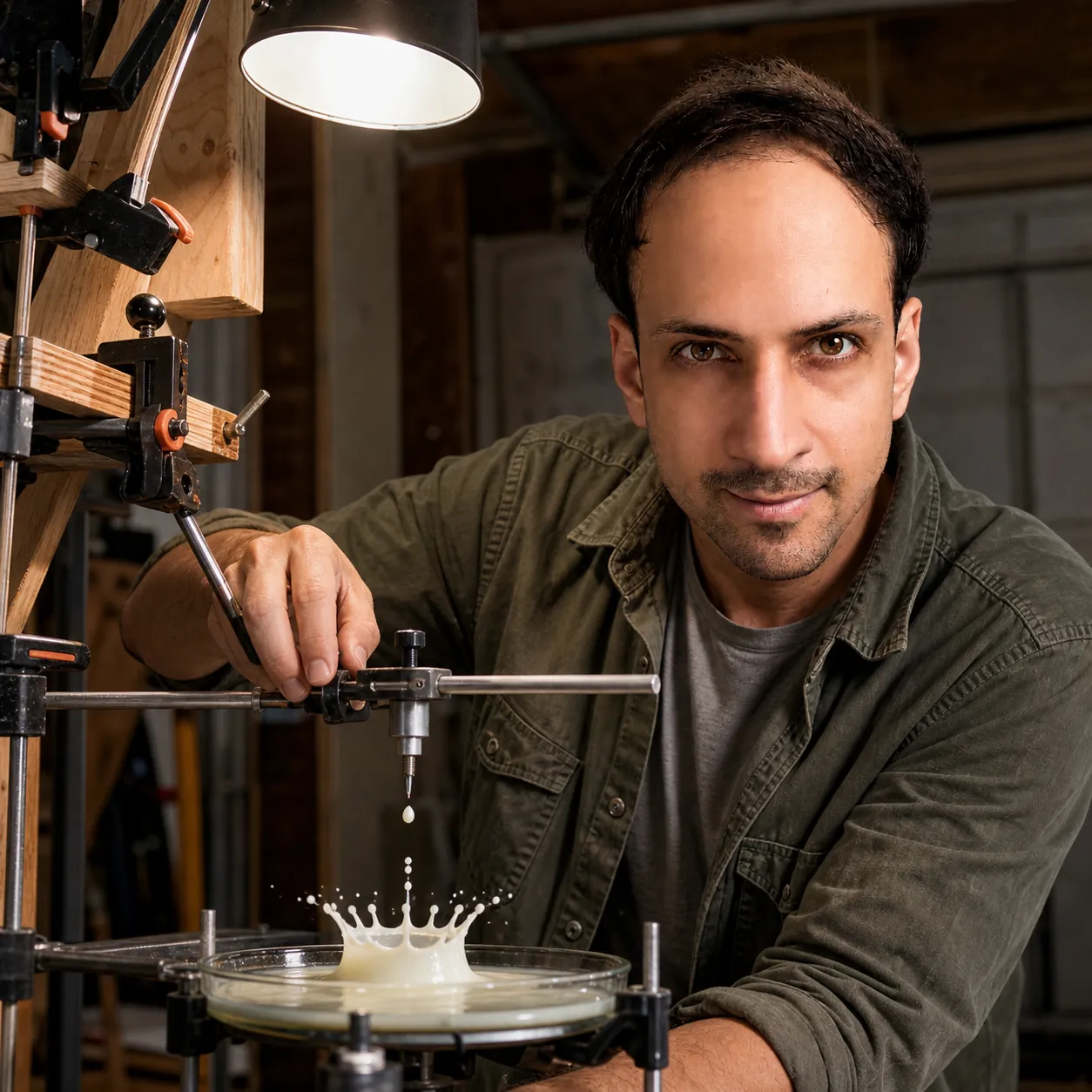
Use the attached reference photo as the identity reference: keep the same face, skin tone, hair and features as the person in that photo, without beautifying, aging or altering them. Create a square 1:1 museum-catalog frame with a strong first read and a slower second read. Location: a home garage with a plywood rig and clamped lamps. Show the subject in a worn olive work shirt over a grey tee, tightening one clamp a final half turn. Treat this mechanism as the frame’s governing rule: a single milk drop's rebound crown, arrested by a microsecond flash into a perfect coronet of rising pillars proves the pattern was drafted by structure long before the trigger. Explore how much structure hides inside events dismissed as accidents; direct expression and posture toward measured thrill, never melodrama or ad-like confidence. Frame from the rig's side so trigger, event, and their steady hands align in one readable diagonal. Make the composition give the trigger mechanism honest visibility instead of mystery. Render it as conceptual impact portraiture combining arrested kinetic events, restrained contemporary art direction, believable rigging, and human-centered editorial realism, using a single overhead practical softened by the surrounding architecture, leaving readable shadow detail and a palette of deep neutral grey, glass green, and pale straw. Keep one identity-locked person, credible hands and fingers, natural fabric, and coherent scale, contact, reflections, shadows, airflow, deformation, and materials. Background people only when essential, always secondary and clearly different. Avoid slow-motion advertising gloss, levitating product shots, splashing perfume bottles, exploding paint clouds, and staged glitter bursts. No text, labels, logos, signatures, watermarks, random symbols, plastic skin, excessive bloom, or glossy AI finish.
Treat that reference as the character anchor and change only the scene. Create a square 1:1 museum-catalog frame with a strong first read and a slower...
Treat that reference as the character anchor and change only the scene. Create a square 1:1 museum-catalog frame with a strong first read and a slower...
Treat that reference as the character anchor and change only the scene. Create a square 1:1 museum-catalog frame with a strong first read and a slower...
Treat that reference as the character anchor and change only the scene. Create a square 1:1 museum-catalog frame with a strong first read and a slower...
Treat that reference as the character anchor and change only the scene. Create a square 1:1 museum-catalog frame with a strong first read and a slower...
Treat that reference as the character anchor and change only the scene. Create a square 1:1 museum-catalog frame with a strong first read and a slower...
Treat that reference as the character anchor and change only the scene. Create a square 1:1 museum-catalog frame with a strong first read and a slower...
Treat that reference as the character anchor and change only the scene. Create a square 1:1 museum-catalog frame with a strong first read and a slower...
Treat that reference as the character anchor and change only the scene. Create a square 1:1 museum-catalog frame with a strong first read and a slower...
Treat that reference as the character anchor and change only the scene. Create a square 1:1 museum-catalog frame with a strong first read and a slower...
Treat that reference as the character anchor and change only the scene. Create a square 1:1 museum-catalog frame with a strong first read and a slower...
Treat that reference as the character anchor and change only the scene. Create a square 1:1 museum-catalog frame with a strong first read and a slower...