جاري التحميل...


جاري التحميل...
Create a square 1:1 museum-catalog frame with a strong first read and a slower second read at exactly 2880x2880 pixels. Location: a mud-brick restoration...
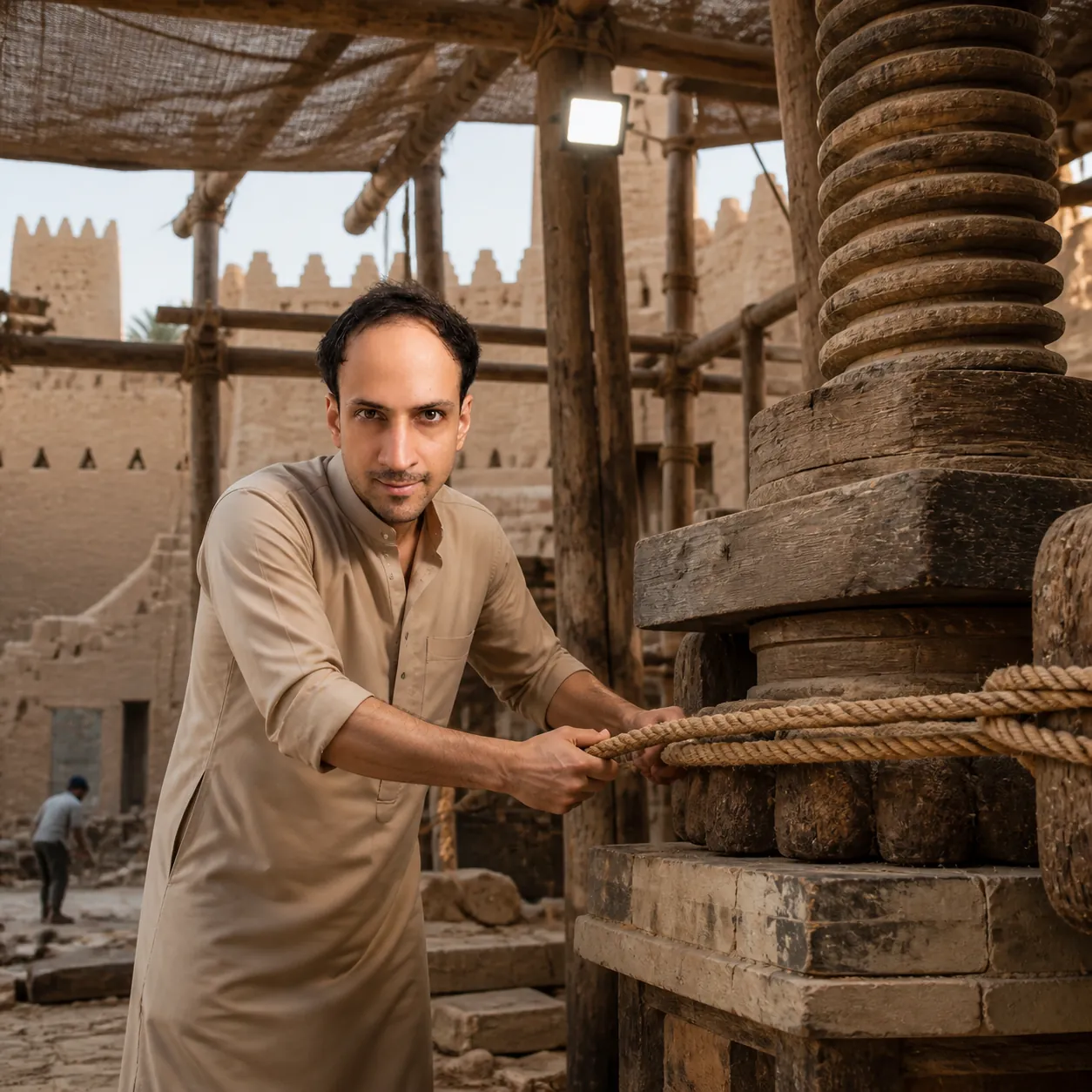
Use the attached reference photo as the identity reference: keep the same face, skin tone, hair and features as the person in that photo, without beautifying, aging or altering them. Create a square 1:1 museum-catalog frame with a strong first read and a slower second read at exactly 2880x2880 pixels. Location: a mud-brick restoration terrace in Diriyah, palm-trunk scaffolds in morning shade. Show the subject in a plain sand-toned traditional Gulf outfit with both sleeves folded back once, checking a scaffold lashing with one slow, deliberate pull. Treat this mechanism as the frame’s governing rule: a great timber screw press whose long bar, walked slowly through half a turn, sinks the platen with irresistible pressure turns a small, steady effort into the equal of crushing weight. Explore whether advantage borrowed from geometry must ever be paid back in strain; direct expression and posture toward grounded calm, never melodrama or ad-like confidence. Use a low 35mm view from beside the load so its true scale presses against the frame. Make the composition weigh the huge load against their small, calm effort. Render it as quiet working-rigging portraiture built from lawful mechanical advantage, heavy documentary realism, hand-worn rope-and-timber materiality, and patient large-format editorial composition, using one high work lamp shaded so the load sits in sculptural half-light and a palette of sandstone buff, rope-shadow grey, and a single indigo accent. Photorealistic: this must read as a real photograph from a physical camera, never an illustration, painting, or 3D render. Resolve real surface detail: grout darker than tile, sealant slightly yellowed, and every joint showing a real tolerance gap. Keep one identity-locked person, credible hands and fingers, natural fabric, and coherent scale, contact, reflections, shadows, airflow, deformation, and materials. Background people only when essential, always secondary and clearly different. Avoid gym equipment, heroic strongman poses, bulging-vein close-ups, snapped-rope drama, and impossibly floating boulders. No text, labels, logos, signatures, watermarks, random symbols, plastic skin, excessive bloom, or glossy AI finish.
Treat that reference as the character anchor and change only the scene. Create a square 1:1 museum-catalog frame with a strong first read and a slower...
Treat that reference as the character anchor and change only the scene. Create a square 1:1 museum-catalog frame with a strong first read and a slower...
Treat that reference as the character anchor and change only the scene. Create a square 1:1 museum-catalog frame with a strong first read and a slower...
Treat that reference as the character anchor and change only the scene. Create a square 1:1 museum-catalog frame with a strong first read and a slower...
Treat that reference as the character anchor and change only the scene. Create a square 1:1 museum-catalog frame with a strong first read and a slower...
Treat that reference as the character anchor and change only the scene. Create a square 1:1 museum-catalog frame with a strong first read and a slower...
Treat that reference as the character anchor and change only the scene. Create a square 1:1 museum-catalog frame with a strong first read and a slower...
Treat that reference as the character anchor and change only the scene. Create a square 1:1 museum-catalog frame with a strong first read and a slower...
Treat that reference as the character anchor and change only the scene. Create a square 1:1 museum-catalog frame with a strong first read and a slower...
Treat that reference as the character anchor and change only the scene. Create a square 1:1 museum-catalog frame with a strong first read and a slower...
Treat that reference as the character anchor and change only the scene. Create a square 1:1 museum-catalog frame with a strong first read and a slower...
Treat that reference as the character anchor and change only the scene. Create a square 1:1 museum-catalog frame with a strong first read and a slower...