جاري التحميل...


جاري التحميل...
Treat that reference as the character anchor and change only the scene. Create a square 1:1 museum-catalog frame with a strong first read and a slower...
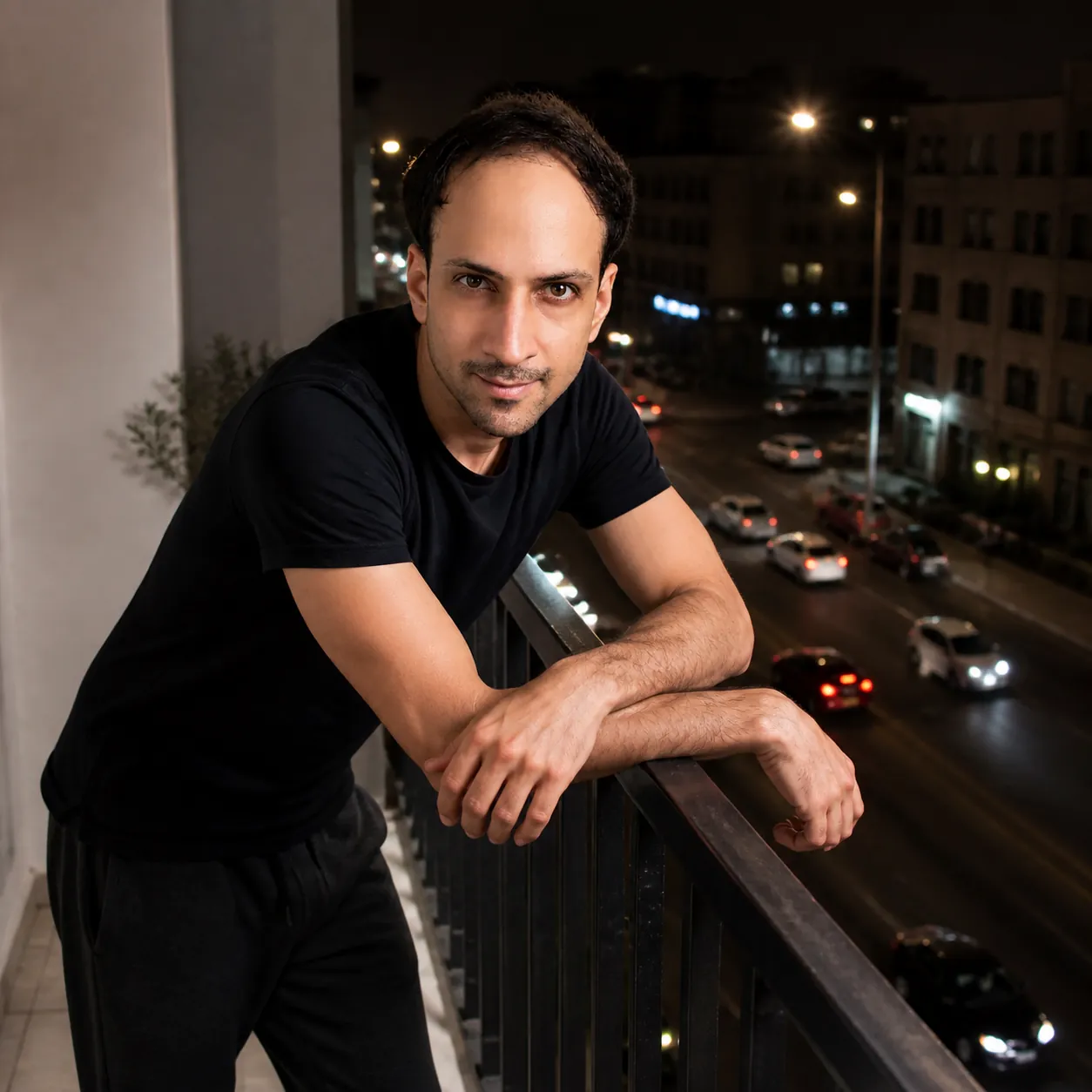
Use the attached reference photo as the identity reference: keep the same face, skin tone, hair and features as the person in that photo, without beautifying, aging or altering them. Treat that reference as the character anchor and change only the scene. Create a square 1:1 museum-catalog frame with a strong first read and a slower second read at exactly 2880x2880 pixels. Location: their balcony above the street's slow night traffic. Show the subject in a tee and joggers, the traditional Gulf outfit changed away, leaning both forearms on the rail. Build the second look around this honest glitch: a shoulder turned early for a narrow gap while the wide bag hangs from their far hand, body and cargo measured as one runs on yesterday's calibration until the update finally lands. Explore why a burdened body threads a narrow gap without one conscious measurement; expression open and unforced, carrying steady curiosity, the attention held before the correction finishes filing. Take a 35mm three-quarter view that leaves room for the motion the body expected. Make the composition let the plain room testify that nothing external moved. Render it as plain documentary reportage made from everyday Saudi spaces, dignified physical humour, natural staging, and completely truthful materials, using underground pillar light, pooled bright with echoing dark between and a palette of night asphalt, headlamp pearl, and one red tail-light trace. Photorealistic: this must read as a real photograph from a physical camera, never an illustration, painting, or 3D render. Keep one identity-locked person, credible hands and fingers, natural fabric, and coherent scale, contact, reflections, shadows, airflow, deformation, and materials. Background people only when essential, always secondary and clearly different. Avoid literal ghosts, drawn-on illusions, double exposure, diagram arrows, and any visual-effect trickery. No text, labels, logos, signatures, watermarks, random symbols, plastic skin, excessive bloom, or glossy AI finish.
Treat that reference as the character anchor and change only the scene. Create a square 1:1 museum-catalog frame with a strong first read and a slower...
Treat that reference as the character anchor and change only the scene. Create a square 1:1 museum-catalog frame with a strong first read and a slower...
Treat that reference as the character anchor and change only the scene. Create a square 1:1 museum-catalog frame with a strong first read and a slower...
Treat that reference as the character anchor and change only the scene. Create a square 1:1 museum-catalog frame with a strong first read and a slower...
Treat that reference as the character anchor and change only the scene. Create a square 1:1 museum-catalog frame with a strong first read and a slower...
Treat that reference as the character anchor and change only the scene. Create a square 1:1 museum-catalog frame with a strong first read and a slower...
Treat that reference as the character anchor and change only the scene. Create a square 1:1 museum-catalog frame with a strong first read and a slower...
Treat that reference as the character anchor and change only the scene. Create a square 1:1 museum-catalog frame with a strong first read and a slower...
Treat that reference as the character anchor and change only the scene. Create a square 1:1 museum-catalog frame with a strong first read and a slower...
Treat that reference as the character anchor and change only the scene. Create a square 1:1 museum-catalog frame with a strong first read and a slower...
Treat that reference as the character anchor and change only the scene. Create a square 1:1 museum-catalog frame with a strong first read and a slower...
Treat that reference as the character anchor and change only the scene. Create a square 1:1 museum-catalog frame with a strong first read and a slower...