جاري التحميل...


جاري التحميل...
Create a square 1:1 museum-catalog frame with a strong first read and a slower second read. Location: a public plaza edge with low scaffolding and chalk...
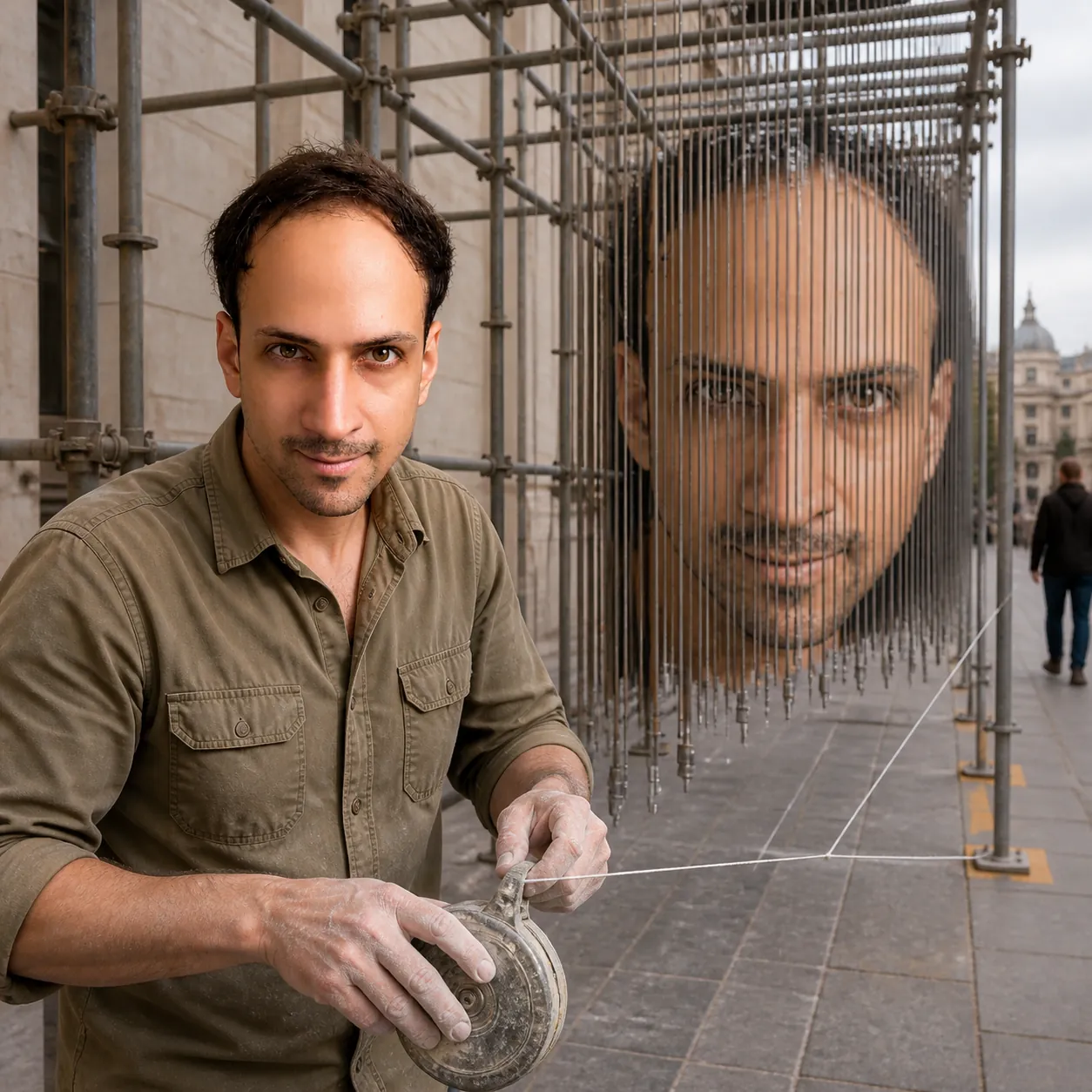
Use the attached reference photo as the identity reference: keep the same face, skin tone, hair and features as the person in that photo, without beautifying, aging or altering them. Create a square 1:1 museum-catalog frame with a strong first read and a slower second read. Location: a public plaza edge with low scaffolding and chalk dust in the joints. Show the subject in a khaki field shirt with sleeves rolled past the elbow, tapping chalk dust from a worn snap-line reel. Treat this mechanism as the frame’s governing rule: dozens of suspended steel rods that assemble into a perfect profile portrait from one aligned doorway lets true scale arrive gently and retire the illusion without breaking it. Explore who is responsible for meaning that no single part contains; direct expression and posture toward sober amusement, never melodrama or ad-like confidence. Frame from one step off the true station so the illusion is caught mid-collapse, still half convincing. Make the composition allow one edge of the trick to sit outside its own geometry. Render it as museum-scale illusion realism combining high-fidelity portrait photography, truthful projective geometry, hand-made materiality, and physically accurate light agreement, using even overcast plaza light that keeps every painted edge honest and a palette of ivory, slate, and one measured band of ochre. Keep one identity-locked person, credible hands and fingers, natural fabric, and coherent scale, contact, reflections, shadows, airflow, deformation, and materials. Background people only when essential, always secondary and clearly different. Avoid theme-park 3D chalk-art gimmicks, fisheye warping, kaleidoscope filters, dream-sequence blur, and gravity-defying poses. No text, labels, logos, signatures, watermarks, random symbols, plastic skin, excessive bloom, or glossy AI finish.
Treat that reference as the character anchor and change only the scene. Create a square 1:1 museum-catalog frame with a strong first read and a slower...
Treat that reference as the character anchor and change only the scene. Create a square 1:1 museum-catalog frame with a strong first read and a slower...
Treat that reference as the character anchor and change only the scene. Create a square 1:1 museum-catalog frame with a strong first read and a slower...
Treat that reference as the character anchor and change only the scene. Create a square 1:1 museum-catalog frame with a strong first read and a slower...
Treat that reference as the character anchor and change only the scene. Create a square 1:1 museum-catalog frame with a strong first read and a slower...
Treat that reference as the character anchor and change only the scene. Create a square 1:1 museum-catalog frame with a strong first read and a slower...
Treat that reference as the character anchor and change only the scene. Create a square 1:1 museum-catalog frame with a strong first read and a slower...
Treat that reference as the character anchor and change only the scene. Create a square 1:1 museum-catalog frame with a strong first read and a slower...
Treat that reference as the character anchor and change only the scene. Create a square 1:1 museum-catalog frame with a strong first read and a slower...
Treat that reference as the character anchor and change only the scene. Create a square 1:1 museum-catalog frame with a strong first read and a slower...
Treat that reference as the character anchor and change only the scene. Create a square 1:1 museum-catalog frame with a strong first read and a slower...
Treat that reference as the character anchor and change only the scene. Create a square 1:1 museum-catalog frame with a strong first read and a slower...