جاري التحميل...


جاري التحميل...
Create a square 1:1 museum-catalog frame with a strong first read and a slower second read. Location: a white ceramics studio with several broken pieces on...
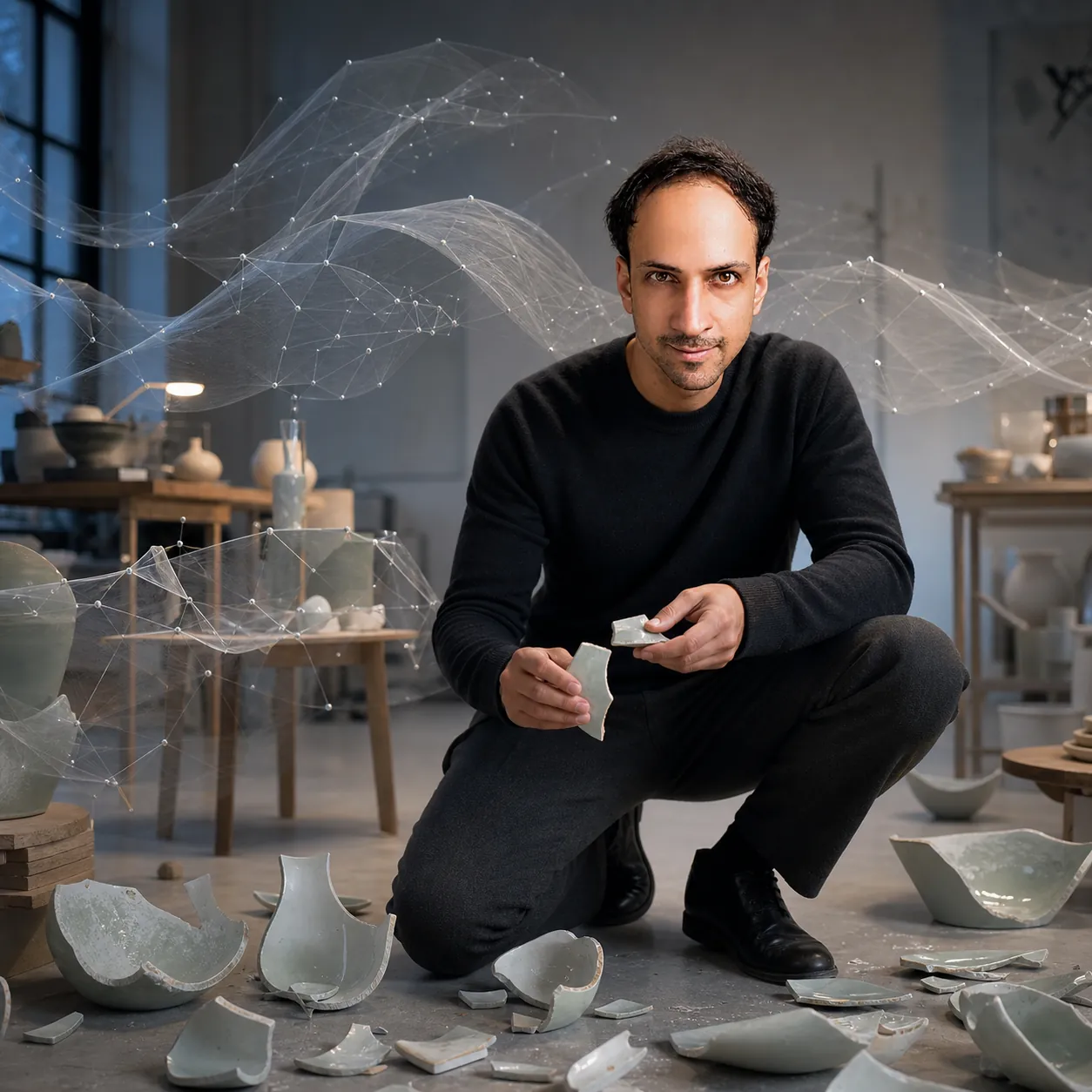
Use the attached reference photo as the identity reference: keep the same face, skin tone, hair and features as the person in that photo, without beautifying, aging or altering them. Create a square 1:1 museum-catalog frame with a strong first read and a slower second read. Location: a white ceramics studio with several broken pieces on the floor. Show the subject in a monochrome fine-knit top with softly structured wool trousers, testing which fragments truly belong together without forcing a fit. Make one rigorous physical condition the conceptual engine: a translucent field whose density reflects confidence without displaying numbers changes course after their quiet intervention without depicting conflict. Explore the ethical value of keeping multiple possible outcomes visible; direct expression and posture toward open deliberation, never melodrama or ad-like confidence. Use an eye-level 65mm medium-format viewpoint with natural perspective and restrained depth of field. Make the composition let no single option dominate by scale or brightness. Render it as conceptual technology portraiture combining tactile data physicalization, restrained contemporary art direction, believable mechanisms, and human-centered editorial realism, using quiet blue-hour ambient light with one low-intensity tungsten interior source and a palette of pale celadon, warm grey, and natural wood tones. Keep one identity-locked person, credible hands and fingers, natural fabric, and coherent scale, contact, reflections, shadows, airflow, deformation, and materials. Background people only when essential, always secondary and clearly different. Avoid robot brains, binary rain, chat windows, floating dashboards, branded devices, and fake code. No text, labels, logos, signatures, watermarks, random symbols, plastic skin, excessive bloom, or glossy AI finish.
Treat that reference as the character anchor and change only the scene. Create a square 1:1 museum-catalog frame with a strong first read and a slower...
Treat that reference as the character anchor and change only the scene. Create a square 1:1 museum-catalog frame with a strong first read and a slower...
Treat that reference as the character anchor and change only the scene. Create a square 1:1 museum-catalog frame with a strong first read and a slower...
Treat that reference as the character anchor and change only the scene. Create a square 1:1 museum-catalog frame with a strong first read and a slower...
Treat that reference as the character anchor and change only the scene. Create a square 1:1 museum-catalog frame with a strong first read and a slower...
Treat that reference as the character anchor and change only the scene. Create a square 1:1 museum-catalog frame with a strong first read and a slower...
Treat that reference as the character anchor and change only the scene. Create a square 1:1 museum-catalog frame with a strong first read and a slower...
Treat that reference as the character anchor and change only the scene. Create a square 1:1 museum-catalog frame with a strong first read and a slower...
Treat that reference as the character anchor and change only the scene. Create a square 1:1 museum-catalog frame with a strong first read and a slower...
Treat that reference as the character anchor and change only the scene. Create a square 1:1 museum-catalog frame with a strong first read and a slower...
Treat that reference as the character anchor and change only the scene. Create a square 1:1 museum-catalog frame with a strong first read and a slower...
Treat that reference as the character anchor and change only the scene. Create a square 1:1 museum-catalog frame with a strong first read and a slower...