جاري التحميل...


جاري التحميل...
Create a square 1:1 museum-catalog frame with a strong first read and a slower second read at exactly 2880x2880 pixels. Location: the vacuum-pump room at...
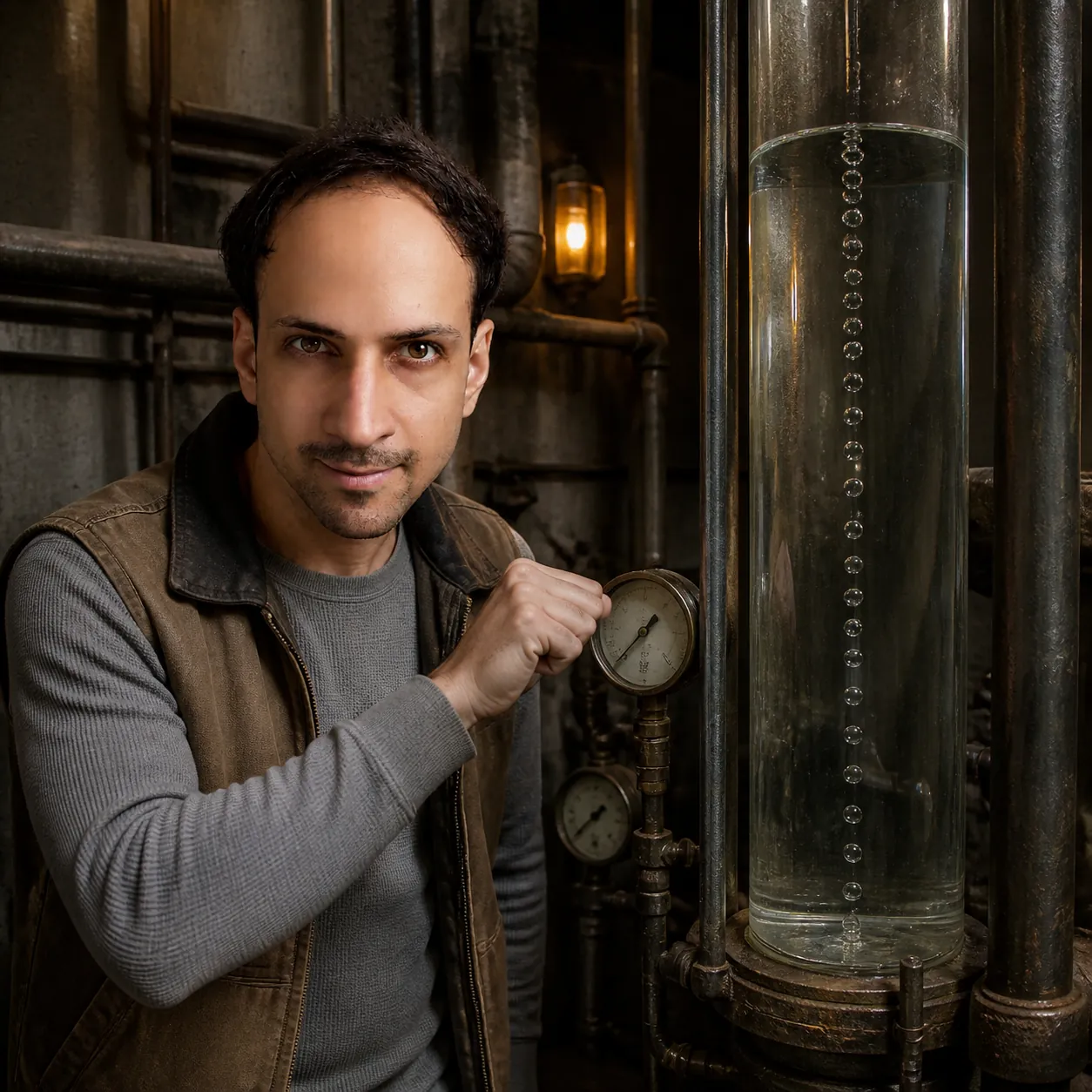
Use the attached reference photo as the identity reference: keep the same face, skin tone, hair and features as the person in that photo, without beautifying, aging or altering them. Create a square 1:1 museum-catalog frame with a strong first read and a slower second read at exactly 2880x2880 pixels. Location: the vacuum-pump room at the tower's base, gauges glowing dim. Show the subject in a heather-grey thermal shirt under an open canvas work vest, tapping a vacuum gauge glass lightly with one knuckle. Make one rigorous physical condition the conceptual engine: a tall water column whose stream of rising air bubbles halts mid-climb and hangs like a string of glass beads turns one honestly borrowed second into proof that weight is circumstance, not essence. Explore how a camera must fall to tell the truth about falling; direct expression and posture toward grave delight, never melodrama or ad-like confidence. Use an eye-level 55mm viewpoint with natural perspective, their planted stance sharing the frame with the floating demonstration. Make the composition give the suspended matter stillness and the cables all the tension. Render it as working research-facility realism combining true free-fall fluid behavior, engineered-safety texture, unglamorous industrial surfaces, and quietly composed editorial portrait photography, using even technical illumination shaped by the capsule's own interior fixtures, shadows kept readable and a palette of bone grey, netting black, and a single amber lamp. Photorealistic: this must read as a real photograph from a physical camera, never an illustration, painting, or 3D render. Resolve real surface detail: fine grit in the texture of concrete, efflorescence at damp edges, and hairline cracks that follow stress. Keep one identity-locked person, credible hands and fingers, natural fabric, and coherent scale, contact, reflections, shadows, airflow, deformation, and materials. Background people only when essential, always secondary and clearly different. Avoid floating-hair astronaut poses, levitating people, swirling CGI water tentacles, and sci-fi antigravity glow. No text, labels, logos, signatures, watermarks, random symbols, plastic skin, excessive bloom, or glossy AI finish.
Treat that reference as the character anchor and change only the scene. Create a square 1:1 museum-catalog frame with a strong first read and a slower...
Treat that reference as the character anchor and change only the scene. Create a square 1:1 museum-catalog frame with a strong first read and a slower...
Treat that reference as the character anchor and change only the scene. Create a square 1:1 museum-catalog frame with a strong first read and a slower...
Treat that reference as the character anchor and change only the scene. Create a square 1:1 museum-catalog frame with a strong first read and a slower...
Treat that reference as the character anchor and change only the scene. Create a square 1:1 museum-catalog frame with a strong first read and a slower...
Treat that reference as the character anchor and change only the scene. Create a square 1:1 museum-catalog frame with a strong first read and a slower...
Treat that reference as the character anchor and change only the scene. Create a square 1:1 museum-catalog frame with a strong first read and a slower...
Treat that reference as the character anchor and change only the scene. Create a square 1:1 museum-catalog frame with a strong first read and a slower...
Treat that reference as the character anchor and change only the scene. Create a square 1:1 museum-catalog frame with a strong first read and a slower...
Treat that reference as the character anchor and change only the scene. Create a square 1:1 museum-catalog frame with a strong first read and a slower...
Treat that reference as the character anchor and change only the scene. Create a square 1:1 museum-catalog frame with a strong first read and a slower...
Treat that reference as the character anchor and change only the scene. Create a square 1:1 museum-catalog frame with a strong first read and a slower...