جاري التحميل...


جاري التحميل...
Create a square 1:1 museum-catalog frame with a strong first read and a slower second read. Location: a bakery back doorway exhaling warmth into a dark...
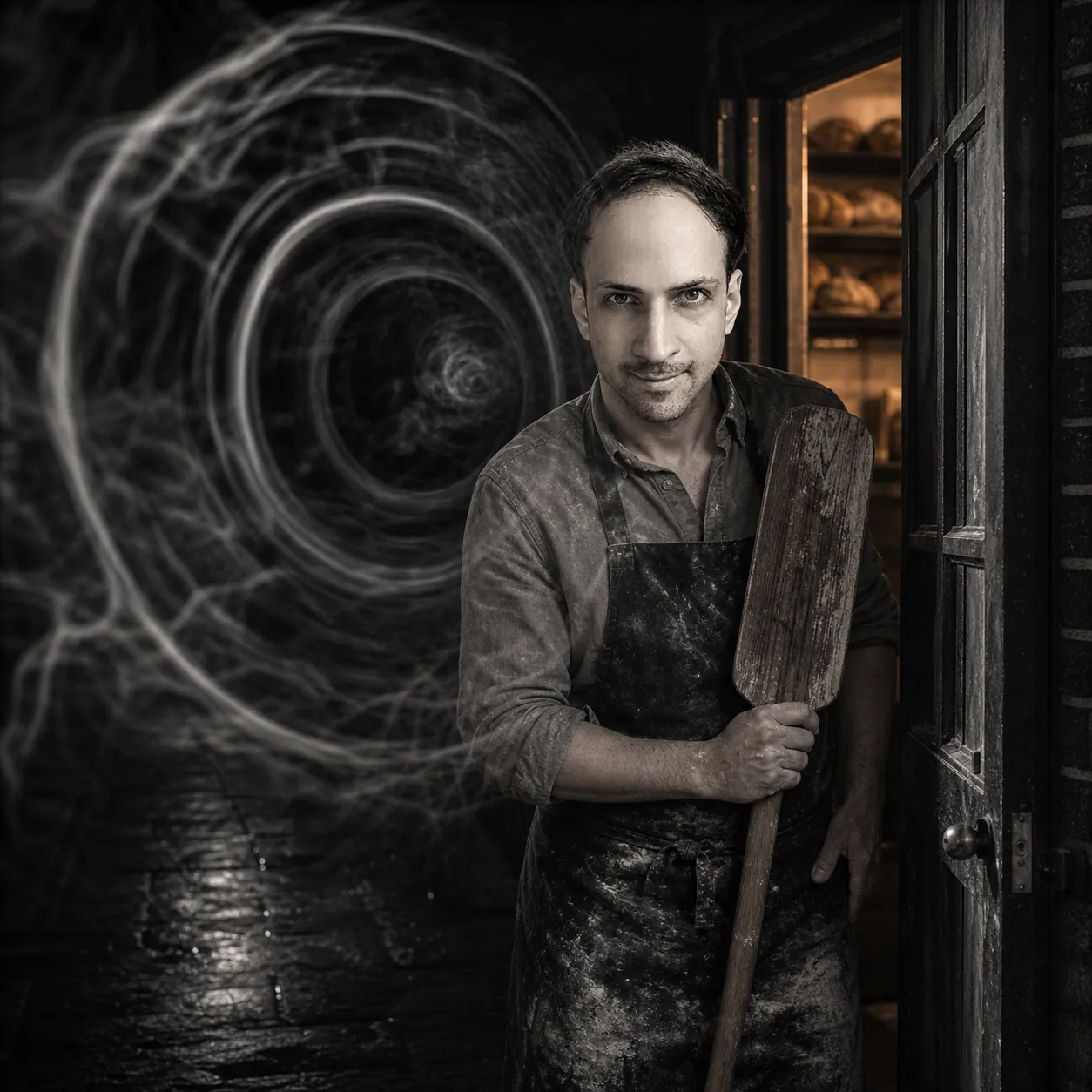
Use the attached reference photo as the identity reference: keep the same face, skin tone, hair and features as the person in that photo, without beautifying, aging or altering them. Create a square 1:1 museum-catalog frame with a strong first read and a slower second read. Location: a bakery back doorway exhaling warmth into a dark alley. Show the subject in a flour-dusted denim apron over a rolled-sleeve shirt, propping the back door open with a worn wooden peel. The impossible-looking event must obey this clear system: the pressure ring of one hand clap, caught by triggered schlieren optics expanding like a stone dropped in still air makes the air itself the most detailed surface in the room. Explore how brief an event can be and still deserve to be called real; direct expression and posture toward patient attention, never melodrama or ad-like confidence. Use a 100mm macro-to-portrait hybrid: one region of visible refraction near the lens and the subject's face readable beyond it, both physically plausible. Make the composition let one current exit the frame before it resolves. Render it as gallery-grade scientific photography built from real density gradients, quiet monochrome discipline, accurate material response, and unhurried observational framing, using a single collimated beam folded through the scene with soft ambient spill and a palette of smoke, graphite, and a low ember orange. Keep one identity-locked subject, credible hands and fingers, natural fabric, and coherent scale, contact, reflections, shadows, airflow, deformation, and materials. Background people only when essential, always secondary and clearly different. Avoid fog machines, dry-ice clouds, glowing sound waves, equalizer bars, and painted wind swirls. No text, labels, logos, signatures, watermarks, random symbols, plastic skin, excessive bloom, or glossy AI finish.
Treat that reference as the character anchor and change only the scene. Create a square 1:1 museum-catalog frame with a strong first read and a slower...
Treat that reference as the character anchor and change only the scene. Create a square 1:1 museum-catalog frame with a strong first read and a slower...
Treat that reference as the character anchor and change only the scene. Create a square 1:1 museum-catalog frame with a strong first read and a slower...
Treat that reference as the character anchor and change only the scene. Create a square 1:1 museum-catalog frame with a strong first read and a slower...
Treat that reference as the character anchor and change only the scene. Create a square 1:1 museum-catalog frame with a strong first read and a slower...
Treat that reference as the character anchor and change only the scene. Create a square 1:1 museum-catalog frame with a strong first read and a slower...
Treat that reference as the character anchor and change only the scene. Create a square 1:1 museum-catalog frame with a strong first read and a slower...
Treat that reference as the character anchor and change only the scene. Create a square 1:1 museum-catalog frame with a strong first read and a slower...
Treat that reference as the character anchor and change only the scene. Create a square 1:1 museum-catalog frame with a strong first read and a slower...
Treat that reference as the character anchor and change only the scene. Create a square 1:1 museum-catalog frame with a strong first read and a slower...
Treat that reference as the character anchor and change only the scene. Create a square 1:1 museum-catalog frame with a strong first read and a slower...
Treat that reference as the character anchor and change only the scene. Create a square 1:1 museum-catalog frame with a strong first read and a slower...