جاري التحميل...


جاري التحميل...
Create a square 1:1 museum-catalog frame with a strong first read and a slower second read. Location: a print archive table with cotton gloves and an empty...
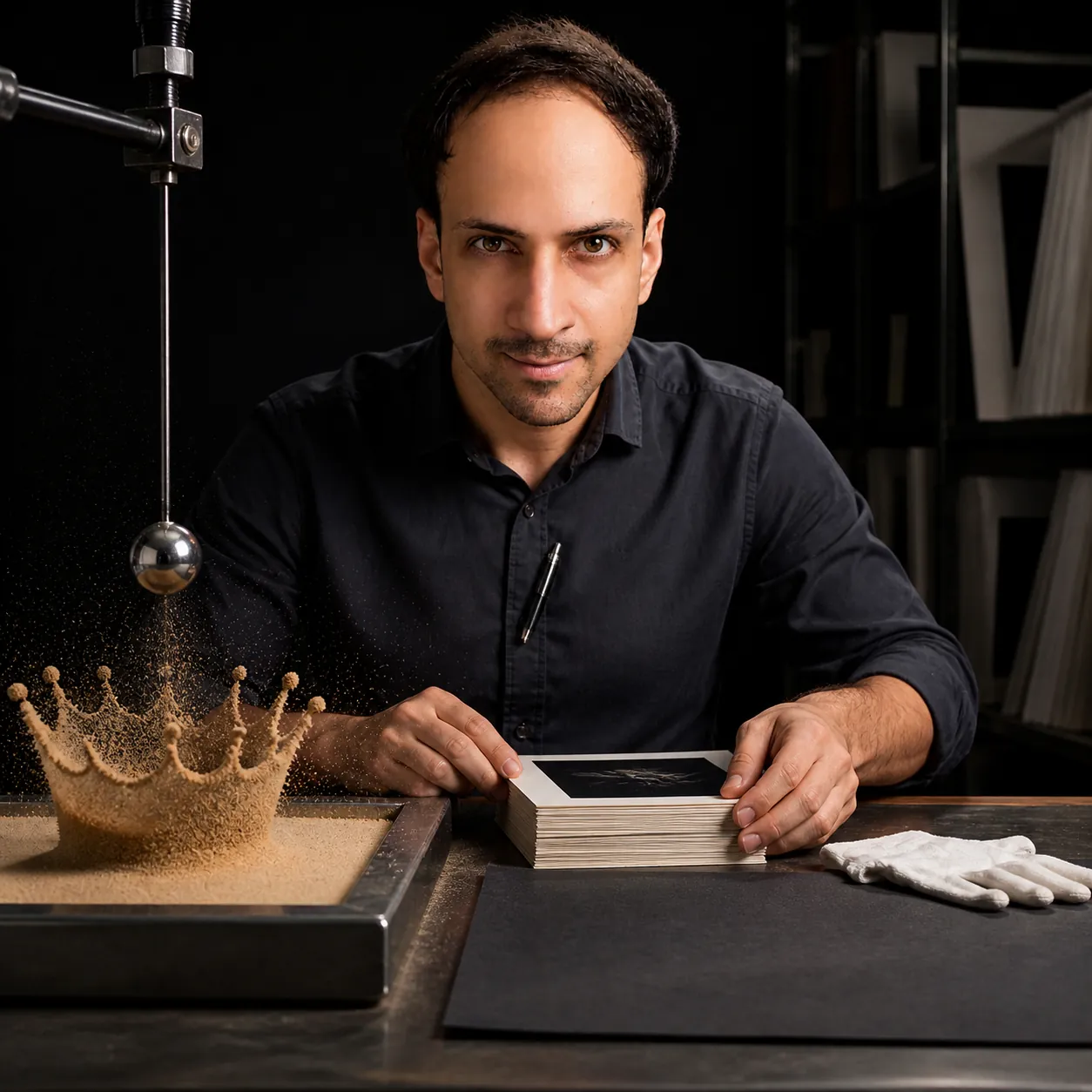
Use the attached reference photo as the identity reference: keep the same face, skin tone, hair and features as the person in that photo, without beautifying, aging or altering them. Create a square 1:1 museum-catalog frame with a strong first read and a slower second read. Location: a print archive table with cotton gloves and an empty blotter. Show the subject in a buttoned slate shirt with a pen clipped to the placket, squaring a stack of prints against the table edge. Use this advanced image-making device as the core logic: a steel ball entering dry fine sand, throwing a granular crown that mimics liquid for one borrowed millisecond proves the pattern was drafted by structure long before the trigger. Explore when one material borrowing another's behavior stops being a trick; direct expression and posture toward disciplined awe, never melodrama or ad-like confidence. Frame across the stage at chest height so the frozen event and their eyes share one focal plane. Make the composition give the trigger mechanism honest visibility instead of mystery. Render it as conceptual impact portraiture combining arrested kinetic events, restrained contemporary art direction, believable rigging, and human-centered editorial realism, using hard side key with black negative fill and controlled specular discipline and a palette of midnight blue, silver, and warm sandstone. Keep one identity-locked subject, credible hands and fingers, natural fabric, and coherent scale, contact, reflections, shadows, airflow, deformation, and materials. Background people only when essential, always secondary and clearly different. Avoid slow-motion advertising gloss, levitating product shots, splashing perfume bottles, exploding paint clouds, and staged glitter bursts. No text, labels, logos, signatures, watermarks, random symbols, plastic skin, excessive bloom, or glossy AI finish.
Treat that reference as the character anchor and change only the scene. Create a square 1:1 museum-catalog frame with a strong first read and a slower...
Treat that reference as the character anchor and change only the scene. Create a square 1:1 museum-catalog frame with a strong first read and a slower...
Treat that reference as the character anchor and change only the scene. Create a square 1:1 museum-catalog frame with a strong first read and a slower...
Treat that reference as the character anchor and change only the scene. Create a square 1:1 museum-catalog frame with a strong first read and a slower...
Treat that reference as the character anchor and change only the scene. Create a square 1:1 museum-catalog frame with a strong first read and a slower...
Treat that reference as the character anchor and change only the scene. Create a square 1:1 museum-catalog frame with a strong first read and a slower...
Treat that reference as the character anchor and change only the scene. Create a square 1:1 museum-catalog frame with a strong first read and a slower...
Treat that reference as the character anchor and change only the scene. Create a square 1:1 museum-catalog frame with a strong first read and a slower...
Treat that reference as the character anchor and change only the scene. Create a square 1:1 museum-catalog frame with a strong first read and a slower...
Treat that reference as the character anchor and change only the scene. Create a square 1:1 museum-catalog frame with a strong first read and a slower...
Treat that reference as the character anchor and change only the scene. Create a square 1:1 museum-catalog frame with a strong first read and a slower...
Treat that reference as the character anchor and change only the scene. Create a square 1:1 museum-catalog frame with a strong first read and a slower...